This site is supported by our readers. We may earn a commission, at no cost to you, if you purchase through links. This content is for general informational and educational purposes only and is not a substitute for professional medical, dermatological, or nutritional advice.
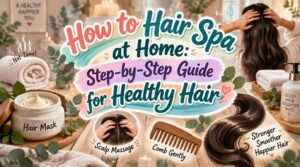
Your hair drinks up conditioner better when it’s warm. Heat lifts the cuticle, so nutrients sink into the shaft instead of sitting on top. That’s the whole trick behind a salon hair spa, and you can copy it in your kitchen.
Ten minutes of scalp massage, a steaming towel, and the right mask will leave your hair softer, shinier, and far less prone to breakage. Your scalp gets better blood flow, and your shoulders get a break from the week.
Here’s how to hair spa at home, step by step, with masks matched to your hair type.
Table Of Contents
- Key Takeaways
- What is a Hair Spa at Home, and What Are The Benefits?
- What Do You Need for a Hair Spa at Home?
- How Do You Do a Hair Spa at Home Step by Step?
- Which DIY Hair Spa Mask Suits Your Hair Type?
- How Often Should You Do a Hair Spa at Home, and How Do You Maintain The Results?
- Frequently Asked Questions (FAQs)
- Is it good to do a hair spa at home?
- What is needed for a hair spa?
- Can hair spa be done without steam?
- How to get salon like hair spa at home?
- Can I do hair spa on colored hair?
- How long should I leave the mask on?
- What water temperature is best for rinsing?
- Should I trim hair before or after treatment?
- Can hair spa help with hair loss problems?
- Can I do a hair spa on colored hair?
- Conclusion
Key Takeaways
- An at-home hair spa follows five steps in order: detangle dry or slightly damp hair, massage your scalp with body-warm oil, steam with a warm towel for 10–15 minutes, apply a mask matched to your hair type, then shampoo, condition, and finish with a cool rinse to seal the cuticle.
- Heat is the key mechanism: warming your hair lifts the cuticle so oil and mask ingredients sink into the strand instead of sitting on top, which is what makes salon treatments work.
- Match your mask to your hair type—avocado and honey for thick dry hair, light aloe and oil for fine hair, egg and yogurt for weak or over-processed hair—and leave it on 5–10 minutes (up to 20 for damaged hair, only 3–5 for fine hair).
- Do it once a week for a balanced scalp or every two weeks if yours gets oily, and maintain results with lukewarm rinses, gentle shampooing, pat-drying, and waiting 48–72 hours after coloring before your next session.
What is a Hair Spa at Home, and What Are The Benefits?
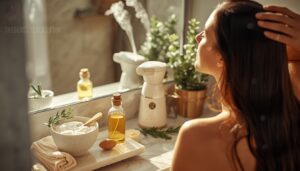
A hair spa at home is a structured, multi-step treatment you can do in your own bathroom to deeply nourish and reset your hair. It combines oil massage, steam, and a conditioning mask to address everything from dryness to breakage. Here’s a closer look at what it involves and why it works.
For relaxed or chemically treated hair, a thick deep conditioner makes an especially good choice for your mask step.
At-Home Hair Spa
Think of a hair spa at home as your personal salon ritual, no appointment needed. It combines warm oil, a nourishing hair mask, a warm towel, and gentle detangling into one focused routine.
A DIY hair spa gives you:
- Full control over what goes on your hair
- The freedom to customize for your exact needs
- A ritual that’s entirely yours
Deeper Hair Nourishment
When hair oil and a hair mask work together, they don’t just sit on the surface. Heat opens the cuticle slightly, letting conditioning ingredients penetrate deeper into each strand. That’s where real hair nourishment happens.
A solid deep conditioning session coats the fiber too, locking in moisture so your hair stays noticeably softer between washes, not just on wash day.
Improved Scalp Circulation
Beyond nourishing each strand, the heat and massage also work directly on your scalp. Scalp massage mechanically stimulates blood vessels, boosting scalp circulation so more nutrients can reach each follicle.
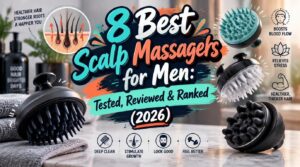
Finding the right fit matters, so exploring scalp massagers designed specifically for men can help you choose a tool that complements your hair type and maximizes those circulation benefits.
Hot towel steaming extends that effect by driving vasodilation, keeping vessels open longer. Pair it with a warm oil massage and you’re giving hair follicle stimulation a real, sustained push.
Softer
That scalp boost sets up the softness you’re after. Warmth thins the oil so it coats every strand evenly, and steaming helps your hair mask sink in deeper.
For the best results, follow up with a deep conditioning treatment that matches your hair type and moisture needs.
This is where hair softening really happens: conditioners cling to each cuticle, smoothing rough spots so strands glide instead of snag. Rinse cool, and your hair moisturization locks in that silky, touchable feel.
Shinier Hair
You know that mirror-like gleam salon hair gets? You can recreate it. Smooth cuticles reflect light instead of scattering it, so shine is really about surface condition.
Here’s what boosts it:
- Warm oil softens strands for easier hair moisturization
- Steam helps hair softening and deeper product spread
- A mask film smooths rough spots for hair shine enhancement
- A cool-water rinse flattens cuticles so light bounces back cleanly
Skip heavy buildup, though. Excess residue dulls shine and weighs hair down.
Reduced Frizz And Breakage
When your cuticles lie flat, frizz control becomes easy and strands resist snapping. Deep conditioning coats each fiber, cutting friction so detangling causes less hair breakage. That lubricating slip also boosts hair elasticity, letting bends flex instead of fracture.
A cool final rinse seals the surface, and consistent gentle handling afterward locks in the hair strengthening you’ve just invested in.
Relaxation And Stress Relief
Picture your shoulders dropping as warm oil meets your scalp, the day’s noise fading with every slow stroke. That’s the hidden gift of a hair spa at home: stress relief built right in.
A hair spa at home quietly doubles as stress relief, melting tension away with every slow, soothing stroke
A gentle scalp massage lowers tension, steady breathing deepens relaxation, and a quiet room helps. Your DIY hair spa doubles as a mini mental reset. You’ve earned it.
What Do You Need for a Hair Spa at Home?
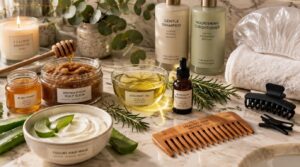
Take Priya, who tried a home spa with random kitchen oils and ended up with greasy, limp hair. The fix wasn’t effort, it was the right kit.
Start with a carrier oil that matches your hair. Jojoba works for fine hair; coconut or olive suits thick, coarse strands. Add a drop or two of rosemary or tea tree essential oil if you want growth or dandruff support.
Gather your application tools: a wide-tooth comb, hair clips for sectioning, and a shower cap to trap heat. A soft towel doubles as your steam wrap.
For extras, keep brown sugar and coconut oil handy for a scalp scrub, plus honey, yogurt, or aloe for a DIY hair mask. Finish with a mild shampoo, conditioner, and lukewarm water for rinsing. That’s it. Simple, affordable, ready.
Following a proper five-step hair spa routine at home — detangling, oil massage, steaming, deep conditioning, and cleansing — ensures the treatment works evenly from scalp to ends.
How Do You Do a Hair Spa at Home Step by Step?
You’ve got your supplies ready, so now it’s time to put them to work. A proper at-home hair spa follows five simple steps, and each one builds on the last. Follow them in order and you’ll get salon-level results without leaving your bathroom.
Prepare and Detangle Your Hair
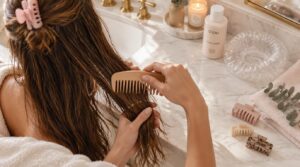
Good prep makes everything after easier. Start with dry or slightly damp hair, since wet strands stretch and snap. Detangle from the ends upward using a widetoothed comb, working in small sections. Clips help with thick hair. If strands snag, add conditioner for slip instead of pulling harder. Once smooth, loosely cover with a shower cap while you gather supplies.
Massage Scalp With Warm Oil
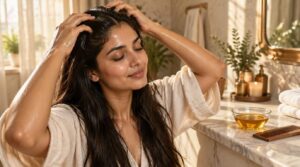
Your fingertips are your best tools here. Warm a little natural oil until it’s body-warm, never hot, then follow this rhythm:
- Part your hair into sections.
- Dab oil directly onto the scalp.
- Use fingertips in small circular motions.
- Keep pressure light at the hairline.
- Work outward until coverage feels even.
This scalp massage boosts circulation, wakes up hair follicles, and helps hair hydration.
Steam Hair With Warm Towel
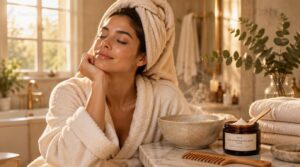
Now that your scalp’s massaged, it’s time to steam hair with a warm towel. This step turns your hair spa at home into a mini salon treatment.
Dip a towel in warm water, wring it out, and wrap it around your hair. The trapped heat opens your cuticle so your deep conditioning mask absorbs better. Re-warm the towel if it cools, but keep it comfortable, never hot. Leave it on for 10 to 15 minutes, and detangle first so heat spreads evenly.
Apply The Right Hair Mask
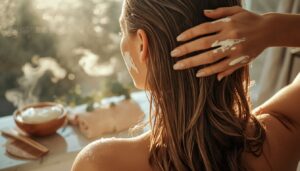
Your hair’s warm and cuticles are open, so apply your hair mask now. Mid-lengths to ends first, then lightly redistribute. Match the mask to your needs:
- Dry hair: rich emollients for hair moisture retention.
- Weak strands: protein masks for hair elasticity improvement.
- Dull hair: smooth hair strand coating for shine.
Spread evenly, especially on ends, and leave it 10 to 20 minutes.
Shampoo, Condition, and Cool-Rinse
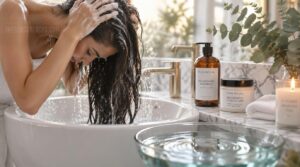
Once your hair mask has done its work, rinse it out with lukewarm water. Then shampoo your scalp with a gentle massage to lift oil and residue, letting the lather glide through your lengths.
Apply conditioner from mid-lengths to ends, detangle with your fingers, and finish with a cool rinse. That final blast seals the cuticle for extra shine.
Which DIY Hair Spa Mask Suits Your Hair Type?
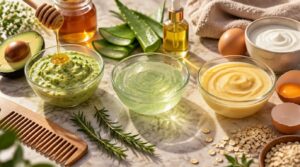
The mask you pick in step four makes or breaks your hair spa at home. Match it to your hair type and you’ll see the difference immediately.
Picture these three options:
- Creamy avocado and honey for thick, thirsty strands
- Light aloe and a few drops of oil for fine hair that flattens fast
- Egg and yogurt for weak, over-processed hair craving protein
Curly and coarse textures drink up rich, moisture-heavy blends. Fine hair needs a thin layer of something lighter, or you’ll lose volume. Color-treated hair loves a DIY hair mask with glycerin and softening oils to restore slip.
This is natural hair care at its simplest: use what your hair actually needs, not what looks good in a jar. High porosity? Go moisture-forward. Low porosity? Rinse thoroughly so nothing sits on the surface.
How Often Should You Do a Hair Spa at Home, and How Do You Maintain The Results?
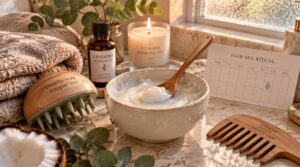
Aim for a hair spa at home once a week if your scalp stays balanced, or every two weeks if it gets oily or builds up product quickly. Watch your scalp: more itching or flaking means space sessions out or stop.
Keep results longer with a few habits:
- Use lukewarm water, not hot, when you rinse.
- Shampoo gently and always condition after.
- Pat dry with a soft towel instead of rubbing.
Skip harsh cleansers right after a session, since they strip the conditioning layer before it settles. If residue dulls your hair, add a clarifying wash occasionally, but don’t overdo it. Consistent hair maintenance locks in softness, helps hair repair, protects hair moisture balance, and keeps hair growth stimulation from your scalp massage working for you.
Frequently Asked Questions (FAQs)
Is it good to do a hair spa at home?
Think of it as a mini-vacation for your head. Yes, a hair spa at home is good. It helps scalp health, boosts moisture retention, and aids hair repair, as long as you use compatible products and gentle heat.
What is needed for a hair spa?
You’ll need a few basics: hair oil, a hair mask, shampoo, and conditioner. Grab a warm towel for steaming, clips for sectioning, a brush or comb, and a clean bowl. That’s it.
Can hair spa be done without steam?
Absolutely. A hair spa at home works fine without steam. Use a hot towel or warm oil instead, let your hair spa mask sit longer, and you’ll still get softness and moisture retention.
How to get salon like hair spa at home?
Over 70% of people say salon visits feel too costly for regular care. You can get salon results with a DIY hair spa: warm natural oils, a proper scalp massage, steam, a matching hair mask, and a cool rinse for lasting hair shaft protection.
Can I do hair spa on colored hair?
Ironically, the hair color you paid for fades fastest when you pamper your hair too soon. Wait 48–72 hours after coloring, then enjoy your DIY hair spa. Use sulfate-free shampoo, a rich conditioner, and a cool rinse for proper hair color protection.
How long should I leave the mask on?
Here’s the simple rule: most masks need 5 to 10 minutes. Damaged hair? Stretch it to Fine hair? Keep it at 3 to 5 minutes so your DIY hair treatment doesn’t weigh strands down.
What water temperature is best for rinsing?
Worried cold water feels harsh? It doesn’t. Rinse with lukewarm water around 100°F and your mild shampoo and conditioner work best. Finish with a 65-75°F rinse for hair cuticle sealing and shine.
Should I trim hair before or after treatment?
Trim after your hair spa at home. Hydration reveals your hair’s true texture, so you’ll spot split ends accurately and avoid over-cutting. Just make sure hair is fully dry and cool before trimming.
Can hair spa help with hair loss problems?
Yes, but with limits. Hair spa reduces shedding from dryness and breakage, and scalp massage helps circulation and stress relief. If you have true hair loss, like patterned thinning, see a dermatologist.
Can I do a hair spa on colored hair?
You can absolutely spa colored hair. Just use a sulfate-free shampoo, lukewarm steam, and a color-safe hair mask for oily hair or dry types. Skip clarifying washes, keep heat brief, and protect your hair pH balance.
Conclusion
Picture your hair wrapped in a warm towel, steam rising, and every strand drinking in what it needs. That’s the magic of learning how to hair spa at home. You don’t need a salon appointment or expensive products, just oil, a mask, and ten quiet minutes.
Do it weekly, pick masks that match your hair type, and keep the habit going. Your hair will thank you with softness, shine, and strength.