This site is supported by our readers. We may earn a commission, at no cost to you, if you purchase through links. This content is for general informational and educational purposes only and is not a substitute for professional medical, dermatological, or nutritional advice.
Your shampoo bottle lists more chemicals than a high school science textbook, yet a bar of olive oil soap—basically ancient technology—contains just a handful of natural ingredients. This centuries-old Mediterranean staple has sparked renewed interest among people seeking a simpler, more natural approach to hair care.
Rich in antioxidants and fatty acids, olive oil soap promises to cleanse without stripping away your hair’s natural oils. However, it’s not quite as straightforward as swapping one product for another. Your hair type, water hardness, and even your scalp’s pH can determine whether this natural alternative becomes your new holy grail or leaves you battling greasy buildup.
Understanding how olive oil soap actually works—and whether it’ll work for you—requires looking beyond the clean-beauty hype.
Table Of Contents
Key Takeaways
- Olive oil soap’s high pH (9-10) can disrupt your scalp’s natural acid mantle and lift hair cuticles, causing frizz and tangles—especially problematic for fine, color-treated, or already damaged hair that needs gentler care.
- Textured or coily hair (types 3-4) benefits most from olive oil soap’s heavy moisturizing properties since natural sebum can’t travel down tight curl patterns, while straight or fine hair often ends up limp and greasy from the weight.
- Hard water transforms olive oil soap into sticky mineral deposits (soap scum) that coat your strands and create buildup, making an acidic rinse with diluted apple cider vinegar essential for restoring smoothness and removing residue.
- Your hair typically needs 3-4 weeks to adjust to olive oil soap as sebum production recalibrates, so starting with once-weekly washes and monitoring your specific response helps you avoid the common pitfalls of greasiness or dryness.
What is Olive Oil Soap for Hair?
Olive oil soap is a natural cleansing bar made primarily from olive oil, offering a gentler alternative to conventional shampoos. Unlike typical hair care products, it works without harsh sulfates or synthetic foaming agents, which makes it particularly appealing if you’re looking for a more minimalist approach.
Before you decide whether it’s right for your hair, it helps to understand what sets it apart, how it actually works, and whether your specific hair type will benefit from the switch.
Key Ingredients and Properties
Think of olive oil soap as a carefully crafted moisturizer built from unsaturated fatty acids—roughly 69% oleic acid—that penetrate your hair shaft and deliver antioxidants like hydroxytyrosol.
The soap-making process retains glycerin content naturally, creating a gentler natural moisturizer than synthetic shampoos.
That oleic-rich fatty acid profile promotes hair growth while olive oil benefits include conditioning and protecting strands from oxidative stress.
Additionally, using a glycerin soap base can boost the moisturizing properties of olive oil soap.
How Olive Oil Soap Differs From Regular Shampoo
Your scalp naturally sits at pH 4.5–5.5, but olive oil soap lands around pH 9–10—meaning it lifts your hair cuticle more than regular shampoo’s acidic formulas do. Here’s how that changes your hair care routine:
- Surfactant types: Soap uses fatty acid salts instead of synthetic detergents
- Cleansing mechanisms: Creates mineral deposits in hard water
- pH levels: Raises cuticle, increasing friction and tangles
- Scalp microbiome: Disrupts your acid mantle temporarily
- Shampoo bars: Syndet versions won’t require adjustment periods
Most natural hair care products aim to protect hair and scalp health differently. Understanding the natural soap benefits is essential for making informed decisions about your hair care routine.
Suitability for Different Hair Types
Before you reach for that soap bar, your specific hair texture determines whether you’ll love or regret the switch. Olive oil soap’s heavy emollient profile means it interacts very differently across hair types—what hydrates coils can flatten fine strands.
Your curl patterns and oil balance matter enormously here. Textured hair with type 3–4 curls benefits from olive oil’s slip because natural sebum can’t travel down tight spirals—you need external moisture. Meanwhile, fine straight hair loses movement fast since those lightweight strands can’t support heavy triglyceride-rich oils without going limp.
Textured curls need external moisture because sebum can’t travel tight spirals, while fine straight hair goes limp under heavy oils
Scalp conditions also shift the equation. If you’re managing dryness or need hair growth support, the vitamin E content strengthens follicles—but oily scalps trap existing sebum under that occlusive layer, making daily life greasier. Hair porosity plays in too: damaged or chemically processed strands with lifted cuticles face even more frizz when soap’s pH 9–10 swells those already-open scales further.
| Hair Type | Soap Response | Usage Recommendation |
|---|---|---|
| Dry/Coarse | Improves manageability by ~30% | Weekly to biweekly treatments |
| Oily Scalp | Traps sebum, increases greasiness | Mid-lengths only, every 2–3 weeks |
| Fine/Thin | Weighs down, reduces volume | Last few centimeters or dilute |
| Curly/Coily | Reduces breakage, retains moisture | Weekly conditioning works well |
| Color-Treated | High pH accelerates fading | Use pH-balanced alternatives instead |
Benefits of Olive Oil Soap for Hair

Olive oil soap brings more to the table than just a gentle cleanse—it actually works to improve your hair’s health from root to tip.
The moisturizing and nourishing properties of olive oil translate into real benefits you can see and feel over time. Here’s what olive oil soap can do for your hair.
Moisturizing Dry or Brittle Hair
When your hair feels straw-like and fragile, olive oil soap can act like a gentle drink of water for each strand. The emollient fatty acids coat dry fibers, helping lock in hair moisture and restore a healthier hair moisture balance. Here’s how it helps:
- Penetrates the hair cuticle to reduce surface lipid loss and support hair nourishment
- Lowers friction by roughly 20–30%, protecting brittle strands from breakage
- Creates a hydrophobic film that seals moisture in while keeping frizz at bay
This olive oil benefits–driven approach tackles dry hair remedies naturally, improving hair cuticle care and offering practical frizz reduction methods.
For already dehydrated hair, moisturizing with olive oil soap once or twice weekly can visibly soften strands and reduce snapping during styling—transforming rough, lifeless lengths into hair that bends without breaking and shines with restored vitality.
Supporting Hair Growth and Strength
Strength and growth hinge on what happens beneath the surface. Olive-derived compounds like oleuropein can boost follicle numbers and upregulate growth signaling factors—IGF-1 and VEGF—in preclinical models, supporting hair follicle care from root to tip.
Meanwhile, olive oil’s oleic acid penetrates strands to prevent protein loss, reducing hair breakage and preserving length.
Pairing scalp massage benefits with olive oil nutrition creates a powerful ritual for hair nourishment and resilient hair strength over time.
Reducing Frizz and Enhancing Shine
Smoothness transforms your texture. Olive oil coats each strand, sealing the cuticle so water stays balanced—fewer swelling-shrinking cycles mean less frizz, especially in humidity.
Glossymeter tests confirm higher light reflection on olive-treated hair versus silicone, translating to noticeable shine enhancement.
You’ll see softer, sleeker locks with improved hair smoothing and cuticle care, particularly if your strands are coarse, textured, or prone to flyaways.
Soothing Itchy or Dry Scalp
Relief may surprise you—or backfire. Some people find olive oil soap delivers itch relief and eases scalp irritation thanks to anti-inflammatory compounds, improving scalp comfort and even psoriasis flaking.
Yet others see worse dryness remedies: the high pH and oleic acid can disrupt your skin barrier, fuel dandruff yeasts, and intensify discomfort.
Oil benefits for scalp health and hair care depend entirely on your unique chemistry.
Managing Dandruff and Scalp Conditions
Dandruff causes often involve Malassezia yeast that thrives on certain oils—including olive oil. While olive oil soap may temporarily calm an itchy scalp or psoriasis flaking, clinical evidence shows it can worsen fungal infections by feeding the very organisms behind dandruff. Here’s what happens:
- Yeast feeds on oleic acid from olive oil soap
- Hair follicle inflammation increases
- Scalp health deteriorates with more flaking
- Standard antifungal shampoos outperform oil-based hair care
- Switching products often brings relief
How to Use Olive Oil Soap on Hair
Using olive oil soap on your hair isn’t complicated, but a few smart techniques can help you get the best results without ending up with greasy strands.
The way you apply it, how often you reach for the bar, and what you pair it with all make a real difference in how your hair responds. Here’s what you need to know to make olive oil soap work for your specific hair needs.
Application Techniques and Best Practices
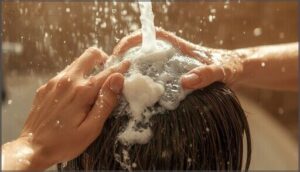
Think of lathering olive oil soap like coating your scalp with a thin, gentle film—not scrubbing vigorously. Wet your hair thoroughly for 30–60 seconds with lukewarm water, then glide the bar over your scalp three to five times for even soap distribution.
Massage with your fingertips for one to two minutes, following proper rinsing protocols to flush away residue and release hair care benefits naturally.
Frequency of Use for Optimal Results
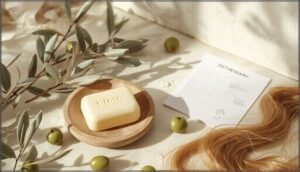
Washing frequency acts like tuning an instrument—you’ll adjust until your scalp sings. Most people see ideal hair care benefits using olive oil soap 1–2 times weekly, allowing scalp adaptation while preventing oil buildup that disrupts hair pH balance. Here’s how to dial in your weekly routines:
- Oily scalps: Try every 2–3 days, monitoring for natural hair remedies effects
- Normal hair: Wash 2–3 times weekly for balanced hair care and maintenance
- Dry or curly hair: Limit to once weekly, supporting hair growth without stripping oils
- Color-treated: Use every 5–7 days to preserve vibrancy
- Adjustment period: Expect 3–4 weeks before your hair care routine stabilizes
Daily washing with alkaline soap strips protective lipids, so spacing applications prevents the dryness that derails your goals.
Combining With Rinses or Conditioners
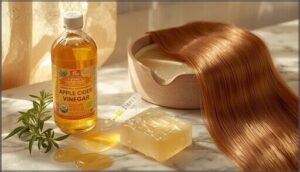
Pairing your soap routine with an acidic rinse—1–2 tablespoons apple cider vinegar in 8 ounces water—restores hair pH balance after alkaline cleansing. This delivers cuticle smoothing and mineral deposit removal, amplifying the benefits of the acidic rinse.
Apply the vinegar treatment for 1–3 minutes, then rinse before using your soap conditioner or deep conditioner. This sequence optimizes natural hair remedies while supporting hair growth and shine.
Potential Drawbacks and Precautions

While olive oil soap offers plenty of benefits, it’s not without a few potential hiccups. Some people notice greasiness, texture changes, or even mild scalp reactions when they first start using it. Understanding these drawbacks can help you decide if it’s the right fit for your hair routine.
Greasiness and Product Buildup
Even though olive oil soap can nourish your hair, residue is a real concern—especially if you have hard water. When soap meets minerals like calcium and magnesium, it forms soap scum that clings to your strands, creating hair buildup and that heavy, dull feeling. Here’s what drives greasiness and product accumulation:
- High pH (around 9–10) disrupts your scalp’s natural balance
- Olive oil residue interacts with sebum, amplifying greasiness
- Hard water transforms soap into sticky deposits on hair
- Styling products layer on top, worsening buildup
- Incomplete rinsing leaves films that dull shine over time
Hard or Sticky Hair Issues
Beyond greasiness, you might notice your hair feels stiff, waxy, or hard to comb—a sign of soap scum removal challenges and hard water effects.
Calcium binds to soap molecules, depositing sticky films that raise friction and dull shine. This mineral buildup disrupts pH balance importance, roughening cuticles and making strands coarse.
An acidic rinse or chelating shampoo offers sticky hair solutions by dissolving residue and restoring smoothness.
Scalp Sensitivities and Allergic Reactions
While olive oil soap suits many, sensitive skin or compromised scalp conditions can trigger allergic contact dermatitis. Fragrances, preservatives, and surfactants—not just the oil—often cause scalp irritation and allergic reactions.
If you have eczema or seborrhoeic dermatitis, olive oil sensitivity may worsen inflammation and disrupt skin pH balance.
Patch-test first, watch for redness or itching, and avoid products with harsh additives that undermine olive oil soap’s anti-inflammatory promise.
Adjusting to Olive Oil Soap Over Time
Initially, your hair may feel waxy or greasy for several weeks as sebum regulation recalibrates and hair fiber effects from alkaline pH balance settle. This adjustment period varies by water hardness and prior product buildup.
Shift strategies—acidic rinses, gradual wash spacing, clarifying first—ease the shift and support hair growth tips while minimizing hair breakage.
Using olive oil soaps for hair becomes smoother once your scalp adapts and natural oils redistribute.
Choosing The Right Olive Oil Soap
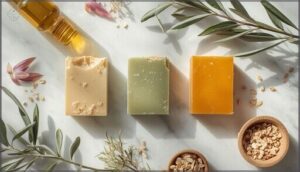
Not all olive oil soaps are created equal, and choosing the right one can make a real difference in how your hair responds. You’ll want to look beyond marketing claims and focus on what’s actually inside the bottle—or bar.
Here’s what matters most when you’re shopping for an olive oil soap that’ll work well with your hair.
Identifying High-Quality Ingredients
You’ll want to check the ingredient list for ‘Olea Europaea (Olive) Fruit Oil’ or ‘Sodium Olivate’ near the top—that means Olive Oil makes up a substantial portion. High-quality bars often feature extra virgin olive oil, which brings beneficial Fatty Acid Composition rich in oleic acid and Natural Additives like squalene for Moisturizing and Hair Health.
Ingredient Sourcing matters too; Greek or Syrian origins tend to signal traditional, handmade approaches. Look for formulas without animal fats or synthetic chemicals.
The Soap Making Process should preserve Olive Oil Quality and its Natural Ingredients, so Organic Products with minimal processing usually deliver better results for your hair.
Selecting Eco-Friendly and Safe Brands
Many Eco Friendly Products now carry Eco Labels like USDA Organic or EU cosmetics certification, signaling safer Natural Ingredients and less Environmental Impact. Check Brand Transparency—reputable companies openly list sourcing, testing, and whether they meet the EU’s restrictions on over 1,600 substances. Sustainable Packaging matters too; bars wrapped in compostable paper trump plastic bottles every time.
For Natural Hair Care that’s gentle and responsible, prioritize Organic Soaps free from parabens, sulfates, and formaldehyde releasers. Chemical Free Hair Care isn’t just marketing—when Olive Oil Soap brands commit to clean formulas and zero-waste packaging, you’re protecting both your scalp and the planet.
Frequently Asked Questions (FAQs)
Can olive oil soap help with split ends?
Split ends happen when hair fibers fray from friction and stress. Olive oil soap can help prevent new damage by lubricating strands and reducing breakage, but it won’t repair ends that are already split.
Is olive oil soap safe for childrens hair?
Think of a child’s scalp like delicate silk—it needs gentle cleansing. While olive oil soap can work, those high soap pH levels (9-10) don’t match pediatric skin care needs.
Choose pH-balanced options for infant scalp health instead.
Can I use olive oil soap daily?
Daily use isn’t recommended—olive oil soap’s high pH (around 9) can disrupt scalp balance and strip natural oils, risking dryness and buildup.
For gentle cleansing and hair damage prevention, limit use to 2–3 times weekly.
How long does olive oil soap last?
Proper storage preserves olive oil soap longevity—handmade bars usually maintain peak quality for six to twelve months.
Cure time matters: fully cured natural olive oil-based soaps last longer in your shower, while cool, dry conditions prevent premature expiration signs like rancidity.
Conclusion
You might worry that switching from your familiar shampoo feels risky, but olive oil soap good for hair doesn’t demand flawlessness—just patience.
Your scalp will adjust, your routine will evolve, and you’ll discover whether this Mediterranean alternative suits your unique hair chemistry.
Start with once-weekly washes, monitor how your hair responds, and don’t hesitate to revert if buildup becomes problematic.
Natural doesn’t always mean universal, but for many, it’s genuinely life-changing.