This site is supported by our readers. We may earn a commission, at no cost to you, if you purchase through links. This content is for general informational and educational purposes only and is not a substitute for professional medical, dermatological, or nutritional advice.

You went in for chocolate brown and walked out with hair that turns copper under every light bulb in your house. Sound familiar? Red tones sneak up on almost everyone—whether it’s leftover warmth from bleaching, faded box dye, or just the natural pigments in your strands crashing the party.
Here’s the good news: you don’t need a salon chair to fix it. Learning how to neutralize red tones in hair at home comes down to color theory, the right green or blue pigments, and a little patience. Grab your toner and let’s get your color back on track.
Table Of Contents
Key Takeaways
- Green neutralizes red because they sit opposite each other on the color wheel, making green shampoo or toner the go-to fix for brassy brunette hair.
- Red tones surface from natural warm undertones, faded dye, bleaching, sun/heat exposure, or hard water buildup, so identifying the cause helps you pick the right fix.
- Match your toner to your hair’s exact level and undertone, since going too dark or too intense risks an ashy or green cast instead of a neutral brown.
- Maintain results by using color-safe shampoo, limiting heat styling, applying UV protection, deep conditioning weekly, and refreshing toner every 4-6 weeks.
Why Red Tones Show Up in Hair
Red tones don’t just show up out of nowhere—they’re usually hiding underneath your natural color, waiting for the right (or wrong) conditions to surface.
If you’re prone to brassiness, picking the right hair color for olive skin tone can help keep those unwanted red tones from creeping in.
Things like your hair’s undertone, old dye jobs, and even your shower water can all play a part.
Here’s a rundown of the usual suspects behind that brassy, red-orange look.
Natural Warm Undertones
Ever notice how some brunettes look coppery even without dye? Blame your natural warm undertones—melanin levels 1-3 naturally carry golden-red pigment. That’s just color wheel theory at work; red sits opposite green, so it shows through.
- Golden complexion hues
- Warm jewelry choices flatter you
- Autumn/spring seasonal palettes suit you
- Peachy-coral makeup shades work
- Skin tone match with auburn
Faded Brown Hair Dye
Sometimes it’s not your natural undertone—it’s your dye job saying goodbye. Semi-permanent brown formulas fade fast since color molecules sit on the hair shaft instead of bonding deep, unlike oxidative pigments built for longevity. As blue and violet tones wash out first (they’re smaller, weaker), warm red pigments linger behind. Porosity speeds this along too. Color fillers can restore lost depth before you tone.
Bleaching and Color Stripping
Bleach and lifting products break down melanin through an oxidative process, and warm red-orange pigment is often what’s left behind. Color removers work differently—they target artificial dye molecules without lightening your natural shade.
Understanding the colour remover vs bleach difference is essential for choosing the right method for your hair.
Both carry cuticle damage risks. Always run a strand test first, whether you’re bleaching or using a color remover for correction.
Sun and Heat Exposure
Your color didn’t fade evenly on its own — the sun helped. UV pigment breakdown hits lighter, warmer tones hardest, while heat styling tools speed up thermal moisture loss, leaving strands drier and more porous.
That extra porosity lets red pigment escape faster and read stronger. Add scalp irritation from sweat or sun, and brassiness correction gets tougher without daily UV protection and heat protectant.
Hard Water Buildup
What’s coming out of your showerhead might be working against your color correction. Hard water carries dissolved calcium and magnesium, and mineral precipitation leaves calcium carbonate residue on strands, throwing off pH balance and hindering hair color neutralization.
This buildup coats hair with a dulling film (basically soap scum formation’s cousin), making it harder for color neutralizing agents to reach the shaft and truly neutralize red tones.
Choose The Right Color to Cancel Red
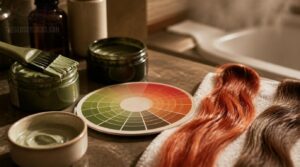
Not every red-canceling product works the same way, so picking the right one matters. The color wheel actually makes this easy once you know the basics. Here’s how to match the right shade to your hair’s undertone.
Green Cancels Red
Grab a color wheel and green sits directly across from red — that’s complementary color theory doing its job. Green pigment cancels red on contact, neutralizing coppery shades and brassy warmth without stripping your color.
For brunettes specifically, purple-based toning falls short, which is why a blue shampoo formulated for brunette hair works so well at keeping orange tones in check between salon visits.
Chlorophyll toning shampoos work gently this way. Just watch application time closely; overdoing it leaves a green cast, especially on lighter brunettes.
Blue Cancels Orange
Orange brassiness loves to creep into blonde and medium hair, especially after bleaching or color fading. Blue sits opposite orange on the color wheel, so it neutralizes orange on contact.
If your brassy tones are stubborn, a best blue toner for orange hair with a strong pigment can cancel warmth faster without lightening your base color.
- Choose light blue for subtle correction
- Pick darker blue for stubborn brass
- Watch porosity so color absorbs evenly
Too much blue toning shampoo risks a cool cast, so test strands first!
Purple Cancels Yellow
Yellow’s opposite on the wheel is purple, which is why purple shampoo works so well for lingering brassiness after your red gets tamed.
| Yellow Level | Violet Intensity | Rinse Time |
|---|---|---|
| Pale | Light | 5 min |
| Medium | Moderate | 10 min |
| Deep | Strong | 15 min |
Watch over-toning risks—too much violet turns hair ashy. Always strand test, then finish with a cool water rinse to lock in your color correction.
Match Your Hair Level
Here’s the thing: a toner that’s dead-on perfect for your neighbor can turn your hair muddy or ashy if your hair color levels don’t match. Grab a color chart, check strands in natural light (porosity messes with accuracy), and always strand test first.
Matching level to undertone is what actually gets you real color correction, not guesswork.
Avoid Over-toning Mistakes
More cool doesn’t mean more correct. Going two levels darker than your base to "really cancel that red" backfires—you’ll land on green cast city instead of neutral brown.
Undertone overcorrection happens fast with complementary colors. Stick close to your natural level, watch processing time closely, and always strand test before committing. Toning is about balance, not battling your hair color into submission.
Toning is about balance, not battling your hair color into submission
How to Neutralize Red Tones at Home
Now that you know which color cancels what, it’s time to put that theory to work. Neutralizing red at home comes down to a simple order of steps, from prepping your strands to locking in that fresh tone. Here’s exactly how to do it, one step at a time.
Clarify Before Toning

Skipping toner and diving straight in is how brassiness sneaks back. Identify your base level first, check for pigment buildup, and do a quick scalp sensitivity check.
Assess hair condition and porosity too, since damaged strands grab pigment differently. Always verify product directions before applying—processing times aren’t just suggestions, they’re the difference between neutralized and over-toned.
If uneven results still show up despite careful timing, this guide on how to fix patchy hair dye walks you through correcting blotchy or uneven color safely.
Apply Green Toning Shampoo

Once your hair’s clarified, green is your best friend on the color wheel—it’s the complementary color that cancels red.
Grab a color-correcting shampoo or DIY green toning shampoo (4-6 drops food coloring works!).
- Apply to damp hair, roots to ends
- Leave on 5-10 minutes—watch scalp sensitivity
- Rinse thoroughly, avoid overtoning
Dilute for subtler results if you’re pigment-shy.
Use Brunette Color Masks
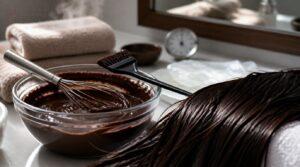
Want more staying power than a rinse-out? Brunette color masks are your move.
Pick a shade close to your natural level—chocolate, espresso, deep neutral—so you neutralize red tones without going ashy or flat.
- Apply to damp hair, focus on lengths
- Leave 5-15 minutes (strand test first!)
- Rinse cool, follow with conditioner
Skip these on blonde or highlighted strands—staining risk is real. Bonus: built-in conditioning benefits.
Try Ash Brown Dye
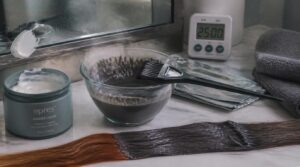
Masks not doing enough? Time for a full ash brown dye—a demi-permanent color corrector built to neutralize red tones at the root.
Match the ash level to your current shade (porosity affects uptake, so strand test first). Apply barrier cream along your hairline to prevent skin staining. The blue-gray pigments cancel warmth, leaving cool tone dimension without going flat or gray.
Rinse and Condition Well
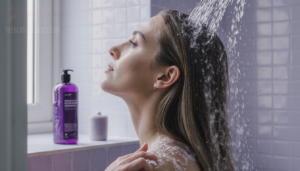
Grab a toning conditioner for this last step—it locks in your color work instead of washing it away.
- Rinse with cool water to seal the cuticle and boost shine
- Avoid hot water, which reopens cuticles and lets red pigment resurface
- Massage scalp gently to prevent residue buildup and mineral deposits
Cool rinses lock in moisture, neutralize red tones long-term, and keep hair cuticle health intact between colorings.
Best At-Home Products for Red Brassiness
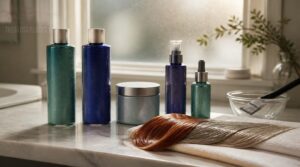
Now that you know your color theory, let’s talk products. The right pick depends on your hair level and how much red you’re fighting. Here are five go-to options worth keeping in your bathroom cabinet.
Green Shampoos for Brunettes
Green cancels red—that’s just color theory doing its job. On the color wheel, green sits directly opposite red, so green shampoo neutralizes red tones fading from brown hair dye.
These formulas use plant-based ingredients and gentle cleansers, protecting moisture balance while fighting brassiness removal.
Best for medium-to-deep brunette hair levels. Lighter brown? Go easy—over-toning turns hair ashy or muddy fast.
Blue Shampoos for Orange Tones
Copper brassiness doesn’t stand a chance against blue toning shampoo. Orange sits opposite blue on the wheel, so blue or violet pigments cancel it fast—think Fanola No Orange.
Leave it on 3-5 minutes, no longer, or you’ll invite dryness. Formulas with panthenol help offset that.
Pigment strength varies by brand, so patch test first for true colorcorrecting shampoo results.
Ash Color Additives
Ash toner is your secret weapon against stubborn red—it works like green’s cooler cousin, blending green and blue-green pigments to cancel warmth at the root.
- Mix ash additive with developer at proper ratios
- Only use on pre-lightened hair for even results
- Watch for blue casts—don’t overdo the ratio
- Choose ash-based dye for stability
- Patch test for additive safety
Color Removers for Dye Buildup
Sometimes toner alone can’t fix red buildup—that’s when a color remover steps in. These use reducing agent technology to break down dye molecules without full stripping. Porosity matters: porous hair lifts faster.
| Type | Best For |
|---|---|
| Ammonia-based | Stubborn, vivid red |
| Ammonia-free | Gentler, low-odor removal |
Bond protecting removers cut breakage. Follow with solid aftercare!
Semi-permanent Toning Options
Wash-out worry got you nervous about commitment? Semi-permanent options are your low-risk fix.
- No ammonia, gentler on strands
- Lasts 4–12 washes based on porosity
- Green toner or color-depositing masks work fast
- Gradual color fading means no harsh regrowth line
Always strand test first. Prefer more control? Demipermanent hair color or semipermanent ash color options offer a color corrector effect with slightly longer staying power.
Keep Red Tones From Coming Back

Neutralizing red tones is only half the battle, keeping them gone is the real win. Red brassiness loves to sneak back in through hot water, sun, and everyday styling habits. Here’s how to lock in that fresh, cool color for the long haul.
Use Color-safe Shampoo
Swap your regular shampoo for a colorsafe formula, and you’ll seal in that hard-won neutralization.
| Feature | Regular Shampoo | Color-safe Shampoo |
|---|---|---|
| pH Level | Higher, opens cuticle | 4.5–5.5, seals cuticle |
| Surfactant | Harsh, strips pigment | Gentle, sulfate-free |
| Extras | None | UV filters, oils |
Sulfate-free options cleanse without fading your toning shampoo results.
Limit Heat Styling
Your flat iron and curling wand are basically tiny factories for warmth, and warmth pulls red right back out of your strands.
Keep heat styling to 2–3 times a week, dial tools to the lowest setting your hair type allows, and lean on heat-free alternatives—braids, air-dried waves—between sessions.
- Split ends
- Dullness
- Increased breakage
Notice these? Scale back before they undo your toning work.
Apply UV Protection
Sun exposure fades toner just as fast as heat does, pulling those neutralized tones back toward red.
Apply UV-protectant spray to damp hair before heading out, focusing on mid-lengths and ends.
| Filter Type | Protects Against | Reapply |
|---|---|---|
| Avobenzone | UVA rays | Every 2-4 hrs |
| Zinc oxide | UVA/UVB | Every 2-4 hrs |
| Antioxidants | Free radicals | Daily |
Grab a hat when you can—it’s free protection.
Deep Condition Weekly
Toning only works if your hair can actually hold moisture, and that’s where weekly deep conditioning earns its keep.
- Boost hydration for days, not hours
- Balance protein and moisture for porous strands
- Seal cuticles with argan or avocado oil
- Add color-depositing masks to refresh brunette tone
Warm towels help thicker masks penetrate deeper, locking in that neutralized color longer.
Refresh Toner as Needed
Eventually, that ash toner fades — it’s just chemistry doing its thing. Refresh every 4-6 weeks, sooner if your hair’s porous or you wash daily. Watch for warmth creeping back in as your fade signal.
Sun and heat speed things up, so adjust your timing accordingly. Keep a color corrector on hand for quick touch-ups between full toning sessions, and you’ll stay ahead of brassiness for good.
Frequently Asked Questions (FAQs)
How long does it take toner to work?
Green-tinted toning shampoos usually need 5 to 10 minutes per use, with visible results in about 1 to 2 weeks of consistent application—concentration, hair porosity, and how stubborn your red tones are all affect the timeline.
Can I mix ash dye with conditioner instead?
Yes, but stick to semi-permanent or ash-based dye, not permanent. Use a 1:2 to 1:4 dye-to-conditioner ratio, choose silicone-free conditioner for better pigment adhesion, and always run a test strand first—color depositing masks work similarly for gentler results.
Will toning shampoo work on damp or dry hair?
Aim for damp hair, about 60–70% dry, for best pigment absorption. Too wet causes dilution and weak results; too dry increases patchiness.
Proper cuticle absorption mechanics help your toning shampoo neutralizes red tones evenly, without hotspots or streaky color correction.
How often should I repeat the toning treatment?
Timing’s a bit like watering a plant—too often drowns it. Permanent toners need 4-6 weeks, demi-permanent every 3- Freshly bleached hair? Wait 7-8 weeks minimum, or you’re just inviting pigment buildup and extra damage.
Does diet or water intake affect red brassiness?
Surprisingly, yes. Carotenoid skin shifts from your diet and hydration color perception both change how warm tones read.
Hard water’s mineral buildup effects roughen strands, making brassiness—and scalp redness contrast around your hairline—look more pronounced than actual pigmentation.
Conclusion
Color doesn’t lie, but it doesn’t have to win either. Once you understand neutralize red tones in hair at home, brassiness stops being a mystery and starts being simple math: but it doesn’t have to win either. Once you understand how to neutralize red tones in hair at home, brassiness stops being a mystery and starts being simple math: green cancels red, patience cancels panic. Grab your toner, follow the steps, and trust the process. Your color will settle into that cool, rich brunette you wanted from day one. Consistency keeps red tones gone for good.