This site is supported by our readers. We may earn a commission, at no cost to you, if you purchase through links. This content is for general informational and educational purposes only and is not a substitute for professional medical, dermatological, or nutritional advice.

Your hair feels like straw, so you grab a box of henna and hope for the best. Then the paste goes on, and the results come out patchy, crunchy, and somehow drier than before.
The culprit usually sits in the mixing bowl, not the powder. Acidic add-ins, heavy oils, and rushed resting times can turn a conditioning treatment into a parching one. Learning how to mix henna for dry and damaged hair means choosing the right liquid, nailing a smooth ratio, and giving the paste time to release its dye.
Here’s the full process, from picking pure powder to rinsing it out, so your strands come away glossy, strong, and evenly colored.
Table Of Contents
- Key Takeaways
- Choose Pure Henna and Check Your Hair’s Condition
- How to Mix Henna for Dry and Damaged Hair
- How to Apply Henna Evenly to Damaged Hair
- How Long Should You Leave Henna On, and How Do You Rinse It Out?
- How to Prevent Dryness After Henna: Aftercare and Mixing Mistakes
- Frequently Asked Questions (FAQs)
- What to mix in henna for hair to prevent dryness?
- What is a good henna pack for dry and frizzy hair?
- What is the best way to mix henna for hair?
- Is it better to apply henna to wet or dry hair?
- Can I use henna on bleached or color-treated hair?
- Will henna permanently change my natural hair color?
- How often can I safely henna damaged hair?
- Does henna cause or worsen hair breakage?
- Can I add coffee or tea for darker color?
- Conclusion
Key Takeaways
- Mix pure henna powder with plain water into a thick, smooth paste, and skip acidic add-ins like vinegar and heavy oils that leave dry, damaged hair parched and patchy.
- Rest the covered paste at room temperature for 6 to 12 hours so it can release its dye before you apply it.
- Apply the paste to damp, detangled hair in thin sections, saturating the most damaged areas first, then leave it on for one to three hours under a shower cap.
- Rinse with cool water only once the paste has loosened, then deep condition and wait 24 to 48 hours before your first wash, spacing henna sessions 4 to 6 weeks apart to keep moisture balanced.
Choose Pure Henna and Check Your Hair’s Condition
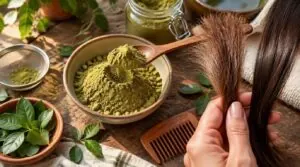
Two checks come before you touch a mixing bowl. Check your henna. Then check your hair.
Buy pure organic henna, meaning Lawsonia inermis leaf powder and nothing else. Skip anything sold as "black henna" or packed with extra dyes, since those can dry your hair out unpredictably. Body art quality henna is finely sifted, which helps the paste go on smooth. Look for a solid lawsone content, and choose powder that’s fresh, not clumpy or grainy.
If you’re new to this, using henna on natural hair is easier once you know how it affects different textures, so do a strand test first.
Now test your hair. Rough texture and breakage mean dry strands. Color-treated ends soak up henna fast, while roots may resist it. Clarify first. Healthier hair means better hair hydration and hair elasticity improvement later.
Prep properly, pamper patiently, and proudly pick pure powder.
How to Mix Henna for Dry and Damaged Hair
Mixing henna the right way keeps your dry, damaged hair soft instead of stiff. You’ll handle it in two simple steps, starting with your liquid and ending with your paste. Follow both steps, and you’ll get a smooth, creamy mix every time.
Choose a Gentle Mixing Liquid
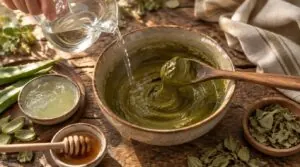
A gentle liquid keeps your paste thick, even and kind to your scalp. Start with plain water. Skip these:
If you’d like to see how water-thinned pastes work in practice, this castor oil hair mask recipe shows how to get a smooth, scalp-friendly consistency from the very first mix.
- Apple cider vinegar, which shifts pH and dries damaged strands.
- Yogurt, which can separate and turn lumpy.
- Heavy olive, coconut or avocado oil, which causes patchy coverage.
Honey or aloe vera? Keep it minimal. Simple, soothing, smooth wins.
Set The Ratio and Rest The Paste
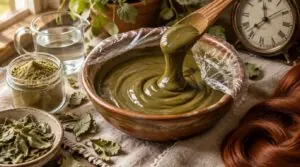
Now get the ratio right. Mix henna powder with water until the henna paste clings without dripping. Then rest the paste, covered, at room temperature.
| Step | Target |
|---|---|
| Texture | Thick, smooth, lump-free |
| Rest | 6 to 12 hours |
| Cover | Plastic wrap on surface |
| Recheck | Stir before applying |
Smooth, steady, simple. Better color builds better hair strengthening. Skip shortcuts. Your strands will thank you.
Before your next appointment, a quick look at this hair color wheel guide can help you pick shades that work together and keep your tone fresh between visits.
How to Apply Henna Evenly to Damaged Hair

Your paste is creamy and rested, so now you can apply henna evenly. Start with damp, detangled hair. Work in thin partings. Coat each strand from root to tip, and smooth the paste with gloved fingers. Don’t rush this part, friend.
Hair porosity matters here. Damaged spots soak up color fast, so saturate the crown and underside first. Then finish your lengths. Keep your paste moist, and don’t leave long gaps between sections.
Even coating gives you:
- Pride in rich, uniform color
- Joy in better hair moisture retention
- Calm from hair breakage prevention
- Confidence from real hair shaft protection
Smooth, section, saturate, and shield. Careful coating crafts calm, color-rich, curl-loving confidence, so slowly slide, spread, and savor every silky strand.
How Long Should You Leave Henna On, and How Do You Rinse It Out?
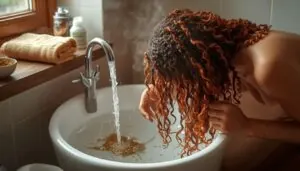
When should you rinse? Wait one to three hours. Cover your hair with a shower cap so the henna paste stays damp and keeps working.
Damaged strands soak up dye fast, so check color early. Textured hair often needs longer.
Rinse like this:
- Wait until the paste flakes or loosens.
- Start with a cool water rinse.
- Finger-detangle gently to lift the paste.
- Rinse until the water runs clear.
- Shampoo lightly to remove leftover residue.
Don’t rinse soaking wet paste. It stains unevenly and leaves residue behind. Skip heavy scrubbing, too. Leftover flakes dry chalky, so check your roots and nape.
Rinse henna only after the paste has loosened, and skip hard scrubbing, since soaking paste stains unevenly and leftover flakes dry chalky
Follow with hair conditioning to support hair moisture retention.
Rinse right and rock radiant, remarkably refreshed, restored, ravishing, resilient ringlets.
How to Prevent Dryness After Henna: Aftercare and Mixing Mistakes
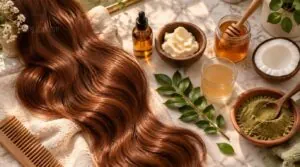
Protect your dry and damaged hair from the start by keeping your henna hair mask simple. Skip eggs, milk, yogurt, and undiluted lemon juice. They block dye uptake and can leave strands parched.
Aftercare matters just as much, so you’ll want to protect your hair moisture balance every step of the way:
- Wait 24 to 48 hours before your first wash.
- Wash with lukewarm water and a sulfate-free shampoo.
- Seal ends with coconut or jojoba oil.
- Air dry, or use heat protectant on low heat.
Make conditioning after henna a weekly habit. Natural moisturizing ingredients like shea butter and honey restore softness fast. Deep conditioning with natural oils like argan for 20 to 30 minutes right after rinsing out the henna can also help restore softness. Add a diluted apple cider vinegar rinse to smooth the cuticle.
Stay sleek, stay soft, stay sensational.
Frequently Asked Questions (FAQs)
What to mix in henna for hair to prevent dryness?
Henna’s a thirsty sponge, so feed it. Stir in natural moisturizing ingredients like honey, plain yogurt, or a teaspoon of olive, coconut, or avocado oil.
Shea or cocoa butter works too. Keep it small, though.
What is a good henna pack for dry and frizzy hair?
Ironically, the plainest mix wins. Mix pure henna with aloe gel until it’s yogurt-thick, then rest it. This natural conditioner protects hair moisture balance on dry and damaged hair.
Bold, bouncy, beautifully balanced hair strength.
What is the best way to mix henna for hair?
Picture a thick, glossy paste, spoonable like yogurt. Stir pure henna powder with a little lemon juice, then add a splash of aloe as a natural conditioner. Rest it a couple of hours.
Is it better to apply henna to wet or dry hair?
Wet or dry, which wins? Go slightly damp.
For dry and damaged hair, damp strands support moisture balance and help henna coat evenly. Skip dripping hair. Finish with a natural conditioner for better cuticle sealing.
Can I use henna on bleached or color-treated hair?
Think of your strands as a thirsty sponge. Yes, you can use henna on bleached or color-treated hair, but expect surprises.
Test a strand first, boost conditioning, protect hair moisture balance, finish with cuticle sealing.
Will henna permanently change my natural hair color?
Henna stains, it doesn’t strip. Lawsone bonds to your strands, so color lasts for months. Roots grow back untouched.
On dry and damaged hair, hair color vibrancy deepens. Boost hair nourishment for bold, bouncy locks.
How often can I safely henna damaged hair?
Most hair takes henna every 4–6 weeks. With dry and damaged hair, aim for the longer end. Protect your moisture balance with conditioning and hair oils.
Tangles? You’re overdoing it. Space sessions, soften, strengthen, shine.
Does henna cause or worsen hair breakage?
A rope frays when it’s pulled too tight. Pure henna can do that too.
Overdo it on dry and damaged hair, and protein buildup hurts hair elasticity. Protect your moisture balance, or hair breakage follows.
Can I add coffee or tea for darker color?
Yes, but don’t expect magic. Coffee water or black tea won’t deepen your henna powder’s dye.
They can add a surface tint that helps hair color blending, though a darker color needs patch testing first.
Conclusion
Worried henna will leave your hair crunchy again? It won’t, if you mix it right.
Knowing how to mix henna for dry and damaged hair comes down to three moves: a gentle liquid, a smooth ratio, and patient resting time. Skip the acids and heavy oils. Rinse thoroughly, then condition well.
Go gently, give it time, and let your strands soak. Soon, soft, shiny, spirited strands will shimmer, silky and strong, showing off sunlit shades.