This site is supported by our readers. We may earn a commission, at no cost to you, if you purchase through links. This content is for general informational and educational purposes only and is not a substitute for professional medical, dermatological, or nutritional advice.

Half my clients come in asking if henna will wreck their curls, and the other half show up with "black henna" boxes from the beauty supply that contain PPD, a sensitizer that can blister your scalp.
So let’s clear this up: yes, you can use henna for natural hair, and it can leave your strands stronger and shinier than before. But lawsone bonds permanently to your hair shaft, meaning that copper glow won’t wash out, and your curl pattern might loosen along the way.
As a trichologist, I’ve seen gorgeous auburn transformations and patchy, brassy disasters, and the difference always comes down to preparation. Here’s everything to know before you mix.
Table Of Contents
- Key Takeaways
- Can I Use Henna on Natural Hair?
- What Are The Benefits and Limitations of Henna for Natural Hair?
- How Does Henna Affect Curls, Porosity, and Dryness?
- What Color Results Can Henna Produce on Dark and Gray Hair?
- How Do You Apply Henna to Natural Hair Safely?
- Frequently Asked Questions (FAQs)
- What is the downside of henna in hair?
- Does henna turn hair black?
- Can I use henna on my 4c hair?
- Who should not apply henna on hair?
- Can henna be used on relaxed or transitioned hair?
- How long does henna color last on hair?
- Does henna work the same on all hair types?
- Can henna be mixed with oils or butters?
- What ingredients should be avoided in henna products?
- Conclusion
Key Takeaways
- Pure henna (Lawsonia inermis only) is safe for natural hair and can strengthen and add shine, but "black henna" often contains PPD, a sensitizer that can blister your scalp—so always patch test 48 hours before use.
- Lawsone bonds permanently to the hair shaft, so the warm copper-red color won’t wash out, and it can loosen your curl pattern or cause dryness and buildup that requires monthly clarifying and deep conditioning.
- Results depend heavily on your starting color and porosity: dark hair gets a subtle red-brown glow, gray strands turn bright copper fast, and uneven application or additives like oils, butters, or mixed-in indigo lead to patchy, brassy color.
- Henna coats the shaft and reacts unpredictably with chemical dyes, so strand test first, apply henna before layering indigo separately (never in one bath), and expect root touch-ups every 4–6 weeks.
Can I Use Henna on Natural Hair?
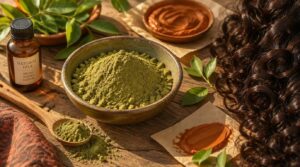
Why yes, you absolutely can use henna for natural hair, and honestly, it’s one of the oldest color options we’ve had around. Henna works by depositing plant-derived pigments directly onto each hair shaft, so it doesn’t need to lift or chemically alter your internal structure to do its thing.
That gentle coating action is a big part of why henna feels kinder to your strands than the harsh chemicals many people worry about in box dye and what it does to your hair.
That matters a lot for natural hair. No developer, no bleach, no chemical stripping. The dye bonds to the surface and oxidizes over time, which means even without heat tools during henna application, you’re still getting real color.
Now, the real talk: not every product labeled "henna" is actually pure. That one distinction shapes every benefit and side effect you’ll experience, so we’re about to get into every bit of it.
What Are The Benefits and Limitations of Henna for Natural Hair?
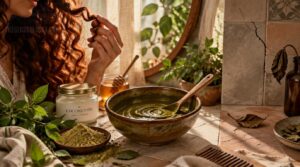
Henna brings a lot to the table for natural hair, but it’s not a one-size-fits-all solution. Before you mix that paste, you need to know both sides of the deal. Here’s what you’re actually working with.
Permanent Warm Color
Expect henna for natural hair to behave more like a permanent decision than a temporary experiment. Lawsone, the active dye molecule in this plant-based hair dye, binds directly to your hair fiber, creating long-lasting warm color that won’t just wash out.
On henna color black hair, the warmth reads coppery and subtle. Longer contact time means deeper color payoff overall.
Strength And Shine
The color isn’t the only win henna brings. Lawsone binds directly to your hair proteins, producing hair cuticle smoothing as a genuine side effect. That coating can increase strand robustness, which many naturals notice as less snagging during detangling.
Henna shine follows naturally because a flatter cuticle reflects light better, making your natural hair look noticeably glossier right after rinsing.
Curl Pattern Changes
That same coating messes with your natural hair texture too. It shifts how curls clump and dry, so curl pattern retention isn’t always a guarantee.
- High porosity hair shows more coating and tighter clumping
- Henna on 4C hair can trigger a curl loosening effect
- Uneven application creates patchy shifts in your pattern
- Curl preservation depends on processing time and saturation
Moisture And Buildup
Although henna builds shine and strength, it also lays down a surface film that can block product absorption and throw your hair porosity balance way off over time.
That film is also why colorists warn against dyeing over henna, since oxidative formulas can react unpredictably — this guide on how long henna lasts on straight hair explains the timeline.
| What You’ll Notice | The Reason |
|---|---|
| Hair feels stiff | Surface film from buildup |
| Poor moisture retention | Film blocks water entry |
| Hair hydration dropping | Henna can dry out hair |
Clarify monthly to reset everything.
Color Compatibility Limits
Many color goals honestly just don’t vibe with henna for natural hair:
- Ash or cool tones can’t cut through that henna red glow
- Oxidative dyes behave unpredictably on previously hennaed strands
- Henna gray coverage hits lighter strands harder, so mottling happens
- Henna and indigo layering needs precise timing, or patchiness wins
Color depositing dyes are genuinely your safest post-henna move.
Safety Considerations
A client once told me her scalp felt on fire after a "henna" treatment. Turns out it was black henna, often spiked with PPD, a known allergen. That’s why henna patch testing matters.
If your scalp’s already stressed from a reaction like that, check this guide on how long to wait before dyeing your hair again before booking anything else.
Buy pure, body-art-quality powder, skip chemical mix-ins, and never apply over broken skin. If you feel burning, rinse immediately.
And yes, henna dry out hair sometimes, so deep condition after.
A rich deep conditioner for dry hair works wonders right after rinsing out the henna.
How Does Henna Affect Curls, Porosity, and Dryness?
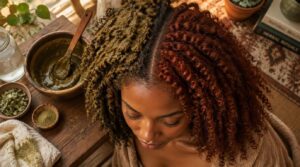
Picture your curls like fresh bread that just came out the oven, then got wrapped in cling film overnight. That’s basically what a henna hair treatment does to your strands, especially henna on 4C hair. The lawsone settles into the cuticle, and your hair responds in ways you’ll feel before you see. If you’re weighing whether the trade-off is worth it, this guide to henna’s benefits and risks for natural hair breaks down what to expect before you mix your first batch.
Henna coats your curls like cling film over fresh bread, so expect changes you feel before you see
Here’s the real deal:
- Henna shrinkage is common, since a firmer shaft tightens curl clumps.
- Your hair porosity can creep up, so water gets in and out faster. This is especially worth knowing when blow-drying — pairing strong airflow with moderate heat, as outlined in this guide to faster hair-drying techniques that protect the cuticle, helps manage moisture without stressing already-sensitive strands.
- Some strands drink moisture while others stay rough, because deposition isn’t even.
- Dryness and brittleness often come from incomplete rinsing, not actual moisture loss.
- Deep conditioning afterward softens the coated layer as it settles.
Give it a week. Your curls usually relax back.
What Color Results Can Henna Produce on Dark and Gray Hair?
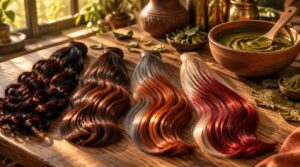
Your starting color tells the whole story. Henna on 4C hair with dark pigment delivers warm undertones rather than the bold red you’d see on lighter strands.
| Starting Color | Expected Result | Notes |
|---|---|---|
| Dark black | Subtle red-brown glow | Most visible in sunlight |
| Medium brown | Richer auburn shift | Builds with repeat apps |
| Gray or white | Bright copper/orange | Grabs color fast |
| Chemically lightened | Deep red saturation | Porosity speeds results |
Henna for gray hair is where things get dramatic. Without melanin, those strands absorb color fast, often turning copper while darker lengths barely shift.
This henna hair treatment always builds over time. Going red to dark brown requires indigo across multiple sessions. Keeping your routine henna all natural means patience is the real ingredient.
How Do You Apply Henna to Natural Hair Safely?
Henna works best when you treat it like a process, not just a product. How you prep, mix, and apply it makes the difference between glowing results and a frustrating mess. Here’s exactly what you need to know before you touch that powder.
Choosing Pure Henna Safely
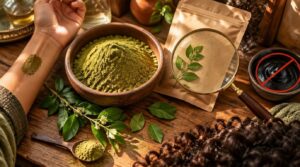
Not all henna is giving what it should, and that’s the whole point of henna safety.
Your ingredient list is everything: pure henna should say Lawsonia inermis and that’s it. Skip black henna completely; it often contains PPD and can cause a real allergic reaction to henna. Body art quality powder is your safest bet. Patch test. Every single time.
Full-Strength Henna Vs Henna Gloss
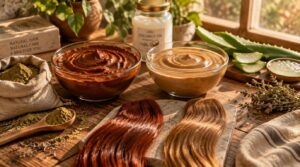
Once you’ve got your pure powder locked in, you need to decide how exactly you’re using it.
Full-strength henna deposits more dye, giving you deeper, longer-lasting warmth and more uniform coverage.
A henna gloss is gentler, conditioning-forward, and better for subtle shifts.
On resistant grays, full-strength wins.
If your hair’s already dry, a gloss might honestly be the smarter call.
Mixing With Amla or Indigo
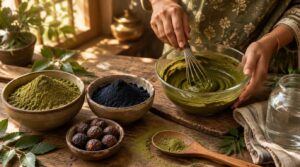
Now, about additives. Amla boosts acidity, which can deepen dye uptake, but it shifts your paste’s pH and may leave residue if you don’t rinse well.
Mixing henna and indigo in one bath? That’s risky; indigo depletes and your color skews brassy. For darker, cooler results, apply henna first, rinse thoroughly, then layer indigo separately. Timing and rinse quality make or break your shade.
Fresh, finely sifted indigo powder for hair dye releases pigment faster, so apply it promptly after rinsing out the henna.
Patch and Strand Testing
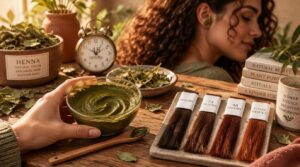
Before you slather that paste everywhere, test it. Do a patch test behind your ear or inner arm, 48 hours minimum, to catch an allergic reaction to hair dye before it hits your scalp.
Then grab a hidden strand, apply, and judge color after full drydown. Wet hair lies, boo. Match your test timing to your real henna application techniques, or your results won’t translate.
Application and Moisture Aftercare
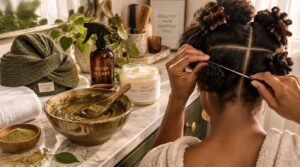
Tested and cleared? Now let’s talk technique. Your henna paste preparation matters: mix it, let it release dye 6 to 12 hours, then apply to clean, product-free hair. Saturate every strand evenly, or you’ll get patchy color, boo.
- Section hair in four for full coverage.
- Wrap 2 to 4 hours minimum.
- Rinse cool until water runs clear.
- Follow with a henna conditioner mix.
Henna feels stiff at first because it seals in moisture less than it coats. That’s normal. Prioritize natural hair moisturizing afterward, deep condition, and go easy on heat while that fresh coating settles.
Frequency and Root Maintenance
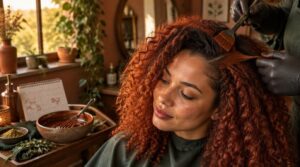
Roots tell the truth about your henna routine. That regrowth line? It’s your cue.
Most of us do root-only treatments every 4 to 6 weeks, blending slightly into old color so you don’t get that harsh demarcation. Wait too long and the contrast gets loud.
Frequent applications build depth, but residue builds too, so your natural hair needs clarifying between sessions.
Chemical Color Compatibility
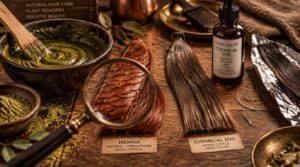
Color compatibility matters most if you plan chemical dye later. Henna coats the shaft, so oxidative dye results can turn patchy or brassy, especially over previously colored or gray strands.
True henna stain removal takes months of fading, not one session. If you used henna and indigo mixing or products with metallic salts, strand test first.
Otherwise, stick to chemicalfree hair dye.
Frequently Asked Questions (FAQs)
What is the downside of henna in hair?
Honey, henna’s not harmless. The downsides? Dryness and lack of elasticity, curl pattern loosening, that stubborn red-orange residue blocking chemical dyes, plus hair dye sensitivity from adulterated mixes. Patch test everything.
Does henna turn hair black?
Short answer: no. Pure henna stains red-brown, never black. That "black henna" look? It’s usually indigo mixed in, or worse, PPD, a chemical that can burn your scalp. Stick with plantbased hair dye you can actually trace.
Can I use henna on my 4c hair?
Yes, you can! Henna for natural hair works beautifully on 4c coils. Just grab pure Lawsonia inermis, skip "black henna," and strand-test first, because hair porosity and dye absorption vary across sections.
Who should not apply henna on hair?
Think of your scalp as soil; damaged soil rejects seeds. Skip henna if you have lawsone allergies, active scalp irritation, cracked skin, or recent chemical processing. Avoid black henna entirely; hidden metal salts cause serious reactions.
Can henna be used on relaxed or transitioned hair?
You can, trust me. Relaxed strands grab henna deeper but patchier, so expect uneven tone. Transitioned hair shows contrast between roots and lengths. Strand test first, and keep up that hair porosity sealing.
If the patchiness does turn brassy or green-tinged, this guide on what color will cover green hair dye explains how to correct it without another bleach session.
How long does henna color last on hair?
My client Keisha’s copper henna stayed rich about five weeks before her roots betrayed her. Expect 4–6 weeks of hair color longevity. Washing frequency, porosity, and heat affect longlasting color, so plan your henna frequency accordingly.
Does henna work the same on all hair types?
Short answer? Nope. Henna for natural hair reacts to your porosity and texture. Coily strands grab color deeper, loose curls show warmth differently. Same batch, different results. Test a strand first, always.
Can henna be mixed with oils or butters?
Short answer: you can, but I don’t recommend it. Oils and butters coat strands, blocking dye contact, so mixing henna with coconut oil or shea gives patchier color.
If you want slip, add a few drops of jojoba oil or lavender essential oils after dye release, right before application. Keep the actual mix water-based for even, reliable stains.
What ingredients should be avoided in henna products?
Flip that label, love. Avoid metallic salts, PPD, "carbon black," fragrance, parfum, mystery additives, and indigo blends if you want pure, plantbased and nontoxic henna. If the list reads vague, that’s your answer: skip it.
Conclusion
Worried henna means saying goodbye to your curl pattern forever? Not if you respect the process.
So, can I use henna for natural hair? Yes, but treat it like a commitment, not a quickie.
Buy pure body-art quality henna, strand test like your edges depend on it, and follow up with deep moisture. Do that, and you’ll get color that shines and strands that hold strong. Your curls will thank you.