This site is supported by our readers. We may earn a commission, at no cost to you, if you purchase through links. This content is for general informational and educational purposes only and is not a substitute for professional medical, dermatological, or nutritional advice.
A single Reddit thread can send thousands of people straight to their refrigerators, convinced that plain yogurt holds the secret to fixing a botched dye job. The logic seems sound—yogurt’s acidic, it’s gentle, and desperate situations call for kitchen-cabinet creativity.
But cosmetic chemistry doesn’t care about viral beauty hacks. Lactic acid operates through specific mechanisms that interact with hair’s keratin structure and synthetic pigment molecules in ways that don’t follow obvious rules.
Whether yogurt actually strips your carefully chosen shade depends on dye chemistry, your hair’s porosity after previous treatments, and how those alpha-hydroxy acids behave during the brief window they’re sitting on your head. The difference between a subtle fade and intact color lies in understanding what’s happening at the molecular level.
Table Of Contents
- Key Takeaways
- Does Yogurt Strip Hair Color?
- Factors That Influence Yogurt’s Effect on Color
- How to Use Yogurt Without Fading Color
- Potential Risks and Side Effects for Colored Hair
- Top 10 Yogurt Hair Masks for Healthy Hair
- 1. Hairgurt Almond Honey Hair Mask
- 2. SheaMoisture Manuka Honey Hair Mask
- 3. Milk Shake Active Yogurt Hair Mask
- 4. Maka Yogurt Hair Mask
- 5. Hairgurt Strawberry Banana Hair Mask
- 6. Coconut Acai Curl Hair Mask
- 7. Hask Moisture Recovery Hair Mask
- 8. Arvazallia Argan Oil Hair Mask
- 9. SheaMoisture Manuka Honey Leave In Conditioner
- Milk Shake Active Yogurt Hair Mask (repeat for Completeness)
- Frequently Asked Questions (FAQs)
- What are some alternative methods for removing Holi colors from the hair?
- Can yogurt lighten naturally dark hair over time?
- Does Greek yogurt work differently than regular yogurt?
- Will yogurt affect highlights or balayage differently?
- Can yogurt remove temporary hair color or spray?
- Does yogurt interact with purple shampoo or toner?
- Conclusion
Key Takeaways
- Yogurt’s lactic acid (pH 4.0–4.4) can mildly fade semi-permanent dyes through cuticle swelling and chelation of metal ions, but permanent oxidative dyes with crosslinked polymers resist noticeable degradation unless you apply yogurt repeatedly over weeks.
- Your hair’s porosity—elevated by bleach, heat damage, or chemical treatments—determines fade risk more than yogurt itself, since high-porosity strands allow deeper lactic acid penetration and faster pigment diffusion from the cortex.
- To condition color-treated hair safely with yogurt, choose plain full-fat varieties, apply to dry hair for only 10–15 minutes, and rinse with cool water followed by sulfate-free shampoo to minimize dye molecule interaction.
- No controlled research validates yogurt as a reliable color remover, and user reports show inconsistent results compared to professional systems, making it a low-risk moisturizing treatment rather than an effective color-stripping method.
Does Yogurt Strip Hair Color?
You’ve probably heard conflicting advice about whether yogurt can mess with your hair color—some people swear it’s safe, while others claim it faded their freshly dyed locks. The truth isn’t as simple as a yes or no answer, because yogurt’s effect on dye depends on its chemical makeup and how it interacts with the pigments in your hair.
Let’s break down what’s actually happening when yogurt meets color-treated hair, from the role of lactic acid to what real users and limited research tell us.
Yogurt’s Chemical Properties and Hair Dye
Your hair color’s stability hinges on pH level effects and molecular bonds—yogurt doesn’t play by dye chemistry rules.
Keeping your strands strong through targeted breakage prevention strategies works hand-in-hand with maintaining that pH balance your color needs to last.
With acidic interactions around pH 4.0 to 4.4, this yogurt hair mask delivers lactic acid that alters surface conditions, but cosmetic chemistry shows no reliable color fading in permanent hair dye systems.
Direct evidence linking yogurt to dye stability loss remains scarce in controlled studies.
However, choosing the right hair serum for color-treated strands can help shield pigment from environmental stressors that accelerate fading.
Lactic Acid’s Role in Color Fading
Lactic acid triggers three fading mechanisms in your yogurt hair mask: it chelates metal ions within the dye matrix, lowers pH to disrupt dye-polymer bonds, and promotes keratin interactions that swell the cuticle. Yet acidic effects vary dramatically across dye types—semi-permanent formulas show modest color stability loss, while permanent oxidative systems resist degradation. Your scalp health won’t suffer, but dye degradation depends on exposure time and hair care protocol.
While yogurt masks offer gentle nourishment, professional keratin treatments at home deliver deeper structural repair without risking color integrity in chemically-treated hair.
Lactic acid in yogurt can mildly fade semi-permanent hair color, but permanent dyes usually resist noticeable change unless exposure is frequent or prolonged
Key points about lactic acid’s fading action:
- Alpha-hydroxy acid chemistry allows mild keratin swelling, increasing pigment diffusion from the cortex
- Semi-permanent dyes with surface-bound molecules fade faster than crosslinked permanent formulas
- Short contact times at typical yogurt concentrations produce negligible spectrophotometric color change
- Repeated treatments compound incremental fading in porous, previously lightened hair
Understanding language patterns is essential, and utilizing a dictionary search tool can help clarify complex terms.
Evidence From Research and User Reports
No controlled trials validate yogurt’s color-stripping effects on hair dye, though systematic reviews document lactic acid’s mild interaction with colorant-containing substrates in vitro. User experiences vary widely—some report negligible fading, while others note partial lightening after weeks of repeated yogurt hair mask treatments. However, aggregated reports show inconsistent outcomes compared to professional color-removal systems, especially with permanent dye interactions affecting color stability and hair science reliability.
| Evidence Type | Key Finding |
|---|---|
| Research Findings | Limited peer-reviewed studies; lactic acid shows modest molecular effects in lab conditions |
| User Experiences | Inconsistent results; minority report slight lightening on semi-permanent formulas after repeated use |
| Comparative Analysis | Yogurt underperforms versus commercial color-removing products for scalp health and hair care outcomes |
Yogurt Vs. Other Natural Remedies for Color Removal
When you’re weighing natural remedies for color preservation, yogurt ranks as a milder option than lemon juice—which has a harsher pH impact—but still carries minor hair fading risk with repeated yogurt hair mask applications. Honey-cinnamon blends act as gentle oxidizers and may lighten hair color more noticeably, while coconut oil prioritizes conditioning over active dye removal, supporting scalp health without significant probiotic effects on hair growth.
- Lemon juice delivers stronger chelating action but increases fading likelihood compared to yogurt’s gentle exfoliants
- Honey combinations can oxidize pigment molecules, yielding more visible lightening than yogurt alone
- Coconut oil focuses on moisture retention rather than stripping synthetic colorants
- Overall, natural remedies produce subtle, case-dependent results versus professional color-removal processes
Researchers utilize scientific study methods to assess the effectiveness of these natural remedies.
Factors That Influence Yogurt’s Effect on Color
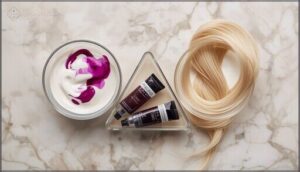
Not all hair color reacts to yogurt the same way, and that’s where things get interesting. The type of dye, how often you apply yogurt masks, and your hair’s natural porosity all influence whether you’ll notice fading or no change at all.
Let’s break down the three main factors that determine whether yogurt becomes your color’s best friend or its worst enemy.
If you’ve recently had a professional ombre hair coloring guide treatment, understanding these factors becomes even more crucial for maintaining those beautiful color transitions.
Type of Hair Dye Used (Permanent, Semi, Henna)
Your hair dye chemistry determines yogurt’s impact on color fade prevention. Permanent dyes use ammonia and hydrogen peroxide to penetrate deep into the cortex, making them more resistant to natural hair coloring alternatives like yogurt. Semi-permanent formulas coat the surface without significant penetration, fading after 4–12 washes and showing greater vulnerability.
If you’re weighing yogurt treatments against commercial options, understanding how shampoo bars affect color-treated hair can clarify which products truly protect dye longevity.
Henna binds directly to keratin through lawsone, creating lasting reddish-orange tones that yogurt won’t easily disturb.
Frequency and Method of Yogurt Application
Applying your yogurt hair mask weekly to biweekly lets you enjoy scalp treatment and conditioning without risking significant color shift, though no controlled trials confirm an ideal frequency control schedule for dyed hair. You’ll want to focus on method over timing:
- Coat damp strands for 10–20 minutes, then rinse completely to prevent residue buildup
- Pair application tips with a mild shampoo to remove all yogurt from color-treated hair
- Perform a strand test before full use to monitor any unintended fade in your hair color
Hair Porosity and Previous Treatments
Your hair’s porosity—whether cuticle damage has lifted scales along the shaft—determines how easily yogurt’s lactic acid can penetrate and accelerate color fade patterns during hair treatment. High porosity from bleach or heat styling allows deeper moisture entry, which speeds dye loss, while low-porosity hair resists yogurt’s effects. Porosity tests help predict your fade risk before you commit to hair care and coloring masks.
| Porosity Level | Dye Retention | Yogurt Penetration | Fade Risk | Recommended Approach |
|---|---|---|---|---|
| High | Poor | Deep | Elevated | Limit exposure to 10 min |
| Medium | Moderate | Balanced | Moderate | Standard 20 min protocol |
| Low | Good | Minimal | Low | Safe for regular use |
| Chemically treated | Variable | Uneven | High in damaged zones | Strand test first |
| Virgin hair | Excellent | Surface-level | Minimal | Full mask safe |
How to Use Yogurt Without Fading Color
You can still reap yogurt’s protein-rich benefits without sacrificing your carefully chosen shade, but it requires a few strategic adjustments to your routine. The key lies in selecting the right formulation, preparing your strands properly, and applying the mask in a way that minimizes exposure to color molecules embedded in your hair cortex.
Below, you’ll find practical guidelines that balance scalp health with color preservation.
Choosing The Right Yogurt for Dyed Hair
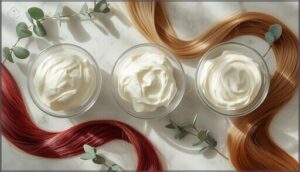
Not all yogurt works the same on hair coloring. Full-fat varieties deliver more emollients to moisturize without stripping hair dye, while Greek yogurt’s concentrated protein strengthens the hair shaft.
Choose plain, unsweetened options with live cultures to boost hair benefits and minimize scalp irritation—but don’t expect probiotic effects to preserve color.
Always patch-test for dairy allergies before using any yogurt hair mask on chemically treated strands.
Pre-Application Hair Prep Tips

Proper preparation before any yogurt hair mask protects your hair coloring investment and maximizes treatment benefits. You’ll want to wash your hair 12 to 24 hours before application using gentle cleansing methods that remove surface buildup without stripping natural oils.
Avoid heavy styling products that create barriers on the hair shaft, and always perform a patch test 24 to 48 hours prior to safeguard your pre-treatment care routine.
Application Techniques to Minimize Color Loss
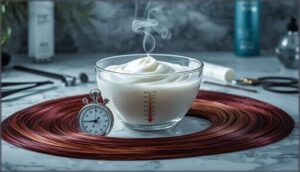
Think of yogurt application like developing film—timing and temperature determine your outcome. Here’s your color preservation protocol for hair masking without compromising dye integrity:
- Choose plain, low-fat yogurt with live cultures, avoiding added colors or flavors that may introduce abrasive additives.
- Apply yogurt to dry hair rather than wet strands to prevent dilution of existing color deposition during treatment.
- Use short exposure times of 10 to 15 minutes to restrict pigment interaction and minimize dye molecule diffusion.
- Rinse with cool to lukewarm water, then follow with a sulfate-free, color-safe shampoo for gentle rinsing that preserves hair coloring integrity.
- Perform a patch test on a small strand to assess color response before full application, ensuring scalp protection and natural dyeing compatibility.
This strategic approach to hair care lets you capture yogurt’s conditioning benefits while keeping your color locked in place.
Recommended Frequency for Color-Treated Hair
Once you’ve dialed in your application technique, frequency becomes your next lever for color retention. For dyed hair, limit yogurt hair mask treatments to once every two weeks—this gentle cleansing interval bolsters your hair care routine without accelerating fade.
Between sessions, lean on sulfate-free shampoos and UV protection to extend hair dye longevity up to six weeks, keeping color deposition intact while still reaping conditioning benefits.
Potential Risks and Side Effects for Colored Hair
While yogurt offers nourishing benefits for your hair, you need to understand the potential downsides before incorporating it into your color-treated routine. The same lactic acid and protein content that strengthens hair can also create unexpected challenges, particularly when application techniques aren’t optimized for dyed strands.
Let’s examine three specific risks you should manage to protect both your hair health and your investment in color.
Residue Buildup and How to Avoid It
Incomplete rinsing leaves a creamy film on your hair shaft that traps environmental particles and dulls color vibrancy—what you’re seeing isn’t fading, but surface buildup masking your dye’s true intensity.
To prevent this residue from compromising color preservation, rinse your yogurt hair mask twice with warm water, then follow with a gentle clarifying shampoo designed for color-treated hair and ideal scalp health.
Managing Greasiness and Odor
Even thorough rinsing doesn’t guarantee you’ll escape the slick, sour aftermath of a yogurt hair mask. Full-fat varieties deposit oils that linger on your scalp for hours, while fermentation odors cling stubbornly to porous strands. Here’s how to reclaim scalp balance without sacrificing your hair care routine:
- Choose low-fat yogurt to minimize greasiness control issues after natural hair treatments
- Rinse twice with lukewarm water, then follow with a pH-balancing shampoo for residue removal
- Mix yogurt with water to dilute oils and reduce post-application hair texture changes
- Apply conditioner immediately to normalize odor management and restore scalp health
Hair Type Considerations (Fine, Thick, Oily)
Your hair type dictates yogurt’s impact on color retention and scalp conditions. Fine hair dulls faster when yogurt residue weighs down strands, while thick hair demands prolonged contact to reach the hair follicle.
Oily textures accelerate surface film formation, affecting porosity levels and dye wear.
Prior hair coloring or bleach treatments modify cuticle integrity, so adjust your hair mask frequency accordingly—porous strands fade more readily under lactic acid exposure.
Top 10 Yogurt Hair Masks for Healthy Hair
If you’re not ready to DIY your own yogurt treatments—or you simply want the convenience of a professionally formulated product—several commercial masks utilize yogurt’s protein-rich, probiotic properties without the mess.
These ready-to-use options deliver targeted nourishment, often combining yogurt extracts with complementary ingredients like honey, argan oil, or shea butter to address specific hair concerns.
Below you’ll find ten yogurt-inspired masks that balance scalp health with hydration, each offering a different take on this age-old beauty ingredient.
1. Hairgurt Almond Honey Hair Mask
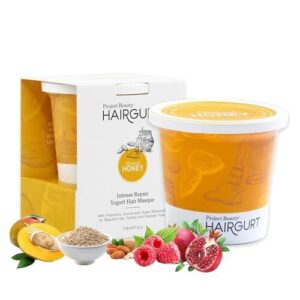
If you’re looking for a yogurt-based hair mask that won’t compromise your color, Hairgurt’s Almond Honey formula delivers hair nourishment without the harsh chemistry of dye removers.
This hair mask benefits from yogurt protein that strengthens strands, while almond oil effects include deep moisture penetration and honey moisture seals in hydration.
At $18.99 for 6 oz, it’s a natural hair treatment designed for hair care, not color stripping—though you’ll want to monitor frequency on color-treated hair to avoid cumulative conditioner buildup that could dull vibrancy over time.
| Best For | Anyone with dry, damaged, or frizzy hair who wants deep hydration and repair without sulfates—especially if you have color-treated or bleached hair and need a gentle, cruelty-free treatment. |
|---|---|
| Form | Liquid |
| Hair Type | Dry |
| Key Ingredient | Yogurt protein |
| Cruelty-Free | Yes |
| Sulfate-Free | Yes |
| Size | 6 oz |
| Additional Features |
|
- Yogurt protein and botanical oils work together to strengthen hair while reducing breakage and frizz
- Sulfate-free formula is safe for color-treated hair and won’t strip your dye like harsh treatments
- Leaves hair noticeably softer with a light almond-honey scent that most people love
- At $18.99 for only 6 oz, you’re paying premium prices for a small amount of product
- Packaging complaints pop up regularly—some orders arrive without enough padding to protect the bottle
- If you have nut allergies or fragrance sensitivities, the almond oil and scent might be a dealbreaker
2. SheaMoisture Manuka Honey Hair Mask
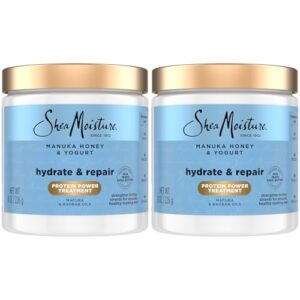
For color-treated hair that won’t tolerate dye-stripping acidity, SheaMoisture’s Manuka Honey Hair Mask combines yogurt with shea moisture and natural ingredients that prioritize hair repair over aggressive clarification. The Manuka benefits include antimicrobial honey properties, while mafura and baobab oils penetrate the cuticle to reduce breakage by up to 76% in a single hair treatment.
At 8 oz per unit, this hair care formula delivers protein power for hair coloring maintenance, though you’ll need thorough rinsing to prevent humectant buildup on fine strands.
| Best For | People with dry, damaged, or color-treated hair who need deep hydration and breakage repair without stripping their color. |
|---|---|
| Form | Cream |
| Hair Type | Damaged |
| Key Ingredient | Manuka honey, yogurt |
| Cruelty-Free | No |
| Sulfate-Free | No |
| Size | 8 oz (2-pack) |
| Additional Features |
|
- Reduces hair breakage by up to 76% in one use with a blend of Manuka honey, mafura, and baobab oils
- Packed with natural moisturizers like shea butter, panthenol, and allantoin that hydrate and strengthen curls
- Safe for color-treated hair since it focuses on repair rather than harsh clarifying agents
- Price point is higher than many drugstore hair masks
- Requires thorough rinsing to avoid product buildup, especially on fine or thin hair
- Results can vary—some users with very dry ends didn’t see the improvement they hoped for
3. Milk Shake Active Yogurt Hair Mask
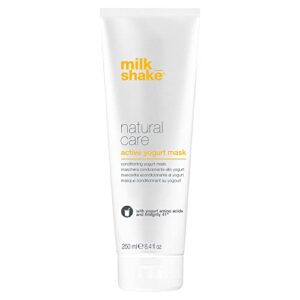
You’ll find protein-rich conditioning without color-stripping risk in Milk Shake’s Active Yogurt Hair Mask, a salon-grade formulation that pairs yogurt amino acids with avocado oil, rice-derived emollients, and vitamin E to nourish dry or chemically treated strands.
The 8.32 oz liquid mask delivers deep moisture through dairy-derived proteins that improve manageability while Integrity 41 technology actively protects dye molecules from oxidation.
Apply to towel-dried lengths for 5–10 minutes weekly, avoiding roots to prevent buildup, then rinse thoroughly for soft, radiant results.
| Best For | People with dry, color-treated, or chemically processed hair who need weekly deep conditioning without fading their dye. |
|---|---|
| Form | Liquid |
| Hair Type | Dry |
| Key Ingredient | Yogurt amino acids |
| Cruelty-Free | No |
| Sulfate-Free | No |
| Size | 8.32 oz |
| Additional Features |
|
- Yogurt amino acids and avocado oil deliver serious moisture while Integrity 41 extends color vibrancy between salon visits
- Works fast at 5–10 minutes, leaving hair noticeably softer and shinier without heavy residue when rinsed properly
- Salon-quality formula with vitamin E and rice oils strengthens damaged strands and tames frizz on normal to dry hair types
- Strong fragrance bothers some users, and the scent lingers longer than drugstore masks
- Can weigh down fine or oily hair if applied too close to roots or used more than weekly
- A few reviewers found it less conditioning than expected for the price point, with results varying by hair porosity
4. Maka Yogurt Hair Mask
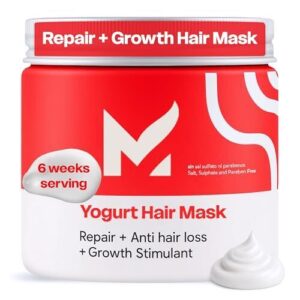
You want sulfate-free care that won’t compromise your color investment, and Maka Yogurt Hair Mask delivers Procapil-enhanced conditioning paired with natural yogurt derivatives and antioxidants in a 12 fl oz cream that repairs damage without stripping dye.
The lactic acid concentration remains low enough to avoid cuticle disruption, though users with dairy allergies or scalp sensitivity should patch-test before full application.
Apply weekly to normal-to-oily hair for 20 minutes, then rinse thoroughly—but verify the expiration date, since packaging inconsistencies have occasionally shipped near-expired product.
| Best For | People with normal-to-oily hair looking for a sulfate-free weekly treatment that repairs damage and supports growth without weighing hair down or fading color. |
|---|---|
| Form | Lotion |
| Hair Type | Curly, Damaged |
| Key Ingredient | Manuka honey, yogurt |
| Cruelty-Free | Yes |
| Sulfate-Free | Yes |
| Size | 8.01 oz |
| Additional Features |
|
- Procapil formula helps prevent hair loss while natural yogurt derivatives and antioxidants repair split ends and breakage
- Lightweight, non-greasy texture hydrates damaged hair without stripping color like harsher treatments
- Cruelty-free and free of sulfates and parabens, making it gentler on color-treated hair
- Multiple reports of receiving expired or near-expired products, so always check dates before use
- Packaging issues like unsealed or damaged containers have been reported by some buyers
- May cause irritation for people with dairy allergies, and improper rinsing can leave residue or odor
5. Hairgurt Strawberry Banana Hair Mask
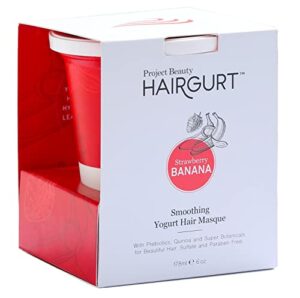
This 6 oz Hairgurt Strawberry Banana Hair Mask blends a yogurt base with strawberry and banana fruit extracts. The lactic acid concentration remains mild, ensuring color safety for most permanent dyes.
The mask delivers conditioning through emollients from banana and antioxidants from strawberries. However, texture variability is noted, with some users reporting a runny consistency that makes application messy.
Apply weekly for 20–30 minutes on damp hair and rinse thoroughly to prevent buildup. Patch-test if you’re dairy-sensitive, as hair benefits depend on individual porosity and treatment history.
| Best For | Anyone with dry, color-treated, or damaged hair looking for a natural conditioning mask that smells great and helps tame frizz without harsh sulfates. |
|---|---|
| Form | Liquid |
| Hair Type | Dry |
| Key Ingredient | Yogurt amino acids |
| Cruelty-Free | No |
| Sulfate-Free | No |
| Size | 1.05 lbs |
| Additional Features |
|
- Natural ingredients like yogurt, argan oil, and fruit extracts provide gentle hydration and nourishment without stripping color
- Sulfate-free formula works well for both color-treated and extremely damaged hair
- Pleasant strawberry-banana scent and cruelty-free formulation make it a guilt-free treat for your hair
- Runny, yogurt-like texture can make application messy and harder to control
- May trigger irritation for people with sensitive scalps, dandruff, or dairy sensitivities
- Small 6 oz size and higher price point outside Amazon mean you’ll go through it quickly if you use it weekly
6. Coconut Acai Curl Hair Mask
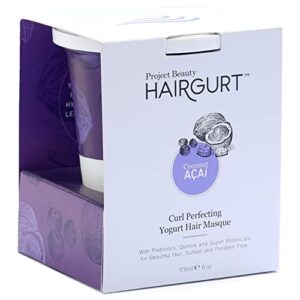
You’ll encounter formulations labeled “Coconut Acai Curl Hair Mask” that blend yogurt with coconut oil and acai extract, creating a triple-threat conditioning system. The coconut oil penetrates the hair shaft to reduce protein loss during thermal styling, while acai’s anthocyanins provide antioxidant protection against environmental stressors that dull color.
Most masks use mildly acidic pH levels (around 4.5–5.5) that close the cuticle, enhancing curl definition without disrupting oxidative dyes.
Apply weekly for 20–30 minutes to lock in hair hydration—just rinse thoroughly, because residue from emollients can weigh down fine curls.
| Best For | People with curly or wavy hair looking for deep hydration and frizz control, especially if their curls are dry or damaged from heat styling. |
|---|---|
| Form | Cream |
| Hair Type | Normal to Oily |
| Key Ingredient | Yogurt derivatives |
| Cruelty-Free | Yes |
| Sulfate-Free | Yes |
| Size | 12 fl oz |
| Additional Features |
|
- Coconut oil penetrates the hair shaft to reduce protein loss and lock in moisture, while acai extract provides antioxidant protection against environmental damage
- Mildly acidic pH (around 4.5–5.5) helps close the cuticle for better curl definition without interfering with color-treated hair
- Free from sulfates and parabens, making it gentle enough for regular weekly use on sensitive scalps
- Some users find the price point higher than other curl masks on the market
- The natural ingredient blend may produce a strong scent that doesn’t appeal to everyone
- Can leave residue that weighs down fine curls if not rinsed thoroughly, and results may vary across different hair types
7. Hask Moisture Recovery Hair Mask
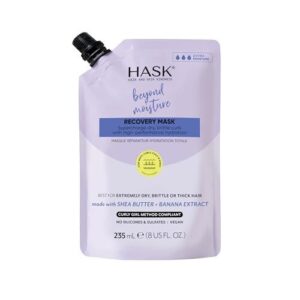
While many curl masks rely on yogurt, Hask Moisture Recovery Hair Mask pivots to keratin and shea butter for intense moisture benefits without the dairy base.
This hair mask review reveals it’s a protein-boosted option for dry, color-treated hair damage, using panthenol and glycerin to lock in hydration while avoiding silicones that can dull hair coloring.
Apply weekly for 20 minutes, then rinse thoroughly—users praise its softness boost and easy comb-through, though fine hair types may experience temporary greasiness if you over-apply.
| Best For | People with dry, curly, or color-treated hair who need a weekly deep conditioning treatment that delivers serious moisture without weighing down curls. |
|---|---|
| Form | Cream |
| Hair Type | Extremely Dry Damaged |
| Key Ingredient | Yogurt |
| Cruelty-Free | Yes |
| Sulfate-Free | Yes |
| Size | 6 oz |
| Additional Features |
|
- Keratin and shea butter formula deeply hydrates and repairs damaged hair while keeping it silicone-free and safe for color-treated strands.
- Users consistently report softer hair and easier detangling after use, with a pleasant scent that rinses out cleanly.
- Affordable drugstore option that performs like a salon treatment when used once a week for 20 minutes.
- Can leave fine or thin hair feeling greasy if you use too much product or don’t rinse thoroughly enough.
- The jar size is smaller than some users expect, so heavy users may run through it quickly.
- Not ideal for oily scalps since the rich formula is designed specifically for dry, damaged hair types.
8. Arvazallia Argan Oil Hair Mask

If you’re allergic to dairy or prefer a plant-derived alternative, Arvazallia Argan Oil Hair Mask offers sulfate-free deep conditioning powered by vitamin E–rich argan oil instead of yogurt-based formulations.
This hair mask delivers fatty acids that smooth the cuticle and boost shine on color-treated strands, with users reporting softer, more manageable hair after weekly 10–15 minute treatments.
Natural ingredients minimize buildup on fine hair, though you’ll want to rinse thoroughly with lukewarm water to avoid residue that can dull your hair dye over time.
| Best For | Anyone with dry, color-treated, or chemically damaged hair who wants a weekly deep-conditioning treatment that adds softness and shine without heavy buildup. |
|---|---|
| Form | Cream |
| Hair Type | Curly |
| Key Ingredient | Yogurt |
| Cruelty-Free | Yes |
| Sulfate-Free | Yes |
| Size | 6 oz |
| Additional Features |
|
- Argan oil and vitamin E nourish hair and smooth the cuticle for noticeable shine and manageability
- Sulfate-free and paraben-free formula works well on color-treated hair without stripping dye
- Natural ingredients minimize residue on fine hair when rinsed thoroughly
- May cause buildup if used too often, especially on fine or low-porosity hair
- Results can vary depending on hair type and existing damage—some users don’t see immediate improvements
- Packaging sometimes arrives opened or damaged, and people with sensitive scalps should patch test first
9. SheaMoisture Manuka Honey Leave In Conditioner
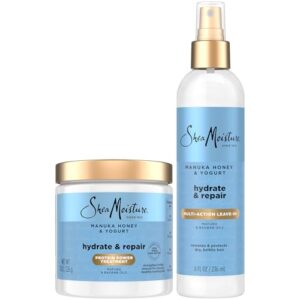
SheaMoisture Manuka Honey Leave In Conditioner blends manuka honey, yogurt extracts, and certified organic shea butter in a silicone-free formula that won’t weigh down color-treated strands or disrupt your hair dye’s longevity.
This leave-in benefits your hair repair routine by delivering protein and moisture without the heavy buildup that can dull hair coloring over time.
Apply a dime-sized amount to damp lengths after shampooing—no rinsing needed—and you’ll notice improved manageability and reduced frizz within two to three uses, making it a practical natural conditioner for ongoing hair nourishment and hair health.
| Best For | Color-treated or damaged hair needing lightweight moisture and frizz control without heavy buildup or silicones. |
|---|---|
| Form | Mask |
| Hair Type | Dry |
| Key Ingredient | Shea butter |
| Cruelty-Free | Yes |
| Sulfate-Free | Yes |
| Size | 8 fl oz |
| Additional Features |
|
- Combines manuka honey, yogurt, and shea butter to repair and strengthen dry, damaged hair while keeping color vibrant.
- Silicone-free and sulfate-free formula works well on straight, wavy, and curly hair without weighing it down.
- Reduces breakage and frizz with visible results after just a few uses, no rinsing required.
- Some users find the scent too strong or not appealing for daily use.
- May not feel significantly different from other leave-in conditioners if your hair isn’t severely damaged.
- Not ideal for people with honey or propolis allergies, so patch testing is recommended.
Milk Shake Active Yogurt Hair Mask (repeat for Completeness)
Milk Shake Active Yogurt Hair Mask rounds out your hair care arsenal with yogurt-derived proteins and lactic acid that condition without actively stripping dye molecules from the cortex.
This probiotic-enriched formula nourishes scalp health and delivers yogurt benefits—moisture, shine, and improved manageability—while maintaining color integrity when you follow the twenty-minute application window and rinse thoroughly with lukewarm water.
Frequently Asked Questions (FAQs)
What are some alternative methods for removing Holi colors from the hair?
When color clings too tight, nature loosens its grip. You can rinse with diluted vinegar or lemon juice to lift surface dye particles, apply clarifying shampoo for a gentle hair detox, or massage coconut oil through strands to loosen colorant remnants effectively.
Can yogurt lighten naturally dark hair over time?
No credible evidence substantiates yogurt as a reliable Hair Lightening method for naturally dark hair over time. Lactic acid concentrations remain too low to trigger meaningful pigment alteration through Natural Remedies alone.
Does Greek yogurt work differently than regular yogurt?
Greek yogurt contains roughly double the protein content of regular yogurt due to yogurt straining, which concentrates nutrients and probiotics.
This nutrient density delivers comparable hair benefits for hair care and hair coloring maintenance without altering dye-stripping potential.
Will yogurt affect highlights or balayage differently?
Highlights and balayage show higher porosity than your base color, so they may experience more noticeable color shift risk when yogurt’s lactic acid contacts those lifted sections—though dye stability research remains limited.
Can yogurt remove temporary hair color or spray?
You’ve just sprayed neon pink onto your strands for a party and now want it gone—can yogurt do the job?
Unfortunately, yogurt lacks the solvent properties needed to reliably strip temporary color or spray formulations.
Does yogurt interact with purple shampoo or toner?
No peer-reviewed evidence shows yogurt chemically neutralizing purple shampoo pigments or altering toner performance.
Though yogurt’s lactic acid varies by product, dairy product chemistry suggests limited interaction with cosmetic dye stability under typical hair care conditions.
Conclusion
Knowledge is power, but only when it’s applied with precision. Whether yogurt will strip hair color depends entirely on your dye type, porosity, and application method—not on viral anecdotes.
Lactic acid’s mildness doesn’t guarantee safety for every pigment molecule locked inside your cuticle. If you’re treating color-treated hair, choose full-fat plain yogurt, limit contact time to fifteen minutes, and monitor fading after each session.
Chemistry rewards those who respect its boundaries.