This site is supported by our readers. We may earn a commission, at no cost to you, if you purchase through links. This content is for general informational and educational purposes only and is not a substitute for professional medical, dermatological, or nutritional advice.

Most salon clients underestimate how much a single technique separates a stunning ombre from a patchy, grown-out mistake. The difference rarely comes down to the shade you choose—it comes down to understanding how light moves through hair and where color should actually begin.
Ombre works because it mimics what sun exposure does naturally, creating depth at the root and luminosity at the ends.
Done right, it’s one of the most forgiving color services available, hiding weeks of regrowth without a visible line.
This professional ombre hair coloring guide walks you through every decision that matters, from shade selection and skin tone matching to application technique and long-term maintenance.
Table Of Contents
- Key Takeaways
- What Ombre Hair Really Means
- Choose The Best Ombre Shades
- Match Ombre to Skin Tone
- Assess Hair Type and Condition
- Gather Professional Ombre Tools
- Prepare Hair Before Coloring
- Mix Formulas and Plan Processing
- Apply Ombre for Seamless Blend
- Rinse, Tone, and Finish
- Maintain Ombre After Coloring
- Frequently Asked Questions (FAQs)
- What is ombré hair color?
- How do you color ombré hair?
- Is ombré a good color?
- What is the difference between Ombre and reverse Ombre hair color?
- How do hairdressers do ombre hair?
- What hair color goes best with rosacea?
- Can HRT affect hair dye?
- What colors work best for ombré?
- How can ombré be adapted for curly hair?
- What are the best ombré styles for short hair?
- Conclusion
Key Takeaways
- Ombre stays low-maintenance because darker roots naturally camouflage regrowth, stretching your refresh interval to 12–14 weeks without looking overdue.
- Matching your shade to your skin’s undertone — warm tones toward gold and caramel, cool tones toward ash and silver — is what keeps the gradient flattering rather than washed out.
- Hair condition dictates everything: porosity, elasticity, and prior color history determine your developer strength, processing time, and whether you need bond-building prep before any bleach touches the strand.
- A seamless blend comes down to technique — teasing the transition zone, feathering product upward with light brush pressure, and fully saturating the ends — not just the shade you choose.
What Ombre Hair Really Means
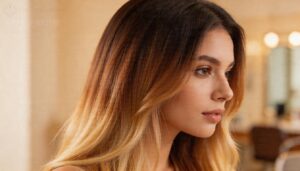
Ombre is one of those techniques that looks smooth but real intention behind every shade shift. Before you pick up a brush or choose your colors, it helps to understand exactly what makes ombre different from everything else out there.
Understanding that distinction gets a lot clearer when you explore how balayage and ombre actually differ in technique and result.
Here’s what you need to know first.
Definition and Signature Dark-to-light Gradient
Ombré is built on one simple idea: dark roots fade into lighter ends through a deliberate gradient blending. That downward shift in color placement creates visual depth you can’t get from a flat all-over tint.
Here’s what defines a true ombré:
- Dark roots anchor the look with grounded contrast ratio
- The blending zone blends shades across several inches
- Gradient direction always flows downward, root to tip
- Lighter ends deliver the payoff—bright, dimensional, intentional
Maintaining a regular moisturizing routine[https://p-de-p.co.uk/ombre-colouring-technique-the-secrets-of-perfect-colour-transition/) helps keep the lightened ends healthy.
Ombre Vs Balayage Vs Sombré
These three techniques look similar at first glance, but they each serve a different client preference.
Ombré delivers bold contrast intensity—roots stay dark, ends go light, and the shift is obvious.
Balayage is painted freehand for a sun-kissed, dimensional result.
Sombré softens ombré’s edge with a gentler fade timeline.
The technique cost and stylist skill required also increase as contrast deepens.
Why Ombre Stays Low-maintenance
Low-maintenance hair color doesn’t get much smarter than ombre. Because the roots stay darker, Root Growth Camouflage is built right into the design—new growth blends in rather than clashing.
Ombre is the rare color technique where growing roots are part of the design, not a problem to fix
That means an Extended Refresh Interval of 12 to 14 weeks feels completely intentional, not overdue.
- Darker roots disguise regrowth naturally
- Color sits mid-length down, offering Reduced Chemical Exposure at the scalp
- Natural Fade Integration keeps the style looking polished as ends soften
- A Simplified Styling Routine maintains dimension without constant salon visits
Best Hair Lengths for Smooth Transitions
Your hair length shapes how smooth that gradient shift actually looks.
Long Hair Flow gives stylists room to stretch the fade naturally, while Mid-Back Gradient creates a polished, multi-inch sweep with real dimension.
Shoulder Length Benefits a softer finish where the blend starts at mid-lengths. Short Hair Precision demands careful placement.
A smart Layered Length Strategy across short, medium, and long ombre hairstyles keeps every gradient looking intentional.
Choose The Best Ombre Shades
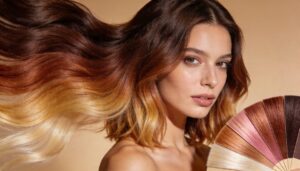
The shade you choose makes or breaks your ombre, so it’s worth thinking through your options before you commit. Your base color, skin tone, and lifestyle all play a role in what’s going to look intentional rather than accidental.
Here are the most popular directions to explore.
Natural Brown, Blonde, Red, and Black Ombre Ideas
Your base color sets the whole story. Whether you’re chasing Celebrity Ombre Inspiration or building on Color Theory Basics, the right pairing makes all the difference:
- Brown ombre: roots into caramel, honey, or golden blonde for a natural sun-kissed fade
- Blonde ombre: darker roots melting into platinum or ash ends
- Red ombre: deep auburn shifting into copper or strawberry blonde tips
- Black ombre: espresso base fading into gray, blonde, or bold fashion accents
Warm Vs Cool Color Pairings
Think of it as Temperature Balance at work: warm undertones pair beautifully with golden, caramel, or copper ends, while cool undertones harmonize with ash, violet, or icy finishes.
This Undertone Harmony principle is pure color theory — it keeps your ombre hair color techniques looking cohesive rather than fighting your complexion. Visual Warmth flatters, and the right temperature simply makes everything click.
High-contrast Vs Soft-blend Looks
High-contrast ombre delivers bold Visual Impact — dark roots against bright ends create a graphic, high-impact style that photographs beautifully. Soft-blend ombre favors subtle gradient shift and better Growth Camouflage, making Maintenance Frequency lower.
During Client Consultation, Styling Flexibility matters: foilyage sharpens contrast, while hand-painting aids softer color blending. Brighter ends need more tone correction; softer fades stay wearable longer between ombre hair maintenance and aftercare appointments.
Seasonal Ombre Color Trends
Your color gradient doesn’t have to fight the season — it can move with it.
- Spring pastel tones like blush and soft gold keep ends airy and fresh
- Summer sun-kissed caramel and honey add warm, beachy dimension in natural light
- Autumn copper and auburn ground the look with rich, earthy depth
- Winter icy platinum or smoky gray creates crisp, high-contrast seasonal accent tones
Tone correction and consistent color maintenance help each shade stay true as seasons shift.
Fashion Shades Like Pastel, Copper, and Silver
Fashion shades open the door to real creative range. Pastel ombré works beautifully when you keep the gradient shift soft — think blush, lavender, or mint fading into lightened ends, which aligns naturally with seasonal pastel palettes in spring collections.
Copper hair styling adds warm depth, while silver metallic finishes lean cool and sharp. Copper silver contrasts, toning, and deep conditioning, as part of your hair care routine, keep both looking polished.
Match Ombre to Skin Tone
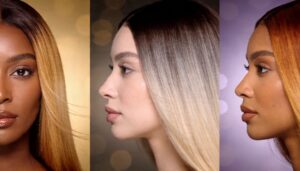
Choosing the right ombre shades isn’t just about what’s trending — it’s about what works with your specific coloring. Your skin tone is the most reliable guide for narrowing down shades that actually flatter you.
Here’s how to match your ombre to your undertones, eye color, and complexion.
Best Shades for Warm Undertones
Warm undertones glow best when your ombre stays in the golden-amber family from root to end. Shades like honeyed caramel, buttery blonde, and sunset copper echo the natural warmth in your complexion instead of fighting it.
Peachy highlights and amber ends keep the finish bright without looking harsh.
Avoid cool ash tones — they’ll dull your skin rather than complement it.
Best Shades for Cool Undertones
Cool undertones thrive on shades that echo silver, ash, and blue-leaning depth.
Think ash brown roots fading into ash beige midtones, or a blue-black finish with soft violet-black highlights for drama.
Silver brown ombre and icy blonde ends both keep the gradient crisp rather than muddy.
During your color consultation, steer toward cool families — they sharpen your complexion instead of competing with it.
Ombre Options for Neutral Undertones
Neutral undertones get the best of both worlds — you’re not locked into strictly warm or cool territory.
Here are five ombre hair color ideas that shine on neutral skin:
- Mushroom Brown Fade — taupe meets ash for a muted, modern finish
- Ash Beige Gradient — polished and balanced without pulling yellow
- Beige Caramel Shift — warm enough for dimension, soft enough to stay grounded
- Soft Rose Gold — works beautifully when the pink stays muted and creamy
- Neutral Gloss Finish — a toner refresh keeps lighter ends from shifting brassy
Each option lets your complexion breathe.
Picking Tones That Flatter Eye Color
Eye color quietly shapes which ombre shades feel magnetic versus flat. Think of the color wheel as your cheat sheet — complementary colors create contrast, while matched tones enhance depth.
| Eye Color | Best Gradient Hair Color |
|---|---|
| Blue | Copper or caramel ombre |
| Green | Light auburn or platinum |
| Hazel | Butterscotch or chestnut |
Brown Eye Warmth responds beautifully to honey blonde. Gray Eye Glow pops with silver-blonde ombre.
Avoiding Shades That Wash Out The Complexion
Beyond eye color, the bigger risk is choosing a shade that fights your skin instead of flattering it. Ashy or icy tones can drain warmth, leaving complexions looking gray.
Avoid over-highlighting near the face without Balanced Lightness in mind. Shade Temperature Harmony keeps things cohesive — complementary colors and Subtle Contrast work together, so your skin looks brighter, not washed out.
Assess Hair Type and Condition
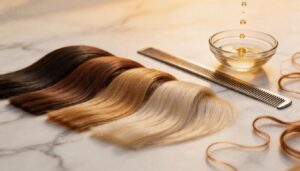
Before you mix single drop of color, your hair’s current condition will shape every decision that follows. Texture, history, and porosity all affect how ombre lifts, blends, and holds tone over time.
Here’s what to what to look at before you get started.
Ombre for Straight, Wavy, Curly, and Coily Hair
Your hair texture shapes everything about how ombre reads.
Straight hair contrast is sharp and unforgiving — the blend must be smooth, or every harsh line shows.
Wavy gradient softness naturally blurs transitions, giving that natural beachy finish.
Curly dimension boost comes built‑in, as coils catch light and shadow through the gradient.
Coily color lift can read as vibrant accents, so texture blending tips matter most here.
Virgin Hair Vs Previously Colored Hair
Whether your starting point is virgin or previously colored hair changes everything about professional ombre application methods.
Virgin hair offers predictable lift consistency and shade uniformity because natural pigment lifts cleanly.
Previously colored hair, though, can slow processing speed and compromise bond strength, making root growth visibility trickier to manage.
Hair health considerations for lightened ends matter more when old color is already in the strand.
Porosity, Elasticity, and Strand Testing
Think of porosity, elasticity, and strand testing as your pre-flight checklist.
A quick Porosity Water Test reveals whether your hair grabs moisture fast or resists it, directly shaping your Lift Timing Calibration. The Elasticity Stretch Test flags brittleness before lightener touches a strand.
Running a strand test confirms real Strand Color Response, so you adjust developer strength and protect hair moisture before committing fully.
When Damaged Hair Needs Repair First
Some hair simply isn’t ready for lightener yet—and pushing forward anyway can cost you more than just a bad result.
Before booking your ombre service, run a quick Damage Assessment:
- Split End Trimming removes frayed ends that no Cuticle Restoration product can fully repair.
- Bondbuilding treatments like Olaplex rebuild broken disulfide bonds before bleach weakens them further.
- Protein Treatments reinforce brittle strands prone to snapping under chemical stress.
- Hydration Therapy through deep conditioning restores moisture balance to porous, straw-like hair. If your hair dries within minutes and feels brittle to the touch, you’re likely dealing with flash drying hair, a sign it’s desperately thirsty for moisture.
- Postbleach hair nourishment planning ensures hair health considerations for lightened ends stay central throughout your color journey.
Medium and Long Hair Vs Short Hair Application
Your sectioning strategy and blend length shift completely depending on how much hair you’re working with. Medium and long hair give you room to stretch the gradient shift across several inches, which softens color visibility and makes product placement more forgiving.
Short hair compresses everything — the fade travels less distance, so precision matters more. Each length delivers a different styling finish, but all three can wear ombre beautifully.
Gather Professional Ombre Tools
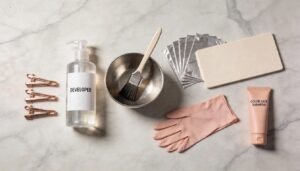
Before you touch a single strand, having the right tools in hand makes all the difference between a clean gradient and a streaky mess. Professional ombre isn’t just about technique — it’s about setting yourself up with the right equipment from the start.
Here’s exactly what you’ll need before you begin.
Non-metal Bowl, Brush, Clips, Gloves, and Cape
Your tools set the stage for everything that follows. A nonmetallic bowl ensures Bowl Material Safety—plastic or silicone won’t interfere with your formula’s chemistry.
Choose an applicator brush with firm Brush Bristle Stiffness for controlled feathering.
Sectioning clips with strong Clip Grip Design keep panels organized. Nitrile gloves offer reliable Glove Chemical Resistance, and a protective cape with Cape Waterproof Fabric guards your client’s clothing throughout.
Lightener, Developer, Toner, and Color Formulas
Once your bowl and brush are ready, your chemistry lineup matters just as much.
Lightener Oxidation Kinetics determine how fast melanin breaks down, so choose a professional bleach mixed at a 1:1 or 1:2 hair dye ratio. Match developer volume carefully—20 to 30 works for most lifts.
Apply toner afterward for precise Toner Deposit Control, using Complementary Pigment Theory to cancel brassiness cleanly.
Rat-tail Comb for Clean Sectioning
Your chemistry is dialed in—now your sectioning needs to match that precision. A rat‑tail comb is the unsung hero every professional stylist reaches for first.
Its Tapered Tail Design and Fine Teeth Spacing give you clean Precision Quadrant Division without snagging, while Heat‑Resistant Materials and Ergonomic Grip keep you comfortable through long sessions.
For smooth ombre hair coloring techniques across any hair type or texture, look for these features:
- Tapered tail under 1 mm wide for razor‑clean parts
- Fine teeth spaced 0.5–1 mm to smooth each section before color
- Carbon fiber or stainless steel construction that won’t warp under heat tools
- Lightweight body under 20 grams to reduce hand fatigue
- Non‑slip grip for steady control on wet, product‑coated hair
Foils, Teasing Combs, and Blending Brushes
Once your sections are clean, three tools take over the real artistry: foils, a teasing comb, and a blending brush.
| Tool | Role in Ombre |
|---|---|
| Foil Placement | Isolates sections for maximum lift and Saturation Control |
| Teasing Comb Technique | Softens the root edge for a diffused fade |
| Blending Brush Texture | Feathers color upward without hard lines |
| Tool Synergy | smooth gradient results |
Each one manages a different stage—isolation, diffusion, finishing—so together, they’re what separates a professional stylist’s foil ombre from a flat, streaky result.
Bond Builders and Post-color Conditioners
Protecting bleached hair from damage doesn’t stop with careful technique—it starts with what you add to your formula.
Bond builders work inside the cortex, targeting broken disulfide bonds through internal bond repair and strengthening protein complexes to keep strands resilient under lift.
Follow up with a post-color sealant conditioner for color longevity boost and color fade prevention, locking in your results from the inside out.
Prepare Hair Before Coloring
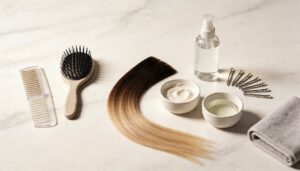
Good prep work is what separates a clean, professional ombre from a patchy mess you’ll regret. Before a single drop of bleach touches your hair, a few key steps lay the foundation for even lift and a smooth blend.
Here’s exactly what you need to do before coloring begins.
Washing Hair 24 to 48 Hours Before Service
Timing your wash right makes a real difference. Shampooing 24 to 48 hours before your appointment hits the sweet spot for scalp irritation reduction, oil barrier benefits, and color grip enhancement—without leaving hair weighed down or stripped.
- Your natural oils act as a buffer against bleach sensitivity
- Hair dryness management starts before you sit in the chair
- Proper appointment timing keeps residue from blocking even saturation
- Clean-but-settled hair sections more cleanly for precise gradient placement
Keeping Hair Dry, Clean, and Product-free
Dry, product-free hair isn’t just a preference — it’s how your colorist sees exactly what they’re working with. Residue from dry shampoo, hairspray, or styling creams creates a barrier that disrupts even color absorption during your Pre-Color Dryness Check.
| What to Avoid | Why It Matters |
|---|---|
| Dry shampoo buildup | Blocks consistent color penetration |
| Styling creams or gels | Leave films on the hair shaft |
| Leave-in conditioners | Interfere with lightener placement |
| Heavy oils or serums | Cause patchy, uneven lift |
A Clarifying Shampoo Routine removes that buildup far better than regular cleansers, supporting Product Buildup Prevention while keeping your Scalp Oil Management balanced — clean, not stripped — for a smooth, Residue-Free Styling canvas that your colorist can actually work with.
Protecting The Hairline and Ears
Before your colorist applies a single stroke, a thin layer of Protective Barrier Cream — petroleum jelly works perfectly — needs to sit just outside your hairline, keeping skin stain-free without blocking color at the roots. A quick Skin Sensitivity Check and Pre-Color Patch Test catch reactions early.
Add Disposable Ear Covers, since dye drips easily there, and keep a damp cotton pad nearby for a Gentle Hairline Wipe during application.
Dividing Hair Into Four Main Sections
Good sectioning is the backbone of any smooth gradient.
Start with Center Part Precision — draw a clean line from your forehead to your nape using a rat-tail comb. Then apply Crown Cross Alignment ear-to-ear, creating four balanced quadrants essential to the Step-by-Step Ombre Application Process:
- Front left and right frame your face evenly
- Back sections cover the occipital area cleanly
- Clip Placement Strategy secures each quadrant immediately
- Quadrant Balance Check confirms equal distribution
- Sectioning Tension Control keeps parting lines crisp
Setting a Clean and Safe Workstation
Your workstation is your command center — and a messy one leads to messy results.
| Station Element | What to Do | Why It Matters |
|---|---|---|
| Tool Sanitization | Soak metal tools 10+ minutes in EPA-grade disinfectant | Prevents cross-contamination |
| Barrier Placement | Use disposable neck strips and nitrile gloves | Protects client and stylist |
| Chemical Storage | Cap your developer volume, toner, and mixing bowl supplies tightly | Prevents oxidation and spills |
| Ventilation Management | Run exhaust fans outward while mixing lightener | Clears ammonia fumes safely |
| Waste Disposal | Separate chemical-soaked foils from regular trash immediately | Meets safety regulations |
After your strand test confirms lift, everything should already be in place.
Mix Formulas and Plan Processing
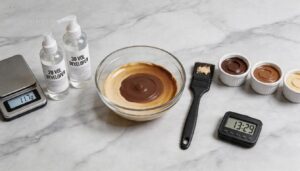
Getting your formula right before you touch the hair makes all the difference between a smooth gradient and a result you’re trying to fix.
The ratio, developer strength, and timing all work together, and a small miscalculation in any one of them can throw off the entire blend.
Here’s what you need to nail each variable.
Dye-to-developer Ratios for Ombre Formulas
Getting your dye developer ratio right is the foundation of every clean ombre blend.
A 1:1 mix gives you a thicker formula with stronger color deposit, ideal for saturating ends. A 1:2 ratio thins the mix consistency for softer, sheerer diffusion through the midlengths.
Always confirm your ratio guidelines with the brand, and run a strand test first — formula texture changes everything.
Choosing 10, 20, or 30 Volume Developer
Once your ratio is locked in, developer volume determines how far the lightener actually reaches.
- 10 volume (3% peroxide): gentle deposit, minimal lift, best for glossing
- 20 volume (6% peroxide): standard permanent color, solid gray coverage strategy, 1–2 levels of lift
- 30 volume (9% peroxide): hair bleaching power for darker bases needing brighter ends
- Bond protection matters most with 30 volume — it processes fast
- Color fading increases when developer volume exceeds what your hair actually needs
Adjusting Strength for Low- and High-porosity Hair
Developer volume doesn’t work the same way on every head — and hair porosity is exactly why.
| Hair Type | Formula Adjustment |
|---|---|
| Low-porosity | Use 20–30 volume + heat activation |
| High-porosity | Drop to 10–20 volume to prevent over-lift |
| Mixed porosity | Apply a porosity equalizer before bleach |
| Damaged ends | Prioritize bond strengthening first |
| Healthy virgin hair | Standard timing adjustments apply |
Low-porosity strands resist product, so gentle heat helps. High-porosity hair grabs fast — less developer protects it.
Processing Windows for Controlled Lift
Once your formula is applied, the clock starts — and zone timing takes over. Heat-sensitive lift means areas near the scalp process faster than the ends, so developer exposure isn’t equal across the head.
Track progressive checkpoints every 5–10 minutes. Target level timing sits between 20 and 45 minutes, depending on resistance.
Don’t walk away and hope for the best.
Monitoring Lift to Avoid Over-processing
Lift Check Intervals matter more than the timer. Wipe a small section clean every few minutes and trust what you see — not the clock.
- Watch for gummy or stretchy texture — stop immediately
- Run Section Visual Checks on thin panels first
- Match Developer Strength Control to porosity before starting
- Use Hair Texture Indicators over strand test timing alone
- Protect bonds throughout the lightening process
Apply Ombre for Seamless Blend
This is where your technique choices make or break the final result. The way you move the product through the hair determines whether you get a clean, smooth fade or a stripe that screams "box dye."
Here are the core application methods every colorist should know.
Hand-painted Ombre Technique
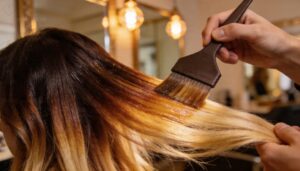
Hand-painted ombre gives you total control over gradient mapping from root to end. Using an applicator brush, vary your brush pressure and stroke angle to feather color upward, building natural depth through color layering.
This handpainted ombre approach lets you honor each client’s vision — adjusting where the fade starts based on their texture and face shape. The result feels custom, never cookie-cutter.
Teasing Method for Softer Transitions
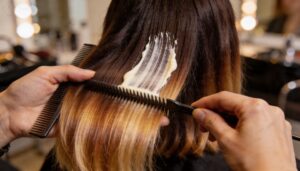
When a smooth gradient is the goal, the teasing method produces outcomes that hand-painting alone can’t always achieve it. Backcombing at the roots or midlengths creates soft diffusion, blurring the border line so color feathers naturally upward.
Section size impact is real — smaller sections give you tighter control.
Use a fine-tooth comb, apply lightener through the teased base, then follow with deep conditioning and toning to perfect the finish.
Foilayage for Brighter, Higher-contrast Ends
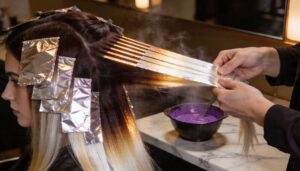
Foilayage takes your foil ombre results further by trapping heat inside each wrap, which accelerates lift and pushes brightness into a different league entirely. Diagonal foil placement keeps the finish soft rather than grid-like, while foil width variation controls your brightness control zones strategically.
Face-framing foils pull contrast forward where it matters most.
Finish with toning to lock in clean, reflective ends.
Feathering Product Upward Without Hard Lines
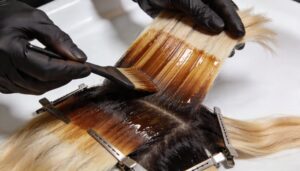
The difference between a smooth gradient and a patchy mess often comes down to one thing: how you move product upward. Use a light product load near the change zone—heavy saturation sets hard bands that toner can’t fully fix. Keep your applicator brush angled like soft tape edge masking, feathering with real-time edge checks as you go.
- Use precise sectioning to control exactly where the gradient change begins
- Apply spray angle control principles—work toward the fold, never into it
- Check edges while product is wet; drying locks in every mistake
Saturating The Ends for The Strongest Payoff
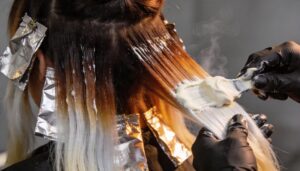
the ends are where your ombre earns its payoff. Load Saturation is non-negotiable here—work product through every strand until no dry pockets remain, because patchy coverage lifts unevenly.
Section Precision keeps placement deliberate, while Foil Containment and Heat Capping accelerate even lift.
Watch Porosity Control closely; porous ends absorb fast.
Full saturation plus controlled timing delivers that clean, high-contrast gradient shift you’re after.
Rinse, Tone, and Finish
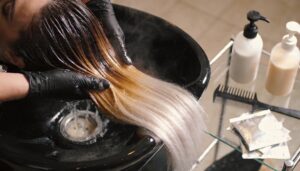
The bleach is out — but you’re not done yet. How rinse, tone, and finish makes the difference between a look that feels polished and one that falls flat.
Here’s what each step involves.
Rinsing Lightener Without Roughing The Cuticle
The rinse is where you can undo a perfect blend in seconds. Use a lukewarm rinse first, letting water gently flush lightener section-by-section — no scrubbing, no high-pressure jets. Then finish with a cool water finish to seal the cuticle flat.
For extra nourishment after rinsing, a yogurt-in-henna conditioning treatment can restore softness without disturbing your carefully preserved color.
- Apply gentle pressure only — fingertips, never nails.
- Use section-by-section rinsing to catch hidden product.
- Follow with an acidic rinse for cuticle closure and shine.
Toning Brassiness and Refining The Final Shade
Once the cuticle is sealed, toning is what separates good color from great color. Your brass neutralizer choice matters here — violet pigments kill yellow, while blue-based toners cut orange.
Gloss enhancement techniques add shine without muddiness.
Color depositing conditioners and shampoo color maintenance extend longevity between visits.
Always do toner patch testing first, especially on porous ends.
Toner Timing for Ash, Beige, or Caramel Results
Toner timing isn’t one-size-fits-all.
Ash timing requires the closest watch — cool tones grab fast on porous ends, sometimes in 5 to 10 minutes. Beige timing, including popular mushroom brown ombre and hair trend beige, usually needs a full 20 minutes. Caramel timing, like chocolate to caramel results, benefits from complete manufacturer windows.
Use strand checks every 5 minutes and apply a heat boost only when resistant.
Conditioning After Color Service
Once toner is rinsed, your hair needs immediate support. Coloring lifts the cuticle, so Cuticle Sealing with an acidic post-color conditioner smooths it back down fast.
This is where Moisture Replenishment and Protein Balance matter together — skip either, and lightened ends feel brittle.
Apply a color-safe conditioner mid-length to ends, then plan your First Wash Timing around 48 hours for Leave-In Care.
Final Styling to Showcase Dimension and Shine
Once your conditioner is rinsed, styling is what makes the gradient actually pop. A smooth blow-dry with a round brush catches light across every tonal shift.
Add gloss spray finish sparingly, then a little texture spray lift for volume. Off-center parting creates crown dimension, while anti-frizz control keeps lighter ends crisp.
These styling tips for ombre look transform good color into a real showstopper.
Maintain Ombre After Coloring
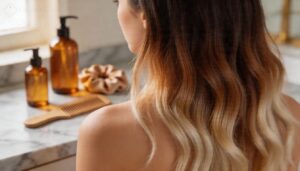
Getting your ombre looking perfect is only half the job — keeping it that way is where the real work begins. The good news is that with the right habits, your color can stay fresh and vibrant for months.
Here’s exactly what you need to do after you leave the chair.
Sulfate-free Shampoo and Color-safe Conditioner
Your shampoo choice matters more than you think.
Gentle Cleansing with a sulfate-free shampoo protects your gradient by using mild surfactants—like decyl glucoside—that won’t strip your color-safe conditioner’s work.
Look for pH Balanced Care around 5.5, which keeps the cuticle smooth and helps Moisture Retention. Silicone-Free Options work well if you prefer lighter formulas.
This simple shift anchors your entire hair care routine for colored hair.
Weekly Deep Conditioning for Lightened Ends
Bleached ends are thirsty by nature — deep conditioning is what keeps them from snapping. Build a weekly schedule around a deep conditioning mask rich in shea or coconut oil, where Ingredient Synergy does the real work of postbleach hair nourishment.
Apply mid-shaft to ends, leave on for 20–30 minutes, then finish with a cold rinse for Hair Cuticle Sealing and lasting softness.
Heat Protectant and Low-heat Styling Habits
Lightened ends have already been through the wringer, so protecting them from heat is non‑negotiable. A quality heat protectant spray creates a Silicone Barrier using Film‑Forming Polymers like dimethicone, shielding hair before any hot tool touches it.
Temperature Settings Guide — tourmaline plate usage at 300–375°F suits most textures, while Ionic Dryer Benefits cut drying time with less damage.
One slow pass beats three rushed ones.
Toner or Gloss Refresh Every 6 to 10 Weeks
Your ombre tone works like a slow fade — beautiful at first, then gradually warmer and duller. That’s why building a consistent refresh interval into your hair care routine for colored hair makes all the difference.
- Toner Color Correction: Schedule frequency of toner refresh appointments every 6–8 weeks for icy or brass-prone shades
- Gloss Shine Boost: Book a gloss every 8–10 weeks when maintaining ombre hair color that’s softer or warmer
- Lifestyle Fading Factors: Sun, chlorine, and frequent washing all shorten your window — adjust salon scheduling tips accordingly
- Ombre Hair Product and Service Matrix: Pair at-home purple shampoo between visits to stretch each appointment further
Touch-up Timing and Signs It Needs a Refresh
Your ombre tells you when it’s ready — you just have to know what to listen for. Root Regrowth Indicators, Faded End Signs, and Brassiness Detection are your clearest signals, while Texture Degradation and Blend Loss Timing confirm a refresh is overdue.
| Refresh Signal | What to Look For |
|---|---|
| Root Regrowth Indicators | Visible demarcation at 4–6 weeks |
| Faded End Signs | Dull, flat ends lacking contrast |
| Brassiness Detection | Yellow or orange shift in lightened ends |
| Texture Degradation | Rough, tangling, or weakened ends |
Weave ombre hair maintenance tips, deep conditioning, and bond protection for ombre hair into your hair care routine for colored hair, and don’t overlook protecting ombre color from UV exposure between appointments.
Common Ombre Mistakes and How to Prevent Them
Even the best colorists have learned a few lessons the hard way.
Blend placement errors and harsh line mitigation come down to starting your fade low and teasing the blend — not rushing it.
Shade mismatch happens when you ignore undertones.
Hair health damage and DIY safety risks climb fast without strand testing and proper developer strength.
Deep conditioning and bond protection for ombre hair aren’t optional.
Frequently Asked Questions (FAQs)
What is ombré hair color?
Ombré hair creates a gradient effect where dark roots fade naturally into lighter ends — a low-maintenance style built on subtle contrast, not sharp lines.
How do you color ombré hair?
Start with a solid Client Consultation, gather your Essential Ombre Dyeing Equipment, prep the hair,
then follow a clear Step-by-Step Ombre Dyeing Guide — Applying Ombre for Smooth Gradient results every time.
Is ombré a good color?
Yes — it’s one of the most adaptable, low-maintenance color choices available. The gradient grows out gracefully, suits most hair types, and offers serious styling versatility without demanding constant salon visits.
What is the difference between Ombre and reverse Ombre hair color?
The key difference is gradient direction.
Traditional ombre moves dark-to-light from roots to ends, while reverse ombre flips that, fading from lighter roots down to darker tips for shadowed, moody depth.
How do hairdressers do ombre hair?
A good colorist reads the hair before touching a brush. They start with a consultation mood board, map the gradient, then hand-paint with brush pressure control for a smooth fade.
What hair color goes best with rosacea?
Soft, blended shades work best.
Cool Ash Brown calms redness for cool undertones. Warm Caramel Blonde flatters warm skin. Neutral Honey Brown suits most.
Avoid icy platinum or brassy tones.
Can HRT affect hair dye?
HRT won’t completely rewrite your hair dye results, but hormone-induced porosity changes can cause dye uptake variability, meaning the same formula may grab faster or fade unevenly than before.
What colors work best for ombré?
Warm caramel, honey blonde, and copper tend to be the most flattering because they mimic natural sun-lightening. Cool ash or silver works well when your undertones lean pink or blue.
How can ombré be adapted for curly hair?
Curly hair actually makes ombré easier to pull off — the curl pattern naturally hides any uneven blending. Strand-level placement along each curl’s shape keeps the gradient clean and dimensional.
What are the best ombré styles for short hair?
Short hair holds ombre surprisingly well.
A bob ombre variation or pixie color blend creates a gentle fade option that feels polished, while pixie gradient ideas with vibrant accent ends add bold, low-maintenance personality.
Conclusion
As you master the professional ombre hair coloring guide, remember that practice makes perfect, and patience yields stunning results. With this expertise, you’ll deliver smooth blends and tones that highlight your clients’ natural beauty.
By following these techniques, you’ll become a skilled colorist, proficient in professional ombre hair coloring guide methods that create an enduring impression.