This site is supported by our readers. We may earn a commission, at no cost to you, if you purchase through links. This content is for general informational and educational purposes only and is not a substitute for professional medical, dermatological, or nutritional advice.

Eczema affects roughly 230 million people worldwide, yet most dermatologists spend only minutes discussing what patients can actually do between clinic visits.
That gap matters, because daily skin management—what you apply, when you apply it, and how your skin barrier responds—shapes your flare frequency far more than most people realize.
The good news is that several well‑studied natural ingredients work through the same mechanisms as conventional emollients: sealing moisture, calming inflammation, and reinforcing the compromised skin barrier that drives eczema symptoms.
Knowing which ones have clinical evidence behind them, and how to use them correctly, gives you real control over your skin.
Table Of Contents
- Key Takeaways
- Best Natural Topical Eczema Remedies
- Build an Eczema-Friendly Skincare Routine
- Support Skin Healing From Within
- Avoid Common Eczema Flare Triggers
- Know When Natural Care Isn’t Enough
- Frequently Asked Questions (FAQs)
- What is the best natural skin care for eczema?
- What is the 3 rule for eczema?
- What is the best natural way to treat eczema?
- What is a good skincare routine for eczema?
- What is the 3 minute rule for eczema?
- What do the Chinese do for eczema?
- How does environmental pollution affect eczema severity?
- Can natural remedies replace prescription eczema treatments?
- Are certain fabrics better for eczema-prone skin?
- What role does sleep quality play in eczema?
- Conclusion
Key Takeaways
- Virgin coconut oil, colloidal oatmeal, and sunflower seed oil have real clinical backing for sealing your skin barrier, easing itch, and reducing flare frequency when applied consistently right after bathing.
- What you eat matters as much as what you apply—low vitamin D, poor gut health, and common triggers like dairy, wheat, and eggs can quietly drive flares from the inside out.
- Your environment works against you more than you’d think—dust mites, synthetic fabrics, temperature swings, and stress all chip away at your skin barrier and keep the itch-scratch cycle going.
- Natural remedies can’t replace prescription care, but they work well alongside it—if you spot signs of infection like yellow crusting, spreading redness, or fever, it’s time to call your doctor.
Best Natural Topical Eczema Remedies
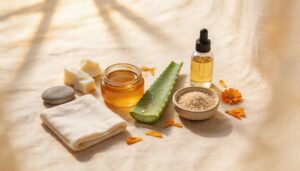
Your skin is asking for relief, and the right topical remedy can make a real difference.
Understanding what makes skin sensitive in the first place can help you choose a remedy that actually works for your skin type.
Natural options have solid research behind them—not just tradition. Here’s worth reaching for when your skin is at its worst.
Virgin Coconut Oil for Dry, Cracked Skin
Cold-pressed virgin coconut oil works like a seal over cracked skin, locking in moisture before it escapes. lauric acid antimicrobial properties help keep Staphylococcus aureus in check — a real concern when eczema skin is raw and open.
One study tracked skin barrier biomarkers like filaggrin and TEWL, showing measurable improvement.
Apply it warm, right after bathing, for best results. Patch test first if you have potential sensitivities.
Recent research provides clinical evidence shows benefit.
Colloidal Oatmeal Baths for Itch Relief
While coconut oil seals the barrier, colloidal oatmeal works differently — it calms the itch from within the bath itself.
Finely milled particle size selection matters here; ultra-fine oats disperse evenly, coating skin with beta-glucans and avenanthramides that reduce itching within 15–30 minutes.
Its pH buffer benefits help neutralize irritated, alkaline skin.
For bath frequency advice, two to three times weekly works well for most.
Always follow allergy screening steps first.
Sunflower Seed Oil for Barrier Repair
Another oil worth knowing: sunflower seed oil. It’s rich in linoleic acid, a fatty acid eczema‑prone skin is often short on. Applied in a thin layer to damp skin after bathing — bath seal technique — it activates PPAR‑alpha receptors, helping rebuild your lipid barrier from the outside in.
- Boosts ceramide production for lasting moisture
- Well-tolerated with no reported redness in barrier studies
- Lighter texture than ointments — easier for daytime use
Aloe Vera and Olive Oil Balm
While sunflower oil works beautifully on its own, some people prefer a richer balm.
Blending aloe vera and olive oil sounds simple, but there are real stability challenges — fresh aloe contains water, which separates from oil without a wax or preservative.
For a workable DIY ratio, try roughly two parts olive oil to one part aloe dry extract.
Heat sensitivity matters too: store your balm cool and away from sunlight.
Patch test first — olive oil occasionally weakens the skin barrier in eczema-prone skin.
Manuka Honey for Oozing Patches
When eczema turns weeping and raw, medical-grade Manuka honey becomes a serious option. Its Antimicrobial Action targets Staphylococcus aureus — the bacteria most responsible for skin infection on broken patches — while its humectant properties support smart Moisture Management without letting the area crust over.
Choose products rated UMF 10+ for meaningful antibacterial activity. Clinical Evidence from a small trial showed nightly application improved lesions within seven days.
- sterile honey gels or impregnated dressings, not kitchen honey
- Apply only to limited areas and watch for stinging or increased redness
- Allergy Precautions — skip it entirely if you have a known honey sensitivity
Chamomile and Licorice for Redness
Red, inflamed patches often respond well to two time-tested botanical options.
Chamomile delivers bisabolol anti-inflammatory compounds alongside flavonoid redness control agents like apigenin, with efficacy comparable to 0.5% hydrocortisone in trials.
Licorice cream provides licochalcone A soothing action through its anti-inflammatory natural ingredients, making it a strong choice for skin soothing ingredients. Check glycyrrhizin safety with prolonged use, and note the Asteraceae allergy caution if you’re sensitive to related plants.
How to Patch Test Natural Ingredients
Before applying anything new to eczema‑prone skin, a patch test is your safety net.
Choose the inner forearm for spot selection, apply a diluted sample — essential oils need a carrier at proper dilution ratios — and watch for 24 hours minimum. Testing duration matters for delayed reactions. Note your reaction indicators and practice consistent record keeping.
- Redness or swelling means stop
- Test one ingredient at a time
- Dilute all oils before testing
- Keep the area dry throughout
Build an Eczema-Friendly Skincare Routine
What you put on your skin matters, but so does how and when you do it. A consistent routine can make the difference between skin that stays calm and skin that keeps flaring.
Here’s what an eczema-friendly daily practice actually looks like.
Lukewarm Bathing and Soak-and-Seal
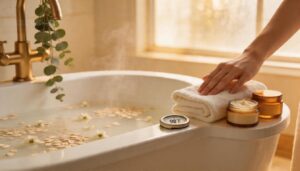
bath as medicine — how you take it matters as much as what you add. Keep water lukewarm, not hot, to protect skin’s natural oils.
Soak 15–20 minutes, then pat dry gently. Immediately apply moisturizer using the Soak-and-Seal Method.
Colloidal oatmeal baths can reduce itching considerably. This bath frequency schedule, done daily or several times weekly, helps real skin barrier repair.
Gentle Fragrance-Free Cleansing Methods
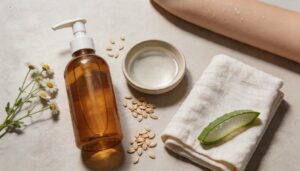
Your cleanser is the foundation of every wash — get it wrong, and you’re adding fuel to the fire. Choose fragrance-free cleansers with mild surfactant blends like glucosides or betaines, and look for pH-balanced formulas between 4.5–5.5.
Prebiotic cleansers and fragrance-free micellar water are excellent options for optimized cleansing for compromised skin. Always use the pat-dry technique after rinsing.
Moisturizing Within Three Minutes
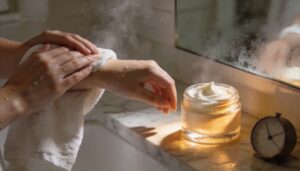
That three-minute timing window after your bath isn’t a myth — it’s the cornerstone of barrier lock-in. Once you’ve used the pat-dry method to gently blot skin damp, not bone-dry, apply your moisturizer immediately.
Humectants draw water in; occlusives seal it there.
Ideal texture matters too: thick creams and ointments outperform thin lotions for lasting skin moisturization.
Consistent reapplication throughout the day reinforces everything.
Daytime Reapplication for Lasting Hydration
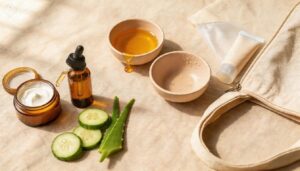
Morning moisturizing sets the foundation, but reapplication timing throughout the day is what keeps your skin barrier function intact. After washing hands or sweating, cue-based reapplication prevents tightness before it starts.
Portable moisturizer packs at your desk or bag for post-activity rehydration. Layering light emollients every two to four hours using natural moisturizers maintains steady hydration without heaviness.
Nighttime Occlusive Care for Flare-Prone Skin
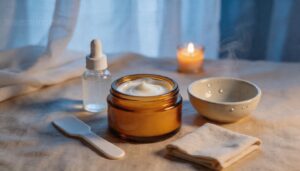
Daytime hydration keeps your barrier stable, but overnight is when real repair happens. A petrolatum ointment benefits your skin by reducing water loss by nearly 99%, sealing everything in while you sleep. Follow the layering sequence timing: cleanse, hydrate, then occlude last.
- Choose hypoallergenic occlusives with a minimalist night formula — fewer ingredients mean fewer reactions
- A silicone barrier seal spreads easily and feels less greasy than heavy ointments
- The Soak-and-Seal Method locks moisture from your bath into overnight occlusion
What to Stop Using During Flares
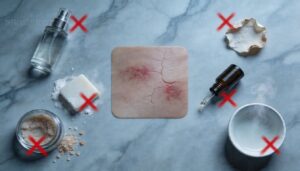
While you’re sealing in moisture overnight, take a hard look at what you’re still reaching for.
Fragrance Products, Alcohol Toners, and Harsh Exfoliants — including AHAs and retinol — strip the barrier you’re working to rebuild.
Hot water and harsh soaps or detergents trigger the same damage.
Even popular essential oils can sting broken skin.
During a flare, subtraction often heals more than addition.
Choosing Thick Creams, Ointments, and Oils
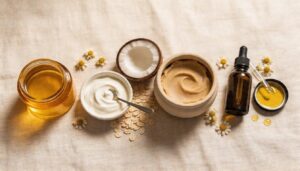
Not all moisturizers are equal. Ointments win on occlusive strength — roughly 80% oil — making them ideal for cracked elbows or stubborn dry patches.
Creams, with their balanced oil-water ratio, suit larger areas better.
For barrier repair ingredients, look for ceramides, shea butter, urea cream, or colloidal oatmeal.
Cold-pressed coconut oil and other natural oils work well too. Match the texture to your skin type and apply within three minutes of bathing.
Support Skin Healing From Within

What you put into your body matters just as much as what you put on your skin. Eczema isn’t only a surface problem—gut health, nutrient levels, and daily diet can all influence how your skin responds and heals.
Just as not all alcohols are harmful to hair, not every ingredient or food that sounds problematic is actually a trigger for your skin.
Eczema healing starts from within—gut health, nutrients, and diet shape how your skin responds
Here’s what the research says about supporting your skin from the inside out.
Probiotics and The Gut-Skin Connection
Your gut and skin are in constant conversation. Probiotic supplementation enhances gut barrier integrity and encourages regulatory T cells that calm overactive inflammation.
Lactobacillus and Bifidobacterium improve microbiome diversity and produce short-chain fatty acids that aid immune modulation.
Research shows this gut microbiome balance can visibly reduce eczema severity, making the role of probiotics in skin health genuinely meaningful.
Vitamin D and Eczema Severity
Low serum vitamin D levels are quietly linked to worse eczema symptoms. Vitamin D helps barrier protein regulation — think filaggrin, the protein that keeps your skin sealed — while also driving immune modulation that dials down overactive inflammation.
UV exposure naturally boosts production, which may explain seasonal flare correlation in winter months.
A 2024 meta-analysis found supplementation meaningfully reduced severity scores in children with documented deficiency.
Borage and Evening Primrose Oil Benefits
Both oils earn their place as GLA supplements for eczema, but they’re not equal. Borage Oil delivers 20–25% GLA potency — roughly double Evening Primrose Oil’s 8–10% — making it a stronger candidate for anti-inflammatory natural ingredients targeting skin barrier restoration techniques.
Oral vs. topical use matters, too: Oral borage hasn’t shown consistent results.
Always choose PA-free borage to avoid PA contamination, and flag bleeding caution with your doctor if you’re on blood thinners.
Anti-Inflammatory Foods That May Help
What you eat can quietly shape how your skin behaves.
Fatty fish like salmon and sardines deliver Omega-3 Rich omega‑3 fatty acids that work as anti‑inflammatory natural ingredients from the inside out.
Pair them with Colorful Produce — berries, leafy greens, bell peppers — plus Whole Grain Benefits, Legume Fiber, and Herb Spice Antioxidants like turmeric to build a plate that genuinely helps calmer skin.
Common Dietary Triggers to Watch
Some foods act like quiet saboteurs, triggering flares before you realize the connection. The most common dietary triggers for eczema include:
- Milk Dairy and Egg Sensitivity — casein, whey, and egg white proteins frequently provoke immune reactions
- Wheat Gluten and Soy Legumes — especially problematic when allergy or sensitivity is already present
- Peanut Nuts — even trace amounts can worsen symptoms noticeably
Tracking these patterns is your first step toward a smarter anti-inflammatory diet.
Hydration Habits for Healthier Skin
Your skin’s barrier works like a dam — it only holds if it’s full.
Starting a Morning Water Intake habit and maintaining an Evening Hydration Routine help reduce transepidermal water loss from within.
Water-Rich Foods like cucumber and watermelon count too.
Hydration Timing Tips matter: steady sips beat one big gulp.
Seasonal Fluid Needs shift with temperature, so adjust accordingly to support ceramides and skin barrier function.
When to Try an Elimination Diet
Drinking more water helps, but sometimes the problem runs deeper — right into what’s on your plate. If you’re dealing with Persistent Flares despite good moisturizing and Ineffective Topicals, a food elimination diet for eczema may be worth considering.
Try one when you notice:
- Flares clearly follow meals, suggesting dietary triggers or food allergens
- Other symptoms like hives or swelling point to Allergy Suspicion
- Reactions happen consistently after the same food
- Standard skincare hasn’t calmed things down
- A dietitian flags potential Nutrient Deficiencies before you start
Always seek Medical Guidance first.
Avoid Common Eczema Flare Triggers

Even with the right creams and a solid skincare routine, flare-ups can still catch you off guard if the triggers around you go unchecked. Eczema-prone skin reacts to more than just what you put on it — your environment, your wardrobe, and even your stress levels all play a role.
what to watch for and how to work around it.
Heat, Cold, and Humidity Changes
Cold air stress strips moisture from your skin, driving up transepidermal water loss and worsening skin barrier dysfunction.
Meanwhile, heat sweat irritation is just as disruptive — sweat lingers on sensitive skin and sparks that familiar temperature itch.
Seasonal humidity swings compound the problem, since humidity dryness and sudden temperature changes keep your barrier perpetually off-balance.
Aim for 40–60% indoor humidity year-round.
Wool, Synthetics, and Scratchy Fabrics
Your clothes touch your skin all day — so fabric choice matters more than most people realize.
- Fiber micron size is the key: wool fibers over 25 microns create scale surface friction that triggers elasticity‑induced itch.
- Synthetics carry chemical residue irritation from manufacturing, worsening skin barrier dysfunction.
- Moisture wicking differences mean polyester traps sweat against sensitive skin.
- Soft cotton offers the most protective clothing for skin.
Stress and The Itch-Scratch Cycle
Fabric isn’t the only invisible trigger — stress can be just as damaging.
When tension rises, your body’s neuroimmune loop fires up, amplifying stress-related itch signals and pushing inflammation higher.
Scratching briefly activates your brain’s reward circuit, which makes stopping genuinely hard.
Poor sleep compounds everything.
Mindful itch reduction strategies — slow breathing, consistent moisturizing, stress management techniques — help break that cycle before it spirals.
Dust, Allergens, and Household Irritants
Your home holds more eczema triggers than you might realize.
Dust Mite Control starts with washing bedding weekly at 130°F and using allergen-proof covers. Pet Dander Management means keeping pets out of bedrooms.
Cockroach Allergen Prevention requires sealing cracks and eliminating food sources.
Mold Moisture Reduction and better Indoor Air Quality protect your skin barrier from environmental irritants that silently fuel flares.
Preventing Skin Infection Naturally
Cracked eczema skin is an open door for bacteria—especially Staphylococcus aureus. These five skin infection prevention strategies help keep trouble out:
- Practice Hand Hygiene before every Clean Application of creams or ointments
- Use Protective Dressings over weeping patches
- Apply Cold Compresses to calm itch and reduce scratching
- Try natural antibacterial agents like Manuka honey or Tea tree oil
- Consider Antimicrobial Herbs to support healing
Daily Habits That Reduce Flare-Ups
Small daily choices stack up fast when you’re managing eczema. A consistent sleep hygiene habit—seven to nine hours, same bedtime nightly—keeps your stress response calmer.
Room temperature, laundry routine, and mindful breathing all pull their weight too.
| Habit | Why It Helps | Quick Tip |
|---|---|---|
| Sleep hygiene | Reduces itch-scratch cycle | Cool, dark bedroom |
| Laundry routine | Removes skin irritants | Extra rinse, fragrance-free detergent |
| Air quality monitoring | Limits allergen exposure | Clean humidifier weekly |
Know When Natural Care Isn’t Enough
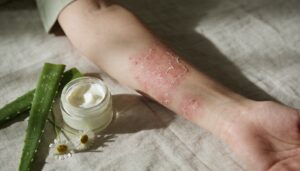
Natural remedies can do a lot, but they have their limits.
There are specific signs that tell you it’s time to bring in medical support — and knowing them early makes a real difference.
Here’s what to watch for.
Signs Your Eczema May Be Infected
Eczema doesn’t always stay simple—sometimes bacteria move in, and that changes everything. Staphylococcus aureus is the most common culprit, triggering skin inflammation that looks and feels distinctly different from a regular flare.
Watch for these warning signs:
- Yellow crusting or oozing discharge with a honey-colored hue.
- Swelling redness spreading beyond your usual patch borders.
- Warmth pain — burning rather than itching — on affected skin.
- Systemic fever above 100.4°F, signaling the infection may be spreading.
Severe Itching, Cracking, and Sleep Loss
When itching keeps you staring at the ceiling most nights, that’s your skin telling you it needs more than home care. Severe itch disrupts sleep, and broken sleep makes eczema feel worse — a cycle that’s hard to break alone.
Nighttime Itch Diary helps track Sleep Disruption Tracking patterns. Pair that with Cooling Bed Linens, Relaxation Before Bed, and Nighttime occlusive treatment protocols.
See a dermatologist.
Infant and Child Eczema Red Flags
Babies can’t tell you when something’s wrong — skin does. Watch for fever with rash, rapid lesion spread, or painful warm skin, which signal infection, not just a flare.
Feeding difficulties and behavioral changes, like sudden irritability or refusing to nurse, are equally urgent. These infant eczema care red flags mean natural remedies alone aren’t enough — seek medical attention promptly.
When Natural Remedies Irritate Skin
Natural doesn’t always mean safe for your skin. Fragrance allergens hide in plant extracts, and essential oil reactions often show up 12–72 hours later — that delayed hypersensitivity makes them easy to miss.
Citrus oils carry photosensitive ingredients that worsen with sunlight.
aloe or honey can trigger plant extract sensitivity.
Essential oil sensitization risk is real, so always patch test first.
Combining Natural Care With Medical Treatment
When irritation from a natural product prompts you to stop, that’s actually a good moment to loop in your doctor. Coordinated Treatment Timing matters here — natural treatments for atopic dermatitis work best alongside, not instead of, prescribed care.
A solid well-rounded approach to eczema care generally includes:
- Clinician Patient Communication about every supplement you’re using
- Integrated Symptom Tracking through simple daily logs
- Safety Screening Protocols to catch interactions early
Your doctor becomes partner, not a gatekeeper.
Frequently Asked Questions (FAQs)
What is the best natural skin care for eczema?
Calm, moisturized skin starts with barrier repair.
Virgin coconut oil, colloidal oatmeal, and fragrance-free emollients are most reliable natural remedies for eczema — simple, research-backed, and gentle enough for daily use.
What is the 3 rule for eczema?
The 3 rule means applying moisturizer within three minutes of bathing — your Three-Minute Seal for Prompt Barrier Restoration. This Rapid Hydration Strategy locks moisture before evaporation strips your skin dry.
What is the best natural way to treat eczema?
There’s no single fix, but the most effective natural approach combines coconut oil, colloidal oatmeal, and aloe vera to restore the skin barrier, calm inflammation, and reduce itching consistently.
What is a good skincare routine for eczema?
good eczema routine starts with lukewarm baths using pH balanced cleansers, followed by barrier repair timing—applying natural skin moisturizers within three minutes to lock in hydration and restore your skin barrier.
What is the 3 minute rule for eczema?
Think of your skin like a sponge fresh out of water — it holds moisture best before it dries.
That’s the heart of the 3-minute rule: Apply moisturizer immediately after bathing to lock in hydration before transepidermal water loss begins.
What do the Chinese do for eczema?
Traditional Chinese Medicine (TCM) treats eczema through Pattern Diagnosis, Herbal Formulas, and Acupuncture Points, tailoring care to each person’s unique presentation of heat, dampness, or wind-related skin patterns.
How does environmental pollution affect eczema severity?
Polluted air quietly punishes sensitive skin.
PM5 exposure, traffic pollution, and oxidative stress all damage your barrier, trigger inflammatory pathways, and worsen flares — making environmental trigger protection a real part of managing eczema severity.
Can natural remedies replace prescription eczema treatments?
Natural remedies for eczema can ease symptoms, but they can’t replace prescription treatments. Clinical efficacy data shows they work best as supportive care alongside medical therapy, not as standalone cures.
Are certain fabrics better for eczema-prone skin?
Like a second skin, your clothing choice matters. Yes — 100% organic cotton, sericin-free silk, or bamboo offer breathability and temperature regulation, reducing friction and sweat that trigger flares.
What role does sleep quality play in eczema?
Poor sleep and eczema feed each other — the nighttime itch cycle disrupts rest, while sleep inflammation weakens barrier repair and sleep needs.
Prioritizing sleep hygiene helps circadian skin recovery and calms flares.
Conclusion
Think of your skin as a barrier that can be rebuilt, layer by layer, with the right daily choices.
Natural skincare remedies for eczema work best when they’re consistent, evidence-backed, and paired with smart trigger management. Coconut oil, colloidal oatmeal, and a solid soak-and-seal routine aren’t just alternatives—they’re tools with real clinical support.
Your skin reacts to what you do every day. Make those days count.