This site is supported by our readers. We may earn a commission, at no cost to you, if you purchase through links. This content is for general informational and educational purposes only and is not a substitute for professional medical, dermatological, or nutritional advice.

You switch to a "sensitive skin" cleanser and your face still burns. The label said gentle. Your skin disagreed.
What causes skin to be sensitive isn’t always the product you’re using. Often, the problem starts with your skin barrier, a thin layer of oils and proteins designed to keep moisture in and irritants out. When that barrier weakens, even mild soap, cold air, or a scented lotion can trigger itching, redness, or a burning sensation.
Several things wear it down. Genetics, daily habits, and root skin conditions all play a role, and knowing which ones apply to you changes everything about how you treat it.
Table Of Contents
- Key Takeaways
- Why is My Skin So Sensitive?
- A Weakened Skin Barrier Often Causes Sensitivity
- Skin Conditions That Increase Sensitivity
- How to Find and Avoid Skin Triggers
- How to Calm Sensitive Skin
- Frequently Asked Questions (FAQs)
- Why is my skin so sensitive to the touch all of a sudden?
- Can sensitive skin go back to normal?
- What is extremely sensitive skin a symptom of?
- How to relieve skin sensitivity?
- Can stress alone cause my skin to become sensitive?
- Is sensitive skin linked to specific food allergies?
- Do skincare ingredients expire and irritate sensitive skin?
- Can over-cleansing damage my skins natural protection?
- Are certain medications known to increase skin sensitivity?
- Can stress make your skin more reactive over time?
- Conclusion
Key Takeaways
- A weakened skin barrier is usually the real culprit behind sensitive skin — when that protective layer breaks down, even gentle products can cause burning, redness, and stinging.
- Genetics, over-cleansing, hot showers, and low humidity all quietly erode your barrier without obvious warning signs until the damage is done.
- Skin conditions like eczema, rosacea, and contact dermatitis actively disrupt barrier function and can masquerade as general sensitivity, so knowing the difference shapes how you treat it.
- Rebuilding your skin comes down to a simple, consistent routine: a fragrance-free gentle cleanser, a ceramide-based moisturizer applied right after washing, and daily broad-spectrum SPF 30.
Why is My Skin So Sensitive?

Sensitive skin doesn’t look the same on everyone, and it doesn’t always behave the same way either. Before you can figure out what’s going on with yours, it helps to recognize what you’re actually dealing with. Here’s what to pay attention to.
Once you know your triggers, exploring calming ingredients for sensitive skin can help you build a routine that actually works for you.
Common Signs of Sensitive Skin
Your skin sends signals when something’s wrong. Itchiness and dryness are often the first signs, followed by redness and irritation after product use. You might also feel burning or stinging when applying even a mild moisturizer or cleanser. Skin discoloration, frequent rashes, and breakouts can follow. Sensitive skin also usually reacts more sharply to sun exposure than you’d expect.
Dermatologists recommend using broad-spectrum sunscreen SPF 30+ to help protect easily irritated skin from UV-triggered flares and burns.
Sudden Versus Ongoing Sensitivity
Those signs you just read about don’t always behave the same way. Sudden sensitivity often appears within hours of a new product or environmental change and usually clears once the trigger is gone.
Ongoing sensitivity tells a different story. It persists for weeks despite gentle care, often signaling a deeper skin barrier issue that needs consistent daily treatment.
Sensitivity Versus Allergic Reactions
Not all reactions mean an allergic reaction. True allergies occur when your immune response overreacts to a harmless substance. Sensitive skin reacts to irritants without immune involvement.
Four ways they differ:
- Reaction timing: allergies appear within minutes
- Symptom overlap: both cause redness and itching
- Non-allergic triggers include cold, heat, and friction
- Fragrance allergy requires patch testing to confirm
A Weakened Skin Barrier Often Causes Sensitivity
Your skin barrier is its first line of defense — and when it’s weakened, almost everything becomes a potential irritant. Several everyday factors can quietly erode that protection without you realizing it. Here’s what often breaks it down.
Dry Skin and Moisture Loss

Your skin’s outer layer, the stratum corneum, works like a seal, holding water in. It needs at least 10% water to feel soft. Dry skin happens when low humidity, warm indoor air, or long hot showers speed up transepidermal water loss, leaving skin tight and rough. Applying a fragrance-free moisturizer right after bathing is one of the simplest ways to lock hydration in.
| Trigger | Effect on Skin |
|---|---|
| Low humidity | Pulls moisture from the surface |
| Hot showers | Strips protective surface oils |
| Skipping moisturizer | Slows overnight barrier repair |
Tiny Cracks Let Irritants Enter

Think of your stratum corneum as mortar between bricks. When it dries out and weakens, microdamage creates barrier gaps that let irritants penetrate much deeper into skin layers, triggering redness and stinging.
Restoring that lipid "mortar" with the right occlusives and humectants is exactly what these skin hydration tips for a stronger, glowing barrier address.
Skin barrier dysfunction disrupts lipid integrity and accelerates transepidermal water loss. These slow recovery cycles then keep your damaged skin barrier vulnerable long after the initial irritation starts.
Genetics and Natural Skin Reactivity

Some people are born with more reactive skin. If your parents had eczema, your odds rise considerably.
Filaggrin gene mutations appear in roughly half of children with moderate to severe eczema, letting moisture escape while raising skin pH above its protective range.
Twin studies show up to 86% concordance in identical twins, confirming genetics outweighs environment here.
Overwashing and Excessive Exfoliation
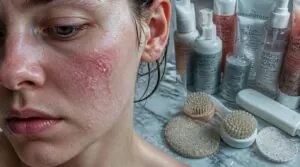
When you overwash or over-exfoliate, your skin barrier struggles to hold moisture, leaving inner layers exposed and vulnerable to irritation.
Signs you’ve gone too far:
- Stinging or burning with products that once felt comfortable
- Redness and chronic dryness despite regular moisturizing
- Flaking or peeling skin
Limit exfoliation to one to two times weekly and use a gentle cleanser daily.
Overnight Skin Barrier Repair

Your skin does most of its barrier repair overnight, but moisture escapes quickly without the right help.
Start with a humectant like hyaluronic acid or glycerin, then apply a barrier cream with shea butter or petrolatum over the top.
That simple night moisture layering sequence draws water into the skin and seals it there while your body actively repairs itself.
Skin Conditions That Increase Sensitivity

Sometimes the sensitivity you’re feeling isn’t just about what you’re putting on your skin — it’s about what’s going on underneath. Certain skin conditions actively disrupt your barrier and keep it from doing its job. The following are the most common ones worth knowing about.
Eczema and Atopic Dermatitis
Eczema, or atopic dermatitis, is more than just dry skin.
Filaggrin mutations weaken your barrier, and up to 80% of eczema patients carry Staphylococcus aureus on active lesions.
Your immune system overreacts, flooding affected areas with persistent inflammation. It often travels with asthma or allergies.
A fragrance-free moisturizer aids skin barrier repair, and dupilumab offers real relief for moderate cases.
Irritant Contact Dermatitis
Irritant contact dermatitis doesn’t need an allergic trigger. Repeated contact with water, soaps, or solvents directly damages your skin barrier, causing redness, itching, and sometimes fissures.
Occupational exposure is a major driver, with healthcare workers and cleaners at particular risk.
Avoiding the irritant is the first step. A gentle cleansing routine and fragrance-free skincare then support skin barrier repair.
Allergic Contact Dermatitis
Unlike irritant reactions, allergic contact dermatitis requires your immune system to respond first. When your skin encounters an allergen, like nickel or a fragrance, it becomes sensitized. Re-exposure later triggers a delayed rash, sometimes appearing days after contact.
Patch testing can identify the cause. Avoiding the allergen and choosing fragrance-free, hypoallergenic skincare with barrier repair moisturizers helps prevent future reactions.
Rosacea, Psoriasis, and Hives
Rosacea, psoriasis, and hives each cause skin sensitivity in different ways. Persistent facial redness and burning are key hallmarks of rosacea, flaring for weeks before settling.
Psoriasis triggers raised, scaly plaques that itch and burn.
Hives appear as reactive welts anywhere on the body, fading quickly but often recurring unpredictably.
All three can easily be mistaken for general skin sensitivity.
Less Common Medical Causes
Some conditions run deeper than skin itself. Lupus, dermatomyositis, and sarcoidosis trigger sensitivity through autoimmune processes. Lichen planus brings intensely itchy raised spots, and porphyria makes skin painfully reactive to sunlight.
Mast cell activation, cutaneous mastocytosis, aquagenic pruritus, and physical or contact urticaria are rarer causes, but each can mimic general sensitivity in ways typical treatments won’t resolve.
How to Find and Avoid Skin Triggers

Figuring out what’s aggravating your skin is half the battle. Everyone’s triggers are a little different, and identifying yours takes some observation and patience. Here are the most common ones worth paying attention to.
Keeping a log of reactions can help you spot patterns—even details like how hair extension weight affects your scalp can be an overlooked trigger worth ruling out.
Hormonal Changes and Flare Patterns
Your skin doesn’t follow a fixed schedule, and hormonal shifts are often the reason. Estrogen and progesterone fluctuate across your menstrual cycle, altering how reactive your skin feels week to week.
Flares often cluster in the premenstrual phase, when estrogen drops. During perimenopause, this pattern becomes less predictable. Cortisol from stress can intensify inflammation during any of these vulnerable windows.
Weather, Humidity, and Sunlight
Your environment is always working on your skin, noticed or not. Cold, dry winter air pulls moisture away fast, and indoor heating makes things worse.
Come summer, heavy humidity traps sweat and bacteria against your skin. Seasonal shifts can leave your skin more sensitive to sunlight, even vulnerable by morning. That’s why a mineral sunscreen daily matters, whatever the season.
Fragrances, Detergents, and Metals
What’s labeled "fragrance" on a product could contain up to 300 different chemicals, and your skin doesn’t get a say in any of them. This is where contact dermatitis often starts, quietly.
One fragrance label can hide up to 300 chemicals — and that’s quietly where contact dermatitis begins
Fragrance-free cleansers, detergents, and moisturizers lower that risk a lot. Metals matter too. Nickel allergy is common, and cleaning products can carry trace heavy metals that contact your skin directly during everyday use.
Smoke, Sweat, and Friction
Even routine exposure to smoke, sweat, or friction can quietly damage your skin barrier.
- Smoke disrupts lipids, raising transepidermal water loss
- Nicotine constricts blood vessels, slowing barrier repair
- Dried sweat deposits salt crystals that abrade skin
- Thirdhand smoke on clothing penetrates compromised skin
- Fabric friction tears the stratum corneum when wet
Reducing these key environmental stressors helps protect your barrier.
Patch Testing and Skin Diaries
Think of patch testing and a skin diary as your personal investigation tools. A dermatologist applies diluted allergen samples to your back for 48 hours, then reads results at 96 hours to identify reactions.
At home, apply any new skincare product to a quarter-sized area on your inner arm first. Log daily triggers, products, and flares to reveal patterns.
How to Calm Sensitive Skin

Once you know what’s irritating your skin, the next step is giving it the support it needs to settle down. There are a few straightforward ways to calm sensitivity and start rebuilding your skin’s defenses. Here’s what actually helps.
Gentle Cleansing and Short Showers
Hot water feels soothing, but it strips your skin’s natural oils surprisingly fast. Keep short showers to under 10 minutes, using lukewarm water, and wet your skin before applying a fragrance-free gentle cleanser.
Use your fingertips, not a washcloth. After stepping out, pat dry and apply your moisturizer right away. That routine protects your skin barrier before moisture can escape.
Fragrance-Free Barrier Moisturizers
Your fragrance-free barrier moisturizer should do more than just hydrate. Look for ceramides near the top of the ingredient list. This emollient therapy rebuilds what barrier function disruption takes away, while humectants like glycerin pull water into skin and lock it in.
Soothing additives like panthenol add a gentle calm. Skip botanical extracts, which can still irritate very reactive skin.
Daily Sun Protection
Your moisturizer seals the barrier. Sunscreen protects it from UV damage. For sensitive skin, broad-spectrum SPF 30 blocks about 97% of UVB rays and guards against UVA.
- Pick physical sunscreen filters like zinc oxide, which rarely cause reactions
- Apply sunscreen 15 minutes before heading outside
- Reapply every two hours
Photodermatoses are real in reactive skin. Don’t skip this step.
Safe Over-the-Counter Relief
Once sunscreen is part of your daily routine, you can layer in some targeted OTC relief. For itch or redness, a fragrance-free antihistamine or colloidal oatmeal bath can calm reactive skin quickly.
When choosing any product, always check the active ingredients label and skip ones with unnecessary additives. Choose ceramide-based moisturizers and follow dosing directions carefully to use them safely.
When to See a Specialist
OTC options work well for mild flares. But some signs need a dermatologist:
- A rash lasts longer than seven days without improvement
- You develop fever, rapid spreading, or pain
- A mole shows sudden color or size changes
Persistent skin issues rarely clear up alone. A dermatologist can run skin sensitivity testing and create a more targeted treatment plan for you.
Frequently Asked Questions (FAQs)
Why is my skin so sensitive to the touch all of a sudden?
Sudden skin sensitivity often has a clear culprit. Stress hormones, weather shifts, or a new product can all flip a switch overnight, making even light touch feel uncomfortable on skin that felt fine yesterday.
Can sensitive skin go back to normal?
Yes. For most people, sensitive skin isn’t a permanent condition. Once you identify the trigger and commit to a consistent, gentle routine, your skin barrier can recover. Many people start noticing real improvement within weeks.
What is extremely sensitive skin a symptom of?
Extremely sensitive skin can be a symptom of eczema, rosacea, or contact dermatitis. It may also signal autoimmune conditions, thyroid imbalance, or vitamin deficiencies affecting your skin’s protective barrier.
How to relieve skin sensitivity?
Relief starts with soothing skin care: gentle moisturizing with a fragrance-free, ceramide-rich moisturizer aids barrier repair. A cool compress calms active flares quickly. Try hydrating overnight, and use an antihistamine or corticosteroid cream when needed.
Can stress alone cause my skin to become sensitive?
Stress can make your skin noticeably more reactive. It raises cortisol levels, weakens your skin’s defenses, and triggers inflammation, which lowers your threshold for reacting to everyday irritants. But it rarely acts alone.
When you’re under pressure, your body releases stress hormones, cortisol chief among them. Those hormones can disrupt skin barrier function, making it harder for your skin to hold moisture and keep irritants out. Think of your skin barrier like a tightly-woven net. Stress loosens the weave, and things that never bothered you before can suddenly slip through.
Stress-related immune changes shift your skin toward an inflammatory state. That can trigger redness, itching, and flare-ups, particularly if you already have eczema or psoriasis. Sleep loss, which often comes with high stress, slows the overnight repair your skin depends on, compounding the problem.
The stress-itch cycle is real. Discomfort from reactive, itchy skin can increase stress, and that elevated stress can worsen the itch. Once that loop starts, it’s difficult to break without addressing both sides.
Stress is usually one piece of a larger picture. Fragrances, detergents, weather changes, and other irritants can provoke your skin on their own. If sensitivity lingers even during calmer periods, a skin sensitivity evaluation by a dermatologist can help pinpoint what’s truly driving your reactions.
Is sensitive skin linked to specific food allergies?
Picture your skin lighting up like a warning flare after a meal. Foods like dairy, nuts, or shellfish can trigger immune-driven hives in true food allergy, but sensitive skin isn’t always the same clinical condition.
Do skincare ingredients expire and irritate sensitive skin?
Yes, they can. Preservatives weaken after opening, letting bacteria grow in the formula. Oxidized actives like vitamin C can irritate. Check the period after opening date and discard anything that smells off or looks changed.
Can over-cleansing damage my skins natural protection?
Over-cleansing does more damage than most people expect. Washing too often strips barrier lipids from your stratum corneum, disrupting skin pH and triggering trans-epidermal water loss that can leave skin tight, dry, and increasingly reactive.
Are certain medications known to increase skin sensitivity?
Certain medications can really increase skin sensitivity. Antibiotic reactions from doxycycline, retinoid sensitivity from acne treatments, and drugs like thiazide diuretics all trigger a drug-induced rash or inflammatory response. Check labels and consult your dermatologist.
Can stress make your skin more reactive over time?
Stress doesn’t just affect your mood. Elevated cortisol levels can quietly break down your skin’s barrier over time, making it thinner, drier, and far more reactive to triggers you once tolerated easily.
Conclusion
Your skin isn’t being difficult, it’s sending a quiet warning that its defenses need care. When you understand what causes my skin to be sensitive, patterns become easier to spot, from harsh products to eczema or changing weather.
Simplify your routine, protect the barrier, and give treatments time to work. If burning, swelling, or repeated rashes continue, seek dermatology care.
Sensitive skin can be managed, and comfort often begins with fewer, gentler steps each day.