This site is supported by our readers. We may earn a commission, at no cost to you, if you purchase through links. This content is for general informational and educational purposes only and is not a substitute for professional medical, dermatological, or nutritional advice.
About 85 percent of homes in the United States run on hard water, yet most people don’t realize it until they’re scrubbing white crust off their showerhead or wondering why their soap never quite lathers.
That chalky buildup isn’t a cleaning failure—it’s minerals, mostly calcium and magnesium, left behind after water travels through layers of limestone and rock deep underground.
Hard water is harmless in many ways, but it’s not without consequences for your skin, your pipes, and your appliances.
Knowing what’s actually in your water puts you in control of the fixes that matter.
Table Of Contents
- Key Takeaways
- What is Hard Water?
- How Hard Water Forms
- How Water Hardness is Measured
- Signs of Hard Water
- Hard Water Effects on Health
- How to Treat Hard Water
- Frequently Asked Questions (FAQs)
- What makes water hard?
- How to identify if you have hard water?
- What is hard water?
- Is water hard or soft?
- Is hard water safe to drink?
- How does hard water affect gardening and plant growth?
- Can hard water stain colored fixtures?
- Does boiling hard water reduce hardness?
- How does hard water affect pets?
- Can hard water damage plant growth?
- Conclusion
Key Takeaways
- Hard water forms when groundwater travels through limestone and rock, picking up calcium and magnesium—minerals that are harmless to drink but rough on your pipes, skin, and appliances over time.
- White scale on faucets, poor soap lather, cloudy dishes, and dropping water pressure are the clearest signs that your water is working against your home.
- You can measure your water hardness at home with a simple test strip kit, and your result determines which fix actually makes sense—boiling only handles temporary hardness, while ion exchange or reverse osmosis tackles the permanent kind.
- Soft water isn’t a free pass either—ion exchange softeners add sodium, and very soft water can accelerate pipe corrosion, especially in homes with older plumbing.
What is Hard Water?
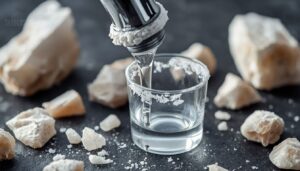
Hard water isn’t a flaw in your plumbing — it’s just water that’s picked up extra minerals on its journey to your tap. Understanding what’s actually in it helps you make smarter choices for your home and health.
Those minerals — mostly calcium and magnesium — are the same ones that leave chalky buildup on your faucets and explain why a water filter for hard water mineral deposits can make a real difference at home.
Here’s what you need to know.
Hard Water Definition
Hard water isn’t a flaw — it’s simply water carrying extra dissolved minerals, mainly calcium and magnesium, picked up as groundwater moves through rock and soil. It’s a water quality property, not a safety issue. Here’s what defines it:
- Measured in mg/L as calcium carbonate (CaCO₃)
- Classified by USGS into four hardness levels
- Causes calcium carbonate scale and buildup
- Affects how soap, appliances, and pipes behave
Minerals That Cause Hardness
Calcium and magnesium are the main drivers of water hardness, but they do not act alone. When groundwater moves through limestone or dolomite rock, it picks up bicarbonate salts and calcium carbonate.
Gypsum deposits add sulfate-based hardness that boiling won’t remove.
Minor hardness minerals like iron, strontium, and manganese contribute too — mostly as staining agents rather than major scale buildup sources.
Calcium and Magnesium Content
Of those dissolved minerals, calcium and magnesium carry the most weight. Calcium levels in tap water usually range from 10 to 100 mg per liter, while magnesium levels in water typically fall between 1 and 30 mg per liter.
Together, their mineral content determines your water hardness score. Higher mineral absorption from underground rock means harder water flowing from your tap.
Hard Water Vs. Soft Water
Calcium and magnesium levels draw a clear line between hard water and soft water. Think of it this way:
- Soft water measures below 60 mg/L as calcium carbonate
- Hard water falls between 121–180 mg/L
- Very hard water exceeds 180 mg/L
Water quality shifts noticeably across these hardness levels, and your water softening options depend entirely on where yours lands.
How Hard Water Forms
Hard water doesn’t start in your pipes — it begins long before water reaches your home. The journey from rainfall to your faucet is what gives water its mineral load.
Here’s how that process unfolds, step by step.
Rainwater, CO₂, and Carbonic Acid
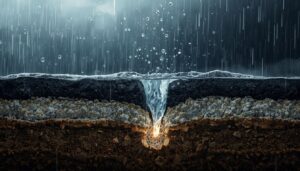
Rainwater isn’t as innocent as it looks. As it falls, it absorbs CO₂ from the air, turning into a mild carbonic acid solution — making rainwater a surprisingly effective water solvent.
Falling rainwater silently transforms into mild carbonic acid, making it nature’s most understated solvent
Once it soaks into the ground, soil CO₂ levels intensify this acidity further. That carbonic acid then triggers bicarbonate formation by pulling calcium and magnesium from surrounding rocks. This process contributes to hard water conditions.
Limestone, Chalk, and Dolomite

The rock type beneath your feet largely determines your water hardness. Limestone, made mostly of calcium carbonate, dissolves readily when exposed to carbonic acid. Chalk aquifers, due to their fine-grained, porous structure, release even higher calcium levels.
Dolomite and gypsum deposits follow similar patterns, and knowing which mineral-rich rock types cause the hardest water helps you understand what’s actually flowing from your tap.
Dolomite formation adds magnesium alongside calcium, as it contains both minerals. These carbonate rock types vary in mineral solubility, directly influencing limescale formation in your home.
Groundwater Mineral Absorption
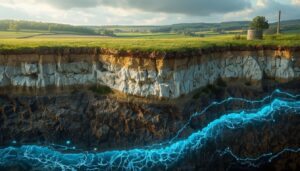
The journey water takes underground shapes everything you drink. Groundwater flow dynamics control how long water lingers against mineral surfaces — and longer contact means more absorption.
Fracture pathway effects accelerate mineral dissolution by exposing fresh rock faces to acidic water, multiplying surface contact and intensifying mineral intake.
Cation exchange reactions quietly swap ions, altering groundwater chemistry and analysis results before water reaches your tap, leading to unexpected shifts in mineral deposition patterns.
- Aquifer residence time determines how mineral-rich your water becomes
- Fractures multiply surface contact, spiking health concerns related to mineral intake
- Cation exchange alters mineral deposition unexpectedly
Temporary Vs. Permanent Hardness
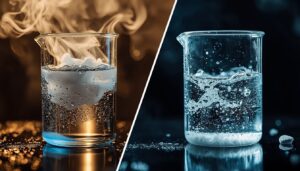
Not all hard water behaves the same way. Temporary hardness comes from dissolved bicarbonates and clears up when you boil water. Permanent hardness — driven by sulfates and chlorides — stays put no matter how long you heat it.
| Hardness Comparison | Mineral Composition | Water Treatment Options |
|---|---|---|
| Temporary Effects | Calcium/magnesium bicarbonate | Boiling works |
| Permanent Solutions | Calcium/magnesium sulfate or chloride | Ion exchange or reverse osmosis |
| Both Types | Mixed minerals | Combined water treatment methods |
Regional Differences in Water Hardness

The region where you live determines what flows from your tap. Limestone Bedrock Regions, such as the Midwest or Florida, sit over karst waters and chalk aquifers, resulting in hardness levels exceeding 180 mg/L. In contrast, Granite Geology Areas in the Pacific Northwest remain naturally soft. Climate variations also play a role—arid zones accelerate mineral concentration.
- Groundwater Dependence Levels drive hardness in farming regions
- Geographical factors in water hardness explain regional water characteristics and regional health disparities
- Water hardness comparison: soft mountain reservoirs vs. hard inland wells
How Water Hardness is Measured
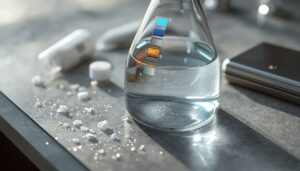
Knowing whether your water is hard or soft starts with understanding how it’s actually measured.
There are a few standard methods that water specialists and homeowners use to get a clear picture. Here is what each one means and why it matters.
Mg/L as Calcium Carbonate
When labs report water hardness, they express it as milligrams per liter of calcium carbonate — not actual limestone particles floating in your glass. This measurement standardizes calcium and magnesium levels through mineral conversion math: multiply calcium mg/L by 2.497 and magnesium mg/L by 4.118, then sum the results.
Water quality standards define 100 mg/L as calcium carbonate, which approximates 1 ppm (parts per million). This equivalence provides a clean, comparable weight analysis for consistent interpretation across any water source.
Grains Per Gallon Explained
You’ll also see water hardness levels reported in grains per gallon (gpg) — especially on softener capacity labels and hardness testing kits. One grain equals 64.8 milligrams of mineral content per US gallon. So at 12 gpg, your water carries about 648 milligrams of calcium and magnesium per gallon.
That’s a meaningful load driving scale buildup and pushing your water softening system harder every day.
USGS Hardness Classification
The USGS Hardness Classification gives those gpg numbers real meaning. Water hardness levels fall into four categories based on mineral content analysis: soft (0–60 mg/L), moderately hard (61–120 mg/L), hard (121–180 mg/L), and very hard (above 180 mg/L).
Regional water variability is significant — your groundwater quality assessment might land anywhere on that scale depending on local geology.
Home Water Hardness Tests
Knowing where your water falls on that scale is one thing — knowing how to check it yourself is another. Home testing gives you that control without waiting for a lab.
- Test Strip Kits – Dip, wait 15–30 seconds, match the color. Quick but limited to broad hardness steps.
- Drop Count Methods – More precise; count titration drops to calculate actual mg/L.
- Soap Lather Tests – No numbers, but cloudy water and thin suds tell their own story.
Digital TDS Meters estimate dissolved solids but can’t isolate calcium and magnesium — so they’re a supporting tool, not a substitute for real hardness testing.
Signs of Hard Water
Hard water leaves clues all over your home — you just need to know where to look. Some signs are obvious, while others quietly chip away at your appliances and plumbing over time.
Here are the most common ones worth paying attention to.
Understanding what causes sensitive skin and barrier breakdown can help you spot which triggers are quietly doing the most damage.
White Scale on Fixtures
That chalky white crust on your faucets? That’s limescale — calcium carbonate left behind as hard water evaporates. It builds up fastest on showerheads and faucet bases, where repeated wet-dry cycles stack fresh mineral deposits onto existing ones.
| Scale Removal Methods | Mineral Deposit Prevention |
|---|---|
| White vinegar soak | Dry fixtures after use |
| Citric acid solution | Install a water softener |
| Soft cloth scrubbing | Use a water conditioner |
Catching hard water stains early makes fixture cleaning tips like these far more effective.
Soap Scum and Poor Lather
Hard water turns a simple shower into a battle. When calcium and magnesium meet soap, the mineral-soap reaction creates insoluble soap scum instead of clean suds — leaving film on your skin and surfaces.
Lather challenges are real: less foam means you keep adding product. Here’s what’s actually happening:
- Minerals bind fatty acids first, reducing available surfactant
- Soap scum builds on walls and skin, trapping oils
- Cleaning product solutions with chelating agents cut through mineral interference
Cloudy Dishes and Stiff Laundry
Cloudy glasses and stiff towels are classic signs of hard water doing its quiet damage. Calcium and magnesium salts dry onto surfaces after every dishwasher cycle, creating mineral spots that regular detergent won’t touch. Your towels lose absorbency as mineral residue coats the fibers over time.
A vinegar rinse helps with mineral spot removal, while proper dishwasher maintenance and the right laundry detergent for hard water restore fabrics’ softness and dishwasher efficiency.
Reduced Water Pressure
Low water pressure is one of the sneakier signs of hard water. Mineral scale builds up inside your water pipes, slowly narrowing the path water travels through.
Faucet aerator issues and showerhead clogging are usually the first things you’ll notice. Valve cartridge problems and hot water restrictions follow.
Hard water quietly taxes your entire water infrastructure, cutting pressure one deposit at a time.
Buildup in Heaters and Appliances
Your home water heater is quietly working harder than it should. Heater scale buildup coats electric elements and tank floors, forcing appliances to use more energy just to hit the same temperature. Hard water appliances suffer the most — kettles, coffee makers, dishwashers all endure significant strain.
- White crust on heating elements = appliance damage control emergency
- Sediment rumbling in your tank means mineral particles are packing the floor
- Spray arm holes clog, so dishes come out dirtier than they went in
- Water hardness can slash appliance efficiency by up to 40%
Household descaling methods like citric acid or vinegar dissolve deposits fast. Pair them with water softening techniques, and mineral deposit prevention becomes routine — not a repair bill.
Hard Water Effects on Health
Hard water won’t make you sick, but it’s not completely off the hook either.
The minerals in your water can affect your body in ways that are easy to miss — from your skin to your sodium intake.
Here’s what you should know.
Dietary Calcium and Magnesium
Your tap water might actually be doing some quiet nutritional work. Hard water carries calcium and magnesium, two minerals your body genuinely needs for bone health and enzyme function.
Magnesium benefits include supporting over 300 cellular reactions, while calcium absorption keeps bones dense. Maintaining dietary mineral balance matters, though water softening reduces these minerals.
Don’t rely on your tap alone for mineral intake; it’s not a substitute for a balanced diet.
Skin Dryness and Hair Issues
Hard water doesn’t just hurt your pipes — it quietly works against your skin and hair too. Mineral buildup, including calcium and magnesium deposits, disrupts your skin’s natural pH, causing dry skin and tightness after every shower.
Hair texture changes are equally noticeable: strands feel coarse, look dull, and break faster. These issues stem from the same mineral residues that affect the scalp.
Relief for scalp dryness often begins with water softening solutions, which reduce the stubborn mineral load.
Hard Water and Eczema Concerns
Skin barrier damage goes deeper than dryness. If you have eczema, hard water affects can actively trigger flares — calcium and magnesium ions weaken your skin’s outer layer, making it easier for irritants to enter.
These mineral interactions also leave soap residue behind that’s hard to rinse off, keeping irritation going. Water softeners can reduce that cycle considerably.
Softened Water and Sodium Intake
Switching to soft water solves scale, but it adds sodium. Water softeners using sodium chloride swap calcium and magnesium for sodium — meaning harder water means more sodium ends up in your glass.
For most people, the amount is small. However, if you’re on a low-sodium diet, potassium chloride softening methods are worth considering. They handle water softening without raising sodium levels.
Lead Risks in Older Plumbing
Sodium isn’t the only hidden risk worth watching. If your home was built before 1986, lead service lines or older solder joints may be quietly affecting your drinking water quality through plumbing corrosion.
Here are five older home hazards to know:
- Lead service lines connecting to the water main are a primary contamination source
- Pre-1930 water pipes may be made of pure lead
- Pipe corrosion accelerates in soft, acidic water
- Water pipe contamination increases after nearby construction disturbs lines
- Lead exposure risks are highest for children and pregnant women
Testing is the only way to know for sure.
How to Treat Hard Water
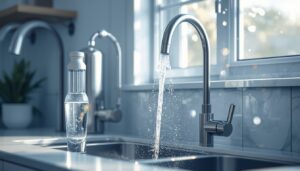
The good news is that hard water is treatable, and you have more options than you might think.
Your choice depends on your water hardness level, budget, and what problems you’re trying to solve.
Here are the most effective methods worth considering.
Ion Exchange Water Softeners
Ion exchange technology is one of the most effective hardness removal methods available. An ion exchange water softener pulls calcium and magnesium out of your water by swapping them for sodium ions inside a resin bed.
The resin regeneration process flushes those minerals out with a brine solution, resetting the system.
Water softener maintenance is straightforward — just keep the salt topped up and monitor sodium ion effects if you’re watching your dietary intake.
Salt-Free Water Conditioners
Salt-free water conditioners offer a low-maintenance path to mineral scale control without removing calcium and magnesium from your water. Using TAC media, these hard water solutions convert mineral particles into tiny suspended crystals that won’t stick to pipes or appliances.
There is no salt to haul, no brine tank to manage — just whole-house protection with simple filter replacements when needed.
Reverse Osmosis for Mineral Reduction
Reverse osmosis systems tackle water hardness at the source — the minerals themselves. The membrane technology inside these units filters out 92 to 99 percent of dissolved calcium and magnesium, delivering near-pure water quality at your tap.
Here’s what this water purification method removes:
- Calcium — up to 97%
- Magnesium — up to 96%
- Fluoride — around 95%
- Sulfates and iron — considerably reduced
That’s serious mineral reduction without an ion exchange process.
Boiling for Temporary Hardness
Boiling hard water works — but only halfway. When you boil, the heat triggers mineral precipitation, pushing calcium and magnesium bicarbonates out of solution as solid scale. This handles temporary hardness.
Permanent hardness from sulfates, however, remains unaffected by boiling.
| Factor | Boiling Effects |
|---|---|
| Temporary Hardness | Removed |
| Permanent Hardness | Remains |
| Scale Removal | Partial |
Descaling With Vinegar or Citric Acid
Acidic solutions are your best weapon against stubborn limescale. White vinegar descaling works well—a 50/50 vinegar-and-water mix left for about an hour breaks calcium carbonate into soluble particles.
Citric acid is faster and odor-free, making it ideal for kettles and coffee makers. Both support natural cleaning without harsh chemicals, though citric acid rinses cleaner after mineral removal.
Maintenance and System Selection
Before committing to any water softening system, check your plumbing compatibility first — some older pipes are incompatible with softened water. A whole-house water softener requires regular salt refills and resin cleaning to remain effective.
Consider scalability needs as well: will one system cover your whole home long-term? Consistent plumbing maintenance and smart system selection ensure your water treatment methods function without unexpected issues.
Frequently Asked Questions (FAQs)
What makes water hard?
Think of water as a sponge — it picks up whatever it travels through.
Mineral composition, mainly calcium and magnesium levels from geological sources, drives water hardness through natural groundwater chemistry analysis.
How to identify if you have hard water?
White scale on faucets, poor soap lather, and cloudy dishes are classic mineral deposit clues.
Home hardness tests and water test kits confirm water hardness levels through simple mg/L readings.
What is hard water?
Hard water is simply water with high levels of dissolved minerals — mainly calcium and magnesium — picked up as groundwater moves through limestone and rock layers over time.
Is water hard or soft?
Your water’s mineral content tells the whole story. Run a Water Hardness Test, and you’ll instantly see whether calcium and magnesium levels push it toward hard or soft.
Is hard water safe to drink?
Hard water is generally safe to drink, as its mineral content poses no serious health risks for most people. Proper water quality testing can confirm your supply meets drinking water safety standards.
How does hard water affect gardening and plant growth?
Watering with high mineral content can quietly throw off soil pH levels, disrupt plant nutrient uptake, cause root zone damage, trigger garden scale buildup, and create irrigation system issues that leave your plants struggling.
Can hard water stain colored fixtures?
Chalky, clingy, and completely stubborn — mineral deposits land on colored fixtures and stay.
Calcium-based residue dulls finishes, erodes enamel, and leaves white limescale stains that deepen over time without regular removal.
Does boiling hard water reduce hardness?
Boiling hard water does reduce hardness, but only partially. It eliminates temporary hardness by converting dissolved calcium and magnesium bicarbonates into solid scale.
Permanent hardness from sulfates remains unaffected — boiling won’t touch it.
How does hard water affect pets?
Your pets feel hard water’s grip too. Mineral buildup can quietly trigger urinary health issues, skin issues, and kidney stress in cats — especially in male cats, who are particularly at risk from hard water.
Can hard water damage plant growth?
Repeated watering with mineral-heavy water causes soil pH imbalance, plant nutrient lockout, and mineral buildup effects. These issues inhibit root growth and reduce overall plant vigor over time.
Conclusion
Hard water doesn’t have to be the silent culprit behind dull hair, spotty dishes, and failing appliances.
Now that you understand what’s flowing through your pipes, you can match the right fix to the real problem—whether that’s a whole-house softener, a descaling routine, or simply knowing your regional mineral levels.
Testing your water takes minutes. Acting on what you find protects your home for years. That’s a straightforward trade worth making.