This site is supported by our readers. We may earn a commission, at no cost to you, if you purchase through links. This content is for general informational and educational purposes only and is not a substitute for professional medical, dermatological, or nutritional advice.

The moment those scissors close and the relaxed ends hit the floor, something shifts—not just your hair, but how you carry yourself. The big chop isn’t a trend or a style experiment.
It’s a clean break from years of chemical processing, a way of saying you’re done maintaining hair that was never quite yours to begin with.
For Black women especially, it marks the starting point of a natural hair journey built on real texture, real growth, and real care.
Whether you’re on the fence or already reaching for the shears, understanding what the big chop actually involves makes all the difference.
Table Of Contents
- Key Takeaways
- What is The Big Chop?
- Why People Choose Big Chop
- Preparing for Your Big Chop
- How to Do Big Chop
- Caring for Hair After Chop
- Frequently Asked Questions (FAQs)
- What does big chop mean in urban dictionary?
- What is a big chop in black culture?
- What is a big chop?
- What is a big chop for hair?
- Is a big chop right for You?
- Why should you eat a big chop?
- Is a big chop a good haircut?
- What does a big chop mean?
- How long does hair grow back after a big chop?
- Is the big chop better than transitioning?
- Conclusion
Key Takeaways
- The big chop removes all chemically processed ends at once, giving your natural curl pattern a clean, undivided start from day one.
- Cutting to a TWA eliminates the two-texture struggle, which means less breakage, faster styling, and a simpler product routine right away.
- Prepping emotionally, finding a stylist who knows natural texture, and collecting inspiration photos make the whole experience feel intentional rather than impulsive.
- After the chop, consistent moisture—through the LOC method, gentle detangling, and regular trims—is what actually keeps your new growth thriving.
What is The Big Chop?

The big chop is one of those decisions that can feel huge before you make it, but incredibly freeing once you do. Essentially, it’s a fresh start — cutting away chemically processed hair to let your natural texture finally breathe.
For many, it’s the moment everything clicks — a full guide to going natural from relaxed hair can help you feel ready before those scissors ever touch your strands.
Here’s what the big chop really means, from definition to how it compares to a gradual shift.
Big Chop Definition
The big chop is your chemical reset process — a bold, intentional cut that removes chemically treated hair so your natural texture can take center stage.
It’s become a powerful natural hair catalyst, especially for Black women ready to stop fighting their curl pattern.
Unlike shifting to natural hair gradually, the big chop pursues texture uniformity goal immediately, making it the fastest, cleanest way to start fresh.
Relaxed Ends Removal
Relaxed ends removal is your Transformation Completion Ritual — the moment your hair transformation actually ends. That visible line of demarcation, where your natural roots meet chemically altered ends, becomes your guide. You cut right there, eliminating damaged strands and achieving texture uniformity across every inch.
Studies highlight the benefits of cutting relaxed ends(http://www.latoyajonesblog.com/2015/11/3-reasons-to-cut-your-relaxed-ends-off.html).
Here’s what that Emotional Transformation Moment actually means:
- Your relaxed hair is permanently altered — it won’t revert
- Immediate Length Reduction happens, sometimes dramatically
- The line of demarcation shows exactly where to cut
- Damaged Strands Elimination leaves hair feeling fuller, thicker
- Shifting to natural hair officially becomes your new reality
TWA Hair Length
Once those relaxed ends are gone, you’re left with what’s called a TWA — a teeny weeny afro.
It usually lands between a quarter inch and two inches, sitting close to your scalp.
That short afro is actually perfect for Coil Enhancement and Density Illusions through smart styling.
| TWA Growth Stages | Hair Length |
|---|---|
| Fresh big chop | ¼ – ½ inch |
| Early natural hair | ½ – 1 inch |
| Growing phase | 1 – 1½ inches |
| Late TWA | 1½ – 2 inches |
| Hair moving out | 2+ inches |
Natural Texture Reveal
Here’s where the magic actually happens — your natural texture finally gets to show up as itself.
Once the processed hair is gone, your curl patterns emerge in their truest form. This Revelation Stage can honestly feel like meeting yourself for the first time. Moisture role is everything here; well‑hydrated hair reveals cleaner clumps and clearer curl definition.
When processed hair is gone, your truest curl patterns emerge — like meeting yourself for the first time
Five things that shape your Natural Texture Reveal:
- Scalp Health directly affects how healthy and defined your new growth looks
- Moisture levels help curls clump together instead of frizzing apart
- Shrinkage makes curls appear tighter at shorter lengths — totally normal
- Community Support from natural hair spaces helps you read and embrace your pattern
- Confidence Boost comes naturally when you finally see your real hair responding freely
Big Chop Versus Transitioning
Choosing between the big chop and progressing to natural hair really comes down to what matters most to you.
Either way, keeping your edges sharp matters—a solid beard trimming guide for beginners can help you nail the clean lines that pull the whole look together.
The big chop delivers immediate results — one texture, one routine, no line of demarcation drama.
Progressing to natural hair lets you hold onto length longer, but managing chemically treated hair alongside new growth means more hair breakage risk, trickier styling flexibility, and shifting maintenance schedules as your ratio changes.
Why People Choose Big Chop

People choose the big chop for a lot of different reasons, and most of them come down to one thing — wanting a fresh start.
Whether you’re tired of managing two textures or just ready to see what your natural hair can really do, the reasons are real and worth knowing. Here are the most common ones that push people to finally make the cut.
Faster Natural Hair Journey
The big chop is honestly the fastest reset button for your natural hair journey. Instead of waiting months to grow out the relaxed ends, you start fresh right away.
From there, low-manipulation styles and protective styles like twists and braids help you track real growth without the setbacks. Add scalp massage and solid hair nutrition, and you’re building momentum from day one.
Less Texture Breakage
When you remove those old, processed ends, something shifts — your natural hair actually gets to breathe. Split ends travel upward and create weak spots, but the big chop cuts that damage cycle short. Think of it as friction reduction and tension relief happening at once.
Here’s what improves right away:
- Cuticle health smooths out, helping with moisture lock
- Hair breakage prevention starts from day one
- Moisture retention improves because shorter strands condition faster
- Damage prevention becomes easier to maintain long-term
Easier Daily Styling
Short natural hair honestly changes your whole morning. A quick rinse, a little leave-in, and you’re out the door — no detangling marathon required. Your short afro or tapered cut dries fast, and a light curl cream keeps everything fresh between wash days.
| Quick Win | How It Helps |
|---|---|
| Quick Drying | Less wait time after washing |
| Refresh Techniques | Mist and go — no full reset |
| Nighttime Protection | Satin bonnet locks your shape in |
| Accessory Styling | Headbands finish the look instantly |
Low maintenance hairstyles and consistent scalp care make the big chop feel like a real fresh start.
Healthier Curl Definition
Once you cut away the relaxed ends, your natural curl definition has room to actually show up. Healthy cuticles lie flat, sealing in moisture and supporting real pattern clarity.
Switching to a microfiber cloth is one of the simplest wins — explore more curly hair styling tips for humidity to keep those freshly defined curls looking their best all day.
With the right moisture balance, protein support, and leave-in conditioners, your curls develop elasticity and bounce back with shape. The big chop gives natural hair the clean start it needs for consistent, beautiful curl definition.
Simpler Product Routine
One of the quiet wins of the big chop is how much your product shelf shrinks.
Natural hair with one uniform texture is just easier to work with.
A sulfate-free cowash, a single leave-in conditioner, and a lightweight gel for styling are honestly all you need.
Minimal cleansing prevents buildup, single moisturizers keep things light, and your chemical‑free hair routine means you adjust washes as your hair tells you what it wants.
Preparing for Your Big Chop

The big chop is a bold move, and a little prep work goes a long way before you pick up those shears. Getting clear on a few things ahead of time means you’ll walk into this decision feeling grounded, not guessing.
Here’s what to think through before you make the cut.
Your hair length, face shape, and maintenance routine all play a role, so it helps to compare options with this guide to buzz cut lengths before you decide.
The right style should work with what you’ve got, not against it, which is why these hairstyles for balding men focus on cuts that complement thinning hair instead of drawing attention to it.
Check Emotional Readiness
Before you book that appointment, take a moment to check in with yourself. The big chop is a real identity reset, and emotional triggers like outside opinions or shrinkage shock can catch you off guard.
Build your support network early, pick a calm time with low-stress timing, and think through your regret management plan.
Your natural hair journey starts from the inside out.
Choose Natural Hair Stylist
Once you’re emotionally grounded, finding the right hair stylist makes all the difference. Look for someone who leads with texture expertise and health-focused care, not just trends.
A good salon consultation means they ask questions, assess your curl pattern, and explain their gentle handling techniques before touching a single strand. Stylist communication skills tell you everything — trust that instinct.
Collect Haircut Inspiration
Now that you’ve got your stylist locked in, start building your inspiration board.
Save inspiration photos that show Texture Matching styles similar to yours—front and side angles both. Pin big chop hairstyles, natural big chop hairstyles, and even 4c hair big chop haircut examples.
Note Target Lengths, Part Options, Color Ideas, short pixie, and tapered cut looks you’d actually wear.
Know Your Curl Pattern
Your inspiration board is ready, so now comes the fun part—curl type identification. Your curl pattern shapes everything, from product picks to how your big chop will actually look.
Wavy, corkscrew curl, or kinky curl? Texture analysis gets clearer when your hair is freshly washed and air-dried.
Pattern mixing is real, too—your 4C hair big chop haircut sections may coil tighter than others, and shrinkage factors can make your natural length look totally different dry versus stretched.
Decide DIY or Salon
DIY the big chop saves money on shears and salon fees, but the Cost Comparison goes deeper than that. Skill Requirements matter too—cutting your own back sections evenly is genuinely tricky.
A hair salon brings Aftercare Support right there in the chair, and that guidance is worth a lot.
Weigh your Time Commitment, budget, and Damage Risks honestly before you decide.
How to Do Big Chop
Whether you’re doing this at home or in a salon, the actual cut is easier than you’d think. You just need the right tools, a little patience, and a clear plan.
Here’s exactly what to do, step by step.
Use Sharp Hair Shears
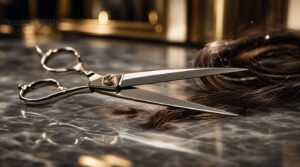
Your shears are the real MVP of a DIY big chop moment. Dull blades fold hair instead of cutting it cleanly, and that’s exactly how you end up with split, ragged ends — the opposite of a fresh start when embracing natural hair. Sharp shears glide through with one smooth motion, giving you clean cuts every time.
- Shear Maintenance matters: sharpen your shears regularly so blade alignment stays true
- Prevent Splitting: one clean stroke beats several hesitant ones
- Point Cutting: use the tips for soft texture, not bulk removal
Wash and Air Dry

Before you even pick up those shears, your wash day sets the whole thing up. Use a sulfate-free co-wash or cleansing conditioner, focus the shampoo on your scalp, and work the conditioner through your ends. Rinse with lukewarm water, then air dry in a well‑ventilated room — high humidity slows drying and invites frizz.
| Step | What To Do |
|---|---|
| Rinse Temperature | Lukewarm, never scalding hot |
| Product Zones | Shampoo scalp, conditioner on ends |
| Sectioning Methods | Divide hair to rinse evenly |
| Drying Conditions | Good airflow, low humidity |
| Humidity Impact | Avoid damp rooms while setting |
Find Demarcation Line
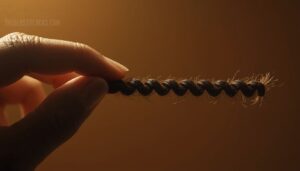
That texture shift is your roadmap — you just have to read it.
Run your fingers slowly down each strand and feel where the curl pattern contrast shifts from tight and coily to straight and limp.
That’s your growth boundary height, and it’s your cut line.
Near your hairline and part lines, line detection methods get easier because the relaxer’s old work shows up clearly.
Trust what you feel.
Cut in Small Sections
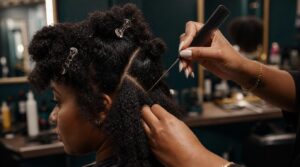
Small sections are your secret weapon here. When you section your hair with clips for sectioning, you get real precision benefits — better tension techniques, cleaner lines, and true evenness strategies that keep your big chop looking intentional.
Whether it’s a DIY haircut or salon visit, section your hair into manageable parts. That style consistency is what separates a sharp short tapered cut from a rough one.
Shape Your Short Style
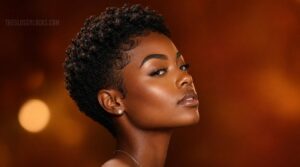
Your short style is where the real magic happens. Once the length is gone, every decision — face framing, crown volume, and nape lines — shapes how your big chop hairstyles actually land on you.
- A short pixie or curly mohawk plays with crown volume for bold lift.
- Clean nape lines define whether your look reads sharp or soft.
- Parting techniques shift your face shape’s balance and silhouette.
- Texture definition brings your curl pattern fully to life.
Caring for Hair After Chop
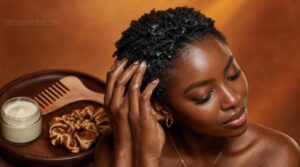
The big chop is just the beginning — now comes the part where your natural hair actually gets to thrive. Your new growth needs consistent care to stay moisturized, strong, and defined.
Here’s what to focus on after the cut.
Moisturize Short Natural Hair
Once you’ve done the big chop, your hair drinks up moisture fast, so keeping it hydrated is everything.
Start with water spritzing to wake up your coils, then layer on leave-in conditioners packed with humectant benefits — think glycerin or aloe — to pull softness in. Finish with oil sealing techniques or butter application to lock it all in.
Quick moisture refresh tips like this keep your natural hair movement bouncy and defined.
Try The LOC Method
The LOC method makes product layering simple and effective. Start with a liquid leave-in (LeaveIn), then seal with coconut and jojoba oils, and finish with a cream styling product. These beginner LOC steps work together like a moisture lock for your coils:
- Liquid hydrates and preps each strand
- Oil seals the moisture in
- Cream adds definition and softness
- Lightweight oils prevent heaviness
- A moisturizing conditioner treatment boosts results on wash day
Seasonal LOC tips matter too — use richer creams in winter.
Fixing LOC problems usually means adjusting amounts per section.
Detangle Gently When Wet
Your moisture routine means nothing if you’re ripping through tangles dry.
Wet your hair first, coat it with a leave-in conditioner for that conditioner slip, then work in small sections using end-upward motion.
Wide-tooth combs glide through knots without forcing them.
Finger‑loosen stubborn spots before the comb follows.
Finish by squeezing — never rubbing — with a microfiber towel.
Avoid Heat Damage
Your curls are finally free — don’t send them back into heat’s grip.
After a big chop, keeping heat tools out of your natural hair routine as much as possible makes a real difference. When you do style with heat, follow these five rules:
- Always apply a heat protectant before touching any hot tool
- Set your flat iron to the lowest temperature that works
- Make one controlled pass per section — not three
- Limit heat styling to two or three times a week
- Air dry first so tools spend less time on your hair
Maintain Regular Trims
Every 4 to 8 weeks is your sweet spot after a big chop — trim frequently and your hair health stays on track.
Skipping trims lets split ends travel up the shaft, slowing hair growth and inviting breakage.
Use sectioning for symmetry, precision end trimming, and shape blending methods to keep your TWA clean.
| Trim Scheduling Tips | Hair Health Checks | Breakage Prevention |
|---|---|---|
| Every 4–8 weeks post-chop | Look for forked or see-through tips | Cut only 1–2 cm of damage |
| Monthly if curls tangle fast | Test elasticity at ends | Detangle before each trim |
| Adjust sooner if shedding spikes | Check ends in good light after washing | Section evenly for clean shape |
Frequently Asked Questions (FAQs)
What does big chop mean in urban dictionary?
Sometimes the boldest fresh start begins with a single cut.
For black women, the big chop is more than a hair evolution—it’s an identity transformation and empowerment symbol, rooted in community support and cultural significance.
What is a big chop in black culture?
In Black culture, the big chop is more than a haircut — it’s an Empowerment Journey rooted in Cultural Identity and Historical Roots, where black women reclaim their natural texture and shed years of Chemical Relaxers for good.
What is a big chop?
The big chop is your Chemical Freedom moment — a single cut that removes all relaxed ends, giving your natural texture its Curl Debut and starting a true Natural Reset from root to tip.
What is a big chop for hair?
hair shift that cuts away all relaxed or chemically treated ends, leaving only your natural growth. It’s a bold reset—one move that takes you from two textures to one, instantly.
Is a big chop right for You?
Only you can answer that.
It comes down to lifestyle changes you’re ready to make, how much maintenance commitment you’re willing to give, and whether your self-image can embrace a bold, fresh start.
Why should you eat a big chop?
You don’t "eat" a big chop — you embrace it. It’s a bold move toward freedom, healthier strands, and owning your natural texture without apology.
Is a big chop a good haircut?
For black women embracing natural hair, it’s more than a haircut.
It’s an empowerment journey that strips away maintenance needs, crushes growth myths, and lets your natural texture finally breathe.
What does a big chop mean?
A big chop means cutting off all your chemically treated hair in one bold move, leaving a short TWA and letting your true natural texture finally take over.
How long does hair grow back after a big chop?
Like clockwork, your hair grows half an inch monthly — that’s roughly six inches yearly.
Your growth rate factors, genetics, and moisture all shape your visible growth timeline after your hair phase begins.
Is the big chop better than transitioning?
Neither is universally better. Shifting to natural hair lets you keep length longer, while the big chop gives you one clean texture fast.
It really comes down to your lifestyle and patience.
Conclusion
A year from now, you’ll look back at this moment as the one that changed everything.
The big chop isn’t just a haircut—it’s the beginning of learning what your hair actually does when it’s free.
You’ll discover curl patterns you never knew you’d have, build a routine that finally makes sense, and stop chasing someone else’s standard.
Your texture is worth knowing. Give it the chance to what it’s capable of.