This site is supported by our readers. We may earn a commission, at no cost to you, if you purchase through links. This content is for general informational and educational purposes only and is not a substitute for professional medical, dermatological, or nutritional advice.
Your shampoo bottle might promise thicker hair, but the black gel in your hand can’t reach your follicles. Activated charcoal sits on the surface of your scalp, grabs oil and residue, and rinses away with the water.
That’s useful, and it’s also where the story stops. Searching for activated charcoal for hair growth turns up bold claims, yet no human trial backs them. What charcoal does well is clear buildup (think hairspray, hard water minerals, and extra sebum), which can make fine hair look fuller at the roots.
Here’s what it can and can’t do for you, how to use it safely, and which risks deserve your attention.
Table Of Contents
- Key Takeaways
- What is Activated Charcoal, and How Does It Work in Hair Care?
- Does Activated Charcoal Help Hair Growth? Evidence and Limitations
- Activated Charcoal for Scalp Buildup, Oil, and Fuller-Looking Hair
- How to Use Activated Charcoal in Your Hair Care Routine
- Activated Charcoal Hair Risks: Dryness, Staining, and Scalp Irritation
- Frequently Asked Questions (FAQs)
- What ingredients grow hair fast?
- What toxins does activated charcoal remove from the body?
- Is it good to use activated charcoal on my face?
- Is charcoal good for your scalp?
- Can activated charcoal reverse existing hair loss?
- Does activated charcoal work for thinning hair?
- How long until charcoal shows hair growth results?
- Is activated charcoal safe during pregnancy or breastfeeding?
- Can you combine charcoal with other growth treatments?
- Can activated charcoal cause hair loss?
- Conclusion
Key Takeaways
- Activated charcoal can’t help your hair grow, because it only sits on your scalp’s surface and no human trial has shown it reaches follicles or changes growth.
- What it does well is lift oil, product buildup, and hard water residue off your scalp, which can make fine or oily hair look fuller at the roots.
- You’ll get the best results by using it about once a week (less often if your hair is dry, damaged, or color-treated), since overuse can dry your scalp and fade dye.
- If you’re shedding more than usual, or your scalp itches, burns, or swells for weeks, see a dermatologist rather than adding another charcoal treatment.
What is Activated Charcoal, and How Does It Work in Hair Care?
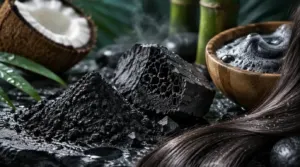
Charcoal that’s been heated and treated to become porous is what makes activated charcoal different from the ash in your fireplace. Manufacturers start with wood, coconut shells, or bamboo, then heat it with steam or chemicals. This creates millions of pores.
Those pores let it work through adsorption, not absorption. Think of a sponge versus Velcro: oil, dirt, and product buildup stick to the surface instead of soaking in. Water rinses them away.
Pair that gentle cleansing with a cool rinse afterward, and you’ll find our step-by-step shave preparation guide shows exactly how to get calmer, smoother skin.
Activated charcoal works like Velcro, not a sponge: oil, dirt, and buildup cling to its surface, and water rinses them away
In hair care, that makes it useful for scalp cleansing, especially with an oily scalp. It binds mostly to oils and residue, not to keratin, so it cleans without chemically changing your hair. Charcoal shampoo can also soothe itchy, flaky scalps by drawing out deep-rooted impurities without affecting natural moisture levels. It stays on the surface, so it can’t reach follicles or drive hair growth.
Does Activated Charcoal Help Hair Growth? Evidence and Limitations
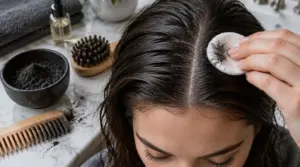
No, there’s no solid proof that activated charcoal helps hair growth. No clinical trial in humans has tested it, and dermatologists call most growth claims marketing.
That fits what you just read. Charcoal binds to oil and residue on the surface, so it can’t reach the follicle or change how hair grows. It also has no vitamins, minerals, or growth factors to feed your follicles.
What it can do is support scalp cleansing. Clearing product buildup may leave your scalp calmer, and your existing hair may look healthier (a bit like wiping dust off a window). That’s a cosmetic gain, not new growth.
For real hair loss treatment, proven options like minoxidil work in ways charcoal doesn’t. If you’re shedding more than usual, see a dermatologist.
Activated Charcoal for Scalp Buildup, Oil, and Fuller-Looking Hair
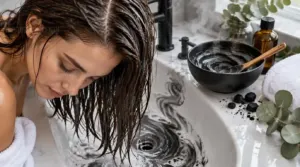
Where charcoal does earn its place is on the scalp surface. Styling products, hard water minerals, and oil pile up at your roots, and that scalp buildup weighs hair down.
If you use wax regularly, the pros and cons of hair wax can help you decide how much product your roots can really handle.
Activated charcoal grabs onto that residue and excess sebum, then lets go when you rinse. It adsorbs rather than absorbs, so the gunk stays stuck to the charcoal instead of settling back onto your scalp.
The payoff is practical. Your roots stay fresh longer, and fine hair often looks lifted because nothing is flattening it. Think of it as a clarifying wash that cleans without the harshness of many sulfate formulas.
That’s hair volume enhancement by cleaning, not by thickening. (Your strand count stays the same.) It works best if your scalp runs oily.
How to Use Activated Charcoal in Your Hair Care Routine
Using activated charcoal well comes down to a few simple choices. Next, you’ll see how to pick the right shampoos and masks, make a safe DIY mix, and set a schedule that suits your hair type. Take these one at a time, and you’ll stay in control of how your scalp and strands respond.
Choosing Charcoal Shampoos and Masks
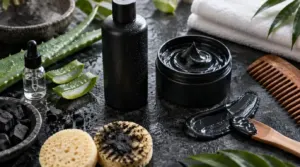
Picture a sponge clogged with grime. That’s your scalp after product buildup. A charcoal shampoo helps with scalp detoxification, but check the label first:
- Charcoal sits in the top half of the ingredients.
- Concentration runs 0.5% to 2%.
- pH lands between 4.5 and 5.5.
- Aloe or glycerin softens the cleanse.
Use a charcoal hair mask weekly, not DIY charcoal treatment.
DIY Charcoal Masks: Safety and Application

You can make a DIY charcoal mask at home, but keep it simple. Stir food-grade activated charcoal into water until it’s a smooth paste, using a glass or wooden bowl. Apply it to your scalp only, then try a gentle scalp massage for two minutes.
Leave it on for 15 minutes, no longer. Rinse well, then condition your ends. It won’t boost hair growth, but it can support scalp detoxification.
Treatment Frequency by Hair Type
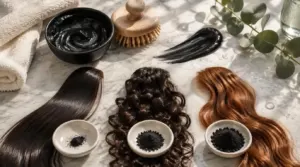
The right schedule depends on your hair type. Activated charcoal acts as a clarifying wash, not a hair growth booster.
If you have an oily scalp or fine hair, use it once weekly. Curly hair can handle once or twice weekly. Dry, damaged, or color-treated hair needs just 1-2 times monthly.
Pause scalp exfoliation whenever it feels tight or dry.
Activated Charcoal Hair Risks: Dryness, Staining, and Scalp Irritation
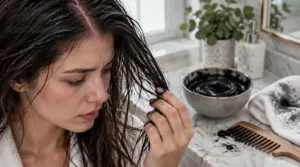
Activated charcoal is gentle for many people, but it isn’t risk-free. The main problems are dryness, staining, and scalp irritation, and they show up more often than you’d expect. Here’s what to watch for, so you can use it with more control and less guesswork.
Color-Treated and Light Hair Precautions
Could your charcoal shampoo be dulling your color? With colortreated hair, activated charcoal can cause temporary staining on light shades and fade dye faster. (Staining usually clears within a few washes.)
Follow these steps:
- Patch-test first.
- Choose sulfate-free formulas.
- Limit use to bi-weekly.
- Skip daily scalp exfoliation for hair breakage prevention.
Dryness makes strands brittle, so alternate charcoal with moisturizing masks.
Dandruff Versus Dryness and Irritation
Flakes look alike, but oil and moisture pull opposite ways.
| Sign | Dandruff | Dry scalp |
|---|---|---|
| Flakes | Large, yellow | Small, white |
| Scalp | Oily, red | Tight, dry |
| Hair | Greasy | Brittle |
| Itch | Moderate to severe | Mild |
Oily flakes suit dandruff shampoo for flake reduction. Dry scalps struggle with activated charcoal, which can disturb scalp pH balance. Seek itchy scalp relief gently, and patch test.
When to See a Dermatologist
Activated charcoal usually behaves, but sometimes it doesn’t. See a board-certified dermatologist if you notice:
- Itching or burning beyond four to six weeks.
- Swelling, tenderness, or a rash after use.
- Thick, spreading scale.
- Hair loss that threatens hair growth.
- Joint pain, nail changes, or fever.
Don’t wait it out. Your scalp health matters, and sebum regulation won’t fix these problems.
Frequently Asked Questions (FAQs)
What ingredients grow hair fast?
In one clinical trial, rosemary oil matched 2% minoxidil after six months.
Caffeine and rosemary oil help most, while activated charcoal helps scalp health, sebum regulation, and dandruff reduction. None really promise fast hair growth.
What toxins does activated charcoal remove from the body?
Does it detox you? Its toxin binding works in your gut, on some swallowed drugs. Heavy metal adsorption is poor, pollutant removal and free radical scavenging aren’t shown, and after toxin absorption, it can’t help.
Is it good to use activated charcoal on my face?
Yes, it can be good for your face, especially if your skin runs oily. Activated charcoal adsorbs excess sebum and dirt, so it acts as a gentle detoxifier. Try it two or three times weekly, and rinse well.
Is charcoal good for your scalp?
Think of your scalp like a kitchen counter: it needs a wipe now and then. Activated charcoal helps by adsorbing excess sebum and buildup, giving deep cleansing for better scalp health. Use it sparingly, since overuse can dry you out.
Can activated charcoal reverse existing hair loss?
You might wonder if a good deep clean could wake up dormant follicles. Sadly, no. Activated charcoal can’t reverse hair loss, and no clinical trial shows it restores hair growth. It helps scalp health by clearing buildup, nothing more.
Does activated charcoal work for thinning hair?
Think of charcoal as a broom, not a seed. Activated charcoal sweeps buildup off your scalp, which helps scalp health and follicle oxygenation. But no trials show it reverses thinning hair or boosts hair growth. Minoxidil does.
How long until charcoal shows hair growth results?
Don’t expect a jungle overnight. You’ll notice better scalp health within 2 to 4 weeks, but charcoal doesn’t speed up hair growth.
Thicker-looking hair takes 3 to 6 months, as hair follicle health improves slowly.
Is activated charcoal safe during pregnancy or breastfeeding?
Funny how a black powder sold for "detox" is the one thing you shouldn’t use to detox right now. Activated charcoal is possibly safe in pregnancy and breastfeeding, only with medical supervision. It can bind nutrients and medications, so ask your provider first.
Can you combine charcoal with other growth treatments?
Think of charcoal as a reset button, not a rival. Yes, activated charcoal can sit alongside your hair growth routine. Use it on non-treatment days, and rinse well so minoxidil isn’t absorbed. Add coconut oil or tea tree oil afterward for scalp health.
Can activated charcoal cause hair loss?
Not directly, but it can happen indirectly. Overusing activated charcoal strips your scalp’s natural oils and irritates it, which can lead to breakage and shedding. Cut back if your scalp feels tight, flaky, or sore.
Conclusion
Maybe you’re thinking, "If it can’t grow hair, why bother?" Fair question. Charcoal earns a spot when buildup is the problem.
Using activated charcoal for hair growth will disappoint you, but using it to clear residue can make your roots look fuller. Keep it to once a week, protect color-treated or light hair, and stop if your scalp stings. Persistent shedding needs a dermatologist, not another mask. Treat charcoal as a reset.