This site is supported by our readers. We may earn a commission, at no cost to you, if you purchase through links. This content is for general informational and educational purposes only and is not a substitute for professional medical, dermatological, or nutritional advice.

You’ve probably been brushing your hair while it’s soaking wet and wondering why it keeps snapping. Here’s the thing: wet hair is at its weakest, and your regular brush is yanking knots tighter instead of loosening them. That’s exactly why a shower comb will change your hair.
A wide-tooth comb used in the shower, with conditioner still in your hair, glides through tangles without the tearing. It spreads conditioner evenly, calms frizz, and keeps breakage way down. Small tool, big difference.
Once you learn the right way to use one, you’ll wonder how you ever detangled without it.
Table Of Contents
- Key Takeaways
- Why Can a Shower Comb Change Your Hair?
- How Does a Shower Comb Reduce Tangles, Frizz, and Breakage?
- How Should You Use a Shower Comb Safely?
- When is The Best Time to Use a Shower Comb?
- How Do You Choose and Clean a Shower Comb?
- Frequently Asked Questions (FAQs)
- Is it good to use a comb in the shower?
- What is the best comb to use in the shower?
- Should you always comb your hair after showering?
- Does brushing your hair in the shower damage your hair?
- Can a shower comb work on curly hair?
- Is shower combing suitable for color-treated hair?
- Can shower combing improve scalp health over time?
- Can children safely use a shower comb?
- Conclusion
Key Takeaways
- Wet hair is at its weakest at its weakest and most breakage-prone, so a wide-tooth shower comb used with conditioner in lets you detangle gently instead of snapping strands.
- Apply conditioner first and let it sit 2–5 minutes, then comb from your ends upward in small sections, avoiding combing under running water.
- The wide, rounded teeth loosen knots, spread conditioner evenly, smooth cuticles to fight frizz, and even stimulate scalp blood flow for healthier growth.
- Choose a plastic or silicone wide-tooth comb with smooth tips, clean it with warm soapy water, and replace it every 6–12 months when it starts bending or cracking.
Why Can a Shower Comb Change Your Hair?

Why does a simple shower comb make such a difference? Because when your hair is wet and coated in conditioner, it’s at its most vulnerable, and your fingers or a brush can snap strands easily. A shower comb lets you detangle hair gently, spreading conditioner evenly so every strand gets moisture and shine. Experts like Jonathan Van Ness recommend this technique for distributing conditioner evenly, which boosts hydration and helps define natural curl patterns.
You’ll also feel the scalp benefits. The comb’s teeth stimulate blood flow to your scalp, which helps healthier roots and, over time, better growth. It’s a small habit with real payoff.
If you’re not sure where to start, this guide to natural products for dry, damaged hair repair pairs perfectly with the routine.
If you’ve been fighting frizz or breakage, this is your sign to try it. Gentle hair handling in the shower sets the tone for everything that follows, and once you start, you won’t go back. Trust me, your hair will thank you.
How Does a Shower Comb Reduce Tangles, Frizz, and Breakage?
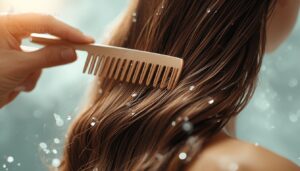
So how does a shower comb actually work its magic? When you detangle hair with wide-spaced teeth, the comb separates clumped strands instead of yanking them, so knots loosen instead of tightening. Less snagging means fewer lifted cuticles, and that’s your frizz control right there, because smooth cuticles reflect light evenly instead of puffing up.
A shower comb’s wide teeth loosen knots gently instead of yanking, keeping cuticles smooth and frizz away
It’s also hair breakage prevention in action. Gentle, slow passes spread tension across many strands, so no single weak spot takes the beating. Wet hair combing with conditioner lowers friction, letting strands slide apart rather than tear.
Keep these in mind:
- Wide teeth catch less and glide more
- Rounded tips protect fragile curl patterns
- Fewer passes mean less cumulative fatigue
- Lubricated strands resist snapping
- Even tooth contact distributes pulling force
Small tool, big science.
How Should You Use a Shower Comb Safely?
So you’ve got your shower comb, and now you want to use it the right way, yes? Good, because technique matters here, and a few small habits make all the difference for your hair. Below, you’ll find the key steps for safe shower combing, so keep reading and you’ll be detangling like a pro in no time.
If you’re building a fuller curly hair routine around this technique, our guide to a curly hair care routine pairs perfectly with these combing habits.
Apply Conditioner Before Detangling
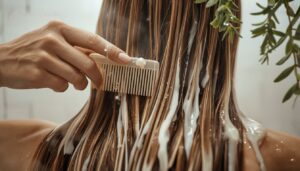
Imagine this: your fingers sink into creamy conditioner, and suddenly every strand feels slick, soft, and ready to cooperate. That’s the magic of conditioning first.
This pre-conditioning trick works because conditioner smooths and seals the hair cuticle, creating a protective layer before shampoo ever touches your strands.
Always apply conditioner before detangling, because it gives your shower comb the slip it needs. Let it sit 2–5 minutes, then use wet hair combing with your wide toothed comb.
These hair detangling techniques protect your ends.
Work From Ends to Roots

Now that your conditioner’s in, here’s the golden rule: start detangling from your ends, then move up. Your ends tangle worst, so free them first with your wide toothed comb, holding sections to avoid pulling.
Once the bottom is smooth, glide your shower comb a little higher, working in small steps. This gentle detangling method means less snagging, less frizz, and way less hair breakage.
Avoid Combing Under Running Water

Usually, you’ll want to skip the stream when you detangle. Running water adds slip and uneven torque, so your shower comb snags knots instead of gliding past them, and wet hair stretches, raising your risk of hair breakage.
- Water pressure pushes strands around mid-stroke
- Saturated roots hold tangles tighter
- Flow roughens cuticles, creating frizz
- Extra passes mean extra strain
Step away, towel-blot lightly, and enjoy gentle detangling as part of your hair care routine.
When is The Best Time to Use a Shower Comb?
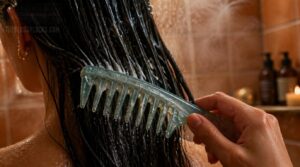
During your shower, right after conditioner application, is when your shower comb works best. You want that slippery layer still coating your strands, because wet hair with slip lets the teeth glide instead of snag and snap.
Here’s your timing window, step by step:
- Rinse shampoo fully, then apply conditioner and let it sit a minute.
- Detangle while the conditioner is still in, working ends to roots.
- Rinse lightly, leaving a bit of slip behind.
- Stop combing before your hair air-dries.
Why does this matter? Once strands dry, friction rises and knots grab harder, so you’ll tug and break more. Combing in one short session also protects your hair moisture retention, since repeated passes on partially dried hair stress fibers you’ve already separated.
How Do You Choose and Clean a Shower Comb?
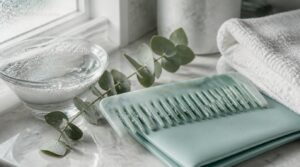
Close your eyes and imagine gliding a comb through slippery, conditioner-coated strands, no snapping, no pulling, just smooth sailing. That feeling starts with picking the right tool, so here’s what you should look for: A good shower detangling comb for wet hair makes all the difference between gentle gliding and frustrating breakage.
- Wide tooth comb design with smooth, rounded tips so your scalp stays happy.
- Plastic or silicone material, because metal can snag and corrode on wet hair.
- A comb labeled for wet hair, since wet strands are fragile and need gentle detangling.
You’ll know it’s time to replace yours when bristles bend, crack, or lose their stiffness, usually after 6–12 months of daily use.
Cleaning is simple, really. Pull out trapped hair, soak the comb in warm water with mild soap or vinegar for 5–10 minutes, rinse well, and let it air-dry completely. Skip boiling water and harsh chemicals, they’ll wreck the bristles. Keep this habit in your hair care routine and your shower comb will last.
Frequently Asked Questions (FAQs)
Is it good to use a comb in the shower?
Is it good to use a comb in the shower? Yes, if you do it right. A wide tooth comb with conditioner distribution makes detangling gentle on wet hair. Just avoid combing under running water.
What is the best comb to use in the shower?
The best comb to use in the shower is a wide tooth comb made of carbon fiber or smooth nylon. It glides through wet hair, resists water swelling, and makes detangling gentle, not breakage city.
Should you always comb your hair after showering?
Should you always comb your hair after showering? Not exactly. Wait until hair stops dripping, then do wet brushing with conditioner. Detangling soaking wet strands adds tension, so gentle postwash care protects each hair strand.
Does brushing your hair in the shower damage your hair?
Does brushing your hair in the shower damage your hair? Not if you’re gentle! Wet hair’s weaker, so wet brushing needs conditioner first. A shower comb with wide teeth gives you hair strand protection and tanglefree hair.
Can a shower comb work on curly hair?
Can a shower comb work on curly hair? Yes, absolutely. Use it on damp hair with conditioner slip, start at your ends, and choose wide, rounded teeth so detangling stays gentle and your curls stay tanglefree.
Is shower combing suitable for color-treated hair?
Is shower combing suitable for color-treated hair? Yes, absolutely. Picture your friend whose fresh balayage fades fast; rough brushing strips dye. With conditioner slip and cuticle protection, your shower comb actually helps color maintenance.
Can shower combing improve scalp health over time?
Can shower combing improve scalp health over time? Yes, gently. Detangling with conditioner reduces tugging and friction, so you get less irritation, plus regular cleaning prevents residue buildup. That’s real scalp health improvement, friend.
Can children safely use a shower comb?
Can children safely use a shower comb? Yes, with wide teeth and gentle hands. Use gentle shampoo, add conditioner slip, detangle ends to roots in small sections, and clean it regularly for comfort and hair strength.
Conclusion
My grandmother used to say you can’t untangle a fishing net by pulling harder, and your hair works the same way. That’s exactly why a shower comb will change your hair: it loosens instead of yanks.
Use it with conditioner in, start from your ends, and be patient with each knot. Weeks from now, you’ll notice less breakage and smoother strands. One small tool, one simple habit, and your hair finally gets the gentleness it deserves.