This site is supported by our readers. We may earn a commission, at no cost to you, if you purchase through links. This content is for general informational and educational purposes only and is not a substitute for professional medical, dermatological, or nutritional advice.

If your hair feels thinner at the temples or snaps too easily in the shower, the answer may not be another harsh “growth” serum.
Amla oil, a traditional preparation made from Indian gooseberry, has earned attention because it strengthens the scalp first, calming irritation, reducing oxidative stress, and helping fragile strands hold on longer.
That distinction matters. Healthier follicles and less breakage can make hair look fuller, even when dramatic regrowth claims outrun the evidence.
To use amla oil for hair growth wisely, you need folklore, chemistry, limits, and a safe, practical sense of what this old remedy can and can’t do.
Table Of Contents
- What is Amla Oil?
- How Amla Oil Supports Hair Growth
- Benefits for Hair and Scalp
- What Research Says About Amla Oil
- Who Should Use Amla Oil
- How to Apply Amla Oil
- DIY Amla Oil Treatments
- Safety, Side Effects, and Results
- Frequently Asked Questions (FAQs)
- Is amla oil better than rosemary?
- Does amla oil help hair grow?
- What are the disadvantages of amla hair oil?
- Can I put amla oil on my hair every day?
- How long does amla take to regrow hair?
- How long should I leave Amla Oil in my hair?
- Are there any shampoos or conditioners that contain Amla Oil?
- Does Amla Oil work better for men or women?
- Can Amla Oil be used as a styling product?
- How long does amla oil last when stored?
- Conclusion
What is Amla Oil?
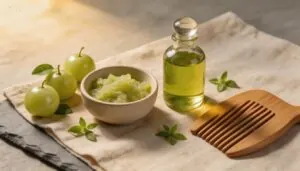
Amla oil is a traditional hair oil made from Indian gooseberry, a fruit long used in Ayurvedic care.
For a deeper look at how amla’s natural compounds support hair regrowth, check out these expert-backed tips for controlling hair fall.
If you’ve seen it in shampoos, masks, or scalp treatments, it helps to know what it actually is and how products can differ. Here’s what to look at before you compare the forms, ingredients, and labels.
Indian Gooseberry Origin and Ayurvedic Use
Because Indian gooseberry, or Phyllanthus emblica, comes from a Native Habitat spanning India, Sri Lanka, Thailand, and the East Himalaya, its Regional Names reflect Cultural Symbolism.
In Ayurvedic medicine, the Ayurvedic roots of amla oil usage begin with Traditional uses of amla in Ayurveda as an Ayurvedic Rasayana, especially during Seasonal Harvest, when fruit is prized for hair and vitality.
Its rich source of vitamin C promotes scalp health and hair strength.
How Amla Oil is Made From Fruit or Powder
That same fruit reaches your scalp through careful Amla oil extraction and processing methods:
- Fruit Infusion Process with chopped, air-dried Amla
- Powder Decoction Method concentrates the Nutrient composition of Amla fruit
- Heat Infusion gently extracts actives
- Oil Base Selection chooses each Carrier oil
- Filtration Technique yields clearer, sometimes cold-processed, Amla oil preparation methods without scorching or leaving gritty sediment behind.
Common Forms: Pure Oil, Infused Oil, and Blends
After extraction, the bottle tells the rest: pure oils center amla, infused oils rely on a carrier oil, and blends soften Aroma Intensity through smart Carrier Selection.
| Form | What to expect |
|---|---|
| Pure | Higher Purity Percentages |
| Infused | Carrier oil, longer Infusion Time |
| Blend | Easier spread, lighter feel |
| Label | Check Filtration Process |
This formulation suits different washability, scent, and styling preferences safely.
Key Compounds Linked to Hair Health
Beyond texture, amla’s appeal is chemical: it pairs vitamin C with soothing plant compounds that help hair behave better.
- Vitamin C Collagen support helps defend follicles from stress.
- Ellagic Acid Polyphenol and Quercetin Flavonoid act as polyphenols, antioxidants, with anti-inflammatory activity.
- Tannin Astringent effects and Fatty Acid Lubrication from carrier oils rich in fatty acids reduce dryness, friction, and breakage.
What to Look for on Ingredient Labels
Because labels tell the story, check Purity Claims first: Is Amla prominent, or buried after the base oil?
Review Carrier Oil Ratio, Additive Disclosure, Organic Certification, including USDA organic, cold processed, and Shelf Life Indicators.
Amla oil extraction and processing methods, organic hair oil extraction, and comparison of carrier oils used in Amla oil production reveal strength, irritation risk, and freshness.
How Amla Oil Supports Hair Growth
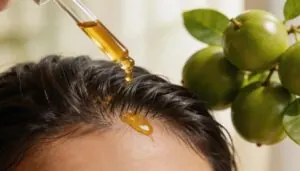
Amla oil is often praised for hair growth, but it’s more useful to look at the specific ways it may support your scalp and follicles. Some of those effects are promising, while others need more evidence and realistic expectations.
Here’s what to look at before you decide what amla oil can and can’t do for hair growth.
Antioxidants and Follicle Protection
Think of amla oil as a shield: its antioxidants support Reactive Oxygen Scavenging, Catalase Activation, and Oxidative Stress Mitigation around vulnerable follicles.
That antioxidant activity may aid oxidative stress reduction, Scalp Barrier Reinforcement, Follicle Regeneration Support, hair follicle stimulation, and hair follicle regeneration, helping preserve follicle structure and healthier retention when environmental stress starts to chip away over time, gently.
Scalp Massage and Improved Circulation
While amla oil provides nourishment, scalp massage enhances this by briefly boosting blood circulation to scalp tissues and improving oxygen delivery around the follicles. Use gentle circular motions with light pressure and simple scalp sectioning.
- Aim for a massage duration of 5–10 minutes.
- Keep friction low.
- Support scalp health improvement through natural oils, scalp health, and more even hair follicle stimulation.
5. alpha Reductase and DHT-related Hair Loss
Could one oil nudge a hormone pathway? Lab studies show that amla demonstrates 5-alpha Reductase Inhibition, a form of Hormonal Pathway Modulation that may reduce DHT levels around susceptible follicles. This mechanism suggests a potential role in Hair loss prevention through DHT inhibition.
For a deeper look at amla’s role in hair health, including its circulation-boosting and antioxidant effects, check out natural remedies for thinning hair in men.
Unlike Finasteride vs Dutasteride, which rely on Enzyme Isoform Targeting and a stronger DHT Binding Blockade, amla oil’s approach appears less direct. Its Mechanisms of hair loss prevention are characterized as supportive, offering adjunctive benefits rather than primary enzymatic interference.
Anti-inflammatory Effects on The Scalp
Chronic scalp inflammation is quietly one of the biggest obstacles to healthy hair growth.
Amla oil’s anti-inflammatory profile works through several overlapping pathways — Cytokine Suppression, NF-kB Downregulation, and COX Enzyme Inhibition — that collectively calm an irritated scalp environment. Its polyphenols support Microbial Homeostasis and Skin Barrier Fortification, helping your scalp stay balanced.
Inflammation reduction benefits include:
- Soothing persistent itchiness and redness
- Reducing follicular swelling that restricts growth
- Calming flare-ups linked to dandruff-prone scalps
- Supporting a healthier microbiome balance
- Strengthening the scalp’s natural moisture barrier
Hair Growth Support Vs True Regrowth Claims
Here’s the honest split: Amla oil benefits for hair growth and scalp health are real, but hair regrowth claims often outrun scientific evidence for Amla oil efficacy.
That means healthier-looking strands, not proven follicle reversal or guaranteed new density alone.
| Marketing Language | Consumer Expectations |
|---|---|
| Thicker-looking hair | Less breakage, more shine |
| Hair regrowth | Clinical Evidence Gap, Placebo Effect, Limited Regulatory Oversight |
Benefits for Hair and Scalp

Amla oil is often used for more than hair growth, especially when your scalp feels dry, irritated, or out of balance. Some benefits are cosmetic, while others relate to scalp comfort and hair strength over time.
Here’s where it may help most and what each benefit can realistically mean for your hair.
Reduced Breakage and Stronger Strands
Because weakened strands snap where friction is highest, amla oil helps by creating a Lipid Coating that facilitates Cuticle Repair, improves Detangling Glide, and boosts Strand Elasticity.
That means less hair breakage during brushing, towel drying, and styling, plus better Static Management for day-to-day hair strengthening and hair elasticity enhancement.
- smoother ends
- fewer snags
- more resilient strands
Better Moisture Retention and Softness
That same protective coating also improves softness. As a natural hair oil, amla creates an Emollient Film and Humectant Barrier that support Moisture Lock, Cuticle Sealing, and Friction Reduction, so hair moisturization lasts longer between washes.
Used as a hydrating hair mask, leave-in treatment, or overnight mask, it helps dry lengths feel smoother, glossier, and less straw-like after each shampoo.
Relief for Dry, Itchy, or Flaky Scalp
That same moisture-locking effect can calm a dry scalp too. Amla oil helps Barrier Repair, Moisture Sealing, and scalp nourishment, which may improve itchy scalp relief when flaking comes from dryness.
Its anti-inflammatory properties add a Cooling Sensation, while Gentle Cleansing afterward helps Scalp pH Balance. Used wisely, it can support comfort and even dandruff prevention between washes over time.
Support for Dandruff-prone Scalps
If your flakes tend to come back, amla oil may help as a pre-wash support, not a stand-alone cure. Its anti-inflammatory, antioxidant content can aid Barrier Repair, while Keratin Softening helps loosen adherent scale.
That may improve scalp health, Scalp pH Balance, and dandruff prevention.
For stubborn cases, true antidandruff properties still depend on Malassezia Inhibition and Keratolytic Action too.
Shine, Smoothness, and Frizz Control
Because frizz often starts when the cuticle lifts, amla oil helps with Cuticle Flattening, Slip Enhancement, and better Light Reflection, which improves hair shine. Its light film offers Humidity Resistance and modest Thermal Shielding, supporting hair cuticle protection.
Used in leave-in conditioning or a weekly hair mask, it promotes hair moisturization and shine enhancement without weighing down roots in practice.
What Research Says About Amla Oil
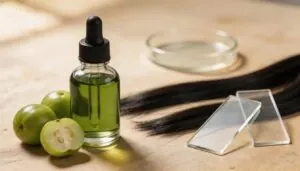
Amla oil has a long history in hair care, but tradition and research aren’t the same thing. Some early findings are promising, especially in lab settings, yet human evidence is still fairly limited.
Here’s what the research can and can’t tell you before you put too much weight on the claims.
Traditional Use Versus Scientific Evidence
Historical anecdotes and cultural context explain the Ayurvedic roots of amla oil usage, but clinical validation remains limited.
Scientific studies on amla oil efficacy for hair loss reveal evidence gaps: mechanistic plausibility includes mechanisms of hair growth promotion by amla oil, hair loss prevention and DHT inhibition, and anti-inflammatory and antioxidant properties of amla oil, but human proof remains thin.
Lab Findings on Hair Follicle Activity
Although clinical studies are still limited, lab work is encouraging: amla extract improves Follicle Cell Proliferation, shows IGF-1 Induction and VEGF Upregulation, and reflects strong Gallic Acid Activity.
These mechanisms of hair growth promotion by amla oil include antioxidants, hair loss prevention and DHT inhibition, plus transfersome targeting for hair follicle regeneration and anagen phase support directly in cultured cells.
Animal Studies and What They Suggest
Animal work offers clues, not guarantees: evidence from animal studies suggests:
- Follicle Activation
- lower Inflammatory Markers
- better Scalp Barrier Function
- wider Hair Fiber Diameter
- Mitochondrial Activity
These patterns support mechanisms of hair loss prevention by amla oil, tied to antioxidant content, DHT blocking, and inhibition of 5alpha reductase as a mechanism for hair loss prevention.
Limits of Current Human Research
Here’s the catch: human clinical evidence remains thin, with Small sample size, Short study duration, Lack of controls, Formulation variability, and Dosage uncertainty, all weakening conclusions. These clinical trial limitations mean evidence from animal studies can’t stand in for strong scientific evidence for amla oil.
Clearer answers depend on research gaps and future studies on amla oil in people today.
Realistic Expectations for Hair Growth Results
Patience Required: clinical evidence is limited, and the hair growth cycle moves slowly, about 1 to 1.25 cm monthly. Expect support, not miracles; Growth Rate Limits, Hair Cycle Phases, anagen phase extension, and telogen phase reduction all matter.
- Hope
- control
- calm
Use Progress Tracking and Measurement Techniques to judge hair density improvement fairly over 8 to 12 weeks for change.
Who Should Use Amla Oil

Amla oil can be helpful for many hair types, but it isn’t a one-size-fits-all fix. Your scalp condition, hair texture, and styling routine all shape whether it’s a good match for you.
Here’s how to tell when it may be worth trying, and when it’s better to pass.
Best Hair Types and Scalp Concerns
Because amla oil behaves like a scalp-conditioning treatment rather than a miracle cure, it fits routines: Fine Hair Volume needs a light hand, Thick Hair Manageability benefits from slip, and Color Treated Hair welcomes Heat Damage Prevention support.
It suits health concerns, including Scalp Acne, dandruff control, hair thinning prevention, and hair care routines for oily, itchy, or dry scalps.
Dry, Damaged, Thinning, or Brittle Hair
That same conditioning role makes amla oil helpful when dry hair, hair breakage, or hair thinning leaves strands fragile. By coating rough cuticles, it promotes hair elasticity, reduces protein loss, and improves hair moisturization and shine enhancement.
Its antioxidants may offer UV protection, temper heat styling damage, and soothe a stressed scalp barrier, so hair feels stronger and less brittle.
Oily Scalps and Lightweight Application Tips
That lighter touch matters if the scalp runs oily. Use Dropper Precision and Sectioned Scalp Targeting with Light Carrier Blends, keeping Short Contact Time for Minimal Residue.
In Hair care routines for oily, itchy, or dry scalps, it promotes Regulation of sebum and scalp oil balance with amla oil.
Application methods and usage tips for hair oils, hair growth, and not leave-in treatment.
Curly, Coily, and Afro-textured Hair Considerations
That same light hand helps coils and curls, especially on wash days:
- Porosity Management on damp hair.
- deep conditioning for hair moisturization and shine enhancement.
- Light use limits Product Buildup and protects Curl Definition.
- Extra mid-length care enhances hair porosity improvement, hair strength and growth.
- Gentle support during Protective Styling and Heat Styling recovery with natural hair growth agents at home.
When Amla Oil May Not Be The Best Fit
Although often helpful, consider Lichen Planus Risk, Photosensitivity Concerns, Pregnancy Contraindications, Medication Interactions, and Adulterated Product Risks.
Amla oil side effects and safety, Potential side effects and safety considerations of herbal hair treatments, Safety considerations for topical amla oil use, Potential side effects and safety precautions of amla oil, Safety and antibacterial effects of amla oil need careful review first.
How to Apply Amla Oil
Using amla oil the right way can make the difference between a helpful treatment and a greasy scalp. A few small choices, like how much you use and how long you leave it on, matter more than most people think.
Here’s how to apply it so the steps ahead feel simple, safe, and worth your time.
Pre-wash Scalp Treatment Steps
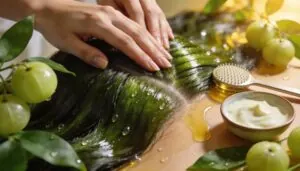
Start pre-shampoo treatment with a Dry Scalp Scrape, then Conditioner Rinse First at the hairline, and a Lukewarm Water Rinse. For pre-wash scalp and hair treatment, avoid Clarifying Shampoo, part the hair, and massage amla oil in a circular scalp motion.
These application methods and usage tips for hair oils support scalp health and Amla oil hair growth benefits.
How Much Oil to Use

Two rules matter: less is usually more.
- Scalp Section Dosage, Amount per Application.
- Hair Density Quantity, Carrier Oil Ratio, Dilution Proportion.
- Usage guidelines and application techniques for amla oil; application methods and usage tips for hair oils.
- Hair care routine frequency and application guidelines, DIY hair mask, Leave-in treatment. Think part lines, not soaked lengths. Build slowly if roots shine.
How Long to Leave It On

Your Scalp Tolerance Window guides timing. For a pre-shampoo treatment or pre-wash scalp and hair treatment, use Washout Timing Guidance: 30 to 120 minutes.
Heat-Enhanced Absorption shortens Hair Length Timing, while Sensitive Scalp Limits may mean 10 to 30 minutes. A leave-in treatment and overnight hair therapy need separate guidance in Application methods and usage tips for hair oils.
Overnight Treatment Vs Short Treatment

Think of timing as dose control: overnight hair therapy offers a patch test advantage for some, yet scalp barrier tolerance, product buildup risk, and comfort hygiene tradeoffs matter.
Hair type suitability counts; fine hair usually prefers a shorter leave‑in treatment.
Amla’s anti‑inflammatory and antioxidant properties may support hair follicles and hair regrowth, but longer contact rarely means better results alone.
How Often to Use for Best Results

Less is more: prewash scalp and hair treatment, not a leave-in treatment.
Hair care routine frequency and application guidelines favor Application Timing: 2 to 3 times weekly, with Scalp Rest Days.
For a Sensitive Scalp Routine, start weekly.
Keep a Hair Length Schedule, make Seasonal Adjustments, and let hair growth cycle best shape Usage guidelines and application techniques for amla oil.
DIY Amla Oil Treatments
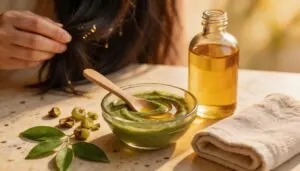
If you’d rather make your own treatment, amla is easy to work into a simple home routine. The key is using the right base, keeping the mixture fresh, and choosing a method that fits your hair needs.
The options below show a few practical ways to get started.
Making Amla Oil at Home
Although simple, home preparation of oils works best when you control moisture, heat, and cleanliness, which matters in DIY hair care, despite limited scientific evidence for amla oil.
- Fruit selection criteria: mature, washed amla
- Drying technique: sun-dried pieces
- Infusion temperature: low, gentle simmer
- Straining method: cool, then strain through muslin
Small batches stay fresher and help prevent waste at home.
Using Amla Powder With Carrier Oils
If you’re blending amla powder for homemade treatments, start with warm oil—Powder Dissolution Temperature matters for reducing clumps. Infusion Time can range from minutes to hours, depending on your Carrier Oil Compatibility and Particle Size Effects.
Straining Techniques remove gritty residue, leaving a smoother oil for scalp massage.
This method preserves amla’s nutrient composition and antioxidant profile, supporting hair growth.
Best Carrier Oils for Hair Growth Goals
Choosing the right carrier oil shapes your amla treatment’s results.
Coconut Oil Occlusion locks in moisture, while Castor Oil Viscosity helps scalp conditioning. Jojoba Oil Balance suits oily scalps, Almond Oil Softness eases detangling, and Avocado Oil Nutrients boost shine.
Compare coconut, olive, sesame, and extra virgin oils—each offers unique benefits for hair growth goals and scalp comfort.
Simple Amla Hair Mask Recipes
If you’re seeking a natural hair treatment, DIY amla hair masks are simple and adaptable. Start with an Amla Powder Ratio—one tablespoon powder to two tablespoons carrier oil.
For a Moisture Booster, add yogurt or aloe vera. Honey works as a Humectant Additive. Adjust Mask Consistency with water.
Seasonal Ingredient Swaps—banana or egg—offer richer, antioxidant-packed homemade treatments.
Storage Tips to Preserve Potency
If you want your cold processed amla oil to retain antioxidant activity, store it in a glass jar, away from light exposure and heat. Airtight sealing prevents free oxygen radicals from degrading potency. For temperature stability, keep the oil in a cool spot.
Batch rotation and clean handling help with contamination prevention—never dip used applicators back into the bottle.
Safety, Side Effects, and Results

Before you start using amla oil, it’s important to know how to use it safely and what to expect.
Some people may notice mild reactions or need to adjust their routine.
Here’s what you should keep in mind as you try amla oil for your hair.
Patch Testing Before First Use
Before you dive into amla oil, patch testing is your safety net—think of it as checking the weather before a hike. Apply a pea-sized amount to clean skin on your forearm or hairline, matching dilution ratios.
Wait 24 hours, documenting any reaction indicators like redness or itching. This step helps screen for skin sensitivity and ensures cosmetic ingredient safety in herbal hair treatments.
Possible Irritation, Buildup, or Sensitivity
Even with oil-regulating properties, amla oil can trigger skin irritation or scalp sensitivity. You may encounter:
- Clogged pores from thick layers, leading to bumps or folliculitis.
- Fragrance irritants or essential oil sensitivity, especially with blends.
- Rancid oil causing itching or redness.
- Allergic contact dermatitis—itching, swelling, or blisters—if you react to plant compounds.
These are potential side effects and safety considerations of herbal hair treatments.
Safe Use Frequency and Washout Tips
How often is too often for amla oil? If your hair care routine frequency isn’t dialed in, scalp residue management gets tricky.
Frequency adjustments, a second shampoo pass, and a cool rinse benefit all and help prevent buildup detection signs. Whether you prefer pre-shampoo treatment or leave-in routines, here’s a quick guide:
| Scalp Type | Application | Washout Steps |
|---|---|---|
| Oily | 1x/week | Double shampoo, cool rinse |
| Dry | 2x/week | Gentle wash, thorough rinse |
| Sensitive | Patch test | Mild cleanser, cool rinse |
| Itchy | 1x/week | Clarifying shampoo, cool rinse |
| Normal | 1–2x/week | Standard wash, cool rinse |
How Long Results May Take
Think of hair growth like tending a slow garden—visible changes take time. Early scalp comfort or less flaking may appear in 1–2 weeks, but true hair regrowth and thicker roots follow the hair cycle phases, often surfacing after 3–4 months of consistent use.
Hair growth moves slowly, so real regrowth often takes months even if scalp comfort improves within weeks
For breakage reduction, expect improvements in 2–4 weeks. Reassessment indicators matter—track progress, not just length.
When to See a Dermatologist for Hair Loss
Wondering if your hair loss is more than routine shedding? A scientific perspective from dermatologists on amla oil and hair loss prevention strategies stresses the need for expert care when symptoms go beyond breakage reduction.
Watch for:
- Sudden hair shedding
- Patchy bald spots
- Scalp pain or itching
- Eyebrow loss
- Family history of hair loss
Consult a trichologist promptly.
Frequently Asked Questions (FAQs)
Is amla oil better than rosemary?
Amla oil and rosemary serve different needs—Amla excels in moisture, antioxidant properties, and gentle nourishment, while rosemary targets scalp stimulation and shedding.
Sensory profile, cost comparison, and formulation potency vary, so ingredient synergy shapes your best choice.
Does amla oil help hair grow?
You’ll find Amla oil widely used in hair loss prevention strategies, but from a scientific perspective, dermatologists note its main benefit is supporting hair follicles and scalp health—consumer perception often outpaces proven comparative efficacy for true hair regrowth.
What are the disadvantages of amla hair oil?
You may notice hair color shift, scalp irritation, or over-drying risk—especially with frequent use or certain carrier oils.
Photosensitivity risk, limited shelf life, and costly ingredient issues also factor in, alongside potential side effects and safety considerations.
Can I put amla oil on my hair every day?
You can use amla oil daily, but adjust for your hair porosity, scalp pH balance, and seasonal application needs.
If you notice buildup, irritation, or greasy roots, reduce frequency—cost efficiency and scalp health matter in your hair care routine.
How long does amla take to regrow hair?
Like seeds waiting for spring, hair follicles need time to show change.
Progress Tracking suggests Timeline Benchmarks of three to six months for hair regrowth, depending on Influencing Factors like DHT and scalp health—Reevaluation Timing comes after consistent patience guidelines.
How long should I leave Amla Oil in my hair?
For most, a pre-shampoo treatment with amla oil works best when left in for 30 minutes to two hours—long enough for scalp absorption.
Overnight leave-in treatment or hair mask use suits dry hair, with seasonal timing adjustments.
Are there any shampoos or conditioners that contain Amla Oil?
Worried about misleading labels?
Product Availability is strong—brands like SheaMoisture and Khan El Kaser offer shampoos and conditioners with amla oil, often blended with carrier oils. Always check ingredient lists for true cosmetic formulation and leave-in treatment claims.
Does Amla Oil work better for men or women?
Gender efficacy with amla oil depends on hormonal impact and scalp tolerance—not sex. Its 5-alpha reductase inhibition targets pattern thinning in both men and women.
Expectation management matters; hair loss prevention strategies using amla support follicles, but regrowth varies individually.
Can Amla Oil be used as a styling product?
Amla oil isn’t a true styling product—it offers limited Hold Potential but excels in Texture Management, hair moisturization and shine enhancement.
For Finish Options, use sparingly as a leave-in treatment; layering techniques help with Residue Management in your hair care routine.
How long does amla oil last when stored?
Shelf life depends on storage: keep natural oils cool, dry, and away from light to slow air oxidation and light degradation. Rancidity detection—off smell or cloudiness—signals spoilage.
Home blends degrade faster; commercial products last longer if unopened.
Conclusion
In caring for your locks, sometimes the best approach is to take a step back and let nature lend a hand.
Amla oil for hair growth offers a gentle, balanced path to healthier follicles and reduced breakage. By calming scalp irritation and infusing strands with antioxidants, this ancient remedy helps your hair thrive.
With patience and consistent use, you can reap the benefits of amla oil and enjoy a fuller, more vibrant mane that truly shines from within naturally.