This site is supported by our readers. We may earn a commission, at no cost to you, if you purchase through links. This content is for general informational and educational purposes only and is not a substitute for professional medical, dermatological, or nutritional advice.

Your scalp’s pH sits around 5.5, but most shampoos clock in closer to 7 or 8—and that gap creates the perfect breeding ground for fungus, inflammation, and follicle stress. Apple cider vinegar, with its pH of 2.7 to 3.1, has been used since ancient times to restore balance and clear away the buildup that suffocates hair growth.
While it won’t reverse genetic baldness on its own, this acidic rinse can neutralize the scalp environment, strip away mineral deposits, and create conditions where your follicles—and other treatments—work more effectively. The science is still catching up, but dermatologists recognize that a healthier scalp is the foundation for stronger hair.
Table Of Contents
Key Takeaways
- Apple cider vinegar won’t reverse genetic hair loss on its own, but its pH of 2.7-3.1 can restore your scalp’s natural 5.5 balance, creating a healthier environment where follicles and proven treatments like minoxidil work more effectively.
- ACV’s antimicrobial properties can inhibit scalp fungi like Malassezia and reduce inflammatory markers by up to 99% in lab studies, though controlled clinical trials proving its direct impact on human hair loss remain nonexistent.
- When diluted properly (1 part ACV to 5-8 parts water) and used 1-2 times weekly, it acts as a clarifying rinse that dissolves product buildup and closes hair cuticles, improving shine and strength without causing the chemical burns that undiluted vinegar can inflict.
- Most dermatologists view ACV as an unproven cosmetic adjunct rather than a primary treatment—if you’re experiencing persistent hair loss beyond three months or painful scalp symptoms, skip the DIY experiments and get a professional evaluation for evidence-based options.
What is Apple Cider Vinegar for Hair Loss?
Apple cider vinegar has become a popular home remedy for hair concerns, but many people don’t know exactly what it is or how it works. This fermented liquid contains acetic acid and other compounds that may influence scalp health and hair condition.
To understand whether it can help with hair loss, you first need to know what makes up apple cider vinegar and how people have used it for hair care over time.
Composition and Key Properties of ACV
Apple cider vinegar comes from fermented apple juice, yielding a distinctive amber liquid rich in acetic acid—about 5% by volume. That acetic acid gives ACV its sharp pH of 2.7 to 3.1, making it over 100 times more acidic than carbonated water. It has also been used as a healing elixir since 3300 B.C.
Beyond acidity, you’ll find:
- Bioactive compounds like polyphenols and chlorogenic acid
- Organic acids including citric and succinic acid
- Trace minerals such as potassium and calcium
- Enzymes and proteins in unfiltered “mother” strands
Traditional and Modern Uses for Hair
For centuries, vinegar-based rinses added shine and cleared away buildup long before modern shampoos arrived in 1903. Today, you’ll find apple cider vinegar straddling two worlds—household remedy and cosmetic ingredient. Apple cider vinegar also contains natural alpha hydroxy acids to gently exfoliate.
Many people use 2–4 tablespoons diluted in 16 ounces of water once or twice weekly to clarify hair and remove residue, while ready-made commercial products now utilize vinegar’s acidity to close cuticles and boost shine without the DIY prep.
| Era | Application | Purpose |
|---|---|---|
| Medieval–1900s | Historical hair rinses with rosemary and nettle | Remove soap, add shine |
| 1900s–present | Household ACV use as post-shampoo rinse | Clear buildup, address oiliness |
| 2020s | Cosmetic adoption in branded rinses and tonics | Controlled pH, frizz control, scalp care |
| Current | Clarifying routines 1–2× weekly | Dissolve minerals, improve light reflection |
How Apple Cider Vinegar May Help Hair Loss

Apple cider vinegar has built a reputation in hair care, but what’s actually behind the hype? The truth is, while it won’t regrow hair on its own, it may support a healthier scalp environment that makes other treatments work better.
Here’s how ACV might help address some of the underlying factors that contribute to hair thinning and loss.
Balancing Scalp PH and Health
Your scalp’s pH balance sits naturally around 5.5, forming an acid mantle that guards against bacteria and irritation. When scalp pH shifts too alkaline, you’ll see more dandruff, itching, and breakage.
ACV’s acidity—around pH 2–3—can help restore that balance when diluted properly. By bringing hair pH back toward ideal levels, you’re supporting your scalp barrier and creating an environment where microbial balance and hair health can thrive.
Removing Buildup and Clarifying The Scalp
Beyond pH balance, ACV’s acidity helps dissolve stubborn sebum and product buildup that ordinary shampoos sometimes miss. When styling residues and excess oil pile up, your follicles face congestion—creating an environment where irritation and thinning can take hold.
Diluted apple cider vinegar works like a gentle clarifying rinse, cutting through that film and giving your scalp a cleaner slate. Still, controlled studies confirming these clarifying benefits remain scarce.
Antimicrobial and Anti-inflammatory Effects
Another reason ACV shows promise is its antimicrobial and anti-inflammatory properties. Laboratory data reveal impressive pathogen growth inhibition—ACV restricts E. coli at 0.1% acetic acid and halts C. albicans at 5%—while cytokine reduction studies document up to 99% drops in inflammatory markers.
These effects may target scalp fungal pathogens like Malassezia, though skin microbiome impact research shows mixed results.
Proteomic disruption mechanisms suggest how apple cider vinegar interferes with microbial proteins, but translating test-tube findings into real-world hair loss benefits requires more clinical validation.
Supporting Hair Strength and Shine
When you rinse with diluted ACV, you’re tapping into pH balance effects that close cuticles and improve hair strength—reducing breakage through cuticle smoothing and tensile enhancement. This porosity control keeps moisture locked in, while frizz reduction and boosted hair shine make strands look healthier.
Though these hair benefits support hair health, they don’t directly reverse hair loss itself.
Scientific Evidence and Limitations

You’ve heard the claims about apple cider vinegar for hair loss, but what does the science actually say? The short answer is that research remains limited, and most dermatologists view ACV as an unproven remedy rather than a front-line treatment.
While apple cider vinegar enjoys widespread popularity for hair care, scientific evidence supporting its use for hair loss remains scarce and most dermatologists consider it unproven
Let’s look at what’s apparent from the available evidence, where ACV might fit alongside proven therapies, and how experts assess its real-world value for your hair.
Current Research on ACV for Hair Loss
When you’re looking for scientific evidence supporting apple cider vinegar for hair loss, you’ll find the cupboard is nearly bare. Here’s what the research actually shows:
- Zero controlled trials prove ACV alone reverses hair growth patterns or stops androgenetic alopecia progression
- Limited microbiome data suggests ACV affects scalp fungi but may selectively promote certain bacteria
- Temporary pH effects last only 15-60 minutes per application, with no long-term hair loss studies
The bottom line? Clinical trial gaps leave us without solid proof that treating hair loss with apple cider vinegar works independently.
ACV’s Role in Enhancing Other Treatments
ACV won’t replace your hair loss treatments, but it might make them work better. A 2021 study found that minoxidil penetrated rat skin several times more effectively when delivered in a garlic oil–ACV nanoemulsion.
You can pair ACV rinses with antifungal shampoos for microbiome support or use them alongside device therapies like low-level light therapy—just remember they’re cosmetic adjuncts, not primary hair growth drivers.
Dermatologist Perspectives on Efficacy
Most dermatologists don’t recommend ACV as a primary hair loss treatment due to Clinical Trial Absence—zero controlled studies prove it stops thinning or boosts hair growth. Instead, experts see it as an Adjunct Cosmetic Option that improves Scalp Condition Focus issues like dandruff rather than driving true hair growth.
For Patient Treatment Plans addressing hair loss, they prioritize Evidence-Based Alternatives such as minoxidil and finasteride over the Benefits of Apple Cider Vinegar for Hair.
How to Use Apple Cider Vinegar for Hair Loss
If you’re interested in trying apple cider vinegar for your hair, the key is using it correctly to avoid irritation or damage. Proper dilution and application frequency can make the difference between a helpful rinse and a scalp problem.
Here’s how to incorporate ACV into your hair care routine safely and effectively.
DIY ACV Hair Rinse Recipe and Instructions

Creating your own apple cider vinegar rinse is straightforward. Start with a basic dilution ratio of 1 tablespoon ACV to 8 ounces of water—adjust stronger for oily scalps or weaker for sensitive skin.
After shampooing, pour or spray the mixture over your scalp, massage gently with your fingertips, and let it sit 2–5 minutes before rinsing with cool water.
Frequency and Proper Dilution

How often should you use it? Once a week works well for most people, but stretch to every 10–14 days if you have a sensitive scalp.
Proper dilution ratios matter: commercial ACV contains 5% acidity, so aim for 1:8 to 1:15 (vinegar to water) to keep acidity levels near your hair’s natural pH of 4.5–5.5. This minimizes burn risks and side effects without sacrificing scalp health.
Using ACV as a Hair Mask or Tonic

Beyond a quick rinse, you can apply DIY ACV as a hair mask or tonic for deeper scalp cleansing.
Here are three application methods:
- Mask Duration: Mix 1 part ACV with 5 parts water, massage into damp scalp, leave 5–10 minutes, then rinse thoroughly with cool water.
- Tonic Benefits: Transfer diluted solution to a spray bottle for easier topical application between washes.
- Scalp Sensitivity: Always patch-test if you’re prone to irritation or have active dermatitis.
Top Apple Cider Vinegar Hair Products
If you’d rather skip the DIY route, several ready-made products incorporate apple cider vinegar for hair care. These formulas often combine ACV with conditioning agents and botanical extracts to minimize irritation while delivering the clarifying benefits.
Below are a few options that bring the potential advantages of apple cider vinegar into a convenient, pre-formulated package.
1. Apple Cider Vinegar Hair Mask
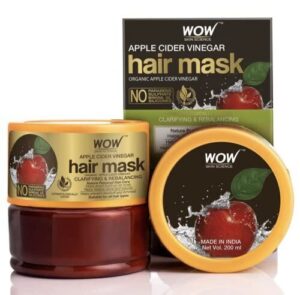
You can make a simple DIY hair mask by mixing two to four tablespoons of apple cider vinegar with 16 ounces of water—a ratio that balances effectiveness with safety.
Apply this blend to wet hair after shampooing, massage it gently into your scalp, then let it sit for five to ten minutes before rinsing with cold water.
For best results, use this mask once or twice weekly. With consistent application over several weeks, many users report improved texture and shine, though individual timelines vary based on your hair’s starting condition.
Best For: People with oily scalps, dandruff concerns, or dull hair looking for a natural treatment to restore shine and balance pH levels.
- Natural detox formula with apple cider vinegar helps seal the hair cuticle, reduce frizz, and restore scalp pH balance
- Packed with nourishing ingredients like coconut oil, wheat protein, and sweet almond oil that hydrate and protect damaged hair
- Plant-powered and free from harsh chemicals, making it a vegan-friendly option for various hair types
- Some users have reported receiving expired products, indicating possible quality control issues
- Can cause irritation, dryness, or increased sensitivity if overused or applied to already dry, color-treated, or sensitive scalps
- Not suitable for people with eczema, psoriasis, or open scalp wounds, and requires patch testing before first use
2. Deep Conditioning Hair Repair Mask
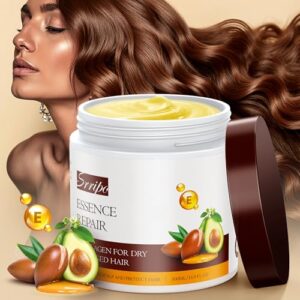
If you’re ready to go beyond a simple DIY recipe, consider a deep conditioning hair repair mask that pairs apple cider vinegar with protein-based repair ingredients like keratin and collagen. These formulas work through mask ingredient synergy—ACV clarifies your scalp while proteins rebuild damaged strands.
Apply generously to damp hair, focusing on mid-lengths and ends, and leave on for at least 30 minutes. Application time effects matter: longer contact allows deeper hydration mask benefits.
Use once weekly to support scalp health masks routines and reduce hair loss without over-conditioning.
Best For: People with dry, damaged, or chemically treated hair looking for an intensive weekly treatment that combines scalp clarification with protein-based repair to rebuild strength and reduce breakage.
- Combines four hydrolyzed proteins (soy, wheat, corn) with collagen and keratin to restore structural integrity and elasticity in damaged hair, helping reduce split ends and breakage over time.
- Infused with four natural oils (glycerin, macadamia, avocado, Moroccan) plus calendula and gentian root extracts to deeply hydrate while soothing irritated scalps—all without sulfates, parabens, or harsh chemicals.
- Works for all hair types and conditions (color-treated, bleached, frizzy, fine) and is cruelty-free and biodegradable, making it a versatile choice for anyone prioritizing both hair health and ethical formulation.
- Results vary significantly—some users with very thick or extremely dry hair report minimal improvement, and individual responses to the protein-heavy formula can differ based on existing hair condition.
- Overuse or applying too close to roots can lead to greasy buildup or overly soft hair that’s harder to style, so sticking to the recommended once-weekly application on mid-lengths and ends is important.
- The scent and creamy texture may not appeal to everyone, and those sensitive to botanical extracts should patch-test first to avoid potential scalp irritation.
3. Pacifica Rosemary Apple Cider Scalp Tonic
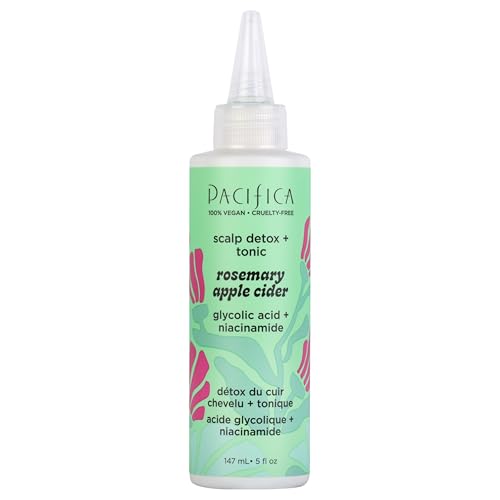
For scalp concerns ranging from flaking to buildup, the Pacifica Rosemary Apple Cider Scalp Tonic delivers exfoliating mechanisms through glycolic acid, lactic acid, and salicylic acid. Tonic ingredients include niacinamide and panthenol for soothing attributes, while apple cider vinegar helps clarify your scalp.
The application method is simple: massage onto scalp, wait 3–5 minutes, then rinse. Though it can’t treat medical hair loss, it fosters a healthier scalp environment for hair growth. Safety context matters—discontinue use if irritation occurs.
Best For: People dealing with flaky scalp, product buildup, or mild dandruff who want a weekly clarifying treatment with chemical exfoliants and botanical extracts.
- Triple-acid formula (glycolic, lactic, salicylic) effectively removes buildup and dead skin cells from the scalp
- Contains soothing ingredients like niacinamide and panthenol to balance the exfoliating acids
- Vegan, cruelty-free, and free from parabens, phthalates, and SLS—fits clean beauty preferences
- Can cause stinging or irritation in sensitive users due to the acid concentration and essential oils
- Some users report inconsistent results, with hair feeling rough or overly oily after use
- Quality control issues have been flagged, including reports of bottles arriving empty or partially filled
Potential Risks and Precautions
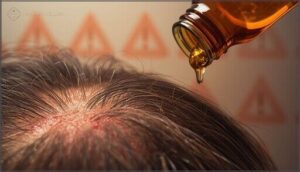
Apple cider vinegar isn’t without its downsides, especially if you use it incorrectly or too often. The acidity that makes it useful can also cause real damage to your scalp and hair when mishandled.
Here’s what you need to watch for and when it’s time to call in a professional.
Common Side Effects and How to Avoid Them
While apple cider vinegar can support hair health, you need to know its side effects. Undiluted vinegar causes scalp irritation, chemical burns, hair dryness, and allergic reactions—issues documented in clinical reports.
To avoid these risks with hair loss treatments, always dilute one part ACV with five parts water, limit use to twice weekly, and patch-test first. If you have pre-existing conditions like eczema or seborrheic dermatitis, start with weaker concentrations and shorter application practices.
When to Seek Professional Advice
When should you stop experimenting and call a dermatologist? If you’re seeing persistent hair loss beyond three months, painful scalp symptoms like pustules or blistering, signs of systemic illness, or limited response to home treatments, it’s time for professional evaluation.
Psychological distress affecting your quality-of-life also warrants specialist care—dermatologists can diagnose underlying scalp conditions and recommend evidence-based options from minoxidil to hair transplant procedures.
Frequently Asked Questions (FAQs)
Can apple cider vinegar change my hair color?
Your hair color won’t dramatically change, but ACV lightening can brighten light brown shades slightly while clarifying buildup that darkens appearance.
Dye fading happens with semi-permanent colors—usage precautions matter for color vibrancy preservation.
How long until I see results from ACV?
Results depend on what you’re hoping to fix. You might notice less buildup or better shine within a few weeks, but usual scalp changes, dandruff improvement, or reduced shedding take one to two months of consistent use.
Can I use apple cider vinegar on dry hair?
You can, but dilute ACV heavily—1 part to 5 parts water—and limit use to once every two weeks.
Always follow with a hydrating conditioner to prevent stripping natural oils and worsening dryness.
Does apple cider vinegar work for all hair types?
One solution rarely fits all—yet ACV adapts beautifully. Oily hair benefits from higher concentrations, while dry hair needs gentle dilution.
Curly, straight, or color-treated types can all use ACV when you match the dilution ratio to your hair’s pH balance needs.
Conclusion
Think of your scalp like soil: nothing thrives in acidic sludge or alkaline dust. Apple cider vinegar for hair loss won’t plant new follicles, but it can till the ground—clearing buildup, calming inflammation, and restoring the pH balance your hair needs to grow stronger.
It’s not a cure, but it’s a solid foundation. If you’re serious about results, pair it with proven treatments and give your scalp the environment it deserves.