This site is supported by our readers. We may earn a commission, at no cost to you, if you purchase through links. This content is for general informational and educational purposes only and is not a substitute for professional medical, dermatological, or nutritional advice.
Your scalp hosts thousands of tiny follicles, each one working quietly beneath the surface to produce the hair you see. When those follicles slow down or inflammation takes hold, people often search for gentle alternatives to pharmaceutical treatments. Essential oils have emerged as a popular option, backed by research showing that compounds like rosemary and peppermint can improve circulation and create conditions that support growth.
But the question isn’t just whether these oils work—it’s whether they work safely, consistently, and for your specific scalp concerns. Understanding how to choose the right oils, dilute them properly, and set realistic expectations separates effective care from wasted effort.
Table Of Contents
- Key Takeaways
- Are Essential Oils Good for Hair?
- Key Benefits of Essential Oils for Hair
- Best Essential Oils for Hair Care
- How to Use Essential Oils Safely
- Risks and Precautions When Using Essential Oils
- Frequently Asked Questions (FAQs)
- What type of essential oil is good for hair?
- Are essential oils good for your hair?
- What is the best oil for men’s hair?
- Which essential oil is good for hair?
- What essential oil should I use to moisturize my hair?
- How can I use essential oils for hair growth?
- What essential oils are good for hair follicles?
- Which essential oils are safe for hair?
- Can I apply essential oil directly to hair?
- Do essential oils really help hair?
- Conclusion
Key Takeaways
- Certain essential oils like rosemary, peppermint, and tea tree can support hair growth and scalp health when properly diluted and used consistently.
- Dilution with carrier oils is essential to prevent skin irritation, and a patch test should always be done before full application.
- Essential oils do not produce overnight results or cure severe scalp conditions but may improve circulation, reduce dandruff, and enhance hair strength over time.
- Some individuals, including pregnant people and those with allergies or asthma, should avoid specific oils or consult a healthcare provider before use.
Are Essential Oils Good for Hair?
Essential oils have gained attention as a natural approach to hair care, but the science behind their effectiveness varies widely. Research shows that certain oils can support hair growth and scalp health, while others may simply offer moisture or fragrance.
One popular technique combines essential oils with scalp massage through the inversion method for hair growth, which boosts circulation while delivering nutrients directly to follicles.
Let’s examine what studies actually reveal, separate common myths from verified facts, and understand how these concentrated plant extracts interact with your hair and scalp.
Scientific Evidence and Research
Research on essential oils for hair relies on several study designs to establish their benefits. Clinical trials measure their effectiveness against hair loss and scalp conditions. Here’s what evidence evaluation reveals:
- Controlled experiments test specific oils like rosemary against minoxidil treatments
- In vivo studies track follicle depth and growth patterns in living subjects
- Systematic reviews combine multiple research methods to assess overall effectiveness
- Data analysis quantifies hair growth improvements and identifies potential side effects
These natural remedies for hair loss show promising results when research follows rigorous protocols.
Common Myths Vs. Facts
Despite the promise of natural remedies for hair loss, myth busting reveals important truths about essential oil safety and oil efficacy. Fact checking shows that essential oils don’t guarantee overnight hair growth or cure severe scalp health conditions alone.
Essential oils don’t deliver overnight hair growth or cure severe scalp conditions on their own
You’ll get better results when you properly dilute oils, use them consistently over months, and combine aromatherapy for hair with a balanced diet and gentle scalp care routine.
How Essential Oils Affect Hair Health
The actual mechanisms behind hair growth stimulation involve three pathways:
- Improved circulation – Peppermint and rosemary blends boost blood flow around follicles, delivering nutrients that support hair follicle health during the anagen growth phase.
- Antimicrobial action – Tea tree oil controls scalp irritation by targeting dandruff-causing yeast.
- Moisturizing effects – Proper essential oil blending with carriers enhances oil absorption rates, conditioning your hair shaft for improved manageability.
Studies have shown that certain essential oils, such as lavender and cedarwood, can contribute to scalp health and hair growth.
Key Benefits of Essential Oils for Hair
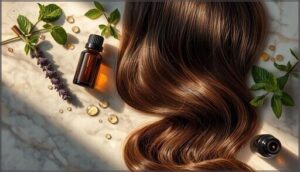
Essential oils offer several research-backed benefits when you’re looking to improve your hair’s appearance and health. From encouraging new growth to calming an irritated scalp, these concentrated plant extracts can address multiple concerns at once.
Incorporating them into a hair care routine for long hair can help strengthen strands while promoting healthier growth over time.
Here’s what the science shows they can do for your hair and scalp.
Promoting Hair Growth
Some essential oils for hair growth can extend your hair’s growth phases by stimulating follicle activity. Rosemary oil, for instance, performed as well as minoxidil in one study, promoting hair growth through improved nutrient delivery and follicle stimulation.
When you combine these oils with scalp massage, you boost microcirculation, supporting hormone balance and healthier growth cycles at the hair follicle level. Maintaining a is also essential for ideal hair growth.
Improving Scalp Health
Your scalp’s microbiome balance thrives when you apply diluted essential oils through scalp massage, which boosts scalp stimulation and sebum regulation. These oils support hair follicle care by maintaining a pH around 5.5, reducing irritation and protecting against harmful microbes.
Regular scalp treatment with tea tree or rosemary oil manages scalp conditions while gentle scalp exfoliation prevents buildup without disrupting your scalp’s natural protective barrier.
Reducing Dandruff and Itchiness
When flaking and constant scratching steal your confidence, certain essential oils tackle those dandruff causes head-on. Tea tree oil delivers anti-fungal power to manage Malassezia yeast overgrowth, while lemongrass provides itch relief and scalp soothing effects. You’ll notice effective flake removal through:
- Medicated shampoos containing zinc pyrithione targeting fungal activity
- Tea tree oil products reducing itchiness at proper dilutions
- Daily gentle cleansing removing excess sebum feeding organisms
- Thyme oil’s antimicrobial properties treating dandruff-related irritation
- Scalp massage improving oil distribution during washing
Enhancing Shine and Strength
Visible brilliance starts with oil balance restorers and cuticle smoothers that reflect light evenly along each strand. Natural gloss enhancers like argan or jojoba mimic your own sebum without weighing hair down, while scalp exfoliation removes buildup blocking shine.
Hair shine boosters work best when paired with hair strengthening proteins that reinforce the cortex and improve hair thickness through regular essential oils application.
| Shine Strategy | Strengthening Action |
|---|---|
| Lightweight serums seal cuticles | Protein formulas reinforce cortex |
| Scalp exfoliants reduce buildup | Bond agents improve elasticity |
| Natural oils mimic sebum | Humectants lock in moisture |
| Cold water rinse closes cuticles | Regular trims remove split ends |
Best Essential Oils for Hair Care
Not all essential oils work the same way in hair care. Some target hair growth, while others focus on scalp health or tackling issues like dandruff.
Here’s a look at the most researched options and what each one brings to the table.
Lavender Oil
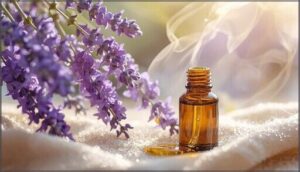
If you’re looking for a gentle starting point in essential oils for hair care, lavender oil offers a soothing, low-risk option. Extracted from Lavandula angustifolia flowers, lavender essential oil contains linalool and linalyl acetate, which contribute to its skin-soothing and anti-inflammatory effects.
In aromatherapy and hair masks, lavender benefits include supporting scalp comfort and potentially aiding hair growth in people with alopecia when combined with carrier oils.
Rosemary Oil

Regarding hair growth and scalp health, rosemary oil stands out in research. A 2015 study found this essential oil performed as well as minoxidil for hair loss—but with less itching.
Rosemary benefits include improved circulation to follicles through scalp massage, reduced shedding, and potential hair thickness gains.
The aromatic properties come from compounds like 1,8 cineole, extracted through steam distillation from Rosmarinus officinalis leaves.
Peppermint Oil
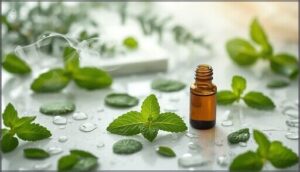
Peppermint oil delivers an invigorating boost to your scalp through menthol’s cooling action. A 2014 study showed it increased follicle count and depth in test subjects, supporting hair growth potential.
Peppermint benefits include:
- Stimulated blood flow during scalp massage
- Antimicrobial properties for balanced scalp health
- Enhanced hair thickness over time
- Invigorating minty aroma from menthol and menthone
Always dilute before application to prevent irritation.
Tea Tree Oil
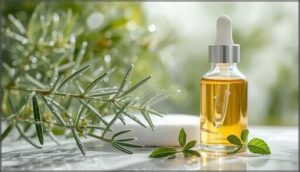
Tea tree oil addresses scalp irritation with antimicrobial power from terpinen-4-ol, its main active component. This essential oil composition helps reduce bacteria and fungi that contribute to dandruff and itchiness.
You’ll find tea tree benefits in many hair masks and essential blends designed for scalp health. Always dilute it properly—concentrated tea tree oil can trigger allergic reactions or burning sensations on sensitive skin.
Cedarwood and Other Notable Oils
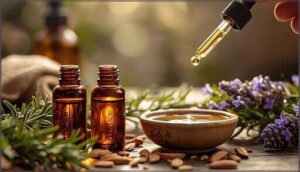
Cedarwood improves scalp circulation and provides antiseptic compounds that support a balanced environment for healthier hair growth. Its antimicrobial properties help maintain clean follicles, making it valuable in growth-focused essential oil routines.
You can blend it with rosemary oil for enhanced follicle nourishment or lavender oil for calming aromatherapy effects during scalp massage. These oil combinations address hair thickness concerns while also providing additional benefits.
How to Use Essential Oils Safely
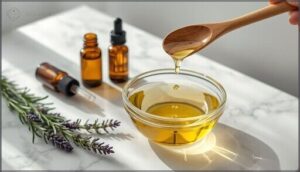
Essential oils pack a lot of power in tiny bottles, which means you can’t just slap them directly onto your scalp and call it a day. The key to getting results without irritation comes down to proper dilution and application methods.
Here’s how to use essential oils the right way for your hair care routine.
Diluting With Carrier Oils
Before applying essential oils to your scalp, you must dilute them with a carrier oil to prevent irritation. Jojoba, coconut, and sweet almond oils are excellent carrier oil types for hair care. A safe dilution ratio starts at 1–3 percent essential oil in your carrier base.
Always perform a skin patch test on your inner arm before blending your full treatment to confirm essential oil safety and dilution.
Adding to Shampoos and Conditioners
You can also add essential oils directly to your shampoo or conditioner for ongoing hair care and natural hair growth support. Mix 2–5 drops of your chosen essential oil blends per ounce of product, ensuring fragrance balance and proper carrier oil selection. Test a small amount first to check for stability and irritation.
Commercial formulations undergo stability testing and meet labeling requirements, but DIY mixtures give you complete control over what touches your scalp.
DIY Hair Masks and Scalp Treatments
Hair mask recipes let you combine essential oils with natural ingredients like avocado, honey, or yogurt to boost scalp health and moisture.
Mix 3–5 drops of your chosen essential oil blends with a carrier oil such as jojoba or olive oil. Apply the DIY hair care recipes from mid-length to ends, leave for 15–30 minutes, then rinse thoroughly for best scalp treatment tips.
Risks and Precautions When Using Essential Oils
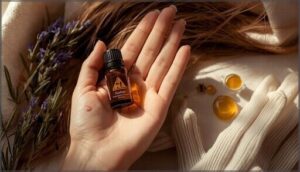
Essential oils can cause unexpected reactions, even when you’re careful about how you use them. Some people are more vulnerable to side effects than others, and knowing the warning signs can help you avoid problems.
Here’s what you need to watch for and who should take extra precautions.
Potential Side Effects and Allergic Reactions
Even when diluted properly, essential oils can trigger skin irritation like redness or burning within hours of contact. You might experience allergic reactions ranging from mild itching to contact dermatitis with blistering.
Respiratory issues such as coughing or throat tightness may occur during inhalation, especially if you have asthma.
Eye damage from accidental splashes and systemic effects like nausea are also possible.
Who Should Avoid Essential Oils
Certain groups should steer clear of essential oils altogether. Pregnant individuals should avoid large doses of clove, cinnamon, and rosemary, as they can affect hormones and uterine activity. Infants are at risk when exposed to peppermint or eucalyptus due to potential airway issues.
Those with asthma concerns should avoid direct inhalation to prevent symptom flares. If you have skin irritation or known allergy risks, skip undiluted oils to prevent allergic reactions.
Tips for Safe Application
Before each application, test a drop of diluted essential oil on your inner forearm and wait 24 hours for reactions. If burning or redness occurs, rinse immediately and discontinue use.
Always dilute to 1 to 2 percent using carrier oils like jojoba or coconut to protect scalp health and prevent skin irritation. Store blends in dark glass bottles away from sunlight to maintain potency.
Frequently Asked Questions (FAQs)
What type of essential oil is good for hair?
Picture healthy follicles thriving in nourished soil. Rosemary oil boosts scalp circulation, while lavender oil promotes cellular growth.
Tea tree oil fights dandruff, and peppermint oil strengthens roots when diluted in carrier oils.
Are essential oils good for your hair?
Essential oils can support hair care when properly diluted and used consistently. They offer scalp health benefits, help manage dandruff, and may stimulate hair growth patterns, though results vary by individual and oil type.
What is the best oil for men’s hair?
For men’s hair types, rosemary oil stands out as the top choice. It promotes follicle health and hair growth when combined with scalp massage.
Blend it with jojoba or argan oil for maximum hair thickening results.
Which essential oil is good for hair?
Rosemary oil is perhaps the champion for hair growth, rivaling minoxidil in clinical trials. Lavender oil calms inflammation while tea tree oil addresses scalp irritation.
You’ll see best results when you dilute essential oil blends properly.
What essential oil should I use to moisturize my hair?
You’ll want carrier oils like sweet almond or argan oil as your moisture lock base.
Add lavender oil or rosemary to this hair oil blend for scalp hydration and hair nourishment benefits.
How can I use essential oils for hair growth?
You can dilute rosemary, peppermint, or lavender oil in a carrier like jojoba oil, then massage it into your scalp.
This scalp massage boosts circulation and promotes hair regrowth when applied consistently over several weeks.
What essential oils are good for hair follicles?
Think of your follicles as tiny engines that need fuel. Lavender oil, rosemary oil, peppermint oil, and tea tree oil support follicle health through scalp massage, oil blending, and hair growth promotion when properly diluted.
Which essential oils are safe for hair?
Most essential oils—like lavender oil, tea tree oil, rosemary, and peppermint—are safe when diluted properly with carrier oils.
Always patch test to avoid scalp irritation or oil allergies before full application.
Can I apply essential oil directly to hair?
No, you shouldn’t apply essential oils directly to your hair or scalp. Their high concentration can cause skin irritation or chemical burns. Always dilute them with carrier oils first for safe topical application.
Do essential oils really help hair?
Yes, certain essential oils can help hair when diluted properly. Rosemary and peppermint oils may support hair growth factors through improved scalp health, while tea tree oil tackles dandruff—though individual results vary considerably.
Conclusion
An ounce of prevention is worth a pound of cure—and that applies to your scalp as much as anything else. When you’re wondering are essential oils good for hair, remember that dilution, patch testing, and consistency determine your results.
Choose oils based on your specific concerns, whether that’s thinning, flaking, or inflammation. Apply them correctly, monitor your scalp’s response, and adjust as needed. With proper technique, these concentrated botanicals can become effective tools in your hair care routine.