
This site is supported by our readers. We may earn a commission, at no cost to you, if you purchase through links. This content is for general informational and educational purposes only and is not a substitute for professional medical, dermatological, or nutritional advice.
A dry clipper blade at 6,000 RPM doesn’t cut hair so much as cook it. Steel grinds on steel, heat builds, and the blades start snagging before you’ve finished the first fade.
Friction is the quiet culprit behind dull edges, stiff folding knife pivots, and rust that appears overnight. The fix costs a few drops, but only if the oil matches the metal, the speed, and the environment it works in.
Avoiding blade friction with proper oil comes down to a handful of habits. Here’s how to pick the right lubricant, apply it cleanly, and keep your blades running smooth.
Table Of Contents
- Key Takeaways
- How Blade Oil Reduces Friction
- Choose The Right Lubricant for Your Blade
- Clean and Dry Blades Before Oiling
- Apply Blade Oil Without Over-Oiling
- Set a Blade Oiling and Storage Schedule
- 10 Blade Lubricants for Reducing Friction
- 1. AGS Cutting Wax Lubricant Stick
- 2. PepeLube White Jewelry Lube Stick
- 3. Olson AC70010 Saw Blade Lubricant
- 4. WD-40 Specialist Dry Lube Twin Pack
- 5. Relton Stick-Kut Lubricating Stick Wax 15oz
- 6. STA-BIL Bio-Based Blade Guard Lubricant
- 7. Lubri-Cut Beeswax Metal Cutting Paste
- 8. DEWALT 16 oz Biodegradable Bar Oil
- 9. Wahl Premium Hair Clipper Blade Oil
- 10. Opove Clipper Lubricating Oil
- Frequently Asked Questions (FAQs)
- Conclusion
Key Takeaways
- Oil keeps a thin film between metal surfaces, which cuts friction and heat, stops edges from snagging, and helps your blades last longer.
- Match the lubricant to the job: use a light oil for fast clippers, a thin oil for knife pivots, food-grade mineral oil for anything that touches food, and never WD-40, which is a solvent that won’t stay on the steel.
- Clean and dry the blade before you oil it, then use only a few drops and wipe off the excess, because oil over dirt or moisture traps grime and rust against the steel.
- Stick to a regular schedule, such as a drop every 2 to 3 clients for clippers or fresh oil every 1 to 2 weeks for carbon steel knives, and shorten the intervals when humidity is high.
How Blade Oil Reduces Friction
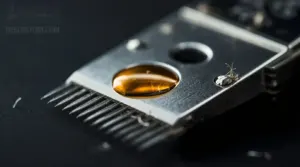
Why does a drop of oil matter so much on a blade that looks perfectly fine? Because steel moving against steel is rougher than it feels. Oil slips a thin fluid film between the surfaces, so the teeth glide instead of grinding, and that’s how it helps reduce friction where metal would otherwise touch metal.
Pairing that monthly drop of oil with weekly brushing is the easiest routine to follow, and this Philips Norelco 6100 review shows how it works on a real trimmer.
A microscopic layer of oil lets blades slide smoothly past each other, sparing the steel from the hidden roughness of constant contact
That film does more than ease motion. It stops microscopic welding between edges, and it keeps fine hair and metal shavings from embedding in the steel and acting like sandpaper. Unlike coolants, WD-40, or Rem Oil, which evaporate quickly, dedicated blade oil stays on the steel and keeps a protective thin coating in place.
Heat is the other half. Friction creates it, so proper blade lubrication keeps temperatures down, and cooler blades hold their gap, cut evenly, and last longer. Skip it, and expanding steel starts binding and snagging.
Choose The Right Lubricant for Your Blade

So oil matters. Now the question is which oil, because the wrong one can be worse than none.
Match the lubricant to the metal, the job, and where you’re working. Here’s a quick way to sort it:
- Soft metals like aluminum want thin, high-flow oils that flush shavings away.
- Harder steels need thicker fluids or pastes that hold up under pressure.
- Clippers spinning at 5,000 to 7,000 RPM need a light oil that creeps into contact points.
- Wet, humid shops call for water-displacing formulas that add rust prevention. Dry, dusty ones favor PTFE or wax.
- Blades that touch food get food-safe mineral oil.
Skip WD-40 for clippers. It’s a solvent, not a lubricant that sticks around.
Clean and Dry Blades Before Oiling

You’ve picked the right oil. Now don’t waste it by pouring it over a dirty blade.
Oil can’t reach bare steel through grime. Worse, fine grit mixes with it and turns into grinding paste. So start by brushing off hair, lint, and metal dust, or blow it out with compressed air, especially around a folding knife’s pivot.
Next, wipe the blade with mild soap and lukewarm water, never harsh solvents or abrasive scrubbers. Then dry it properly. A cloth leaves microscopic moisture behind, so finish with isopropyl alcohol, which evaporates fast and takes residual water with it.
Oil right away. A bare carbon steel blade starts oxidizing in humid air faster than you’d think. Moisture under the oil film just rusts the blade underneath.
Apply Blade Oil Without Over-Oiling
Once your blade is clean and dry, the oil goes on, and more isn’t better. Too much oil just collects lint, hair, and grit, which ruins the whole point. Here’s how much to use on each of the three blade types you’re most likely to own.
Hair Clipper Blade Oiling

Picture a clipper that’s snagging mid-fade because last month’s hair is baked into the teeth. Don’t blame the motor. Fix the routine:
- Brush out debris, then oil the blade with three drops on top and one per side rail.
- Run it 10 seconds, then gently wipe off the excess.
- Keep it flat while oiling, so nothing seeps into the housing.
Folding Knife Pivot Oiling

You can oil a folding knife in under a minute, but only if you start with a clean pivot. Add one small drop to each side of the pivot screw junction, then work the blade open and closed 15 to 20 times. A thin knife pivot oil flows into tight gaps without gumming up, so a single drop goes a long way.
Wipe off any seepage right away. Exterior residue attracts lint and grit, which undoes your pivot mechanism upkeep.
Fixed Blade Oiling

Carbon steel like 1095 or D2 needs oil within 15 minutes of getting wet, so wipe the blade dry and coat it right after cleaning.
Use food-grade mineral or camellia oil on anything that touches dinner.
Apply a thin film with a microfiber cloth, then wipe off the excess.
Pulled from leather, fixed blades store best with silica gel, checked every few months.
Set a Blade Oiling and Storage Schedule

Ever wonder why a blade you oiled in March is spotted with rust by June? Usually, there was no schedule.
Good blade care runs on a calendar, not on memory. Here’s what that looks like:
- Clipper blades: a drop every 2 to 3 clients, plus a full coat after the last one.
- Carbon steel and Damascus knives: oil every 1 to 2 weeks.
- Stainless knives: every 1 to 3 months.
- Stored tools: monthly checks for rust specks, plus fresh desiccant.
Humidity above 60% means you shorten every interval. Damp room or big temperature swing? Re-oil afterward. For longer knife storage, add VCI tabs and keep the blades dry, because oil over moisture only locks it in. That’s your maintenance routine.
10 Blade Lubricants for Reducing Friction
You’ve got your schedule, so now you need something worth putting on the blade. The ten products below cover everything from clipper oils to saw sticks and pastes, so you can match the lubricant to the job. Skim the list, pick what fits your tools, and keep your edges running cool.
1. AGS Cutting Wax Lubricant Stick
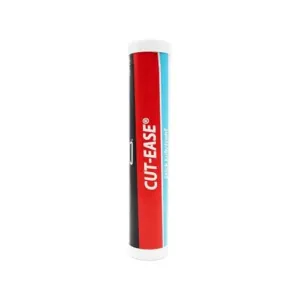
Ever try cutting steel with a band saw and watch the blade smoke like a campfire? This stick is the fix. It’s a solid cutting wax that you press straight against the tool, so there’s no liquid to spill or slosh around.
It works on ferrous metals, non-ferrous metals, and plastics, and it cuts friction and heat on steel and aluminum. Use it on band saws, hole saws, drills, and taps.
Expect to reapply during long sessions. It can also stick to surfaces, so wipe up after.
| Best For | Metalworkers and DIYers who need a mess-free, portable lubricant for cutting steel, aluminum, or plastics with band saws, hole saws, drills, and taps. |
|---|---|
| Lubricant Type | Solid wax stick |
| Container Size | 1.12 lb |
| Packaging Format | Solid stick |
| Primary Application | Metal cutting and drilling |
| Friction Reduction | Reduces friction and heat |
| Main Drawback | Can be messy, needs reapplication |
| Additional Features |
|
- Reduces friction and heat for cleaner cuts on steel and aluminum
- Works on ferrous metals, non-ferrous metals, and plastics
- Solid stick format has no liquid to spill, making it handy for portable cutting
- Needs to be reapplied during long or repeated cutting sessions
- Can stick to surfaces, so some cleanup is needed afterward
- One customer reported no noticeable difference in blade life
2. PepeLube White Jewelry Lube Stick
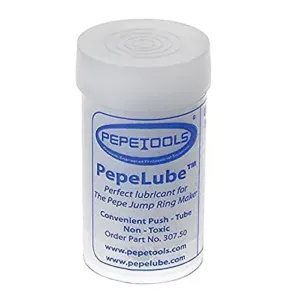
Here’s the odd thing about this stick: it likes heat. As your blade warms up mid-cut, the wax pulls lubricant toward the point of contact, which is exactly where you need it. That cuts friction and tightens up precision whether you’re drilling, grinding, or stamping.
It’s a 1.7-ounce push tube, so it’s easy to carry. Saw blades drag and bind less, which can double blade lifespan, and files last longer too.
One catch: the texture is dry and crumbly, and it may not cling to blades well. If you want wet lubricant, skip it.
| Best For | Jewelers and metalworkers who do a lot of sawing, filing, and drilling and want a portable stick lubricant that cuts friction and extends tool life. |
|---|---|
| Lubricant Type | Dry solid stick |
| Container Size | 1.7 oz |
| Packaging Format | Push tube |
| Primary Application | Saw blades and files |
| Friction Reduction | Reduces blade drag and binding |
| Main Drawback | Crumbly, may not stick |
| Additional Features |
|
- Draws lubricant to the point of contact as the blade heats up, which reduces friction and improves precision in drilling, grinding, and stamping.
- Reduces saw blade drag and binding, which can double blade lifespan and improve control and finish quality on jump rings and metal coils.
- Comes in a 1.7-ounce push tube that is easy to carry, and it extends file cutting life by reducing wear.
- Has a dry and crumbly texture rather than a smooth or creamy one.
- May not stick well to blades during use.
- Not a good fit for people who prefer wet or liquid lubricants.
3. Olson AC70010 Saw Blade Lubricant
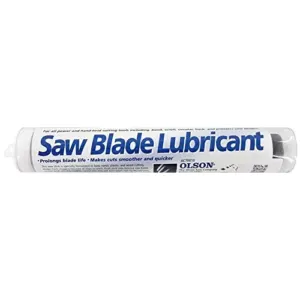
Tired of scraping gunk off your teeth after every cut? This wax stick takes care of that. Push it into a moving blade and the heat melts a thin coat onto the teeth, so wood chips, pitch, and metal debris don’t clog them. It’s USA-made, 8 inches long, and fits band, scroll, circular, hack, and jewelers saw blades. No liquid coolant, no mess.
One catch: wax can wear bandsaw tires if it builds up on the wheels. Watch for that.
| Best For | Woodworkers, metalworkers, and hobbyists who use band, scroll, circular, hack, or jewelers saw blades and want a mess-free way to keep their teeth from clogging. |
|---|---|
| Lubricant Type | Wax stick |
| Container Size | 0.422 oz |
| Packaging Format | Flexible plastic tube |
| Primary Application | Saw blades |
| Friction Reduction | Coats blade teeth |
| Main Drawback | Can damage bandsaw tires |
| Additional Features |
|
- Melts onto the teeth when pushed into a moving blade, so wood chips, pitch, and metal debris don’t clog them.
- Works on band, scroll, circular, hack, and jewelers saw blades, and on metal, plastic, and wood.
- Replaces liquid coolant, which means less mess and less heat.
- Wax can build up on the wheels and wear or ruin bandsaw tires.
- Wax mixed with sawdust can harden and need scraping to remove.
- Should be applied only to the tooth tips when you use Cool Blocks replacement guides.
4. WD-40 Specialist Dry Lube Twin Pack
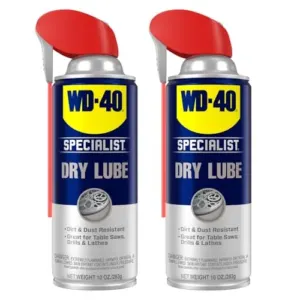
Wax isn’t the only dry option. This industrial strength PTFE-based dry lube goes on wet and sets up slick, so it doesn’t attract dirt or dust. The Smart Straw lets you hit tight channels and pivots precisely.
It’s a 10 oz. twin pack, rated from -50°F to 500°F, and 50-state VOC compliant. Clean the blade first, or you’ll trap debris. Give it a few minutes to dry before you test the glide. Skip it on clear polycarbonate or polystyrene plastics.
| Best For | DIY users, tradespeople, and facility maintenance workers who need a clean, non-sticky lubricant for window tracks, door hardware, conveyor belts, bike chains, and other sliding or moving parts. |
|---|---|
| Lubricant Type | PTFE dry lubricant spray |
| Container Size | 10 oz twin pack |
| Packaging Format | Aerosol with Smart Straw |
| Primary Application | General metal and mechanical parts |
| Friction Reduction | Reduces friction and wear |
| Main Drawback | Not safe on clear plastics |
| Additional Features |
|
- PTFE-based dry formula reduces friction and wear without attracting dirt or dust
- Smart Straw applicator reaches tight spots and channels with precision
- Works across a wide temperature range of -50°F to 500°F and is 50-state VOC compliant
- Not safe for use on clear polycarbonate or polystyrene plastics
- Surfaces must be cleaned first, or debris can get trapped
- Needs a few minutes of drying time before parts glide smoothly
5. Relton Stick-Kut Lubricating Stick Wax 15oz
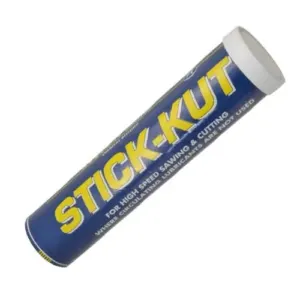
If you’d rather stick with wax, this one’s built for the shop. The Stick-Kut comes in a narrow push tube, and you rub it straight onto the blade. It’s odorless and leaves a greasy film that cuts friction and heat on steel, wood, and even styrofoam. Users report up to three times longer blade life, plus less sticking and kickback during high-speed sawing.
The catch is the tube. Big jobs mean slow, fiddly application, so a liquid reservoir wins there.
| Best For | Shop users who want an odorless, no-mess wax to rub onto saw blades for small to medium cutting jobs in steel, wood, or styrofoam. |
|---|---|
| Lubricant Type | Solid wax stick |
| Container Size | 15 oz |
| Packaging Format | Narrow push tube |
| Primary Application | Saw blades |
| Friction Reduction | Reduces friction and heat |
| Main Drawback | Difficult for large jobs |
| Additional Features |
|
- Cuts friction and heat on steel, wood, and styrofoam.
- Users report up to three times longer blade life.
- Helps prevent sticking and kickback during high-speed sawing.
- The narrow push tube makes extraction and application difficult on large jobs.
- Application is slower than with liquid cutting oils or fluid reservoirs.
- The listed shipping weight of 0.01 ounces contradicts the 15 ounce net weight.
6. STA-BIL Bio-Based Blade Guard Lubricant
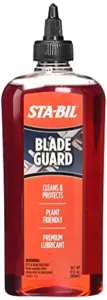
For big jobs, a liquid wins, and this one’s built for the yard. STA-BIL Blade Guard does double duty as a cleaner and lubricant, fighting rust, corrosion, and sticky sap on hedge trimmers, brush cutters, axes, pruners, and saws.
The bio-based formula won’t brown your plants, and it suits gas or electric tools, keeping edges sharp.
Brush off heavy debris first. Some users find it too thick, and the strong smell means airing out the garage. It lasts two years.
| Best For | Homeowners and landscapers who maintain gas or electric hedge trimmers, brush cutters, pruners, axes, and saws and want one product that cleans, lubricates, and protects their blades without harming plants. |
|---|---|
| Lubricant Type | Bio-based liquid |
| Container Size | 12.3 oz |
| Packaging Format | N/A |
| Primary Application | Outdoor cutting blades |
| Friction Reduction | Cleans and lubricates blades |
| Main Drawback | Strong odor |
| Additional Features |
|
- Bio-based formula is designed to prevent plant damage such as browning.
- Works as both a cleaner and a lubricant, protecting blades from rust, corrosion, and sticky sap buildup.
- Fits a wide range of tools, both gas-powered and electric, while helping keep blade edges sharp.
- Some users find the viscosity too thick.
- Heavy debris must be brushed off before lubricating.
- Strong odor requires ventilation during use and airing out indoor spaces like garages afterward.
7. Lubri-Cut Beeswax Metal Cutting Paste
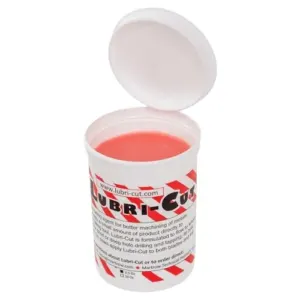
Switching from yard work to the shop, this one’s a paste, and it behaves nothing like a spray. The beeswax-based formula is blended with cutting oils, and it’s thick enough to cling to drill bits and saw blades without dripping. It’s chlorine-free and low-odor, so you won’t be airing out the garage.
Use it for drilling, tapping, sawing, milling, and lathe work to keep edges cooler and finishes cleaner.
The catch: melted paste can fling off at high speed, and the 2.5-ounce tub means dipping by hand.
| Best For | Hobbyists and small-shop machinists who drill, tap, saw, mill, or turn metal by hand and want a low-odor, drip-free cutting lubricant. |
|---|---|
| Lubricant Type | Beeswax cutting paste |
| Container Size | 2.5 oz |
| Packaging Format | Tub |
| Primary Application | Drilling, tapping, sawing |
| Friction Reduction | Keeps cutting edges cooler |
| Main Drawback | May fling off at high speed |
| Additional Features |
|
- Thick beeswax-based paste clings to drill bits and saw blades without dripping.
- Chlorine-free, low-odor formula reduces misting and waste.
- Extends tool life and keeps cutting edges cooler for a better surface finish.
- Melted paste can fling off during high-speed rotation, creating airborne gunk.
- Customer feedback is mixed on how well it stays on drill bits.
- The small 2.5-ounce tub has no applicator, so you have to dip or spread it by hand.
8. DEWALT 16 oz Biodegradable Bar Oil
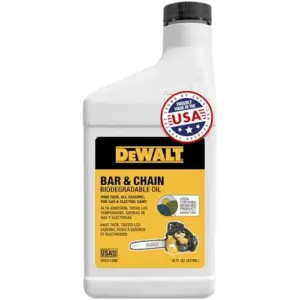
A bottle of this soy-based oil earns its spot in the shed if you run saws and care about the dirt underneath them. It’s USDA Certified Biobased, built for 100% loss use, so what slings off your bar ends up on soil and plants. Its tacky texture clings to the chain, and the high viscosity index keeps lubrication steady across temperature swings.
It fits gas, electric, and pole saws, pours at –15°F, and stands up to 500°F heat. Pricing exceeds petroleum oil.
| Best For | Homeowners and landscapers who run gas, electric, or pole saws near soil, plants, or water and want a biodegradable bar and chain oil. |
|---|---|
| Lubricant Type | Soy-based bar oil |
| Container Size | 16 oz |
| Packaging Format | Bottle |
| Primary Application | Chainsaw bar and chain |
| Friction Reduction | Reduces friction and wear |
| Main Drawback | Higher price |
| Additional Features |
|
- USDA Certified Biobased soy formula that is biodegradable and non-toxic, so oil slung off the bar does less harm to soil and plants.
- Tacky consistency clings to the chain to cut down on slinging, and the high viscosity index keeps lubrication steady across temperature changes.
- Works with gas, electric, and pole saws, with a –15°F cold-pour point and heat resilience up to 500°F.
- Costs more than basic petroleum-based bar and chain oils.
- Buyers have given mixed feedback on whether the 16 oz bottle holds as much as they expected.
- Made only for bar and chain lubrication, so it isn’t a fit for general-purpose uses like bike chains.
9. Wahl Premium Hair Clipper Blade Oil
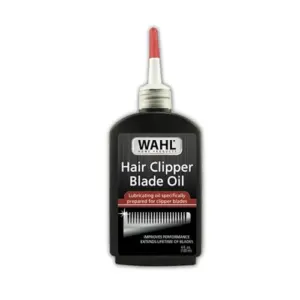
Grab this 4 oz bottle (model 3310-300A) when your clippers start running hot or tugging at hair. It’s formulated for all Wahl electric clippers and trimmers, and it works on blades from other brands too.
Follow the pattern: two drops on the left corner, two on the right, one in the middle. Skip it and you’re guessing.
You get less friction and heat, rust protection, and longer blade life. Reapply every few haircuts. It won’t replace self-sharpening, only support it.
| Best For | Anyone who uses Wahl or other brands of electric clippers and trimmers at home or in a shop and wants to keep their blades running cool, smooth, and rust-free. |
|---|---|
| Lubricant Type | Clipper blade oil |
| Container Size | 4 oz |
| Packaging Format | Bottle |
| Primary Application | Hair clipper blades |
| Friction Reduction | Reduces friction and heat |
| Main Drawback | Frequent reapplication needed |
| Additional Features |
|
- Reduces friction and heat during clipping, so the tool runs better and tugs less.
- Protects blades from rust and helps keep them from dulling over time.
- Extends the life of both the clippers and replaceable blades, and works on other brands too.
- Needs to be reapplied every few haircuts to keep the blades lubricated.
- Must be applied in a set pattern: two drops on the left, two on the right, and one in the middle.
- Does not replace self-sharpening mechanisms, since it only supports the existing blade construction.
10. Opove Clipper Lubricating Oil
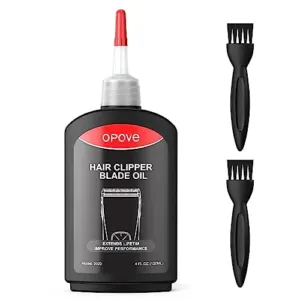
Picture a barber’s drawer at closing time: clippers humming warm, blades dragging a little on thick hair. That’s your cue to oil.
Opove’s 4.05 oz (120ml) bottle, model X-oil, is made for electric clippers and trimmers, and it fits other brands. Put 2–3 drops on the blades every few haircuts to cut friction, heat, and rust. Two brushes come in the box for cleanup first.
Keep it away from eyes, mouth, and kids. Some users report leaks, so store upright.
| Best For | Anyone who uses electric hair clippers or trimmers at home or in a barbershop and wants an easy way to keep their blades running smoothly and free of rust. |
|---|---|
| Lubricant Type | Clipper blade oil |
| Container Size | 4.05 oz |
| Packaging Format | Bottle with two brushes |
| Primary Application | Hair clipper blades |
| Friction Reduction | Reduces friction and heat |
| Main Drawback | Possible bottle leaking |
| Additional Features |
|
- Reduces friction and heat buildup, which helps extend blade life
- Comes with two brushes for cleaning the blades before oiling
- Works with Opove and other brands of grooming tools
- Some users report the bottle can leak
- Must be kept away from eyes, mouth, and children
- Needs regular reapplication, with 2–3 drops every few haircuts
Frequently Asked Questions (FAQs)
Why does my blade still rust after oiling?
Oil only protects steel that’s clean and dry. If you oiled over dampness, you sealed moisture in. Fingerprints, onion residue, or a cold blade sweating in humid air will rust right through the film.
How do I remove old, gummed-up lubricant?
Start with a solvent that matches the mess. Methylated spirits or kerosene soften gummed-up lubricant, and a brass parts brush lifts it without scratching. Wipe dry, blow out debris with compressed air, then relube right away.
Can I use cooking oil on blades?
Ever wonder why your salad dressing ingredient makes a lousy lubricant? You can oil a knife with cooking oil in a pinch, but it goes rancid and gums up pivots.
Use food-grade mineral oil instead.
Is blade oil safe for sharpening stones?
Mostly, no. Skip general blade oil, since its sulfur and chlorine additives can slowly eat at a stone’s bonding. Stick with pure white mineral oil, and keep diamond, ceramic, and magnesia stones oil-free.
Does oil damage DLC-coated blade finishes?
No, oil won’t hurt your DLC coating. It’s chemically inert, so mineral, silicone, and PAO oils just sit on it. Skip wire scourers and abrasive pastes, though, since they scratch the finish.
Conclusion
Steady habits save steel. Avoiding blade friction with proper oil isn’t complicated, just consistent: match the lubricant to the metal, clean and dry the edge first, then add a drop, not a puddle.
Put a reminder on your calendar and keep a small bottle where you store your blades. Five seconds of upkeep beats an hour of regrinding.
Treat oil as part of the cut, and your blades will run smooth for years, not months.