This site is supported by our readers. We may earn a commission, at no cost to you, if you purchase through links. This content is for general informational and educational purposes only and is not a substitute for professional medical, dermatological, or nutritional advice.

Your shaver head heats up within 30 seconds, and the hum turns to a faint squeak. That’s dry metal grinding on metal, and it wears down blades faster than any beard ever will.
Knowing when to oil electric shaver blades prevents that damage. Foil models need a drop after every daily shave. Rotary heads run cooler and can wait a week. Skip the schedule or grab the wrong oil, and you get tugging, missed patches and a drained battery.
Below, you’ll find the right timing, the oils worth buying, and the problems no amount of lubricant can fix.
Table Of Contents
- Key Takeaways
- How Often to Oil Electric Shaver Blades
- Signs Your Shaver Blades Need Lubrication
- 3 Lubricants for Electric Shaver Blades
- Oiling Shaver Heads After Cleaning and Drying
- How Cleaning Stations Affect Manual Oiling
- When Oiling Won’t Fix Shaver Performance
- Frequently Asked Questions (FAQs)
- Conclusion
Key Takeaways
- Oil foil shavers after every daily shave, and oil rotary heads every three to four uses or at least weekly, using just one drop of light clipper or shaver oil per head on clean, completely dry blades.
- Watch for heat on the foil within 30 seconds, grinding or squeaking, tugging, missed patches, or faster battery drain, because they mean your blades are running dry.
- Skip manual oiling after a cleaning station cycle since the solution already lubricates, but replace cartridges on schedule and wait for drying to finish before touching the blades.
- If your shaver still tugs after fresh oil, check for damaged foils or worn cutters, a low or aging battery, and buildup, and wipe off excess oil before shaving your neck and jawline, where skin is most sensitive.
How Often to Oil Electric Shaver Blades

How often you oil an electric shaver depends on how often you shave. If you shave daily, oil after every use. That keeps friction heat down and protects shaver blade longevity. If you shave two or three times a week, oiling once or twice a week is enough.
If you want to go beyond basic shaver oil, natural oils for pre-shave can help your shaver glide smoothly and keep blades well lubricated between sessions.
Rotary models need less machine lubrication than foil shavers. Their cutters turn far slower, so they generate less heat. Oil a rotary every three to four uses, or at least once a week. Avoid household oils, WD-40, and greases, since they attract dust and thicken over time, so stick to lightweight non-detergent machine oil instead.
Skip oiling on a brand-new shaver or fresh cartridge. They arrive pre-lubricated. Make shaver blade lubrication part of your shaver maintenance, and always oil clean, dry blades. Run it 20 seconds, then wipe off excess before shaving sensitive areas.
Signs Your Shaver Blades Need Lubrication

Even with a solid schedule, blades can run dry between oilings. Your shaver will tell you if you pay attention to what it feels and sounds like.
Check for these five signs:
- Heat on the foil within the first 30 seconds.
- A smooth hum turning into grinding or squeaking.
- Tugging, pinching, or dragging against your skin.
- Missed patches or extra passes to get a close shave.
- Dull, dry-looking blades with no oil film, or faster battery drain.
Heat is the clearest warning. A hot head means dry metal is rubbing on metal.
Don’t ignore pulling or snagging. It often leads to shave irritation, especially if your skin sensitivity runs high. If you spot rust, oil the blades once they’re clean and dry, then check the cutters for wear.
3 Lubricants for Electric Shaver Blades
You’ve got three solid options to choose from, and each one suits a slightly different routine. Pick the one that fits how you shave and how often you oil. The list below covers a clipper oil, a blade lube, and a 5-in-1 spray.
If you’re still choosing a shaver, this guide to electric shavers for teenagers compares each type so you can match one to your skin.
1. Wahl Professional Clipper Oil 4oz
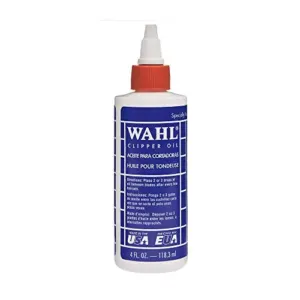
Say your foil shaver starts sounding strained halfway through a Sunday shave. A drop of the right oil usually fixes that. This 4 oz bottle of Wahl Professional Clipper Oil is formulated for clippers and trimmers, cuts blade friction, and gives rust-resistant protection to metal edges. It also works on grooming scissors.
Some users report spills, and the oiliness gets mixed feedback, so use one or two drops. Wipe excess before shaving, especially near your neckline, the most sensitive spot.
| Best For | People who regularly use clippers, trimmers, or grooming scissors and want an easy way to keep the metal blades lubricated and protected from rust. |
|---|---|
| Size | 4 oz |
| Format | Bottle |
| Lubrication | Reduces blade friction |
| Blade Life | Maintains optimum performance |
| Rust Protection | Rust-resistant protection |
| Compatibility | Clippers, trimmers, scissors |
| Additional Features |
|
- Specially formulated for clipper and trimmer lubrication, so it helps reduce blade friction during use
- Provides rust-resistant protection for metal blades
- Also works on grooming scissors, and the 4 oz bottle gives plenty for regular upkeep
- Some users report spills during application
- The oiliness gets mixed customer feedback
- The listed product weight of 0.25 g looks inconsistent with a 4 oz bottle, which makes the specs less reliable
2. Oster Premium Blade Lube 4 oz
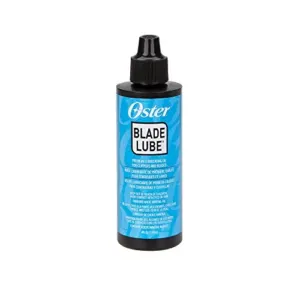
If you’d rather stay with the brand that makes your clipper, Oster’s 4 oz bottle is a solid second pick. It’s a premium lubricating oil made from refined white mineral oil. It’s non-detergent and meets FDA purity standards, so it’s safe near skin.
The dropper bottle gives you control, though some customers report leaks, so store it upright. Apply it while the blades run. Oster doesn’t explicitly confirm compatibility with other brands, so check your shaver’s manual first.
Since oiling works best on clean, fully dry blades, this guide to keeping clipper blades sharp while cleaning them walks through the whole routine.
| Best For | Clipper owners who prefer to use the same brand that made their tool and want a dropper bottle for controlled, precise oiling. |
|---|---|
| Size | 4 fl oz |
| Format | Dropper bottle |
| Lubrication | Maintains lubricating film |
| Blade Life | Prolongs blade life |
| Rust Protection | N/A |
| Compatibility | All clippers, trimmers, blades |
| Additional Features |
|
- Made from refined white mineral oil that is non-detergent and meets FDA purity standards, so it is safe near skin
- Dropper bottle gives you control over how much oil you apply
- Helps prolong blade life by keeping a lubricating film between the blade parts
- Some customers report leaks or spills, so the bottle should be stored upright
- Must be applied while the blades are running
- Compatibility with non-Oster brands is not explicitly confirmed, so you should check your tool’s manual first
3. Andis Cool Care Plus 5-in-1 Spray
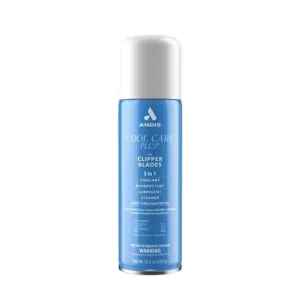
How do you handle cleaning, cooling and lubricating in one step? This 15.5 oz aerosol combines blade coolant, disinfectant, lubricant, cleaner and rust pre-treatment for $12.48. Its high-pressure nozzle clears hair from the teeth without detaching the blade.
Spray only on completely dry heads, or the product dilutes. Use it in a ventilated space, and never soak or immerse blades. Keep it off your skin and eyes, especially around the neckline, your most sensitive spot. Always check the label first.
| Best For | Barbers and home groomers who want to clean, cool, lubricate, and disinfect their clipper blades quickly between cuts without taking the blades off. |
|---|---|
| Size | 15.5 oz |
| Format | Aerosol can |
| Lubrication | Lubricates blades in place |
| Blade Life | Boosts blade life |
| Rust Protection | Rust pre-treatment |
| Compatibility | Clippers, no blade removal |
| Additional Features |
|
- Combines blade coolant, disinfectant, lubricant, cleaner, and rust pre-treatment in one 15.5 oz can for $12.48
- The high-pressure contoured nozzle clears hair from the blade teeth without detaching the blade
- Quick sprays between cuts help boost blade life, and the disinfectant works as a virucide, fungicide, bactericide, and tuberculocidal
- The aerosol formula needs proper ventilation during use
- It is not meant for immersing or soaking blades, so it can’t replace a full soak-style disinfection
- It must be kept away from eyes and skin, so you need to follow the label’s safety instructions closely
Oiling Shaver Heads After Cleaning and Drying
Oil your shaver only after the heads are clean and completely dry. Damp metal traps moisture and speeds up rust. Here’s how to apply it to each head type, so you get smooth cutting without extra residue.
Oiling Foil Shavers and Pop-Up Trimmers
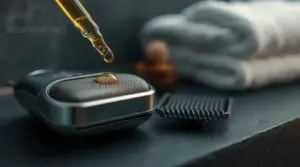
Start with a dry shaver. If you rinsed it, let the foil frame air dry for several hours first. Oiling a damp unit traps moisture and corrodes the thin foil grids.
Place one drop of oil on the outside of each foil, not the inner cutter block. Run the shaver for five seconds so the oil flows through the mesh. Extend the pop-up trimmer and add a drop to the middle of its teeth.
Oiling Rotary Shaver Heads

Say you rinsed your shaver under the tap last night and let it dry on the counter. This morning it feels warm and tugs at your jaw. That’s your cue.
Add one drop of oil to the slits of each head. Run the shaver for 5 to 10 seconds, then wipe off the excess. Use shaver or clipper oil, never household lubricants.
How Cleaning Stations Affect Manual Oiling

Think a cleaning station can’t lubricate your blades? It can. The solution carries its own lubricant, so you don’t need to add shaver or clipper oil after a cycle.
Here’s what to expect from each system:
- Braun cartridges use alcohol that degreases the blades, plus a little mineral oil.
- Philips pods use an alcohol-free formula with active lubricants, but they don’t dry the shaver.
- Panasonic stations combine water and lubricant, then dry the shaver.
Wait until drying finishes before you touch the blades. Oil applied over wet residue does little.
Replace cartridges on schedule, roughly every two months for Braun, because an empty one stops degreasing and lubricating, which wears the foils faster. Fresh fluid also helps prevent shaver clogging.
When Oiling Won’t Fix Shaver Performance
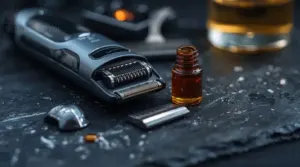
Oil can’t repair what’s broken. If your shaver still pulls after fresh lubricant, look elsewhere.
Lubricant won’t mend a damaged shaver, so when it keeps tugging after a fresh application, the real culprit lies elsewhere
Check the blades and foils first. Visible holes, nicks or bent foils mean structural failure, so replace the parts. Heavy wear and tear also dulls cutters through microscopic chipping that no oil reverses.
Next, charge the battery. Below 40%, torque drops, and below 20%, coarse hair tugs. A battery older than three to five years may need replacing.
Clean away mineral deposits and skin residue with a vinegar soak, since buildup adds motor stress. Trim hair longer than 3 mm to 1-2 mm first. Ease off the pressure too.
Stop right away if your skin burns or bleeds, especially around the sensitive neck and jawline.
Frequently Asked Questions (FAQs)
How much oil is too much?
A flooded engine stalls. Your shaver does too.
Use one drop of light mineral oil per head, and wipe any pooling. Over-oiling gums up blades and foils, hurting top performance. Keep oil off sensitive skin.
Can I oil a shaver while its running?
Yes, and it’s the standard method. Add a drop of oil to the foils while the shaver runs, then let it go for 5 to 20 seconds. Wipe off the excess right after you switch it off.
Does oil damage the shavers plastic parts?
Light mineral oil, like Wahl’s professional clipper oil, is rated safe for plastic housings. Heavy greases and aerosols aren’t. Use light mineral oil only on blades and foils, and wipe off the excess right away.
How should I store oil and shaver?
Nothing ruins a perfectly oiled shaver like a damp drawer. Dry every part completely, wipe off old oil, and add a fresh layer. Store it in a hard case or airtight pouch, cool and dry, with the oil bottle capped.
Conclusion
Clean the head, dry it fully, then add one drop. That routine takes ten seconds and protects the blades for years. Knowing when to oil electric shaver blades means matching the habit to your shaver: daily for foils, weekly for rotaries.
If your shaver still tugs after oiling, replace the foil or cutters. Fresh oil can’t sharpen worn steel. Wipe excess before shaving, since leftover oil can irritate the skin around your neck and jawline.