This site is supported by our readers. We may earn a commission, at no cost to you, if you purchase through links. This content is for general informational and educational purposes only and is not a substitute for professional medical, dermatological, or nutritional advice.
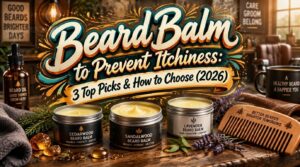
Your beard itches at 3 a.m., and you scratch like a man who lost a bet with his own face. Then comes the flaking, the tight skin, the sudden urge to shave it all off.
Dry skin under your beard drives most of that misery, and the right beard balm to prevent itchiness can stop it. It locks in moisture, smooths rough hairs, and gives your skin barrier a protective film. But a bad formula, loaded with synthetic fragrance or harsh oils, makes things worse fast.
Here’s how to spot the real cause, pick ingredients that work, and match a balm to your beard length.
Table Of Contents
- Key Takeaways
- Why Does My Beard Itch—and When Won’t Balm Help?
- How Beard Balm Helps Prevent Dryness and Itchiness
- How to Choose a Beard Balm for Itchy Skin
- Beard Balms to Compare for Itch Relief
- How to Apply Beard Balm to Prevent Itchiness
- Frequently Asked Questions (FAQs)
- Does beard balm stop itching?
- What to put on a beard to stop itching?
- What cream can I use to stop my beard from itching?
- What is the 3 month beard rule?
- Does beard balm prevent itching?
- How to make a beard less scratchy?
- How often should I use beard balm?
- Can I use beard balm on my head hair?
- Does beard balm help with beard growth?
- How long should my beard be before using balm?
- Conclusion
Key Takeaways
- Beard itch is usually caused by irritation from fragrance, botanicals, or friction rather than dryness alone, so you’ll want to name your trigger before reaching for a balm.
- Balm only works when dryness is the cause, so if you’ve got flaking that won’t quit, persistent redness, burning, or a spreading rash, you’re dealing with something it can’t fix.
- Pick a balm that pairs a humectant like glycerin with sealing butters or oils, skip synthetic fragrance, harsh alcohols, and strong essential oils, and go unscented if your skin reacts easily.
- Warm a pea-sized amount in your palms after washing, massage it down to the skin, and track how your skin responds for a week to see whether it’s helping or hurting.
Why Does My Beard Itch—and When Won’t Balm Help?
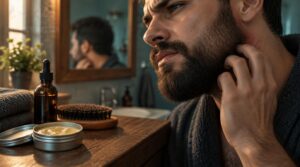
Irritation is the usual culprit behind an itchy beard, and dryness is just one suspect. Fragrance, essential oils, and botanical extracts can set your skin off, while tight trimming, rough brushing, and hard towel-drying add friction. Flakes point somewhere else: oily skin with yeast-driven inflammation.
If you keep your beard short, a few simple short beard grooming habits can cut down on friction and keep irritated skin calmer.
An itchy beard is usually irritation rather than dryness, triggered by fragrance, botanicals, and friction, while flakes point to yeast-driven inflammation instead
That’s where beard balm benefits hit a ceiling. Skin moisturization and natural ingredients soothe dry skin, but they can’t calm an immune reaction or clear scale.
Skip the balm and rethink your beard grooming routine if you notice persistent redness, burning, swelling, or a spreading rash. Thick flaking that survives moisturizing is another red flag. So is itch that shows up only where a new product touches. Real itch relief starts with finding the trigger.
How Beard Balm Helps Prevent Dryness and Itchiness
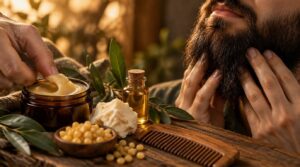
When dryness is your trigger, balm gives you real itch relief. Dry skin under the beard feels tight, and rough hair rubs it raw. A good balm works like a beard moisturizer with a built-in seal, calming that cycle in five ways:
- It locks in water, supporting your beard skin barrier.
- Massage spreads conditioning agents down to the skin.
- Smoother hair fibers mean less prickly friction.
- Humectants and oils soften both hair and skin.
- Waxy bases keep a protective film working all day.
Pick one with gentle natural ingredients and you’ll feel the difference fast. Apply it consistently, reaching the skin and not just the surface. Unscented formulas are the safest bet for reactive skin, so you stay in control.
How to Choose a Beard Balm for Itchy Skin
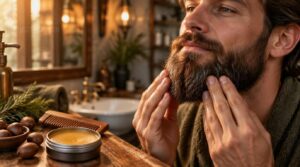
Picking the right beard balm doesn’t have to feel like guesswork. Five quick checks will help you find a balm that fits your skin, your beard, and your itch. Let’s walk through them one at a time.
Identify the Itch Trigger
Last winter, my buddy blamed his beard itch on "weak genes." Wrong suspect. It was his pomade.
Before blaming genes or grooming products, check your diet too, since the right protein supplements for beard health can help fill gaps that stall growth.
Match the clue to the culprit:
| Clue | Likely trigger |
|---|---|
| Flaking near brows | Seborrheic dermatitis |
| Tight, tingly skin | Dry skin |
| Itchy bumps | Folliculitis |
Name your itch trigger first. Balm only delivers itch relief when dryness is the cause. Flakes? That could be beard dandruff.
Look for Moisturizing Ingredients
Dry skin is your culprit? Good. Now you can fight back with the right label reading.
Your beard balm should moisturize and seal. Pair a humectant like glycerin or panthenol for skin hydration with butters, squalane, or jojoba for beard softening. Natural ingredients like shea work well. Skip single-ingredient formulas. A mix beats a solo act. Hydrate first, then seal.
Avoid Potential Irritants
Steer clear of anything that fights your skin. Your beard balm should calm, not provoke. Scan labels for:
- Synthetic fragrances that spark contact dermatitis
- Alcohol-based formulas and harsh alcohols that strip natural oils
- Sulfates left over from your beard wash
- Pore-clogging ingredients that trap buildup
- Strong essential oils or citrus extracts
Switched products and itch flared? Suspect the preservatives too.
Match Your Beard Type
Since every beard type itches for different reasons, your beard balm should fit yours. Curly beards lose moisture faster, so lean on richer beard moisturizing formulas. Patchy growth exposes skin, which raises itchiness there.
| Beard type | Itch driver | Balm focus |
|---|---|---|
| Short | Skin | Moisturizing |
| Medium | Skin and hair | Softness and hold |
| Long | Friction | Spreadability |
Smart beard care starts with matching length.
Check Your Skin’s Response
Think a new balm can’t be the problem? It can. Check Your Skin’s Response before blaming your beard.
Track these for a week:
- Burning after applying
- Redness near the jawline
- Flaking that wasn’t there before
- Itch returning by morning
- Relief after stopping the product
Pick natural ingredients, add a gentle beard shampoo, and expect skin soothing and quick itch relief.
Beard Balms to Compare for Itch Relief
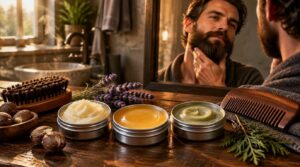
Ready to meet your beard’s new best friend? Below, you’ll find three beard balms for itch relief, each picked to calm dry, irritated skin. Scan the list, match one to your beard, and take back control of your comfort.
Cremo Distiller’s Blend Beard Balm
If your beard feels like a dry haystack by midday, Cremo’s Distiller’s Blend Beard Balm is built to calm that scratchy mess, thanks to jojoba and sunflower oils paired with beeswax. leans on natural ingredients to deliver steady itch relief without a heavy feel.
Here’s what you get:
- Skin hydration from jojoba oil that resembles your skin’s own oil
- Sunflower oil for a soft, smooth finish
- Beeswax that seals in moisture and tames flyaways
- A light hold, so you can still style your beard your way
Big Forest Beard Balm
Want beard itch relief that smells like a hike? Big Forest Beard Balm leans on natural ingredients to soothe dry, itchy skin.
Here’s what you get:
- Shea butter and coconut oil soften coarse hair and help seal in moisture.
- The forest scent adds personality, but fragrance can bother sensitive skin.
- Eco-friendly packaging keeps your conscience as tidy as your beard.
Got reactive skin? Patch-test this beard balm on your jaw first, because fragrance-driven itchiness won’t improve just by adding more product.
Stirling Unscented Beard Balm
Sensitive skin deserves unscented beard balm that behaves. Stirling’s formula skips fragrance entirely and leans on natural ingredients for steady itch relief.
| Feature | Detail | Benefit |
|---|---|---|
| Hold | Light | Natural movement |
| Scent | None added | Layers with cologne |
| Oils | Castor and jojoba | Skin hydration |
| Pick | Included | Hygienic scooping |
Warm it between your palms, work it in, then comb. You’ll feel softness, not stiffness.
How to Apply Beard Balm to Prevent Itchiness
Picked your balm? Great. Now let’s make proper application do the heavy lifting, because even the best formula can’t help if it only sits on top of your hair.
Wash your face first, since skin is most hydrated then. Pat dry, then follow these steps:
- Scoop a pea-sized amount and warm it between your palms until it melts.
- Work it through your beard, hands first, so the product spreads evenly.
- Massage down to the skin line, where dryness hides.
- Let it settle a minute before touching your face.
Pair this beard balm application with a steady beard moisturizing routine, and you’ve got one of the simplest beard itch relief methods. Stick with it, and your beard care routine gets easier.
Frequently Asked Questions (FAQs)
Does beard balm stop itching?
Funny how your beard balm can’t fix a beard itch caused by dandruff or eczema.
But for dryness-driven itchiness, it delivers real beard itch relief. Choose natural ingredients, rub it into skin, watch dryness fade.
What to put on a beard to stop itching?
Think beard itch means your beard’s dirty? Not quite. Dryness drives most itchiness, so skip harsh washing. Massage a fragrance-free beard balm with natural ingredients and glycerin onto damp skin.
That’s real skin relief today.
What cream can I use to stop my beard from itching?
Does a cream really fix beard itchiness? Mostly, if dry skin is the culprit.
Reach for a beard balm with natural ingredients like shea butter and jojoba oil. Make it part of your beard care.
What is the 3 month beard rule?
Picture a freshly seeded lawn: patchy, scruffy, itchy. That’s your beard early on.
The three-month beard rule says stick with it. Itch usually eases by then, though timing varies. Support it with beard balm daily.
Does beard balm prevent itching?
Day five of growing out your stubble, and you’re scratching. Beard balm prevents that beard itch by moisturizing your skin underneath, so an itchy beard calms down. It’s antiitch beard irritation relief that curbs itchiness.
How to make a beard less scratchy?
Tame the scratch with a daily beard balm habit. Wash gently with beard shampoo for solid beard hygiene, then brush with boar bristles. Trim split ends often. Your beard softening plan beats itchiness.
How often should I use beard balm?
Ready to stop the scratching? Use beard balm daily, right after washing while your beard’s still slightly damp. Start with a pea-sized amount, then reapply when dryness creeps back to moisturize and keep itchiness away.
Can I use beard balm on my head hair?
Yes, you can. Beard balm adds real hair nourishment and light hold, but it’s built for coarser beard conditioning, so use a pea-sized dab. Choose natural ingredients, skip heavy fragrance, and stop if itchiness appears.
Does beard balm help with beard growth?
Beard balm won’t make your beard growth speed up. It can’t wake sleepy follicles. What it does is support hair follicle health by softening skin with natural oils, so your beard hair nourishment stays steady.
How long should my beard be before using balm?
Start once stubble feels scratchy, usually after a few days.
Length matters less than reaching your skin, so work beard balm in at the roots. Itchiness fades with beard hygiene, beard conditioning and natural ingredients.
Conclusion
Your beard grows roughly half an inch a month, and the skin underneath needs care that keeps pace.
A beard balm to prevent itchiness does that job daily, sealing in moisture while taming stray hairs. Pick ingredients your skin trusts, skip the fragrance, and match the formula to your length.
Then watch how your skin responds. Itch fading? Keep going. Still scratching? Look deeper, because another trigger may be hiding. You call the shots here.