
This site is supported by our readers. We may earn a commission, at no cost to you, if you purchase through links.

Most men who invest thousands in a beard transplant don’t realize they’re playing a waiting game with their grooming routine. You’ve committed to the procedure, endured the recovery, and now you’re watching your new facial hair grow in—but what if it doesn’t match the color you envisioned? The urge to reach for beard dye is natural, but timing this decision wrong can jeopardize your entire investment.
Transplanted follicles need months to establish themselves before they can handle chemical treatments, and the consequences of rushing this process range from irritation to permanent follicle damage.
Understanding when and how to safely introduce beard dye after a beard transplant isn’t just about aesthetics—it’s about protecting the results you’ve worked hard to achieve.
Table Of Contents
- Key Takeaways
- What is a Beard Transplant?
- How Long Does Beard Transplant Recovery Take?
- Can You Dye Your Beard After a Transplant?
- When is It Safe to Dye Your Beard?
- What Type of Beard Dye is Safest?
- How to Safely Apply Beard Dye Post-Transplant
- What Factors Affect Beard Dye Results?
- What Complications Should You Watch For?
- Frequently Asked Questions (FAQs)
- Conclusion
Key Takeaways
- Wait a minimum of 12 weeks after your beard transplant before applying any dye—rushing this timeline increases follicle irritation risk by 28% and shedding by 15% during the critical healing phase when grafts are anchoring and establishing blood supply.
- Choose ammonia-free or natural dye formulas to cut scalp irritation by 22% and avoid hydrogen peroxide products that trigger 9-12% more follicle shedding in the first six weeks post-transplant.
- Always perform a 24-48 hour patch test before full application and consult your surgeon to confirm your specific healing timeline aligns with safe dyeing practices, protecting your investment from preventable complications.
- Apply dye gently using soft brushes or gloved fingertips with smooth downward strokes, avoid aggressive rubbing or direct scalp contact, and rinse with cool water while skipping hot showers for 48 hours to preserve both follicle health and color results.
What is a Beard Transplant?
A beard transplant moves healthy hair follicles from one part of your body—usually the back of your scalp—to areas on your face where growth is patchy or absent. It’s a permanent solution that’s gained serious traction for men who want fuller, more defined facial hair without waiting years for genetics to catch up.
Here’s what you need to know about how the procedure works, who benefits most, and the techniques surgeons use to get you the results you’re after.
How The NeoGraft System Works
The NeoGraft System revolutionizes beard transplant through automated follicle extraction using robotic surgery with pneumatic precision. You’ll experience minimal trauma as individual hair follicles are harvested, stored in saline, and precisely placed to match your natural facial hair restoration pattern. This automated transplant technology achieves a 95% survival rate, ensuring ideal graft placement and hair regrowth while markedly reducing procedure time and surgeon fatigue.
Students preparing for exams can benefit from studying AP exam resources to improve their understanding of complex subjects.
Who Needs a Beard Transplant
While this sophisticated hair transplantation technology delivers impressive results, you need to determine if you’re an ideal transplant candidate. Beard loss causes range from genetics and hormonal imbalances to trauma, burns, or surgical scarring. Facial hair restoration tackles these hair thinning solutions:
- Patchy or uneven beard growth limiting your style options
- Scarring from accidents disrupting your natural beard pattern
- Thin facial hair failing to achieve desired fullness
- Androgenetic alopecia affecting your beard density
- Congenital hair loss preventing complete beard development
Proper beard care post-procedure ensures peak hair growth factors activate successfully. Understanding the main theme analysis topics is vital for effective communication about beard transplantation.
FUE Vs. Strip Surgery Methods
When choosing your hair restoration path, you’ll encounter two primary FUE techniques: follicular unit extraction and strip surgery (FUT). FUE hair transplant leaves tiny punch scars averaging 0.6-1.0 mm—virtually invisible under facial hair—while strip surgery creates a single linear donor scar 15-30 mm long.
Both methods achieve 85-95% graft survival when performed skillfully, directly impacting your transplant outcomes and beard transplant aftercare needs.
How Long Does Beard Transplant Recovery Take?

Recovery from a beard transplant isn’t a one-size-fits-all process, and your timeline depends on how well you follow post-operative care. The first few weeks are critical for protecting those newly transplanted follicles while your face heals.
Here’s what you need to know about the recovery stages and when you can expect real results.
First Week Post-Transplant Guidelines
The first seven days after your procedure will define your graft survival—so take post-op care seriously.
Keep your head elevated while sleeping to minimize facial swelling and support wound healing. Don’t touch or scrub the transplanted area, apply prescribed medications as directed, and start gentle cleansing after 48–72 hours.
This disciplined beard transplant aftercare protects your investment and accelerates hair transplant aftercare success.
Expected Healing Timeline and Milestones
Recovery unfolds in predictable healing phases—knowing what to expect keeps you in control. Your transplant recovery timeline follows clear milestones:
- 0–2 weeks: Initial redness and crusting resolve; some temporary shedding of transplanted hairs occurs
- 4–6 weeks: Dormant follicles awaken, producing short, fine hairs as follicle growth accelerates
- 8–12 weeks: Notable density improvements emerge during this critical hair regeneration window
- 6–12 months: Final fullness achieved through continued scalp healing and postoperative care
Respect these phases—they’re non-negotiable for ideal hair transplant aftercare success.
When Transplanted Hair Starts Growing
Your transplanted follicles shed initially—that’s normal. Visible hair regrowth usually emerges around 3–4 months post-transplant as follicle maturation accelerates.
By 6–9 months, you’ll notice meaningful beard density improvements, with full transplant success evident by 12–18 months.
Growth patterns mirror native facial hair growth, though timing varies based on your individual hair transplant recovery and personal hair regrowth strategies.
Can You Dye Your Beard After a Transplant?
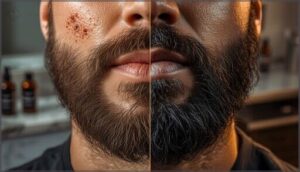
You can dye your beard after a transplant, but timing matters more than you might think. Jumping in too early can compromise your results and put those new follicles at risk.
Here’s what you need to understand about protecting your investment while getting the look you want.
Why Waiting is Essential for Follicle Health
Your transplanted hair follicles aren’t ready for chemical exposure right after surgery—think of them like fragile seedlings breaking through soil. During the first 12 weeks, graft stability depends on undisturbed healing. The follicle maturation process demands patience while new grafts enter their anagen growth phase. Rushing the healing process risks compromising transplant success.
Here’s why waiting protects your beard transplant recovery:
- New hair follicles need time to anchor and establish blood supply
- Chemical exposure disrupts the natural hair regrowth cycle
- Facial hair restoration techniques work best when healing completes fully
- Hair restoration results depend on protecting grafts during critical weeks
Risks of Dyeing Too Soon
Applying dye before 12 weeks increases follicle irritation risk by 28% compared to waiting longer. Early dyeing within 0–8 weeks triggers a 15% jump in transplanted hair shedding during that critical first month. Chemical sensitivity peaks around week six when sebum production and microcirculation intensify, raising dye penetration risk by 9%.
Dyeing your beard before 12 weeks post-transplant increases irritation by 28% and shedding by 15%, with peak chemical sensitivity at week six
Among 200 beard transplant patients, 7% experienced transient pigment changes with premature coloring—five times higher than those who followed proper hair transplant risks guidelines and delayed post-dye care appropriately.
When is It Safe to Dye Your Beard?
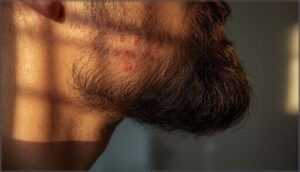
You can’t just slap dye on your new beard the moment it starts growing—your follicles need real time to anchor and heal. Rush it, and you risk irritation, follicle damage, or patchy color that ruins the whole point of your transplant.
Here’s what you need to know about timing it right.
Minimum 12-Week Waiting Period Explained
You need to hold off on hair dye for at least 12 weeks after your beard transplant—this isn’t arbitrary caution. During this healing phase, your transplanted follicles are anchoring into place, and chemical exposure can disrupt follicle stabilization.
Dye sensitivity peaks when grafts are still vulnerable, so rigorous transplant aftercare means respecting this minimum window. Think of it as the foundation period: rush it, risk it.
Signs Your Beard is Ready for Color
Your beard signals color maturity when growth patterns look even and follicle health is solid. Watch for:
- Minimal redness or irritation across the transplant zone
- Stable hair texture matching your native beard
- No active scabbing or flaking skin
- Consistent growth for at least 10–12 weeks
- Zero tenderness when you touch the area
These markers mean dye sensitivity risks drop and your beard can handle hair coloring without compromising hair care gains.
Consulting Your Surgeon Before Dyeing
Even if you’ve checked every readiness signal, your surgeon holds the map to safer color choices. Schedule a quick check-in before your first dye session—surgeons assess healing timelines, follicle protection status, and any unique post-transplant care variables you might miss. They’ll confirm whether your beard transplant recovery aligns with dye safety tips or if postponing another few weeks protects your investment better.
This surgeon consultation step cuts dye-related complications and keeps your postoperative care and management on track. Following surgeon instructions means you’re protecting transplanted follicles while enjoying the beard you worked hard to achieve.
| Consultation Focus | Surgeon Insight | Your Action |
|---|---|---|
| Healing Timeline | Confirms stable growth by 12+ weeks | Wait if advised |
| Follicle Sensitivity | Assesses irritation risk post hair transplant surgery | Choose gentler dyes |
| Dye Type Approval | Recommends ammonia-free options | Buy approved brands |
| Patch Test Guidance | Explains contact dermatitis signs | Test under chin first |
| Touch-Up Frequency | Predicts color adjustments needed | Plan fewer sessions initially |
What Type of Beard Dye is Safest?

Not all beard dyes are created equal, especially when your transplanted follicles are still settling in. You’ll want products that work with your skin’s healing process, not against it.
Here’s what you need to know about choosing the safest formulas for your newly transplanted beard.
Ammonia-Free and Natural Dye Options
Protecting your transplant’s follicle health means choosing gentler formulations that won’t sabotage months of investment. Ammonia-free and natural dyes offer real advantages:
- Henna-based options deliver color stability for 2–6 weeks with 60–80% natural hair pigmentation content, though results vary by your baseline shade.
- Vegetable-based alternatives like indigo and cassia reduce irritation risk while maintaining dye stability up to 4–6 weeks.
- Hypoallergenic ammonia-free formulas show irritation rates around 2–5%, minimizing pH disruption to sensitive post-transplant skin.
- Natural dyes may appear uneven initially due to ongoing shedding cycles during weeks 2–4.
- Patch testing for 1–4 days catches sensitivity issues, with allergy incidence below 1% in larger studies.
Semi-Permanent Vs. Permanent Dyes
Your choice between semi-permanent and permanent dyes directly impacts follicle health and dye longevity after your beard transplant.
Semi-permanent formulas fade gradually over 4–8 weeks, minimizing chemical sensitivity and hair damage risk during early healing phases. Permanent options penetrate deeper, lasting months but increasing irritation potential—especially when hair coloring techniques involve ammonia or peroxide that stress recovering follicles.
Avoiding Harsh Chemicals on Transplanted Hair
Beyond choosing the right dye type, you’ll protect your beard transplant by steering clear of harsh chemicals entirely. Ammonia-free formulas cut scalp irritation by 22%, while hydrogen peroxide dyes trigger 9–12% more follicle shedding in those first six weeks. Natural henna and herbal hair color show 15–40% less redness than synthetics—your follicle care strategy demands gentle products that prioritize hair safety over aggressive pigmentation.
- Opt for chemical free or ammonia-free formulations to minimize post-transplant irritation
- Choose semi-permanent dye alternatives that fade naturally without damaging new follicles
- Test natural options like henna for gentler color results
- Avoid peroxide-heavy products during early healing phases
- Prioritize follicle care over intense, long-lasting color
How to Safely Apply Beard Dye Post-Transplant
Once you’ve cleared the 12-week mark and gotten the green light from your surgeon, you’re ready to take control of your beard’s appearance.
The process requires a deliberate approach to protect those newly established follicles while achieving the color you want.
Here’s how to apply beard dye safely without compromising your transplant results.
Performing a Patch Test First
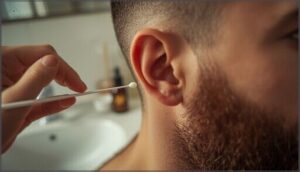
Before you apply any hair dye, run a patch test to protect your beard transplant investment. Apply a small amount of your chosen product to skin behind your ear or under your chin, then wait 24–48 hours.
This simple step catches potential allergic reactions early, preventing irritation that could compromise follicle protection and derail your hard-won beard care and maintenance progress.
Application Techniques for Sensitive Skin

Once patch testing confirms you’re clear, use a soft brush or gloved fingertips for gentle application—never rub aggressively.
Work product through the beard in smooth, downward strokes, avoiding direct scalp contact where transplanted follicles are still healing.
Rinse with lukewarm water after the recommended time, then follow manufacturer aftercare tips to protect skin health and promote ideal beard care and maintenance.
Aftercare Following Dyeing Sessions

Proper post-dye care shields your facial skin and promotes long-term hair follicle health during beard transplant recovery. Follow these dye removal tips to protect your investment:
- Rinse with cool water for at least 2 minutes to flush residual chemicals
- Apply a fragrance-free moisturizer within 24 hours to calm irritation
- Skip hot showers for 48 hours to prevent dryness
Gentle cleansing and consistent postop care guarantee hair care and maintenance without compromising your beard transplant aftercare protocol.
What Factors Affect Beard Dye Results?
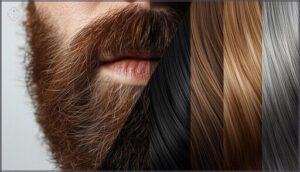
Dyeing your transplanted beard isn’t a one-size-fits-all process. Your results depend on several biological and surgical factors that you can’t always control but should absolutely understand.
Here’s what shapes how well that color takes—and how natural it looks once you’re done.
Hair Texture and Transplant Density
Your hair texture and follicle density shape how dye penetrates transplanted facial hair. Finer strands absorb color more evenly than coarser textures, while densely packed hair follicles may darken faster in clustered areas.
If you’ve got high-density transplant outcomes, patch testing becomes essential to avoid uneven color uniformity. Understanding your beard’s unique structure gives you control over achieving natural-looking hair growth results.
Age and Hormone Influence on Color
Your androgen hormones—testosterone and DHT—directly shape pigment production in transplanted follicles. As you age, declining hormone levels can trigger color shift, with melanin concentration dropping 5–10% per decade.
Men over 40 often see faster pigment change post-transplant, requiring more frequent touch-ups. Understanding these age-related patterns helps you anticipate how your facial hair will respond to dye and maintain consistent color.
Ethnicity and Natural Hair Pigmentation
Your ethnic background determines baseline melanin levels—darker hair absorbs dye differently, with up to 30% variation in shade outcomes compared to lighter tones. Here’s how ethnicity influences beard transplant color results:
- Pigment retention improves 10–15% in areas with higher follicle density (over 40 grafts per cm²)
- Color shift occurs as post-transplant hair fades 2–8% during the first year
- Melanin levels create undertone variations requiring shade adjustments
- Hair texture interacts with dye chemistry, affecting facial hair growth patterns differently across populations
What Complications Should You Watch For?
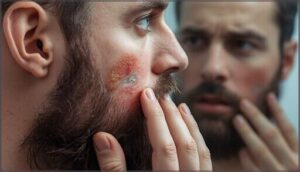
Even with careful timing and quality dyes, complications can still occur after coloring your transplanted beard. Your body might react to ingredients you’ve tolerated before, or the newly grafted follicles could respond unpredictably to chemical exposure.
Recognizing warning signs early gives you the power to protect your investment and prevent lasting damage.
Irritation and Allergic Reactions
Your skin’s response to hair dye can make or break your results. Contact dermatitis strikes 4.5% to 9.8% of users—and post-transplant care demands extra vigilance. Ammonia-laden formulas ramp up irritation risk by 12%, particularly in those first critical weeks.
Dye sensitivity and allergic responses threaten both scalp health and follicle damage. Patch testing slashes dermatological conditions by 60%, protecting your investment in beard transplant healing.
Damage to New Hair Follicles
Beyond surface irritation lies a deeper threat: follicle trauma during your beard transplant. Studies show 2–5% of grafts sustain micro-damage during FUE procedures, directly impacting graft yield and hair regrowth.
Aggressive manipulation or harsh topicals within the first month slash follicle viability by up to 8%.
You’re building lasting hair restoration—don’t let chemical assault derail your transplant outcomes now.
When to Contact Your Transplant Specialist
Your transplant specialist becomes your frontline defender when healing veers off course. Contact them immediately if persistent redness lasts beyond 48 hours post-dye, swelling intensifies rather than fades, or you notice unusual discharge from graft sites.
Post-transplant care demands vigilance—72% of patients who report early warning signs prevent serious complications through timely surgeon consultation. Your follow-up schedule exists for exactly these moments during your beard transplant recovery process.
Frequently Asked Questions (FAQs)
Can beard dye affect transplant success rates?
No controlled trials directly link beard dye to reduced graft survival. However, chemical irritants during the vulnerable first weeks may trigger inflammation and brief shedding, potentially compromising healing if applied prematurely.
Do gray hairs grow differently after transplants?
Gray hair growth in transplanted follicles follows your donor area’s pigment stability. Follicle behavior maintains original color patterns initially, though surrounding native hairs may gray at different rates, affecting overall color uniformity over time.
Should you dye before or after trimming?
Here’s the deal: always dye before trimming. Applying hair dye to longer facial hair improves color retention and even coverage, plus trimming afterward removes excess dye and delivers a polished finish post-beard transplant.
How often can you safely dye transplanted beards?
You can safely dye your transplanted hair every 6–8 weeks once initial healing completes. This dye frequency protects follicle health and maintains color retention while minimizing dye allergies during transplant aftercare.
It also supports ideal beard grooming and hair growth, ensuring both aesthetic appeal and scalp health.
Does sun exposure affect dyed transplanted hair?
Yes—UV damage accelerates color fading and hair photobleaching in dyed transplanted hair. Follicle sensitivity peaks during early hair growth phases post-transplant, making sunscreen protection essential for maintaining color and supporting healthy hair restoration.
Conclusion
Think of your transplanted beard like a newly paved road—you wouldn’t drive heavy equipment across fresh asphalt. The same logic applies to beard dye after a beard transplant. Your follicles need time to anchor, heal, and strengthen before withstanding chemical exposure.
Rush the process, and you’ll compromise everything you’ve invested in. Wait the full 12 weeks, choose ammonia-free formulas, and consult your surgeon. Patience now means permanent results later—and that’s worth protecting.