This site is supported by our readers. We may earn a commission, at no cost to you, if you purchase through links.
Spotting gray beard before 30 hits differently than finding it on your head. It feels earlier, more visible, and somehow more personal—like your face is aging on its own schedule.
For some men, a few silver strands appear in their mid-20s, driven by stress, a B12 deficiency, or a gene variant called IRF4 that quietly stacks the odds against pigmentation. Your beard hair turning gray early isn’t random bad luck. There are real, identifiable causes behind it—and most of them respond to the right intervention.
Table Of Contents
- Key Takeaways
- Causes of Premature Graying
- Genetic Influence on Graying
- Lifestyle Factors Affecting Graying
- Nutritional Strategies for Hair
- Environmental Factors and Graying
- Managing Gray Beard Hair
- Reversing Gray Hair Naturally
- Common Deficiencies and Graying
- Aging and Graying Process
- Preventing Premature Graying
- Frequently Asked Questions (FAQs)
- Why is my beard turning grey so fast?
- How to stop premature greying of beard?
- What is the normal age to get a grey beard?
- Why is my beard turning gray so fast?
- Why is my beard getting white at early age?
- How to stop premature greying of beard hair?
- Should you pluck grey beard hairs?
- Does trimming beard hair prevent premature graying?
- Are there beard dyes safe for sensitive skin?
- Can medical treatments reverse gray beard permanently?
- Conclusion
Key Takeaways
- A single gene variant (IRF4) accounts for roughly 30% of early beard graying, meaning your DNA often sets the clock before lifestyle even enters the picture.
- Chronic stress physically depletes your follicles’ pigment reserves by flooding them with norepinephrine — it’s not just in your head, it’s in your hair.
- Deficiencies in B12, iron, and copper are among the most fixable drivers of premature graying, and a simple blood test can catch them before the damage compounds.
- Smoking, UV exposure, and harsh grooming chemicals accelerate melanocyte burnout faster than aging alone — and most of that damage is within your control to stop.
Causes of Premature Graying

Gray showing up in your beard before you’re ready isn’t just bad luck — there are real reasons it’s happening.
From genetics to stress to nutritional gaps, the reasons behind early beard graying are more varied than most guys realize.
Some are written into your DNA, others come down to daily habits you can actually change.
Here’s what’s driving it.
High Stress Levels
Stress doesn’t just wear you down mentally — it physically hijacks your beard color. When stress levels stay high, your body’s sympathetic activation floods hair follicles with norepinephrine, a stress hormone that forces pigment stem cells to activate all at once. That sudden surge causes oxidative damage and depletes your melanocyte reserves faster than they can recover.
Here’s what’s happening at the cellular level:
- Norepinephrine effects trigger premature differentiation of pigment stem cells, exhausting the follicle’s color supply.
- Cellular stress and oxidative stress accumulate, permanently shutting down melanin production in affected follicles.
A recent study highlights the role of the sympathetic nervous system in how stress accelerates pigment loss in hair.
Genetic Factors
Your genetic predisposition is quietly running the show here. If your father or grandfather went gray early, hereditary patterns suggest you’re likely following the same script. That’s genetics — not a flaw, just inherited traits doing exactly what they were programmed to do.
The IRF4 gene is a key player. One variant alone accounts for roughly 30% of gray hair tendency.
Ethnic variations also shape your timeline:
| Population | Typical Graying Age |
|---|---|
| Caucasians | Mid-30s |
| Asians | Late 30s |
| Africans | Mid-40s |
A deeper look at ethnic hair aging differences reveals that structural and environmental factors also play a significant role.
Understanding your genetic inheritance doesn’t mean surrendering — it means knowing what you’re working with.
Vitamin Deficiencies
Genetics loads the gun, but nutrient deficiencies pull the trigger.
Genetics sets the timeline, but what you eat decides how fast the clock runs
A Vitamin B12 shortage directly disrupts melanin production — and it’s more common than you’d think, especially on plant-based diets. A Copper Deficit knocks out tyrosinase, the enzyme your follicles need to make pigment. An Antioxidant Gap lets hydrogen peroxide build up, bleaching hair from the inside out.
Watch for these deficiencies:
- Vitamin B12 and iron — low levels starve follicle cells of energy
- Folate Shortage — slows keratin and melanin protein synthesis
- Mineral Imbalance (zinc, copper) — weakens pigment enzyme activity
- Folic acid gaps — accelerate oxidative damage in beard follicles
Simple bloodwork catches most of these early.
Smoking and Toxins
Nutrient gaps quietly chip away at pigment — but smoking torches it outright. Toxic exposure from cigarettes floods follicles with reactive oxygen species, overwhelming your natural antioxidant protection. Nicotine effects constrict blood vessels, cutting oxygen delivery by up to 30%. Smoke damage and chemical buildup from heavy metals like cadmium wreck melanocyte DNA fast.
- Oxidative stress from smoking habits destroys pigment cells permanently
- Environmental toxins in tobacco inflame and weaken hair follicle health
- Nicotine-driven vasoconstriction starves follicles of nutrients needed for melanin
Genetic Influence on Graying

Genetics is probably the biggest reason your beard is going gray before you’re ready for it. If your dad or grandfather had silver streaks early, there’s a good chance your follicles are following the same blueprint.
Here’s what your DNA is actually doing behind the scenes.
Family History
Your DNA is writing this story before you even pick up a razor. If your father or grandfather went silver before 40, you’re probably on the same timeline — family traits and hereditary factors carry serious weight here. Research shows having an affected relative more than doubles your odds of early graying.
| Parental Influence | What It Means for You |
|---|---|
| Father grayed before 35 | High inherited tendencies toward early beard graying |
| Both parents grayed early | Stronger genetic predisposition, likely IRF4 gene involvement |
| One sibling grayed early | Shared genetics and greying patterns across family |
| No family history | Lifestyle or deficiency more likely driving the change |
Ethnicity and Graying
Where you come from shapes when your beard goes gray — and the numbers back this up. White men usually hit premature graying before 20, Asian men around 25, and Black men closer to 30.
Beyond genetics, the sun plays its own role — UV damage and beard color changes can accelerate fading well ahead of your biological clock.
These aren’t arbitrary cutoffs. Ethnic variations in melanin density, melanosome size, and genetic predisposition all drive these graying patterns.
Regional differences and cultural perception also color how early feels — a few gray strands at 28 means something different depending on your background and beard genetics and graying norms within your community.
IRF4 Gene Variant
One gene — IRF4 — quietly runs more of your beard’s color story than most men realize. A specific variant called rs12203592 sits in an enhancer region that controls IRF4 gene expression in your pigment cells. When this gene variation is present, it weakens melanin regulation inside each hair follicle, gradually cutting off melanin production before it should slow down. That’s what drives beard hair turning gray early — not just stress or diet.
- Genetic predisposition: Your IRF4 variant can account for roughly 30% of gray hair’s genetic component
- Pigment cell strain: Reduced IRF4 activity pushes melanocytes toward early burnout
- Compounding effect: Premature graying accelerates when genetic expression meets oxidative stress
Lifestyle Factors Affecting Graying

Genetics may load the gun, but your daily habits pull the trigger.
The good news is that lifestyle choices are actually within your control — and some of them have a real impact on how fast your beard goes gray.
Here’s where to start.
Stress Management
Chronic stress floods your body with cortisol, and that hormone doesn’t just exhaust you — it actively depletes the melanocyte stem cells responsible for your beard’s color. Think of oxidative stress as rust quietly eating through your follicles.
The good news? Stress reduction is actionable. Daily Mindful Breathing for just 10–15 minutes lowers baseline stress hormone impact measurably. Add Relaxation Techniques like progressive muscle relaxation or guided imagery, and you’re building real Emotional Balance. These Calming Strategies work — protecting pigment from the inside out.
Balanced Diet
What you eat is either protecting your pigment or quietly accelerating its loss. Proper nutrition matters more than most men realize.
For Nutrient Balance, start here:
- Prioritize Antioxidant Foods — berries, leafy greens, and peppers fight oxidative damage at the follicle level.
- Add Healthy Fats from salmon, avocado, and nuts to support vitamin absorption and melanin pathways.
- Address vitamin deficiencies through smart Meal Planning — rotate eggs, legumes, and whole grains to cover B12, copper, and zinc.
Dietary Supplements can fill gaps when food falls short.
Quitting Smoking
Smoking is quietly torching melanocytes. Every cigarette floods your follicles with free radicals, driving oxidative stress that breaks down pigment cells faster than aging ever would alone. The toxins literally starve your beard hair of oxygen and nutrients by constricting circulation. That’s a direct line to beard hair turning gray early.
Yes, nicotine withdrawal is real — irritability, cravings, restlessness — but it peaks around day three to five and fades. Solid quit plans combining patches, behavioral support, and cessation strategies make staying smoke free manageable. The health benefits start within 20 minutes of your last cigarette. Quitting now won’t reverse existing gray, but it stops accelerating premature graying dead in its tracks.
Nutritional Strategies for Hair

What you eat shows up in your beard — sometimes before you notice anything else.
Certain nutrients do the heavy lifting in terms of keeping your melanocytes healthy and your pigment production on track. Here’s what to focus on.
Iron and Folic Acid
Iron and folic acid sit at the crossroads of beard nutrition and gray hair prevention. Low iron weakens oxygen delivery to your follicles, sabotaging pigment cells.
Add a folic acid deficiency—suddenly, DNA repair stalls and hair quality tanks. This mineral deficiency duo accelerates premature graying more than most men realize.
Lean meat, beans, and leafy greens—nature’s iron supplements—plus fortified cereals, support healthy pigment production when your beard starts turning gray early.
Omega 3 and Antioxidants
Beyond iron and folic acid, omega-3s and antioxidants form another layer of follicle health you can’t ignore.
EPA and DHA improve blood flow directly to beard follicles, feeding pigment cells before oxidative stress gets a chance to damage them. Pair that with antioxidant defenses from berries, leafy greens, and nuts — and you’re actively pushing back against nutritional deficiencies that accelerate graying.
- Cold-water fish like salmon and sardines deliver EPA and DHA for direct pigment protection
- Vitamin C and E work together, recycling each other to extend antioxidant coverage around follicles
- Berries and leafy greens neutralize hydrogen peroxide buildup that degrades melanin-producing cells
- Inflammation reduction from omega-3s protects the follicle stem cell niche responsible for new pigmented growth
Vitamin B12 and D
Those omega-3s and antioxidants buy your follicles time — but Vitamin B12 and Vitamin D are what keep the engine running.
Low B12 quietly starves your hair follicles, disrupting hair pigmentation from the inside. Vitamin D deficiencies make gray hairs appear faster by weakening follicle cycling. Both are fixable with the right nutritional strategies for hair health.
Here’s your practical Beard Nutrition checklist for Gray Hair Prevention:
- B12 food sources — eggs, fish, dairy, and fortified cereals cover your 2.4mcg daily need
- D-rich foods — fatty fish, egg yolks, and fortified milks support Hair Follicle Health year-round
- Smart supplementation — 1,000–4,000 IU of D3 daily if you’re mostly indoors
- Annual blood tests — catch vitamin deficiencies before premature graying gets ahead of you
Environmental Factors and Graying

Your genes and diet aren’t the only things working against your beard color — your environment plays a bigger role than most people realize.
Everything from the air you breathe to the products you use can quietly speed up the graying process. Here’s what’s worth paying attention to.
Pollution and Oxidative Stress
City pollution isn’t just bad for your lungs — it’s quietly attacking your beard follicles too. Fine particulate matter settles on your skin daily, generating reactive oxygen species that trigger serious oxidative stress effects.
This cellular damage depletes the melanocytes responsible for pigment. The pollution exposure risks are real: free radical damage from environmental toxins can exhaust your follicles’ natural defenses faster than aging alone ever would.
Wash your beard nightly and add vitamin C and vitamin E to your routine.
UV Rays and Sun Damage
Every sunny day is doing quiet damage to your beard you can’t see yet. UVA rays penetrate deep into the hair shaft, breaking down melanin and accelerating hair pigmentation loss — that’s photoaging effects working against you in real time.
UV-driven oxidative stress and aging also disrupts melanocyte function directly in the follicle, pushing premature graying faster than genetics alone might. Sun damage causes hair bleaching and beard discoloration, leaving dark beards patchy and gray hairs wiry.
Wear a wide-brim hat during peak hours and use beard products with UV protection to slow the environmental impacts on hair follicle aging.
Harsh Chemicals and Hair Care
Your beard grooming routine could be quietly wrecking your hair pigmentation. Sulfate effects are real — sodium lauryl sulfate strips sebum and weakens keratin, leaving follicles dry and stressed.
Chemical damage from ammonia-based hair dyes adds oxidative pressure directly on melanocyte cells, speeding up graying. Paraben risks are subtler but accumulate with daily product use.
Switching to gentle alternatives — sulfate-free, ammonia-free hair care products — protects hair follicle health without sacrificing a clean, well-kept beard.
Managing Gray Beard Hair
Once gray strands show up, your next move is knowing how to work with them.
The right products and habits can keep your beard looking sharp and feeling healthy. Here’s what actually has a lasting impact.
Beard Oils and Moisturizers

Gray hairs are naturally coarser and drier — they need more care than your younger strands did. That’s where beard hydration becomes non-negotiable.
Jojoba oil mimics your skin’s natural sebum, absorbing fast without the grease. Argan oil delivers vitamin E straight to the hair follicle, supporting real hair health maintenance. A few drops massaged in daily covers beard care and skin protection simultaneously.
Gray softening isn’t magic — it’s just consistent oil benefits working quietly.
Avoiding Harsh Chemicals
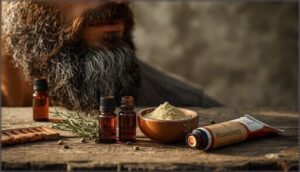
What you put on your beard care matters just as much as what you put in your body. Many commercial grooming products quietly work against you — sulfates strip natural oils, synthetic fragrances trigger contact dermatitis, and PPD-based dyes can damage melanin-producing cells over time, accelerating premature graying.
Here’s what to swap in:
- Choose gentle cleansers and sulfate alternatives that preserve your beard’s natural sebum
- Opt for chemical free products — skip parabens, ammonia, and phthalates hiding in fragrance options
- Use natural dyes like henna to cover gray without attacking hair follicle health
- Patch test everything 48 hours before full use — even “sensitive skin” formulas can react
Protect melanin production by controlling what touches your face daily.
Reversing Gray Hair Naturally

You can’t always stop gray hair completely, but you can slow it down — and in some cases, the right habits actually make a difference.
The good news is that some of the most effective approaches don’t require a prescription or a medicine cabinet overhaul. Here are the natural changes worth making first.
Reducing Stress
Chronic stress is quietly aging your beard hair — and the science backs this up. When stress spikes, norepinephrine depletes your melanocyte stem cells, accelerating premature graying.
Mindful exercises like deep breathing (six breaths per minute activates your relaxation response) and calming activities genuinely help with stress management. These lifestyle changes aren’t just wellness fluff — they’re real tools for managing gray beard hair.
| Relaxation Technique | Benefit for Hair |
|---|---|
| Deep Breathing | Lowers cortisol, protects melanocytes |
| Regular Exercise | Improves follicle blood flow |
| Quality Sleep | Stabilizes stress hormones |
| Hobby Engagement | Reduces oxidative stress load |
Improving Diet and Nutrition
What you eat shows up in your beard. Vitamin deficiencies — especially B12, iron, and copper — directly disrupt melanin production.
Proper nutrition means prioritizing antioxidant foods like berries and leafy greens, healthy fats from fish and walnuts, and adequate protein intake around 1.0–1.2 grams per kilogram daily. Vitamin balance and nutrient absorption matter. Fix your plate, and your follicles notice.
Exercise and Hydration
Food fixes the foundation, but movement seals the deal. Regular Cardio — even 20 to 30 minutes of brisk walking — delivers real Blood Flow Benefits, pushing oxygen and nutrients directly to beard follicles. That improved circulation helps create healthier hair growth environments and aids in managing Stress Levels over time.
Hydration Tips matter more than you’d think. Dehydration cuts nutrient delivery to follicles, making gray progression faster and beard texture rougher.
Smart lifestyle changes to build now:
- Rinse sweat post-workout — Sweat Management prevents salt buildup that dries out beard hair
- Apply beard oil after cleansing for essential Beard Care
- Follow consistent Exercise Routines rather than intense, irregular sessions
- Drink enough water daily to facilitate hormonal changes and proper nutrition absorption
Common Deficiencies and Graying
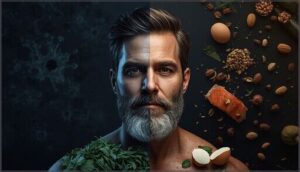
What you eat — or aren’t eating enough of — can quietly accelerate graying faster than genetics ever would.
Two deficiencies in particular show up again and again in men who gray early. Here’s what your body might be missing.
Vitamin B12 Deficiency
Deficiency is a quiet saboteur — and vitamin B12 is one of the biggest culprits behind premature graying that most men completely overlook. Its vitamin role is straightforward but critical: B12 helps your hair follicle cells produce DNA and sustain healthy melanin production. When levels drop, hair pigmentation suffers fast.
Vegetarians, older adults, and anyone on long-term metformin are especially vulnerable. Poor nutrient absorption means your follicles starve even if your diet looks fine on paper.
| Deficiency Symptoms | Hair Pigmentation Impact | B12 Supplements Timeline |
|---|---|---|
| Fatigue, pale skin | Accelerated premature graying | 3–6 months |
| Tingling hands/feet | Reduced melanin production | 2–4 months |
| Memory fog, low mood | Brittle, color-stripped strands | 4–8 months |
Correcting your dietary impact on hair starts with testing your B12 levels — then supplementing with sublingual tablets or injections based on how severe the deficiency is.
Iron Deficiency
B12 isn’t the only nutrient quietly stealing your beard’s color — iron deficiency runs a close second. Low iron starves your hair follicles of oxygen, and without it, melanocytes can’t produce pigment properly. Ferritin levels below 30 ng/mL are a red flag for hair pigmentation loss tied to anemia symptoms.
Here’s what to watch:
- Eat iron rich foods like lean meat, lentils, and spinach regularly
- Pair them with vitamin C to boost absorption
- Get ferritin levels tested before starting iron supplements — deficiency treatment works best with guidance
Aging and Graying Process

Graying isn’t random — it follows a biological timeline, and your beard is often the first place that story unfolds.
Understanding exactly how your body drives that change puts you back in control. Here’s what’s actually happening beneath the surface.
Melanin Production
Think of melanocytes as your beard’s personal color printers — sitting inside each hair follicle, pumping out pigment during active growth.
Melanin synthesis begins when the enzyme tyrosinase converts tyrosine into pigment.
Reduce tyrosinase activity through oxidative stress or nutrient gaps, and those pigment cells slow down fast. That’s when gray takes over. Your melanocyte function doesn’t fail overnight — it erodes gradually, hair by hair.
Hair Life Cycle
Your beard doesn’t grow on a single clock — each hair follicle runs its own independent hair growth cycle. And that matters more than most men realize.
The hair life cycle moves through four growth phases: anagen (active growth), catagen transformation, telogen (rest), and exogen (shedding). Beard hair renewal happens faster than scalp hair, with shorter anagen windows — sometimes just months versus years.
That rapid turnover puts follicle health under constant pressure. Here’s why it accelerates graying:
- Anagen phase lasts months, limiting melanin production per cycle
- Catagen shrinks the hair follicle, reducing pigment activity fast
- Beard shedding replaces hairs before melanocytes fully recover
- Faster cycles compound oxidative damage across each renewal round
Visual Prominence of Gray Hair
Gray hairs don’t just appear — they announce themselves. On facial hair, beard greying catches the eye faster than scalp changes ever will. Why? Contrast. Grey hairs against dark strands create sharp visual breaks along your chin, jawline, and mustache.
Coarser texture makes them stick out and reflect light differently, amplifying noticeability. Facial hair pigmentation loss hits the most high-visibility real estate on your face. That’s why hair color loss in your beard feels more urgent — because it genuinely is more visible.
Preventing Premature Graying

You can’t always outsmart your genes, but you’ve got more control here than you think.
A few consistent habits can slow down the process and keep your melanocytes working longer.
Start with these three fundamentals.
Healthy Lifestyle Choices
Small lifestyle changes add up fast. Stress reduction habits — like 10–20 minutes of meditation daily — lower the cortisol that accelerates oxidative damage in your follicles.
Mindful eating means prioritizing a balanced diet with vitamin B12, iron, and antioxidants to fuel melanin production. Quit smoking, stay hydrated, and build healthy habits consistently. Proper nutrition isn’t optional — it’s your first defense.
Regular Exercise and Relaxation
Movement is your beard’s quiet ally. A consistent Exercise Routine — 150 minutes of moderate Physical Activity weekly — lowers cortisol, cuts oxidative stress, and improves blood flow to your follicles. That means better nutrient delivery, including vitamin B12, right where melanin gets made. Pair that with Relaxation Techniques like yoga or deep breathing for real Stress Reduction.
- Mindful Movement: Tai chi and yoga calm hormonal changes linked to premature graying
- Cardio sessions: Cycling or jogging 30 minutes daily regulates stress levels effectively
- Recovery rituals: Post-workout stretching reinforces lifestyle changes that protect pigment cells
Balanced Diet and Nutrition
Think of your plate as a blueprint for your beard. Macronutrient Balance starts with adequate protein, Healthy Fats from olive oil and nuts, and complex carbs from Whole Foods.
Smart Meal Planning around vitamin B12, iron, folic acid, and zinc directly promotes Nutrient Absorption and melanin production, keeping your beard’s pigment working longer.
Frequently Asked Questions (FAQs)
Why is my beard turning grey so fast?
Your beard is graying fast because melanocytes — the pigment-producing cells in your follicles — are losing the battle against melanin loss factors like oxidative stress, genetics, and nutrient gaps driving premature aging faster than you’d expect.
How to stop premature greying of beard?
You can’t stop every gray hair, but smart lifestyle changes — stress reduction, proper nutrition, quitting smoking, and targeted beard care — can slow premature graying and protect the pigment cells you still have.
What is the normal age to get a grey beard?
Most men notice the first grey hairs in their beard between ages 30 and That’s the normal graying age range. Genetics, ethnicity, and aging patterns all shape your exact timeline.
Why is my beard turning gray so fast?
Gray isn’t creeping in — it’s sprinting. Your follicles are losing melanin faster than they should, driven by stress hormones, nutrient gaps, smoking, and genetics all hitting your facial hair health at once.
Why is my beard getting white at early age?
Hormonal changes, follicle health, and beard genetics explain it.
Early aging signs appear when melanin production drops — often from B12 deficiency, stress, or inherited hair pigmentation traits reducing color fast.
How to stop premature greying of beard hair?
Think of your follicle health like a candle — once the wax runs out, the flame’s gone. But you can slow the burn.
Manage chronic stress, fix B12 and iron deficiencies, quit smoking, and prioritize follicle health through antioxidant-rich nutrition for effective gray hair prevention.
Should you pluck grey beard hairs?
Skip the tweezers. Plucking grey beard hairs risks follicle damage, ingrown hairs, and even permanent thinning.
It won’t stop premature graying. Trim them instead, or try beard dye for smarter grey hair care.
Does trimming beard hair prevent premature graying?
Trimming your beard care is like polishing a car with a cracked engine — it looks better, but nothing’s fixed underneath.
Cutting the hair shaft doesn’t touch melanocyte activity inside your hair follicles.
Follicle pigment is decided before the beard hair even emerges.
Grooming keeps things neat, but it can’t slow melanin loss or stop premature grey beard from developing.
That battle happens deep in your hair growth cycle, well beyond any scissors’ reach.
Are there beard dyes safe for sensitive skin?
Yes, gentle options exist. Look for hypoallergenic formulas free of PPD and ammonia — or try natural dyes like henna.
Always do a patch test first, especially if your sensitive skin reacts easily.
Can medical treatments reverse gray beard permanently?
No approved medical reversal exists today. Gray hair restoration remains experimental — melanin replacement therapies can’t fully revive dead follicles.
Correcting vitamin B12 deficiency sometimes slows beard pigmentation loss, but permanent reversal of gray beard hair isn’t clinically guaranteed yet.
Conclusion
Think of your melanocytes like a battery — they don’t drain overnight, but the right habits slow the drain considerably. Beard hair turning gray early isn’t a sentence; it’s a signal.
Stress, B12 gaps, smoking, and sun exposure are variables you can actually control. Fix your deficiencies, protect your follicles, and manage the pressure that compounds daily.
Your beard reflects what’s happening inside. Change the inputs, and you change what shows up in the mirror.
- https://www.webmd.com/beauty/features/abcs-premature-graying
- https://pmc.ncbi.nlm.nih.gov/articles/PMC6290285/
- https://www.toppik.com/blogs/hair-blog/why-beards-turn-gray
- https://voltgrooming.com/why-your-beard-might-go-gray-at-a-young-age/
- https://www.clinicsearchonline.org/article/the-influence-of-diet-lifestyle-and-environmental-factors-on-premature-hair-greying-an-evidence-based-approach