This site is supported by our readers. We may earn a commission, at no cost to you, if you purchase through links. This content is for general informational and educational purposes only and is not a substitute for professional medical, dermatological, or nutritional advice.
By noon, your T-zone looks like you dunked your face in a fryer, and no amount of blotting paper fixes it. Oily skin doesn’t need harsh stripping, it needs ingredients that pull excess sebum without triggering your glands to panic and produce even more oil.
That’s the tightrope walk: control shine, clear pores, and skip the tight, flaky aftermath that sends you reaching for heavy creams. Clay, salicylic acid, and niacinamide each play a different role in that balance.
Finding the best face mask for oily skin means matching formula to your actual skin behavior, not just grabbing whatever’s trending. Here’s what actually earns a spot in your weekly routine.
Table Of Contents
- Key Takeaways
- 10 Best Face Masks for Oily Skin
- 1. Peter Thomas Roth Pumpkin Enzyme Mask
- 2. Snail Mucin Face Mask for Dark Spots
- 3. Kate Somerville ExfoliKate Facial Scrub
- 4. Kora Organics Turmeric Face Mask
- 5. Farmacy Niacinamide Overnight Face Mask
- 6. Drunk Elephant Babyfacial AHA BHA Mask
- 7. Hanacure Facial Starter Kit
- 8. Perricone MD Cold Plasma Sheet Mask
- 9. Dead Sea Mud Face Mask
- 10. clarifying clay face mask oily
- How to Choose an Oily-Skin Mask
- Best Mask Ingredients for Oily Skin
- Face Mask Benefits by Skin Concern
- How to Use Oily-Skin Masks Safely
- Frequently Asked Questions (FAQs)
- Which mask is best for oily skin?
- Do face masks help with oily skin?
- How do I glow my oily face?
- Which Korean mask is best for oily skin?
- What is the best face mask for oily skin?
- Which pack is best for oily skin?
- Can I use a face mask for oily skin?
- Should people with oily skin use face masks?
- Which is best face for oily skin?
- How often should you use face masks?
- Conclusion
Key Takeaways
- Clay masks with kaolin or bentonite are your best bet for oily skin since they can soak up to 1300% their weight in oil and cut surface shine fast.
- Salicylic acid dives into pores to break up the gunk causing blackheads, while niacinamide works more gently, calming oil production over time without stripping your skin.
- Stick to 1-3 masking sessions a week (less if your skin’s sensitive) since overdoing it backfires, triggering dryness and even more oil as your skin tries to compensate.
- Always cleanse before masking and moisturize with something lightweight and oil-free afterward, and don’t skip sunscreen if you’ve used anything exfoliating.
10 Best Face Masks for Oily Skin
Oily skin doesn’t need a harsh routine, it needs the right mask working with your sebum instead of against it.
A gentle, balancing approach like this simple daily facial care routine helps keep oil production in check without disrupting your skin’s natural barrier.
From enzyme powders to overnight hydrogels, the options below cover every texture, price point, and skin concern you might be dealing with.
Here’s a rundown of ten masks worth adding to your shelf.
1. Peter Thomas Roth Pumpkin Enzyme Mask
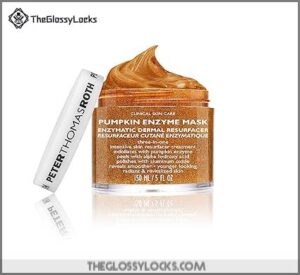
Think of this mask as a triple exfoliation crew clocking in on your pores. Pumpkin enzymes dissolve dead cells, AHAs speed up cell turnover for brighter tone, and micro-polishing aluminum oxide crystals buff away leftover buildup by hand, basically covering every angle of congestion at once.
Leave it on just 3 to 7 minutes, depending on how sensitive your skin runs, then rinse clean. Weekly use brings smoother texture and visibly clearer pores without that stripped, tight feeling oily skin often gets from harsh treatments.
Stick to once or twice a week. Push past that, and you’re flirting with over-exfoliation instead of glow.
| Best For | People with dull, uneven skin tone who want a weekly resurfacing treatment to smooth texture and brighten their complexion. |
|---|---|
| Key Ingredient | Pumpkin/AHA/Aluminum Oxide |
| Frequency | 1-2x weekly |
| Contact Time | 3-7 minutes |
| Texture Type | Gritty exfoliant |
| Sensitive Skin Note | Patch test advised |
| Primary Benefit | Resurfacing |
| Additional Features |
|
- Triple-action formula (enzymes, AHA, and micro-polishing crystals) tackles dead skin, tone, and texture all at once
- Short 3-7 minute treatment time makes it easy to fit into a weekly routine
- Helps reduce the look of fine lines while revitalizing dull, aging skin
- Increases sun sensitivity, so sunscreen and protective clothing are a must during and for a week after use
- Not for daily use—overdoing it can lead to over-exfoliation and irritation
- External use only, so care is needed to avoid contact with eyes or broken skin
2. Snail Mucin Face Mask for Dark Spots
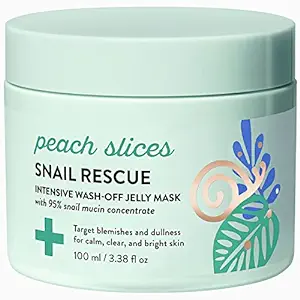
After all that buffing and polishing, your skin needs something gentler to work on tone. That’s where snail mucin comes in, a slimy-sounding ingredient with 95% concentration that’s earned its cult status honestly.
Packed with glycoproteins and growth factors, it helps cell turnover while fading dark spots left behind by old breakouts. Look for formulas that pair mucin with licorice extract or vitamin C to boost brightening power.
This bouncy jelly mask rinses off in 15 minutes, though the thick texture needs a generous rinse. Use it 2-3 times weekly, and give it six to eight weeks before judging results.
| Best For | Anyone dealing with dark spots, dullness, or reactive, easily irritated skin who wants a gentle way to support tone and texture over time. |
|---|---|
| Key Ingredient | 95% Snail Mucin |
| Frequency | 2-3x weekly |
| Contact Time | 15 minutes |
| Texture Type | Bouncy jelly |
| Sensitive Skin Note | Gentle, reactive-friendly |
| Primary Benefit | Tone evening |
| Additional Features |
|
- Formulated with 95% snail mucin plus birch juice and licorice extract to help fade dark spots and even out skin tone
- Hydrating, soothing texture that’s gentle enough for sensitive or reddened skin, including after eyebrow threading
- Simple to fit into a routine, since it’s only needed 2-3 times a week
- Thick, bouncy jelly texture can be tricky to rinse off fully, especially at the sink instead of in the shower
- Some users find they need to use more product than expected to see the full effect
- Results take patience, with visible improvement typically taking six to eight weeks
3. Kate Somerville ExfoliKate Facial Scrub
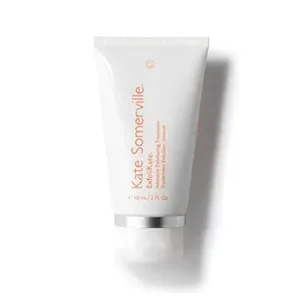
If dark spots need patience, dull texture needs something faster. That’s where ExfoliKate earns its reputation, a triple exfoliation formula combining lactic acid, salicylic acid, and fruit enzymes with silica for physical polish.
The papaya and bromelain enzymes handle cell turnover while silica particles buff away surface debris, together tackling both dead skin and clogged pores in one step. Massage onto damp skin for 30 seconds to two minutes, then rinse with lukewarm water.
It fits naturally into a daily facial exfoliation routine for mature skin, where gentle yet effective formulas make the biggest difference.
Use it once or twice weekly, never more. Skip a clean, wet face and you’re just spreading actives around ineffectively. Aloe vera and honey soften the intensity, so redness stays minimal for most oily and combination skin types.
| Best For | People with dull, rough texture or clogged pores who want a fast-acting, spa-level exfoliation treatment they can use at home. |
|---|---|
| Key Ingredient | Lactic/Salicylic/Fruit Enzymes |
| Frequency | 1-2x weekly |
| Contact Time | 30 sec-2 min |
| Texture Type | Creamy exfoliant |
| Sensitive Skin Note | May be intense |
| Primary Benefit | Deep exfoliation |
| Additional Features |
|
- Combines physical, chemical, and enzymatic exfoliation for thorough texture improvement in one step
- Aloe vera and honey help soothe skin, keeping redness minimal for oily and combination types
- Free from mineral oil, parabens, phthalates, SLES, and SLS
- Requires a full 2-minute contact time on clean, wet skin to work effectively
- Limited to just one or two uses per week, so results take patience
- Triple-acid formula may be too intense for sensitive or reactive skin
4. Kora Organics Turmeric Face Mask
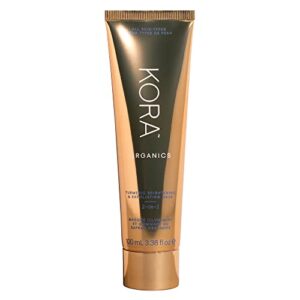
Where ExfoliKate polishes with acids, Kora Organics leans on turmeric, a golden root known for calming inflamed, acne-prone skin while evening out tone.
This 2-in-1 formula pairs turmeric extract with rosehip and aloe, plus gentle plant-derived exfoliants that slough dull cells without stripping oily skin’s natural balance. No harsh sulfates, no over-drying.
Apply to damp skin, massage briefly, then either rinse right away as a quick scrub or leave on five to fifteen minutes for deeper pore refinement. Two to three times weekly fits most routines.
Fair warning: turmeric stains. Rinse in the shower or drape a towel nearby.
Patch test first, especially if you’re sensitive, and follow with sunscreen since exfoliation always bumps up sun sensitivity.
| Best For | Those with oily, acne-prone, or uneven-toned skin looking for a gentle 2-in-1 scrub-and-mask treatment to refine pores and calm inflammation. |
|---|---|
| Key Ingredient | Turmeric Extract |
| Frequency | 2-3x weekly |
| Contact Time | 5-15 minutes |
| Texture Type | Scrub/mask hybrid |
| Sensitive Skin Note | Patch test first |
| Primary Benefit | Pore refinement |
| Additional Features |
|
- Dual-action formula works as both a quick exfoliating scrub and a longer-wearing purifying mask
- Made with certified organic turmeric, rosehip, green tea, and other antioxidant-rich botanicals that exfoliate without harsh sulfates or over-drying
- Award-winning formula recognized by Cosmopolitan and Allure for its effectiveness
- Contains AHA, which increases sun sensitivity, so sunscreen and sun avoidance are needed during and after use
- May cause temporary redness or tingling, especially for sensitive skin, so a patch test is recommended
- Turmeric can stain fabrics and surfaces, requiring careful rinsing or protective measures
5. Farmacy Niacinamide Overnight Face Mask
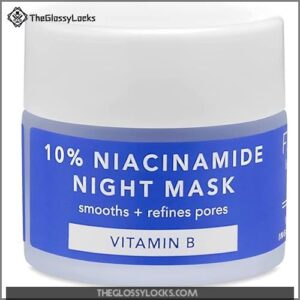
While other masks work while you scrub or rinse, Farmacy’s overnight formula does its job as you sleep. Packed with 10% niacinamide and 3% panthenol, it smooths texture and refines pores without leaving that heavy, sticky residue some overnight treatments do.
Clinical testing found 94% of users saw clearer, more even tone after four weeks, with 97% waking up to noticeably softer, hydrated skin.
Antioxidant-rich blueberry seed oil rounds things out, brightening dullness while niacinamide keeps oil production in check. Apply a thin layer as your last step before bed. Just know the gel-like texture can transfer to pillowcases, so an old pillowcase might be your friend here.
| Best For | People with dull, uneven, or sensitive (even rosacea-prone) skin who want an easy overnight step to boost hydration and smooth texture. |
|---|---|
| Key Ingredient | 10% Niacinamide |
| Frequency | Nightly |
| Contact Time | Overnight |
| Texture Type | Lightweight gel |
| Sensitive Skin Note | Rosacea-friendly |
| Primary Benefit | Overnight hydration |
| Additional Features |
|
- Clinically shown to improve tone clarity in 94% of users within four weeks
- Delivers strong overnight hydration, with 97% of users waking up to moisturized skin
- Non-greasy, fragrance-free formula that’s gentle enough for sensitive skin
- Gel-like texture can transfer onto pillowcases
- Won’t form a sealing barrier the way some thicker overnight masks do
- Small container size means you may need to repurchase it fairly often
6. Drunk Elephant Babyfacial AHA BHA Mask
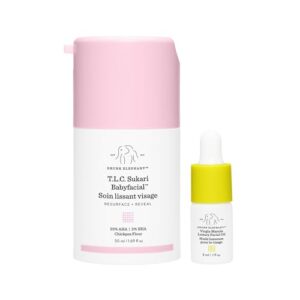
Consider this jelly-textured jar the intense workout of your mask rotation. T.L.C. Sukari Babyfacial blends 25% glycolic acid with 2% salicylic acid, pairing an AHA/BHA combo strong enough to rival an in-office peel.
Expect a genuine tingle for the first 20 to 30 seconds — that’s the acids breaking down dead cells while salicylic acid works down into oily pores to head off breakouts before they start.
Chickpea flour and niacinamide round out the formula, balancing skin tone without leaving it stripped or tight. Use it once weekly for up to 20 minutes on clean, dry skin, then follow with a rich moisturizer.
Sensitive skin types should patch test first; this isn’t a mask you want to rush into full-face.
| Best For | Anyone chasing brighter, smoother skin who wants peel-like results at home and doesn’t mind a bit of tingle along the way. |
|---|---|
| Key Ingredient | 25% Glycolic Acid |
| Frequency | 1x weekly |
| Contact Time | Up to 20 minutes |
| Texture Type | Jelly texture |
| Sensitive Skin Note | Patch test first |
| Primary Benefit | Peel-like renewal |
| Additional Features |
|
- Powerful 25% AHA and 2% salicylic acid combo tackles texture, tone, and clogged pores in one step
- Free of essential oils, drying alcohols, silicones, chemical sunscreens, fragrances, dyes, and SLS
- Leaves skin feeling noticeably smoother and more radiant after just one use
- Can cause redness, burning, or irritation, particularly for sensitive skin types
- Pump dispenser makes it tough to use up every last bit of product
- Higher price point compared to the amount of product you actually get
7. Hanacure Facial Starter Kit
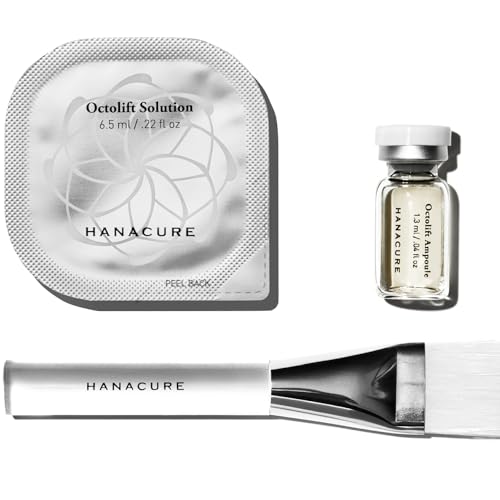
If tightening and firming matter as much as oil control, this kit earns its cult following. Hanacure’s Octolift technology creates a gel matrix that tightens visibly while working on excess shine underneath.
You’ll mix the lifting serum ampoule with the gelling pack, brush it on, and let it dry into that famous "frozen face" sensation for 20 to 30 minutes. Don’t worry — that tightness is normal, not a sign you’ve done something wrong.
The kit includes a nano emulsion hydrator for afterward, so skin doesn’t feel stripped once you rinse. Expect smoother texture and reduced pore appearance almost immediately, though results are temporary and best saved for special occasions rather than weekly rotation.
At around $37, it’s pricier than clay options, but for an instant confidence boost before an event, it delivers.
| Best For | Anyone wanting a quick, noticeable tightening and firming boost before a special occasion like a photo shoot or event, rather than as part of a regular weekly routine. |
|---|---|
| Key Ingredient | Octolift Gel Matrix |
| Frequency | Occasional use |
| Contact Time | 20-30 minutes |
| Texture Type | Gel matrix |
| Sensitive Skin Note | Hypoallergenic |
| Primary Benefit | Instant tightening |
| Additional Features |
|
- Delivers immediate skin tightening, firming, and a smoother, more youthful appearance
- Minimizes pore visibility and evens skin tone, making makeup application easier
- Dermatologist tested, hypoallergenic, and includes everything needed (serum ampoule, gelling pack, applicator brush) in one single-use kit
- Results are temporary, lasting only about 8 hours after application
- No resealable packaging, so the product can’t be stored once mixed — it’s single-use only
- Not recommended for the upper eyelids and may cause discomfort if misapplied
8. Perricone MD Cold Plasma Sheet Mask
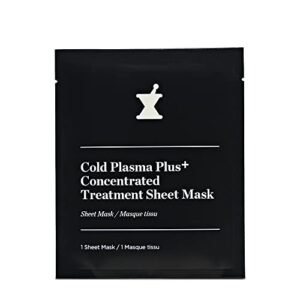
Not every oily-skin mask needs to feel gritty or drying, and that’s where this one stands out. The two-piece sheet hugs your jawline and cheeks for even serum contact, no pooling or missed spots.
Inside that serum sits Vitamin C ester for brightening, plus copper tripeptide to support firmness and skin repair. Phospholipids help the formula actually sink in rather than sit on top, so active ingredients reach where they’re needed.
Leave each piece on for about 20 minutes, then massage any leftover serum into your neck. It’s fragrance-free, which spares sensitive skin unnecessary irritation, though a few users mention an odd smell regardless.
No SPF here, so treat it as a prep step, not sun protection, before your daytime routine.
| Best For | Anyone with oily or dull-looking skin who wants a brightening, firming treatment that layers in easily before their daytime routine. |
|---|---|
| Key Ingredient | Vitamin C Ester |
| Frequency | Weekly |
| Contact Time | 20 minutes |
| Texture Type | Sheet mask |
| Sensitive Skin Note | Fragrance-free |
| Primary Benefit | Brightening |
| Additional Features |
|
- Brightens and smooths skin with Vitamin C Ester while copper tripeptide supports firmness and repair
- Phospholipids help the serum absorb well instead of sitting on the surface
- Fragrance-free formula that’s gentle on sensitive skin
- Some users notice an unpleasant smell despite being fragrance-free
- Results can vary, and not everyone sees a visible difference
- Offers no SPF, so it can’t replace daytime sun protection
9. Dead Sea Mud Face Mask
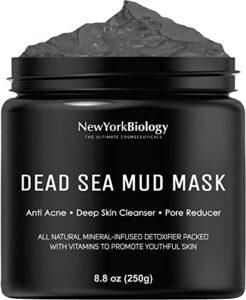
Something almost primal happens when you smear actual sea mud on your face, and this mask leans hard into that ritual. Packed with 21 minerals like magnesium, calcium, and potassium, it pulls double duty, absorbing oil while calming skin thanks to aloe vera, calendula, and jojoba oil folded into the formula.
Give it three weekly uses and you’ll likely notice less surface shine as the mud draws out excess sebum from clogged pores. It’s gentle enough for sensitive types, though the thick, paste-like texture means extra rinsing at the sink.
Expect mild tingling as it dries; that’s normal, but patch test first. Skip it if irritation lingers past a few minutes.
| Best For | People with oily or congested skin who want a spa-like weekly treatment to help clear pores and reduce shine. |
|---|---|
| Key Ingredient | 21 Sea Minerals |
| Frequency | 3x weekly |
| Contact Time | Varies until dry |
| Texture Type | Thick paste |
| Sensitive Skin Note | Patch test first |
| Primary Benefit | Oil absorption |
| Additional Features |
|
- Loaded with 21 Dead Sea minerals plus aloe vera, calendula, and jojoba oil to cleanse without over-drying
- Free from alcohol, parabens, and sulfates, and cruelty free
- Gently exfoliates and helps absorb excess oil for smoother, refreshed-looking skin
- Can cause mild tingling or burning as it dries, which may be uncomfortable for sensitive skin
- Thick, paste-like texture makes it tricky to rinse off completely
- Requires a patch test before first use to rule out skin sensitivity
10. clarifying clay face mask oily
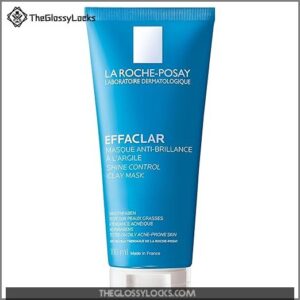
Sometimes the simplest formula wins, and a basic clarifying clay mask proves it. Kaolin clay works through physical adsorption, its particles grabbing onto sebum and pulling it from clogged pores in about five minutes flat.
Studies back this up: clay masks can absorb up to 1300% of their weight in oil, with kaolin removing as much as 84% of excess surface sebum in a single use. That’s dramatic, but don’t expect miracles overnight—results build with consistency.
Used twice weekly, this budget-friendly clay mask also removes pollution particles and dead skin cells while glycerin keeps hydration intact. Apply a thin layer post-cleanse, rinse after five minutes, and enjoy that matte, balanced T-zone.
| Best For | People with oily or shiny skin who want to tighten the look of enlarged pores and keep shine under control. |
|---|---|
| Key Ingredient | Kaolin Clay |
| Frequency | 1-2x weekly |
| Contact Time | 5 minutes |
| Texture Type | Clay paste |
| Sensitive Skin Note | Non-comedogenic |
| Primary Benefit | Mattifying |
| Additional Features |
|
- Kaolin clay draws out excess oil and impurities like dust and pollution particles
- Glycerin helps keep skin conditioned so it doesn’t feel stripped or tight
- Gentle enough for acne-prone skin, since it’s non-comedogenic
- Only meant for 1-2 uses per week, so it’s not a daily fix
- Needs a full 5-minute wait time, which some may find inconvenient
- Results build gradually, so don’t expect an instant transformation
How to Choose an Oily-Skin Mask
With so many oil-fighting formulas out there, picking the right one comes down to knowing what your skin actually needs. Texture, ingredients, and sensitivity all play a part, and getting them wrong can leave you dealing with dryness or breakouts instead of relief. Here’s exactly what to check before you commit to a mask.
Match Your Primary Skin Concern
Before comparing textures, get honest about what’s actually bothering you.
Shine and greasiness call for oil control methods that clear sebum fast, often within five minutes for most users. Clogged, congested pores respond to pore minimization techniques like salicylic acid, cutting congestion up to 40% in a month. Dark marks need brightening post-acne solutions with niacinamide, working gradually over six weeks.
Humid zones like Miami and Florida favor lightweight, non-occlusive formulations humid climates skin state
Compare Mask Types and Textures
Once you know your concern, texture decides how well a mask delivers.
Clay masks harden into a breathable crust, pulling sebum out for real oil absorption and pore cleansing.
Cream feels rich but seals in moisture.
Gel stays light with a matte finish.
Peel-offs lift debris; sheets absorb fast without tackiness.
Check Active Ingredient Strength
Texture tells you how a mask works, but strength tells you how hard it’s working. Check labels for active ingredient percentage—like 3.5% sulfur or clay ratios—since concentration drives sebum regulation and oil control. Look for:
- Clear percentage or mg/g listings
- Noncomedogenic formula confirmation
- Manufacturer safety data
- Patch-test guidance for potent actives
Higher strength isn’t always better; it just demands shorter contact time.
Consider Sensitivity and Acne
Oily skin and sensitive skin overlap more than people expect, and acne often makes your skin barrier easier to disrupt. Watch for stinging or redness—signs to skip aggressive actives.
Choose noncomedogenic, soothing formulas over harsh exfoliation, and always patch test first. Gentler routines actually improve sebum control while calming inflammation, without the flare-ups tougher masks can trigger.
Balance Price and Masking Frequency
A few smart dollars beat a fancy jar every time. Clay masks under $15 handle weekly masking routines fine, while charcoal drugstore picks ($5–12) target oily T-zones fast. Check cost per use, not sticker price—multi-packs win here.
Cap sessions at 1–3 weekly for real sebum control, and rotate textures to avoid rebound oil or irritation.
Best Mask Ingredients for Oily Skin
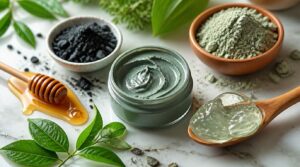
Once you know your skin type and mask texture preferences, the next step is understanding what’s actually inside the jar. Not all ingredients tackle oil the same way, some absorb it, some regulate it, and some fight the breakouts it causes. Here’s what to look for on the label before you commit to a mask.
Clay for Oil Absorption
Ever wonder why clay masks feel like they’re vacuuming your face? It’s basic mineral structure: clay’s nano-scale interlayers trap excess sebum on contact.
Clay masks work like tiny vacuums, their nano-scale mineral structure trapping excess sebum on contact
Kaolin and volcanic clays can absorb up to 1300% of their weight in oil within three minutes, unclogging pores fast.
That’s real pore cleansing—simple, effective, and gentle enough for weekly use.
Salicylic Acid for Clogged Pores
Where clay pulls oil off the surface, salicylic acid dives deeper. It’s oil-soluble, so it slips inside pores and breaks down the debris causing blackheads and whiteheads.
Think of it as your pore unclogging routine MVP—dissolving buildup before it hardens. Pair it with clay masks 2-3 times weekly for solid oil control without over-exfoliating sensitive, acne-prone skin.
Niacinamide for Sebum Balance
Here’s the gentle option: niacinamide doesn’t strip oil, it negotiates with it. At 2-5% concentration, it signals glands to calm sebum production while strengthening your skin barrier.
You’ll notice:
- Less T-zone shine after a few weeks
- Reduced inflammation around pores
- Steadier oil levels day-to-day
It’s a daily-routine ingredient, not a spot treatment—patient, reliable, barrier-friendly.
Sulfur for Acne Treatment
Sulfur smells like a spa day gone rogue, but it works. In five minutes, it can knock out up to 99% of acne bacteria, while absorbing roughly 30% of its weight in sebum.
| Benefit | Effect | Timeframe |
|---|---|---|
| Antibacterial | 99% bacteria reduction | 5 minutes |
| Anti-inflammatory | 45% cytokine drop | 24 hours |
| Exfoliation | 30% less comedones | 2 weeks |
Use it 2-3 times weekly, at 5% concentration.
Humectants for Lightweight Hydration
Oily skin still needs water, just not oil. Hyaluronic acid holds up to 1000 times its weight, while glycerin keeps binding moisture even when humidity drops. Pair both for dual attraction, then seal with a light, oil-free moisturizer to protect your moisture barrier without clogging pores.
Panthenol soothes any tightness, keeping hydration balanced, breathable, and never greasy.
Face Mask Benefits by Skin Concern
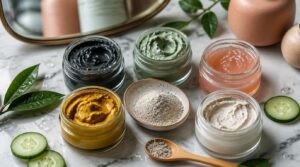
Not every oily-skin struggle looks the same, so your mask shouldn’t either. Whether it’s shine, clogged pores, breakouts, texture, or leftover dark marks bothering you most, there’s a formula built for that exact job. Here’s how to match your biggest concern to the right kind of mask.
Controlling Oil and Shine
When your T-zone shines by noon, clay is doing real work, absorbing up to 1300% its weight in oil within three minutes.
Bentonite and kaolin cut sebum by roughly 84% per use, giving you that matte finish without stripping skin.
- Blot, don’t rub, midday shine
- Mask 1-3x weekly for steady oil control
- Pair with oil-free moisturizer for lasting shine control
Clearing Congested Pores
Once shine’s under control, the next job is pore cleansing, clearing out the oil and debris sitting inside them.
Clay masks handle deep pore cleansing well, with kaolin and bentonite delivering real pore reduction through sebum absorption.
For blackhead removal, gentle exfoliation matters more than scrubbing. Pair clay with non-comedogenic moisturizer so pores stay clear without new congestion forming.
Preventing Oily-Skin Breakouts
Clear pores are step one, but keeping breakouts from forming takes a whole routine, not just a mask.
Cleanse gently twice daily, skip scrubbing, and pick noncomedogenic products so pores stay unclogged between mask days.
- Clay masks weekly for sebum reduction
- Avoid pore-clogging moisturizers and makeup
- Cleanse after sweating
- Moisturize post-mask, lightweight only
- Never skip sunscreen
Smoothing Rough Skin Texture
Bumpy, congested skin needs more than oil control, it needs gentle exfoliation through enzyme masks or salicylic acid pore-clearing.
| Method | Best For | Timeframe |
|---|---|---|
| Enzyme masks | Smoothing | 2 weeks |
| Salicylic acid | Clogged pores | 2-3x/week |
| Retinoids | Texture renewal | 8-12 weeks |
Follow exfoliating acids with hydrating texture serums so skin stays balanced, never stripped or reactive.
Brightening Post-Acne Marks
Once breakouts fade, those stubborn marks linger, but brightening ingredients can speed things along. Look for masks with:
- Vitamin C for antioxidant brightening
- Alpha arbutin to inhibit dark spot pigment
- Niacinamide for sebum balance and tone
- Licorice root extract for gentle lightening
- Turmeric for natural radiance
For deeper dark spot correction, ask your esthetician about a chemical peel paired with daily SPF.
How to Use Oily-Skin Masks Safely
Picking the right mask is only half the battle, since how you use it matters just as much for keeping oily skin balanced and breakout-free. A few simple habits stand between glowing results and irritated, overworked skin. Here’s exactly what to keep in mind before, during, and after every mask session.
Cleanse Before Applying Your Mask
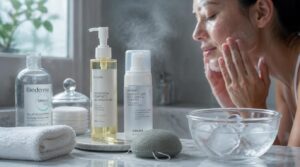
Skipping cleanse before masking is like painting over dust. Double cleansing—oil-based first, then a salicylic wash—strips residue so clay masks actually reach sebum instead of sitting on top of it. Follow with micellar water and a cool rinse to shut pores tight. That prep step alone boosts absorption by 25%, making your deep pore detox genuinely work.
Follow The Recommended Application Time
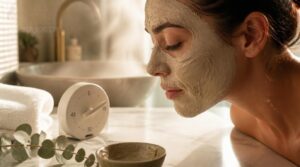
Rarely does timing feel important, until your face is stinging. Mask timing accuracy matters: clay sits 10-15 minutes, enzyme masks just 5-7, AHA/BHA under 10.
Set a timer, not memory. Sensitive skin? Shave off 2 minutes.
- Trust broken
- Barrier disrupted
- Sebum unbalanced
Clocking it right keeps oil control, mattifying effect, and your deep pore detox working for you.
Avoid Overmasking and Irritation

More isn’t better here, it’s how you strip your barrier down to nothing. Cap intensive masking at two to three sessions weekly, spacing them at least 24 hours apart so sebum production can reset.
Skip stacking clay, exfoliating, or sulfur formulas back to back. Rotate in hypoallergenic, noncomedogenic options, and if redness or itching shows up, dial back duration immediately.
Moisturize Without Clogging Pores
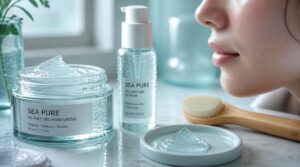
Masking doesn’t mean skipping moisturizer—that’s how oily skin overcompensates. Reach for a gel-based, oil-free moisturizer with hyaluronic acid for lightweight hydration that won’t sit heavy.
Look for non-comedogenic, fragrance-free labels, plus niacinamide or zinc PCA to keep sebum balanced. Your skin gets hydration without the clogged-pore payback.
Apply Sunscreen After Exfoliating Masks
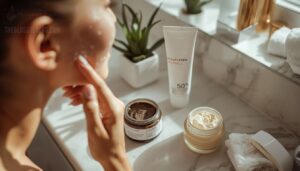
Here’s the part people skip: exfoliating masks with AHA leave skin wide open to sun damage. Give your skin barrier 5-10 minutes to recover, then apply mineral SPF 30+ with zinc oxide—gentle on freshly exfoliated skin. Reapply every 2 hours outdoors. Post-exfoliation sensitivity is real; sunburn risk jumps noticeably within 24 hours if you skip this step.
Frequently Asked Questions (FAQs)
Which mask is best for oily skin?
Reach for clay or sulfur-based masks first—kaolin and bentonite absorb excess sebum fast, while sulfur calms breakouts. Add niacinamide for oil balance and hydration. Use twice weekly, checking labels for sensitivity before committing to a routine.
Do face masks help with oily skin?
Think of them as a sponge for your skin: clay masks absorb up to 1300% their weight in oil, tightening pores, regulating excess sebum, and supporting real breakout prevention and texture improvement within minutes.
How do I glow my oily face?
Layer a humectant serum for hydration balance, then a light gel moisturizer. Add SPF 30, an oil-free luminizer, and powder highlighter on cheekbones for natural glow without triggering extra shine or breakouts.
Which Korean mask is best for oily skin?
Jeju volcanic ash wins here: the Innisfree Super Volcanic Clay Mask draws out deep impurities without over-drying, pairing nicely with fragrance-free, pore-minimizing enzyme formulas for sensitive, oil-prone skin needing genuine balance, not stripping.
What is the best face mask for oily skin?
Your skin overproduces oil when stripped too harshly, so clay masks with kaolin or bentonite work best, absorbing excess sebum gently. Used two to three times weekly, they cut surface oil by 30-50% without disrupting your barrier.
Which pack is best for oily skin?
Honestly, clay is oil’s kryptonite. Bentonite and kaolin absorb sebum fast, tighten pores within a week, while charcoal lifts grime. Pair with niacinamide or salicylic acid for stronger oil control and lasting T-zone mattification.
Can I use a face mask for oily skin?
Yes, and it’s one of the best habits you can build. Clay masks absorb excess sebum, tame T-zone oiliness, and act as a natural pore reducer, all while helping prevent breakouts when used two to three times weekly.
Should people with oily skin use face masks?
Think of your T-zone as a leaky faucet—ignore it and the shine just keeps flowing. Clay masks slash sebum by up to 69% instantly, with 24-30% reduction over three weeks, curbing clogged pores and breakouts.
Which is best face for oily skin?
For real oil control, look for clay masks, sulfur spot treatments, and niacinamide formulas. Mineral mud and kaolin absorb excess sebum fast, while enzyme exfoliation smooths texture, giving your T-zone lasting shine control.
How often should you use face masks?
Picture your T-zone shining by noon, that’s overmasking talking.
Clay masks twice weekly curb excess sebum without triggering rebound oil production. Sensitive skin needs once weekly; adjust seasonally, more in humidity, less in dry winter, always watching for redness or tightness.
Conclusion
Shiny by noon, calm by night — that’s the shift the right mask creates when clay meets chemistry. The best face mask for oily skin isn’t the one with flashy packaging; it’s the one that respects your skin’s rhythm, pulling oil without stripping it raw.
Sulfur calms breakouts, niacinamide balances sebum, clay does the heavy lifting. Pick one, use it weekly, and watch panicked, oily skin settle into something calmer, clearer, unmistakably yours.