
This site is supported by our readers. We may earn a commission, at no cost to you, if you purchase through links.

Most people unknowingly damage their hair every single day—not with harsh chemicals or heat styling tools, but with the simple act of drying it. Rubbing vigorously with a cotton towel, cranking the blow dryer to maximum heat, or leaving hair soaking wet for hours can weaken strands, create frizz, and undo all the benefits of your carefully chosen shampoo and conditioner.
The best way to dry hair isn’t about speed or convenience—it’s about understanding your hair’s unique needs and choosing techniques that preserve its strength and shine. Whether you’re working with fine, straight strands or thick, coily curls, the right drying approach makes the difference between healthy hair and a lifetime of battling breakage.
Table Of Contents
- Key Takeaways
- Key Factors Affecting Hair Drying
- Choosing The Right Drying Method
- Essential Tools and Products for Drying
- Step-by-Step Guide to Drying Hair Safely
- Preventing Damage and Maintaining Hair Health
- Frequently Asked Questions (FAQs)
- What is the best way to dry hair if I have a lot of hair?
- How can I dry my hair without using a hairdryer?
- What is the best way to dry hair if I have curly hair?
- What is the best way to dry hair if I have oily hair?
- What is the best way to dry hair if I have damaged hair?
- How often should I wash my hair weekly?
- Can I sleep with wet hair safely?
- Does cold water actually improve hair health?
- What temperature setting works best for fine hair?
- Should I trim my hair more when heat styling?
- Conclusion
Key Takeaways
- Your hair’s porosity—how well your cuticles absorb and release moisture—determines which drying method will work best, with high-porosity hair battling frizz while low-porosity strands repel water and dry faster.
- Microfiber towels absorb up to 50% more water than cotton while reducing friction-based breakage, making gentle blotting from roots to ends your first defense against damage before any heat touches your hair.
- Blow drying at medium heat (320–365°F) from 6–8 inches away with constant motion prevents thermal hot spots that cause breakage, while a final cool shot seals cuticles flat for lasting smoothness and shine.
- Most hair damage happens during the drying process itself—not from chemicals or styling—because rushing with high heat and rough towels destroys strand integrity faster than skipping protective products ever could.
Key Factors Affecting Hair Drying
Not all hair dries the same way, and what works for your best friend might leave your strands a frizzy mess. The secret to damage-free drying isn’t just about technique—it starts with understanding what makes your hair unique.
Three key factors determine which drying method will protect your hair while giving you the results you’re after.
Hair Type and Porosity
Your hair’s porosity—basically how your cuticle health allows moisture in or out—is the key factor for drying. Low porosity hair repels water like a raincoat, drying fast but struggling with product absorption. High porosity hair drinks up moisture then loses it quickly, battling frizz and damage. Medium porosity strikes that sweet moisture balance, making it more forgiving during styling.
Hair porosity determines how your strands absorb and release moisture, shaping everything from drying speed to frizz control
Hair Length and Thickness
Beyond porosity, length and thickness dictate your drying time and strategy. Longer strands trap more water—shoulder-length hair dries noticeably faster than waist-length because airflow reaches more surface area.
Thick hair with high density holds moisture deeper, demanding sectioning techniques to prevent damp core regions that breed damage. Your hair type, texture, and elasticity all interact with these physical realities, shaping how you approach the dryer.
Styling Goals and Desired Finish
What you want to achieve—whether that’s natural waves, glass-smooth shine enhancement, or long-lasting frizz control—determines your entire approach.
Styling goals shape your finish perception: matte textures call for minimal heat and diffusing, while sleek looks demand controlled blowdrying with a heat protectant.
Hair texture and porosity influence style longevity, so choose hair drying techniques that align with your vision and protect hair health and damage prevention.
Choosing The Right Drying Method

You’ve got options for drying your hair, and each method comes with its own set of trade-offs. The right choice depends on your hair type, how much time you have, and what kind of results you’re after.
Let’s break down the main approaches so you can figure out what works best for your routine.
Air Drying Benefits and Drawbacks
Letting your hair dry naturally cuts heat exposure to zero, which protects your strands from damage over time. It preserves natural texture beautifully and aids hair health, especially for those with high hair porosity.
The catch? Airdrying takes notably longer, can increase frizz in humid conditions, and may leave you with uneven drying or limp roots if you’re not careful with technique.
Blow Drying Pros and Cons
When you’re racing against the clock, blow drying shaves off up to 80 percent of your drying time and delivers smooth blowout techniques that air drying can’t match. An ionic hair dryer with adjustable dryer settings cuts frizz while boosting volume.
But here’s the trade-off: high heat accelerates heat damage and hair breakage unless you use a heat protectant and keep styling tools moving constantly.
Diffusing for Curly and Wavy Hair
A diffuser transforms your blow dryer into a curl-friendly tool that slashes drying time by 20 to 40 percent without the frizz. When you’re working with wavy texture or tight coils, this attachment spreads heat evenly to boost curl definition while protecting your hair type from concentrated damage. Here’s how to master it:
- Keep the nozzle 6 inches from your scalp to preserve curl enhancement and prevent heat concentration
- Choose low heat and airflow settings for enhanced frizz control and cuticle protection
- Let curls set hands-off in the diffuser cup to improve definition by up to 28 percent
Towel Drying Best Practices
Your towel choice makes or breaks your hair’s health—skip rough terry cloth and reach for a microfiber towel instead.
Gentle blotting from roots to ends removes water without lifting the cuticle, cutting frizz reduction by nearly half compared to aggressive rubbing.
Microfiber benefits include faster drying methods and less hair damage, while proper towel selection keeps your strands smooth and manageable between washes.
Essential Tools and Products for Drying

You can’t control your hair type, but you can control what you use to dry it. The right tools make the difference between frizzy, damaged strands and smooth, healthy hair that actually cooperates.
Let’s break down the essentials that’ll give you that professional finish without the salon price tag.
Microfiber Towels Vs. Regular Towels
Your towel choice matters more than you think. Microfiber towels absorb water up to 50% faster than regular cotton, and their smoother fibers reduce friction that causes breakage and frizz.
Cotton’s rougher texture can snag your cuticles during towel-drying, especially if you’re rubbing instead of blotting.
For curly hair, microfiber maintains your natural pattern without disrupting those delicate curls you’re working to protect.
Ionic and Ceramic Hair Dryers
Ionic technology breaks down water molecules with negative ions, cutting your drying time while taming frizz—ideal if you’re battling coarse or unruly hair. Ceramic coating distributes steady, even heat across your strands, preventing those damaging hot spots that lead to breakage.
Together, they offer energy efficiency and hair damage prevention, but you’ll need proper heat settings and regular dryer maintenance to see real results beyond the marketing hype. For peak performance, consider the importance of scientific study summaries in evaluating product effectiveness.
Leave-in Conditioners and Heat Protectants
You can’t shield your strands from heat damage without the right armor—leave-in conditioners and heat protectants form thermal shields up to 450–500°F, creating a barrier that locks in hair moisture and reduces direct cortex exposure.
Silicones like dimethicone smooth the cuticle, while polymers distribute heat evenly, cutting surface temperature transfer by 10–20°C for real damage prevention during styling.
Wide-Tooth Combs and Brushes
Once you’ve layered on protection, reach for a wide-tooth comb—not a fine-tooth model that snags and snaps wet strands. Nylon and resin options resist heat deformation while gliding through tangles with minimal hair breakage.
For gentle styling after your microfiber towel blot, boar-bristle brushes distribute natural oils from root to tip, cutting frizz and boosting shine during hair drying.
Step-by-Step Guide to Drying Hair Safely
Drying your hair the right way doesn’t have to be complicated, but it does require following a few essential steps in the proper order. Each stage—from removing water to locking in shine—plays a role in preventing damage and keeping your hair healthy.
Here’s how to dry your hair safely, whether you’re air drying or using heat tools.
Removing Excess Water Gently

Start by pressing—not rubbing—your hair with a microfiber towel to lift excess moisture without friction. Microfiber absorbs 30–50% more water than cotton, making towel drying faster and safer.
Gentle blotting respects hair porosity and prevents cuticle damage, especially in high-porosity strands. Focus water removal from ends to roots, replacing the towel once damp to maintain effectiveness across all hair drying methods.
Applying Products for Protection

Once your hair’s blotted, apply a heat protectant while it’s still damp—that’s when protective films absorb best. These heat shields reduce moisture loss by 20–30% and form barriers against thermal damage.
Work product from mid-length to ends for curls, or just the ends for fine strands. Hair serums with silicones create moisture locks that guard against breakage, making product layering your first defense in hair damage prevention.
Proper Blow Drying Techniques
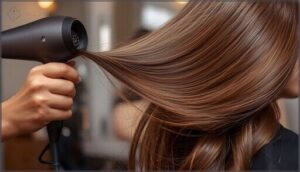
Once you’ve locked in protection, position your blow dryer 6–8 inches away and keep it moving—holding heat in one spot invites damage.
Here’s your technique breakdown:
- Use medium heat (320–365°F) for efficiency without frying strands
- Direct airflow downward to smooth cuticles flat
- Section thick hair for faster drying speed
- Try ionic technology to cut time and static
- Add a diffuser for curls that need gentle airflow
Constant motion protects your investment.
Finishing Touches for Smoothness and Shine
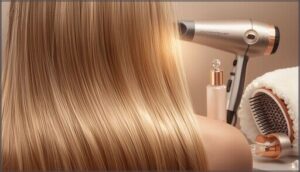
Your final pass seals everything in. Hit that cool shot button to close cuticles and lock in smoothness—it’s instant shine insurance.
Follow with a pea-sized silicone serum for slip without grease. If you’re using a round brush, one last heated pass distributes polish evenly.
Skip the regular towel; a microfiber finishing touch kills frizz on contact.
Preventing Damage and Maintaining Hair Health

You’ve mastered the techniques, but that’s only half the battle. The real key is understanding what silently sabotages your hair between wash days and knowing how to fortify it from the inside out.
Let’s break down the mistakes that undermine your efforts and the habits that’ll transform your hair’s resilience for good.
Avoiding Common Drying Mistakes
You don’t need expensive damage control when you sidestep these pitfalls. Excessive towel rubbing lifts cuticles and increases frizz—blotting with a microfiber towel cuts friction by 50%. Skipping heat protectant? That invites moisture loss and compromises cuticle protection strategies. Keep your blow dryer 15–20 cm away to prevent thermal spikes, and always section hair for even airflow. These gentle drying techniques slash breakage and preserve your hair’s integrity.
- Never combine vigorous towel rubbing with immediate brushing—detangle damp strands with a wide-tooth comb instead
- Avoid cranking your dryer to maximum heat—moderate temperatures paired with distance reduce surface heat by 20–30%
- Don’t skip sectioning during blow drying—dividing hair into 4–6 parts standardizes heat distribution and shortens drying time by up to 40%
Tips for Reducing Frizz and Breakage
You can lock down frizz and breakage by choosing the right products and techniques. Hydrated hair with proper porosity alignment reduces frizz by up to 30%, so use silicone-based serums—they cut visible hair frizz by 40–60%.
Switch to a microfiber towel to minimize roughness, apply leave-ins with polyquaternium for breakage prevention, and maintain moisture balance. Smart cuticle care and hair smoothening strategies protect hair elasticity while keeping hair porosity in check.
Incorporating Healthy Habits Into Your Routine
You can’t fight hair damage prevention without addressing what happens outside your hair care routine. Drinking 2–3 liters of water daily keeps scalp moisture balanced, while 7–9 hours of sleep promotes follicle health.
Schedule 5–10 minute scalp massages twice weekly to boost blood flow, and create a washing cadence that fits your hair type—these healthy routines transform your hair drying methods into real hair care and maintenance.
Nutrition and Treatments for Stronger Hair
Your hair’s strength starts from within. Adequate protein intake aids shaft production, while iron supplements address deficiency-related shedding—particularly for premenopausal individuals. Omega benefits include reduced follicle inflammation, though biotin effects show limited evidence unless you’re actually deficient.
For hair treatment targeting thinning, topical minoxidil treatment promotes regrowth in approved cases. Real hair wellness demands both smart hair nutrition and evidence-based approaches to hair health.
Frequently Asked Questions (FAQs)
What is the best way to dry hair if I have a lot of hair?
When you’re working with a full mane, think of yourself as an architect—you can’t rush the foundation.
Section your thick hair into quarters, gently squeeze moisture with a microfiber towel, then blow dry each portion separately at medium heat.
How can I dry my hair without using a hairdryer?
You can gently squeeze excess water with a microfiber towel, apply leave-in conditioner, then let strands air dry naturally.
Use a wide-tooth comb for detangling while gentle blotting minimizes frizz and breakage.
What is the best way to dry hair if I have curly hair?
Forget everything you thought you knew—curly hair demands a total rebel approach. Air dry with a microfiber towel or diffuser on low heat, scrunching gently to lock in curl definition and frizz control without damage.
What is the best way to dry hair if I have oily hair?
You can control excess oil by blotting—not rubbing—your scalp with a clean microfiber towel, then blow drying on low heat with the nozzle aimed downward, finishing with a cool blast to seal cuticles.
What is the best way to dry hair if I have damaged hair?
Damaged hair demands extra care: blot with a microfiber towel, skip harsh rubbing, and let strands air-dry when possible.
If you blow-dry, stick to cool-to-warm settings and keep the nozzle moving—gentle drying methods prevent further breakage.
How often should I wash my hair weekly?
Most people benefit from washing 2–3 times per week to maintain hair oil balance and scalp health. Adjust based on your hair type—oily scalps need more frequent cleansing, while dry or curly hair thrives with less washing.
Can I sleep with wet hair safely?
Ever wonder why stylists cringe at bedtime routines? Sleeping with wet hair invites fungal growth and scalp infections, while friction causes hair breakage.
Air drying completely before bed protects against moisture damage and maintains hair health.
Does cold water actually improve hair health?
Cold water benefits your hair cuticle by sealing it flat, boosting shine temporarily.
But rinse temperature plays a minor role in hair health compared to heat styling, hair porosity management, and scalp comfort during your hair care routine.
What temperature setting works best for fine hair?
For fine hair, less heat is more—think 300–350°F on your blow dryer. Low temperature settings with a heat protectant shield delicate strands from thermal damage while maintaining hair health.
Should I trim my hair more when heat styling?
Yes, you’ll need to trim more often—every 6–8 weeks works well. Heat styling accelerates hair splitting and breakage, so regular trim frequency maintains hair health while preventing heat damage from traveling up your hair shaft.
Conclusion
The irony? Most damage happens when you’re trying to be quick and efficient. Rushing through the drying process with high heat and rough towels destroys more hair than skipping conditioner ever could.
Now that you understand the best way to dry hair, you hold the power to break that cycle. Treat your strands with intention, invest in the right tools, and watch your hair transform from fragile to resilient—one gentle, deliberate session at a time.