This site is supported by our readers. We may earn a commission, at no cost to you, if you purchase through links.
A client once walked into my shop asking if he could save money by using leftover hair dye on his gray beard. Twenty minutes after applying it, his face looked like he’d gone three rounds with a chemical burn.
The skin beneath your beard isn’t the same as your scalp—it’s thinner, more sensitive, and reacts differently to ammonia-heavy formulas designed for head hair. Regular hair color can work on facial hair, but it comes with real risks most guys don’t consider until they’re dealing with redness, irritation, or patchy results that won’t wash out.
Your beard’s coarse texture and your face’s delicate skin demand a different approach. Understanding what separates hair dye from beard-specific products—and knowing when you can bend the rules safely—makes the difference between a sharp look and a regrettable mistake.
Table Of Contents
- Key Takeaways
- Can I Use Hair Color on My Beard?
- Why Beard-Specific Dye is Recommended
- How to Choose The Right Beard Dye
- Step-by-Step Guide to Dyeing Your Beard
- Common Mistakes to Avoid When Dyeing Beards
- Natural and Safer Alternatives for Beard Coloring
- Frequently Asked Questions (FAQs)
- Can you use regular hair dye on a beard?
- Which hair color is safe for a beard?
- Is coloring a beard safe?
- Can I use L’Oreal hair color on my beard?
- Can you use regular hair dye on beards?
- Is hair colour good for beard?
- How do you apply hair dye to your beard?
- Is it safe to dye a beard?
- How long does beard dye typically last?
- Can I dye my beard at home safely?
- Conclusion
Key Takeaways
- Regular hair dye can technically work on your beard, but it’s formulated for scalp skin and hair—meaning the harsher ammonia and peroxide levels create serious risks of chemical burns, irritation, and allergic reactions on your thinner, more sensitive facial skin.
- Beard-specific dyes use gentler formulations designed for coarse facial hair texture and delicate skin, delivering better color penetration, even coverage, and longer-lasting results without the skin damage that comes from scalp products.
- Always perform a patch test 24-48 hours before applying any dye to your beard, and skip the gamble of using leftover hair color when beard-specific options exist that won’t leave you with redness, patchy coverage, or a trip to the dermatologist.
- Natural and temporary alternatives like plant-based dyes, color sprays, and washable products give you commitment-free options to experiment with your look while protecting your beard’s health and avoiding harsh chemical exposure.
Can I Use Hair Color on My Beard?
You can technically use regular hair color on your beard, but that doesn’t mean you should. The differences between scalp and facial hair matter more than you might think, and those differences directly affect how the dye performs and what risks you’re taking.
For the same reasons using regular shampoo on your beard isn’t ideal, regular hair dye can be too harsh for the coarser texture and sensitive skin underneath your facial hair.
You can use regular hair color on your beard, but the differences between scalp and facial hair create risks you shouldn’t ignore
Let’s break down what separates hair dye from beard dye, the real dangers you’re facing, and when—if ever—it makes sense to grab that box from your bathroom shelf.
Before you make that call, understanding what makes beard dye different from regular hair dye can save you from serious skin irritation or patchy results.
Differences Between Hair and Beard Dye
Hair dye and beard dye aren’t interchangeable—here’s why. Your beard’s coarser texture and the thinner skin underneath demand different formulations.
Different dyes also vary widely in longevity, so it’s worth understanding how long beard dye typically lasts before you commit to a specific product.
- Dye formulations: Hair dye uses stronger developers like hydrogen peroxide and ammonia that penetrate deeper, while beard dye deposits color gently on the surface.
- Hair texture: Beard hair’s unique porosity affects how color adheres and lasts.
- Skin irritation: Facial skin reacts more easily to harsh solvents found in hair dye.
- Color longevity: Beard color fades faster due to frequent washing and exposure. For a detailed breakdown of the differences in permanent vs temporary beard coloring, check reputable grooming resources.
Risks of Using Regular Hair Dye
Standard scalp formulas pack a punch your face wasn’t built to handle. Here’s what you’re risking when you skip beard-specific products:
| Risk Type | What Happens | Why It Matters |
|---|---|---|
| Chemical Exposure | Ammonia and peroxide absorb through thin facial skin | Systemic effects build up over time |
| Skin Irritation & Allergic Reactions | Redness, burning, blisters on face and neck | Facial skin reacts faster than your scalp |
| Cancer Risks | Some chemicals linked to increased cancer risk with repeated use | Long-term exposure adds up |
| Eye Damage | Vapors or splashes cause chemical burns | One wrong move needs urgent care |
Your skin sensitivity and allergies heighten every reaction. That patch test? Non-negotiable. For a closer look at the potential dangers, see this overview of.
When Hair Dye May Be Appropriate
Despite the risks, hair dye can work in specific scenarios if you’re careful. Temporary or demi-permanent formulas with low peroxide give you safer options when beard dye isn’t available.
Consider hair color when:
- You’re testing shades first – Temporary dyes wash out in 1-2 weeks, letting you experiment without commitment
- Gray coverage needs subtlety – Semi-permanent formulas blend salt-and-pepper without harsh chemicals
- Skin passes the patch test – Always test 24-48 hours before full application on facial skin
Why Beard-Specific Dye is Recommended
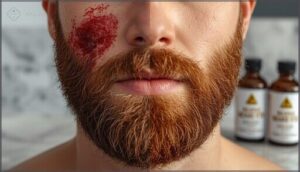
Your face isn’t your scalp, and the skin around your beard won’t tolerate the same harsh chemicals. Beard-specific dyes are engineered to work with the unique texture of facial hair while respecting the sensitive skin underneath.
Here’s why making the switch to a proper beard dye matters for both your appearance and your comfort.
Gentler Formulations for Facial Skin
Your facial skin isn’t scalp skin—it’s thinner and more reactive. Beard-specific formulas use gentle cleansing agents like decyl glucoside instead of harsh sulfates that strip moisture.
Many men also turn to beard dye for a younger look when grays appear, pairing it with beard-safe cleansers to protect color longevity.
They incorporate soothing ingredients such as allantoin and bisabolol to calm irritation, plus ceramides for skin barrier repair.
Hypoallergenic formulas minimize contact dermatitis risk, making beard care safer for those with skin sensitivity concerns.
Better Results for Coarse Beard Hair
Coarse beard hair demands more from dye than scalp hair ever will. Beard-specific formulas penetrate deeper with smaller molecules and conditioning agents like panthenol that soften wiry texture during coloring.
They’re built for facial hair’s unique density—delivering even coverage without the patchiness you’d get from standard hair dye. Better penetration means richer color that actually lasts on stubborn coarse fibers.
Reduced Risk of Irritation
Your facial skin is far more sensitive than your scalp, making irritation prevention critical. Beard-specific dyes skip harsh ammonia concentrations and use gentle formulas with calming agents that protect your skin barrier.
- Hypoallergenic options eliminate parabens and sulfates that trigger allergic reactions
- pH-balanced blends maintain natural skin acidity and reduce redness
- Fragrance-free formulations minimize stinging on sensitive skin
These natural dyes prioritize skin health without sacrificing color results.
How to Choose The Right Beard Dye
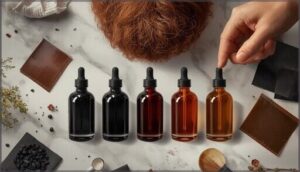
Picking the right beard dye isn’t about grabbing whatever’s on sale—it’s about matching your specific needs with the right product. You’ll need to think about shade, formula type, and how your skin reacts to different ingredients.
Here’s what you should look at before you commit to any color.
Selecting The Correct Shade
Picking the right beard color isn’t guesswork—it’s shade matching based on value, chroma, and hue. Start with your natural hair undertones: cool tones need ash shades, while warm beards look best in golden or reddish hues. Your skin tone also plays a crucial role. Lighter complexions pair well with neutral dye formulas, whereas darker skin tones require deeper, warmer beard tinting options for smooth facial hair grooming.
| Factor | Light Skin Tones | Dark Skin Tones |
|---|---|---|
| Undertone | Ash or neutral | Natural warmth |
| Shade depth | Medium to light | Deep to rich |
| Edge visibility | Minimal contrast | Warm blending |
| Formula type | Cool-based dyes | Warm-based dyes |
| Best match | Neutral browns | Deep browns/blacks |
Permanent Vs. Temporary Options
Permanent beard dyes penetrate the shaft and last 4 to 6 weeks, while temporary beard dyes coat the surface and wash out in 1 to 5 days. Color longevity depends on beard porosity—facial hair absorbs and releases pigment faster than scalp hair.
Dye formulations with lower ammonia reduce skin reactions but affect fading rates. Choose permanent for full coverage or temporary for quick changes without commitment.
Considering Skin Sensitivity and Allergies
Sensitive skin reacts faster to dyes, so you’ll want gentle formulas without harsh fragrances or PPD. Allergic reactions can show up as redness, swelling, or itching—sometimes hours after application.
That’s why patch testing behind your ear 24 to 72 hours beforehand isn’t optional. It catches skin irritation before it spreads across your face, protecting both skin health and your beard.
Step-by-Step Guide to Dyeing Your Beard
Dyeing your beard isn’t rocket science, but it does require careful preparation and attention to detail. Skip a step, and you’re looking at uneven color, skin irritation, or a shade that screams “mistake.”
Here’s how to do it right from start to finish.
Preparing Your Beard and Skin
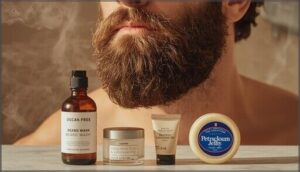
Getting your beard ready isn’t just washing and hoping for the best. Think of it like prepping a canvas—clean skin and hydrated facial hair make all the difference in how color takes hold and how your skin reacts.
- Cleanse thoroughly with a sulfate-free beard wash 2-3 times weekly to remove oil and buildup without stripping natural moisture.
- Exfoliate gently 1-2 days before dyeing using a chemical exfoliant with salicylic acid to prevent clogged follicles and ingrown hairs.
- Hydrate your beard line with a fragrance-free, non-comedogenic moisturizer to create a protective barrier and reduce skin irritation.
- Apply petroleum jelly along the edges where beard meets skin to prevent staining and shield sensitive areas during your pre-dye routine.
Applying The Dye Safely
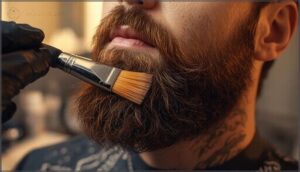
Once your beard’s prepped, technique matters more than you’d think. Work section by section using a spoolie or facial brush to distribute dye from roots to ends—not skin to hair. That’s the difference between professional coverage and patchy mistakes.
| Dye Application Tips | Why It Works |
|---|---|
| Section beard into quadrants | Ensures even coverage without missed spots |
| Apply from root to tip direction | Prevents dye pooling on skin causing irritation |
| Use gloves and facial brush tools | Protects hands while controlling precise placement |
| Keep dye off skin barrier areas | Reduces staining and allergic reactions risk |
| Follow timing exactly per product label | Prevents over-processing and chemical damage |
Timing isn’t flexible—safe dye formulas still cause skin irritation if left too long.
Rinsing and Aftercare Tips

Once timing’s up, rinsing determines whether color locks or bleeds out fast. Use cool to lukewarm water for 2 to 3 minutes—hot water opens cuticles and strips pigment you just set. Gentle rinsing in small sections prevents skin irritation while fade prevention starts here.
- Rinse beard thoroughly for 2 to 5 minutes using cool water to close cuticles
- Skip hot water completely as it causes rapid color bleeding and fading
- Pat dry gently with a clean towel to minimize friction lifting fresh dye
- Apply fragrance-free moisturizer immediately for skin soothing around the beardline
- Wait 24 to 48 hours before washing with sulfate-free shampoo for color locking
Beard moisturizing isn’t optional after dyeing—facial skin needs hydration to recover from chemical exposure. Use aftercare balms designed for color-treated hair, not regular beard care products that strip dye. If redness appears, cool water rinses with aloe gel calm reactions fast. Schedule touch-ups every 4 to 6 weeks as new growth shows, and limit chlorine exposure for 72 hours post-application. Proper beard maintenance now extends vibrancy for weeks instead of days.
Common Mistakes to Avoid When Dyeing Beards

Even experienced guys mess up their first few beard dye jobs, and it’s usually the same handful of mistakes that cause patchy color, skin irritation, or a shade that looks nothing like what’s on the box.
You don’t need to learn these lessons the hard way. Here are the most common errors that’ll sabotage your beard dye results and how to avoid them.
Skipping The Patch Test
Why risk a painful reaction when a simple test can save you? Skipping the patch test is the fastest way to invite allergic reactions and skin irritation. Apply dye behind your ear 48 hours before coloring to check for dye sensitivity. Facial skin is thinner than your scalp, so skin allergies show up faster and hit harder here.
| Test Location | Wait Time | Warning Signs |
|---|---|---|
| Inner forearm | 24-48 hours | Redness or swelling |
| Behind ear | 24-48 hours | Itching or burning |
| Jawline area | 24-48 hours | Blistering or rash |
| Neck skin | 24-48 hours | Persistent irritation |
| Chin area | 24-48 hours | Inflamed patches |
Even hypoallergenic formulas need testing. Your facial damage from skipped tests can include dermatitis that lasts weeks. Professionals won’t touch your beard without this step—neither should you.
Using The Wrong Color or Formula
Just as dangerous as skipping tests? Picking the wrong shade or formula. Hair dye vs beard dye formulas aren’t interchangeable—regular hair dye packs higher ammonia levels that trigger skin irritation on your face.
Shade selection matters too: go two levels darker than your natural color and you’ll create harsh contrast that screams “fake.”
Formula risks multiply when you ignore beard-specific products designed for coarse facial hair.
Improper Application Techniques
Precision separates professional results from sloppy stains. Your beard dyeing techniques directly impact color distribution issues and skin irritation risk. Skip proper dye application steps and you’ll face consequences:
- Applying dye too thickly creates uneven color and extends cleanup time
- Overlapping onto skin near the jawline produces hard-to-remove stains requiring aggressive stain removal methods
- Not following recommended processing time results in under-color or rapid fading
- Ignoring skin protection measures like barrier cream causes chemical burns on sensitive facial skin
Beard preparation tips prevent most application disasters.
Natural and Safer Alternatives for Beard Coloring

You don’t have to expose your beard to harsh chemicals just to change its color.
There are gentler options that won’t irritate your skin or damage your facial hair.
Let’s look at some natural alternatives and safer products that actually work.
Plant-Based and Hypoallergenic Dyes
If regular hair dye feels too harsh, plant-based colors and hypoallergenic formulas offer gentler dyeing alternatives. These eco-friendly alternatives minimize irritation on facial skin while delivering natural dye options that work with your beard’s coarse texture—perfect for sensitive skin types.
Natural beard dyes use ingredients like henna, walnut husk, and beetroot to achieve browns and reds without ammonia or PPD.
Temporary Beard Color Products
Temporary beard dyes give you total control without the commitment—sprays, chalks, and washable products let you experiment with beard color trends while keeping facial hair healthy. If you’re tired of harsh hair dyeing and coloring formulas, these temporary options wash out in one to three shampoos.
- Color sprays deliver fine mist coverage with natural browns and blacks that blend seamlessly.
- Beard chalks provide bold, event-ready pigments perfect for performances or statement looks.
- Colored waxes tint while styling, depositing gradual color with conditioning oils for texture.
- Precision pens target gray patches selectively with quick-dry, water-resistant formulas.
Maintaining Beard Health After Dyeing
Dye fade prevention starts the moment you rinse—your beard needs serious conditioning and moisturizing to stay healthy. Color preservation demands strategic care and maintenance, not guesswork.
| Routine | Frequency | Purpose |
|---|---|---|
| Leave-in conditioner or beard oil | Daily or every other day | Restores moisture, reduces breakage |
| Deep conditioning treatment | Weekly | Maintains softness, prevents dye fade |
| Sulfate-free cleansing | Every other day | Preserves natural oils, color longevity |
| Skin barrier moisturizer | After each wash | Nourishes facial skin, prevents irritation |
| Trim and inspect | Bi-weekly | Removes split ends, ensures even color |
Monitor for skin irritation signs—redness, swelling, burning—and address them immediately with cool water rinses and fragrance-free soothing creams.
Frequently Asked Questions (FAQs)
Can you use regular hair dye on a beard?
You can—but it’s like bringing a sledgehammer to carve wood. Regular hair dye works on beards, yet risks skin irritation and allergic reactions since facial skin is more sensitive than your scalp.
Which hair color is safe for a beard?
Look for beard-specific dyes with lower ammonia levels and gentler oxidants. Semi-permanent formulas reduce skin reactions and dye allergies. Hypoallergenic options work best if you’ve got sensitive skin or concerns about color longevity.
Is coloring a beard safe?
When you follow safety precautions like patch testing and choose the right dye formulations, coloring your beard is generally safe.
Skin irritation and allergic reactions happen when you skip these essential steps.
Can I use L’Oreal hair color on my beard?
L’Oreal’s Men Expert One-Twist shouldn’t touch your beard—it’s formulated for scalp hair only.
Instead, grab their Temporary Instant Beard pen. It’s ammonia-free, gentle on facial skin, and designed specifically for beards.
Can you use regular hair dye on beards?
You can use regular hair dye on beards, but it’s not ideal.
Hair color formulations contain stronger chemicals that increase skin irritation risks and dye allergies on sensitive facial skin compared to beard-specific products.
Is hair colour good for beard?
Hair dye isn’t ideal for beards. Regular formulas contain higher ammonia and peroxide levels that can burn facial skin and trigger allergic reactions.
Beard-specific dyes offer gentler, safer results with less irritation risk.
How do you apply hair dye to your beard?
Start at the roots and work toward the tips with an applicator brush, ensuring even color distribution through each section.
Protect your skin with petroleum jelly, then rinse thoroughly after processing.
Is it safe to dye a beard?
Yes, dyeing beard hair is generally safe when you choose beard-specific dye formulations, complete a patch test beforehand, and follow safety precautions carefully to minimize skin irritation and allergic reactions.
How long does beard dye typically last?
Most beard dye lasts forever—or at least 4 to 6 weeks before fading kicks in. Permanent beard dyes outlast temporary beard dyes, while beard color fading depends on washing frequency, beard growth rates, and your color retention tips.
Can I dye my beard at home safely?
Absolutely. Follow the product instructions exactly, perform a patch test 24 to 48 hours before, apply barrier cream around your beard line, and rinse thoroughly with cool water afterward.
Conclusion
Your beard isn’t just another patch of hair—it’s your face’s first line of defense, and it deserves better than leftovers from a scalp dye box.
You can use hair color on your beard, but only if you’re willing to accept the trade-offs: potential irritation, uneven coverage, and chemistry your skin wasn’t built to handle.
Skip the gamble. Invest in beard-specific products that respect both your facial hair’s texture and your skin’s limits.