This site is supported by our readers. We may earn a commission, at no cost to you, if you purchase through links. This content is for general informational and educational purposes only and is not a substitute for professional medical, dermatological, or nutritional advice.
Hair loss costs Americans an estimated $3.5 billion in treatments annually—yet the most effective options often sit in your kitchen or cost less than a streaming subscription. Androgenetic alopecia affects roughly 50 million men and 30 million women in the U.S., and the pharmaceutical industry has spent decades convincing sufferers that stopping it requires expensive intervention.
That assumption doesn’t hold up. Cheap hair loss remedies ranging from onion juice to generic minoxidil carry real clinical data behind them, not just anecdotal folklore.
What separates the remedies worth your time from the ones worth ignoring comes down to mechanism—how each one actually interacts with your follicles.
Table Of Contents
- Key Takeaways
- Top 7 Cheap Hair Loss Remedies
- Affordable Over-the-Counter Treatments
- Low-Cost Medical Hair Loss Options
- Top 7 Budget Hair Loss Products
- Preventing Hair Loss on a Budget
- Frequently Asked Questions (FAQs)
- Are there natural remedies for hair loss?
- What are the home remedies for hairfall?
- What is the best hair loss treatment?
- How do you get rid of hair loss at home?
- Is there a natural alternative to hair loss?
- What is the best treatment for inherited hair loss?
- What is the best home remedy for hair loss?
- What not to use on thinning hair?
- What is the best treatment for hair loss?
- Can hair loss be reversed?
- Conclusion
Key Takeaways
- Generic minoxidil ($10–20/month) and daily scalp massage (just 4 minutes) are among the most evidence-backed, low-cost tools you can start today without a prescription.
- Onion juice, aloe vera, green tea rinses, and coconut oil aren’t folk tales — each targets a real mechanism, from DHT suppression to follicle inflammation, that drives hair loss.
- For men, generic finasteride can cost as little as $4/month with discount coupons and cuts DHT by roughly two-thirds — making it one of the cheapest medical options with the strongest clinical backing.
- Diet, stress, and styling habits quietly drive more hair loss than most people realize — keeping ferritin above 60 ng/mL, limiting heat to 380°F or below, and managing cortisol through sleep can slow shedding without spending a dollar on products.
Top 7 Cheap Hair Loss Remedies
You don’t need to spend a fortune to start fighting back against hair loss. These seven remedies use ingredients you likely already have at home or can grab for just a few dollars.
Most of them pair well with the at-home hair loss remedies covered here, so you can mix and match based on what’s already in your kitchen.
Here’s what actually works.
Onion Juice Treatment
Onion juice is one of the most overlooked natural remedies for hair loss — and it costs almost nothing. Its sulfur properties support keratin bonds and scalp health, while one small clinical trial found that roughly 87% of participants showed measurable hair regrowth after six to eight weeks of consistent juice application.
Apply it two to three times weekly, leave it on for 30 minutes, then rinse thoroughly. For a detailed overview of the process and additional uses, see this guide on using onion juice for hair growth.
Aloe Vera Scalp Application
Sulfur gets the credit, but aloe vera quietly treats the inflammation side of the equation. As a natural remedy, aloe vera benefits your scalp by calming irritation, clearing follicle-blocking buildup, and supporting the conditions hair actually needs to grow.
Here’s a simple aloe gel application routine:
- Scoop fresh gel and massage into the scalp using small circular movements for 2–3 minutes
- Leave on 30–60 minutes, then rinse with mild shampoo
- Repeat two to three times weekly for consistent scalp health improvement
- Patch test first — some people experience mild irritation
No clinical proof exists that aloe vera alone regrows hair, but as hair growth tips go, it’s a low-cost add-on worth pairing with proven treatments. For a full guide to the and application tips, check out this in-depth resource.
Egg and Oil Hair Masks
While aloe vera works from the outside in, egg and oil masks feed your hair from a nutritional angle.
One egg whisked with a tablespoon of olive oil delivers keratin-like proteins that patch weak cuticles, plus oleic acid that penetrates the shaft to lock in moisture.
This scalp nutrition combo costs under two dollars per mask recipe — hard to beat for that level of hair protein support.
Green Tea Rinses
Your kitchen pantry is hiding another solid tool. Steep 1–2 green tea bags in 2 cups of hot water for 20 minutes, cool completely, then pour it over clean hair as a rinse.
EGCG benefits scalp health by blocking DHT production and keeping follicles in the growth phase longer.
Scalp soothing, natural remedies, real results — once or twice weekly works well.
Coconut Oil Scalp Massage
Coconut oil gives you three concrete wins in one routine:
- Penetration — lauric acid enters the hair shaft, reducing protein loss and breakage.
- Scalp health — its antimicrobial properties lower fungal buildup around follicles.
- Cost — a large bottle lasts months of twice-weekly pre-wash sessions.
Warm a few tablespoons, work it in with circular motions for 5–10 minutes, then shampoo out.
Scalp Massages for Growth
A Japanese study found that just four minutes a day of scalp massage can lead to thicker hair strands after six months.
Just four minutes of daily scalp massage can produce thicker hair strands within six months
Scalp massage techniques work by boosting blood flow and mechanically stretching the dermal papilla cells that control hair growth promotion.
Use your fingertips or a silicone massage tool for follicle stimulation and scalp tissue relaxation. Consistency beats intensity every time.
Balanced Diet and Nutrition
Your hair is built from protein, so low dietary protein intake is one of the fastest ways to trigger shedding. Eggs, lentils, and canned fish cover your keratin needs affordably.
Iron supplements help only if blood work confirms a deficiency — don’t guess. Vitamin deficiencies, poor mineral balance, and inadequate healthy fats all quietly stall hair growth.
A consistent, nutritional diet costs less than any product on this list.
Affordable Over-the-Counter Treatments
You don’t always need a prescription to get real results. Several over-the-counter options have solid research behind them and won’t drain your wallet. Here are four worth knowing about.
Generic Minoxidil Solutions
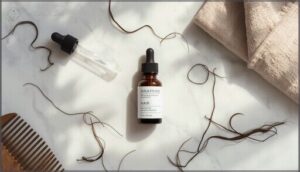
Generic minoxidil is one of the most proven hair loss solutions you can buy without a prescription. It comes in two minoxidil concentrations — 2% for women, 5% for men — and costs roughly $15 a month, about half the price of brand-name Rogaine.
- Proper application matters: 1 mL to a dry scalp, twice daily
- Propylene glycol in the liquid can irritate sensitive skin
- Side effects like shedding in week one are normal — don’t quit early
Caffeine and Ketoconazole Shampoos

Two shampoo ingredients worth your attention are caffeine and ketoconazole. Caffeine penetrates follicles within about 2 minutes, countering DHT-related damage that drives pattern thinning.
Ketoconazole takes a different angle — it calms scalp inflammation and locally reduces DHT activity.
Rotate them: caffeine shampoo most wash days, ketoconazole once or twice weekly. A bottle of each runs under $20 combined.
2% Pyrithione Zinc Shampoos

Think of 2% pyrithione zinc shampoo as a quiet workhorse for scalp health. It won’t regrow hair like minoxidil, but it clears the path for healthier growth by controlling the Malassezia yeast that drives dandruff and follicle-damaging inflammation.
Key pyrithione zinc benefits worth knowing:
- Antifungal, antibacterial, and antimicrobial action in one antidandruff shampoo
- Clinically shown to increase hair counts in androgenetic alopecia, though modestly
- Over-the-counter, usually $10–$20 per bottle — no prescription needed
Home Use Dermarollers
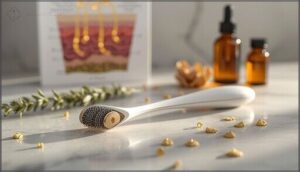
While pyrithione zinc works on the surface, scalp microneedling with a home dermaroller goes a layer deeper — literally. At-home treatment with a 0.5 mm to 1.0 mm needle size creates microchannels that boost hair growth stimulation and help minoxidil absorb better.
For dermaroller safety, stick to every two to four weeks. Most devices cost under $30.
Low-Cost Medical Hair Loss Options
Sometimes natural remedies and drugstore options aren’t enough, and that’s when a doctor’s prescription can change everything. Medical treatments for hair loss have become more accessible and affordable than most people expect.
Here’s what’s actually worth knowing before you talk to your doctor.
Prescription Finasteride and Dutasteride
Among DHT blockers, finasteride and dutasteride give you the most clinical firepower per dollar. Finasteride dosage starts at 1 mg daily, cutting DHT by roughly two-thirds. Dutasteride benefits go further, suppressing DHT by over 90 percent, making it ideal when finasteride falls short.
For androgenetic alopecia, prescription costs run $20–30 monthly for finasteride — real hair regrowth without breaking the bank.
Spironolactone (Aldactone) for Hair Loss
Finasteride works well for men, but if you’re a woman dealing with female pattern hair loss, spironolactone might be your answer. Its mechanism of action targets androgen receptors directly on follicles, slowing the damage DHT causes.
Dermatologist dosing guidelines commonly start at 25–50 mg daily, scaling toward 100 mg. Oral vs. topical options exist, with topical combinations running around $63 monthly. Side effects like irregular periods are usually manageable.
Comparing Minoxidil Vs. Finasteride Costs
Spironolactone helps women reclaim control, but for both sexes, knowing what you’re actually spending matters.
Generic minoxidil runs about $10–20 monthly, while generic finasteride can cost as little as $4 with discount coupons—making it one of the cheapest medical treatments available.
Bundled hair loss subscriptions combining both usually run $25–38 monthly, offering real medication savings without sacrificing your hair restoration budget.
Limitations of Budget Medical Treatments
Even the most diligent saver has to weigh the risks and benefits when choosing low-cost medical treatments for hair loss. Limited effectiveness and safety concerns can undermine early gains. Here’s what you might face:
- Regular doctor visits add hidden costs
- Side effects like sexual dysfunction or scalp irritation
- Weak results in moderate-to-advanced baldness
- Higher counterfeit product risk
Top 7 Budget Hair Loss Products
Sometimes you want something you can actually buy, not mix in your kitchen. These seven products sit at the more budget-friendly end of the market without cutting corners on evidence.
Here’s what’s worth your attention.
1. Women’s Rogaine Hair Regrowth Solution
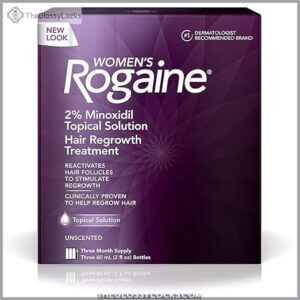
Women’s Rogaine is the only FDA-approved once-daily foam treatment for women dealing with hereditary hair thinning. It uses 5% minoxidil as a topical vasodilator, extending your hair follicles’ growth phase and increasing hair thickness by up to 48%.
Over 80% of women see regrowth after six months of consistent use, with some noticing reduced shedding as early as 12 weeks.
Apply half a capful daily to dry scalp areas — that’s it. Just don’t stop using it, or your gains will gradually reverse.
Consistency is the real secret — as this guide on effective baldness treatments for men explains, addressing the underlying cause is what makes the difference between results that last and results that fade.
| Best For | Women experiencing hereditary hair thinning or hair loss who want a clinically proven, easy-to-use daily treatment. |
|---|---|
| Form | Liquid |
| Hair Type | Thinning/Loss |
| Scent | Unscented |
| Target User | Women |
| Results Timeline | Varies |
| Consistent Use | Required |
| Additional Features |
|
- Clinically proven to regrow fuller hair and increase hair thickness by 61%
- Simple to apply twice daily, and it’s unscented so no weird smell to deal with
- Tackles hair loss in multiple ways — improves blood flow, stimulates growth, and reverses follicle miniaturization
- You have to keep using it indefinitely or the regrowth reverses
- May cause unwanted hair growth in areas beyond your scalp
- Results aren’t guaranteed — it won’t work the same for everyone
2. Hers Minoxidil Hair Regrowth Treatment
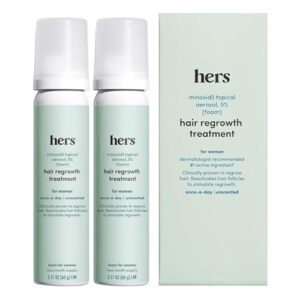
Hers minoxidil foam gives you the same FDA-approved 5% minoxidil as pricier brands, but it won’t drain your wallet. A subscription runs as low as $12.67 per month, and a one-time four-month supply costs around $54.
Apply half a capful once daily to a dry scalp — nothing complicated. Expect real results in three to six months.
One heads-up: if you have rosacea, this vasodilator isn’t your best fit. Otherwise, it’s a straightforward, clinically backed option.
| Best For | Women dealing with hair thinning or loss who want a clinically proven, no-fuss daily treatment without overpaying for a name brand. |
|---|---|
| Form | Foam |
| Hair Type | Thinning/Loss |
| Scent | Unscented |
| Target User | Women |
| Results Timeline | Varies |
| Consistent Use | Required |
| Additional Features |
|
- FDA-approved 5% minoxidil — same active ingredient as pricier options
- Non-greasy, unscented foam that’s easy to work into your daily routine
- Affordable subscription starting around $12.67/month
- You have to use it every single day or results won’t stick
- Can make hair feel stiff or hard after application
- Not safe for anyone with rosacea due to its vasodilator properties
3. Hairmax LaserBand Hair Growth Treatment
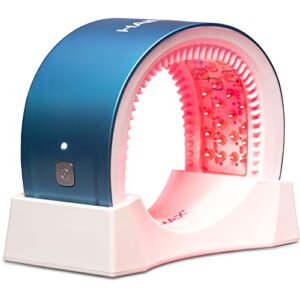
At $849, the Hairmax LaserBand 82 isn’t cheap — but hear the math out. It uses 82 medical-grade lasers at 655 nanometers to stimulate follicles in just 90 seconds, three times a week.
Clinical studies show roughly a 129-hair-per-square-inch increase after consistent use. That’s FDA-cleared technology, not a gimmick.
Spread over two years of use, the per-session cost drops markedly. If minoxidil hasn’t moved the needle, this is a clinically backed next step worth considering.
| Best For | Anyone dealing with hereditary or pattern hair loss who wants a clinically backed, at-home treatment and doesn’t mind the upfront investment. |
|---|---|
| Form | Headband |
| Hair Type | Thinning/Loss |
| Scent | N/A |
| Target User | Men & Women |
| Results Timeline | 3+ months |
| Consistent Use | Required |
| Additional Features |
|
- 82 medical-grade lasers deliver real, FDA-cleared technology in just 90 seconds — no lengthy routines
- Backed by 7 clinical studies with a 90% success rate, so it’s not just marketing fluff
- Lightweight headband design makes it easy to use at home or pack for travel
- $849 is a steep price tag upfront, even if the per-session cost evens out over time
- Results aren’t guaranteed — some users see no new growth after months of consistent use
- It only works if you stick to it three times a week, every week, without skipping
4. Nutrafol Hair Growth Supplements
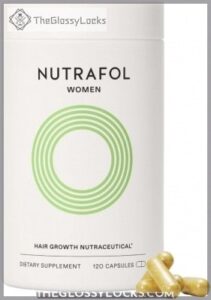
Nutrafol takes a different route — no minoxidil, no prescriptions, just a daily four-capsule blend targeting stress, hormones, and nutrition gaps all at once.
Its Synergen Complex pairs saw palmetto with ashwagandha and marine collagen, and a six-month clinical trial showed measurable gains in hair count and thickness.
The catch? It runs $88 a month, and results take three to six months to appear. If you’re patient and consistent, the data suggests it’s worth the wait.
| Best For | Women ages 18–44 looking for a natural, drug-free approach to thinning hair who don’t mind waiting a few months for results. |
|---|---|
| Form | Capsule |
| Hair Type | Thinning/Loss |
| Scent | Unscented |
| Target User | Women 18-44 |
| Results Timeline | 3-6 months |
| Consistent Use | Required |
| Additional Features |
|
- Targets multiple root causes at once — stress, hormones, and nutrition gaps
- Clinically tested with real data backing hair count and thickness improvements
- Dermatologist-recommended and works with other at-home hair treatments
- At $88 a month, it’s a serious ongoing expense
- Results take 3–6 months, so patience is a must
- Not ideal for women over 44 or those with underlying health conditions
5. Hairmax Laser Hair Regrowth Device
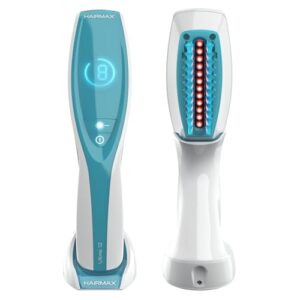
If you’re serious about regrowing hair without clinic visits, low-level laser therapy is worth understanding. The Hairmax Ultima12 uses 655-nanometer red light — the wavelength shown to stimulate follicles — and its patented teeth part your hair so laser energy actually reaches your scalp, not just the surface strands.
FDA-cleared with a reported 90% success rate, it runs about $199 and requires 8–11 minutes per session, three to four times weekly. Results take three to six months, but consistency is the real deciding factor.
| Best For | Anyone dealing with hereditary or age-related hair loss — men or women — who want a clinically backed, at-home alternative to expensive clinic treatments. |
|---|---|
| Form | Comb/Device |
| Hair Type | Thinning/Loss |
| Scent | N/A |
| Target User | Men & Women |
| Results Timeline | 3-6 months |
| Consistent Use | Required |
| Additional Features |
|
- FDA-cleared with a 90% success rate and a 6-month money-back guarantee, so the risk feels pretty low
- Cordless and lightweight at under 8 ounces — easy to use at home or toss in a bag when traveling
- The patented teeth actually part your hair so the laser hits your scalp directly, not just the top layer of strands
- Results take 3–6 months, and you have to stick to 3–4 sessions a week — it’s a real commitment
- Some users experience increased shedding early on, which can be alarming even if it’s normal
- It won’t work for everyone, and certain medical conditions or medications may make it a no-go
6. Omi Hair Growth Peptides Supplement
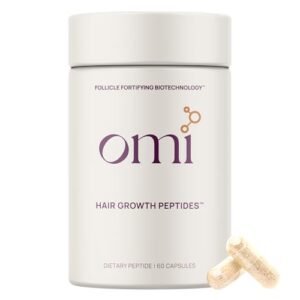
If lasers feel like overkill, a supplement might be your next logical move. Omi Hair Growth Peptides use a patented intermediate filament peptide complex sourced from New Zealand wool, and company data shows up to 47% less hair loss after 90 days of daily use.
Each capsule pairs those peptides with biotin, zinc, and B vitamins — nutrients your follicles actually need.
At around $69 to $79 per month, it’s not the cheapest option, but a 90-day return policy keeps the financial risk manageable.
| Best For | Anyone dealing with hair thinning or loss who wants a simple, pill-based solution they can work into their daily routine without a lot of fuss. |
|---|---|
| Form | Capsule |
| Hair Type | Thinning/Loss |
| Scent | Natural |
| Target User | All |
| Results Timeline | 3+ months |
| Consistent Use | Required |
| Additional Features |
|
- Backed by clinical data showing up to 47% less hair loss after 90 days
- Combines hair growth peptides with biotin, zinc, and B vitamins for well-rounded follicle support
- A 90-day return policy makes it easier to try without stressing about the cost
- At up to $79 a month, it’s a pricier commitment compared to other supplements
- Results aren’t guaranteed — some users saw no change or dealt with stomach upset
- You’ll need to take it consistently for at least three months before knowing if it works for you
7. Head and Shoulders Dandruff Shampoo
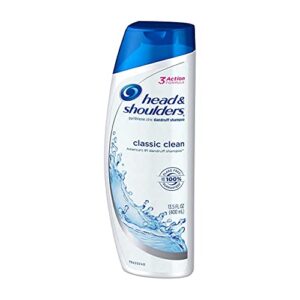
Sometimes the most effective fix is already in your shower. Head & Shoulders Classic Clean uses 1% pyrithione zinc to target Malassezia globosa, the scalp yeast linked to inflammation and flaking that can quietly accelerate shedding. Less irritation means less scratching — and less mechanical damage to your follicles.
A 13.5 oz bottle runs roughly $10 to $15, making each wash cost well under a dollar. It won’t regrow hair, but a calmer scalp is a better foundation for everything else you’re doing.
| Best For | Adults dealing with dandruff, dry scalp, or scalp irritation that may be contributing to hair shedding. |
|---|---|
| Form | Liquid |
| Hair Type | Dry |
| Scent | Unscented |
| Target User | Adults |
| Results Timeline | Immediate |
| Consistent Use | Required |
| Additional Features |
|
- Targets the root cause of dandruff with a proven anti-dandruff formula that calms itching and flaking
- Affordable per-wash cost, making it easy to work into your routine without breaking the bank
- Doubles as a scalp health tool — less irritation means less scratching and less follicle damage
- The 13.5 oz size runs out faster than you’d expect, especially for daily use
- Some buyers have run into packaging discrepancies, so double-check what you’re ordering
- A few users feel the price-to-size ratio isn’t great compared to larger bottles from competing brands
Preventing Hair Loss on a Budget

Stopping hair loss doesn’t have to drain your wallet — a lot of the damage happens before people even think about treatment.
The good news is that a few straightforward habits can slow things down without costing much. Here’s what actually has an impact.
Avoiding Tight Hairstyles and Heat
Two habits quietly wreck your hair for free: tight styling and excessive heat. Both damage hair follicles long before you notice thinning.
| Stressor | Safer Limit |
|---|---|
| Tight braids/weaves | Remove every 6–8 weeks |
| Flat iron temperature | Stay below 380°F |
| High-tension styles | Loosen roots immediately |
| Daily heat styling | Max 2–3 times weekly |
Scalp tension causes traction alopecia; heat damage makes breakage inevitable.
Reducing Stress for Hair Health
Stress silently shortens your hair’s growth phase by flooding your system with cortisol — and that’s just as damaging as a hot iron. Solid Stress Management and Sleep Hygiene cost nothing but consistency.
- Practice Mindful Meditation 10 minutes daily to support Cortisol Balance
- Aim for 7–9 hours of sleep on a fixed schedule
- Walk outdoors several times weekly for Hair Relaxation
- Limit late caffeine to protect hormone rhythms
- Combine movement with breathing exercises for scalp health
DIY Scalp Care Routines
Building a consistent scalp care routine doesn’t require expensive products — just a little know-how. Natural Remedies like Aloe Vera, Coconut Oil, and Pumpkin Seed Oil form the backbone of effective DIY care. Pair Oil Treatments with Massage Techniques and periodic Scalp Exfoliation, and you’re covering circulation, hydration, and follicle health in one go.
| Routine Step | Method | Frequency |
|---|---|---|
| Scalp Massage | Fingertip circular motion, 4+ minutes | Daily |
| Oil Treatments | Coconut Oil or Essential Oils, 30–60 min pre-wash | 1–2x weekly |
| Scalp Exfoliation | Sugar scrub on damp scalp | Every 1–2 weeks |
| Hair Masks | Aloe Vera or egg-oil blend, 20–30 min | 2–3x weekly |
Affordable Lifestyle Changes for Prevention
Most of what drives hair loss doesn’t require a prescription fix. Healthy Eating that keeps iron and ferritin above 60 ng/mL directly promotes hair growth. Stress Management through daily walks or deep breathing lowers cortisol that triggers shedding.
Gentle Haircare, Regular Exercise, and Balanced Hydration address nutritional deficiencies quietly fueling hair thinning — all without spending a dollar on hair care products.
Frequently Asked Questions (FAQs)
Are there natural remedies for hair loss?
Yes, several natural hair growth remedies genuinely work. Aloe vera benefits scalp health, coconut oil treatment reduces breakage, and scalp massage therapy boosts circulation.
Herbal supplements can support hair regrowth when used consistently.
What are the home remedies for hairfall?
Home remedies for hair fall include onion juice, aloe vera, egg masks, green tea rinses, and scalp massage.
These natural hair growth remedies support scalp health and may encourage hair regrowth with consistent use.
What is the best hair loss treatment?
There’s no single best answer — it depends on your hair loss type and budget.
For most people, generic minoxidil or finasteride delivers the strongest treatment efficacy among medical options, backed by consistent clinical data.
How do you get rid of hair loss at home?
You can tackle hair loss at home with natural remedies like scalp massage, dietary changes, and targeted scalp treatments that support hair follicle health — all without spending much money.
Is there a natural alternative to hair loss?
Several natural remedies genuinely support hair growth and scalp health. Onion juice, aloe vera, and coconut oil all show real results for strengthening hair follicles and reducing loss through alternative therapies rooted in solid evidence.
What is the best treatment for inherited hair loss?
For androgenetic alopecia, minoxidil therapy and finasteride treatment are the only two FDA-approved options proven to slow hair loss and support hair growth — start early, stay consistent.
What is the best home remedy for hair loss?
No single home remedy wins outright, but scalp massage, onion juice, aloe vera, coconut oil, and green tea consistently show the strongest evidence for supporting hair growth with minimal cost or risk.
What not to use on thinning hair?
Avoid sulfate shampoos, drying alcohols, and bleaching hair — all strip or weaken thinning strands. Dry shampoo overuse, tight weaving, and skipping scalp stimulation also quietly accelerate loss over time.
What is the best treatment for hair loss?
No single treatment wins every case. Minoxidil remains the leading over-the-counter option, while combination approaches — pairing it with finasteride or pumpkin seed oil — consistently deliver stronger long-term results for effective hair regrowth.
Can hair loss be reversed?
Sometimes, yes. Telogen effluvium often reverses within 3 to 6 months once the trigger is gone. But androgenetic alopecia rarely fully reverses without minoxidil, finasteride, or other consistent treatment.
Conclusion
Your follicles don’t care how much you spend—they respond to the right inputs, not expensive ones. The cheap hair loss remedies covered here aren’t consolation prizes; several outperform treatments costing ten times as much.
Generic minoxidil, scalp massage, dietary consistency—these work because they address real mechanisms, not marketing narratives.
Start with one intervention, track it for 90 days, and let your results do the talking. Your hair doesn’t need a bigger budget. It needs a smarter one.