This site is supported by our readers. We may earn a commission, at no cost to you, if you purchase through links. This content is for general informational and educational purposes only and is not a substitute for professional medical, dermatological, or nutritional advice.
Two-thirds of men will experience significant hair loss by age 35. That’s not a scare tactic. It’s biology, and the mechanism behind it is surprisingly well understood. DHT, a hormone derived from testosterone, quietly shrinks your hair follicles over years until they stop producing hair altogether.
The honest answer is that there’s no baldness cure for men. Not yet. But "no cure" doesn’t mean "no options." The treatments available today can slow, stop, or partially reverse hair loss with real, measurable results.
What separates the treatments that work from the ones that don’t comes down to targeting the root cause.
Table Of Contents
- Key Takeaways
- Is There a Baldness Cure for Men?
- Causes and Diagnosis of Male Baldness
- Proven Baldness Treatments for Men
- Top 7 Male Baldness Products
- 1. Rogaine 5 Minoxidil Hair Regrowth Foam
- 2. Patrick’s RD1 Thinning Hair Treatment Spray
- 3. Act+ Acre Stem Cell Scalp Serum
- 4. Revita Hair Density Shampoo for Thinning Hair
- 5. iRestore Essential Laser Hair Growth System
- 6. Nutrafol Scalp Exfoliating Hair Mask
- 7. hims Hair Regrowth Treatment Minoxidil 5% Foam
- Choosing Treatments and Future Baldness Cures
- Frequently Asked Questions (FAQs)
- Conclusion
Key Takeaways
- DHT is the real culprit behind male pattern baldness — it steadily shrinks your hair follicles over time, and finasteride is the only clinically proven way to block it at the source.
- There’s no permanent cure yet, but finasteride and minoxidil used together can slow loss and drive real regrowth — as long as you keep using them consistently.
- Hair transplants are the only truly permanent fix because transplanted follicles naturally resist DHT, while every other treatment stops working the moment you quit.
- The earlier you act, the more you can save — once follicles are gone, no treatment brings them back, so starting at the first signs of thinning is your strongest move.
Is There a Baldness Cure for Men?
The honest answer is that there’s no cure for male pattern baldness — but that doesn’t mean you’re out of options. What exists today is a growing toolkit of treatments that can slow loss, encourage regrowth, and in some cases, noticeably reverse the damage. Here’s what you actually need to know.
From FDA-approved medications like finasteride to topical minoxidil, the best hair loss treatments for men span a wider and more effective range than most people realize.
No cure exists for male pattern baldness yet, but a growing toolkit of treatments can slow loss, spark regrowth, and reverse real damage
Current Cure Versus Treatment
The hard truth is there’s no cure for male pattern baldness yet, only treatments. Minoxidil, finasteride, and low-level laser therapy can all slow or partially reverse hair loss, but only while you keep using them consistently. Most men need to wait 3–6 months for noticeable results before seeing meaningful changes from any treatment regimen.
Stop the treatment, and your progress usually fades within three to six months. Think of it as ongoing hair maintenance, not a permanent fix.
When Hair Regrowth is Possible
Treatments slow the loss, but hair regrowth is only possible when your hair follicles still function well. The early intervention window peaks at Norwood Stage 2, and your hormonal balance will largely determine how much is reversible.
- Confirm follicle viability early
- Start topical minoxidil therapy right away
- Use DHT blockers for better treatment responsiveness
- Improve scalp health for hair density improvement
Permanent Versus Temporary Results
Not every solution keeps working once you stop, and that’s the real divide in male pattern hair loss care. Transplant permanence is lifelong because transplanted follicles resist DHT naturally. FDA-approved medication maintenance delivers genuine hair regrowth, but hair thinning returns if you stop. Laser therapy ongoing and PRP treatment cycles need consistency. Stem cell future therapies aim to change this.
| Treatment | Result Type | What You Should Know |
|---|---|---|
| Hair Transplant | Permanent | Follicles resist DHT for life |
| FDA-approved Minoxidil/Finasteride | Temporary | Six-month money back guarantee on select products |
| Laser Therapy and PRP | Temporary | Require ongoing sessions to sustain results |
| Stem Cell Therapy | Experimental | Still years away from wide availability |
Why Ongoing Maintenance Matters
Most treatments in that table require one thing above all: consistency. Stopping minoxidil or finasteride lets DHT return and shedding resumes. Ongoing maintenance means:
- Consistent medication use to keep follicles protected
- Regular scalp monitoring and hygiene to track changes
- Managing side effects before they disrupt your progress
Adjusting your long-term plan as patterns shift is how real hair regrowth holds.
Causes and Diagnosis of Male Baldness

Understanding why you’re losing hair is the first step toward doing something about it. Male baldness isn’t random — it has specific causes that shape which treatments will actually work for you. Here’s what’s driving the loss and how to figure out where you stand.
Genetics, Hormones, and DHT
Genetics and hormones work together to drive male pattern baldness. When 5-alpha reductase converts testosterone into DHT (dihydrotestosterone), the hormone binds androgen receptors in scalp follicles, shrinking them. Inheritance patterns determine how strongly follicles respond. Finasteride blocks it.
| Factor | Role | Fix |
|---|---|---|
| Genetics | Sets follicle sensitivity | Inherited trait |
| DHT | Drives male pattern baldness | Finasteride |
| Androgen receptors | Activate hair loss | DHT blockers |
Temporary Versus Permanent Hair Loss
Not all hair shedding signals permanent loss. Telogen effluvium happens when stress, illness, or surgery causes a cycle phase shift, disrupting normal shedding patterns prematurely. You’ll notice full-length hairs with white bulbs at the root, not thin wisps.
Understanding how anagen and telogen phases drive normal hair cycling makes it easier to spot when shedding has crossed from routine into something worth addressing.
Follicle miniaturization is different. That’s androgenetic alopecia, where DHT steadily shrinks follicles over time.
Trigger identification separates what’s fixable from what’s progressive.
Early Male-pattern Baldness Signs
Early signs can be subtle. A receding hairline near your temples is often the first clue, sometimes in your early 20s. You might also notice crown thinning or a widening part where scalp shows through.
Strands feel finer before obvious patches ever form. That’s follicle miniaturisation at work, and since male pattern hair loss is painless, it’s easy to dismiss.
Hair Loss Diagnostic Methods
Diagnosing hair loss takes more than a glance. A dermatologist usually starts with a hair pull test, tugging a small section to count released strands. Six or more signals active shedding.
The card test presses felt against a parted scalp to reveal fine new hairs. Unclear cases call for scalp biopsy analysis, which confirms whether follicles are scarred or still viable.
When to See Dermatologists
Don’t wait for things to worsen. See a hair loss specialist when:
- Persistent skin symptoms like scalp itching or irritation linger
- You spot changing moles or unusual lumps
- Shedding accelerates despite home remedies
- You want prescription-strength options or clinical trial access
- Hair loss is affecting your confidence or daily life
Virtual check-ins with dermatologists make that first consultation simple.
Proven Baldness Treatments for Men
For treating male pattern baldness, you actually have more clinically backed options than most people realize. The treatments below are the ones dermatologists consistently recommend — each working through a different mechanism, with real evidence behind them. Here’s what’s currently available and worth your attention.
Topical Minoxidil for Regrowth
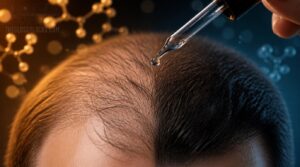
Topical minoxidil is your most established FDA-approved option. Apply it twice daily to a dry, healthy scalp. Expect an initial shedding period as your hair growth cycle resets. Results take time.
| Phase | What Happens |
|---|---|
| Weeks 1–4 | Shedding increases temporarily |
| Weeks 8–16 | Growth slowly begins |
| Weeks 16–48 | Density improves noticeably |
| Ongoing use | Maintenance routine required |
| Stop using | Hair loss quickly returns |
Finasteride for Reducing DHT

Minoxidil works outside. Finasteride targets DHT from within.
One 1 mg daily tablet inhibits 5-alpha-reductase, the enzyme converting testosterone into dihydrotestosterone (DHT) that miniaturizes follicles in androgenetic alopecia. Scalp concentration drops measurably, slowing genetic predisposition response.
- Reduces scalp DHT levels up to 70%
- Targets the root hormonal pathway
- Slows follicle miniaturization over time
- Stops working if you stop taking it
Hair Transplant Surgery
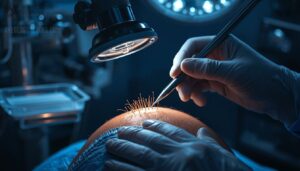
Pills slow the loss. Surgery permanently relocates it.
Hair transplant surgery moves follicular units from a donor area, usually the back of the scalp, to zones thinned by male pattern baldness. DHT-resistant by nature, they keep growing after relocation.
| Aspect | FUE | FUT |
|---|---|---|
| Graft harvesting | Individual follicles extracted one by one | Strip removed, then divided into grafts |
| Scarring | Minimal dot scars | Linear scar at donor site |
| Recovery | 7-10 days | Up to 2 weeks |
Recipient site design and postoperative care protocols drive long-term survival rates past 90% in well-performed cases.
Laser Therapy and PRP

Surgery isn’t your only option for stimulating follicle activity. Low-level laser therapy uses red and near-infrared wavelengths, around 904 nm, to trigger cellular repair without cutting anything. Think of it as dosing your scalp with light.
PRP, or platelet-rich plasma, concentrates your own platelets five to ten times above normal levels, injecting growth factors directly where thinning occurs. Results take roughly six months.
Combining Treatments Safely

Light and platelets can only do so much. FDA-approved options like DHT inhibitors and topical minoxidil work better together. Before combining:
- Require medical consultation first
- Monitor side effects monthly
- Book virtual check-ins with your dermatologist
- Avoid finasteride with pregnancy risk
- Commit to long-term use
Dosage adjustment should always come from your doctor.
Top 7 Male Baldness Products
Not every product on the market is worth your money or your time. The seven options below are worth knowing — each one combats hair loss from a different angle, so you can find what fits your situation. Here’s what’s on the list.
1. Rogaine 5 Minoxidil Hair Regrowth Foam
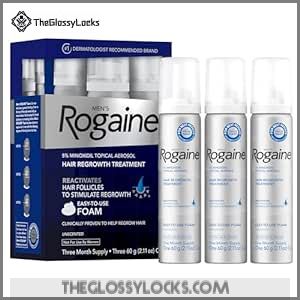
If you’re catching more hair in your drain than on your head, Rogaine’s 5% minoxidil foam is where most men start. Each three-month supply packs three 2.11-ounce canisters, and the unscented, glycerin-based formula absorbs quickly without leaving residue.
Apply half a capful twice daily to a dry scalp, focusing on the vertex and crown areas. Don’t expect overnight results. Visible thickening usually takes four months or more, and you’ll need to keep using it to hold onto those gains.
| Best For | Men experiencing hereditary hair thinning on the vertex or crown who want a clinically proven, easy-to-use treatment they can fold into their daily routine. |
|---|---|
| Product Type | Minoxidil Foam |
| Key Ingredient | 5% Minoxidil |
| Usage Frequency | Twice daily |
| Primary Benefit | Hair Regrowth |
| Results Timeline | 4+ months |
| Key Limitation | Lifelong use required |
| Additional Features |
|
- Clinically proven 5% minoxidil formula that stimulates follicles and promotes visible hair regrowth over time
- Unscented, quick-absorbing foam leaves no residue and works alongside your existing hair care products
- Three-month supply means fewer reorders and consistent treatment without interruption
- Requires lifelong twice-daily use — stop applying and any regrowth you’ve gained will likely reverse
- Won’t help with frontal hairline recession or complete baldness, only vertex and crown thinning
- Initial shedding in the first month can be alarming, and some users report scalp irritation or unwanted facial hair growth
2. Patrick’s RD1 Thinning Hair Treatment Spray
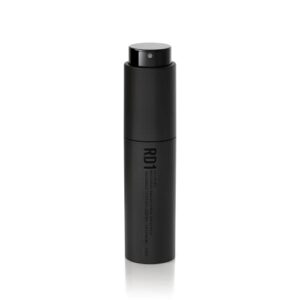
Patrick’s RD1 makes bold promises about blocking DHT, but the formula tells a different story. Its Redensyl and Capixyl complex can support the appearance of thicker, fuller hair, and caffeine plus rosemary oil provide genuine scalp stimulation.
What it won’t do is meaningfully reduce DHT the way finasteride does. At just 20ml per bottle, you’re looking at less than a month of daily use. Think of it as a scalp-conditioning spray with real cosmetic benefits, not a proven clinical solution.
| Best For | Men who want to add cosmetic volume and scalp refreshment to thinning hair without committing to a clinical treatment. |
|---|---|
| Product Type | Volumizing Serum |
| Key Ingredient | Redensyl & Capixyl |
| Usage Frequency | Daily |
| Primary Benefit | Volume & Texture |
| Results Timeline | Immediate |
| Key Limitation | No DHT blocking |
| Additional Features |
|
- Redensyl and Capixyl work together to make hair look visibly thicker and fuller
- Lightweight, fast-drying formula won’t leave hair feeling heavy or greasy
- Works well as a standalone treatment or as a base layer before styling
- Won’t block DHT or trigger actual hair regrowth the way prescription options can
- At 20ml, a single bottle barely covers a month of daily use
- The price is hard to justify if you’re looking for measurable, clinical results
3. Act+ Acre Stem Cell Scalp Serum
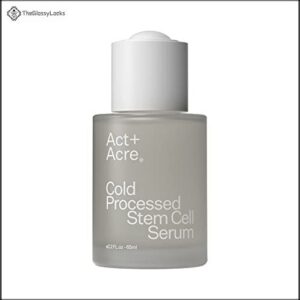
The Act+Acre serum takes a different angle, leaning on apple stem cells and sodium hyaluronate to hydrate and rebalance your scalp rather than block DHT. Clinically, 56% of users saw reduced shedding after 12 weeks of daily use.
Apply a few pipettes directly to your scalp, massage it in, and leave it on overnight. No rinsing required. Cold-processed below 40°C to protect its actives, it absorbs quickly without grease. Good for sensitive scalps, less ideal if you need proven regrowth.
| Best For | People with sensitive or dry scalps who want to reduce shedding and improve scalp health without harsh chemicals or a complicated routine. |
|---|---|
| Product Type | Leave-in Serum |
| Key Ingredient | Apple Stem Cells |
| Usage Frequency | Daily |
| Primary Benefit | Reduced Shedding |
| Results Timeline | 8–12 weeks |
| Key Limitation | Results vary widely |
| Additional Features |
|
- Hydrates and soothes the scalp with clean, gentle ingredients like apple stem cells, aloe, and sodium hyaluronate
- Leave-in formula absorbs quickly with no grease or residue, making it easy to fit into any routine
- Clinically shown to reduce shedding in 56% of users after 12 weeks of consistent use
- Results take 8–12 weeks to appear and vary widely depending on genetics and other personal factors
- Some users experience scalp dryness, irritation, or flaking with continued use
- Premium price point and a dropper applicator that can clog over time make long-term use less practical for some
4. Revita Hair Density Shampoo for Thinning Hair
Revita isn’t your average anti-thinning shampoo. Its Nanosome Delivery System encapsulates actives like caffeine, biotin, and procyanidin B2, releasing them gradually into your scalp rather than washing straight down the drain. Caffeine stimulates follicle metabolism, while procyanidin B2 helps counter DHT’s effects at the scalp level.
Leave it on for two minutes, five times a week. Sulfate-free and color-safe, it works alongside minoxidil without interference. Some users report thicker-feeling hair within weeks, though density gains vary and the price reflects its formulation.
| Best For | People dealing with hair thinning or hair fall who want a science-backed, color-safe shampoo that pairs well with other treatments like minoxidil. |
|---|---|
| Product Type | Hair Shampoo |
| Key Ingredient | Caffeine & Biotin |
| Usage Frequency | Daily |
| Primary Benefit | Softer Fuller Hair |
| Results Timeline | Ongoing |
| Key Limitation | Mixed user results |
| Additional Features |
|
- Packed with active ingredients (caffeine, biotin, amino acids, ginseng, and turmeric) that work together to support scalp health and hair feel
- Sulfate and silicone free, making it safe for color-treated hair and gentle enough for daily use
- Compatible with minoxidil and other hair treatments, so it fits easily into an existing routine
- Results vary widely — some users see no noticeable improvement in thickness or growth
- The price is on the higher end, which may be hard to justify if you’re not seeing significant results
- The dispenser design makes it tricky to get the last of the product out as the bottle empties
5. iRestore Essential Laser Hair Growth System
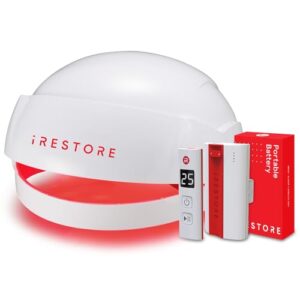
The iRestore Essential takes a different approach entirely. Instead of applying something to your scalp, you wear an FDA-cleared laser helmet for 25 minutes every other day, letting red light energy stimulate follicles at the cellular level.
Clinical data report an average 43.2% increase in hair count among active users. Results vary, and some men see little change after a year or more. It’s cordless, hands-free, and pairs well with minoxidil if your dermatologist recommends combining approaches.
| Best For | People with thinning hair or early-stage hair loss who want a hands-free, drug-free treatment option and are willing to commit to a consistent, long-term routine. |
|---|---|
| Product Type | Laser Helmet |
| Key Ingredient | Low-Level Laser |
| Usage Frequency | Every other day |
| Primary Benefit | Hair Regrowth |
| Results Timeline | 3–6 months |
| Key Limitation | No growth guarantee |
| Additional Features |
|
- FDA-cleared with clinical data showing an average 43.2% increase in hair count in active users
- Cordless and hands-free, so you can move around during your 25-minute sessions
- Works well alongside other treatments like minoxidil for a more comprehensive approach
- Results can take 3–6 months to appear, and some users see no improvement even after extended use
- The helmet design may not fit all head shapes comfortably, with mixed reviews on stability
- Requires consistent every-other-day commitment with no guarantee of results
6. Nutrafol Scalp Exfoliating Hair Mask
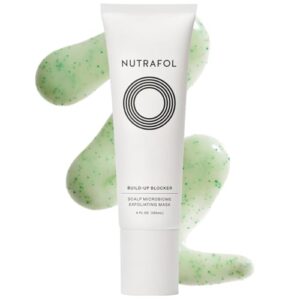
Most hair products treat the strand. This one treats the scalp first, which is where real hair health begins.
The Nutrafol Scalp Exfoliating Hair Mask uses AHA fruit acids and jojoba esters to dissolve oil, product residue, and flake buildup without stripping your microbiome. Australian wild berries and chia seeds round out a formula that’s earned MyMicrobiome certification. Apply it in sections, leave it for 3-5 minutes, rinse well. Some users find rinsing tricky, so thorough washing matters here.
| Best For | Anyone who relies on dry shampoo or styling products and wants a deep scalp cleanse that won’t throw off their scalp’s natural balance. |
|---|---|
| Product Type | Scalp Exfoliant |
| Key Ingredient | AHA & Jojoba Esters |
| Usage Frequency | As needed |
| Primary Benefit | Deep Scalp Cleanse |
| Results Timeline | First use |
| Key Limitation | Hard to rinse out |
| Additional Features |
|
- Combines chemical (AHA fruit acids) and physical (jojoba esters) exfoliation for a thorough, two-pronged cleanse
- Certified microbiome-friendly, so it cleans without disrupting the scalp’s natural flora
- Tackles dryness, flaking, and itchiness alongside product buildup — multiple benefits in one step
- Can be difficult to rinse out fully, with some users noticing residue left on the scalp
- Micro beads may linger even after washing, which could be frustrating for thorough rinsers
- Pricey for a 4 fl oz bottle, and not everyone feels the results justify the cost
7. hims Hair Regrowth Treatment Minoxidil 5% Foam

If the scalp mask gets the ground ready, hims 5% minoxidil foam does the actual growing. FDA-approved and clinically proven, it’s the real workhorse of any serious hair regrowth routine.
Apply half a capful to thinning areas twice daily. The foam absorbs fast without greasy residue, and skipping propylene glycol means less scalp irritation than liquid versions. Expect around 3 to 6 months before you see real change, and don’t stop once you do. Hair loss resumes without it.
| Best For | Anyone dealing with thinning hair or early-stage hair loss who wants a clinically backed, easy-to-apply daily treatment without the mess of liquid minoxidil. |
|---|---|
| Product Type | Minoxidil Foam |
| Key Ingredient | 5% Minoxidil |
| Usage Frequency | Once daily |
| Primary Benefit | Hair Regrowth |
| Results Timeline | 3–6 months |
| Key Limitation | Results vary |
| Additional Features |
|
- Contains 5% minoxidil in a fast-absorbing, non-greasy foam that’s gentler on the scalp than liquid alternatives
- Clinically tested to support fuller-looking hair within 3–6 months of consistent use
- Once-daily application makes it simple to build into a regular grooming routine
- Results aren’t guaranteed — some users see no noticeable regrowth even after extended use
- Can cause scalp irritation, including burning or redness, especially for those with sensitive skin
- The cap design has been flagged by users as frustrating to open and close, which can make daily use more annoying than it should be
Choosing Treatments and Future Baldness Cures

Picking the right treatment isn’t just about what works — it’s about what works for you, given your budget, lifestyle, and tolerance for side effects. The landscape is also shifting fast, with promising new therapies closing in on something closer to a real cure. Here’s what you need to know to make a smart choice and stay ahead of what’s coming.
Comparing Results and Side Effects
No two treatments deliver exactly the same results. Oral finasteride 1mg improves hair in about 65% of men after a full year, while topical minoxidil 5% reaches roughly 40% over 48 weeks. Finasteride’s side effect profile is quite minimal, affecting under 2% of users. Stop either oral medication or topical solution, though, and you’ll lose most gains within 3-12 months.
Cost, Convenience, and Commitment
Effectiveness is only half the equation. Minoxidil’s twice-daily application costs $25-40 monthly and fits most schedules, but you’re committing to that routine permanently.
Prescription finasteride runs $15-30 per month with just one daily pill. Transplants cost $4,000-$15,000 upfront yet remain the most hands-off long-term choice. FDA-approved options exist across every price point, so your lifestyle and budget shape your plan.
Selective Topical DHT Blockers
If you want more control over side effects, topical DHT blockers offer a smarter route. Follicle-targeted delivery keeps the drug local, reducing whole-body exposure.
Three promising topical options:
- Topical finasteride: proven localized DHT reduction with lower systemic absorption
- Clascoterone (Breezula): blocks DHT at the androgen receptor directly
- Pyrilutamide: another receptor blocker gaining traction in trials
Stem Cell and Exosome Research
While drugs dominate most plans, researchers are eyeing stem cell-derived exosomes, tiny vesicles roughly 30 to 150 nm, carrying proteins, lipids, and nucleic acids as biological messengers.
These exosomes may trigger growth factor activation and stimulate the Wnt/beta-catenin pathway in hair follicle regeneration studies, nudging your follicles back into a growth phase. Still experimental, but cell-free therapy is gaining traction.
Avoiding Unregulated Hair Loss Supplements
Don’t buy into every "hair supplement" claim you see. The FDA doesn’t require premarket safety approval for nutritional supplements, creating regulatory oversight gaps that expose you to real risks.
Biotin interferes with lab tests. High doses of Vitamin A trigger shedding. Saw palmetto often appears with mystery dosing.
Look for third-party certification from USP or NSF before spending a cent.
Frequently Asked Questions (FAQs)
Will there ever be a cure for male baldness?
Not yet, but the science is advancing faster than ever. Stem cell therapies, gene editing, and JAK inhibitor trials are moving research well beyond simple management toward something that could genuinely reverse hair loss.
What did Matthew McConaughey do to fix his thinning hair?
Funny coincidence: McConaughey shaved his head before regrowing it. He then applied Regenix, a plant-based topical ointment, to his scalp once daily for 10 minutes, staying committed to that non-surgical routine for nearly 20 years.
How did Elon Musk treat his baldness?
Nobody knows for certain. Musk has never confirmed any procedure, but photos suggest a hair transplant around the early 2000s, likely paired with minoxidil or finasteride for long-term maintenance.
Is it possible for bald men to regrow hair?
The answer depends on one thing: whether your hair follicles are still alive. If they are, minoxidil and finasteride can trigger dormant follicle revival and restore visible density, especially when started early.
How much does hair transplant surgery cost?
In the U.S., hair transplant surgery usually costs $6,000 to $12,000, though some cases reach $15, Your final price depends on graft count, technique, and surgeon experience.
Conclusion
Somewhere right now, a TV infomercial is promising a baldness cure for men in just 30 days. Don’t buy it.
The real path is less dramatic but far more effective: finasteride targets DHT, minoxidil keeps follicles alive, and consistency does the heavy lifting.
Hair loss isn’t a problem you solve once. It’s one you manage well. Start early, stay committed, and the follicles you protect today are the ones that keep working for you tomorrow.