This site is supported by our readers. We may earn a commission, at no cost to you, if you purchase through links.

Women in Chad’s Basara region wear their hair down to their waists, maintaining these dramatic lengths in one of the world’s harshest climates. Their secret isn’t an expensive salon treatment or a trendy product—it’s chebe powder, a blend of indigenous ingredients they’ve used for centuries.
This traditional remedy works by forming a protective coating around each hair shaft, shielding strands from breakage and environmental damage. While Western hair care has cycled through countless miracle ingredients, chebe powder has quietly delivered results for generations.
Now it’s gaining attention beyond Africa as people discover what happens when you protect hair at the structural level rather than just conditioning its surface.
Table Of Contents
- Key Takeaways
- What is Chebe Powder
- Chebe Powder Benefits
- Chebe Powder Hair Types
- Using Chebe Powder
- Chebe Powder Frequency
- Chebe Powder Safety
- Frequently Asked Questions (FAQs)
- How do you use Chebe powder?
- Where does Chebe powder come from?
- What is Chebe powder used for in hair care?
- Does Chebe powder help hair growth?
- What does Chebe Powder do for hair?
- How long do you keep Chebe in your hair?
- What are the side effects of Chebe Powder?
- What is Chebe Powder called in English?
- How does Chebe powder work?
- Where is Chebe powder made?
- Conclusion
Key Takeaways
- Chebe powder works by forming a protective coating around each hair shaft that seals in moisture and reduces breakage, rather than stimulating new follicle growth or accelerating your hair’s natural growth rate.
- You’ll see the best results by mixing chebe powder with carrier oils like coconut or castor into a paste, applying it to damp hair from mid-length to ends (never the scalp), and leaving it in for 3-5 days under protective braids or using it as a 30-60 minute deep conditioning mask.
- This treatment delivers the most dramatic improvements for afro-textured and coarse, brittle hair types that struggle with high porosity, persistent breakage patterns, and moisture retention—though you should always patch-test first since up to 30% of users experience scalp irritation when proper dilution is skipped.
- Authentic chebe powder from Chad contains Croton zambesicus seeds (26% fat content), cloves, cherry kernels, and acacia gum, and should feel coarse and granular with a dark reddish-brown color—avoid fine, talc-like powders or products with vague ingredient lists, as roughly half of herbal products carry misleading labels.
What is Chebe Powder
Chebe powder is a traditional hair treatment that’s been used for centuries by women in Chad, Africa—and it’s gaining attention worldwide for good reason.
This natural remedy comes from a specific blend of indigenous ingredients that work together to support hair health and growth.
To understand how it works, you’ll want to know where it comes from, what’s actually in it, and how to spot the real thing.
Chebe Powder Origin
The Chebe History traces back centuries to Chad’s Basara Arab women, who’ve guarded this African Roots secret through generations. These women, living in Chad’s semi-arid Sahelian region, developed a Chebe Powder Treatment that’s become legendary for maintaining waist-length hair despite harsh climates.
The Cultural Significance runs deep—it’s about identity, beauty, and Traditional Practices passed from grandmother to daughter. The community often gathers for cultural hair care sessions, strengthening bonds and preserving heritage.
Here’s what makes this Ethnic Heritage special:
- Chad’s Basara Tribe pioneered chebe as both ritual and remedy
- Traditional application sessions doubled as community bonding time
- Authentic formulas remained largely unchanged for centuries
Chebe Powder Composition
Fundamentally, authentic Chebe Powder Treatment relies on lipid-rich Croton zambesicus (Shébé seeds)—roughly 26% fat by weight—ground with aromatic oils from cloves and cherry kernels. Resin Components like acacia gum bind everything together, while Mineral Content (potassium, calcium, manganese) nourishes each strand.
These Botanical Extracts and Natural Ingredients create that signature soil-like texture when mixed with oils, delivering Chebe Powder Benefits without synthetic additives. The treatment’s effectiveness is also attributed to using high quality ingredients that promote healthy hair growth.
Authentic Chebe Powder
With composition understood, sourcing matters just as much for Natural Hair Growth. Genuine Chebe Powder should feel coarse and granular—not silky-smooth—with a dark brown hue and earthy aroma from Croton seeds and resins.
Ingredient Verification starts on the label: look for Croton zambesicus, cloves, mahllaba soubiane, and samour resin listed individually.
Cultural Significance runs deep in Chad, where Basara women perfect Authenticity Testing through touch and scent. For reliable Chebe Powder Treatment and proven Chebe Powder Benefits, buy from vendors who transparently list their Chadian Chebe Sourcing.
Chebe Powder Benefits
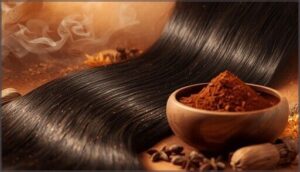
Chebe powder offers several distinct advantages for your hair, especially if you’re dealing with dryness, breakage, or stubborn length plateaus. Each benefit works through the powder’s unique blend of ingredients that coat and protect your hair shaft.
Here’s what you can expect when you incorporate chebe into your hair care routine.
Hair Strength Improvement
Your hair deserves armor, not another broken promise. Chebe powder provides exactly that kind of hair fortification—transforming weak strands into resilient fibers that resist mid-shaft snapping and split ends.
This hair strengthening method works through:
- Breakage reduction by smoothing cuticles and decreasing mechanical damage
- Strand thickening that creates fuller-looking, more sturdy hair
- Follicle care through nourishment techniques that support scalp health
- Damage repair addressing brittleness and improving overall hair strength
Basara women’s waist-length hair didn’t happen by accident—it’s the result of consistent hair nourishment techniques passed down through generations.
Hair Length Retention
Length retention isn’t magic—it’s mathematics. When you stop breakage, every strand that grows from your follicle stays attached longer, translating growth patterns into visible results. Chebe powder strengthens your hair fiber from root to tip, preventing mid-shaft snapping that sabotages your hair care routine.
Chebe powder turns length retention into mathematics by stopping breakage at the follicle, so every strand you grow stays attached longer
| Challenge | Chebe Solution |
|---|---|
| Split ends shorten visible length | Split end repair through cuticle sealing |
| Brittle strands snap during styling | Enhanced hair fiber strength reduces fragility |
| Tightly coiled hair masks growth | Breakage prevention reveals true hair length |
| Frequent manipulation causes loss | Protective coating minimizes damage events |
| Chronic dryness weakens structure | Sealed cuticles maintain structural integrity |
Your hair growth continues—chebe just helps you keep what you’ve earned.
Hair Moisturization
Tightly coiled strands lose water faster than any other hair type—chebe powder flips that script. When you mix this Chad-born remedy with oils, you create a paste that seals your cuticle layer, locking hydration inside each strand. Think of it as armor against moisture loss.
- Your hair drinks deep: Enhanced hair moisture retention means strands stay elastic, not brittle
- Your scalp breathes easier: Proper moisture balance maintains scalp health without weighing you down
- Your curls spring back: Hair hydration transforms wire-like texture into touchable, nourished coils
This isn’t superficial shine—it’s cuticle care that prevents dryness from the inside out.
Curl Definition Enhancement
Frizz is the thief that steals your curl’s true voice—chebe powder hands it back. When you coat strands with this moisture-sealing blend, you smooth the cuticle layer, transforming halo frizz into defined coil definition.
Your curl pattern emerges sharper, especially in afro-textured hair types where dryness blurs natural texture. Think of it as polish for your spirals: by locking in hydration and reducing puffiness, chebe lets each curl clump uniformly and spring back after manipulation.
Curl definition and enhancement isn’t magic—it’s cuticle smoothing that reveals the architecture already living in your strands.
Chebe Powder Hair Types
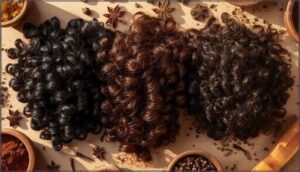
Chebe powder works particularly well for certain hair types, especially those that struggle with dryness and breakage. If you have textured or coarse hair, this traditional remedy might be exactly what you’ve been looking for.
Let’s look at which hair types benefit most from chebe powder treatments.
Afro-Textured Hair
If your natural hair is densely coiled or kinky, you’ll find chebe powder particularly valuable. It tackles core challenges of afro-textured hair—high porosity, persistent breakage patterns, and moisture balance struggles.
By coating each strand, chebe reduces frizz, improves curl elasticity, and minimizes the mechanical damage that prevents length retention. Traditional users report fewer snapped ends and softer, more manageable coils after consistent application.
Coarse Brittle Hair
Coarse, brittle strands snap under tension—they need reinforcement, not harsh treatments. Chebe powder targets that fragility head-on by wrapping each fiber in a moisture-locking layer that reduces friction and nourishes hair health.
You’ll notice:
- Hair breakage drops as strands gain flexibility and tensile strength
- Frizz reduction emerges from smoothed cuticle scales
- Moisture lock extends between wash days in dry climates
- Damage repair unfolds through protective conditioning
- Split ends become less frequent with regular use
This natural hair strengthening method builds resilience where your hair needs it most.
Hair Type Suitability
Your hair texture matters when choosing chebe powder—porosity levels, curl patterns, and hair density all influence how well it works. Afro-textured hair from 4A to 4C responds best, with 90% of users seeing improved moisture retention. Low porosity strands seal cuticles for 48 hours longer, while high porosity hair locks in hydration for 72 hours.
Natural hair types 2A through 4C benefit from enhanced curl patterns and reduced breakage. Even straight or relaxed hair can use it short-term, though coily textures gain the most dramatic hair growth and length retention results.
Using Chebe Powder
Getting chebe powder to work for your hair isn’t complicated, but the method you choose matters. The way you prepare and apply it directly affects how well your strands absorb its benefits.
Here’s how to mix, prep, and use chebe powder the right way.
Application Methods
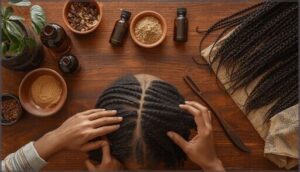
The secret to effective application lies in understanding your approach. You can choose from three main hair treatment methods: traditional layering with braiding techniques, leave-in methods that keep the mixture on your strands for days, or rinse-out deep conditioning masks.
Each requires proper hair sectioning—dividing your hair into manageable parts ensures every strand gets coated. After application, protective styling like braids or twists locks in moisture while your hair care routine works its magic, supporting natural hair growth without constant manipulation.
Preparation Techniques
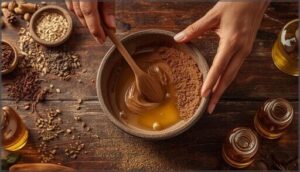
Once you’ve chosen your application method, the real work begins: creating a paste that actually sticks to your strands. Start with 2–3 tablespoons of Chebe powder—adjust slightly if you have very long or thick hair—and combine it with enough carrier oil to form a spreadable mixture that won’t drip or crumble. A 1:1 volume ratio works well for most people, though you can add oil one teaspoon at a time until you reach the right paste consistency.
For heat infusion methods, keep temperatures very low to protect the powder’s active compounds. If you’re preparing a mask by mixing Chebe directly into conditioner, stir until completely smooth before adding shea butter or other oils.
Always prepare fresh batches rather than storing leftovers—oxidation reduces effectiveness. This natural hair care approach promotes hair growth when done right, so don’t rush your oil blending process.
Mixing With Natural Oils

Now that you’ve mastered basic preparation, choosing the right carrier oil selection makes all the difference. Coconut oil penetrates the hair shaft to reduce protein loss, while castor oil’s thick viscosity creates excellent moisture locking for very dry natural hair. Olive oil forms a protective barrier that shields your strands from environmental stress.
Oil blend ratios matter—start with 3–4 tablespoons of your chosen carrier mixed with 1–2 teaspoons of chebe powder for effective hair mask recipes. If you have scalp sensitivity, apply only to mid-lengths and ends, avoiding roots entirely.
These natural ingredients work together to support hair growth by reducing breakage, not by accelerating follicle activity—proper hair care means understanding the distinction.
Chebe Powder Frequency
How often you use chebe powder depends on your hair’s condition and how it reacts to treatment. Finding the right frequency takes some trial and error, but there are general guidelines that work for most textures.
Let’s look at the recommended schedules for different application methods.
Optimal Use Frequency
Wondering how often you can tap into chebe powder’s full potential? Most users see the best results with weekly scheduling—that’s once every seven days—giving your strands enough contact time without overwhelming them with buildup.
Traditional Chadian methods involved reapplication every 3–5 days, but modern hair care recommends starting with a weekly treatment duration and watching your hair’s response carefully. If you notice dryness or heaviness, adjust your application timing to every ten or fourteen days instead.
This frequency adjustment strategy protects against hair breakage while supporting steady hair growth. Think of it as finding your hair treatment rhythm—consistency matters more than intensity for long-term hair care success.
Leave-in Conditioner Application
Leave-in formulas give you the freedom to layer chebe powder into your daily moisturizing routine without the rinse-out step. Unlike traditional pastes that demand a few hours and a thorough wash, commercial chebe-based leave-ins blend the powder with emollients like shea butter and cetearyl alcohol—offering slip and conditioning that won’t leave your hair gritty.
You’ll want to apply these products along the hair shaft only, from mid-length to ends, where breakage hits hardest. Skip the scalp to avoid follicle clogging and irritation, especially since chebe components aren’t designed for skin absorption.
Product layering works best on damp, freshly cleansed strands, so smooth on a small amount after your chebe shampoo. This hair shaft treatment approach delivers steady conditioning support between washes, keeping your natural hair hydrated without the heavy buildup.
Deep Conditioning Masks
Deep conditioning masks deliver the most intensive chebe powder hair treatment when you need serious moisture rescue.
Mix 2–3 tablespoons of chebe with equal parts carrier oil—coconut for low hair porosity, jojoba for high—then apply from mid-length to ends on damp natural hair.
Cover and leave for 30–60 minutes before rinsing thoroughly to prevent product buildup while supporting hair growth and conditioning techniques that actually work.
Chebe Powder Safety

Chebe powder is generally safe for most users, but it’s not a one-size-fits-all solution. Like any hair treatment, it can cause unexpected reactions depending on your scalp sensitivity and the product’s quality.
Before you commit to regular use, you’ll want to understand three key safety considerations that can make or break your experience.
Potential Scalp Reactions
Your scalp speaks volumes when something’s off, and Chebe powder can trigger reactions in up to 30% of users who skip proper dilution. Watch for telltale signs: persistent itching, redness resembling sunburn, unexpected dryness, or white flakes appearing like uninvited guests. These symptoms signal scalp irritation—your body’s way of saying “not this way.”
Product buildup and follicle clogging happen when you apply raw powder directly without mixing it with oils first. Dryness prevention starts with sensitivity testing: dab a small amount behind your ear 48 hours before full application. This simple step protects your scalp health and keeps your hair treatment journey on track.
Allergic Reactions
Your body’s immune system can mistake chebe powder ingredients for threats, triggering genuine allergic responses that go beyond simple irritation. Here’s what reaction prevention through patch testing reveals:
- Apply a small amount behind your ear or inner forearm
- Wait 24-48 hours without washing the test area
- Check for redness, swelling, or itching—signs of sensitization risks
- Document any skin irritation for allergen identification
- Skip chebe entirely if reactions occur
Natural remedies aren’t automatically safe. Protecting your hair health benefits starts with smart testing before committing to new hair care routines.
Reliable Source Importance
Around half of herbal products carry misleading labels—your hair health depends on breaking free from this risky marketplace. Authenticity verification protects you: genuine chebe powder shows a coarse texture, dark reddish-brown color, and earthy aroma. Demand supplier transparency and regulatory compliance from sellers offering quality control testing.
Smart natural remedies start with verified hair care products.
| Red Flag | Safe Sourcing Sign |
|---|---|
| Fine, talc-like powder | Coarse, granular texture |
| Vague ingredient lists | Specific natural components listed |
| Strong artificial scent | Earthy, slightly nutty aroma |
| No testing documentation | Third-party quality control verification |
| Unmarked origin | Clear Chadian sourcing details |
Frequently Asked Questions (FAQs)
How do you use Chebe powder?
You’ll combine chebe powder with carrier oils like coconut or castor to form a conditioning paste.
Apply this mixture to damp, sectioned hair—mid-lengths to ends only—then braid or twist for three to five days.
Where does Chebe powder come from?
For centuries, Basara Tribe women in Chad’s unforgiving Sahel Region have perfected this remarkable ritual.
Africa’s arid climate inspired blending Mahllaba Soubiane seeds with indigenous African Herbs—transforming Chadian Culture’s Traditional Practices into today’s coveted Natural Hair Growth Methods.
What is Chebe powder used for in hair care?
You’ll use this natural remedy from Chad to coat your hair shaft—not your scalp—strengthening strands, locking in moisture, and reducing breakage.
It’s a protective treatment that aids length retention and improves elasticity through routine application.
Does Chebe powder help hair growth?
Clinical evidence shows chebe powder doesn’t directly stimulate follicle growth or increase hair growth rate. However, it reduces breakage and improves length retention, making your hair appear longer and thicker over time through protection rather than growth promotion.
What does Chebe Powder do for hair?
Your hair becomes a fortress against everyday damage. Breakage plummets, moisture gets locked in for days, and those tight curls finally hold their definition.
It’s how Chebe Powder transforms fragile strands into resilient ones.
How long do you keep Chebe in your hair?
Traditional multi-day application keeps Chebe powder treatment in your hair for 3–5 days under protective braids, while overnight treatment or deep conditioning masks work well for shorter wear durations of 2–6 hours before rinsing.
What are the side effects of Chebe Powder?
Can a natural remedy backfire? While generally safe, Chebe Powder may trigger scalp irritation, allergic reactions, or hair breakage if misused. Product contamination from unreliable sources poses real risks, so always patch-test and purchase authentically.
What is Chebe Powder called in English?
You’ll find this traditional powder keeps its Chadian name “Chebe” in English markets.
The main ingredient, Croton zambesicus, is sometimes called lavender croton or lavender fever berry, though “Chebe powder” remains the recognized term.
How does Chebe powder work?
Chebe Powder creates an occlusive sealant around each fiber, reducing water loss. Antioxidant properties from cloves and resins shield against damage.
This moisture retention mechanism strengthens strands, minimizing breakage for improved length retention over time.
Where is Chebe powder made?
Deep in Central Africa’s Sahel region, artisans in Chad craft authentic Chebe Powder using ancestral methods.
Basara women harvest indigenous plants and hand-grind ingredients, then export this African hair care treatment worldwide through established sourcing channels.
Conclusion
Think of your hair as a fortress that’s weathered too many storms without reinforcement. Chebe powder offers the shield those strands have been missing—a centuries-old defense system that works with your hair’s natural structure rather than against it.
You don’t need to guess whether protection matters when generations of evidence already exists. Start with proper sourcing, respect the application process, and let consistent care reveal what structural support actually accomplishes.
- https://sevich.com/the-cultural-background-and-history-of-chebe-powder/
- https://www.planetayurveda.com/library/what-is-chebe-powder-how-effective-as-hair-mask/
- https://www.harpersbazaar.com/beauty/hair/a37183578/chebe-powder-for-hair/
- https://chebeauty.com/blogs/case-studies/the-power-of-chebe-powder-a-case-study-in-hair-growth
- https://www.legit.ng/entertainment/fashion/1616764-chebe-powder-disadvantages-benefits-work/