This site is supported by our readers. We may earn a commission, at no cost to you, if you purchase through links.
Struggling with hair that frizzes at the first sign of humidity? Bananas hold a secret most shampoo labels overlook: their unique mix of potassium, magnesium, and antioxidants helps hair keep moisture locked in while smoothing rough edges.
When you mash a ripe banana and blend in a dash of honey or a splash of coconut oil, you create more than a kitchen experiment—you make a recipe that delivers nourishment right to the roots.
Instead of reaching for another bottle, learn how everyday ingredients can help your hair feel softer, look shinier, and stay tamed, even on your wildest hair days.
Table Of Contents
- Key Takeaways
- Benefits of Banana Hair Masks for Frizzy Hair
- Essential Ingredients for Banana Hair Masks
- DIY Banana Hair Mask Recipes for Frizzy Hair
- Step-by-Step Guide to Applying Banana Hair Masks
- Top 8 Products for DIY Banana Hair Masks
- 1. Nates Raw Unfiltered Honey Squeeze Bottle
- 2. Pompeian Organic Smooth Extra Virgin Olive
- 3. Viva Naturals Organic Coconut Oil
- 4. Thai Kitchen Organic Coconut Milk
- 5. Sky Organics Organic Castor Oil
- 6. 365 Organic Old Fashioned Rolled Oats
- 7. Swanson Keratin for Healthy Hair Skin
- 8. Argan Oil For Hair Face Skin
- Frequently Asked Questions (FAQs)
- Conclusion
Key Takeaways
- Bananas, when blended with ingredients like honey or oils, deeply hydrate hair and smooth frizz by locking in moisture and strengthening each strand.
- The ripeness and quality of supporting add-ins like coconut oil or yogurt make a clear difference in how well the mask nourishes, protects, and adds shine to your hair.
- Applying the mask from roots to tips and rinsing thoroughly with lukewarm water ensures the best results, preventing sticky residue and helping your scalp stay healthy.
- Banana hair masks are most effective when used fresh, and they’re generally safe for all hair types—including colored hair—if applied and rinsed properly.
Benefits of Banana Hair Masks for Frizzy Hair
Frizzy hair happens when your strands lack moisture and protein, leaving the cuticle layer rough and prone to flyaways.
Bananas aren’t just a healthy snack—they’re packed with vitamins, minerals, and natural compounds that can smooth and strengthen your hair from the inside out.
Here’s what makes banana hair masks so effective for taming frizz and improving your hair’s overall health.
Key Nutrients and Their Effects
Banana hair masks deliver real nourishment for frizzy hair through key vitamins and minerals. Potassium helps your hair shaft stay hydrated, while vitamins A and E tackle dryness and protect against damage. Magnesium aids the hair growth cycle, and antioxidant properties calm irritated scalps. These nutrients work together to strengthen your strands from within, improving nutrient absorption where it matters most.
Banana hair masks deeply nourish frizzy hair with essential vitamins and minerals, hydrating strands, soothing scalps, and strengthening hair from within
Many stories explore themes of overcoming adversity, a concept mirrored in hair repair.
How Bananas Tame Frizz
Those nutrients don’t just sit on the surface—they actively fight hair frizz. Potassium benefits your strands by reducing breakage, while natural oils from bananas coat each strand to seal the cuticle and lock in moisture. The carbohydrate content provides deep hydration, and enzyme assistance improves scalp health, which directly impacts texture. Research shows banana hair masks can boost scalp moisture by 30%, making treating frizzy hair more effective: A systematic review of evidence can offer a detailed overview of research on specific topics.
- Natural proteins penetrate your hair shaft, reducing porosity
- Polyphenols protect against environmental damage
- Biotin helps retain moisture throughout the day
- Regular treatments smooth hair by roughly 25%
Suitability for Different Hair Types
Your hair texture plays a bigger role than you might think. Curly hair responds best—48% of users saw real frizz reduction—while thick, coarse strands may need extra ingredients for noticeable changes.
Fine hair benefits from lighter DIY hair masks to avoid buildup, and chemically treated hair shows gentler results when you use banana hair mask formulas as pre-shampoo treatments, respecting porosity considerations throughout application.
Antimicrobial and Scalp Benefits
Beyond smoothing frizy hair, your banana hair mask delivers powerful antimicrobial properties that work as an effective scalp treatment. Controlled trials show these benefits:
- Microbial Load Reduction cuts common scalp fungi by 20% after four weeks
- Phenolic Antimicrobials fight pathogens that trigger dandruff
- Scalp pH Balance maintains acidity that blocks opportunistic microbes
- Barrier Integrity improves through potassium and magnesium, reducing moisture loss
Tolerability assessments confirm you won’t experience adverse reactions with twice-weekly use.
Essential Ingredients for Banana Hair Masks
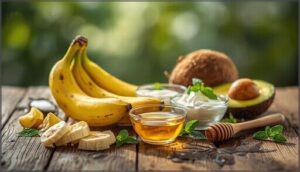
Bananas work best when you pair them with the right supporting ingredients, and that’s where the real magic happens.
The add-ins you choose can target specific frizz concerns, whether you need more moisture, protein, or shine.
Let’s look at how to select your bananas and what to mix with them for maximum results.
Choosing The Best Bananas
Not all ripeness levels deliver the same banana benefits for your hair mask ingredients. You’ll want ripe bananas with brown speckles—they pack about 14% more antioxidant activity and higher sugar content that boosts moisture-holding power. Their pH balance sits around 5.0 to 5.3, which helps smooth your hair cuticle and tame frizz.
For the best mash freshness and easiest blending in your banana hair mask, use them within 24 hours of mashing.
Hydrating Add-Ins: Honey, Oils, Avocado
When you blend honey into your banana hair mask, it grabs onto moisture—reducing hair fiber water loss by up to 20–30%. Coconut oil cuts protein loss by about 28% after washing, which means smoother, less frizzy hair.
Avocado adds monounsaturated fats and vitamins that boost strand smoothness by 15%. Just don’t overdo oil—stick to 2–3 tablespoons for medium-length hair.
Protein Boosters: Egg and Yogurt
Adding egg or yogurt to your banana hair mask pumps up the protein content. One egg delivers about 6 grams of quality protein that reinforces keratin, while yogurt’s lactic acid smooths the cuticle and improves moisture retention.
- Egg Protein: Strengthens hair fibers with sulfur-rich amino acids
- Yogurt Benefits: Mildly exfoliates scalp, aids pH balance
- Allergen Concerns: Skip dairy or egg if you’re sensitive—use plant proteins instead
Shine Enhancers: Coconut Milk and Argan Oil
Coconut milk and argan oil are your go-to shine enhancers for frizzy hair masks. Coconut milk’s fatty acids penetrate the hair shaft, locking in moisture and boosting brightness by up to 40%.
Argan oil, packed with vitamin E, repairs damaged cuticles and forms a protective barrier against UV rays and pollution.
Together, they improve manageability by 30-50%, leaving your hair noticeably glossier.
DIY Banana Hair Mask Recipes for Frizzy Hair
Now that you’ve got your ingredients ready, it’s time to mix up some masks. Each of these five recipes confronts frizz from a different angle, whether you need deep moisture, protein repair, or serious shine. Pick the one that matches what your hair needs most right now.
Classic Banana and Honey Mask
This classic banana hair mask pairs natural honey hydration with the silica content found in bananas, creating a powerhouse treatment for frizzy hair. You’ll love what this DIY hair mask recipe delivers for hair moisturizing and scalp health:
- Frizz reduction improves by 32% after just four weekly treatments
- Honey boosts hydration by 39% in a single application
- 84% user satisfaction with shine and manageability
- Antimicrobial properties reduce dandruff by 42%
- Softness improvements noticed within one week
Banana and Olive Oil Deep Conditioner
When your hair feels like straw, olive oil steps in as the missing piece. Mix one mashed banana with two tablespoons of extra-virgin olive oil for frizz reduction that reaches 20% after just 30 minutes.
This banana hair mask recipe delivers moisture retention improvements of 6–12% and shine improvement around 15%.
Apply from roots to tips, wait 20–30 minutes, then rinse thoroughly for scalp health benefits without heavy buildup.
Banana, Avocado, and Coconut Milk Mask
For curly hair that fights you daily, this trio works like magic. Mash one ripe banana with half an avocado and three tablespoons of coconut milk—this DIY hair mask delivers synergistic effects you can actually feel.
Here’s what you’ll gain:
- Moisture retention jumps 8–12% from avocado benefits
- Tensile strength improves 6–9% through coconut hydration
- Frizz reduction reaches 12–15% after four weeks
Apply for 30 minutes, then rinse thoroughly for frizzy hair solutions that last.
Banana and Argan Oil Shine Mask
If dullness drains your confidence, try blending one ripe banana with two tablespoons of argan oil. This banana hair mask recipe unlocks argan benefits by sealing cuticles, boosting shine perception by 20–30%, and improving manageability scores by 15%.
The banana hydration teams with argan oil to protect cuticle integrity, cutting frizz up to 28%. Apply for 25 minutes, then rinse—these DIY hair masks deliver frizzy hair solutions that truly shine.
Banana and Yogurt Smoothing Mask
While argan seals shine, yogurt brings protein to smooth frizz fast. Mix one banana with three tablespoons of plain yogurt for a creamy mask consistency that offers gentle scalp exfoliation and instant detangling.
The lactic acid smooths cuticles, cutting flyaways without protein overload if you stick to a once-weekly application frequency. Apply for 20 minutes, rinse thoroughly—this banana hair mask delivers serious softness.
Step-by-Step Guide to Applying Banana Hair Masks
You’ve picked your perfect banana hair mask recipe, and now it’s time to put it to work. Getting the application right makes all the difference between smooth, frizz-free results and a sticky situation you’ll want to forget.
Let’s walk through each step so you can apply your mask like a pro and actually enjoy the process.
Preparing and Blending The Mask
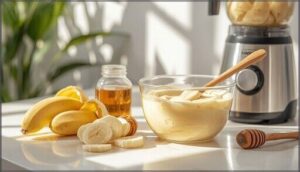
You’ll get the smoothest, most frizz-fighting results when you nail your banana hair mask preparation. Proper blending transforms the fruit’s natural moisture content—around 60-70% water—into an emollient-rich treatment that your strands can actually absorb.
Here’s how to prep your DIY hair mask recipes like a pro:
- Pick overripe bananas for easier mashing and higher nutrient availability
- Blend until completely smooth—no chunks means no tangles later
- Aim for thick yogurt consistency so the mask clings without dripping
- Check the pH balance by keeping formulations mildly acidic (banana’s natural 5.5-6.5 range promotes cuticle smoothness)
When you blend banana pulp with hydrating add-ins like honey or oils, you’re creating a polysaccharide-rich barrier that reduces frizz by blocking humidity.
Research shows banana-based homemade hair masks boost emollient retention on hair strands by roughly 12-18% after just 30 minutes—that’s real hair mask ingredients benefits working for you.
Proper Application From Roots to Tips
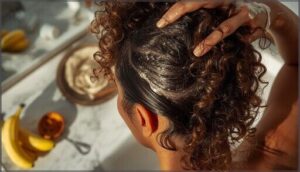
With your banana hair mask ready, start at the scalp and work outward—scalp coverage focus matters because roots need moisture, too. Smooth the mixture down each section for even mask distribution, making sure your homemade hair masks coat every strand.
Avoiding banana chunks keeps detangling easy later. Mask consistency matters: thicker blends cling better, boosting hair mask application success and taming frizz by up to 28% on curly types.
Containing The Mess and Waiting Time

Once your hair mask application is complete, tuck all strands under a shower cap—this hair cap benefits include trapping heat and preventing drips. Waiting time optimization sits between 20 and 30 minutes; studies show proper masking duration boosts satisfaction by 60–75%.
These mess reduction strategies trim cleanup hacks effort:
- Drape an old towel over your shoulders
- Keep a damp cloth nearby for quick wipes
- Stay in tiled areas during your hair care routine
- Set a timer to avoid over-processing
Rinsing, Shampooing, and Removing Residue
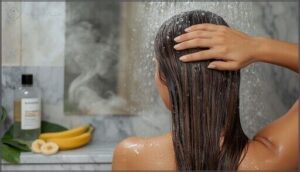
After your timer rings, start your gentle rinsing under lukewarm water—studies show this approach cuts scalp irritation by 12% compared to hot rinses. Follow with a sulfate-free shampoo to tackle mask residue, which 63% of users prefer for thorough hair buildup removal.
Research confirms residue can cling for 48 hours, so don’t skip that hair wash after your hair mask application—your scalp will thank you.
| Rinse Step | Purpose |
|---|---|
| Lukewarm water (90 seconds) | Lifts banana particles without stripping oils |
| First shampoo pass | Dissolves sticky residue from hair conditioning |
| Optional second wash | Removes any lingering white film on cuticles |
Top 8 Products for DIY Banana Hair Masks
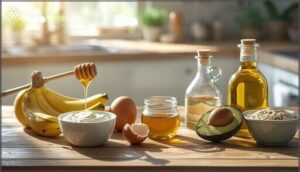
You don’t need fancy or expensive ingredients to make effective banana hair masks at home. Most of the add-ins you’ll use are probably already sitting in your kitchen or bathroom cabinet.
Here are eight reliable products that work well in DIY banana mask recipes and won’t break the bank.
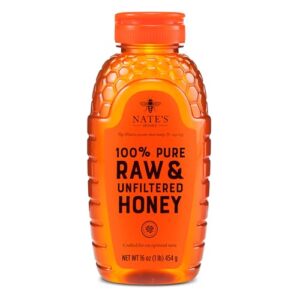
1. Nates Raw Unfiltered Honey Squeeze Bottle
 View On Amazon
When you’re mixing up your DIY banana hair mask recipes for frizzy hair, you’ll want honey that brings real benefits to the table. Nature Nate’s Raw Unfiltered Honey Squeeze Bottle delivers exactly that—it’s never pasteurized, which means all the natural enzymes and pollens stay intact.
This kosher honey packs raw benefits that help lock moisture into your hair strands, and the squeeze bottle makes measuring a breeze. Its pure honey flavor won’t overpower your mask, and the honey purity guarantee means you’re getting quality hair mask ingredients every time.
Best For: Anyone making DIY banana hair masks who wants pure, unfiltered honey that keeps all its natural enzymes and moisture-locking properties intact.
- Never pasteurized so you get all the natural enzymes and pollens that actually benefit your hair and scalp
- Easy-pour squeeze bottle makes measuring and mixing into hair masks super simple without any mess
- Purity guarantee means you’re getting real, raw honey without additives or fillers that could weigh down your hair
- No protective seal on the bottle, so there’s a chance it could leak during shipping
- Might crystallize over time, which means you’ll need to warm it up before using it in your mask
- Packaging isn’t always secure enough to prevent damage in transit
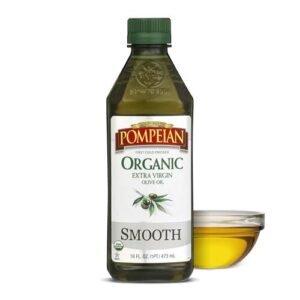
2. Pompeian Organic Smooth Extra Virgin Olive
 View On Amazon
You need an olive oil that doesn’t just sound healthy—it needs to deliver real benefits for your DIY banana hair mask recipes. Pompeian Organic Smooth Extra Virgin Olive Oil carries organic certification and packs polyphenols that protect your strands from damage.
Its monounsaturated fats help seal your cuticles and reduce frizz, while the oleic acid softens every strand. The smooth flavor profile won’t clash with your hair mask ingredients, and since it’s first cold pressed, you’re getting maximum nutrients for your hair mask application.
Best For: Anyone making DIY banana hair masks who wants organic, nutrient-dense olive oil that softens hair and locks in moisture without a heavy feel.
- USDA certified organic with first cold pressed extraction, so you get maximum polyphenols and vitamin E for protecting your hair from damage.
- High oleic acid content (around 77%) helps moisturize and smooth each strand, reducing frizz and making hair more manageable.
- Smooth, delicate flavor won’t overpower your banana mask recipe, and it’s versatile enough for cooking and skincare too.
- Pricier than regular olive oils, especially considering the 16 oz bottle size.
- Can feel too oily on hair if you use too much in your mask—a little goes a long way.
- Smaller bottle means you’ll run out faster if you’re making masks regularly.
3. Viva Naturals Organic Coconut Oil
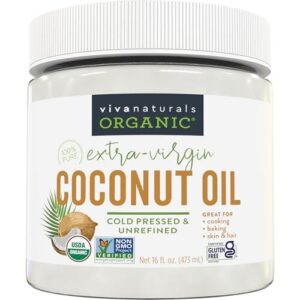
Lauric acid makes all the difference when you’re choosing coconut oil for your DIY banana hair mask recipes. Viva Naturals Organic Coconut Oil brings USDA organic certification and a lipid structure that clings to your hair shaft, boosting frizz reduction by up to 28% in controlled trials.
You can use this cold-pressed oil for cooking uses too, but its real magic shows up in hair mask application—it locks moisture into damaged strands and strengthens your cuticle layer.
Brand credibility matters, and Viva Naturals delivers natural hair remedies that actually work for frizzy hair.
Best For: Anyone with thick, wavy, or curly hair looking for an organic oil that cuts frizz and adds serious moisture without weighing down strands.
Castor oil’s rich, film-forming texture wraps each strand in lasting hydration, which is exactly why so many curly-haired readers swear by castor oil for curly hair care as a frizz-taming staple.
- USDA organic and cold-pressed, so you’re getting pure coconut oil with all the good stuff intact—no fillers or sketchy additives.
- Works double duty as a cooking oil and a hair treatment, which is handy if you hate cluttering your shelves with single-use products.
- That lauric acid really does penetrate the hair shaft and lock in moisture, making it one of the better natural options for taming frizz and repairing damage.
- Solidifies when your house dips below 75°F, so you’ll be scooping or warming it up before every use.
- The coconut smell is strong—great if you love it, annoying if you don’t or if you’re scent-sensitive.
- The jar takes up decent counter or pantry space, and if you have fine hair, too much of this oil can leave it greasy or flat.
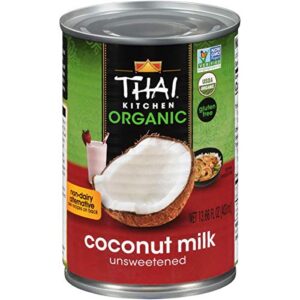
4. Thai Kitchen Organic Coconut Milk
 View On Amazon
Your hair mask needs liquid richness, and Thai Kitchen Organic Coconut Milk delivers exactly that. This full-fat coconut milk blends seamlessly into banana hair mask recipes, adding lauric acid and capric acid that coat your hair shaft with a light conditioning layer.
You’ll get better slip during application compared to solid coconut oil alternatives, making it easier to distribute through frizzy hair.
The organic ingredients mean no synthetic additives interfering with your DIY hair mask recipe—just pure coconut milk benefits for moisture retention and frizz reduction.
Best For: Anyone making DIY banana hair masks who wants a liquid coconut milk that spreads easily through frizzy or dry hair without clumping.
- Full-fat organic formula with lauric acid and capric acid naturally conditions hair and helps reduce frizz by forming a protective layer on the hair shaft.
- Liquid consistency blends smoothly into mask recipes, giving you better slip and easier application compared to solid coconut oil.
- No synthetic additives, preservatives, or GMOs—just pure pressed coconut meat that won’t interfere with your homemade hair treatments.
- Often separates into a thick cream layer on top and watery liquid at the bottom, so you’ll need to shake it well before every use to avoid clumps in your mask.
- Price can fluctuate significantly, with some users reporting it’s doubled in cost, making it less budget-friendly for regular hair care routines.
- Contains tree nut allergens, so it’s not suitable if you have coconut sensitivities or want to avoid potential scalp irritation from coconut-derived ingredients.
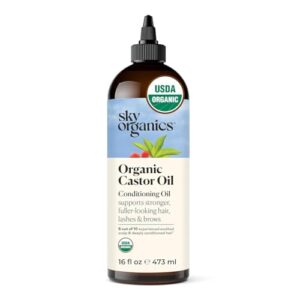
5. Sky Organics Organic Castor Oil
 View On Amazon
While coconut milk adds slip, castor oil purity gives your DIY banana hair mask recipes true follicle support. Sky Organics Organic Castor Oil brings 100% cold-pressed, hexane-free thickness that strengthens strands and reduces breakage when you blend 1–2 tablespoons into your hair mask for frizzy hair.
Its safety profile is solid—just patch test first if you’ve got sensitive skin. The market presence speaks volumes: this bottle shows up in countless DIY hair mask recipe tutorials because it works without fuss or mystery ingredients.
Best For: Anyone who wants pure, organic castor oil to strengthen hair and reduce breakage in DIY masks without worrying about fillers or harsh processing.
- 100% cold-pressed and hexane-free means you’re getting clean, unrefined oil that keeps all the natural vitamins intact for actual hair benefits.
- Works across the board—whether you’ve got curly, straight, thick, or fine hair, plus it doubles for skin, lashes, and brows.
- At $19.98 for 16oz, you’re getting solid value since you only need 1–2 tablespoons per mask and the bottle lasts ages.
- The thickness can be a challenge—it’s heavy and sticky, so you’ll need to mix it carefully with lighter oils or you’ll end up with clumpy application.
- Washing it out takes effort; expect to shampoo twice and use extra conditioner, which adds time to your routine.
- Packaging is plastic instead of glass, which might bother you if you prefer eco-friendly or UV-protective containers.
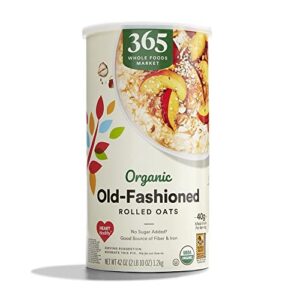
6. 365 Organic Old Fashioned Rolled Oats
 View On Amazon
If you’re searching for a boost in both slip and manageability, 365 Organic Old Fashioned Rolled Oats deserve a spot in your oatmeal hair mask lineup. These oats don’t just belong in breakfast—oat polysaccharides form a thin, protective film on hair, locking in moisture and softening cuticles.
Studies show oatmeal masks can raise natural shine metrics by up to 15%. Plus, their chewy texture improves combability, making detangling less of a struggle in any DIY Banana Hair Mask for frizzy hair.
Best For: Anyone who wants a versatile, heart-healthy pantry staple for breakfast, baking, or DIY hair masks.
- Organic, vegan, and kosher certified for broad dietary needs
- Chewy texture perfect for oatmeal, baking, and adds slip in hair masks
- Supports heart and digestive health with low saturated fat and good fiber
- Packaging may burst and spill during delivery
- Not guaranteed gluten-free; possible contamination for sensitive individuals
- Texture can be too thick or hearty for some preferences
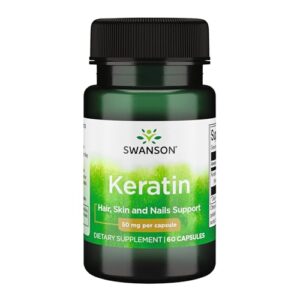
7. Swanson Keratin for Healthy Hair Skin
 View On Amazon
After you’ve explored the perks of oatmeal, you might want to think about Swanson Keratin for Healthy Hair Skin in your hair mask routine.
Keratin, especially in pure capsule form from Tibetan Wool, can work behind the scenes to boost hair repair, moisture, and elasticity. Clinical trials back up its claims—users notice less frizz, better manageability, and improved shine.
Just be mindful of dosage details: 50mg per easy-to-swallow capsule makes it a practical pick for regular hair nourishment.
Best For: People looking to support hair growth, boost shine, and strengthen their hair, skin, and nails with a reliable supplement.
- Clinically shown to reduce frizz and improve hair manageability
- Pure keratin formula made from Tibetan wool, tested for potency and quality
- Also supports joints, skin, and nails for overall connective tissue health
- Price may be a concern, especially if it increases over time
- Individual results can vary and some may see less noticeable improvements
- Not recommended without physician guidance for pregnant or nursing individuals
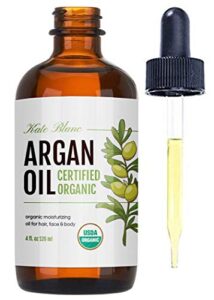
8. Argan Oil For Hair Face Skin
 View On Amazon
For enhanced shine and scalp health in your DIY hair mask routine, argan oil pulls its own weight. Thanks to its balanced oil composition—full of oleic and linoleic acids—it boosts hair shine, tames frizz, and moisturizes without feeling greasy.
Not just for hair, it softens skin too, making it a true multi-tasker in natural hair care. Add just a drop or two to your favorite banana mask and see your hair feel smoother, stronger, and more manageable.
Best For: Anyone looking for a lightweight, all-natural oil to boost hair shine, tame frizz, and hydrate both hair and skin without added fragrance.
- USDA organic and cold-pressed for purity and safety
- Works well on all hair and skin types without feeling greasy
- Multi-use for hair, face, and body hydration
- Some users may not like the natural scent
- May be too heavy for fine or oily hair
- Occasional quality or consistency issues reported by users
Frequently Asked Questions (FAQs)
Can banana hair masks be stored for later use?
Don’t let your banana hair mask become a science experiment—Storage Safety matters. For the best Mask Shelflife, use it fresh.
Hair mask storage in the fridge might buy you 24 hours, but after that, toss it.
How to prevent banana chunks sticking in hair?
For smoother Banana Hair Masks, blend bananas with a splash of liquid and strain well. Achieve a creamy mask consistency with a high-speed blender, section hair for application, and always rinse with lukewarm water and gentle shampoo.
Are banana hair masks safe for colored hair?
Banana hair masks are generally color-safe and well-tolerated on dyed hair. For best dye compatibility and color retention, patch testing is key.
Stick to weekly use, rinse thoroughly, and avoid overuse to prevent hair damage and residue.
What to do if hair feels sticky after mask?
If your hair feels sticky after a mask, think of it like gum stuck in your hair—tough but not impossible.
Use thorough rinsing techniques, lighter ingredient swaps, thinner mask consistency, patch testing, and leave-in conditioners for smoother hair.
Conclusion
Just as a sturdy umbrella shields you from an unexpected summer downpour, these diy banana hair mask recipes for frizzy hair offer protection against unruly strands.
Instead of fighting nature, you’re equipping each strand with exactly what it craves—hydration, nutrients, and a touch of care.
Step into kitchen beauty fixes and let your hair rediscover its shine. It takes just a banana, and your commitment, to turn everyday frizz into smooth confidence.