This site is supported by our readers. We may earn a commission, at no cost to you, if you purchase through links.
You’ve tried every shampoo on the shelf, and the white flakes keep coming back. So you start wondering if the nuclear option—shaving your head completely—might finally solve the problem. It’s tempting to think that removing all your hair would eliminate dandruff along with it.
But dandruff isn’t a hair problem. It’s a scalp condition driven by yeast, oil production, and how your skin reacts to both. Shaving can make treatment easier and reduce visible flaking, but it won’t cure the underlying issue.
Understanding what actually causes those flakes—and why they can appear even on a completely bald head—changes how you approach getting rid of them for good.
Table Of Contents
- Key Takeaways
- Does Shaving Your Head Eliminate Dandruff?
- What Causes Dandruff on The Scalp?
- How Does Shaving Affect Dandruff?
- Can You Get Dandruff on a Bald Head?
- Best Ways to Treat Dandruff on a Shaved Head
- Potential Drawbacks of Shaving for Dandruff Relief
- Frequently Asked Questions (FAQs)
- Will shaving my head get rid of my dandruff?
- How often should I shave my head to get rid of dandruff?
- What are some other ways to get rid of dandruff?
- Will shaving my head make my dandruff worse?
- Do I need to use a special razor to shave my head?
- Is it safe to shave my head if I have dandruff?
- How do I know if I have dandruff?
- What are the consequences of not treating dandruff?
- What are some home remedies for dandruff?
- Will dandruff return after hair grows back?
- Conclusion
Key Takeaways
- Shaving your head removes the visible flakes and makes treatment easier, but it doesn’t cure dandruff because the condition is caused by Malassezia fungus and oil production on your scalp, not by your hair.
- You can still get dandruff on a completely bald head since the fungus feeds on scalp oils and environmental factors like cold air or pollution directly irritate exposed skin.
- The most effective approach combines shaving with medicated antifungal shampoos (like ketoconazole or selenium sulfide), regular moisturization, and consistent scalp hygiene rather than relying on shaving alone.
- About half of dandruff patients relapse within a month of stopping treatment, so ongoing maintenance with antifungal products is essential even after shaving provides temporary relief.
Does Shaving Your Head Eliminate Dandruff?
Curious if head shaving is the magic bullet for dandruff? Shaving’s impact is mostly cosmetic. Removing hair strips away the surface flakes, but the underlying causes—like Malassezia fungus and scalp oils—remain. Dandruff recurrence is common without ongoing treatment reliance.
The scalp environment still fosters yeast and oil, even when bald. That’s why treating dandruff on bald heads means more than just shaving. You need targeted dandruff treatment to truly support scalp health, not just a clean canvas.
Shaving can help by providing exfoliating properties, removing dead skin cells.
What Causes Dandruff on The Scalp?
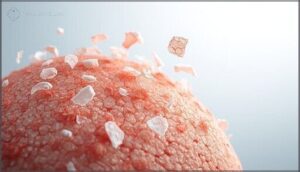
Dandruff isn’t just about having a dirty scalp or skipping a few washes. The real story involves a mix of biology, environment, and lifestyle factors working together on your skin.
Let’s break down what actually triggers those white flakes and that persistent itch.
Role of Malassezia Fungus
At the heart of dandruff causes lies Malassezia, a yeast-like fungus that lives on your scalp. This fungus feeds on sebum and produces oleic acid that irritates your skin. Fungal overgrowth disrupts your scalp microbiome, triggering flaking and itching. Different Malassezia species, including Malassezia globosa, vary in their effects.
Antifungal treatments target this sebum metabolism process—even shaving and dandruff management can’t succeed without addressing the fungus itself. For effective dandruff control, consider using products with fungistatic active ingredients.
Scalp Oils and Dead Skin Buildup
Beyond fungal activity, your natural scalp oil—sebum—plays a major role in dandruff. Sebum production feeds Malassezia and alters lipid composition on your scalp surface.
Free fatty acids and oxidized lipids disrupt normal shedding, causing dead skin cells to clump into visible flakes. This accelerated corneocyte turnover and retention creates the buildup you recognize as dandruff—a scalp condition rooted in oil and microbiota interaction.
Irritation From Hair Products and Environment
Your scalp barrier faces threats from multiple directions—not just internal factors. Hair products packed with irritant ingredients like sulfates, preservatives, and fragrances can trigger scalp irritation and skin sensitivity.
Environmental stressors compound the problem:
- Air pollution deposits particles that weaken your scalp barrier
- Hard water leaves mineral buildup causing dryness
- UV exposure inflames and damages scalp tissue
- Climatic conditions—extreme humidity or dryness—disrupt normal barrier function
These product allergens and climate effects can worsen dandruff or create flaking that mimics it.
Impact of Stress on Dandruff
While stress doesn’t directly create flakes, it aggravates your scalp condition through a domino effect. When you’re stressed, cortisol levels spike—ramping up sebum production and weakening your scalp barrier. This oilier environment fuels Malassezia growth, worsening dandruff severity. Studies link higher perceived stress to more severe flaking and mental health burden, with stress-related flares commonly reported during exams or life upheavals.
| Stress Factor | Physiological Impact | Dandruff Effect |
|---|---|---|
| Elevated cortisol | Increases sebum production | Creates oily environment for Malassezia |
| Weakened immunity | Reduces scalp barrier function | Allows fungal overgrowth |
| Poor sleep quality | Impairs skin recovery | Worsens flaking and irritation |
| Anxiety levels | Triggers inflammatory response | Increases scalp sensitivity |
| Chronic tension | Disrupts hormonal balance | Perpetuates flare cycles |
Stress reduction strategies—exercise, sleep, mindfulness—support hormonal balance and may ease this skin condition alongside standard treatments.
How Does Shaving Affect Dandruff?
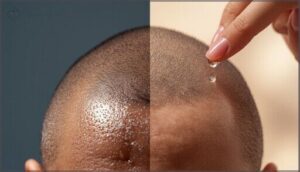
Shaving your head won’t cure dandruff, but it changes how the condition behaves on your scalp. The removal of hair affects where flakes collect and how treatments reach your skin.
Here’s what actually happens when you shave.
Reduced Hair for Flakes to Cling To
When you shave your head, you remove the primary structure where dandruff clings. Studies show hair shafts harbor 15 to 853 flake particles per millimeter. Without hair, visible flake reduction occurs immediately because there’s nowhere for dead skin to accumulate and fall onto your shoulders.
Shaving also exfoliates the scalp surface, lowering the humid environment where flakes usually collect and become noticeable.
Improved Access for Treatments
Without hair in the way, you can apply medicated shampoos directly to your scalp and let them sit for the full 3–5 minutes needed for ingredients like ketoconazole to work.
You’ll also remove scale and sebum more easily, which helps antifungal lotions penetrate better.
This direct access gives you more treatment flexibility and makes it simpler to stick with your dandruff routine consistently.
Exfoliation Benefits of Shaving
Dragging a razor across your scalp does more than cut hair—it physically lifts away dead skin cells that pile up and form flakes. This mechanical exfoliation removes the outer corneocyte layers where Malassezia thrives, clears follicular buildup that traps sebum and styling residue, and disrupts the barrier just enough to boost treatment absorption. Your scalp breathes easier, stays cleaner, and responds better to medicated products when you combine shaving with proper care.
- Corneocyte removal: Shaving strips away surface layers of dead skin, similar to gentle microdermabrasion
- Follicular buildup clearance: You eliminate sebum, product residue, and flake clusters around hair roots
- Barrier function shift: Temporary disruption increases penetration of antifungal shampoos by up to 18%
- Microenvironment influence: Removing scale reduces the nutrient base that feeds dandruff-causing yeast
- Treatment synergy: Exfoliating properties magnify the effectiveness of topical therapies applied afterward
Temporary Relief Vs. Long-Term Solution
Your scalp might look cleaner for a few weeks, but about half of patients relapse within a month of stopping treatment—shaving head alone doesn’t fix the underlying scalp pathophysiology. Malassezia keeps multiplying, sebaceous glands stay active, and environmental limits mean you’ll see flakes return.
Shaving your head might clear flakes temporarily, but half of patients relapse within a month because the underlying fungus and oil production never stop
Symptom recurrence is predictable without maintenance therapy targeting the root cause. Managing dandruff effectively requires sustained scalp health strategies, not just a razor. Prognosis patterns favor ongoing dandruff treatment options over one-time fixes.
Can You Get Dandruff on a Bald Head?
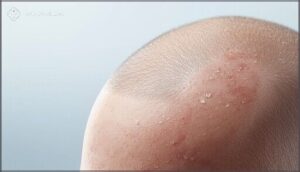
Yes, you can still get dandruff on a bald head. The condition affects your scalp, not your hair, so shaving doesn’t make you immune to flaking.
Let’s look at how dandruff shows up on bald scalps and what makes it different from other skin issues.
Scalp Flaking Without Hair
You can definitely get flakes on a bald scalp. Sebum production continues without hair, and Malassezia yeast still thrives on that natural oil. Environmental exposure—cold, dry air, pollution—hits your bare scalp directly, triggering irritation and flaking.
Bald scalp flaking looks just like dandruff: white or gray scales, itchiness, and redness. Shaving your head doesn’t stop the underlying process that creates those flakes.
Differences Between Dandruff and Dry Scalp
Flakes on your scalp don’t always mean dandruff. Dry scalp produces small, powdery white flakes that shed easily, often with a tight feeling but no oiliness. Dandruff creates larger, oily yellow-white scales that stick to your skin and cause persistent itching.
Check your scalp appearance: greasy with redness signals dandruff from Malassezia yeast, while dull and rough points to simple skin dryness requiring different treatment.
Environmental Factors for Bald Scalps
When you remove the shelter of hair, your scalp faces direct UV exposure that can trigger sunburns and worsen flaking. Cold winter air strips moisture, while summer heat and sweat accumulation create breeding grounds for Malassezia.
Pollution effects add oxidative stress. Temperature swings and seasonal changes—low humidity in particular—hit exposed skin harder, amplifying dandruff symptoms in your new environment.
Best Ways to Treat Dandruff on a Shaved Head
Shaving your head makes treatment easier, but it won’t cure dandruff on its own. You still need a solid approach that combats the fungus and keeps your scalp balanced.
Here’s what actually works when you’re dealing with dandruff on a shaved head.
Medicated and Antifungal Shampoos
Antifungal shampoos target Malassezia, the primary driver of dandruff. Ketoconazole clears moderate to severe cases with an 88% success rate in clinical trials. Selenium sulfide reduces flaking by nearly 80% after four weeks. Zinc pyrithione works well for milder symptoms.
For best results, use these antidandruff shampoos two to three times weekly, then maintain control with once-weekly applications.
Regular Scalp Moisturization

Medicated shampoos work best when your scalp stays hydrated. Moisturizers restore your skin’s protective barrier and support microbiome balance.
Use emollient types like petrolatum or hyaluronic acid serums daily for the first two weeks. Frequency matters—consistent hydration reduces flaking by improving natural scalp oil production.
Long-term hydration maintains scalp health and prevents relapse. Think of moisturization as maintenance, not just treatment.
Gentle Exfoliation and Hygiene

Regular washing combats dandruff at its source. You’ll want to cleanse your scalp every 1–2 days with a gentle, pH-balanced shampoo to remove sweat, oils, and dead skin cells that fuel Malassezia growth.
Follow these four hygiene practices for scalp microbiome balance:
- Massage your scalp during washing to improve mechanical exfoliation without scratching
- Rinse thoroughly to clear residues
- Change pillowcases frequently
- Dry your scalp completely after cleansing
This environmental control prevents yeast proliferation and maintains long-term scalp health.
Lifestyle Adjustments for Scalp Health

Balancing stress management with quality sleep bolsters your scalp health from within. Chronic stress and poor sleep worsen dandruff flares, while dietary influence matters too—limiting alcohol consumption and processed foods reduces scalp inflammation.
Your grooming routine should include proper hydration practices and omega-3-rich foods to strengthen skin health. These lifestyle shifts complement your hair care regimen and scalp care treatments for lasting control.
Potential Drawbacks of Shaving for Dandruff Relief
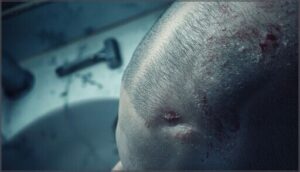
Shaving your head might seem like a quick fix for dandruff, but it’s not without its downsides. The approach can create new problems while failing to get to the bottom of your scalp issues.
Here are the main drawbacks you should consider before reaching for the razor.
Skin Irritation and Sensitivity
Shaving can backfire if your scalp is sensitive. Razor burn, ingrown hairs, and barrier disruption are real risks when you shave too often or use dull blades.
Product allergies and shaving frequency also matter—too much friction causes scalp irritation and skin sensitivity. If you notice redness, burning, or heightened discomfort after shaving, your technique or tools may be worsening the problem instead of solving it.
Mistaking Other Conditions for Dandruff
What looks like dandruff isn’t always dandruff. Scalp psoriasis, tinea capitis, seborrheic dermatitis, contact dermatitis, and head lice all cause flaking you might mistake for simple dandruff. Eczema and other skin conditions mimic the same symptoms.
Shaving won’t solve the real problem if you’re treating the wrong causes of dandruff. You need the right diagnosis to get results.
Importance of Ongoing Treatment
Shaving might clear away flakes today, but dandruff comes back without ongoing care. Clinical studies show relapse rates jump to 47% when you stop medicated treatments.
You need maintenance regimens with antidandruff shampoo ingredients like ketoconazole or selenium sulfide once or twice weekly. Adherence strategies matter for long-term safety and control.
Think of scalp treatments as part of your hair care regimen, not a one-time fix.
Frequently Asked Questions (FAQs)
Will shaving my head get rid of my dandruff?
Removing hair won’t cure the condition—yet it helps. Shaving improves treatment accessibility and offers temporary symptom relief by reducing flake buildup, but underlying scalp health issues like Malassezia require targeted antidandruff shampoo for real control.
How often should I shave my head to get rid of dandruff?
How often should you shave your head to control dandruff? Most find shaving every one to three days works best.
Your shave frequency benefits depend on dandruff severity, skin sensitivity, and how well your treatment schedule aligns with maintenance shaving routine.
What are some other ways to get rid of dandruff?
You’ll see the best results by using antifungal shampoos for Malassezia, topical steroids for stubborn scalp conditions, scalp serums for quick relief, and making dietary changes.
Don’t underestimate hydration’s importance or the power of regular anti-dandruff shampoos.
Will shaving my head make my dandruff worse?
Shaving exacerbates dandruff for some, as sebum overproduction and irritation from shaving can worsen flaking and itch. Misdiagnosed conditions or skin irritation may also flare up.
Long-term control of dandruff requires more than shaving your head.
Do I need to use a special razor to shave my head?
Imagine swapping your Walkman for a smartphone—razor choice matters just as much. For safe head shaving, use a safety razor or electric shaver.
Cartridge razors increase razor burns and irritation risks. Keep blades clean and sharp for best results.
Is it safe to shave my head if I have dandruff?
You can safely shave your head with dandruff if your scalp has no open wounds. Use gentle products to minimize irritation.
Severe itching, bleeding, or crusting requires dermatologist advice before shaving.
How do I know if I have dandruff?
You’ll notice visible flakes on your scalp and hair—usually white or yellowish. An itchy scalp often accompanies these flakes. If your scalp feels oily yet flakes persist, that’s classic dandruff.
What are the consequences of not treating dandruff?
Untreated dandruff can progress to seborrheic dermatitis with inflammation and barrier damage. You might experience hair loss, secondary infections, and significant psychosocial impact.
Stress and environmental factors often worsen these skin conditions causing dandruff.
What are some home remedies for dandruff?
You can try coconut oil, tea tree oil, or aloe vera to soothe your scalp and reduce Malassezia fungus.
Diluted vinegar rinses may help restore pH balance, while brief sunlight exposure can calm inflammation naturally.
Will dandruff return after hair grows back?
Like a weed that regrows from deep roots, dandruff often returns after hair growth because the underlying scalp condition persists.
Regular treatment maintenance with antidandruff products remains essential to prevent recurrence.
Conclusion
Does shaving your head get rid of dandruff? Not completely—but it removes the hiding place for flakes and makes treatment far more effective.
The real battle happens at the scalp level, where fungus and oil create the conditions for flaking. A shaved head won’t cure the problem, but paired with the right antifungal treatments and consistent care, it gives you a clear path to finally controlling those stubborn flakes for good.
- https://pmc.ncbi.nlm.nih.gov/articles/PMC4852869/
- https://www.headandshoulders.co.in/en-in/healthy-hair-and-scalp/dandruff/dandruff-solutions/does-shaving-get-rid-of-dandruff
- https://pubmed.ncbi.nlm.nih.gov/8245236/
- https://www.goodrx.com/conditions/seborrheic-dermatitis/dandruff-causes
- https://en.wikipedia.org/wiki/Malassezia