This site is supported by our readers. We may earn a commission, at no cost to you, if you purchase through links. This content is for general informational and educational purposes only and is not a substitute for professional medical, dermatological, or nutritional advice.
A mouse study found that 3% peppermint oil promoted about 92% hair growth, while minoxidil managed only 55%. Tempting, right? Before you raid your pantry, here’s the catch: mice aren’t people.
As a trichologist, I’ve watched plenty of clients pour undiluted oil on their scalps and end up itchy, red, and miserable. The best essential oils for healthy scalp care work through real mechanisms, like tea tree calming dandruff yeast and rosemary matching minoxidil in a 2015 trial of 100 men.
I’ll show you which oils earn their spot, how to dilute them safely, and which products deliver.
Table Of Contents
- Key Takeaways
- Best Essential Oils for a Healthy Scalp by Concern
- Essential Oil Benefits for Scalp Health: What The Evidence Supports
- Top 9 Essential Oil Products for Healthy Scalp
- 1. Rosemary Mint Hair Oil Treatment
- 2. Tea Tree Oil Hair Growth
- 3. Cedarwood Essential Oil for Skin
- 4. Organic Rosemary Oil for Hair
- 5. Plantovika Rosemary Hair Growth Oil
- 6. Vitality Extracts Healthy Scalp Oil
- 7. Ghori Rosemary Mint Biotin Hair Oil
- 8. Pure Rosemary Essential Oil 4oz
- 9. Vitality Extracts Healthy Hair Oil
- How to Dilute and Use Essential Oils in a Scalp Care Routine
- Essential Oil Scalp Safety: Patch Testing, Irritation, and When to Seek Help
- Frequently Asked Questions (FAQs)
- What essential oil is good for your scalp?
- What are the healthiest oils for the scalp?
- What oils should not be used on the scalp?
- Is it safe to put essential oils on your scalp?
- How long before seeing scalp health improvements?
- Which essential oils suit sensitive skin best?
- Are essential oils safe during pregnancy or breastfeeding?
- Can essential oils replace prescription scalp treatments?
- How often should I apply essential oils to my scalp?
- Can essential oils be used on color-treated hair?
- Conclusion
Key Takeaways
- Rosemary has the strongest human evidence, since a 2015 trial of 100 men found it matched 2% minoxidil for hair count after six months, so give it three to six months before you judge it.
- Peppermint’s 92% versus 55% result came from mice, so you should treat it as promising but unproven for people.
- Tea tree is your best pick for dandruff because it targets the yeast behind flaking, while most other oils, like cedarwood, lemongrass, and clary sage, have little scalp-specific proof.
- You’ll protect your scalp by always diluting oils in a carrier (roughly 0.5% to 2%), patch testing for 24 to 48 hours first, and seeing a clinician for swelling, trouble breathing, oozing, or conditions like eczema.
Best Essential Oils for a Healthy Scalp by Concern
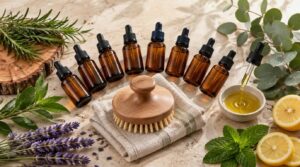
For every scalp worry, there’s an oil that gets the hype. But which one actually fits your problem? Let’s match them up.
Once you’ve picked the right oil, how often you should oil your scalp matters just as much, since too much can clog follicles while too little won’t help.
Flaking and itching? Tea tree is your go-to, thanks to its antimicrobial benefits against the yeasts tied to dandruff. Thinning and hoping for hair growth? Rosemary gets the spotlight. Oily or irritated scalp? Cedarwood is a popular pick for comfort and calm, though its antiinflammatory benefits are more claimed than proven.
Here’s the catch. Psoriasis, fungal infections, and dermatitis have different drivers, so oils may do nothing for them. Match the oil to the real issue, and your scalp health will thank you. Stay curious, stay careful, and read on. Ready to find your match? Let’s get started.
Essential Oil Benefits for Scalp Health: What The Evidence Supports
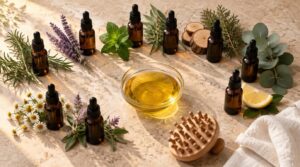
Let’s be honest: some oils have real research behind them, and others just have great marketing. Below, I’m sorting out what the evidence shows so you stay in control of what touches your scalp. You’ll also get the safety basics that keep your routine smart and irritation-free.
Tea Tree For Dandruff
Reach for Tea Tree Oil when dandruff won’t quit. Its antimicrobial benefits come mostly from terpinen-4-ol, which targets Malassezia, the yeast behind most flaking. Those antifungal properties work best with contact time, so let a diluted product sit on your scalp before rinsing.
Go easy, though. Sensitive skin can react, and healthy scalp health beats a stinging, red one.
Rosemary And Hair Growth
Now, rosemary. Can Rosemary Oil really help hair growth? The honest answer is maybe, but the evidence is thin and mostly small studies. Its terpenes may calm follicle stress, and a scalp massage can boost blood flow to your hair follicles.
Dilute it, patch test first, and give it several months before judging.
Other Oils: Limited Evidence
Curious about the rest of the shelf? Here’s the thing: other oils have even less proof behind them.
- Lemongrass Oil: lab antimicrobial work only
- Clary Sage Oil: mostly marketing
- Patchouli Oil: scant scalp data
- Ylang Ylang Oil: anecdotes, not trials
- Thyme Oil: potent, so dilute carefully
Treat them as experiments, not promises. Patch test first, and keep your routine simple.
In one study
While most oil claims sound exciting, you’ll want proof first. In one study, peppermint oil boosted follicle number and depth in mice over four weeks. Mice aren’t people, though, so stay realistic.
| Oil | Evidence | Your takeaway |
|---|---|---|
| Peppermint | Mouse study | Promising, unproven |
| Rosemary oil | Human trial | Worth trying |
| Tea tree oil | Skin reactions | Soothing support |
Lavender oil? Evidence is still thin.
reaching 92% versus 55
Here’s the headline number that got everyone talking: in a four-week mouse study, 3% peppermint oil hit about 92% hair growth promotion, while 3% minoxidil managed 55%. Wild, right?
Hold your horses, though. Those were mice, not people. Rosemary oil has the stronger human data, so treat peppermint oil as promising, not proven, and keep your scalp massage routine realistic.
If you’d like to pair your scalp massage with other time-tested habits, these Indian hair growth secrets for stronger, longer hair offer gentle ideas worth trying alongside your diluted oil.
with no toxic signs observed
I once cheered a client’s perfect patch test, then watched her scalp flare two weeks later. Lesson learned. "No toxic signs observed" only covers what researchers actually checked:
- Redness and stinging, not hidden effects
- Short follow-up, so delayed reactions slip through
- One formula, so essential oil dilution matters
Treat it as cautious permission, not solid proof of lasting scalp health.
Dilution And Allergy Risks
My client Dana swore by "natural" and dabbed neat tea tree on her scalp every night. By week three, she was itching, red, and baffled.
That’s the catch. Natural doesn’t mean gentle. Dilution matters, so mix a few drops into a carrier oil and patch test first. Skip that, and your allergy risks and sensitization risk climb with every use.
Natural doesn’t mean gentle, so dilute essential oils in a carrier oil and patch test first, or allergy and sensitization risks keep climbing
Top 9 Essential Oil Products for Healthy Scalp
Ready to find a scalp oil you can actually trust? I’ve lined up nine products below, from rosemary blends to a pure tea tree pick, so you can match one to your own scalp. Keep your patch test handy, because even the best bottle needs a careful first try.
1. Rosemary Mint Hair Oil Treatment
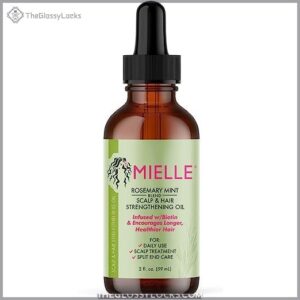
Ever wonder why some scalp oils feel like a mini spa day? Blame the peppermint. That cooling tingle is real, though it’s a sensation, not proof of growth.
This mixture pairs biotin with castor, jojoba, coconut, tea tree, and peppermint oils, so it works as a scalp oil, pre-wash treatment, or split end fix. Dab a few drops on your hairline, eyebrows, or lash line if you want targeted support, but keep it away from your eyes.
Here’s the catch. Skip it if you’re allergic to peppermint, and it’s not ideal for straight or wavy hair, where it can turn greasy. Some people notice itching or shedding. Patch test first, and give it weeks of consistent use before judging.
| Best For | People with curly, coily, or thick hair and a dry scalp who want a multi-use oil for scalp care, pre-wash treatments, split ends, and targeted hairline, eyebrow, or lash line support. |
|---|---|
| Key Oils | Castor, jojoba, coconut, tea tree, peppermint |
| Scalp Benefits | Moisturizes dry scalp |
| Hair Benefits | Fortifies root to tip |
| Scent | Peppermint tingle |
| Usage Method | Scalp oil, pre-wash, split ends |
| Main Drawback | Greasy on straight hair |
| Additional Features |
|
- Blends biotin with castor, jojoba, coconut, tea tree, and peppermint oils to moisturize the scalp and fortify hair from root to tip.
- Works several ways, as a scalp oil, a pre-wash treatment, or a split end fix.
- Can be dabbed on the hairline, eyebrows, or lash line for targeted growth support.
- May cause shedding, scalp itching, or greasiness in some users, especially those with straight or wavy hair.
- Not suitable for anyone with a peppermint allergy, so a patch test is wise before use.
- Needs consistent use over several weeks before you can judge results, and the cooling tingle isn’t proof it’s working.
2. Tea Tree Oil Hair Growth

Think of your scalp as soil. If yeast is crowding it, nothing grows happily. That’s where tea tree oil earns its spot. Its terpinen-4-ol fights the scalp fungi behind dandruff and itch, so the real win is a calmer, cleaner scalp, not a magic growth switch. I’ll be straight with you: direct growth evidence is thin.
This mix pairs tea tree with jojoba and grapeseed oils, which hydrate and soften while it works. Leave-on oils keep contact longer than shampoo, and the comb applicator and scalp massager spread it evenly.
Watch the downsides. Some people get irritation, the scent lingers, and fine hair can feel oily. Patch test first, and go light. Your scalp will thank you.
| Best For | People with an itchy, flaky, or dry scalp who want a hydrating leave-on oil to calm dandruff and irritation, and who don’t mind a strong scent. |
|---|---|
| Key Oils | Tea tree, jojoba, grapeseed |
| Scalp Benefits | Soothes itch and dandruff |
| Hair Benefits | Softens and smooths |
| Scent | Strong, lingering |
| Usage Method | Leave-on with comb applicator |
| Main Drawback | Oily on fine hair |
| Additional Features |
|
- Tea tree oil helps soothe itchy, dry scalp and fight dandruff and irritation
- Jojoba and grapeseed oils hydrate and smooth hair, leaving it soft and refreshed
- The comb applicator and scalp massager help spread the oil evenly
- Some users report scalp irritation, so a patch test is wise
- The fragrance can be strong and linger
- It may leave hair feeling oily or weighed down, especially fine hair
3. Cedarwood Essential Oil for Skin

Tea tree not your scent? Meet cedarwood, the warm, woodsy cousin your shelf might be missing.
This one is steam distilled from Atlas cedar wood (Cedrus atlantica), and it smells grounding, with a subtle balsamic edge. Some folks say it doesn’t smell like cedar at all, so scent is personal. It blends nicely with lavender, bergamot, frankincense, and sandalwood if you want to customize.
Here’s the honest part. Scalp-specific evidence is limited. Its antimicrobial and calming promise comes mostly from lab work, so treat it as a gentle support, not a cure.
Always dilute in a carrier oil first. Undiluted cedarwood can irritate, and reactions may show up late, so patch test on your inner arm and wait a day. Choose single-ingredient bottles. Your scalp stays happy.
| Best For | Anyone who enjoys a warm, grounding, woodsy scent and wants a single-ingredient oil to diffuse or dilute in a carrier oil for relaxing massage or aromatherapy. |
|---|---|
| Key Oils | Atlas cedarwood |
| Scalp Benefits | Limited evidence; calming |
| Hair Benefits | N/A |
| Scent | Warm, woodsy |
| Usage Method | Diffuse or dilute in carrier |
| Main Drawback | Limited scalp evidence |
| Additional Features |
|
- Warm, woodsy aroma with a subtle balsamic edge, steam distilled from Atlas cedar wood
- Blends well with lavender, bergamot, frankincense, and sandalwood for custom scents
- Works in diffusers or diluted with carrier oil, and supports relaxation and sleep
- Scent is personal, and some users say it doesn’t smell like cedar, with mixed feedback on fragrance
- Must be diluted in a carrier oil before topical use, since undiluted cedarwood can irritate and reactions may show up late
- Scalp-specific evidence is limited, with antimicrobial and calming claims resting mostly on lab work
4. Organic Rosemary Oil for Hair

Now for the one with real data behind it. In a 2015 trial of 100 men, rosemary oil matched 2% minoxidil for hair count after six months, with less scalp itching. Pretty impressive, right?
It likely works by boosting scalp circulation and calming oxidative stress, so your follicles get more of what they need.
Here’s how to use it: dilute to 2% in jojoba or coconut oil, patch test your inner arm for 24 hours, then stay consistent for 3 to 6 months. Hair cycles are slow, so patience pays off.
If you’re eyeing a bottle, look for rosemary blended with vitamin E and argan oils. Some report a perfume-like scent, so check labels.
| Best For | People dealing with thinning hair, breakage, or a dry, flaky scalp who want a rosemary-based oil with vitamin E and argan oils and are willing to use it consistently for several months. |
|---|---|
| Key Oils | Rosemary, vitamin E, argan |
| Scalp Benefits | Dry flaky scalp, dandruff |
| Hair Benefits | Strengthens roots, reduces breakage |
| Scent | Sometimes perfume-like |
| Usage Method | Dilute to 2% in carrier |
| Main Drawback | Slow, variable results |
| Additional Features |
|
- Rosemary oil has some real research behind it, including a 2015 trial where it matched 2% minoxidil for hair count after six months, with less scalp itching.
- Rosemary, vitamin E, and argan oils work together to boost scalp circulation, strengthen hair from the roots, and reduce breakage.
- It also helps with dandruff and a flaky scalp, and the vitamin E and argan oils moisturize the skin.
- Some customers say the organic claims are misleading, since nothing on the packaging indicates it is organic.
- A few users find the scent strong and perfume-like, unlike natural rosemary oil.
- Results for hair regrowth vary, and it takes about 3 to 6 months of steady use, so progress can be slow or unclear.
5. Plantovika Rosemary Hair Growth Oil

Plantovika is where rosemary meets a whole pantry of friends. Your 2 oz bottle mixes rosemary, jojoba, castor, argan, peppermint, and lavender oils, and it’s free from parabens, sulfates, silicones, and artificial fragrances. Nice, right?
Use it daily as a finishing oil, since one bottle covers over 60 applications. It’s meant to hydrate strands, soothe an itchy scalp, and help balance oil.
Now the honest bit. Buyers haven’t confirmed it helps regrow fallen hair. Some say it contains extra oils beyond the listed mix, so read the label and patch test first. The scent is strong, too, so scent-sensitive noses beware. Start small and watch your scalp’s response.
| Best For | Anyone with a dry, itchy, or oily scalp who wants a daily multi-oil treatment to hydrate hair and reduce breakage and doesn’t mind a strong scent. |
|---|---|
| Key Oils | Rosemary, jojoba, castor, argan, peppermint, lavender |
| Scalp Benefits | Soothes itch, balances oil |
| Hair Benefits | Hydrates, reduces breakage |
| Scent | Strong |
| Usage Method | Daily finishing oil |
| Main Drawback | Unconfirmed regrowth |
| Additional Features |
|
- Blends rosemary, jojoba, castor, argan, peppermint, and lavender oils and is free from parabens, sulfates, silicones, and artificial fragrances
- Hydrates and repairs hair strands to reduce breakage while soothing a dry, itchy scalp and helping balance oil production
- Each 2 oz bottle provides over 60 applications, making it practical for daily use
- Has a strong fragrance that may be unpleasant for scent-sensitive users
- Some users report it contains additional oils beyond the advertised blend, so checking the label and patch testing is wise
- Effectiveness for recovering fallen hair has not been confirmed by user reports
6. Vitality Extracts Healthy Scalp Oil

Ready for something more Ayurvedic? Vitality Extracts Healthy Scalp Oil skips the rosemary and goes for amla, brahmi, bacopa, bhringaraj, sesame, turmeric, peppermint, and chili seed oils. That’s eight plant oils in one little bottle.
I love the chili seed and peppermint pairing. Together they’re meant to boost blood flow to your scalp, which helps follicle growth. The mix also moisturizes, so dryness and itchiness calm down, and regular use may strengthen roots and add volume.
Quality matters to me, and this mix is GCMS tested for purity and composition. The bottle measures 4.37 x 2.64 x 2.17 inches and weighs 2.4 ounces.
Now, the fine print. Results vary with your hair and scalp. Keep it away from your eyes, and stop if irritation shows up. Tried it yet? Tell me how your scalp responded!
If your scalp tends to get red or itchy, a soothing natural cleanser for irritated skin is worth trying, and a quick patch test first keeps things safe.
| Best For | People with a dry, itchy scalp who want an Ayurvedic-style blend of plant oils to stimulate the scalp and add volume with regular use. |
|---|---|
| Key Oils | Amla, brahmi, bhringaraj, sesame, chili seed, peppermint |
| Scalp Benefits | Reduces dryness and itchiness |
| Hair Benefits | Strengthens roots, adds volume |
| Scent | Peppermint and chili |
| Usage Method | N/A |
| Main Drawback | Results vary |
| Additional Features |
|
- Combines eight plant oils, including amla, brahmi, bhringaraj, and sesame, in one small bottle
- Peppermint and chili seed oils stimulate blood flow to the scalp to support hair follicle growth
- GCMS tested for purity and composition
- Results vary based on individual hair and scalp conditions
- For external use only, and it must be kept away from the eyes
- Some people may get irritation, which means stopping use
7. Ghori Rosemary Mint Biotin Hair Oil

A bottle of Ghori Rosemary Mint Biotin Hair Oil packs three heavy hitters into one lightweight, fast-absorbing formula. Rosemary oil boosts scalp circulation, peppermint and menthol cool itchy, dry, or flaky skin, and biotin with Vitamin E helps cut breakage from root to tip. Sounds like a dream, right?
Here’s my honest take. It suits all hair types and daily use, but the texture is thick, so go easy. Over-apply and your hair looks oily. Wash it out soon after application, or it can roll off your scalp and leave you greasy. Some people find the strong scent chemical-like, so sniff first.
Start small, patch test first, and tell me how your scalp responds.
| Best For | Anyone with an itchy, dry, or flaky scalp, or thinning and breakage-prone hair, who wants a lightweight daily oil with rosemary, peppermint, and biotin. |
|---|---|
| Key Oils | Rosemary, peppermint, menthol |
| Scalp Benefits | Cools itchy, flaky scalp |
| Hair Benefits | Cuts breakage, improves elasticity |
| Scent | Strong, chemical-like |
| Usage Method | Lightweight daily oil |
| Main Drawback | Greasy if over-applied |
| Additional Features |
|
- Rosemary oil boosts scalp circulation and supports follicle health for thicker, fuller-looking hair
- Peppermint oil and menthol cool and calm itchy, dry, or flaky scalps
- Biotin and Vitamin E strengthen hair from root to tip, improving elasticity and cutting breakage
- The thick texture can leave hair looking oily if you over-apply
- The strong scent may smell unpleasant or chemical-like to some users
- It can roll off the scalp and cause greasiness if not washed out soon after application
8. Pure Rosemary Essential Oil 4oz

Although rosemary oil sounds gentle, this one’s the real deal, and I love it for exactly that reason. Maple Holistics packs 4oz of pure, vegan, cruelty-free rosemary into one bottle, so you control the mix. Stir 5 drops into a teaspoon of jojoba or coconut oil, patch-test first, then massage it into your scalp. Want it in your shampoo? Add it there too, or run your diffuser.
Keep it away from your hairline, though, because eye irritation is real. Some folks also notice the scent turning ammonia-like over time, and others find the size small for the price. Have you tried rosemary yet? Tell me how it went, I’m all ears!
| Best For | People who want a pure, versatile rosemary oil to add to hair care, diffuse at home, or dilute with a carrier oil for scalp and skin use. |
|---|---|
| Key Oils | Rosemary |
| Scalp Benefits | N/A |
| Hair Benefits | N/A |
| Scent | Ammonia-like over time |
| Usage Method | Dilute, add to shampoo, diffuse |
| Main Drawback | Small for price |
| Additional Features |
|
- Pure, vegan, and cruelty-free formula
- Works several ways: mixed into shampoo or conditioner, used in a diffuser, or diluted for topical use
- Suitable for hair, scalp, and skin care
- Can irritate the eyes if applied too close to the hairline or forehead
- Some users say the scent turns ammonia-like over time
- Some customers find the bottle small for the price
9. Vitality Extracts Healthy Hair Oil

Think of this oil as a spicy herbal tea for your scalp: warming, bold, and not for everyone. Vitality Extracts Healthy Hair Oil pairs amla, brahmi, and bhringaraj with peppermint and chili seed, and it’s vegan, cruelty-free, and free of parabens, sulfates, and synthetics. It’s made for all hair types, including gray, colored, thinning, or damaged strands.
Here’s my honest take. The brand says it boosts scalp blood flow and strengthens roots, but no clinical trial data backs the growth claims. Results will vary, so keep your expectations realistic.
Patch-test first. Peppermint and chili can feel intense on sensitive scalps. Does tingling sound fun to you? Try a dab behind your ear, wait a day, then massage it in gently. Tell me how it all goes!
| Best For | People with any hair type, including gray, colored, thinning, or damaged hair, who want a plant-based, vegan scalp oil and don’t mind a strong, warming scent and tingle. |
|---|---|
| Key Oils | Amla, brahmi, bhringaraj |
| Scalp Benefits | Moisturizes scalp |
| Hair Benefits | Strengthens roots, adds volume |
| Scent | Strong for sensitive users |
| Usage Method | N/A |
| Main Drawback | No clinical data |
| Additional Features |
|
- Blends amla, brahmi, and bhringaraj oils to moisturize the hair and scalp and strengthen roots
- Vegan, cruelty-free, and free of parabens, sulfates, and synthetics
- Made for all hair types and aims to add volume and renew damaged hair
- No clinical trial data supports the hair growth claims
- Results may vary depending on your hair and scalp
- The peppermint and chili seed scent and tingle may be too strong for sensitive users
How to Dilute and Use Essential Oils in a Scalp Care Routine
A client once showed up with a scalp the color of ripe tomatoes. Her mistake? Six undiluted drops of tea tree, straight from the bottle. Don’t be her.
Start with carrier oil dilution: 1 to 2 drops of essential oil per teaspoon of jojoba or coconut oil. That’s roughly 0.5% to 2%. Stir before every use, since oils separate. Keep your essential oil blending consistent.
Use it as a preshampoo treatment. Part your hair, dab a little on small sections, then do a gentle scalp massage for two minutes. Rinse out within 30 minutes. Twice a week is plenty.
You’ll feel:
- Calm and in control
- Proud of an itch-free scalp
- Confident in a predictable routine
- Excited by steady, safe progress
Essential Oil Scalp Safety: Patch Testing, Irritation, and When to Seek Help

Ever slathered on a "natural" oil and ended up with a scalp that burns like a sunburn? I’ve seen it more than I’d like.
Patch testing is your safety net. Here’s the patch test procedure: dab your diluted mixture on your inner forearm or behind your ear, then leave it alone. Check it for 24 to 48 hours. Redness, itching, swelling or burning means stop, and skip the scalp.
Mild skin irritation usually stings and stays local. An allergic reaction itches, spreads and worsens over a few days. Mixing several oils raises your sensitization risk, so keep blends simple.
Seek medical help fast for facial swelling, trouble breathing, widespread hives, or oozing, crusting scalp. Got eczema? See a clinician first.
Frequently Asked Questions (FAQs)
What essential oil is good for your scalp?
Which oil fits your scalp best? Tea Tree Oil fights dandruff, Rosemary Oil helps follicles, and Cedarwood Oil soothes.
Peppermint Oil and Lavender Oil are fine extras. Dilute in a carrier oil, and patch test.
What are the healthiest oils for the scalp?
One small trial had me hooked on Rosemary Oil.
For dandruff, Tea Tree Oil leads. Lavender Oil and Peppermint Oil soothe but have much thinner evidence. Always dilute in Jojoba Oil, and patch test first.
What oils should not be used on the scalp?
Cinnamon bark oil can be roughly 70% cinnamaldehyde, a notorious sensitizer, so skip it. Bergamot, undiluted oils and anything on an itchy scalp or inflammatory scalp conditions are also out. Your barrier will thank you.
Is it safe to put essential oils on your scalp?
Yes, but only with care. Undiluted oils can burn, so mix a few drops into a carrier oil first. Do a patch test on your inner arm before going near your scalp.
How long before seeing scalp health improvements?
A client once swore her flaking vanished overnight. It hadn’t. Scalp health gains show up around two to four weeks of steady use, as sebum regulation and scalp circulation settle. Hair growth takes far longer.
Which essential oils suit sensitive skin best?
Wondering what won’t spark a flare-up? I always reach for lavender oil and chamomile. Both are antiinflammatory and gentle on sensitive skin, calming scalp irritation. Mix them into a carrier oil, and patch test first.
Are essential oils safe during pregnancy or breastfeeding?
Here’s the honest truth: most essential oils need a doctor’s okay while you’re pregnant or nursing. Some compounds can cross into breast milk, and your skin gets touchy. Check your essential oil stash, ask first, then patch test.
Can essential oils replace prescription scalp treatments?
Nope, and I’d hate for your essential oil stash to trick you into thinking otherwise. Oils can calm dandruff, but they can’t match prescriptions for stubborn scalp disease. Never ditch prescribed meds without asking your clinician.
How often should I apply essential oils to my scalp?
Funny how bottles promise results but name no schedule.
Dilution and tolerance decide it. Patch test, then try diluted scalp massage weekly, stopping if burning starts. Hair growth or hair loss goals don’t change that.
Can essential oils be used on color-treated hair?
Yes, but dilute first. Mix rosemary oil, peppermint oil, tea tree oil, lavender oil, or cedarwood oil into a carrier, patch test, and keep it on your scalp, not strands. Fresh color? Wait.
Conclusion
Rosemary matched minoxidil in a 2015 trial of 100 men, and that’s the kind of evidence worth trusting. Mouse results are fun, but human data pays the bills.
Pick your oil by concern, dilute it every single time, and patch test before you commit. That’s how essential oils for healthy scalp care actually works: small amounts, steady habits, real patience.
Your scalp isn’t a science experiment. Treat it kindly. Tell me which oil you’re trying!