This site is supported by our readers. We may earn a commission, at no cost to you, if you purchase through links. This content is for general informational and educational purposes only and is not a substitute for professional medical, dermatological, or nutritional advice.

Most people grab whatever mask catches their eye, slap it on whenever it’s convenient, and wonder why their results feel inconsistent. The answer usually comes down to one overlooked detail: when you apply your mask relative to your shower changes everything about how it performs.
Clay and charcoal masks pull oils more effectively on dry skin, while hydrating and sheet masks absorb deeper when pores are warm and open. Getting this timing right doesn’t require a complicated routine—it means matching your mask to the skin state your shower naturally creates.
Table Of Contents
- Key Takeaways
- Face Mask Before or After Shower?
- Why Face Mask Timing Matters
- Use Masks Before Showering
- Use Masks After Showering
- Best Timing by Mask Type
- Best Timing by Skin Type
- Pre-Shower Face Mask Routine
- Post-Shower Face Mask Routine
- Shower Habits That Affect Results
- Simple Rule for Better Results
- Frequently Asked Questions (FAQs)
- Do you face mask before or after a shower?
- Do you do a face mask first or wash your face first?
- What is the best time to use a face mask?
- Should I wash my face before or after a shower?
- Should you face mask before or after a shower?
- Should I use mask before or after wash?
- Is it better to do an eye mask before or after a shower?
- Can I use a mask after exfoliating?
- How long should masks stay on?
- Are certain masks better in hot weather?
- Conclusion
Key Takeaways
- Clay and charcoal masks work best on dry skin before your shower, while hydrating and sheet masks absorb more effectively on warm, slightly damp skin right after.
- Leaving a clay mask on too long pulls moisture instead of oil, so follow the label’s timing and always rinse with lukewarm water — not hot.
- Your skin type shapes your timing: oily skin benefits from pre-shower clay masks, while dry, sensitive, and mature skin does better with post-shower hydrating formulas.
- No matter when you mask, always start with clean skin and seal everything in with a moisturizer immediately after removal to lock in results.
Face Mask Before or After Shower?
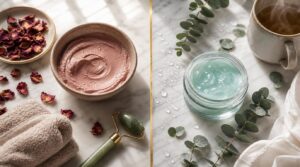
The answer depends on what type of mask you’re using and what your skin actually needs. Timing it right can mean the difference between a mask that works and one that barely does anything. Here’s a quick breakdown to point you in the right direction.
If you want to go a step further, these homemade anti-aging face mask recipes let you tailor ingredients to exactly what your skin is asking for.
Quick Answer by Mask Type
Not every face mask plays by the same rules. Clay and charcoal masks work best before your shower, where dry skin lets them absorb oil without interference. Gel, sheet, and exfoliating masks belong after, when warmth has softened your skin and pores are more receptive. Match your mask type to your timing, and the results speak for themselves.
These skincare tips don’t apply to disposable surgical masks used for health.
Best Timing by Goal
Your goal shapes your timing more than anything else.
If oil absorption is the priority, apply a clay or charcoal mask before your shower — that’s your detoxification window, when dry skin draws out excess sebum most effectively.
For a hydration seal, go post-shower on slightly damp skin. Soothing and sheet masks also belong in that post-shower glow window, when warmth has already done its work.
Common Timing Mistakes
Knowing whether to use a face mask before or after a shower matters, but so does avoiding the mistakes that quietly cancel your results.
Leaving a mask on too long is one of the biggest — clay especially dries out and starts pulling moisture instead of oil.
Always follow the label. Also, never apply to uncleansed skin, rinse with lukewarm water only, and moisturize immediately after removal.
Why Face Mask Timing Matters

Timing your face mask isn’t just a detail—it actually changes what your skin gets out of it. The state of your skin before, during, and after a shower affects how well a mask absorbs, how much moisture it locks in, and how your skin reacts. Here’s why each of these factors deserves a closer look.
Clean Skin Absorbs Better
Think of your skin like a sponge — it works best when it’s clean. Barrier removal before any mask matters more than most people realize. Leftover sunscreen, oils, or product residue sits on the surface and blocks mask ingredients from doing their job. Gentle cleanser impact is real: a simple rinse clears the path.
- Clean skin absorbs mask actives more effectively than prepped skin with residue layers
- Slippery skin after cleansing signals leftover oil that can interfere with skin absorption
- Deep cleansing masks need direct contact with your stratum corneum, not mixed residue
- Consistent cleansing reduces daily variability, so your mask type performs predictably every session
Steam Softens Surface Buildup
Shower steam does more than relax you — it actively preps your skin. Steam heat benefits your face by warming the outer layer, softening pore buildup like hardened sebum and debris so they release more easily.
The condensation effect adds a thin layer of moisture to the surface, loosening residue so your cleanser or mask can reach skin directly rather than working through a dried film.
Heat Can Increase Sensitivity
Heat isn’t just warming your skin — it’s waking up your nervous system. Nociceptor activation happens when skin temperature climbs enough to trigger heat-sensitive nerve endings, lowering your threshold for discomfort.
- Hot showers prime pain pathways
- Thermal hyperalgesia builds quickly
- Masks may sting on heated skin
- Skin barrier needs time to settle
Timing Affects Hydration
Timing is everything regarding skin hydration. Apply a hydrating mask to damp skin right after your shower, and you’re locking in moisture before it escapes. Wait too long, and that window closes fast.
Lukewarm rinse benefits your barrier by keeping it calm, while patting skin slightly damp before masking helps moisture seal timing work in your favor.
Use Masks Before Showering
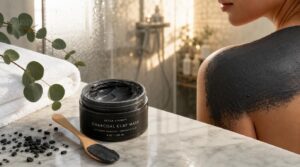
Clay and charcoal masks actually work harder when your skin is dry — and a pre-shower application is the perfect setup for that. You get the full detoxifying effect without shower water diluting the formula, and cleanup becomes almost easy.
Here’s why applying before your shower makes sense for certain masks.
Best for Clay Masks
Clay masks are best used before you shower. Apply a thin, even layer to clean, dry skin — this helps the clay adhere properly and dry consistently. Leave it on per package instructions, then rinse with lukewarm water before stepping in.
The shower’s steam does the cleanup work for you, flushing away residue without scrubbing your pores raw.
Good for Charcoal Masks
Charcoal masks work on the same principle as clay — and they’re just as well-suited for pre-shower timing. Activated charcoal adsorbs dirt, oil, and debris from your pores rather than simply sitting on the surface.
Apply it to dry skin before your shower, let it bind those impurities, then rinse clean. The shower manages the rest effortlessly.
Helps Absorb Excess Oil
Pre-shower masking is where oil-absorbing masks truly earn their place. A porous matrix inside clay and charcoal formulas works through capillary uptake — pulling sebum directly off your skin surface and locking it inside the mask material through oil binding adhesion.
- Excess sebum gets absorbed before heat loosens more
- Layer stability keeps the mask in even contact with oily zones
- Non-drying formula targets oil without stripping skin moisture
Easier Rinse-off Cleanup
Rinsing off a wash-off mask before stepping into the shower is one of those small habits that make a real difference.
When you apply a thin layer beforehand, it dries evenly and lifts away cleanly with lukewarm water and a gentle circular motion — no scrubbing needed. The shower then removes any residue naturally, leaving your skin ready for a post-rinse moisturizer.
Avoid Over-drying Skin
Once the mask is off, the real work of protecting your skin begins. Hot water and clay together can strip your moisture barrier faster than you’d expect.
That’s why a lukewarm rinse matters — and patting skin gently to pat dry afterward keeps hydration from escaping. Follow with a gentle cleanser and moisturizer to support skin barrier repair before dryness sets in.
Use Masks After Showering

Post-shower is where hydrating masks truly shine. Your skin is warm, your pores are relaxed, and it’s primed to soak up every drop of moisture you give it. Here’s when after-shower masking works best — and why it makes such a difference.
Best for Hydrating Masks
After a shower is the sweet spot for hydrating masks. Your skin is warm, your pores are relaxed, and the steam has already softened surface buildup — making it the perfect canvas.
Humectant power ingredients like hyaluronic acid and glycerin pull water straight into your skin, giving you that post-shower glow and a visibly plumped, healthy-looking finish.
Ideal for Sheet Masks
Sheet masks are practically made for the post-shower moment. Warm skin and relaxed pores give serums — packed with hyaluronic acid, ceramides, and niacinamide — a clear path in.
Biocellulose masks conform closely to every curve of your face, keeping the essence exactly where it needs to be. Hydrogel sheet masks add a cooling layer, making them ideal for irritated or post-procedure skin.
Supports Moisture Retention
Applying a hydrating face mask to slightly damp skin after your shower is one of the smartest moves in your routine. Damp skin acts as a reservoir — humectants like glycerin and hyaluronic acid pull that surface water in and hold it there.
Damp skin after a shower acts as a reservoir, letting humectants lock moisture deep where it belongs
Pair that with an occlusive ingredient, and you’ve effectively sealed the deal on moisture retention.
Helps Calm Tight Skin
That post-shower tightness — the kind that makes your skin feel like it’s shrinking — is a sign your barrier needs support fast.
Soothing masks with panthenol or colloidal oatmeal help restore comfort quickly. Aloe vera-based formulas offer a cooling, calming effect that eases redness too.
Keep your water temperature lukewarm and remove the mask gently to avoid making sensitivity worse.
Apply on Damp Skin
Damp skin is the sweet spot — not dripping, just slightly moist. At that moment, your stratum corneum permeability peaks, meaning hydrating masks absorb more effectively than on dry skin.
- Pat gently, don’t fully dry
- Apply within a minute or two
- Use lukewarm water to avoid irritation
- Layer your hydrating mask evenly
- Seal with moisturizer to lock in that post-shower glow
Best Timing by Mask Type
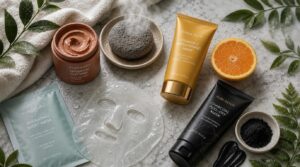
Not every mask plays by the same rules, and timing is where the real difference shows. The type of mask you’re using should actually drive when you apply it. Here’s how to match each one to the right moment in your routine.
Clay and Mud Masks
Clay and mud masks belong before your shower, no question. Their mineral-rich formula needs dry skin to work — moisture on the surface weakens that oil-absorbing effect.
Apply a thin, even layer, follow the product’s timing closely, then let the shower rinse everything clean. Lukewarm water lifts residue gently without stripping skin that’s already working hard.
Charcoal Detox Masks
Charcoal works like a magnet for your pores — pulling out excess sebum and surface buildup through charcoal adsorption. Use it before your shower so the mask sets fully on dry skin, then rinse clean without mess.
- Drying time matters: wait until the mask feels firm, not tacky
- Peel-off formulas lift more evenly on dry, product-free skin
- Oil control benefits are strongest with full contact time
- Watch for sensitivity risk factors like stinging or tight discomfort
Gel Soothing Masks
Gel soothing masks are built for after the shower. Their water-based hydrogel matrix releases humectants like glycerin, hyaluronic acid, and panthenol into warm, relaxed skin — maximizing gel hydration without overloading your barrier.
The cooling effect feels especially good when skin runs tight or flushed from heat. Apply to slightly damp skin, let it sit, then seal with moisturizer for a real post-shower glow.
Sheet Masks
Sheet masks are best used after the shower. Warm skin absorbs serum faster, and slightly damp pores let humectants like hyaluronic acid and glycerin sink in deeply.
Materials like bio-cellulose and hydrogel adhere more closely to your skin’s contours thanks to precision cutting, keeping serum where it belongs. That’s your shortcut to a real post-shower glow.
Exfoliating Masks
Unlike sheet masks, exfoliating masks work best before your shower. Applying a salicylic acid or glycolic acid formula to dry skin gives the actives time to break down dead cells and support pore cleansing without water diluting the formula.
Rinse everything off in the shower — clean, easy, done.
Best Timing by Skin Type
The right mask timing isn’t one-size-fits-all — your skin type changes everything. Oily skin plays by different rules than dry or sensitive skin, and getting that wrong can undo all your effort. Here’s how to match your timing to what your skin actually needs.
Oily Acne-prone Skin
If you have oily or acne-prone skin, apply your face mask before the shower. Your skin’s excess sebum — driven by overactive sebaceous glands — responds best to clay and pore-clarifying masks on dry skin. This timing maximizes sebum control by letting the mask fully absorb oil before water interferes.
After showering, seal everything with a non-comedogenic moisturizer containing niacinamide or salicylic acid.
Dry Dehydrated Skin
Dry and dehydrated skin need different timing than oily skin. Dry skin lacks oil; dehydrated skin lacks water — and both respond best to masks applied after the shower. Warm steam softens the surface and preps your skin to absorb hydrating ingredients more effectively.
- Apply on slightly damp skin to improve moisture retention
- Choose masks with hyaluronic acid or glycerin for deeper hydration
- Always follow with a barrier-repairing moisturizer to seal everything in
Combination Skin Zones
Combination skin plays by two sets of rules.
Your T-zone oil management calls for a clay or charcoal mask before the shower, where dry skin absorbs it best. Then post-shower, apply a cheek moisture boost with a hydrating gel mask on slightly damp skin.
This dual zone treatment keeps pore size control and hydration working together.
Sensitive Reactive Skin
Sensitive or reactive skin demands a gentler approach to the decision of using a face mask before or after a shower. Post-shower timing works best here — warm water relaxes the skin without triggering stinging from direct heat contact. Let your skin cool for 5–10 minutes first, since heat can heighten nerve hyperreactivity and worsen skin irritation.
Choose a calming gel mask to support barrier repair and cooling relief without overwhelming your moisture barrier.
Mature Aging Skin
Mature skin plays by different rules. Barrier lipid loss, collagen decline, and sebum reduction mean your skin holds less moisture and recovers more slowly. That’s why post-shower timing works best — warm steam prepares skin for absorption without stripping what little oil remains.
- Use anti-aging masks on slightly damp skin for a hydration boost
- Target pigmentation changes with vitamin C or niacinamide formulas
- Support skin barrier health with ceramide-rich moisturizer after removal
- Avoid hot water — skin thinning makes mature skin more reactive to heat
Pre-Shower Face Mask Routine
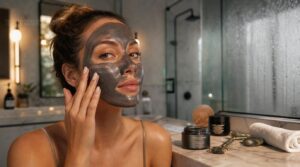
Getting this routine right doesn’t require much — just the right order of steps. Clay and charcoal masks work best before your shower, and following a simple sequence makes all the difference. Here’s exactly how to do it.
Start With Dry Skin
Before reaching for your mask, check one thing: is your skin actually dry? Dry skin prep is the most overlooked step in a pre-shower routine. Clay and charcoal masks need a dry surface to grip properly — wet or damp skin breaks their seal.
A quick, gentle cleanse first removes surface oil; then let your skin air-dry completely before applying.
Apply Thin Even Layer
Think of mask application like painting a wall — too much product in one pass makes more work, not better results. Apply less than you think you need, then spread it thin and even.
- Use a soft brush or flat applicator for controlled, streak-free coverage
- Work in one consistent direction to avoid reworking the surface film
- Target thicker product buildup at the jawline and around the nose immediately
If your face mask feels heavy or tacky while spreading, that’s your cue — you’ve applied too much. A thin, uniform layer dries evenly and delivers better results in your pre-shower skincare routine.
Follow Product Timing
The label isn’t just a suggestion — it’s the formula doing its job. Label timing adherence matters because clay and charcoal masks are calibrated to absorb excess oil within a specific window.
Leave them too long and you’re pulling moisture your skin actually needs. Set a timer, stick to the ideal wear period, and your pre-shower skincare routine stays on track.
Rinse With Lukewarm Water
Once the timer goes off, head straight to the sink. Rinse with lukewarm water — not hot, not cold — using gentle, circular motions to lift the mask away from your pores.
Hot water strips more than just the mask, and cold water won’t clear residue cleanly. Lukewarm keeps your skin barrier intact while washing everything off comfortably.
Moisturize After Shower
After rinsing, your moisturizing routine starts a two-minute clock. Once the mask and lukewarm water have done their work, your skin is clean, slightly damp, and ready to absorb. That Two Minute Window is when moisturizer locks in the most hydration — wait too long, and surface moisture evaporates before you can trap it.
- Moisture Lock works best on damp skin
- Humectants like glycerin draw water into the skin
- Barrier Boost ingredients like ceramides reduce water loss
- Match your Texture Match — light lotion for oily skin, richer cream for dry
- Pat gently using Soft Application to avoid redness on freshly cleansed skin
This step is what separates a decent routine from a real post-shower glow. Whether you’re asking about face mask before or after shower timing, moisturizing seals everything in and keeps your skin comfortable all day.
Post-Shower Face Mask Routine
Post-shower is prime time for hydrating and calming masks, but the steps you take right after turning off the water make all the difference. Your skin is warm, receptive, and ready — so a little intention goes a long way. Here’s how to work through your post-shower mask routine from start to finish.
Cleanse During Shower

Your post-shower face mask routine starts in the shower itself. Use a gentle facial cleanser to clear away sweat, oil, and daily residue — this is the deep cleansing step that sets everything else up. Massage it in briefly, then rinse thoroughly with lukewarm water.
Avoid harsh scrubbing or high-pressure spray, especially around the eyes. Pat your skin dry without rubbing.
Let Skin Cool Briefly

Once you’re out of the shower, give your skin a moment to settle. This Brief Cooling Period — just 5 to 10 minutes — lets your skin temperature reset before anything touches it.
Here’s why that matters:
- Skin Temperature Reset reduces post-shower heat that can increase sensitivity
- Cooled skin is calmer and less reactive to active ingredients
- Cooling Before Mask application improves ingredient absorption
- It lowers the risk of redness from an already-warm skin barrier
- A Gentle Chill Step readies skin for a better postshower glow
Apply Mask Gently

Once your skin has cooled, it’s ready for the mask. Before you start, do a quick skin safety check: skip any reddened, broken, or reactive areas.
Use clean fingertips or an applicator and spread the product in smooth, even strokes — moving from the center of your face outward. Press lightly so the mask makes contact without dragging.
Remove Without Scrubbing
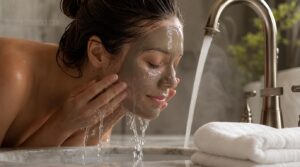
Removing your mask the wrong way can undo all the good work you just put in. Lukewarm water is your best tool here — let it do the heavy lifting.
- Wet your face fully before touching the mask
- Let water soften the mask for a few seconds
- Avoid friction removal — no rubbing or scrubbing circles
- If residue clings, re-wet and wait briefly
- Pat dry gently with a clean towel
Seal With Moisturizer
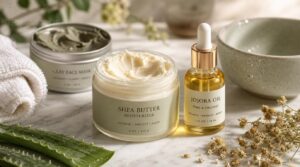
Sealing in moisture is the final step that makes everything else count. After removing your mask, your skin is primed — slightly damp and receptive. Apply a moisturizer with occlusives like shea butter or petroleum jelly to lock that hydration in place. Skipping this step lets water evaporate, leaving skin drier than before you started.
| Moisturizer Type | Key Ingredient | Best For |
|---|---|---|
| Humectant-based | Hyaluronic acid | Dry, dehydrated skin |
| Occlusive-rich | Petroleum jelly | Very dry or mature skin |
| Emollient-rich | Jojoba oil | Normal to combination skin |
| Barrier-repair | Ceramides | Sensitive or reactive skin |
| Lightweight gel | Glycerin blend | Oily or acne-prone skin |
Match your moisturizer to your skin type for the best results.
Shower Habits That Affect Results

Your shower routine does more for your skin than you might think — and a few small habits can make or break how well your mask works. The water temperature, how long you stay in, and even how you dry off all play a role. These simple adjustments can set your skin up for better results every time.
Avoid Very Hot Water
Very hot water is quietly sabotaging your skin. Water above 44°C strips natural oils, weakening your skin barrier and making it far more prone to dryness, redness, and irritation — none of which pair well with masking.
Whether you’re applying a face mask before or after a shower, lukewarm water protects sensitive skin and keeps your results consistent.
Keep Showers Shorter
The longer your shower runs, the more it costs you — in water, energy, and skin health. A five-minute shower uses roughly 12.5 gallons, compared to 20 gallons for an eight-minute one. That difference adds up fast.
Shorter showers also preserve natural skin oils, so your face mask — whether you apply it before or after a shower — works on a stronger baseline.
- Turn off the water while lathering or shaving
- Set a five-minute timer to stay on track
- Use cooler water to reduce oil stripping
- Rinse quickly before stepping out
Skip Harsh Scrubbing
Scrubbing your face hard during mask removal is one of the easiest ways to undo everything you just did.
Gentle pat drying and soft finger pressure let lukewarm water do the heavy lifting instead. This minimal friction technique keeps your skin barrier intact, reduces redness, and leaves your face ready — whether you’re masking before or after your shower.
Use Gentle Cleanser
Your cleanser choice matters just as much as your mask. A gentle, non-stripping cleanser keeps your skin’s natural acid mantle intact — meaning your barrier stays balanced, not raw and reactive. That’s why harsh soaps can quietly sabotage your whole skincare routine before a mask even touches your face.
Look for cleansers that offer:
- Humectants like glycerin to maintain comfort during washing
- Formulas free from synthetic fragrance and SLS
- Barrier-supportive ingredients like ceramides or hyaluronic acid
Pat Skin Slightly Damp
After using a gentle cleanser, how you dry your face is often overlooked — but it shapes everything that follows. Pat skin slightly damp, not fully dry. Damp skin helps hydrating masks and sheet masks spread evenly, absorb better, and lock in moisture far more effectively than applying to dry skin.
| What You Do | What It Does |
|---|---|
| Pat gently with a clean towel | Removes excess water without stripping moisture |
| Leave skin slightly moist | Promotes even mask adhesion and spread |
| Skip rubbing dry | Reduces irritation before mask application |
| Apply mask within 30 seconds | Catches the ideal moisture lock window |
Simple Rule for Better Results

Once you know your mask type, the timing practically decides itself. There’s a simple framework that covers most situations without overthinking it. Here’s what to keep in mind.
Detox Masks Before Shower
Detoxifying clay masks work best before you shower. Applied to dry skin, they pull excess oil and debris from pores through the oil extraction process; then the shower rinse efficiency manages cleanup effortlessly.
This pre-shower clay application combines steam boosted detox and deep pore cleansing in one routine:
- Absorbs sebum without spreading
- Promotes pore unclogging effectively
- Reduces sink mess completely
- Simplifies skin detoxification naturally
Hydrating Masks After Shower
While clay masks do their best work before the shower, hydrating masks after shower is where they shine.
Your skin is warm, clean, and slightly damp — the perfect setup. Apply your hydrating sheet masks or gel formula within a few minutes of stepping out, then seal everything in with an emollient-rich moisturizer to lock that moisture in.
Exfoliating Masks With Caution
Exfoliating masks need a different approach than clay or hydrating options. Timing and pressure matter — leave the mask on only as long as the label says, then remove it with a soft cloth and light strokes.
Avoid acid overlap by skipping other actives that day. For sensitive skin, choose gentler acids like lactic acid to protect your barrier.
Follow Label Directions
The label is your most reliable guide — more than trending tips or online hacks. Whether it’s a face mask before or after shower, read instructions carefully before you start. The label tells you the right skin condition, wear time, and removal method for that specific mask type.
- Apply as directed — thin, even layer, avoiding eyes and lips
- Check frequency limits — overusing a mask won’t speed up results
- Follow removal steps — lukewarm water, no scrubbing
This is dermatologist-approved advice built into every product. Respect it, and your skincare routine gets smarter.
Adjust for Skin Reaction
Your skin will tell you when something’s off — the trick is learning to listen.
| Signal | What to Do |
|---|---|
| Burning or stinging | Stop and rinse immediately |
| Redness that lingers | Switch to a gentler mask |
| Itching after removal | Patch test before next use |
| Tight, dry feeling | Apply moisturizer right away |
| Rash or persistent irritation | Seek dermatologist-approved advice |
Skin sensitivity shifts with seasons, stress, and routine changes. If a mask causes discomfort, scale back — use it less often or swap to a barrier-repair formula with ceramides. Always run a Patch Test Protocol first when trying something new.
Frequently Asked Questions (FAQs)
Do you face mask before or after a shower?
Both timing choices matter. Apply detox and clay masks before your shower for oil control, and save hydrating or sheet masks for after — when steam absorption boost and hydration lock effect work in your favor.
Do you do a face mask first or wash your face first?
Always wash your face first. Cleansing removes oil, dirt, and surface residue so your mask can actually work — not just sit on top of grime. Clean skin absorbs active ingredients far more effectively.
What is the best time to use a face mask?
The best time to use a face mask depends on your mask type and skin goal. Cleansing or detox masks work best after cleansing. Hydrating masks shine on clean, receptive skin.
Should I wash my face before or after a shower?
Wash your face after shampooing but before leaving the shower. This removes any product residue that drips onto your face, and lets steam loosen pore buildup first.
Should you face mask before or after a shower?
It depends on your mask type. Clay and detox masks work best before your shower, while hydrating and sheet masks shine after. Match the timing to your mask, and your skin wins.
Should I use mask before or after wash?
Cleanse first. Applying a mask to unwashed skin traps oils and debris against it, which works against the treatment. Start with clean skin every time, regardless of whether you mask before or after your shower.
Is it better to do an eye mask before or after a shower?
After a shower is the smarter move for eye masks. Clean, slightly damp skin absorbs serums better, and letting your skin cool briefly reduces the risk of irritation under that delicate eye area.
Can I use a mask after exfoliating?
Yes, you can. After exfoliating, reach for a hydrating or soothing mask. Your barrier is temporarily sensitive, so skip clay or acids. A moisture-focused mask restores comfort and helps seal in hydration fast.
How long should masks stay on?
Each mask type has its own sweet spot. Clay and charcoal masks: 10–15 minutes. Sheet masks: 10–20 minutes. Exfoliating masks: 5–10 minutes. If it cracks, stings, or pulls — take it off.
Are certain masks better in hot weather?
Hot weather calls for lighter choices. Breathable, moisture-wicking materials and gel soothing masks beat heavy creams. They cool the skin, control excess oil, and skip the stuffy, heat-trapped feeling entirely.
Conclusion
You don’t need a complicated routine to get any of this right. Deciding whether to use a face mask before or after a shower simply comes down to what your skin needs and what type of mask you’re using.
Clay pulls oils better on dry skin, and hydrating formulas sink in deeper once steam has softened your pores. Match the mask to the moment, and your skin will show you exactly what good timing looks like.