This site is supported by our readers. We may earn a commission, at no cost to you, if you purchase through links. This content is for general informational and educational purposes only and is not a substitute for professional medical, dermatological, or nutritional advice.
Most protective styles make you choose between looking good and keeping your edges intact. Feed-in braids refuse that trade-off. The technique builds each braid from thin to full—starting with your natural hair, then gradually weaving in extensions—so tension stays light while the finish looks polished and flawless.
No bulky knots digging into your scalp. No harsh pull that has you wincing by day two.
Whether you’re chasing length, protecting a fresh trim, or just want a style that holds up for weeks without the drama, this guide walks you through everything—styles, steps, and the maintenance habits that make them last.
Table Of Contents
- Key Takeaways
- What Are Feed-in Braids?
- Popular Feed-in Braid Styles
- Step-by-Step Feed-in Braiding Guide
- Customizing Feed-in Braids for Your Look
- Maintaining and Caring for Feed-in Braids
- Pros and Cons of Feed-in Braids
- Frequently Asked Questions (FAQs)
- What does feed in braids mean?
- How many packs of hair for feed in cornrows?
- How long does feed in braids last?
- What is the feed in braids?
- What is the difference between cornrows and feed in braids?
- What is the difference between feed in and stitch braids?
- Can I swim with feed-in braids?
- What type of hair is best for feed-in braids?
- Can I wear my feed-in braids in a high ponytail?
- How long does it take to install feed-in braids?
- Conclusion
Key Takeaways
- Feed-in braids gradually weave extensions into your natural hair instead of knotting them at the root—so you get a polished look without the scalp-wrecking tension.
- This technique works for almost every hair type and age, from a toddler’s delicate strands to a bold adult style, and you can customize length, thickness, and color without commitment.
- A simple nighttime routine—satin scarf, light oil on your scalp, gentle washing—is what separates braids that last two weeks from braids that go the full six.
- The biggest risks come from going too tight or too often, so always flag scalp sensitivity to your braider before the first strand goes in.
What Are Feed-in Braids?
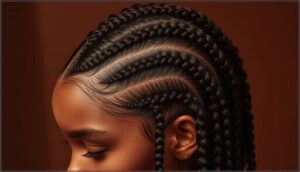
Feed-in braids are one of those styles that look complicated but make total sense once you understand how they work.
They’re also a smart move if you want your style to actually last—feed-in braids and other protective styles like cornrows tend to hold up much longer when you skip the daily brushing and combing.
They’re built differently from traditional braids — and that difference is exactly what makes them stand out.
Here’s what you need to know.
Key Features of Feed-in Braids
Feed-in braids have a few tricks up their sleeve that make them stand out from the rest. This protective style works by gradually adding hair extension pieces into your natural hair — no bulky knots, no harsh tension.
- Hair blend feels smooth and natural-looking
- Braid patterns range from simple rows to creative swirls
- Scalp care stays front and center — less pulling, more breathing room
How Feed-in Braids Differ From Other Styles
So what actually sets them apart from the braided styles you might already know? It comes down to technique. Traditional braids often knot extensions at the root — feed in braids weave them in gradually. Smoother finish, less bulk, less tension.
| Style | Hair Extension Method | Feel at Root |
|---|---|---|
| Box Braids | Knotted at base | Can feel heavy |
| Cornrows | No extensions usually | Flat, tight |
| Feed In Braids | Gradually fed in | Light, smooth |
That gradual approach is what makes this protective style so different — and honestly, so much more freeing.
Benefits as a Protective Hairstyle
That smooth, gradual technique does more than look good — it actually works in your favor. As a protective hairstyle, feed-in braids tuck your ends away, locking in moisture and limiting daily manipulation. Less touching means less hair breakage. The even weight distribution brings real tension relief and scalp comfort.
Over weeks, that protection quietly fosters hair growth — your natural hair just thriving underneath. You can further support healthy hair by learning more about.
Popular Feed-in Braid Styles
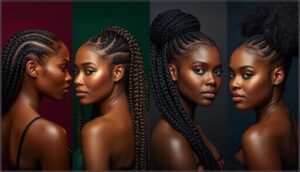
Feed-in braids aren’t a one-size-fits-all situation — and that’s honestly the best part. Whether you want something sleek and classic or bold enough to stop traffic, there’s a style that fits your vibe.
Here’s a look at some of the most popular ways to wear them.
Straight Back Feed-in Braids
Straight-back feed-in braids are the classic move—clean rows running from your hairline to the nape of your neck, no fuss, just pure structured style. Whether you go jumbo or keep them tiny, braid thickness totally changes the vibe.
Different hair textures take to this technique beautifully. Pick your extension choices wisely, and these protective hairstyles will carry you effortlessly through weeks of bold, unbothered living.
Side and Curved Feed-in Braids
Side and curved feed-in braids flip the script—instead of running straight back, all that gorgeous length sweeps to one side or hugs the curves of your head for a look that feels bold, fluid, and unmistakably yours.
Getting that sweep just right takes some know-how, so brushing up on cornrow techniques for natural hair health can help you protect your strands while pulling off the look.
Think lemonade-style side feed-in braids or curvy hair designs that follow your natural head shape. These feed-in methods let your braid pattern ideas do the talking—curved accents included.
Jumbo and Small Feed-in Variations
Size matters here—and with feed-in braids, you get to decide exactly how bold or understated you want to go.
Jumbo feed-in braids are quick to install and make a serious statement. Small feed-in braids offer delicate detail and longer wear.
Both are protective hairstyles that work with hair extensions seamlessly—different feed-in methods, same gorgeous payoff. Pick your vibe.
Creative Patterns and Designs
This is where feed-in braids become full-on art. Geometric braids use triangle or diamond parts to turn your scalp into a canvas. Curved rows sweep and flow like waves. Symbolic designs—hearts, stars, even letters—make a personal statement. Mixed directions add drama. Artistic details like stitch lines and decorative ends lift these braided hairstyles from protective to unforgettable. Your head, your masterpiece.
Feed-in braids transform your scalp into a canvas where geometry, curves, and symbols become wearable art
For inspiration on classic and creative options, explore these.
Step-by-Step Feed-in Braiding Guide
Ready to get your hands in some hair? Before you start braiding, it helps to know exactly what you’re working with — the right tools, the right prep, and the right steps in the right order.
Here’s everything you need to make it happen.
Essential Tools and Products
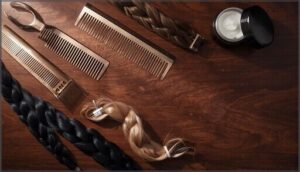
Before you sit down in that chair, let’s make sure you’ve got everything within arm’s reach—because nothing slows down a great braid session like hunting for a rat-tail comb mid-part.
For feed-in braids, you’ll need braid combs, hair clips, styling gel, braiding thread, and quality hair extensions. These basics make the difference between clean, smooth braided hairstyles and a frustrating afternoon.
Preparing Natural Hair
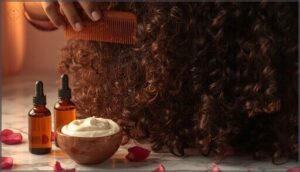
Think of your natural hair as the foundation of a house—if it’s not solid going in, nothing built on top of it’s going to hold. Before pre-braiding begins, give your hair some real love:
- Detangle thoroughly—knot-free hair makes weaving seamlessly so much easier.
- Do a scalp massage with natural oils to boost circulation.
- Deep condition with a hair mask for soft, flexible strands.
Sectioning and Parting Techniques
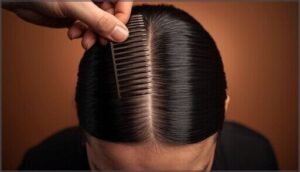
Clean parts are everything—they’re the difference between braids that look intentional and braids that just look busy. Start with scalp mapping: decide your braid patterns before you touch a comb.
Grab a rat-tail comb for precise parting, then work in clean sections from front to back.
Your braiding angles matter too—consistent tension across each part keeps feed-in braids flat, neat, and smooth.
Feeding in Extensions Seamlessly
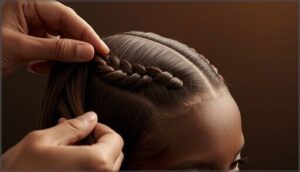
Now that your parts are clean and your sections are mapped, it’s time for the magic part—feeding in those extensions without a bump or bulge in sight. Start small. Thin pieces of extension hair blend far better than thick clumps—that’s your smooth blending secret right there.
Add more hair gradually as you braid down, matching the natural flow of your own strands. Keep your braid tension even throughout. That consistent pull is what makes feed-in braids lie flat and look effortlessly natural.
Securing and Finishing The Braids
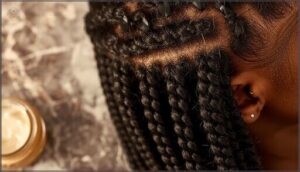
You’ve fed in every strand — so let’s lock it all in and give those braids a clean, polished finish that actually lasts. Secure each braid with a small elastic, then dip the tip in hot water to seal the end.
Lay your edges down with a firm-hold gel — that’s the finishing touch that pulls the whole look together. Clean, sleek, done.
Customizing Feed-in Braids for Your Look

Feed-in braids are honestly one of the most personal hairstyles you can rock — because the real fun starts after the foundation is done.
From length and thickness to pops of color and cute accessories, there are so many ways to make this style truly yours.
Here’s how to customize your feed-in braids from every angle.
Choosing Braid Length and Thickness
Length and thickness are the two decisions that shape everything about your final look—so it’s worth taking a minute to get them right. Your hair texture and scalp sensitivity guide both choices more than you’d think.
- Neck-length feedin braids feel light and low-maintenance
- Waist-length braids offer maximum Styling Flexibility
- Jumbo Thickness Variations cut install time way down
- Finer braids suit delicate scalps and thinner hair texture
- Medium Braid Length Options balance boldness with everyday ease
Adding Accessories (Beads, Cuffs, String)
Once you’ve locked in your length and thickness, the real fun starts — accessories are where your braids stop looking good and start looking yours. Thread in String Details near the roots, slide on metallic cuffs mid-braid, or scatter Beaded Accents toward the ends.
Hair Charms and Cuff Styling add instant personality. Even subtle Braid Embellishments — a few decorative accents here and there — make the whole style feel intentional.
Color and Hair Extension Options
Color is where your braids go from a style to a statement. The right Extension Materials and Color Matching can completely transform your look — no commitment required.
- Ombre Effects fade from dark roots to bold ends
- Braid Highlights add dimension without full color
- Colored extensions let you experiment freely
- Hair Dye Options work on synthetic or human hair extensions
- Natural-looking hairline blends feed in braids flawlessly
Styles for Kids and Adults
Feed-in braids don’t play favorites — whether you’re styling a toddler’s tender scalp or rocking a bold look yourself, there’s a variation made for every age and vibe.
Kids braids stay gentle and low-tension, perfect for delicate hair textures. Adults can push boundaries with braid thickness, length, and intricate braiding techniques.
These protective hairstyles flex across the board — no scalp left behind.
Maintaining and Caring for Feed-in Braids
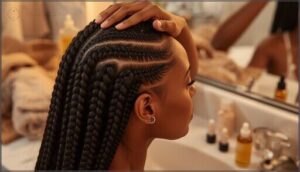
Getting your braids installed is the fun part — keeping them fresh is where the real work begins. The good news? A simple routine goes a long way.
Here’s what you need to know to make your feed-in braids last.
Daily and Nighttime Protection
Your braids went through a lot to look this good—so treat them like the investment they’re. A little daily styling discipline and smart nighttime wrapping go a long way toward braid preservation.
- Wrap with a satin scarf for sleep protection every night
- Use a satin pillowcase as backup hair shielding
- Refresh edges gently with lightweight oil daily
- Keep natural hair moisturized underneath
- Avoid tight updos that stress your roots
Washing and Conditioning Tips
Dirty hair doesn’t have to mean ditching your braids—you just need to wash smarter, not harder. Dilute a sulfate-free shampoo with water, then apply it directly to your scalp. A gentle scalp massage breaks up product buildup without disturbing your style. Follow with a lightweight conditioner to lock in hair moisture—your natural hair stays happy, and your protective style stays fresh.
| Step | What To Do |
|---|---|
| Cleanse | Diluted sulfate free shampoo on scalp |
| Massage | Gentle scalp massage to lift buildup |
| Condition | Light conditioner for hair moisture |
| Dry | Air dry fully to protect hair maintenance |
Preventing Frizz and Scalp Issues
Frizz and itch don’t have to crash your protective style party. Wrap your braids in a satin scarf at night — it cuts friction fast.
For Scalp Care, mist a witch hazel spray along your parts for quick Itch Relief. Light oils like jojoba handle Hair Hydration without buildup.
Skip heavy greases — they invite flakes, not Frizz Control. Simple Braid Maintenance wins every time.
How Long Feed-in Braids Last
With the right care, these braids can stick around for two to six weeks — and that’s not a small window. Braid longevity comes down to how well you protect your scalp health and wrap up at night. Good braiding techniques and quality hair extensions make a real difference in style durability.
- Silk wrap = fewer frizz fights
- Moisturized scalp = longer-lasting feed in braids
- Gentle handling = protective hairstyles that actually protect
Pros and Cons of Feed-in Braids

Like any style, feed-in braids come with real upsides and a few things worth knowing before you commit.
They’re not perfect for everyone — and that’s okay. Here’s an honest look at what to expect.
Scalp Health and Hair Growth
Protection starts at the roots — literally. When tension stays light, your hair follicles stay happy, and healthy growth patterns follow. Think of feed-in braids as a true protective style: ends tucked away, friction minimized, breakage slashed.
| Scalp Health Factor | What It Means for You |
|---|---|
| Tension Relief | Light roots protect follicles from thinning |
| Hydration Tips | Light oils keep scalp balanced, not clogged |
| Scalp Massage | Boosts circulation between washes |
Styling Versatility and Longevity
Healthy roots are great, but let’s talk about what makes feed-in braids so worth the install — they’re one of the most flexible styles you can wear, day one through week six. Braid durability is real with the right care. Style adaptation keeps things fresh without starting over.
- Switch accessories to refresh your look
- Longevity tips like nightly wrapping extend wear
- Braid reinforcement tightens edges without full reinstall
Potential Drawbacks and Risks
Every protective hairstyle has a flip side — and feed-in braids are no exception. Tension Alopecia creeps in when braids are installed too tight, too often. Scalp Irritation, Hair Breakage, and even Allergic Reactions from synthetic extensions are real risks worth knowing.
| Risk | Cause | Warning Sign |
|---|---|---|
| Tension Alopecia | Tight installation | Thinning edges |
| Scalp Irritation | Product buildup | Redness, bumps |
| Allergic Reactions | Extension Damage/fibers | Persistent itching |
Suitability for Different Hair Types
Knowing the risks is half the battle — the other half is figuring out whether feed-in braids actually work for your hair type. Good news: they do, for most.
Fine hair benefits from lighter Extension Choices and smaller sections. Coarser Hair Texture manages Braid Durability like a champ. Even short Hair Length works.
Just flag any Scalp Sensitivity before installation — your braider needs to know.
Frequently Asked Questions (FAQs)
What does feed in braids mean?
Think of it like building a braid piece by piece — that’s the feed-in method. You gradually add hair extension strands to your natural hair, creating smooth, protective style braids without bulk or tension.
How many packs of hair for feed in cornrows?
Most people use 3–5 packs for feed in cornrows. Braid thickness and cornrow length drive that number up or down. Jumbo styles need less; tiny braids demand more. When in doubt, grab an extra pack.
How long does feed in braids last?
Braid longevity basically boils down to care. Most feed-in braids last two to six weeks — hair extension quality, braiding techniques, and your style maintenance routine all play a role.
What is the feed in braids?
Feed-in braids are a modern take on Braid History. A hair extension gets added strand by strand, weaving them seamlessly into your natural hair for a smooth, tension-free finish that actually lasts.
What is the difference between cornrows and feed in braids?
Cornrows lie flat against the scalp using only your natural hair. Feed-in braids do the same — but extensions get added gradually, giving you more length, fullness, and styling options without the bulk.
What is the difference between feed in and stitch braids?
The main difference is all in the pattern. Stitch braids add horizontal threading across each braid, creating a ladder-like effect. Feed-in braids weave extensions seamlessly into natural hair for a smoother, fuller finish.
Can I swim with feed-in braids?
You can, but don’t jump in blind. Chlorine effects and saltwater care can dry out your braids fast.
Rinse immediately after, follow a solid post-swim routine, and keep drying braids gentle to protect natural hair.
What type of hair is best for feed-in braids?
Most hair types work well. Your curl pattern, natural density, and porosity level all play a role in how smooth the blend looks — but honestly, feed-in braids adapt beautifully to almost any hair texture or length.
Can I wear my feed-in braids in a high ponytail?
Yes — and it looks amazing. Gather your feed-in braids, pull them up, and secure with a thick band. Add a curly hair extension for volume.
Ponytail styling, high bun, braided pigtails — all fair game.
How long does it take to install feed-in braids?
Installation usually takes two to six hours — depending on your braider’s experience level and braid size. Jumbo styles wrap up faster. Smaller, intricate braids take longer.
Either way, the results are absolutely worth your time.
Conclusion
A good braid job is like a well-packed bag before a long trip—everything tucked tight, nothing pulling, ready for wherever life takes you. Feed-in braids work the same way. Built gradually, worn confidently, and maintained with intention, they protect your hair without stealing your style.
Now you’ve got the technique, the tools, and the know-how. The only thing left? Pick your pattern, grab your extensions, and get started.