This site is supported by our readers. We may earn a commission, at no cost to you, if you purchase through links. This content is for general informational and educational purposes only and is not a substitute for professional medical, dermatological, or nutritional advice.

Week three, and your jawline looks like a patchy lawn after a drought. You check the mirror daily, hoping for progress, and some mornings it feels like nothing’s changed at all.
Here’s the truth every barber knows: growing a beard for the first time tests your patience more than your genetics. Those thin patches aren’t a life sentence, they’re just Act One. Follicles wake up on their own schedule, and rushing the process usually backfires.
So before you reach for the trimmer in frustration, let’s talk about what’s actually happening under your skin, and how to work with it instead of against it.
Table Of Contents
- Key Takeaways
- What to Expect When Growing Your First Beard
- Build a Beginner Beard Care Routine
- Handle Common First-Time Beard Problems
- Trim and Shape Your First Beard
- Support Healthy Beard Growth Naturally
- Frequently Asked Questions (FAQs)
- How long does a beard take to grow for the first time?
- What is the 2 finger rule for beard?
- What is the 3 day beard rule?
- What to do when first growing a beard?
- How to grow a beard for the first time?
- Does your beard grow from your parents?
- Why should you grow a beard?
- Is it time to become a bearded?
- Should you cut a beard before growing it?
- How to stimulate beard growth on a pre-existing beard?
- Conclusion
Key Takeaways
- Patchy growth in the first few weeks is totally normal, so give your beard 90 to 120 days before judging how it fills in.
- Beard hair grows about half an inch a month, and genetics, hormones, and each follicle’s own cycle all shape your timeline.
- Stick to a simple routine—wash 2-3 times a week, moisturize damp skin, apply beard oil daily, and don’t skip sunscreen—to keep itch and flaking under control.
- Hold off on trimming or shaping for at least 6 to 12 weeks so density has time to show, and back it up with good sleep, hydration, protein, and stress management for healthier growth.
What to Expect When Growing Your First Beard

So you’ve decided to grow your first beard, and that’s exciting. But before you commit, you need to know what’s actually coming your way over the next few months. Here’s what to expect, step by step.
The itchy, patchy early weeks are totally normal, and this guide to styling and growing your beard day by day breaks down exactly what to do at each stage.
The First 12 Weeks
So you’ve put the razor down, now what? Weeks 1-3 bring soft vellus hair and early itch as follicles wake up. By weeks 2-6, expect the awkward phase, patchy and uneven. Stick with it. Between weeks 6-12, terminal hair thickens and patches fill in. Most men reach a true full beard timeline between six and twelve months. Patience is your best grooming tool here.
Average Beard Growth Rate
So how fast is fast? Facial hair grows about 0.3 to 0.5 millimeters a day, roughly 9 to 15mm monthly, that’s half an inch on average. Slower than scalp hair, which explains the wait.
Hairs cycle through growth, change, and resting phases, so progress looks uneven even when it’s happening.
Beard oil helps keep things comfortable while you ride it out.
Genetics, Age, and Hormones
So why does your buddy’s beard look fuller than yours? Blame genetics. You inherit thickness genes from both parents, and DHT sensitivity in your follicles matters too.
Age plays a role: testosterone climbs through your twenties, peaking near 30. Ethnic background shifts patterns too, but hormonal balance ultimately drives your timeline.
When Patches May Fill In
Genetics loads the dice, but timing still matters. Your beard follicles run on separate growth cycles, so patchy spots at 6 weeks often fill by 8-12 weeks as resting follicles wake up.
Thicker beards fill within 2-3 months; thin ones need 3-6. Give it the full 90-day window before judging shape.
Why Beard Growth Takes Patience
Since every follicle runs its own clock, your beard journey won’t move in a straight line, and that’s normal.
Here’s what’s shaping your timeline:
- Growth cycle stage per follicle
- Hormone signals from testosterone/DHT
- Genetic timing of your pattern
- Density building as patches progress
Stay patient. Real beard confidence comes once density catches up, not before.
Build a Beginner Beard Care Routine

So now that you know what to expect, let’s get you set up for success. A good routine doesn’t need to be complicated, just consistent. Here are the five habits every beginner should build into their week.
Gentle Beard Washing Schedule
Wash 2-3 times a week, no more. Wet your beard, work in a nickel-sized dab of gentle beard wash, and massage in small circles for 30 seconds, right down to the skin. Rinse thoroughly with lukewarm water for about a minute. Skip daily washing, it strips oils your skin needs.
On non-wash days, a quick brush with a boar bristle brush keeps things looking full—check out this step-by-step guide to grooming a patchy short beard for more tips on covering thin spots.
Moisturizing Skin Beneath Your Beard
Here’s the part most guys skip: after you wash, pat your beard dry, don’t rub it raw.
While skin’s still damp, work a dime-sized dab of moisturizer straight into the skin underneath, not just the hair on top. This hydrating under-beard skin step fights flaking and calms that early itch fast.
Applying Beard Oil Correctly
Think of beard oil as your beard’s daily drink of water. Apply it right after a shower, while hair’s still damp, working 3 to 10 drops root to tip.
- Warm oil between palms
- Massage into skin first
- Comb through, tip to root
- Repeat daily
Small amounts prevent greasy buildup, so start light.
Brushing Without Causing Breakage
Grab a boar bristle brush or wide-tooth beard comb, never a fine-tooth one that snags.
Detangle first: start at the ends, work upward, easing out knots before smoothing root to tip.
Keep pressure light, forcing through resistance strains the hair shaft and cuticle.
Wet beard? Go gentler, damp hair breaks easier than dry.
Sunscreen for Bearded Skin
Here’s a myth worth busting: your beard is not a built-in sunscreen. UV rays still reach the skin underneath, so daily SPF 30+ matters for skin cancer prevention.
- Use a lightweight gel or fluid sunscreen
- Work it in with your fingertips, reaching skin
- Cover ears, neck, and nose too
- Reapply every 2 hours outdoors
Layer sunscreen after moisturizer for a solid skin barrier.
Handle Common First-Time Beard Problems

So here’s the truth: every first-time beard hits a few bumps along the way. Nothing you’re about to feel is unusual, and nothing here is unfixable. Let’s go through the most common problems and how to handle each one.
Managing Early Beard Itch
So that itch driving you crazy? It’s usually friction and dryness, not "bad genetics." Wash gently with real beard wash, pat dry, then apply beard oil while skin’s still damp.
| Itch Cause | Quick Fix |
|---|---|
| Collar rubbing | Loose, soft fabrics |
| Hot showers | Lukewarm water |
| Product buildup | Simple, fragrance-free wash |
| Sweat trapped | Rinse after workouts |
| Dry skin | Beard oil daily |
Reducing Dryness and Flaking
Once itch settles down, flaking’s next. Moisturize right after washing, while skin’s still damp, it locks hydration in. Pat dry, never rub.
Pick a non-comedogenic beard moisturizer or oil daily. Dry spell? A thin layer of petroleum jelly overnight works wonders. Running a humidifier helps too, especially in dry winter air.
Preventing Ingrown Beard Hairs
So how do you dodge those annoying red bumps? Shave with the grain, always. Prep skin with a warm towel first, exfoliate gently, then use sharp blades, no dragging. Moisturize after. Skip the same spot twice.
Combine that with regular beard wash and light beard combing, and you’ll cut ingrown hairs way down.
Handling Uneven, Patchy Growth
Once your skin’s calmed down, patchy spots are next. Give it 90 to 120 days before judging anything, cheeks and jaw grow at different speeds.
Let denser areas grow slightly longer to cover thin ones. Brush daily with a boar bristle brush to train hair sideways. A shorter, defined style hides contrast better than letting it grow wild.
Avoiding Premature Trimming Mistakes
Grabbing the trimmer at week three is the fastest way to sabotage your progress. Wait before trimming, six weeks minimum, so density can actually show up.
Check hair density by combing back and checking your skin. Assess growth patterns for 8-12 weeks before shaping anything. Rushing means you’ll avoid over-trimming’s regret later. Patience beats a razor every time here.
Trim and Shape Your First Beard
So you’ve made it past the itchy, patchy stage, and now your beard’s ready for some real shape. This is where you go from "just growing it out" to actually looking put-together. Here’s what you need to know to trim and shape it like you mean it.
Choosing Styles by Face Shape

Your face shape decides your best beard style. Round faces need pointed chin growth, tapered sides. Square jaws pair well with circle beards. Oval faces? Almost anything works. Long faces want width from a boxed beard. Triangular faces need fullness at the jaw to balance things out.
When to Start Shaping

So when do you actually pick up the trimmer? Not yet. Give it 8 to 12 weeks before touching your shape. That’s when patches fill in and true density shows.
Trimming too early risks cutting hairs that would’ve filled gaps. Many guys book a professional first trim around 60 days, letting a barber define lines while preserving your growth potential.
Setting a Clean Neckline

Here’s the trick: two fingers above your Adam’s apple marks where your natural neckline placement begins. Trim a soft U-shape, ear to ear, angling downward with the curve of your jaw.
Follow up with a razor for crisp razor finishing technique. Never trim too high, that kills fullness fast.
Defining Your Natural Cheek Line

Picture a straight line from your sideburn’s front edge over to your mustache, that’s your natural cheek line. Don’t trim yet. Let growth fill in fully first, then match the line to your real density.
Keep it high when you can. Drops in growth mean adjusting lower, avoiding that harsh, unnatural boundary altogether.
Trimming Uneven Growth Safely
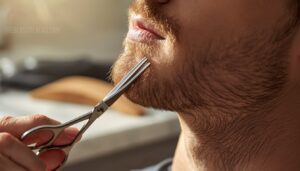
Uneven patches need patience, not panic. Trim dry so you see true length, then use gradual length reduction, one guard size at a time.
Comb hair flat to spot strays, then spot-trim with scissors at a slight angle.
Small, careful passes beat one big rushed cut every time.
Support Healthy Beard Growth Naturally

Your beard isn’t just growing on your face, it’s growing from the inside out. What you eat, how you sleep, and how you handle stress all show up in your whiskers eventually. Here’s what actually moves the needle.
Eating Enough Protein
Grab your fork before your trimmer. Amino acids from a protein-rich diet fuel beard follicle health, and aim for roughly 7g per 20 lbs of bodyweight daily.
- Eggs
- Fish
- Beans
- Greek yogurt
- Lean meats
Spread protein across meals for steady muscle repair and support your hair growth cycle from the inside out.
Staying Hydrated for Beard Health
Protein feeds your follicles, but water carries it there. Aim for 8 glasses daily, sipping steadily instead of chugging.
| Sign | Meaning |
|---|---|
| Light yellow urine | Well hydrated |
| Dark yellow urine | Drink more |
| Dry, flaky skin | Add water-rich foods |
| Soft, comfortable beard | Hydration’s working |
Snack on cucumber or watermelon, then lock moisture in with beard oil afterward.
Prioritizing Sleep and Exercise
Water fuels growth, but sleep is where your body actually builds it. Aim for 7 to 9 hours nightly, same bedtime and wake time daily.
Move your body too. Daytime walks or workouts boost circulation, feeding follicles. Just finish exercising a few hours before bed, your beard sleep and recovery matter more than late-night reps.
Managing Stress Consistently
Sleep and exercise cover your body. Your mind needs care too.
Stress spikes cortisol, which can stall growth and fuel patchy stress. Try:
- Stress journaling stressors nightly
- Mindful breathing or progressive relaxation daily
- Leaning on social support when overwhelmed
Beard patience pairs with life patience. Manage stress consistently, and your beard timeline stays on track toward real beard goals.
Setting Realistic Product Expectations
A few honest words on beard products: they won’t grow new hair. When you’re growing a beard for the first time, treat labels with product label honesty in mind, oils and balms offer moisturizer benefits only, conditioning existing hair, not follicle growth.
Beard products won’t grow new hair, they only condition what’s already there
| Claim Type | Reality |
|---|---|
| "Boosts growth" | Unverified |
| "Softens & conditions" | Backed |
| "Reduces itch" | Backed |
Manage expectations, not miracles.
Frequently Asked Questions (FAQs)
How long does a beard take to grow for the first time?
Funny thing about patience: it’s the one tool no trimmer can replace. Your beard growth timeline runs 2 to 6 months, growing roughly half an inch monthly. Patchy spots fill in gradually, so genetics and initial growth stages matter more than rushing the process.
What is the 2 finger rule for beard?
Simple trimming reference point: place two fingers above your Adam’s apple, top edge marks your neckline. Shave below, keep above. It gives you a balanced neckline and stops that dreaded neckbeard look cold.
What is the 3 day beard rule?
It’s not really about counting days. The rule points to a 5 to 4mm stubble length, your beard’s foundation. Stop shaving, let growth catch up, then trim for that clean, intentional stubbled look.
What to do when first growing a beard?
Think of it like planting grass seed, patchy at first, but it fills in with time. Start slow, avoid trimming, manage itch with oil, and care daily while your beard grows naturally into its own shape.
How to grow a beard for the first time?
Stop shaving for 8 to 12 weeks, wash gently with beard shampoo, apply oil daily for early itch relief, brush to train growth, and stay patient through patchiness before shaping your beard.
Does your beard grow from your parents?
Yes, both parents hand down the DNA behind your beard. Genetic inheritance shapes follicle density and testosterone sensitivity, so your thickness and pattern often echo traits from mom’s and dad’s sides, not just dad’s beard alone.
Why should you grow a beard?
Like a knight earning his beard before a joust, you’ll build facial definition, sharper social perception, and real beard confidence. Add sun protection and skin comfort, and this beard care ritual becomes your favorite self-expression.
Is it time to become a bearded?
This is your Beard Growth Commitment moment, the real Shaving Decision Point. Ready for months of patience, a beard care routine, and a Beard Identity Choice? Then start your first beard journey now, stubble and all.
Should you cut a beard before growing it?
A single trim beats it back to skin level, giving you a clean baseline to track real growth. Skip repeat shaves though. Constant resetting delays fill-in and stalls the growth timeline you’re trying to read.
How to stimulate beard growth on a pre-existing beard?
Want your existing beard to grow thicker? Try minoxidil application and microneedling to stimulate follicles, eat protein-rich foods for nutrition, manage stress, brush daily with boar bristles, and use beard growth oil consistently for real results.
Conclusion
A beard grows like a garden, slow, stubborn, and worth the wait. Growing a beard for the first time means trusting roots you can’t see yet.
Wash gently, oil daily, and resist that trimmer when patches tempt you to quit. Feed your skin, feed your body, and give follicles the months they need.
Six weeks from now, you won’t just have a beard. You’ll have proof that patience pays off, one whisker at a time.