This site is supported by our readers. We may earn a commission, at no cost to you, if you purchase through links.
The difference between a clean fade and a botched haircut often comes down to one factor: blade selection. Professional barbers know that taper blades won’t deliver the razor-sharp skin fades their clients expect, just as balding blades create problems when you’re blending mid-length hair.
Each blade type fulfills a specific purpose, shaped by its tooth configuration, cutting angle, and edge design. Understanding hair clipper blade types and their uses transforms guesswork into precision, whether you’re executing a tight bald fade, creating smooth gradient transitions, or defining crisp outlines.
The right blade doesn’t just cut hair—it controls how that hair meets the skin, determining whether you achieve professional results or struggle with tugging, uneven removal, and disappointed clients.
Table Of Contents
Key Takeaways
- Blade selection determines fade quality and cutting precision—taper blades handle smooth transitions, fade blades execute tight skin fades, and balding blades deliver ultra-close finishes, while choosing the wrong blade causes tugging and uneven results.
- Material composition directly impacts performance and comfort—stainless steel offers durability and corrosion resistance, ceramic blades stay cooler during extended sessions, and titanium or gold titanium options provide hypoallergenic benefits for sensitive skin.
- Proper maintenance extends blade life and preserves cutting power—clean blades after each use with alcohol or clipper solution, apply oil to moving parts, and replace blades every six to twelve months depending on usage frequency to prevent rust and dullness.
- Match blade type to hair texture and your specific cutting goal—fine hair requires finishing or taper blades to prevent irritation, coarse or dense hair needs deep tooth T-blades for bulk removal, and professional barbers benefit from interchangeable blade systems while home users stick with adjustable all-purpose options.
Key Hair Clipper Blade Types
Your clipper’s blade type determines what cuts you can pull off and how clean they’ll look. Each blade fulfills a specific purpose, from creating sharp fades to adding finishing touches.
Understanding how different blades pair with the right hair styling tools for men helps you achieve professional results at home.
Here’s what you need to know about the six main blade types barbers rely on.
Taper Blades
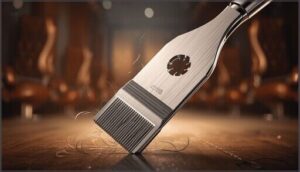
Taper blades feature a flattened base and wider cutting edge that make them your go-to for smooth blending and fading. The flat bevel lets you pivot off the head during cutting techniques without lifting from the skin, which keeps transitions fluid.
You’ll get longer edge geometry than fade blades, meaning fewer guard changes when working across different lengths. Regular blade sharpening and clipper maintenance keep that controlled cut consistent.
Fade Blades
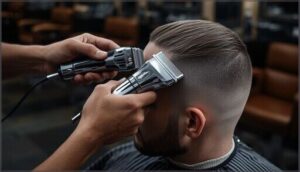
When you need tight skin fades and razor-sharp guidelines, fade blades deliver. Their flat, slim profile sits closer to the scalp than taper blades, giving you the precision fade techniques demand.
Key advantages include:
- Zero gap setup capability for ultra-close cuts
- Minimal back bevel for smooth flicking motions
- Thinner edge design that reduces bulk during blending
Regular blade sharpening and clipper maintenance keep performance consistent across all hair textures.
Wedge Blades
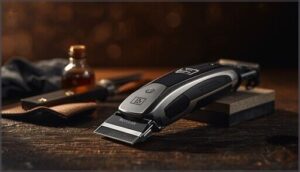
Between the versatility of fade blades and the close cutting of balding blades sits the wedge blade design—your middle ground for precision cutting. This blade style bridges both worlds with fine edge retention and smooth blending capacity.
Wedge blades excel when you’re sculpting sharp outlines or refining subtle transitions without sacrificing control.
| Feature | Benefit |
|---|---|
| Narrow edge profile | Enhanced control in tight areas |
| Balanced geometry | Smooth fading and detailing |
| Compatible materials | Stainless steel, titanium options |
| Maintenance needs | Regular blade sharpening, oiling |
Balding Blades
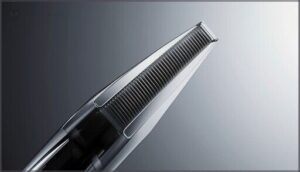
When you need a near-skin finish for balding techniques or crisp full-head outlines, balding blades deliver that ultra-close cut. Their stagger tooth pattern removes bulk hair fast while blending smoothly, reducing visible guide lines. You’ll achieve predictable performance with proper scalp preparation and clipper safety practices. Regular blade sharpening and maintenance keep your edges sharp for consistent bald fades and precise detailing work. The provides ultra-close, professional-level trimming ideal for barbers seeking precision results.
- Ultra-close cutting for sleek bald finishes
- Stagger teeth minimize harsh boundary lines
- Wide 6X0 size covers large areas efficiently
- Rust-resistant stainless steel construction
- Compatible with detachable blade systems
Finishing Blades
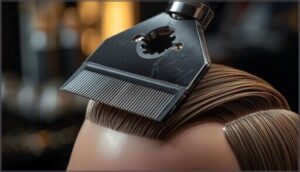
After you’ve nailed your fade with taper blades or fade blades, finishing blades polish the final surface with ultra-fine tooth geometry. These stainless steel blades or ceramic blades deliver edge precision for outlining ears, necklines, and sideburns, refining hair texture without bulk removal. Light passes seal cut ends for cutting accuracy, eliminating visible clipper marks.
Proper blade sharpening keeps your finishing techniques smooth across different hair clipper blade types. For best results and safe grooming, it’s important to understand how professional groomers use.
T-Blades and Specialty Blades

Deep tooth T-blades deliver precision cutting on coarse hair textures that challenge standard fade blade and taper blade designs. Their reinforced tooth geometry manages dense, wiry strands without snagging, making them essential for beard work and tight necklines.
Keeping those deep teeth sharp with proper blade maintenance techniques ensures consistent performance across every texture.
Specialty edge variants—perforated or scalloped—reduce friction on oily scalps, while ceramic blade construction keeps cutting surfaces cool during extended sessions.
Blade Design and Cutting Performance
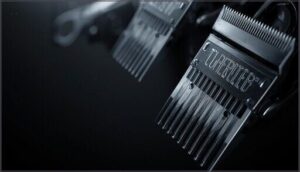
Understanding how blade design affects performance gives you control over every cut you make. The shape, angle, and tooth pattern of your blades determine whether you’re working fast through bulk hair or finessing a tight fade.
Let’s break down the three design factors that separate clean work from choppy results.
Blade Shape and Tooth Configuration
The shape of your clipper blade determines how cleanly it engages hair and skin. Blade geometry influences tug, snag, and how smoothly you move through each pass. Here’s what you should understand about blade design:
- Tooth Spacing affects how aggressively hair is cut and guides resistance levels
- Edge Design with rounded tips reduces catch in sensitive areas
- Blade Curvature maintains consistent contact along contours for even removal
- Taper Blades feature gradually narrowing edges that smooth entry into coarse hair
- Deep Tooth TBlade configurations lift and separate thick hair for cleaner cuts
Fade blades use closely arranged teeth for uniform reduction, while wedge profiles distribute cutting pressure to minimize burrs.
Cutting Angles and Control
You control fade quality by adjusting blade angle throughout each pass. Tilting from 0 to 45 degrees modifies skin contact and how the cutting edge geometry engages hair waves.
A steeper blade tilt adjustment lifts the blade off the scalp, reducing skin contact management challenges during tight fades. Low angles keep guards close to the skin for sharper lines, while float mechanisms help you follow head contours without losing blade movement control.
Precision Vs. Bulk Cutting
Precision cutting demands sharp blades that slice individual hairs cleanly, while bulk trimming removes volume quickly without finesse. Blade sharpness directly impacts your cutting techniques—dull edges pull textured hair instead of cutting it evenly.
- Precision cutting: Use finishing or fade blades for detailed work and sharp lines
- Bulk trimming: Select taper or balding blades to remove large sections efficiently
- Hair texture matters: Coarse hair requires sharper blade material than fine hair
Your hair clipper blade selection should match the task. Blade design and clipper blade materials determine whether you’re carving details or clearing bulk.
Materials Used in Clipper Blades
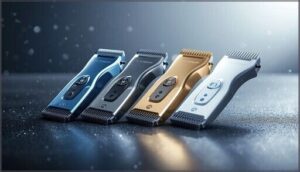
The material your clipper blades are made from affects everything from how sharp they stay to how comfortable they feel on skin. Different materials offer distinct advantages in durability, heat resistance, and cutting performance.
Here’s what you need to know about the most common blade materials on the market.
Stainless Steel Blades
Stainless steel blades remain the workhorse of professional clipper blade materials. Chromium content between 10 and 14 percent creates outstanding corrosion resistance, protecting against rust in humid shops. These blades achieve Rockwell hardness ratings of 58 to 64, delivering sharp edges that hold up through countless cuts. Proper maintenance prevents metal fatigue and surface pitting, keeping your edge retention strong for years.
| Feature | Benefit |
|---|---|
| Chromium alloy | Corrosion resistance in any environment |
| Rockwell 58-64 hardness | Outstanding edge retention and sharpness |
| Non-porous surface | Easy sanitization between clients |
| Carbide elements | Enhanced wear resistance under heavy use |
| Protective coatings | Extended blade durability and performance |
Ceramic Blades
Zirconia and sophisticated ceramics deliver a ceramic edge that stays sharper longer than stainless steel blades. You’ll notice reduced heat buildup during extended sessions, protecting sensitive scalps from irritation. Blade durability suffers if you drop or twist them, so handle with care during cleaning and installation.
- Heat resistance keeps temperatures low, reducing client discomfort
- Sharpness retention means fewer mid-session blade swaps
- Ceramic safety features include corrosion-free surfaces that resist moisture
- Blade material comparison shows longer replacement intervals versus steel
Titanium and Gold Titanium Blades
Gold titanium blades combine a titanium base with gold plating, giving you corrosion resistance and hypoallergenic benefits that protect sensitive skin. These blade materials stay cooler during long cuts, and titanium coatings improve edge retention compared to standard steel.
You’ll find hair clipper blades with this finish glide smoothly through dense hair while reducing friction. Expect higher price points for these premium blade material options.
Black Diamond Carbon Blades
Black Diamond Carbon blades feature a DLC coating that boosts edge retention and rust resistance beyond what titanium blades offer. You’ll notice these carbon blades stay cooler during extended sessions, reducing heat buildup on your clippers.
The coating’s benefits include:
- Enhanced glide with reduced pulling on thick hair
- Longer intervals between sharpening sessions
- Advanced corrosion protection in humid environments
- Compatibility with professional clipper models
- Low blade maintenance requirements when cleaned regularly
Uses and Applications of Blade Types
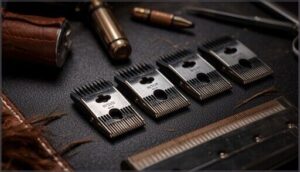
Each blade type has a specific job in your toolkit, and knowing when to reach for the right one separates a decent cut from a professional finish. The blade you choose changes how you approach fading, detailing, and bulk work.
The blade you choose determines whether you deliver a professional finish or just a decent cut
Let’s break down exactly what each blade does best and when you’ll want it in your hand.
Fading and Blending Techniques
Fading and blending are where your blade choice truly matters. Fade blades handle micro blends and smooth transitions with precision, while taper blades soften the blend line naturally. Wedge blades split the difference on texture control. Clipper rolling with proper skin tension keeps your lines consistent throughout.
| Technique | Best Blade |
|---|---|
| Smooth Transitions | Fade Blade |
| Micro Blends | Fade Blade |
| Clipper Rolling | Wedge Blade |
| Soft Blending | Taper Blade |
Creating Bald Fades and Close Cuts
Balding blades bring precision trimming to skin fade methods and close cut styles. Their ultra-fine teeth remove hair near the skin without tugging, essential for bald fade techniques. You’ll achieve clean hairline shaping by maintaining steady pressure and controlled strokes.
Clipper blade design matters here—fade blades create high-contrast results, while taper blades soften transitions. Zero-gap adjustments boost your hair clipper blades’ cutting power.
Outlining and Detailing
Fine hair clipper blades deliver sharp edge control when you detail hairlines and sideburns. Fade blades produce crisp 1- to 2-millimeter outlines, while titanium blades glide smoothly over sensitive areas.
Proper skin prep—tautness and minimal oil—keeps micro detailing clean.
Detail patterns like geometric shapes require steady hands and a well-oiled clipper blade design.
Finishing touches rely on crosschecking symmetry before your final pass.
Bulk Hair Removal
When tackling large areas—full heads or major length reduction—you need a clipper blade with wide tooth spacing and sharp edges. Bulk cutting requires high clipper speed and ideal blade design to power through thick hair without snagging.
Fade blades with stainless steel construction maintain blade sharpness during continuous passes, while proper removal techniques and consistent pressure prevent uneven results across the scalp.
Beard and Neckline Trimming
Shaping your beard and defining a clean neckline demands precision edge detailing with the right blade setup. T-blades or specialty curved designs follow the natural jaw curve, while fade blades create sharp boundaries along the neck without irritation.
- Use a warm towel to relax hairs before trimming
- Map your desired neckline shape with a dry run
- Apply light, careful strokes at a zero-degree angle
- Finish with moisturizer to soothe sensitive skin
Choosing The Right Blade for Your Needs
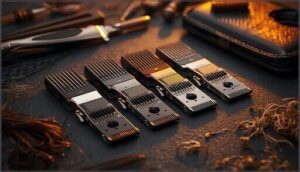
The right blade isn’t just about the cut you want—it’s about matching the tool to your situation. Your hair type, how often you’re clipping, and whether you’re working in a shop or at home all shape which blade makes sense.
Let’s break down what actually matters when you’re choosing.
Hair Type and Texture Considerations
Your hair type dictates blade success more than most realize. Fine hair slips under aggressive teeth, while coarse fibers resist and dull edges faster. Match blade design to the texture, curl patterns, and porosity levels you’re working with. Dense, curly hair demands deeper teeth and patient strokes, whereas straight, moderate-density hair responds well to standard configurations.
Curl patterns affect how hair lifts during trimming. Coiled textures require guidance and short guide strokes to avoid uneven length. Porosity levels influence blade heat and friction, so high-porosity hair benefits from lubricated blades and lighter pressure. Scalp sensitivity around hairlines and ears means you’ll need precision hair cutting tools and controlled hair trimming techniques to prevent tugging or irritation.
| Hair Texture | Recommended Blade Design | Key Consideration |
|---|---|---|
| Fine, Low Density | Finishing or taper blades | Prevents scalp irritation and over-cutting |
| Medium, Moderate Porosity | Wedge or fade blades | Balances precision with comfort |
| Coarse, High Fiber Density | Deep tooth T-blades | Manages bulk without blade heat buildup |
Skin Sensitivity and Comfort
Sensitive skin demands blades that minimize friction and direct contact. Stainless steel with rounded edges and hypoallergenic coatings reduce skin irritation during each pass. Comfort features like blade guards and safety ramps create a buffer between metal and sensitive areas, preventing nicks around the jawline and neck.
Key skin-friendliness factors in hair clipper blades:
- Low-rake tooth design reduces tugging on fine hairs
- Ceramic or coated variants stay cooler, limiting heat-induced redness
- Flexible blade mounting adjusts pressure on delicate zones
- Micro-serrated edges grip hair without digging into skin
Regular blade lubrication lowers friction for smoother strokes. Proper grooming tool maintenance, including bacteria-free cleaning, protects post-trim skin health. Durability in blade design ensures consistent performance without unexpected snagging or pressure spikes.
Frequency of Use and Maintenance
Your usage patterns drive how often you maintain blades. Daily salon work demands cleaning after every few clients and blade replacement every six to nine months. Home users stretching intervals to monthly cleaning see faster blade wear and inconsistent cuts. Oil application before and after each session keeps teeth sharp and rust-free.
| Usage Frequency | Cleaning Schedule | Blade Replacement |
|---|---|---|
| Daily Professional | After every 2-4 clients | 6-9 months |
| Weekly Home Use | After each session | 12-18 months |
| Occasional Trimming | Monthly deep clean | 18+ months |
Grooming tool maintenance isn’t optional—it’s your insurance against dull performance.
Professional Vs. Home Use
Clipper blade choice depends on where you’re cutting. Professional barber tools feature taper, fade, and finishing blades with quick-release systems for fast swaps between clients. Home kits stick to adjustable or standard blades that handle general trimming without fuss. Pro blade cost runs higher—several hundred dollars for sets with DLC blade coatings and sophisticated heat management—but delivers precision and durability through heavy daily use.
Consider these practical differences:
- Blade design variety: Pros carry interchangeable options; home users rely on one all-purpose blade
- Sharpening needs: Salon blades maintain edges through long sessions; home blade durability peaks with occasional touch-ups
- Heat management: Ceramic and titanium pro blades stay cool during back-to-back cuts
- Hair clipper maintenance: Professionals clean after every client; home users oil weekly
- Value calculation: High-end clipper blade investment pays off in reduced downtime and consistent results.
Maintenance and Care for Clipper Blades

Your blades won’t last forever, but the right care routine keeps them sharp and reliable for years. A few simple habits—cleaning, oiling, and proper storage—prevent most common problems like rust, dullness, and motor strain.
Here’s what you need to know to maintain peak performance and extend the life of your clippers.
Cleaning and Oiling Procedures
Performance hinges on consistent blade maintenance through proper sanitizing methods and oil application. After each session, clean blades with clipper-specific solution or 70 percent isopropyl alcohol, wiping with a lint-free cloth.
Apply a drop of clipper oil to pivot points and moving teeth, running blades 10 to 15 seconds to distribute evenly. This routine protects blade design while preventing rust formation on exposed steel.
Blade Replacement and Adjustment
Even well-maintained blades wear down and need replacement every six to twelve months depending on usage frequency. Unplug your clippers first, then detach the blade assembly using a small Phillips screwdriver to loosen mounting screws evenly.
- Check blade alignment with a thin card to confirm parallel teeth height
- Adjust the gap settings by loosening screws before fine-tuning blade movement
- Tighten screws gradually in small increments to preserve proper blade design
- Test on cloth to verify smooth cutting without grabs or unusual sounds
Guards won’t compensate for misaligned blades, so verify adjustment tools are securing everything flush before your next cut.
Safe Storage and Handling
After cleaning and oiling, proper storage keeps blades sharp and safe. Use a padded tray or blade cover to protect tooth edges from chipping.
Lock your clippers in a cabinet away from children, and maintain room temperature between 60 and 75 degrees to preserve coatings.
Label containers by blade type and date to track replacement cycles and simplify your maintenance routines.
Preventing Rust and Wear
You’ll extend blade life dramatically by applying protective oil after every cleaning session to block moisture and minimize friction.
Store your clippers in sealed containers with silica gel packets, keeping humidity below 40 percent to slow corrosion. Stainless steel and titanium offer built-in rust prevention through their chromium content.
Inspect blades every four to six weeks for pitting, and replace any showing stubborn surface rust immediately.
Frequently Asked Questions (FAQs)
What are the different types of clipper blades?
You’ll find six main clipper blade categories—taper, fade, wedge, balding, finishing, and T-blade—each built with distinct tooth patterns and edge shapes to handle specific cutting techniques and hair textures efficiently.
Does a #7 or 10 blade cut shorter?
A #10 blade cuts shorter than a #7, leaving about 6 mm versus 2 mm of hair. The higher blade number yields a closer trim for detailed work around ears and paws.
Can clipper blades be sharpened at home?
You can sharpen clipper blades at home using dedicated sharpening tools and careful technique, but professionals discourage it—improper angles or cheap abrasives risk uneven edges, warping, and voided warranties.
How often should blades be replaced?
You’ll need fresh blades every six to twelve months with typical weekly use.
Watch for tugging, heat buildup, or patchy cuts—these blade wear signs mean replacement is due, ensuring consistent cutting power and sharpness maintenance.
Are clipper blades interchangeable between brands?
Contrary to popular belief, most clipper blades aren’t universally interchangeable between brands. Blade compatibility depends on system size—A5 blades fit A5 clippers across brands, but mixing systems risks clipper safety and blade replacement failures.
What causes blades to overheat during use?
Friction issues arise when hair strands rub against blade teeth during cutting, generating heat. Blade wear, cutting speed, and material limits affect how fast blades heat up. Poor lubrication and debris buildup greatly increase heat generation.
Do wireless clippers use different blade types?
Wireless clippers don’t require different blade types—they use the same detachable systems and interchangeable blades as corded models. You’ll swap taper, fade, and specialty blades just like you’d on traditional clippers.
Conclusion
The right tool makes all the difference—your clipper’s performance hinges on matching blade type to technique. Whether you’re executing skin fades with balding blades or creating smooth transitions with taper designs, understanding hair clipper blade types and their uses eliminates guesswork from your work.
Master the materials, applications, and maintenance practices covered here, and you’ll consistently deliver the sharp, professional results that keep clients returning to your chair.