This site is supported by our readers. We may earn a commission, at no cost to you, if you purchase through links.
You’ve probably noticed it in the mirror—your hair behaves perfectly until those last few inches decide to flip, curl, or wave in every direction except the one you want. It’s not rebellion, and you’re not imagining things. Your ends are dealing with a cocktail of physics, genetics, and plain old wear-and-tear that makes them the most unpredictable part of your whole head.
The good news? Once you understand why those ends act up—from weight distribution playing tricks on your strands to environmental factors sneaking in damage—you can actually take control. Whether you’re fighting frizz, battling breakage, or just tired of ends that won’t cooperate, the right combination of cuts, care, and styling tweaks can transform those wild tips into smooth, manageable excellence.
Table Of Contents
- Key Takeaways
- Why Hair Curls at The Ends
- Common Causes of End Curling
- The Role of Genetics in Hair Curl
- How Hair Structure Impacts Curling
- Environmental Factors Affecting Hair Ends
- Heat Styling and Its Effects
- Hair Care Routine for Smoother Ends
- Solutions to Prevent Unwanted End Curls
- Top 8 Products for Healthy Hair Ends
- Styling Tips to Control Curl at Ends
- Frequently Asked Questions (FAQs)
- How can I prevent my hair from curling at the ends?
- Can hormonal changes cause hair to curl at the ends?
- Are there any environmental factors that can contribute to hair curling at the ends?
- Can vitamin deficiencies cause curling at ends?
- Does water quality affect hair end texture?
- Will chemical treatments increase end curl over time?
- Can towel drying technique influence end curling?
- Does hair density impact how ends curl?
- Conclusion
Key Takeaways
- Your hair curls at the ends because of weight distribution, friction, heat damage, and natural wear-and-tear that weakens those tips way more than your roots—genetics loads the gun, but your routine pulls the trigger.
- Regular trims every 6-8 weeks, heat protectant before styling, and deep conditioning weekly are your non-negotiable essentials for keeping ends smooth and stopping split ends before they spiral into full-blown damage.
- Environmental factors like humidity above 60%, UV radiation, and pollution actively mess with your cuticle and moisture balance—especially at those fragile ends—so protection through products and physical barriers matters more than you think.
- Switching to silk or satin pillowcases, blow-drying downward with tension, and finishing with a cool shot actually work to seal your cuticle and prevent that annoying flip-back without excessive heat or complicated techniques.
Why Hair Curls at The Ends
You’ve probably noticed your hair doing its own thing at the ends—flipping out, curling up, or just refusing to cooperate no matter what you do. It’s not random, and it’s definitely not just you.
Let’s break down the real reasons your ends have a mind of their own.
Weight Distribution Effects
When gravity pulls on your hair, it’s not pulling evenly—and that’s where the curl magic happens. Your ends bear more stress because they’re holding up less weight than your mid-lengths.
- Tensile load increases at the ends, creating natural bending moments that kickstart curl formation
- Strand diameter variations heighten localized stress, making ends extra prone to curling
- Biomechanics show end-loaded strands reach their curl equilibrium faster than mid-shaft sections
Weight management through strategic cuts can help tame those rebellious tips. Understanding the importance of methodological rigor is essential in scientific studies of hair care.
Hair Length and Friction
The longer your hair gets, the more those fiber strands rub against each other—friction builds up like static electricity on a winter day. This hair fiber contact creates tangles at your hair ends, throwing off moisture balance and weakening fiber strength.
You’ll notice your hair texture changes and curl patterns emerge. Friction reduction through detangling and static control products keeps your hair health in check and those ends smoother.
Wrong Hairstyle Choices
But friction isn’t the only villain here. Those hairstyle choices you make daily? They’re quietly sabotaging your hair ends. Tight ponytails crank up hair tension and boost breakage risk by 50%.
Daily heat styling spikes style damage by 30%, throwing off frizz control and curl prevention. Wet straightening? That’s a fast track to weaker cuticles and unwanted hair curl at your ends.
Smart hair care means rethinking how you treat those fragile strands.
Genetic Influences
But here’s the thing: your curl pattern at the ends isn’t just about what you do—it’s written in your DNA. Genetic variance shapes your follicle shape and keratin structure from birth.
Those hair follicles? Their cross-section (oval or round) determines your natural curl pattern. Hair biology is wild—genetics literally control how your ends behave.
Twin studies prove it: curl tendency runs in families through genetic expression affecting hair structure.
Stress and Hair Health
Chronic anxiety messes with your hormonal balance—cortisol levels spike and disrupt your hair’s growth cycle. You might notice hair shedding months after a stressful period hits. That’s cortisol impact doing its thing.
Mindful practices like meditation help with stress reduction, improving overall hair health. Better sleep and cleaner eating support hair maintenance too, reducing oxidative damage that weakens those ends.
Natural Wear and Tear
Your hair ends take a beating every single day. Hair fiber damage builds up from brushing, styling, and friction against clothes. Over time, cuticle degradation lets moisture escape, leaving ends brittle and prone to structural weakness.
That moisture loss makes them curl unpredictably. Daily wear weakens those tips way more than roots—friction effects add up fast, causing split ends and breakage that change your natural curl pattern.
Common Causes of End Curling
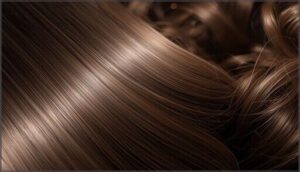
You know why your ends curl up when the rest of your hair behaves? It’s not just bad luck. Several sneaky culprits are working against you, and once you spot them, you can fight back and reclaim those smooth, straight ends you’re after.
Heat Damage From Styling Tools
Ever crank your flat iron too high and wonder why your ends suddenly flip? That’s thermal damage at work. When heat above 356°F hits your strands, it weakens the cuticle and messes with keratin—hello, frizz and curling iron-induced chaos.
Your hair repair starts with heat protection sprays and smarter styling tips. Lower temps prevent hair damage and keep curl prevention on track without sacrificing your look.
Environmental Factors (Humidity, Sun, Wind)
Think your hair’s just being difficult? Climate change and weather patterns might be the real troublemakers. When humidity climbs past 60%, your cuticles swell and frizz takes over—especially at those delicate ends.
UV radiation breaks down keratin (yep, actual protein damage), while air pollution coats strands in gunk. Wind? It’s like sandpaper for curly hair. Atmospheric pressure shifts don’t help either.
Protecting your hair health means fighting back against Mother Nature’s styling sabotage.
Hair Age and Fragility
Your hair doesn’t stay young forever—surprising, right? As strands age, they lose tensile strength and elasticity, making ends snap easier under heat or brushing. The cuticle thins out, increasing porosity and moisture loss like a leaky faucet.
Here’s what aging hair care really means for those rebel ends:
- Reduced lipid content increases friction during styling, causing more breakage
- Slower recovery after heat damage locks in unwanted curls longer
- Weakened protein bonds make hair ends more prone to deformation and frizz
Fragility testing shows older hair fibers can’t bounce back like they used to. That’s why your ends curl while your roots stay straight—it’s literally age showing up in your hair health.
Cuticle damage accelerates this whole mess, leaving you fighting a losing battle without proper hair maintenance and repair strategies.
Hormonal Changes and Pregnancy
Pregnancy turns your hair into a wild card—blame the hormones. Elevated estrogen levels during those nine months extend your hair growth phase, thickening strands and sometimes shifting your curl pattern at the ends.
But postpartum shedding hits hard two to four months after delivery when hormone balance crashes. Vitamin deficiencies don’t help either, messing with hair texture and follicle behavior when your body’s nutrient demands skyrocket.
Product Buildup
Beyond hormones, your hair care routine might be sabotaging your ends. Product residue from silicones, polymers, and heavy conditioning agents creates a film that weighs down strands and distorts your natural curl pattern. Buildup prevention starts with clarifying shampoos monthly and gentle cleansing between treatments.
Watch for these telltale signs:
- Hair feels greasy hours after washing
- Ends won’t hold styling or appear limp
- Strands look dull despite conditioning efforts
The Role of Genetics in Hair Curl
Your hair’s curl pattern isn’t something you picked up from your favorite styling tutorial—it’s written right into your DNA. The shape of your follicles, the texture you inherited from your family, and even your tendency to get those flipped ends all come down to genetics.
Let’s break down exactly how your genes are calling the shots regarding curling at the ends.
Follicle Shape and Curl Pattern
Your follicle geometry is basically your curl’s blueprint. Round follicles produce straight hair, while elliptical ones create that beautiful hair spiral effect. The angle and follicle depth determine your curl direction and how tight those waves get.
It’s all about hair texture and structure written into your genetics—your hair follicles literally shape every curl pattern you rock.
Hereditary Texture Variations
Your family tree basically wrote your hair story before you were born. Gene variants set your follicle shape and strand stiffness—that’s why curly hair runs in families. Studies show texture genetics are inherited traits with measurable patterns.
Population-specific variations explain why certain regions have dominant hair textures.
But here’s the kicker: genetics loads the gun, but your hair care routine and environment pull the trigger on those inherited curls.
Genetics set your curl pattern, but your routine and environment decide whether those inherited curls show up
Genetic Predisposition to End Curling
Turns out, you inherited more than just your mom’s eyes—your end curls come with the package. Follicle shape and keratin fiber alignment are hereditary traits that directly influence curl patterns at your tips. Here’s what genetics passes down:
- Oval follicles produce more end curl than round ones
- Cortex arrangement determines how ends respond to humidity
- Gene expression for structural proteins affects curl retention
But here’s the good news: even with genetic factors stacked against you, the right cut and conditioning routine can outsmart your DNA.
How Hair Structure Impacts Curling
Let’s talk about what’s actually happening inside each strand of your hair. The way your hair is built—from the outer protective layer to the inner core—has everything to do with why those ends want to curl up on you.
Here’s what you need to know about your hair’s structure and how it’s secretly working against (or with) your styling goals.
Cuticle Health and Curl Formation
Think of your hair cuticle as overlapping shingles on a roof—when those layers lie flat and smooth, you get gorgeous, defined curl formation and serious curl retention. But if your hair porosity is high or the cuticle’s roughed up, moisture balance goes haywire. Water sneaks in unevenly, causing frizz and wonky curls at the ends.
That’s why cuticle repair through solid hair care matters for your hair health and keeping those curls bouncy.
Cortex Strength and Curl Retention
Your cortex is where curl memory lives—it’s the inner powerhouse of your hair follicle that decides if those curls bounce back or fall flat. When protein synthesis is strong and cortex elasticity is high, your curly hair laughs off mechanical stress from brushing and styling.
Weak cortex? Your hair texture and structure suffer, and those ends lose their shape fast. Solid hair care and targeted hair curling solutions keep that cortex tough.
Porosity and Moisture Balance
Porosity tests reveal your hair’s thirst level—and honestly, that’s where most moisture battles are won or lost. High porosity hair cuticles gulp water down fast but can’t hold it, while low porosity locks out hydration like a fortress.
- High porosity needs heavier conditioners to seal moisture in
- Low porosity requires heat or pre-wetting for hydration methods to work
- Balance restoration comes from pH-smart products that adjust cuticle behavior
- Over-moisturizing creates buildup; under-moisturizing causes breakage and frizz
Get your hair porosity right, and your hair texture and structure will thank you with healthier ends.
Environmental Factors Affecting Hair Ends
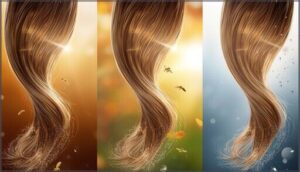
Your hair doesn’t curl at the ends just because of what you do to it—sometimes, it’s what’s happening around you. The weather, the air quality, even the season can totally change how your ends behave.
Let’s break down the environmental factors that might be messing with your hair.
Humidity and Curl Definition
Humidity is like an uninvited guest that crashes your hair party—and it affects everyone differently. For curly hair types, higher humidity can actually amplify your curl pattern by adding moisture and making strands swell. But here’s the twist: if you’ve got porous hair, that extra water messes with hydrogen bonds, leading to frizz control nightmares and looser curls at the ends.
| Humidity Level | Low Porosity Hair | High Porosity Hair |
|---|---|---|
| Low (20-30%) | Curls stay defined | Curls may lose definition |
| Medium (40-60%) | Minimal curl change | Moderate curl enhancement |
| High (70%+) | Slight frizz appears | Major frizz and curl intensification |
| After Styling | Holds shape well | Needs moisture balance products |
Your hair texture and structure determine how humidity impacts your styling routine. High-porosity hair absorbs moisture fast, which can turn your sleek ends into wild ringlets. Low-porosity hair resists those changes better. The good news is that humidity effects aren’t permanent—they vanish once conditions dry out and you adjust your hair care routine accordingly.
Seasonal Changes and Curl Pattern
Ever notice how your hair curl behaves like a moody artist across seasons? Temperature influence and humidity effects drive these curl patterns in wild ways.
Winter’s dry air strips moisture levels, loosening your natural texture and ramping up frizz. Summer humidity penetrates hair texture and structure, tightening those ringlets at your ends.
These seasonal shifts aren’t permanent—adjust your hair care and hair styling routine, and you’ll keep your curly hair thriving year-round.
Pollution and UV Exposure
Air pollution and UV damage are silently wrecking your ends. Those airborne toxins crack open your cuticle, letting in moisture and frizz. UV rays break down keratin—your hair’s armor—especially at the tips. Toxic effects compound daily.
Here’s your hair protection game plan:
- Wear hats in high-UV conditions
- Use products with UV filters
- Rinse hair after polluted commutes
- Apply leave-in conditioners as barriers
- Deep condition weekly for repair
Smart hair maintenance tips beat environmental impact every time.
Heat Styling and Its Effects
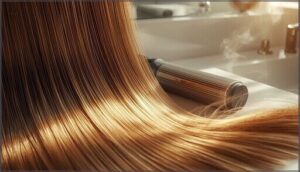
Heat styling tools are probably sitting on your bathroom counter right now—and they’re one of the biggest culprits behind those pesky curls at your ends. Whether you’re team curling iron or flat iron devotee, understanding how heat affects your hair can save you from a world of damage.
Let’s break down what you need to know about protecting your strands while still getting that styled look you’re after.
Curling Irons Vs. Flat Irons
You’ve probably wondered which tool causes less damage when you’re trying to tame those unruly ends. Curling irons wrap hair around a heated barrel, while flat irons press between plates—but here’s the kicker: both can fry your strands without proper heat settings and tool materials.
Your curling iron concentrates heat on smaller sections, and flat irons can create sneaky creases if you’re attempting curl techniques without the right styling techniques.
Proper Heat Protection Techniques
The real secret weapon? Slathering on a heat protectant before you pick up that curling iron. I’m talking a silicone-based serum from mid-lengths to ends—it creates a barrier that keeps heat damage at bay.
Let it absorb for a minute or two before styling; otherwise, you’re just steaming your hair. Keep those tools between 175–205°C, and your ends will thank you.
Minimizing Damage During Styling
Beyond slathering on heat protectant, you’ve got to play it smart with your styling tools. Keep that curling iron at 175–185°C—you’ll cut cuticle damage by about 30%.
Air-dry your hair 80% before you reach for heat, and always use a heat protectant on damp strands to slash protein loss in half.
Clean your tools regularly, too. Residue buildup scorches hair faster than you think.
Hair Care Routine for Smoother Ends
Look, I’m not going to sugarcoat it—smoother ends don’t happen by accident. You need a solid haircare routine that actually works with your hair, not against it.
Let’s break down the three essentials that’ll transform those frizzy, curled-up ends into the smooth, healthy hair you’ve been dreaming about.
Forming a Consistent Haircare Routine
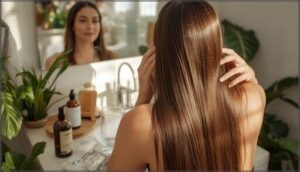
Think of your hair care routine as your daily rebellion against damage—it’s the foundation that keeps your ends smooth and free. A consistent schedule cuts seasonal damage by about 20% and brings real improvements in texture within 6–8 weeks.
- Lock in a weekly wash day to maintain scalp pH near 4.5–5.5
- Rotate your products every few months to dodge ingredient sensitivities
- Track your hair’s response with simple elasticity checks
- Schedule trims every 6–8 weeks to stop split ends in their tracks
Moisturizing Shampoos and Conditioners
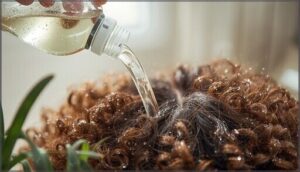
Your shampoo and conditioner choices are game-changers for moisture retention. Look for humectants like glycerin—they lock in 20–60% more hydration, keeping curly hair soft and manageable.
pH-balanced formulas (around 4.5–5.5) smooth your cuticle and cut frizz fast. Silicone effects vary: some add slip, others build up.
Check hair product labels for ingredients that match your hair care routines and health advice needs.
Avoiding Heavy Oils and Butters
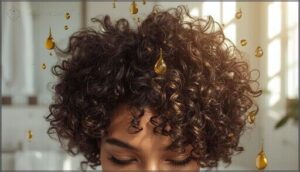
Heavy oils and butters might seem nourishing, but their high molecular weight prevents hair penetration—they just sit on top, causing product buildup. Comedogenic effects can clog follicles, while excess weight drags down your ends.
Switch to lightweight alternatives like argan oil for better absorption. Your curly hair deserves hair products that actually work with your natural texture, not against it.
Solutions to Prevent Unwanted End Curls
Alright, so you know what’s causing those pesky curls at the ends—now let’s talk about what you can actually do to fix them. These aren’t complicated solutions that’ll take over your life.
Here are five straightforward ways to keep your ends smooth and say goodbye to unwanted curl for good.
Opting for The Right Haircut
Your haircut can be a transformative choice for taming those rebellious end curls. Layering techniques, customized to your hair texture analysis, help redistribute weight, so your ends hang smoother instead of flipping up.
A skilled stylist consultation makes all the difference—they’ll assess your curl pattern and recommend haircut techniques that work with your natural texture, not against it. Sometimes curl reduction starts with the right cut.
Regular Trims to Prevent Split Ends
You can’t rush healthy hair—it needs steady upkeep. Regular trims every 6–8 weeks remove split ends before they travel up your strands, preserving hair health and preventing breakage that steals length.
If you’re weighing your options before your next salon visit, this guide on choosing between long and short layered haircuts breaks down which style holds up best between trims.
Salon techniques guarantee clean cuts without crushing ends. This trim frequency promotes hair growth by stopping damage in its tracks.
It’s the simplest hair maintenance move for vibrant, curl-controlled ends that actually cooperate.
Deep Conditioning Weekly
Think of deep conditioning as a weekly power-up for your strands. This hair treatment restores moisture balance and targets damage from heat, friction, and everyday stress—your hair repair methods toolkit essential.
- Apply a rich hair mask once a week for 15–20 minutes
- Focus product on mid-lengths to ends where damage lives
- Use gentle heat (warm towel or cap) to boost absorption
- Rinse thoroughly to avoid buildup that weighs hair down
Consistent weekly routines strengthen your hair from the inside out, reducing breakage and taming those rebellious curls at the ends.
Sleeping in Protective Styles
Wrapping your hair before bed isn’t just about vanity—it’s serious curl preservation and sleep hygiene rolled into one. Loose buns, soft braids, or a pineapple updo reduce hair tension and friction while you toss and turn.
These protective style benefits mean your ends stay smoother, healthier, and way less prone to that annoying nighttime frizz. Make it part of your nighttime routine—your hair will thank you.
Using Silk or Satin Pillowcases
Beyond protective sleep styles, your pillowcase choice makes a real difference. Cotton absorbs moisture and creates friction—not ideal. Switch to silk or satin, and you’ll notice smoother ends fast.
Here’s why fabric choice matters:
- Reduces hair friction while you sleep
- Keeps natural oils on your strands
- Prevents breakage and split ends
- Maintains leave-in treatments overnight
- Bolsters your hair care routine effortlessly
It’s a simple upgrade with serious hair health advice payoff.
Top 8 Products for Healthy Hair Ends
You can’t fight curly ends without the right products in your corner. I’ve tried dozens of heat protectants, masks, and tools over the years, and honestly, some work way better than others.
Here are eight products that’ll actually help you keep your ends healthy and smooth—no fluff, just what works.
1. HSI Argan Oil Heat Protector Spray
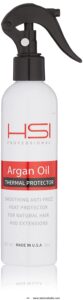
This heat protectant is your thermal shield against damage up to 450°F. You’ll love that it doubles as a leave-in hair serum packed with argan oil and shine-boosting vitamins.
Perfect for curling hair or straightening—it protects while it hydrates. Apply it on damp strands before heat styling, and you’re golden.
The spray benefits include detangling and anti-frizz power. Just know it can feel heavy on fine hair, so go light.
It’s sulfate-free and color-safe, which means your hair care tips just got an upgrade.
| Best For | People with thick or coarse hair who use hot tools regularly and want heat protection that also adds shine and helps tame frizz. |
|---|---|
| Hair Type | All hair types |
| Form | Liquid |
| Size | 8 fl oz |
| Free From | Sulfate, paraben, phosphate |
| Key Benefit | Heat protection & shine |
| Price Range | Budget-friendly |
| Additional Features |
|
- Shields hair from heat damage up to 450°F while doubling as a leave-in conditioner with argan oil
- Works on all hair types and is free of sulfates, parabens, and phosphates—plus it’s color-safe
- Detangles, smooths frizz, and boosts shine without needing multiple products
- Can weigh down fine or thin hair and may look greasy if you use too much
- The argan oil scent is pretty strong and might not be everyone’s favorite
- Feels a bit sticky when you first apply it, though it does fade as it dries
2. Chi Thermal Protection Hair Spray
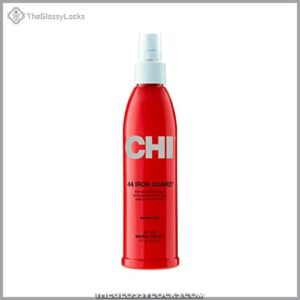
Chi Thermal Protection Hair Spray is a solid pick if you’re after ceramic-enhanced heat defense. This spray creates a barrier against styling tool temps while packing in proteins to strengthen your strands—think of it as armor for your hair.
Spray application techniques matter here: mist it on damp or dry hair before you fire up that flat iron. The heat styling tips pros swear by? Even coverage is key. Some users mention the reformulated version feels more liquid, so don’t drench your hair.
It fights heat damage while reducing frizz, though the scent isn’t everyone’s cup of tea.
| Best For | Anyone who regularly uses heat styling tools and wants ceramic-enhanced protection that works across all hair types without breaking the bank. |
|---|---|
| Hair Type | All hair types |
| Form | Spray |
| Size | 8 oz |
| Free From | Paraben, sulfate |
| Key Benefit | Heat protection & frizz control |
| Price Range | Mid-range |
| Additional Features |
|
- Creates a heat-blocking barrier with ceramic and proteins that actually strengthens hair while you style
- Works on both damp and dry hair, so you’re covered whether you’re blow-drying from scratch or touching up with a flat iron
- Tackles frizz and adds shine without feeling heavy or leaving your hair crunchy
- The scent can be hit-or-miss—some people find it too strong or just not their thing
- Recent formula changes have made it more liquid and potentially less effective according to some longtime users
- Can get sticky or leave residue if you layer it with certain oils or products, so you might need to experiment with your routine
3. Hair Food Coconut Heat Protectant Spray

If you’re into coconut-scented hair care, Hair Food Coconut Heat Protectant Spray won’t let you down. This leave-in conditioner doubles as a heat protectant up to 450°F—perfect when you’re wrestling with a curling iron or flat iron.
The coconut and argan oil blend adds shine without that greasy feel, and it’s sulfate-free for those of you who’ve sworn off harsh ingredients. Frizz control? Pretty solid.
Just know some users noticed formula tweaks over time, so your first bottle might feel slightly different from your third.
| Best For | Anyone who heat-styles regularly and wants a coconut-scented spray that protects up to 450°F while adding shine without the grease. |
|---|---|
| Hair Type | All hair types |
| Form | Spray |
| Size | 6.4 fl oz |
| Free From | Sulfate, paraben, dye |
| Key Benefit | Heat protection & softness |
| Price Range | Budget-friendly |
| Additional Features |
|
- Protects hair from heat damage up to 450°F, so you can use it with blow dryers, flat irons, and curling irons without worry.
- The coconut and argan oil blend leaves hair shiny and soft without that heavy, greasy feeling.
- Sulfate-free and paraben-free formula works well if you’re avoiding harsh ingredients.
- Some people say the formula has changed over time—scent and texture might feel different between bottles.
- Frizz control doesn’t work equally well for everyone, especially if you have really stubborn hair.
- Can leave a dry or ashy texture on your scalp if you spray too close to the roots.
4. Moroccanoil Hair Mending Serum
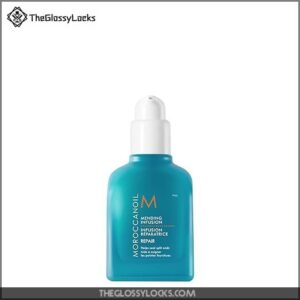
Moroccanoil Hair Mending Serum is your go-to for sealing split ends before they spiral into full-blown damage. This lightweight serum uses argan oil effects to condition and strengthen those fragile ends that love to curl up on you.
It’s cruelty-free and works wonders for frizz control—especially when humidity’s trying to ruin your vibe.
Apply a small amount to damp or dry hair, focusing on mid-lengths to ends. Just don’t overdo it if your hair’s fine, or you’ll end up with that sticky, weighed-down feeling nobody wants.
For a deeper dive into product amounts and technique, this guide on using curl activator on natural hair breaks down how to get bouncy, well-defined curls without the crunch.
| Best For | Anyone with damaged hair looking to seal split ends, tame frizz, and add shine without weighing hair down. |
|---|---|
| Hair Type | Damaged hair |
| Form | Serum |
| Size | 8.98 oz |
| Free From | Cruelty-free |
| Key Benefit | Split end repair |
| Price Range | Premium |
| Additional Features |
|
- Argan oil formula conditions and strengthens ends while providing heat protection during styling
- Works great for frizz control in humid weather and leaves hair looking shiny and healthy
- Cruelty-free and effective for various hair types, especially fine or colored hair
- Can feel sticky or oily if you use too much, particularly on fine hair
- Pricey with mixed feedback on whether it’s worth the cost
- Strong scent might be too much for some people, and the thick glass bottle isn’t the most eco-friendly
5. Ouai Hydrating Hair Treatment Masque
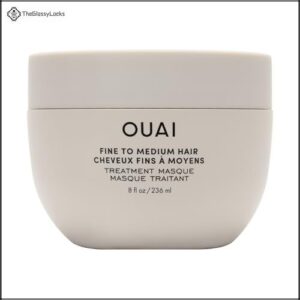
Your hair’s basically screaming for moisture when those ends start curling—that’s where Ouai Hydrating Hair Treatment Masque comes in. This deep conditioning powerhouse delivers intense hair restoration with shea butter and keratin, knocking out dryness in just three minutes.
Perfect for your hair care routine if you’re battling frizz and breakage, the hydrating treatment works for all hair types, making damaged strands feel softer and stronger.
Yes, it’s pricier than drugstore options, but the Ouai product benefits and hair repair results are legit worth it for stubborn hair curl issues.
| Best For | Anyone dealing with dry, damaged, or frizzy hair who wants a quick deep conditioning treatment that actually works. |
|---|---|
| Hair Type | Curly, fine, straight, wavy |
| Form | Cream |
| Size | 8 oz |
| Free From | Paraben, phthalate, sulfate |
| Key Benefit | Deep hydration & repair |
| Price Range | Mid-to-high |
| Additional Features |
|
- Works fast—you only need 1-3 minutes to see real results
- Packed with good stuff like shea butter, keratin, and collagen that genuinely repair and hydrate
- Works for all hair types, whether you’ve got curls, waves, or straight hair
- Price tag is pretty steep compared to drugstore alternatives
- The scent can be really strong if you’re sensitive to fragrance
- Tub packaging isn’t ideal for throwing in your gym bag or suitcase
6. SheaMoisture Manuka Honey Hair Mask
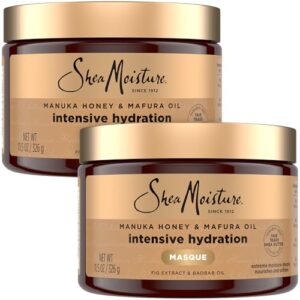
When those rebellious ends won’t quit curling, this organic powerhouse steps up with certified Fair Trade shea butter and manuka honey. The SheaMoisture deep conditioning treatment delivers serious hair hydration without sulfates or silicones—just pure hair repair goodness.
User reviews rave about reduced frizz and improved strength after weekly use, making it perfect for your hair care routine.
The mask benefits extend beyond taming hair curl issues; product ingredients like baobab oil and African rock fig actually fortify damaged strands. Apply it mid-length to ends, let it work its magic for 5-10 minutes, and you’re golden.
| Best For | People with dry, damaged, or color-treated hair who need deep conditioning and frizz control, especially those with coily, textured, or curly hair. |
|---|---|
| Hair Type | Curly, frizzy |
| Form | Cream |
| Size | 12 oz (2-pack) |
| Free From | Silicone, sulfate, paraben |
| Key Benefit | Intensive moisture & strengthening |
| Price Range | Mid-range |
| Additional Features |
|
- Packed with organic ingredients like Fair Trade shea butter, manuka honey, and baobab oil that deliver serious hydration without harsh chemicals
- Actually reduces frizz and strengthens hair over time—users consistently report softer, more manageable hair after weekly use
- Clean formula with no sulfates, silicones, parabens, or petrolatum, so you’re treating your hair without buildup or questionable additives
- Can be too heavy for fine or thin hair types, potentially weighing hair down or making it look greasy
- Requires careful application and thorough rinsing to avoid product buildup, which adds extra time to your routine
- Some users find the texture, scent, or price point ($25.94 for a 2-pack) less appealing compared to other hair masks
7. Arvazallia Argan Oil Hair Mask

Sometimes you need a deep conditioning MVP that won’t cost your whole paycheck. Arvazallia’s argan oil hair mask delivers natural ingredients and argan oil benefits that actually restore bounce and shine to chemically treated strands.
This sulfate-free cream works wonders on curly hair dealing with those pesky end curls—users report softer, more manageable texture after consistent use. Apply it to mid-lengths and ends, let it penetrate for several minutes, and watch your hair styling techniques get easier.
In product comparison tests, it holds its own against pricier hair products while keeping your hair care routine simple.
| Best For | People with dry, damaged, or chemically treated hair who want deep conditioning without breaking the bank. |
|---|---|
| Hair Type | Dry hair |
| Form | Cream |
| Size | 8.4 oz |
| Free From | Sulfate, paraben |
| Key Benefit | Deep hydration & restoration |
| Price Range | Affordable |
| Additional Features |
|
- Argan oil formula actually delivers on moisture and shine without sulfates or parabens
- Makes detangling and styling way easier, especially for curly or frizzy hair
- Costs less than salon treatments but gives you similar bounce and softness
- Might be too heavy if you have naturally oily hair
- Results take a few uses to really show up—not an instant miracle
- Packaging sometimes arrives banged up or already opened
8. Bedsure Satin Pillowcase Set
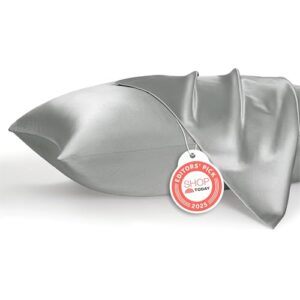
You can’t control your hair while you’re sleeping—but you can control what it rubs against. Bedsure’s satin pillowcase set transforms your nighttime hair care by cutting friction that creates frizz and unwanted hair curl at the ends.
The smooth pillowcase materials (100% polyester satin) let curly hair glide instead of tangle, supporting better hair health overnight. Fabric durability holds up through regular washing, and the sleep comfort factor beats cotton hands-down.
It’s one of those hair styling techniques that works while you literally do nothing.
| Best For | People with curly or frizzy hair who want to wake up with smoother, less tangled hair without adding extra steps to their routine. |
|---|---|
| Hair Type | All hair types |
| Form | Pillowcase |
| Size | 20″ x 30″ |
| Free From | N/A |
| Key Benefit | Reduces frizz & tangles |
| Price Range | Budget-friendly |
| Additional Features |
|
- Reduces friction on hair while you sleep, which means less frizz and fewer tangles by morning
- Feels cool and smooth against your skin, making it more comfortable than regular cotton pillowcases
- Comes as a two-pack with envelope closures that actually keep your pillow in place
- Can create static electricity, which sort of defeats the purpose if you’re trying to tame frizz
- Attracts pet hair like a magnet if you have cats or dogs
- Needs gentle washing and low-heat drying to keep the fabric from losing its smoothness
Styling Tips to Control Curl at Ends
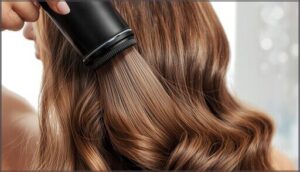
Even with the best products, your styling technique can make or break whether those ends stay smooth or spring back into curls. The way you handle your hair during styling makes a huge difference in curl reduction and frizz control.
Here’s what actually works for end styling:
- Blow-dry downward – Point the nozzle down the hair shaft to seal the cuticle and prevent frizz.
- Use tension while drying – Pull ends taut with a round brush for hair smoothing without excessive heat.
- Cool shot is your friend – Finish with cool air to lock in straightness and boost shine.
- Section smartly – Work in small sections so heat distributes evenly across each strand.
- Finish with serum – A tiny amount on damp ends prevents that annoying flip-back.
Master these hair styling tips, and you’ll see way less rebellion from those ends.
Frequently Asked Questions (FAQs)
How can I prevent my hair from curling at the ends?
Your ends have gone rogue? Tame them with regular trims every six weeks, lightweight hair serum for frizz control, and heat protectant spray.
Silk pillowcases and deep conditioning weekly work wonders for curl prevention too.
Can hormonal changes cause hair to curl at the ends?
Yes, hormonal shifts during pregnancy, menstrual cycles, or thyroid changes can alter hair texture and structure. Fluctuating estrogen levels affect hair growth patterns and curl behavior, though genetics still plays the biggest role in determining your hair type.
Are there any environmental factors that can contribute to hair curling at the ends?
Your hair’s basically weathering a storm every day. Humidity effects swell the cuticle, sun exposure fries proteins, wind damage increases friction, and pollution impact adds residue—all conspiring to make those ends curl unexpectedly.
Can vitamin deficiencies cause curling at ends?
Vitamin deficiency can weaken hair texture and growth, but there’s limited proof it directly causes curl prevention issues.
Focus on mineral balance and hair nutrition for overall hair health—your dietary impact matters more than you’d think.
Does water quality affect hair end texture?
Ironically, the very thing meant to cleanse your hair—water—can quietly sabotage it. Water hardness, mineral buildup, pH levels, and chlorine effects all reshape hair texture and structure, while soft water benefits include smoother, healthier strands.
Will chemical treatments increase end curl over time?
Absolutely. Repeated chemical treatments disrupt disulfide bonds, increasing hair porosity and altering your natural curl pattern. Treatment frequency accelerates bond damage, making ends more vulnerable to humidity-driven curling. Bond repair products help minimize these structural changes over time.
Can towel drying technique influence end curling?
Yes, it definitely does. Towel friction can rough up your cuticle, mess with hair porosity, and throw off curl retention.
Gentle blotting with microfiber towels protects hair texture and structure while preserving your natural curly hair solutions.
Does hair density impact how ends curl?
Density Effects reshape curl patterns dramatically. Dense hair weighs down ends, reducing curl definition compared to fine strands.
Follicle shape and cuticle health interact with hair porosity, creating unique texture variations that demand tailored curly hair solutions.
Conclusion
Ready to stop letting those rebellious ends dictate your entire style? Now that you know exactly why hair curls at the ends—from damage and genetics to simple physics—you’ve got the power to take control.
Pick the right cut, commit to consistent care, protect against heat and environment, and watch those wild tips transform. Your hair doesn’t have to betray you anymore. Time to make those ends work with you, not against you.
- https://www.ncbi.nlm.nih.gov/pmc/articles/PMC4387693/
- https://x.com/godofprompt/status/1990526288063324577
- https://www.sciencedirect.com/science/article/pii/S2949916X23000464
- https://onlinepubs.trb.org/onlinepubs/nchrp/cd-22/manual/v1appendixb.pdf
- https://academichelpexpress.blog/2024/08/please-use-the-bulleted-points-and-the-rubric-below-to-guide-your-work-your-pa/