This site is supported by our readers. We may earn a commission, at no cost to you, if you purchase through links. This content is for general informational and educational purposes only and is not a substitute for professional medical, dermatological, or nutritional advice.

Hair wax is one of those products most people grab once, use wrong, and either love or quietly abandon. The instructions on the tin don’t help much, and the difference between a great hair day and a greasy mess often comes down to a pea-sized amount.
What makes wax worth understanding is how differently it behaves from other styling products. Gel locks your hair into place and stays there. Pomade gives you shine and slip. Wax does something neither can: it holds with flexible, reworkable grip while keeping your hair looking like hair, not like you tried.
The trade-off is real, though. Buildup, weight, and tricky removal are legitimate concerns, and they hit harder depending on your hair type. Knowing the pros and cons of hair wax puts you in control of whether it belongs in your routine.
Table Of Contents
- Key Takeaways
- What is Hair Wax and How Does It Work?
- Pros of Using Hair Wax
- Cons of Using Hair Wax
- Is Hair Wax Suitable for Your Hair?
- How to Use Hair Wax Safely
- Frequently Asked Questions (FAQs)
- Can I use hair wax if I have thin or fine hair?
- Does wax work well for styling bangs or fringe?
- Is hair wax okay for kids or teens to use?
- Can you use hair wax on wet or damp hair?
- How often should you wash hair wax out completely?
- Whats the best hair wax for sensitive scalps?
- Can hair wax expire or go bad over time?
- Does hair wax work well in humid weather?
- Is hair wax safe to use during pregnancy?
- Can hair wax be layered with other styling products?
- Conclusion
Key Takeaways
- Hair wax gives you flexible, reworkable hold all day without the stiff, crunchy finish you get from gel or pomade.
- A pea-sized amount warmed between your palms is all you need — using too much leads to greasy, flat, weighed-down hair fast.
- Wax builds up on your scalp over time, so a clarifying shampoo every one to two weeks is non-negotiable to avoid irritation and clogged follicles.
- Your hair type drives which formula to pick — lightweight wax for fine strands, stronger wax for thick or coarse hair, and always apply mid-length to ends only.
What is Hair Wax and How Does It Work?

Hair wax is one of those styling staples that’s easy to grab off the shelf but harder to understand once it’s in your hands. Before you can decide if it’s right for you, it helps to know what’s actually in it, how it holds your hair, and how it stacks up against other products. Here’s what you need to know.
From pomades to clays to fiber waxes, knowing which formula suits your hair type makes all the difference — this breakdown of the best hair waxes for men covers exactly that.
Hold, Texture, and Finish
Hair wax gives you strong, flexible hold that lasts at least eight hours without turning stiff or crunchy. Your finish depends on the formula you pick. Both work on wet and dry hair without flaking. Just as students benefit from data-centered reading approaches to better understand complex information, taking a closer look at product labels can help you choose the right wax formula for your hair type.
- Separates strands for defined, natural texture
- Offers matte or subtle shine finishes
- Resists humidity to reduce frizz
- Restyles easily with your fingers or a comb
Wax Ingredients and Formulas
That finish comes down to what’s inside the formula. Wax bases like carnauba and beeswax build structure. Soft oils reduce tack and improve spread. Emulsifiers bind everything into a stable paste.
| Ingredient Type | What It Does |
|---|---|
| Carnauba and beeswax | Builds hold and shape |
| Soft oils and esters | Reduces tack, improves spread |
| Emulsifiers | Binds wax and oil evenly |
| Texture modifiers | Controls shine or matte finish |
The oil-to-wax ratio controls shine and restyle ease in oil-based hair styling products. Too much oil leads to product buildup and sticky residue.
Hair Wax Vs Gel
Those ingredient ratios also separate wax from hair gel. Wax gives you flexible hold with texture, so you can restyle all day. Gel sets hard and stays.
Wax has a matte to low-shine finish; gel looks wet and glossy. Gel goes on damp hair; wax goes on dry.
Both cause product buildup over time, so always wash your hair thoroughly.
Hair Wax Vs Pomade
Pomade is wax’s smoother cousin. It spreads easily, delivers hold and shine, and suits slick, polished styles.
Wax grips harder and dries matte, making it better for hair styling control on short or textured cuts.
For thick or coarse hair, pomade glides through without tugging.
On removal: water-based pomade rinses clean, while wax sometimes needs a second wash.
Pros of Using Hair Wax

Hair wax has a lot going for it — and once you know what it actually delivers, it’s easy to see why so many people swear by it. It’s not just about holding your style in place; it’s about how it works with your hair rather than against it. Here’s what makes it worth adding to your routine.
If you’re unsure where to start, practical hair care and styling advice can help you figure out which wax works best for your texture and goals.
Strong Yet Flexible Hold
Think of good hair wax as a flexible grip, not a rigid cast.
Hair wax holds your style with a flexible grip, not a rigid cast
- Flexible film formation coats each strand without locking it rigid
- Hold strength tuning lets you scale up control by adjusting how much wax you use
- Humidity resistance keeps your shape intact without any crunch or stiffness
That natural mobility means you can restyle anytime without starting over.
Natural Texture and Definition
Hair wax creates soft shadow separation between your strands. You get individual strand visibility without stiffness or buildup. That’s effective hair texture maintenance done simply.
| Feature | Result With Hair Wax | Without Hair Wax |
|---|---|---|
| Finger strand definition | Distinct, velvety strands | Clumped together |
| Natural texture preservation | Moves like real hair | Stiff or flat |
| Solid control | Natural look, no crunch | Heavy or crunchy |
Matte or Subtle Shine
The finish you pick shapes how your whole look reads. Matte wax uses clay or silica to scatter light, keeping shine below 10 percent. It hides fine texture and scalp imperfections cleanly.
Prefer a soft glow? Subtle shine formulas use lightweight silicones to reflect light gently, landing between 10 and 25 percent. Your hair looks natural, never wet or greasy.
Easy Restyling Throughout Day
Easy restyling throughout day is wax’s standout perk. Your morning touch-up takes under 60 seconds. Midday reshaping needs just a small dab. That same hold carries through an evening refresh.
Each quick style change fits your hair care routine well. Your daily restyling tips: use hair wax sparingly, stick to regular washing, and product buildup won’t sneak up on you.
Frizz and Flyaway Control
Frizz doesn’t stand a chance against the right wax. Smoothing agents work through cuticle sealing, so moisture can’t puff each strand and give you built-in humidity resistance all day.
Lightweight formulas won’t weigh your hair down. Add hair wax to your daily hair styling routine for targeted flyaway prevention, a clean matte finish, and long-lasting hold without crunch or stiffness.
Cons of Using Hair Wax

Hair wax isn’t perfect, though — and knowing its drawbacks helps you use it smarter. Like any styling product, it comes with a few trade-offs worth understanding before you commit to it daily. Here’s what to watch out for.
Stubborn Product Buildup
Wax doesn’t rinse out like a regular conditioner. It clings to the hair shaft and scalp, and within a few days, product buildup traps dust and oils into a tacky film. Regular shampoo won’t cut it. You need a deep cleaning shampoo or clarifying formula to wash hair thoroughly. Left alone, the wax-oil mix can oxidize and irritate your scalp.
Greasy or Heavy Hair
Buildup isn’t the only problem hair wax creates. Product overload makes hair feel heavy and look greasy long before your next wash.
Sebum interaction is why. Your scalp produces oil naturally, and wax traps it at the roots.
That leads to scalp oil buildup that weighs hair down fast. Increasing your cleansing frequency helps, but prevention starts with using less.
Scalp Irritation and Itching
Heavy buildup does more than just weigh hair down. It can also trigger scalp irritation and itch.
Some waxes contain synthetic fragrances or preservatives like methylisothiazolinone. These cause allergic or irritant reactions that show up as redness and itching, often 24 to 72 hours after application.
Blocked follicles make things much worse, trapping oil and bacteria right against your scalp.
Difficult Removal
That irritation connects to a bigger problem: wax that won’t wash out.
Unlike gel, wax is oil-based and water-resistant, so plain water can’t rinse it clean. A sticky scalp film forms, trapping oil that oxidizes between washes.
You need a clarifying shampoo to break it down. Even a small amount of wax demands a thorough wash to prevent product buildup.
Thinning Hair Appears Flatter
A clean scalp helps, but hair wax can still make thinning hair look flatter. It may weigh down fine roots, causing crown flattening and more scalp visibility. A wider-looking part line can stand out, especially when greasy hair reflects light.
Use a tiny amount on the ends. Avoid the scalp to limit product build up, dry scalp, and a smooth, flat hair texture.
Is Hair Wax Suitable for Your Hair?
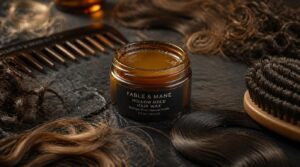
Hair wax can work well, but the right fit depends on your hair and scalp. Your length, texture, and density all affect the result. Here’s how it usually performs for different hair types and needs.
Short Hair and Cropped Styles
Hair wax suits short hair because it shapes without turning cropped styles stiff. Use a fingertip amount on a pixie, crew cut, or spiky top, focusing on textured ends rather than the scalp.
Build height for round faces, soften square jaws with a longer top, and try a side fringe for heart shapes. Warm wax between your palms, then restyle lightly. Shampoo every 1–2 days to prevent product buildup.
Medium and Long Hair
Because medium and long hair brings Hair Length Versatility, hair wax defines ends without weighing down roots. Use Layered Styling Tips for movement, then picture:
- soft face-framing layers
- loose touchable waves
- sleek mid-lengths
- bright balayage ends
- polished updos
Follow a Moisture Maintenance Routine, Color Enhancement Options, Heat Protection Guidelines, and hair washing technique. Match wax to hair thickness, limit hair product residue, and support hair follicles’ health over time.
Fine or Thinning Hair
Fine or thinning hair needs careful product choices. Heavy wax weighs strands down fast, worsening scalp visibility concerns and flattening your overall look. Stick to lightweight product selection and use just a fingertip-sized amount. Apply to ends only, never roots. This keeps follicle health intact while adding definition.
A consistent hair washing technique clears hair product residue before buildup forms.
Thick, Curly, or Coarse Hair
Thick, curly, or coarse hair can handle wax better than most other types. The strand density gives wax something to grip, boosting curl pattern retention without weighing your curls flat.
Apply a small amount to damp hair and work it through mid-lengths to ends only. Keeping wax off your scalp protects follicle health and stops wax buildup from forming there.
For fuller, stronger strands over time, pair this light-handed styling with proven hair strengthening and thickening habits that support healthier growth.
Dry or Sensitive Scalps
Sensitive scalps are quick to react. Wax buildup sitting on scalp oil can cause itching, flaking, and dandruff flare-ups between washes.
Protect your scalp barrier:
- Keep wax on hair ends only
- Use a deep-clean shampoo weekly
- Try scalp exfoliation to lift residue
- Avoid synthetic fragrances or dyes
- Switch to a gentle, sulfate-free shampoo if dryness starts
How to Use Hair Wax Safely
Using hair wax the right way makes all the difference between a great style and a greasy mess. A few simple habits will protect your hair and scalp while keeping your look on point. Here’s what you need to do.
Start With a Small Amount
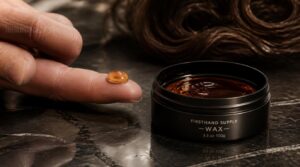
A pea-sized dab is your starting point. Amount control matters because wax builds up fast, creating a greasy effect or crunchy feel. Start small, then follow a gradual increase strategy, adding more in 15-minute intervals. Sectional application helps too. Work from the sides inward, keeping product off your scalp to protect hair follicles and allow for easy targeted touchups later.
| Step | What to Do | Why It Matters |
|---|---|---|
| Start | Use a pea-sized dab | Prevents wax buildup and greasy effect |
| Build | Add small amounts every 15 min | Helps gradual increase without crunchy feel |
| Apply | Focus on mid-lengths, not scalp | Protects hair follicles health |
| Maintain | Custom nail care before applying | Prevents product transfer and uneven hold |
Warm Wax Between Palms

Once your amounts are sorted, the next step is getting the wax ready to work with. Rub it between your palms for 5 to 15 seconds. That friction warms it to around 35 to 40 degrees Celsius, softening it into a smooth, clay-like consistency. At that point, it spreads evenly without clumping or dragging through your hair.
Avoid Applying to Scalp
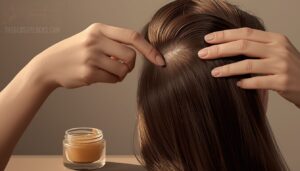
Once your wax is warmed and ready, the next step is placement. Keep it away from your scalp and work it through mid-lengths and ends only. Scalp contact lets wax mix with natural oils, trapping heat and risking follicle clogging.
- Helps scalp health protection
- Reduces sebum accumulation at roots
- Avoids skin irritation from buildup
- Keeps hair roots lifted and clear
Prevent Wax and Oil Buildup
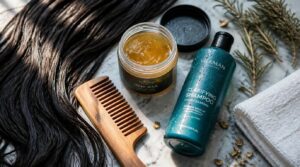
Keeping wax off your scalp is half the battle. The other half is preventing wax and oil buildup between washes.
Brush your hair before shampooing to move oils away from your roots.
Every one to two weeks, reach for a clarifying shampoo to clear residue that regular washing leaves behind.
Shampoo Wax Out Thoroughly

Clearing wax from your hair isn’t as simple as a quick rinse. Start with warm water to loosen the residue before you even reach for shampoo. A clarifying shampoo cuts through buildup far better than your regular formula. Rinse each section for at least 60 seconds to make sure nothing lingers.
Frequently Asked Questions (FAQs)
Can I use hair wax if I have thin or fine hair?
Fine hair looks delicate, but it copes hair wax just fine. Use a pea-sized amount of lightweight, water-based formula. Focus at the roots for lift, and rinse thoroughly to stop buildup from flattening your strands.
Does wax work well for styling bangs or fringe?
Bangs respond really well to hair wax. A pea-sized amount warmed between your palms gives flexible hold without crunchiness. It stays pliable all day, so restyling is always easy, and the matte finish looks natural.
Is hair wax okay for kids or teens to use?
Think of hair wax like training wheels on a bike. For kids and teens, gentle, natural formulas are the safest pick. Use a small amount, keep it off the scalp, and wash it out thoroughly.
Can you use hair wax on wet or damp hair?
Yes, you can apply hair wax to damp or dry hair. Damp hair lets the wax spread more evenly and creates a softer, flexible hold. Dry application gives you sharper definition and firmer results.
How often should you wash hair wax out completely?
Most people should wash hair wax out every one to two days. If you have oily hair, daily washing prevents buildup and follicle clogging. Dry hair can stretch to two or three days between shampoos.
Whats the best hair wax for sensitive scalps?
For sensitive scalps, choose fragrance-free, hypoallergenic waxes with soothing ingredients like aloe vera or bamboo extract. Keep application gentle, stay away from the scalp directly, and follow a consistent washing routine to prevent wax buildup.
Can hair wax expire or go bad over time?
Ancient Egyptian beauty oils didn’t come with a PAO label, but your modern hair wax expires just the same.
Most last 12 to 36 months. When it oxidizes, texture hardens and the scent turns sour.
Does hair wax work well in humid weather?
Hair wax can hold in humid weather, but results depend on the formula you use. Oil-based waxes resist moisture better than water-based ones. Humidity weakens the wax film, letting hair absorb moisture and go limp.
Is hair wax safe to use during pregnancy?
Think of hair wax as a gray-zone product during pregnancy. Skin absorption is minimal for styling products, but check ingredient labels carefully. Use it in a well-ventilated space and keep wax away from your scalp.
Can hair wax be layered with other styling products?
Yes, and it opens up some real styling options. A wax and conditioner combo adds moisture without weighing your look down. For more lift, try a wax with mousse base right at the roots first.
Conclusion
Wax works best when you work smart with it. The pros and cons of hair wax really come down to knowing your hair and your daily habits.
Fine strands need a light hand and a lightweight formula. Thick or coarse hair can take a little more. Start small, warm it well, and always keep it off your scalp.
Done right, wax gives you flexible, natural hold without the helmet effect. That’s a trade worth making.