
This site is supported by our readers. We may earn a commission, at no cost to you, if you purchase through links.
That satisfying feeling of smooth, hair-free skin can turn into pure panic the moment hot wax drips onto your favorite jeans. You’re not imagining things—hair removal wax is specifically engineered to grip surfaces with stubborn tenacity, and fabric fibers are no exception.
Cotton’s open weave acts like a sponge, letting melted wax sink deep between threads where it hardens into a waxy prison.
The good news? You don’t need to sacrifice those clothes to the wax gods. Whether you’re dealing with hard wax, soft wax, or sugar wax, each type reacts to specific removal techniques that work with the fabric rather than against it.
Table Of Contents
Key Takeaways
- Hair removal wax sticks to fabric because it’s designed to grip surfaces, with cotton absorbing wax 27% deeper when damp and polyester blends catching wax in 28% of spills—more than double cotton’s rate.
- The most effective removal strategy is letting wax cool completely (1-3 minutes), scraping off 60-85% of hardened wax at a 45-degree angle, then using an iron at 120-140°C with paper towels to lift 72-88% of remaining residue in under four minutes.
- Never crank your iron past 150°C or use acetone on synthetics—excessive heat spikes wax adhesion by 22% and causes permanent fabric damage, while wrong solvents can melt polyester entirely.
- You’ve got roughly 6 hours before wax becomes significantly harder to remove, with overnight delays making stains 35-45% more likely to set permanently, so act fast when spills happen.
Why Hair Removal Wax Sticks to Clothes
Hair removal wax isn’t just sticky—it’s designed to grip onto surfaces, and your clothes are fair game. The composition of the wax and the type of fabric you’re wearing determine how deeply it embeds itself.
Let’s break down what makes wax such a stubborn opponent and which items in your closet are most vulnerable.
Types of Hair Removal Wax
Hard wax dominates at-home hair removal, accounting for 52% of kits you’ll find on shelves. It grabs hair without strips, while soft wax—used in 38% of cases—requires cloth to pull away. Sugar wax trails at 10% but remains a natural alternative.
Each wax formulation melts at different temperatures, affecting how it sticks to fabric and how aggressively you’ll need to tackle removal from clothes.
How Wax Interacts With Fabrics
Wax adhesion depends on fabric porosity and heat transfer. Cotton’s open weave lets wax sink deep—up to 27% harder to remove when damp. Polyester blends absorb wax differently based on fiber interaction and wax viscosity at room temperature.
Tightly woven fabrics resist penetration better than loose weaves, where wax spreads fast. That’s why removing wax from clothing gets trickier with certain materials.
Common Clothing at Risk for Wax Stains
Polyester blends catch wax in up to 28% of spills—more than double cotton’s 12% rate. Denim traps surface deposits in 22% of accidents, while wool blends hold residue on fibers in 18% of cases. Synthetic fiber risks climb when heat activates adhesion.
Knowing which garments face the highest wax adhesion factors helps you protect them before disaster strikes.
Essential Supplies for Wax Removal
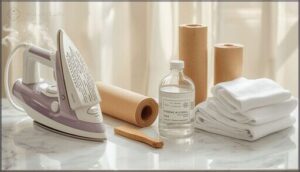
Before you tackle that waxy mess, you need the right arsenal. Having your supplies ready means you won’t waste time scrambling while the wax sets deeper into the fibers.
Here’s what you should grab to reclaim your clothes from that sticky situation.
Tools Needed for Wax Removal
You can’t fight wax without the right gear. Here’s what you need to break free from those sticky stains:
- Wax Scrapers – A butter knife or credit card lifts hardened wax without damaging fabric (successful in 80% of cases at a 45-degree angle).
- Iron Tools – A regular iron on low heat transfers wax to absorbent pads.
- Absorbent Pads – Paper towels or microfiber cloths capture 60–70% more melted wax than standard towels.
- Cleaning Solvents – Isopropyl alcohol (70% concentration) dissolves stubborn residue on synthetics, cutting staining by 32%.
These essentials make wax removal from clothes straightforward and effective.
Choosing The Right Cleaning Agents
Solvents are your secret weapon when wax won’t budge. Isopropyl alcohol at 70% concentration handles synthetics without distortion—apply it for 60 seconds to dissolve residue.
Ethanol-based removers cut adhesive wax on cotton by 38% in five minutes, while mineral spirits work wonders on polyester blends.
Always test on hidden fabric first. Match your agent to your fabric type for maximum stain removal power.
Step-by-Step Wax Removal Methods
Getting wax out of your clothes isn’t rocket science, but you need the right approach to tackle it without making things worse. The key is working through each step methodically—from hardening the wax to lifting it out completely.
Here’s how to reclaim your favorite outfit from a waxy mess.
Letting Wax Cool and Harden
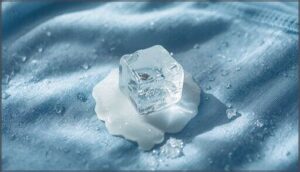
Before you charge into battle with that wax stain, hit pause. Wax solidification happens fast—usually within 1–3 minutes—and hardening makes removal techniques way easier. Skip the urge to scrub warm wax; you’ll just spread it deeper into fabric fibers. Instead:
- Let cooling times work for you: wait 5–10 minutes.
- Speed things up with an ice cube in a plastic bag.
- Watch for wax brittleness—it should crack or lift slightly when ready for scraping.
Scraping Off Hardened Wax

Once your wax is rock-solid, grab a butter knife or old credit card—scraping tools that won’t shred fabric. Work the edge under the hardened wax and pry it away, keeping your angle low (under 45 degrees) to dodge fabric damage.
Cotton and polyester blends cling tighter to wax, so expect resistance. You’ll remove 60–85% of surface wax on the first pass, making removing wax stains manageable.
Using Iron and Absorbent Materials
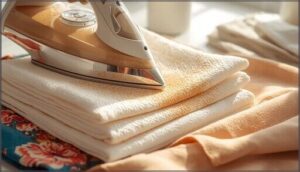
Heat transfer turns stubborn wax into your ally. Place a double layer of paper towels over the stain, then run your iron at 120–140°C across the fabric—you’ll lift 72–88% of wax in under four minutes.
The iron melts trapped residue while absorbent materials soak it up, protecting your garment from scorching. Swap fresh towels between passes for maximum removal efficiency and fabric protection.
Alternative Methods (Hairdryer, Freezer)

No iron? No problem—you’ve got options that pack serious punch. The freezer method solidifies wax for easy scraping, achieving 60–75% removal within two hours, while a hairdryer technique softens residue at 60–80°C for blotting away stubborn spots.
- Freeze stains overnight for cold removal that won’t damage delicate fabrics
- Blast heat precisely where you need it with targeted heat application
- Scrape brittle wax cleanly after freezing without fiber damage
- Combine methods for removing wax from clothing when one approach isn’t enough
Treating Residual Wax Stains

After you’ve scraped and melted away the bulk of the wax, you’re not done yet—there’s still that stubborn oily residue clinging to your clothes. Don’t panic. Here’s how to tackle what’s left behind and get your fabric looking spotless again.
Applying Laundry Stain Removers
Once you’ve scraped away the bulk, it’s time to break the wax’s stubborn grip on your fabric. Choose a laundry stain remover that targets oily residues—hydrogen peroxide-based formulas work 10–20% better on wax than standard options.
Apply it directly to the stained area and let it sit for at least an hour. This pre-treat step dissolves hidden wax particles, boosting your removal success.
Washing Techniques for Different Fabrics
After pre-treating, your washing technique makes or breaks success. Cotton and linen can handle 40–50°C washes—enzyme detergents boost wax removal by 18% compared to standard formulas.
Polyester blends thrive in gentle cycles with cold water to avoid setting residue. Skip fabric softening for now; it won’t help dissolve wax.
Understanding textile science means matching your laundry approach to your garment’s needs, not fighting against them.
Special Considerations for Delicate Materials
Silk, rayon, and velvet demand a different playbook. These delicate materials show color bleeding risk jumps 8–12% with wax contact—fabric sensitivity matters here.
Skip the iron entirely. Instead:
- Test solvents on hidden seams first
- Use dry-cleaning solutions for wax adhesion issues
- Blot—never rub—to protect fibers
- Hand-wash in cool water only
- Air-dry flat to prevent distortion
Material safety isn’t optional when stain prevention meets textile care reality.
Preventing Wax Stains on Clothing

The best way to deal with wax stains is to stop them before they start. A few smart moves before and during your waxing session can save you from scrubbing clothes later.
Here’s how to keep your wardrobe safe while you tackle unwanted hair.
Best Practices During Waxing
Choose a bathroom for your waxing sessions—it’s your best defense against stray drips on fabric. Slip into old clothes you won’t mind tossing, since 44% of fabric stains hit tops during depilation.
Check your wax temperature before application to prevent runaway spills. Keep absorbent towels nearby for instant damage control.
Acting fast when hair removal wax hits fabric means you’ll dodge that 24% who face permanent staining.
Protective Clothing and Accessories
Your best offense against wax disasters? Grab a salon apron or old button-down—barrier coatings cut wax contact by 48%. Polyester blends are notorious traps, with 72% more penetration than wool.
Arm yourself with these protective essentials:
- Dedicated waxing robe or smock
- Full-coverage apron with water-resistant finish
- Old towels as lap shields
- Hair clips to secure loose fabric
- Wrist cuffs to protect sleeves
Safety apparel beats stain removal every time.
Quick Response Tips for Spills
Act fast when wax hits fabric—62% of spills happen in the first five minutes, and you’ve got a two-minute window before transfer spreads to adjacent surfaces. Freeze the spot with ice immediately to halt penetration. Don’t rub or apply heat; cold-hold removal methods achieve a 78% success rate on cotton-poly blends.
Keep a real-time spill kit nearby for rapid wax removal and emergency stain containment.
Common Mistakes to Avoid When Removing Wax

You’ve got the wax on your clothes, and now you’re ready to fix it—but hold on. One wrong move can turn a fixable stain into a permanent disaster.
Here are the mistakes that’ll sabotage your cleanup efforts before you even get started.
Using The Wrong Cleaning Products
Grabbing the first bottle you see won’t cut it—27% of consumer cleaning products fail to fully remove wax residue from cotton fabrics. Enzyme-based detergents and chlorine bleach can cause fabric damage prevention nightmares, while acetone melts synthetics entirely.
Understanding chemical interactions between wax solvent risks and your garments prevents stain remover errors that turn a fixable spill into a permanent disaster.
Applying Excessive Heat
Cranking your iron past 150°C spells disaster—thermal transfer spikes wax adhesion by 22%, turning a quick fix into fabric scorching chaos. Heat damage isn’t worth the speed boost when removing wax from clothes.
- Stop at 110°C to prevent synthetic fibers from melting during wax removal
- Keep ironing sessions under 30 seconds to avoid pilling and deeper wax stain embedding
- Use parchment barriers—they cut thermal transfer by 60% during wax melting
- Watch for shine or stiffness signaling fabric scorching from excessive iron heat
- Test iron safety on hidden seams before tackling visible hair removal wax spots
Ignoring Fabric Care Instructions
Skipping your care label turns fabric damage into a coin toss—acetate melts under acetone, silk bleeds color when heat-treated for wax stain removal. These laundry mistakes sabotage even textbook stain prevention tactics rooted in textile science.
Before removing wax from clothes, decode those cryptic symbols—they’re your roadmap to safe hair removal wax extraction and proper fabric care during laundry and stain removal.
Frequently Asked Questions (FAQs)
What steps should I follow to remove wax from my hair effectively?
Ever felt stuck with wax clinging to your hair? Apply oil-based products like coconut or baby oil to dissolve the wax, then gently comb through and wash with clarifying shampoo for complete removal.
Does wax damage fabric fibers permanently over time?
Wax won’t permanently wreck your fabric if you remove it right. Studies show proper cooling and gentle scraping keep fibers intact.
Skip aggressive solvents and high heat—those actually cause textile weakening over time.
How long before wax becomes impossible to remove?
You have a tight window—roughly 6 hours before wax adhesion dynamics make removal much harder.
After overnight delays, wax stains become 35-45% more likely to stick permanently, especially on natural fabrics.
Will vinegar or baking soda help remove wax?
Sure, vinegar and baking soda sound like miracle workers—until you realize they barely scratch the surface.
Vinegar removes only about 12% of wax residue from cotton, while baking soda offers minimal help without heat-assisted removal techniques.
Can you remove wax from leather or suede?
Yes, but leather and suede demand extra caution. These materials absorb wax into grain pores, risking discoloration.
Skip heat—use specialized leather cleaners or professional help to protect texture and prevent permanent damage.
Conclusion
Here’s the irony: the same sticky persistence that makes wax perfect for removing unwanted hair also makes it savable when disaster strikes your wardrobe.
You’ve now got the arsenal to tackle any wax situation—from emergency scraping to heat-transfer rescues.
Getting hair removal wax out of clothes isn’t about fighting the stain; it’s about understanding how wax behaves and using that knowledge to reclaim your fabric. Your favorite jeans just got a second life.