This site is supported by our readers. We may earn a commission, at no cost to you, if you purchase through links. This content is for general informational and educational purposes only and is not a substitute for professional medical, dermatological, or nutritional advice.
Most men pick up a product, work it through their hair, and wonder why it never looks quite right. The cut seems fine. The brand is popular.
But something’s off. Nine times out of ten, the problem isn’t the product—it’s that they’re fighting their natural hair texture instead of working with it.
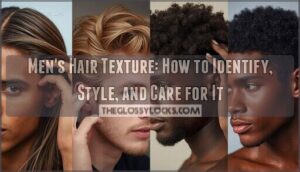
Straight, wavy, curly, coily—each type behaves differently, reacts to different products, and thrives with different techniques.
Understanding your hair texture for men isn’t a vanity project; it’s the difference between a style that holds and one that falls apart by noon. Get that foundation right, and everything else gets easier.
Table Of Contents
- Key Takeaways
- Men’s Hair Texture Types
- Identifying Your Hair Texture
- Styling Tips for Textured Hair
- Haircut Styles for Different Textures
- Care and Maintenance for Men’s Hair Texture
- Frequently Asked Questions (FAQs)
- What hair texture do I have for men?
- Can antidepressants change hair texture?
- What is rich girl hair?
- How do I get texture in my hair for men?
- Can men’s hair be textured?
- How can one achieve a healthier hair texture?
- How do you make men’s hair look more textured?
- What is hair texture?
- How to texturize men’s short hair?
- How to make your hair look textured?
- Conclusion
Key Takeaways
- Fighting natural hair texture is the real reason most men can’t get their style to hold, not the product they’re using.
- Each hair type — straight, wavy, curly, or coily — needs its own products and techniques, so what works for one won’t work for another.
- Simple tools like sea salt spray and matte clay do more for your texture than any expensive product, as long as you apply them the right way.
- What you eat, how you manage stress, and how often you wash all shape your hair texture just as much as anything you put on it.
Men’s Hair Texture Types
Your hair texture is the starting point for everything — the right cut, the right products, and the right routine all depend on it.
Understanding what sets each type apart helps you make smarter choices—explore the full breakdown of hair texture types to find exactly where yours falls.
Men’s hair generally falls into four main categories, each with its own look and feel.
Here’s what you need to know about each one.
Straight Hair Characteristics

Straight hair grows from round follicles, which means every strand falls in a clean, uniform line — smooth, flat, and predictably cooperative. That light reflectivity gives it a natural shine, but it comes with a catch.
- Oil distribution happens fast, making hair look greasy quickly
- Volume challenges are real — fine strand density sits close to the scalp
- Low porosity means product sits on top rather than absorbing
- Regular cleansing is non‑negotiable for solid hair care and men’s grooming
Master these, and straight hair styling becomes straightforward. Consider trying the French Crop style for added texture.
Wavy Hair Features

Wavy hair sits right between straight and curly — and that’s actually a sweet spot. You’re working with a natural S-pattern that runs 2A to 2C, giving you built-in volume and movement most guys have to style for.
Frizz management matters more here, and porosity levels affect how your hair drinks in product.
Density variations also mean what works for one wave won’t work for another. For example, 2B hair exhibits well-defined moderately dense waves.
Curly Hair Traits
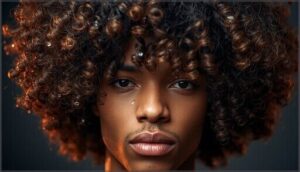
Move up the curl chart, and things get real. Curly hair — type 3A to 3C — brings volume density, natural shrinkage effects, and frizz control challenges most guys aren’t prepared for.
Curl porosity determines how fast your hair loses moisture, so moisture retention becomes non‑negotiable. Master your styling techniques here, and your men’s haircare routine actually starts working for your hair texture, not against it.
Coily Hair Properties
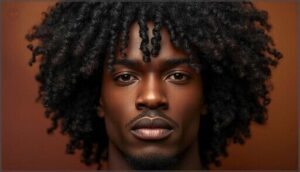
Coily hair is the most intense hair texture out there — and it demands respect. Tight coils grow from curved, figure-8 shaped follicles, creating that signature zigzag pattern.
Those densely packed spirals aren’t just beautiful — they’re structurally unique, and understanding what defines the coily hair type can completely change how you care for them.
Here’s what defines coily hair:
- Follicle Shape curves sharply, limiting natural oil travel.
- Shrinkage Levels can hit 75% of your actual length.
- Porosity Types vary widely, affecting moisture retention.
- Fragility Factors hide behind dense volume.
- Styling Techniques must prioritize gentle handling.
Identifying Your Hair Texture
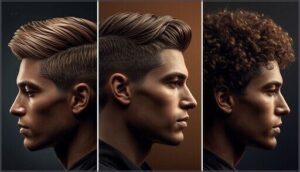
Knowing your hair texture starts with paying attention to the right clues. There are a few reliable ways to figure out exactly what you’re working with.
Here’s what to look for.
Visual Signs and Patterns
Your hair tells its own story before you even touch it. Watch how it falls after air-drying — straight hair lies flat with no silhouette volume, while curl size indicators like tight coils or loose S-bends reveal wavy or curly types.
Check for density gaps and cowlick direction at the crown. Porosity shine matters too — dull, frizzy ends usually signal higher porosity.
Touch and Feel Differences
Running your fingers through your hair tells you more than any mirror can. Fine strands barely register between your fingers, while coarse ones feel like cotton thread — that’s strand diameter doing the talking.
Slide from root to tip: smooth means low porosity, rough means high. Greasy roots signal oiliness level issues, and that sticky, clumped feeling is product buildup feel — your hair asking for a reset.
Common Misconceptions
Most guys have the wrong idea about what their hair is telling them. These grooming tips cut through the noise:
- Shrinkage means damage — False. Springy coils shrink because the curl pattern is healthy.
- Oil equals health — Straight hair looks shiny but can still be damaged.
- Heavy products required — Fine waves need lightweight creams, not thick butters.
- Heat destroys texture permanently — Mild heat with protectant won’t wreck your hair.
Styling Tips for Textured Hair

Knowing your hair type is one thing — knowing how to work with it where the real fun starts.
right products and techniques can take your texture from flat to full in just a few minutes.
Here’s what actually moves the needle.
Sea Salt Spray and Its Benefits
Sea salt spray is one of the most underrated tools in your styling kit. A few spritzes give you an instant Volume Boost, a natural Matte Finish, and Light Hold without the crunch.
It coats each strand, separating them for real texture. Some formulas even offer Scalp Exfoliation and fresh Fragrance Options. Simple, effective hair care that actually works.
Pomade, Clay, and Gel Uses
Pick the right product, and your hair texture does half the work. Pomade gives you that High Shine finish with flexible hold — great for slick styles that need to move.
Matte clay is your go‑to for a Volume Boost and natural Matte Finish without grease. Need control all day? Hair gel locks everything in place. These styling products aren’t interchangeable — know your hair texture, choose accordingly.
Layering and Texturizing Techniques
Your barber’s toolkit matters more than most guys realize.
Point Cutting breaks up blunt ends and adds natural movement, while Slide Cutting builds soft, blended layers that reduce bulk without chopping length.
Razor Texturizing creates that lived‑in, feathered finish.
For thicker hair, Internal Debulking removes weight from inside the cut.
Coily Layering sculpts shape without killing volume.
These Textured Haircut Techniques are the backbone of serious men’s grooming.
Haircut Styles for Different Textures
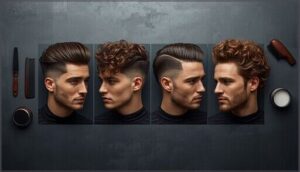
The right haircut does half the styling work for you.
Your texture plays a big role in which cuts actually look good versus which ones you’ll be fighting every morning. Here are the styles worth knowing, broken down by length and what works best for each.
Short Textured Looks
Short textured haircuts punch above their weight. With just 1–2 inches on top, you get serious shape and movement without a lot of effort. Here’s what makes them work:
- A high skin fade or low taper fade sharpens the contrast
- A point cutting technique creates piecey, separated strands
- Matte clay usage keeps texture natural, never crunchy
Trim every 3–5 weeks to stay sharp.
Medium-Length Options
Medium length opens up your options fast.
With 3 to 7 inches to work with, you can pull off textured hairstyles that short cuts simply can’t touch — think bro flows, shags, and mid-length Ivy Leagues.
Layering techniques and fade variations keep the shape clean, while light clays and sea salt spray are your go-to product pairings for natural, lived-in movement.
Long Hair Texturizing Methods
Long hair needs the right cuts to actually move. Your barber’s toolkit here includes point cutting to break up blunt ends, slide cutting to shed weight while keeping flow, and razor channel work for that piecey, lived-in separation.
Thinning shears and over direction layering pull bulk from the mid-shaft so your length sits light, not heavy. Less product**, more movement.
Popular Celebrity Inspirations
Real inspiration beats guesswork every time. Study how these guys pull it off:
- Beckham Quiff — textured top, faded sides, minimal product
- Chalamet Waves — Timothée Chalamet’s tousled, natural movement
- Gyllenhaal Pompadour — Jake Gyllenhaal’s brushed-up, polished finish
- Jordan Fade — Michael B. Jordan’s sharp mid-fade with coily texture
- Pharrell V‑Fade — geometric neckline, defined coils on top
Match the celebrity hairstyle to your texture, not just the aesthetic.
Care and Maintenance for Men’s Hair Texture
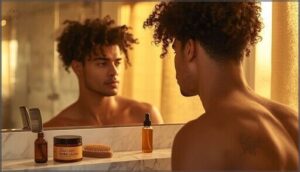
Getting the right cut is only half the battle — how you take care of your hair day to day is what keeps it looking sharp.
Your texture, whether straight, wavy, curly, or coily, has specific needs that go beyond just washing and hoping for the best. Here’s what you need to know to keep it in good shape.
Shampoo and Conditioning Routines
Your haircare routine lives or dies by wash frequency. Straight, oily hair does well with shampoo three to four times a week, while curly or coily types should stretch it to once weekly — over-washing dries them out fast.
Choose sulfate-free shampoos if you’re working with texture or a sensitive scalp. Match your conditioner types to your needs, rinse with warm water first, then cooler to seal the cuticle.
Managing Frizz and Oil
Battling frizz and greasy roots often comes down to smarter product choices and a few key habits. Skip heavy waxes and silicone‑rich shampoos — they wreck your hair care routine by causing product buildup prevention issues fast.
Keep it tight with these:
- dry shampoo at the roots every other day
- argan oil on damp ends for humidity control
- scalp exfoliation weekly to manage oil and heat‑styling damage
Lifestyle Factors Affecting Hair Texture
What you put into your body shows up in your hair.
Protein intake fuels keratin production, keeping strands strong, while proper hydration levels prevent that stiff, straw‑like feel.
Stress management and a consistent exercise routine both improve scalp circulation and hormone balance.
Smoking exposure damages follicles directly.
These lifestyle factors affecting hair texture matter as much as any hair maintenance routine for long‑term hair health.
Your lifestyle shapes your hair as much as any product or routine ever will
Frequently Asked Questions (FAQs)
What hair texture do I have for men?
Your hair type falls into one of four categories: straight, wavy, curly, or coily. Wash it, let it air-dry, and watch what it does naturally — that’s your answer.
Can antidepressants change hair texture?
Yes, antidepressants can change hair texture. Medication shedding pushes follicles into a resting phase, affecting hair health and texture recovery. Most changes reverse once your body adjusts to the medication.
What is rich girl hair?
Rich girl hair is all about looking naturally expensive — glossy finish, subtle color, minimalist layers, and natural movement.
Think bond building treatments and luxury shine over heavy styling.
It’s polished without trying too hard.
How do I get texture in my hair for men?
Getting textured hair is almost too simple — start with a sea salt spray on damp hair, scrunch it in, let it air dry, then finish with a small amount of matte clay.
Can men’s hair be textured?
Absolutely — any man can rock textured hair, regardless of hair type. Whether your strands are straight, wavy, curly, or coily, the right cut and products release serious texture potential.
How can one achieve a healthier hair texture?
Want healthier hair texture? Start from the inside out.
A protein-rich diet, scalp massage, heat-protectant usage, moisture-balancing products, and UV-shielding habits all work together to transform dull strands into something worth showing off.
How do you make men’s hair look more textured?
Start with sea salt spray on damp hair, scrunch it in, then blow-dry using a diffuser technique for volume boost. Finish with a matte finish clay for defined, piecey texture.
What is hair texture?
Hair texture describes the natural pattern, thickness, and feel of each strand — shaped by follicle shape, influence, and genetic determinants.
It controls light reflection impact, oil distribution patterns, and how well your hair holds any style.
How to texturize men’s short hair?
Ask your barber about point cutting and razor texturizing for built‑in shape.
At home, work on clay sculpting or apply texture powder through dry hair with your fingertips for instant volume and separation.
How to make your hair look textured?
Getting textured hair isn’t complicated — it’s about prep, product, and technique.
Start with Pre‑Styling Prep, apply Sea Salt Spray or Matte Clay, use smart Drying Techniques, and finish with Texture‑Boosting Tools.
Conclusion
Most men spend a fortune chasing products that promise to fix hair that was never actually broken—just misunderstood. The real secret, which apparently only everyone selling mystery serums knows, is that hair texture for men is the entire game.
Know your texture, choose the right product, use the right technique. That’s it. No ritual. No overhaul.
Just stop fighting what’s already growing out of your head, and let it work for you.