This site is supported by our readers. We may earn a commission, at no cost to you, if you purchase through links. This content is for general informational and educational purposes only and is not a substitute for professional medical, dermatological, or nutritional advice.

Three weeks into retinol, my patients often text me photos of flaky, pink cheeks with one question: "Is this normal?" Yes, and it’s the least glamorous part of the story.
So how long does retinol take to show results? Most skin looks worse before it looks better. Purging peaks around weeks two to four, then smoother, brighter texture arrives somewhere between weeks four and eight. Fine lines soften closer to week twelve, while deeper wrinkles stay put.
Your timing depends on dose, sunscreen habits and how patiently you build tolerance. Here’s the week-by-week timeline, plus the routine that keeps results on track.
Table Of Contents
- Key Takeaways
- How Long Does Retinol Take to Work?
- Which Skin Concerns Improve With Retinol?
- How to Use Retinol for Consistent Results
- Why Retinol Results Vary or Stall
- Top 7 Products for Your Retinol Routine
- When to Pause Retinol or Seek Help
- Frequently Asked Questions (FAQs)
- How can I tell if retinol is working?
- What is the 1/2/3 rule for retinol?
- Is 40 too late for retinol?
- Can retinol really get rid of wrinkles?
- Can I use retinol while pregnant or breastfeeding?
- Is bakuchiol a good alternative to retinol?
- Does prescription tretinoin work faster than retinol?
- Do I need sunscreen when using retinol?
- How should I track my retinol progress?
- Conclusion
Key Takeaways
- You’ll likely look worse before you look better, with peeling, redness and purging peaking around weeks two to four, smoother, brighter texture arriving by weeks four to eight, and fine lines softening closer to week twelve.
- Retinol helps with acne, fine lines, dark marks and rough texture, but deeper wrinkles and dented or raised acne scars barely budge, so expect smoother skin rather than a total reset.
- You’ll get the best results by starting low and slow, using a pea-sized amount once a week and building up gradually, sandwiching it between moisturiser layers, and wearing broad-spectrum SPF every morning.
- You should expect real change in about two to three months and the most dramatic results around six, and if redness, peeling or stinging lasts past four weeks, or you notice signs of an allergic reaction or infection, see a dermatologist.
How Long Does Retinol Take to Work?
Retinol isn’t an overnight miracle, but it isn’t a mystery either. Think of it as a slow burn, with four distinct stages that each bring something different to your skin. Here’s what to expect, so you know exactly when to stay patient and when to start checking your progress.
If you’re curious about the science behind those four stages, this guide to how retinol cream works on your skin explains why patience pays off.
Weeks 1–4: Adjustment and Early Changes

Most people hit a bumpy patch in the first month, and it’s completely normal. During this adjustment phase, expect mild peeling, redness and dryness, often starting around day three. This skin irritation is just retinol speeding up turnover. Peeling usually peaks around weeks three to four, and gradually increasing frequency over four to six weeks can reduce barrier disruption.
You might see purging, with breakouts peaking in weeks two to four. Moisturise generously and wear SPF daily, as sun sensitivity rises.
Weeks 4–8: Potential Texture Improvements

Hang in there, because this is where it gets good. By weeks four to eight, your skin has usually settled, and the payoff starts to show. Cell turnover speeds up, sloughing off dull, rough cells so smoother skin can surface. Collagen synthesis ramps up too.
Expect smoother, brighter texture and pores that look less clogged. Keep up the moisturiser and SPF.
Weeks 8–12: Assess Initial Results
Here’s your first proper checkpoint. After six to twelve weeks of steady retinol, judge your skin texture and fine lines honestly. Antiaging results build slowly, so look for:
- Smoother, softer skin texture
- Less visible pores
- Shallower fine lines
- More even tone
- Fading dark marks
Don’t panic if progress looks modest. Most people see gains by now, and they keep growing.
Months 3–6: More Noticeable Improvements

Past Weeks 12, the real payoff arrives. Retinoids boost collagen synthesis and slow its breakdown, so fine lines soften, skin texture looks smoother and acne keeps calming. Deeper wrinkles? They budge less, so keep your expectations sensible.
Dark spots fade slowly, and sunscreen protects every gain. Keep applying consistently. Acne can improve beyond six months, too.
Which Skin Concerns Improve With Retinol?
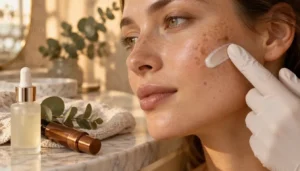
Most skin concerns people bring me are ones retinol can genuinely help with, though not all of them. Let’s sort the wins from the wishful thinking.
Acne is the headline act. Retinol keeps pores clear by normalising cell turnover, so blackheads and whiteheads ease, and some inflamed spots calm down too. Mind you, it’s gentler than prescription retinoids, so don’t expect miracles.
Fine lines soften as skin thickens and collagen gets a nudge. Deep wrinkles? Sorry, they stay put.
Hyperpigmentation fades as pigmented surface cells shed faster, which helps sun spots and post-acne marks. Texture feels smoother, and pores look tidier, though they don’t actually shrink. Acne scars that are dented or raised need other treatments, and any dark spot that changes should be checked by a clinician.
If dryness or irritation shows up while you’re fading dark spots, natural facial oils for skin hydration can help support your moisture barrier alongside retinol.
How to Use Retinol for Consistent Results

You don’t need a fancy routine to get results, just a steady one. Think of a pea-sized amount of retinol as your golden rule. Start once weekly, then nudge up to twice, then three times, as your skin cell turnover finds its rhythm. Fancy a picture of the perfect evening?
- Cleanse, then wait until your face is completely dry.
- Smooth on a thin layer of moisturiser.
- Add your pea of retinol, then another layer of moisturiser.
- Hop into bed and let it work overnight.
Sandwiching like this gently softens the adjustment phase without dulling your results. Keep consistency tolerable rather than heroic, and wear broad-spectrum SPF every morning. Redness or peeling that just won’t settle? Book a proper dermatologist consultation.
Why Retinol Results Vary or Stall
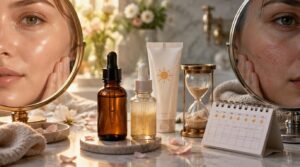
Same serum, same routine, wildly different results. Your friend glows after eight weeks, while you’re still squinting at the mirror. Why?
Sun is a big culprit. UV light keeps breaking down collagen, so skipping daily sunscreen undoes your hard work.
Your barrier plays a part as well. Irritated, dry skin masks progress, and a rushed adjustment period can leave you flaky and stuck. Build skin tolerance slowly. That’s dosage optimization: the lowest amount, used as often as your skin allows, beats heavy-handed nightly applications.
Your skin’s barrier decides your progress, so build tolerance slowly, because the lowest dose used as often as your skin allows beats nightly heavy-handedness
Genetics and age change how well your skin converts retinol into its active form. Formulation counts, too. Choose opaque packaging, and bin anything that’s changed colour or smell after six to twelve months. Oxidised retinol’s useless.
Top 7 Products for Your Retinol Routine
Right, you know the timeline and why results can stall, so let’s talk products. Below are seven picks that cover retinol serums and the moisturisers you’ll want to pair with them. Choose the one that suits your skin, and you’ll be set up for the long haul.
1. The Ordinary 0.2% Retinol Squalane Serum
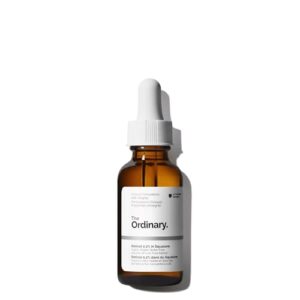
Think of this one as retinol with training wheels. The Ordinary’s 0.2% retinol sits in squalane, with no water to break it down, so it’s a gentle way in if you’re new to the stuff.
The squalane base softens retinol’s drying tendencies, and the silky formula sinks in quickly. Smoothing texture and evening tone are the main wins, plus softer fine lines over time.
Start once or twice a week, at night. Wear sunscreen daily, skip pregnancy and breastfeeding, and keep it away from other retinoids. Refrigerate after opening and use within three months.
| Best For | People new to retinol, including those with sensitive skin, who want a gentle, low-strength option to smooth texture, even out tone, and soften fine lines. |
|---|---|
| Volume | 1 fl oz (30 ml) |
| Model Number | N/A |
| Dimensions | N/A |
| Key Ingredients | Retinol, squalane |
| Skin Type | Sensitive or new users |
| Main Benefit | Fine lines, even tone |
| Additional Features |
|
- Gentle 0.2% formula makes it a good starting point for beginners
- Squalane base nourishes skin and helps offset retinol-related dryness
- Water-free formula absorbs quickly and feels silky
- Cannot be combined with other retinoids or retinoic acid
- Makes skin more sensitive to UV, so daily sunscreen is a must
- Needs refrigeration after opening, must be used within three months, and is not recommended during pregnancy or breastfeeding
2. CeraVe Resurfacing Retinol Serum
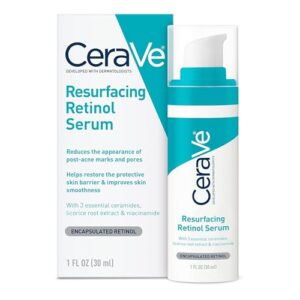
Think retinol has to be harsh to work? Not this one.
CeraVe’s encapsulated retinol releases slowly, so your skin gets the resurfacing without much of the sting. Three ceramides and niacinamide keep your barrier calm, while licorice root helps fade post-acne marks.
It’s fragrance-free, non-comedogenic, and suits dry, oily or sensitive skin. Use 1-2 pumps at night, a few times a week at first, then build up.
Expect smoother texture and fewer marks over 8-12 weeks. Patience pays off.
| Best For | People with dry, sensitive, oily, or acne-prone skin who want a gentle retinol to smooth texture and fade post-acne marks. |
|---|---|
| Volume | 1 oz |
| Model Number | B07VWSN95S |
| Dimensions | 1.18 x 1.18 x 4.33 in |
| Key Ingredients | Retinol, ceramides, niacinamide |
| Skin Type | Dry, sensitive, oily, acne-prone |
| Main Benefit | Post-acne marks, texture |
| Additional Features |
|
- Encapsulated retinol releases slowly, resurfacing skin with less irritation
- Three essential ceramides (1, 3, 6-II) plus niacinamide help support and calm the skin barrier
- Fragrance-free, paraben-free, and non-comedogenic, so it suits sensitive and acne-prone skin
- Results take time, with visible changes expected over 8-12 weeks
- Needs a gradual start, a few nights a week at first, which slows how quickly you can build up use
- The small 1 oz size may not last long with regular nightly use
3. SKIN1004 Retinol 0.2% Boosting Shot Ampoule
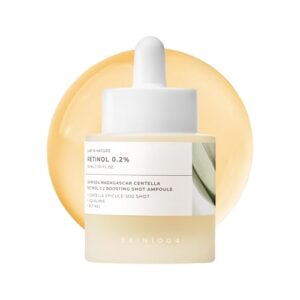
Think of this one as a retinol with a tiny delivery crew. The micro-spicules carry Madagascar Centella and Panthenol deeper, so the 0.2% retinol and retinal get a proper shot at working.
Retinal acts faster, retinol works slowly, so you get both speeds in one bottle. Squalane and Madecassoside keep things calm, which sensitive skin will appreciate in an evening routine.
The catch? The dropper is fiddly, and results vary. Start slowly, and patch test first.
| Best For | People with sensitive or retinol-new skin who want to smooth fine lines and improve firmness in an evening routine, and who don’t mind a fiddly dropper. |
|---|---|
| Volume | 30 ml (1.01 fl oz) |
| Model Number | N/A |
| Dimensions | 1.57 x 1.57 x 4.72 in |
| Key Ingredients | Retinol, retinal, centella |
| Skin Type | Sensitive skin |
| Main Benefit | Elasticity, fine lines |
| Additional Features |
|
- Combines retinol and retinal at 0.2%, so you get both fast and slow-acting anti-aging benefits.
- Micro-spicules with Centella and Panthenol help the actives absorb deeper.
- Centella, Madecassoside, and Squalane soothe the skin and support the moisture barrier.
- The dropper is hard to use, which makes application awkward.
- Results vary, with some users seeing improvement and others noticing no change.
- The retinol can still irritate very sensitive skin, so a patch test and slow start are needed.
4. COSRX Retinol 0.5 Oil Serum
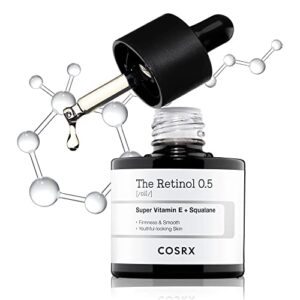
Ready to turn up the dial? COSRX steps up to 0.5% retinol, suspended in an oil that’s 91% squalane to protect your skin barrier. Super vitamin E (tocotrienol) adds anti-ageing support, and you can smooth it over your face, neck and chest. It’s the strongest pick so far, so respect it.
Beginners, go easy: start with two or three nights a week. Keep the 19.9 ml bottle in the fridge once opened, and expect some dryness or greasiness at first.
| Best For | Experienced retinol users with mature or aging skin who want a stronger 0.5% oil-based serum for face, neck, and chest. |
|---|---|
| Volume | 0.67 fl oz (19.9 ml) |
| Model Number | COS-050 |
| Dimensions | 1.97 x 3.15 x 3.54 in |
| Key Ingredients | Retinol, squalane, vitamin E |
| Skin Type | N/A |
| Main Benefit | Firmness, radiance |
| Additional Features |
|
- Contains 0.5% retinol to target fine lines and wrinkles.
- Formulated with 91% squalane to help protect the skin barrier.
- Can be applied to face, neck, and chest, and adds tocotrienol (super vitamin E) for anti-aging support.
- Not recommended for daily use by beginners; start with 2-3 times per week.
- Requires refrigeration after opening to maintain stability.
- May cause temporary dryness or greasiness for some users.
5. La Roche-Posay Retinol Face Serum
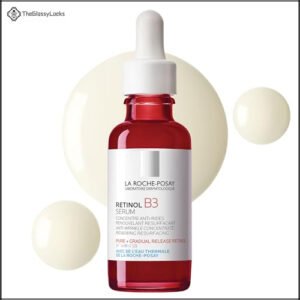
Found the 0.5% a bit much? La Roche-Posay is your gentler step back. It pairs gradual-release pure retinol with niacinamide and hyaluronic acid, so it’s kind to sensitive skin and a smart pick for retinol beginners.
Use 3-4 drops on cleansed skin in the evening, avoiding your eyes. Under moisturiser works too. The 1 oz (30 ml) bottle is non-comedogenic, though a little tingling or irritation can happen, and the fragrance won’t suit everyone. Skip it while pregnant or breastfeeding.
| Best For | People with sensitive skin or those new to retinol who want a gentler, gradual-release option to soften fine lines and improve skin texture, tone, and hydration. |
|---|---|
| Volume | 1 oz (30 ml) |
| Model Number | 3337875566254 |
| Dimensions | 2.17 x 1.4 x 4.33 in |
| Key Ingredients | Retinol, niacinamide, hyaluronic acid |
| Skin Type | Sensitive skin |
| Main Benefit | Fine lines, texture, hydration |
| Additional Features |
|
- Gradual-release pure retinol paired with niacinamide and hyaluronic acid for gentler, hydrating results
- Reduces the appearance of fine lines and wrinkles while improving skin texture and tone
- Non-comedogenic, dermatologist-tested, and suitable for sensitive skin and retinol beginners
- May cause a burning sensation or irritation in some users
- The fragrance can be intolerable for certain people
- Best used at night, with sun exposure avoided, and not suitable during pregnancy or breastfeeding
6. CeraVe Moisturizing Cream 8oz
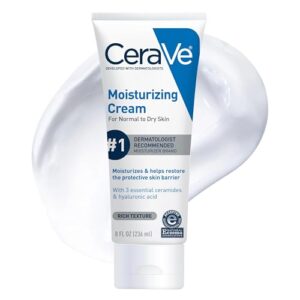
Retinol’s best mate is a good moisturiser, and this one’s a classic. Ceramides help restore your skin barrier, while hyaluronic acid holds onto moisture and MVE technology releases hydration all day.
Apply it after cleansing, before or after your serum, whichever your skin tolerates better. It’s fragrance-free, oil-free, hypoallergenic and non-comedogenic, and works on face and body.
The catch? It can feel heavy if your skin’s oily or normal. It’s best for dry to very dry skin, and at $13.52 full price, it’s hardly a splurge.
| Best For | People with dry to very dry skin who want a fragrance-free, hypoallergenic moisturizer for both face and body. |
|---|---|
| Volume | 8 fl oz |
| Model Number | 3606000534759 |
| Dimensions | 1.38 x 2.07 x 4.65 in |
| Key Ingredients | Hyaluronic acid, ceramides |
| Skin Type | Dry to very dry |
| Main Benefit | 24-hour hydration |
| Additional Features |
|
- Hyaluronic acid and MVE Delivery Technology provide 24-hour hydration.
- Ceramides help restore the skin’s protective barrier.
- Fragrance-free, oil-free, hypoallergenic, and non-comedogenic, so it works on face and body.
- Can feel heavy on very oily or normal skin.
- Not a lightweight option for everyday use on normal skin.
- Full price of $13.52 can be higher than sale prices.
7. Illiyoon Ceramide Ato Concentrate Cream
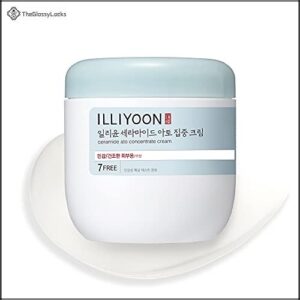
Want a ceramide cream with a bit more range? Illiyoon’s ceramide capsules give deep moisture that lasts up to 2–3 days after application, which suits retinol-ruffled skin nicely. It helps reduce redness, strengthens your barrier and works on face and body, whether you’re dry, sensitive or combination.
The catch? Some people find it heavy or sticky at first, and reviewers mention a mild medicinal scent. Plus, 500 ml is a lot of cream. Maybe split it with a good friend?
| Best For | People with dry, sensitive, or combination skin, especially those whose skin is irritated by retinol, who want a fragrance-free ceramide cream for both face and body. |
|---|---|
| Volume | 500 ml (16.9 oz) |
| Model Number | 1051619879 |
| Dimensions | 3.98 x 3.74 x 3.7 cm |
| Key Ingredients | Ceramides |
| Skin Type | Dry, sensitive, combination |
| Main Benefit | Long-lasting hydration |
| Additional Features |
|
- Ceramide capsules deliver deep moisture that lasts up to 2–3 days after application.
- Helps reduce redness and strengthens the skin barrier for irritation-prone skin.
- Unscented and free of seven specific ingredients, including animal materials, mineral oil, and parabens.
- May feel heavy or sticky at first for some users.
- Has a mild medicinal scent that reviewers describe as slightly unusual.
- The 500 ml size may be more than occasional users need.
When to Pause Retinol or Seek Help

We all love a bit of retinol enthusiasm, but your skin gets the final say. Some irritation during the adjustment period is normal, so a little dryness and flaking in the first few weeks isn’t cause for panic. Cut back to every third night, add moisturiser, and give it time.
Still red, peeling or stinging after four weeks? See a dermatologist.
Stop immediately and get medical help if you notice hives, swelling or trouble breathing. The same goes for blistering, intense itching, pus, oozing or crusting, which can signal infection.
Pregnant, planning a baby or breastfeeding? Skip retinol and ask your doctor first. Eczema, psoriasis, rosacea or isotretinoin? Check in with your dermatologist before starting.
Frequently Asked Questions (FAQs)
How can I tell if retinol is working?
Congratulations, your face is peeling, so retinol must be working. No. Irritation isn’t progress.
Look for smoother texture, fewer breakouts, faded hyperpigmentation and fine lines. Compare before and after photos, since cell turnover takes time.
What is the 1/2/3 rule for retinol?
Think of a staircase, not a lift. The 1/2/3 rule eases your retinol serums in: once weekly, then twice, then three times, with weeks of adjustment phase between steps.
It’s dosage optimization, not a deadline.
Is 40 too late for retinol?
Picture slower soil, not barren ground.
Not at all. Retinol still works on fine lines, with changes showing within 12 to 16 weeks. Start gently with mild serums, and see a dermatologist if irritation lingers.
Can retinol really get rid of wrinkles?
Think of retinol as a smart editor, not an eraser. It boosts collagen production and speeds cell turnover, softening fine wrinkles nicely. Deep ones? They’ll barely budge, so expect smoother, not gone.
Can I use retinol while pregnant or breastfeeding?
Best to skip it. Dermatological guidelines advise avoiding retinol and prescription retinoids during pregnancy, since topical vitamin A data are limited. While breastfeeding, evidence is thin too, so ask your clinician first, never on breasts.
Is bakuchiol a good alternative to retinol?
Yes, it can be. In studies, 5% bakuchiol matched retinol on fine lines and dark spots over 12 weeks, with far less stinging. Think gentler serums, same longterm results, and it’s pregnancy-safe too.
Does prescription tretinoin work faster than retinol?
Yes, tretinoin usually works faster. As a prescription product, it’s already active, so skin skips retinol’s conversion steps. Expect changes within weeks, but a rougher adjustment period, and check your skin tolerance.
Do I need sunscreen when using retinol?
Picture Sam, three weeks into her retinol routine, skipping SPF on a cloudy morning. By lunchtime, her cheeks are pink and stinging. Yes, you need daily broad-spectrum sunscreen. Retinol thins your skin barrier, so UV hits harder.
How should I track my retinol progress?
Think of your skin as a slow-growing garden: you won’t spot progress by staring at it daily. Take beforeandafter photos every four weeks, same lighting and angle, and log your routine.
Conclusion
Picture Priya, week three, staring at her flaky cheeks and ready to bin the bottle. Don’t. She kept going, and by week ten her skin looked smoother than it had in years.
So, how long does retinol take to show results? Roughly two to three months for real change, and six for the showstopping kind.
Your job is simple: go low and slow, wear sunscreen daily, and stay consistent. Patience is the actual active ingredient.