This site is supported by our readers. We may earn a commission, at no cost to you, if you purchase through links. This content is for general informational and educational purposes only and is not a substitute for professional medical, dermatological, or nutritional advice.

You walk into a salon expecting to pay $80 for cornrows, but the final bill reads $180—extensions you didn’t ask for, intricate edges you didn’t specify, and a “rush fee” nobody mentioned upfront. These surprise charges hit thousands of clients every week, and the confusion makes sense: cornrow pricing doesn’t follow a universal menu.
Your hair length, the complexity of your chosen style, your city’s cost of living, and even your braider’s Instagram following all shift the number on that receipt. Urban salons in Los Angeles or New York charge $150 to $250 for full-head cornrows, while talented stylists in Southern or Midwest towns deliver comparable work for $60 to $120.
Understanding what drives these price gaps—and which add-ons genuinely improve your style versus pad the bill—puts you in control of your budget and ensures you walk out with the look you want at a fair rate.
Table Of Contents
- Key Takeaways
- How Much Do Cornrows Cost in 2026?
- Key Factors Affecting Cornrow Pricing
- Regional Price Differences for Cornrows
- Cornrow Styles and Their Cost Impact
- Cost of Hair Extensions With Cornrows
- Additional Services and Hidden Fees
- Maintenance Costs and Lifespan of Cornrows
- Tips to Save Money on Cornrow Services
- Frequently Asked Questions (FAQs)
- Can cornrows be done on all hair types and lengths?
- How often should I wash and moisturize my cornrows?
- Can I swim or exercise with cornrows?
- Are there any specific products or techniques recommended for maintaining cornrows?
- Can I get cornrows with very short hair?
- Do cornrows work on all hair textures?
- How do I sleep with new cornrows?
- Are cornrows damaging to natural hair edges?
- What products should I use on cornrows?
- Conclusion
Key Takeaways
- Cornrow costs swing from $60 in rural areas to $350 in major cities, driven by your stylist’s experience, braid complexity, and local competition—with extensions adding another 40-60% to your total bill.
- Hair length, thickness, and texture directly push your price up by 10-30%, since longer or coarser strands demand extra labor, tighter sections, and sometimes pre-stretching treatments before braiding even starts.
- Simple straight-back cornrows run $100-$250 and take 2-4 hours, while intricate geometric patterns or Fulani styles cost 20-50% more due to precision work, custom designs, and extended chair time.
- Hidden fees like rush appointments (20-50% surcharge), beads and accessories ($10-$25), and maintenance touch-ups every 2-3 weeks ($20-$60) add up fast—booking off-peak and choosing the right braider cuts costs without sacrificing quality.
How Much Do Cornrows Cost in 2026?

Cornrow pricing in 2026 depends on where you live, who’s braiding your hair, and how intricate you want the style to be. You’ll see a pretty wide range—from budget-friendly neighborhood braiders to high-end salons charging premium rates for complex designs.
Let’s break down what you can expect to pay based on national averages, whether you’re getting a full head or just a few rows, and how complexity shifts the final bill.
National Average Price Ranges
National average cornrow pricing spans $120 to $350 across most U.S. markets, shaped by labor costs and pricing structures tied to braid styles and regional variations. Simple straight-back designs start around $120–$150, while intricate patterns push toward $250–$450 in high-demand areas.
For inspiration on complementary looks that pair well with braided styles, explore this creative hair styling inspiration guide featuring updos, accessories, and finishing techniques.
Market analysis shows cost factors—including stylist reputation and complexity—drive these price trends, with urban locations commanding premium rates. The auditing process for methodological rigor involves checking for statistical rigor flaws to verify accurate pricing.
Full-Head Vs. Partial Cornrows
Full-head vs. partial designs: Full head cornrows cover your entire scalp, running $150–$350 depending on braid patterns and hair texture, while partial designs focus on sections—say, the crown or sides—costing $60–$180.
Full installations demand more labor and can strain scalp health if tension isn’t managed, but they offer broader styling options and cornrow durability that lasts four to six weeks with proper care. Understanding language patterns can help in describing the various braiding techniques and styles available.
Typical Price by Braid Complexity
Beyond choosing full or partial coverage, braid complexity drives cornrow pricing factors even further. Basic straight-back rows on short hair run $40–$120, while intricate braid patterns with high braid density jump to $200–$500.
If you’re exploring options that balance style with scalp health, consider protective hairstyles for natural hair growth that minimize tension while delivering the intricate look you want.
Hair texture and styling options multiply labor costs—expect $350–$800 for geometric designs on long, thick hair, with price variations tied directly to time and technique.
Salons with experienced colorists often publish detailed haircut pricing guides that break down these texture-based surcharges by service type.
Key Factors Affecting Cornrow Pricing

Your cornrow cost depends on more than just walking into a salon and asking for braids. Several specific factors shift the price up or down, often by $50 to $200 or more.
If you’re also dealing with frizzy or poofy hair, prepping your texture with overnight moisture treatments can actually help cornrows last longer and look smoother.
Let’s break down the three main variables that determine what you’ll actually pay.
Hair Length and Thickness
Your hair length and hair thickness are the biggest players regarding cornrow pricing factors—longer strands need more braids and tighter sections, bumping costs by 10–25% per extra inch. Thick hair demands extra material and effort, raising prices 15–30% over medium hair volume. Very curly textures often require pre-stretching, adding surcharges since braid density, hair texture, and scalp tension all require more stylist labor.
Hair length and thickness drive cornrow costs up by 10–30%, with curly textures adding pre-stretching surcharges
- Longer hair: More braids and tighter sections increase time and cost per inch.
- Thicker volume: Extra material and effort raise prices compared to medium hair.
- Curly textures: Pre-stretching or smoothing adds minutes and surcharges to your bill.
Number and Size of Braids
Braid density and cornrow sizes shape your bill more than you might expect. Large cornrows (2-4) run $60–$150, medium patterns (6-10) land between $80–$160, and micro designs (15+) start around $200 and can hit $600.
Smaller braids demand extra stylist skill and labor hours, pushing labor costs up while braiding thread stays minimal regardless of hair texture or braid patterns.
Stylist Experience and Skill Level
A seasoned braider’s portfolio tells you what your scalp will feel—and what your wallet will pay. Stylist experience directly drives labor costs: entry-level braiders charge base rates but take longer, while certified pros with skill specialization in hairstyling techniques and prices command 10–40% premiums in urban markets.
Training methods and experience levels shape your investment:
- Apprentices offer lower salon services pricing with extended appointment times
- Senior stylists deliver faster, more consistent tension and refined weaving
- Specialized cornrows pricing rises 5–20% for intricate patterns over basic straight-backs
Regional Price Differences for Cornrows

Where you get your cornrows done can swing your final bill by 15% to 40%, and that’s before you even factor in your stylist’s reputation or the intricacy of your design. Urban salons generally charge more than their suburban or rural counterparts, and certain regions across the U.S. consistently run higher due to local demand and cost of living.
Let’s break down how geography shapes what you’ll pay.
Urban Vs. Rural Salon Rates
Urban salons charge $100 to $150 for full-head cornrows, with premium studios exceeding $200 for complex designs—while rural shops price the same service at $40 to $90. This cost variance stems from operating expenses: urban rent, staffing, and demand push regional fees higher. Rural discounts reflect lower overhead, making salon location a primary driver in hair braiding costs across regional price differences.
| Location Type | Full-Head Price Range |
|---|---|
| Urban Metro | $100–$200+ |
| Suburban Center | $70–$130 |
| Rural Community | $40–$90 |
| High-End Urban | $200–$350 |
| Budget Rural | $40–$60 |
Price Variations by U.S. Region
Regional Trends: Northeast and West Coast cornrows pricing averages $120–$250, while Midwest and Southern states run $60–$150 for full heads.
Coastal pricing reflects elevated living costs and state taxes—you’ll pay 25%–40% more in metro New York or Los Angeles than in rural Texas.
Regional price differences in hair braiding costs hinge on salon location, overhead, and market competition across cornrows pricing tiers.
Local Demand and Competition
Market Trends: Where you live shapes what you pay. Urban pricing runs highest in neighborhoods packed with African American and Afro-Caribbean salons—usually within a 10–15 mile radius—where salon competition keeps rates steady. Demand fluctuations spike before summer and back-to-school, nudging cornrows pricing up temporarily. Independent braiders counter boutique rates with promotions that build client loyalty.
- Urban areas with multiple braiders stabilize regional prices through balanced supply and demand
- Seasonal peaks around vacations and school starts trigger temporary increases in hair braiding costs
- Salon location density—especially in metro zones—directly correlates with stylist experience and rate ranges
- Bundled maintenance deals from independent stylists attract repeat clients and reduce long-term costs
Cornrow Styles and Their Cost Impact
The style you pick shapes how much you’ll pay and how long you’ll sit in the chair. Simple straight-back cornrows run cheaper and faster than geometric patterns or styles that blend multiple techniques.
Here’s what different cornrow styles will cost you in 2026.
Basic Straight-Back Cornrows
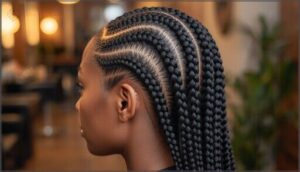
Basic straight-back cornrows are your gateway to clean, low-maintenance styling—and they won’t drain your wallet. You’ll pay $100 to $250 for a full head in most U.S. markets, with labor driving the bulk of that cost. Stylist experience, hair texture, and the number of braids you want all shift the final number. Urban salons generally charge more than rural shops, reflecting local demand and overhead.
| Feature | Low End | High End |
|---|---|---|
| Full-Head Price | $100 | $250 |
| Typical Duration | 2–4 hours | 2–4 hours |
| Braid Count | 12–20 sections | 30–40 sections |
| Material Add-On | $0–$15 | $30–$80 |
| Touch-Up Fee | $20–$40 | $50–$100 |
Cornrow maintenance matters: proper care extends wear time to four or six weeks, maximizing your investment. Salon reviews and stylist qualifications help you lock in fair hair styling costs without sacrificing quality. Book off-peak if you can—hair braiding appointments during weekends often carry premium rates.
Intricate Patterns and Designs
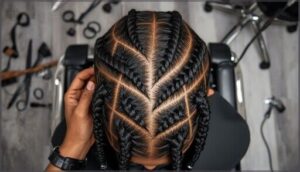
Intricate patterns—geometric grids, zigzags, paisleys—demand precision braiding techniques that bump your cost 20 to 40 percent higher than straight-back styles. You’re paying for stylist skill and design fees ranging from $20 to $100, plus extended chair time of 30 to 90 minutes.
Pattern density multiplies labor, so custom designs often require a consultation fee between $10 and $40 before your hair braiding appointment begins.
Feed-in and Fulani Styles

Feed-in braids and Fulani styles are intricate braiding techniques that demand skilled hands and precise patterns. These styles layer extensions gradually along your natural hairline, creating a smooth, no-bulk look, while Fulani styles blend curved cornrows with beads and ornamental details that honor deep cultural significance. Due to their complexity, these styles typically cost 25 to 50 percent more than straight-back cornrows, ranging from $120 to $280, reflecting specialized braiding services, hair textures, styling tools, and extension types used.
- Feed-in technique: Creates smooth transitions without visible extension demarcation at your scalp
- Fulani motifs: Feature looping rows, cattle-horn curves, and decorative beadwork with rich cultural roots
- Installation time: Adds 60 to 120 minutes to your appointment, increasing hair styling prices accordingly
- Material costs: Human-hair extensions and metallic accessories push hair braiding costs higher than synthetic options
Cost of Hair Extensions With Cornrows

Extensions transform your cornrow game, but they’ll also shift your budget in ways you mightn’t expect. The price depends on what kind of hair you choose, how your stylist installs it, and whether you’re paying separately for materials or bundled into one labor charge.
Here’s what you need to know about the costs that come with adding extensions to your cornrows.
Types of Extensions Used
Types of Extensions Used: You’ll encounter several hair extension options when adding length or volume to your cornrows.
Synthetic extensions deliver budget-friendly braid materials, while human hair offers styling flexibility and a natural finish.
Clip-ins provide a quick, commitment-free boost, and weaving methods like sew-ins secure extension bundles directly onto your cornrow base for longer wear.
Extension Installation Fees
- Urban salons charge 15% to 40% more than suburban shops, hitting your wallet harder.
- Rush appointments tack on 20% to 50% surcharges when you’re racing the clock.
- Reusable attachment methods cost more upfront but save you money over time.
Material Vs. Labor Charges
Material Costs versus Labor Rates shape your final bill. Extensions usually eat up 40 to 60 percent of your total price, while braiding labor claims the rest.
Urban stylists charge $40 to $120 per hour, and full installations take three to six hours.
Cost Estimation gets tricky—intricate patterns boost both Material Costs and Labor Rates, shifting Price Balancing toward premium Billing Practices for Cornrow Pricing.
Additional Services and Hidden Fees

Your final bill won’t always match the quoted price for your cornrows. Salons often tack on charges for extras like beads or cuffs, and you might face surprise fees if you need a rush appointment or want your edges touched up between full redos.
Here’s where those hidden costs show up and what you can expect to pay.
Beads, Accessories, and Embellishments
Bead options and hair jewels can bump your final bill by 5 to 20 percent—especially if you’re drawn to gold or gemstone braid adornments. Many salons charge embellishment costs as a flat $10 to $25 fee, while others itemize accessory fees per bead.
If you’re after standout cornrow styles with hair accessories and products woven into intricate braiding patterns, expect to pay more for that custom flair.
Maintenance, Touch-Ups, and Repairs
Regular maintenance visits every two to three weeks keep your cornrows fresh, generally adding $20 to $60 per touch-up session. Braid repair for loose strands or frizzy edges usually costs less than a full redo, while hair extension replacements increase maintenance costs.
Professional hair care services preserve your style longer than DIY fixes, and knowing these maintenance costs upfront helps you budget beyond the initial installation.
Rush and After-Hours Fees
Rush and after-hours appointments hit your wallet hard. Booking same-day cornrows or scheduling outside regular business hours usually adds a 20% to 50% surcharge to your base styling costs—sometimes $15 to $60 flat.
Urban salons charge steeper overtime charges than rural shops, reflecting higher demand for hairstyling costs and salon services and pricing flexibility during peak times.
Maintenance Costs and Lifespan of Cornrows

Getting cornrows is just the beginning—knowing how long they’ll last and what it takes to keep them looking fresh will help you budget for the real cost of the style. Most cornrows hold up between two and six weeks depending on your hair type, lifestyle, and how well you care for them.
Here’s what affects their lifespan, what maintenance actually costs, and how to protect your scalp and strands while you rock the look.
Typical Duration Before Redoing
Braid Longevity and Maintenance Schedules: You’ll usually get two to six weeks out of your cornrows before needing a redo—most people hit the salon around week four for prime style durability.
Your hair texture plays a big role here; straighter types often stretch to five or six weeks, while tightly coiled hair may need freshening sooner.
Activity level, sweating, and water exposure can shorten these redo intervals for protective hairstyles.
Professional Vs. DIY Maintenance
Choosing Your Maintenance Route: Professional techniques bring trained hands that tighten roots, condition the scalp, and prevent breakage—protecting your hair health over time. DIY risks include uneven tension and potential damage if you’re not careful with hairstyling techniques. Here’s what each option delivers:
- Professional care reduces scalp irritation through proper product selection
- DIY maintenance costs nearly nothing but demands practice
- Salon schedules align protective hairstyles with natural growth rates for maximum braid longevity
Preventing Damage and Prolonging Wear
Smart Upkeep for Lasting Braids: Sleep on satin or silk to cut friction and breakage. Keep tension light at your scalp—tight pulling wrecks edges fast.
Apply lightweight oil sparingly; heavy products weaken your protective hairstyles. Schedule maintenance before six weeks to stop matting.
Gentle handling and consistent scalp care stretch your cornrows’ lifespan, saving you money and protecting natural texture underneath.
Tips to Save Money on Cornrow Services

You don’t have to break the bank every time you want fresh cornrows. A few smart moves can shave 20% to 40% off your total bill without sacrificing quality or style.
Here’s how to stretch your budget while still walking out with braids that turn heads.
Choosing The Right Salon or Braider
Your best defense against inflated beauty salon prices starts with research. Check salon reviews and client testimonials for honest feedback on cornrows pricing and quality.
Review each braider’s portfolio to confirm they’ve mastered your desired style, then verify stylist credentials and experience levels.
Ask about service guarantees upfront—reputable braider selection means transparency on salon services, rates, and refund policies before you commit.
Scheduling and Off-Peak Pricing
Scheduling Strategies can slice 5% to 30% off cornrows pricing. Book mid-week mornings or early slots when salon schedules thin out—beauty salon prices drop during off-peak hours to fill empty chairs.
Urban markets show sharper discounts than rural ones, and regional price differences mean coastal cities reward flexible timing more than inland areas.
Join loyalty programs for exclusive booking tips and bundled deals on salon services or hair extension costs.
At-Home Care to Extend Style
Once you’ve locked in your appointment, scalp health and braid longevity start at home. Wash gently with pH-balanced shampoo to dodge buildup, then lock in hair moisture with a lightweight oil—skip anything greasy.
Sleep on satin to nail frizz prevention, ditch heat tools, and handle your protective hairstyles with care.
Solid hair care and maintenance routines can stretch your cornrows two extra weeks, saving you serious cash on hair maintenance visits.
Frequently Asked Questions (FAQs)
Can cornrows be done on all hair types and lengths?
Here’s the thing: cornrows work beautifully on most hair types and lengths, though very short or fine hair may need extensions.
Professional braiders adapt braid techniques for your unique hair texture, prioritizing scalp comfort throughout.
How often should I wash and moisturize my cornrows?
Wash your cornrows every 1 to 2 weeks to remove hair buildup without loosening braids. Moisturize your scalp 2 to 3 times weekly with lightweight oil for proper scalp care and braid moisture.
Can I swim or exercise with cornrows?
You can absolutely swim or exercise with cornrows—they’re protective hairstyles built for active lifestyles.
Just rinse chlorine immediately after water activities and keep your scalp dry to prevent buildup and maintain braid durability.
Are there any specific products or techniques recommended for maintaining cornrows?
Preserve protective hairstyles with proper hair maintenance: apply a lightweight leave-in conditioner, massage scalp weekly with light oil, use gentle shampoo, and sleep on satin.
Quality braid care products and consistent hair care routines extend cornrows beautifully.
Can I get cornrows with very short hair?
Yes, you can get cornrows on very short hair if your stylist specializes in tight scalp braiding techniques. Coarse hair textures hold better, though results depend on hair length and your braider’s expertise.
Do cornrows work on all hair textures?
Cornrows adapt to various hair textures—straight, wavy, kinky, and coily—through customized braid techniques. These techniques account for hair porosity, thickness, and scalp health.
Textured hair often requires smaller braids and moisture-rich preparation to ensure longevity.
How do I sleep with new cornrows?
Wrap your head with a satin scarf before bed to lock in moisture and prevent frizz.
A silk pillowcase works wonders too—it reduces friction while you sleep, keeping your braids smooth and your scalp comfortable through the night.
Are cornrows damaging to natural hair edges?
It’s a double-edged sword: tight cornrows can tug edges toward traction alopecia, but proper braid technique, moderate tension, gentle scalp care, and rest periods between styles help prevent hair breakage and support edge recovery.
What products should I use on cornrows?
You’ll want a sulfate-free cleanser, lightweight leave-in conditioner, and non-greasy oil to lock in hair moisture.
Focus on scalp health with gentle cleansers, avoid heavy waxes, and store products properly for lasting braid care.
Conclusion
You’ve held the purse strings long enough to know transparency beats guesswork. Armed with regional benchmarks, style breakdowns, and the real story behind extension fees, you’ll never overpay for cornrows again.
Whether you’re booking a $70 session in Atlanta or budgeting $200 for intricate feed-ins in Manhattan, every line item makes sense now. Walk into that chair confident, ask the right questions, and claim the look you want without surprise charges dimming your shine.