This site is supported by our readers. We may earn a commission, at no cost to you, if you purchase through links.
Most people buying their first hair clipper assume all models cut the same—they grab whatever’s on sale, then wonder why their home haircuts look uneven or the motor stalls halfway through thick hair.
The difference between a $20 bargain clipper and a $100 professional model isn’t just price; it’s motor strength, blade precision, and whether you’ll finish a haircut without hand cramps or patchy results.
Your hair type, cutting frequency, and skill level all determine which features actually matter: rotary motors power through coarse hair, adjustable taper levers create smooth fades, and cordless designs offer maneuverability but require battery planning.
Choosing the right clipper means understanding these trade-offs before you commit, so you’re not fighting your equipment every time you pick it up.
Table Of Contents
- Key Takeaways
- What Makes a Quality Hair Clipper
- Key Features to Consider Before Buying
- Matching Clippers to Your Hair Type
- Top 5 Hair Clippers Worth Considering
- Budget Vs Professional Grade Clippers
- Essential Maintenance for Clipper Longevity
- Choosing The Right Clipper for Beginners
- Frequently Asked Questions (FAQs)
- Conclusion
Key Takeaways
- Motor strength and blade quality determine whether your clipper cuts smoothly through thick or coarse hair or stalls mid-session, making these features more critical than price alone when choosing a model that matches your hair type.
- Corded clippers deliver consistent power throughout extended sessions, while cordless models offer maneuverability but require careful battery management and typically provide less torque as the charge depletes.
- Professional-grade clippers with brushless motors, carbide-coated blades, and metal housings last 1,000-3,000 hours compared to budget models’ 200-500 hours, justifying higher upfront costs through superior durability and lower long-term maintenance expenses.
- Regular blade cleaning, proper lubrication every 8-10 minutes of heavy use, and storing batteries at 40-60 percent charge extend clipper lifespan dramatically while preventing common failures like rust, friction damage, and premature motor wear.
What Makes a Quality Hair Clipper
You can’t cut through mediocre performance when your clipper lacks the fundamentals that separate a clean fade from a choppy mess. A quality clipper isn’t just about price; it’s built on four core elements that determine whether you’ll master your cuts or fight your tool every time.
Choosing the right barber clippers starts with understanding blade quality, motor power, ergonomics, and durability—the foundation of consistent performance.
Let’s break down the motor power, blade construction, power delivery, and grip design that make or break your cutting experience.
Motor Power and Types Explained
Motor power determines how easily your clipper pushes through dense sections without stalling or pulling. Three motor types deliver different performance:
- Rotary motors balance speed and torque, handling thick or curly hair with consistent power consumption.
- Magnetic motors run at high RPM but lower torque, ideal for precise fades.
- Pivot motors supply high torque control at lower speed settings, cutting wet or textured hair without choking.
- Brushless designs boost motor efficiency and reduce heat during extended sessions.
Corded clippers often reach 90–120 watts for heavy-duty energy output, while cordless clippers usually run 8–25 watts with managed motor performance.
Blade Materials and Longevity
Your clipper’s blade material governs how long it stays sharp under real-world use. High carbon steel blades, often hardened through precise heat treatment, hold an edge longer than basic stainless steel.
Ceramic blades resist heat buildup and offer outstanding durability, though they’re brittle. Titanium coatings add corrosion protection and reduce friction, extending blade life in humid conditions where uncoated steel would rust.
Factors such as blade toughness and corrosion resistance have a significant impact in determining how your clipper performs across different environments.
Corded Vs Cordless Performance
Power comparison starts with a simple truth: corded models deliver uninterrupted torque through your entire session, while cordless clippers throttle speed as battery voltage drops. That steady motor performance means consistent cuts on coarse sections without pulling or snagging.
Battery life varies widely, so if you’re cutting thick hair regularly, corded units offer better heat management and motor efficiency for extended use. For an in-depth look at the advantages and disadvantages of each type, consider how power source impacts your cutting experience.
Ergonomic Design and Comfort
Once you’ve locked in the right power source, comfort becomes your next priority; you can’t master sharp fades if your hand cramps after ten minutes. Ergonomic grips with contoured holds and balanced weight distribution—typically 200 to 450 grams—cut hand fatigue by up to 15 percent, while textured grip materials keep control solid even when your palms sweat.
- Rubberized surfaces prevent slipping during wet cuts
- Thumb rests support natural finger placement
- Vented housings reduce heat transfer to your palm
- Slim bodies allow one-handed operation for detail work
Ergonomic design transforms clippers from a chore into a tool that feels like an extension of your hand.
Key Features to Consider Before Buying
You’ve got the motor, blades, and power supply sorted—now it’s time to focus on the features that’ll actually make or break your cutting experience.
The right clipper won’t just cut hair; it’ll give you control, precision, and enough flexibility to handle anything from a quick trim to a full fade.
Here’s what separates the tools that empower you from the ones that hold you back.
Guide Combs and Length Settings
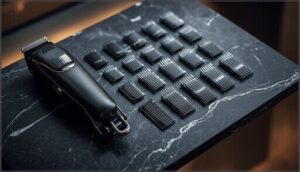
Your control over every cut starts with understanding guard sizes and how they lock into position. Guide combs determine length precision, ranging from 1 mm for tight fades to 25 mm for fuller styles; secure clipper attachment prevents slipping during passes, while comb materials like durable plastic resist bending under pressure. Blade quality paired with proper cutting angles ensures consistency across different hair cutting techniques.
| Guard Length | Typical Result | Best Application |
|---|---|---|
| 1–3 mm | Close fade/stubble | Skin fades, detail work |
| 6–9 mm | Short buzz cut | Even trim, low maintenance |
| 12–16 mm | Medium length | Blended styles, texture |
| 19–22 mm | Longer buzz | Fuller look, gentle taper |
| 25 mm | Maximum length | Minimal trim, bulk removal |
Battery Life and Charging Options
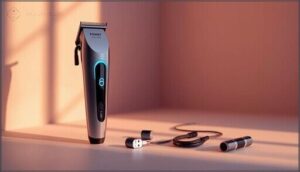
Generally, cordless clippers deliver 40 to 120 minutes of runtime on a single charge, though battery capacity measured in milliamp hours (mAh) and charging speed dictate real-world performance.
Regular maintenance like clearing debris from the motor shaft—detailed in this electric shaver troubleshooting guide—helps maximize that battery runtime.
Power management separates models worth your investment from disposable options:
- Li-Ion packs maintain 80 percent capacity after 300 to 500 charge cycles
- USB fast charging restores 50 percent in roughly 30 to 60 minutes
- Swappable batteries enable runtime extension without waiting for recharge
- Cordless efficiency depends on blade lubrication reducing motor load
Noise Level for Home Use
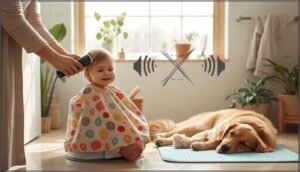
Most home clippers run between 60 and 70 decibels, which matters when you’re working around kids who startle easily or pets sensitive to sound.
Look for models advertising quiet operation, brushless motors, or vibration reduction, because those features minimize child anxiety and let you focus on technique instead of managing reactions. Sound levels below 70 decibels keep sessions comfortable without requiring hearing protection during regular home use.
Customization and Adjustability
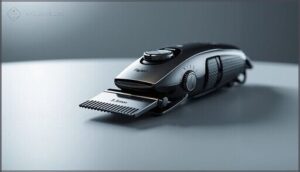
Precision Settings and taper lever controls separate clippers you’ll outgrow in six months from ones you’ll rely on for years. Adjustable Blades paired with Custom Guards let you dial in exact lengths from 1 mm to 25 mm in tiny increments, while Variable Speed motors adapt power to different hair densities without stalling.
- Click-stop dials lock common lengths for repeatable fades and blends without fumbling
- Interchangeable Blade Materials like titanium extend sharp performance on thick or coarse textures
- Ergonomic Grips with swappable grips prevent hand fatigue during longer sessions
- Memory presets store preferred Guide Combs settings for each family member
- Digital readouts confirm cutting length to 0.25 mm, eliminating guesswork during detail work
True Clipper Features customization means you control every pass instead of working around limitations.
Matching Clippers to Your Hair Type

Your hair type determines which clipper will actually work for you, not just collect dust in your bathroom drawer.
A motor that powers through thick curls might yank and pull on fine hair; blades designed for precision fades can bog down in coarse textures.
Here’s how to match the right tool to what’s growing on your head.
Best Options for Thick or Coarse Hair
Thick or curly hair demands high-torque motors that push through dense sections without pulling or stalling; pivot motor models and rotary designs handle coarse hair care with steady blade speed, while electromagnetic motors deliver the cut force you need for aggressive cutting techniques.
Prioritize stainless steel or titanium blade material, check hair type compatibility, and don’t skimp on clipper motor types built for serious texture.
Clippers for Fine or Thinning Hair
Fine hair cutting demands ceramic blades that glide without snagging, plus adjustable taper levers for subtle thinning techniques; low-vibration designs improve scalp comfort and control when you’re working close to delicate strands.
Choose hair clippers with extensive guard sets and quiet operation under 60 decibels—hair type compatibility matters, and proper hair clipper maintenance keeps your clipper features for home use sharp through every session.
Solutions for Curly or Textured Hair
Curly hair tips start with high-torque rotary or pivot motors that push through dense coils without stalling; titanium-coated blades maintain sharpness and reduce friction, so you’ll avoid the snags that destroy curl patterns.
Wide-tooth guide combs protect texture while you work, and adjustable blade angles let you follow natural curl flow—thick or curly hair demands clipper blade angles that respect each strand’s shape.
Wet Vs Dry Cutting Capabilities
Hair clippers with waterwashable blades and sealed housings give you wet-cutting freedom, letting you trim in the shower while water cools the blade material and rinses away loose hairs for dust reduction.
Dry cutting techniques suit quick touch-ups and precision fades where edge quality matters most, though you’ll sacrifice blade cooling and water efficiency—choose models that handle both cutting methods if you want complete control over every session.
Top 5 Hair Clippers Worth Considering
You’ve narrowed down what features matter for your hair type and cutting style; now it’s time to look at specific models that deliver on those promises.
The clippers below represent a range of motor types, blade materials, and price points, each chosen for its real-world performance in barber chairs and home setups alike. These five options give you a solid starting point, whether you’re cutting your own hair weekly or setting up a small home-based operation.
1. Andis Professional Hair Trimmer
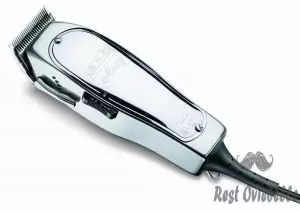
When you’re ready to commit to a workhorse trimmer, the Andis Professional model delivers 14,000 cutting strokes per minute through its high-torque rotary motor, designed to power through dense sections without hesitation.
You’ll appreciate the carbon steel T-blade that adjusts from size 000 to 1 using a thumb-controlled button; this one-hand operation keeps your workflow smooth during fades and detail work.
The metal housing withstands daily shop abuse, while the 8-foot cord gives you freedom to move around clients without constantly repositioning.
| Best For | Barbers and stylists who need a reliable trimmer for high-volume work, or experienced home users who want professional-grade precision for fades and detailed cuts. |
|---|---|
| Motor Type | High-torque rotary motor |
| Blade Material | Carbon steel |
| Weight | 1.25 pounds |
| Guide Combs | Adjustable 000-1 |
| Power Source | Corded 120V |
| Use Case | Professional/home |
| Additional Features |
|
- Powerful 14,000 spm motor cuts through thick hair without bogging down or pulling
- Adjustable carbon steel blade (000–1) lets you switch between fine detail work and coarser cuts with one hand
- Metal housing holds up to daily salon wear and tear better than plastic alternatives
- Gets hot during extended sessions, which takes some getting used to
- Needs regular blade oiling to keep running smoothly and quietly
- Higher price point puts it out of reach for casual users or beginners
2. Wahl Elite Pro Haircut Kit
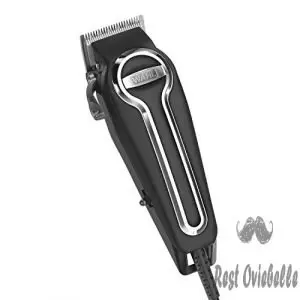
Stepping into home territory, the Wahl Elite Pro (model 79602) gives you 15 percent more motor power than Wahl’s earlier PowerDrive models, pushing self-sharpening precision blades that cut 40 percent faster through any texture you throw at them.
You get SECURE-FIT guide combs with stainless steel clips—70 percent stronger than older versions—so they won’t pop off mid-fade, plus an adjustable taper lever for clean blending. At 2.5 pounds and made in the USA, this corded kit sustains extended sessions without overheating or losing bite.
| Best For | Home users who want barber-grade power and precision without the barber-shop price tag, especially if you’re cutting thick or coarse hair regularly. |
|---|---|
| Motor Type | PowerDrive premium motor |
| Blade Material | Self-sharpening precision |
| Weight | 2.5 pounds |
| Guide Combs | Secure-Fit combs included |
| Power Source | Corded USA |
| Use Case | Home/men’s grooming |
| Additional Features |
|
- 15% more motor power and blades that cut 40% faster mean you’re not wrestling with thick sections or making multiple passes
- Secure-Fit combs with steel clips actually stay put during fades and tapers—no mid-cut pop-offs
- Adjustable taper lever gives you smooth blending control for clean transitions between lengths
- USA-only voltage means you can’t take it overseas without a converter
- Blades need regular oiling to keep that sharp edge and smooth performance
- Lifetime warranty only covers home use, so pros or heavy commercial users are out of luck
3. Oster Fast Feed Hair Clipper
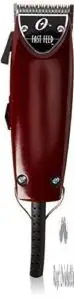
Built around a Whisper Quiet pivot motor that doubles the torque of a magnetic clipper, the Oster Fast Feed (model 76023-510) powers through thick or wet hair without bogging down, delivering consistent blade speed when you need clean fades.
Its 17-tooth steel blade adjusts from size 000 to 1 with a simple lever, eliminating the need to buy extra blades for common lengths. At 1.7 pounds with an 8-foot cord, it balances reach and control during all-day sessions.
| Best For | Barbers and home users who need a reliable clipper that powers through thick or wet hair while staying quiet enough for residential settings. |
|---|---|
| Motor Type | Pivot motor |
| Blade Material | Adjustable steel blade |
| Weight | 1.7 pounds |
| Guide Combs | 4 guide combs |
| Power Source | Corded |
| Use Case | Professional/personal |
| Additional Features |
|
- Pivot motor delivers double the torque of magnetic clippers, cutting through all hair types without slowing down
- Adjustable steel blade (size 000 to 1) eliminates the need to purchase multiple blades for common cutting lengths
- Ergonomic 1.7-pound design with 8-foot cord reduces hand fatigue during extended cutting sessions
- Clipper tends to get clogged easily during use, requiring frequent cleaning
- Can become uncomfortably warm or hot after prolonged operation
- Included guard combs are reportedly lower quality than the clipper itself
4. Surker Mens Hair Clippers Kit
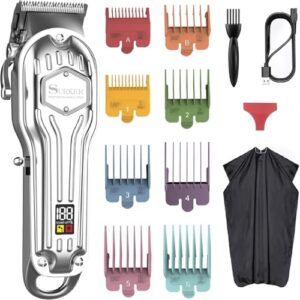
At $29.99, the Surker K7S-silver delivers a five-hour cordless runtime and eight color-coded guide combs, making it an accessible entry point for home cutting.
Its high-carbon stainless steel blades self-sharpen during use, while the adjustable lever shifts cutting lengths from 0.8 mm to 2.0 mm without swapping guards. You’ll find the LED battery display tracks remaining charge through your session; however, dense or coarse textures can challenge its motor, so it performs best on standard to moderately thick hair.
| Best For | Home users and beginners who want an affordable, easy-to-use clipper for regular maintenance on fine to medium hair types. |
|---|---|
| Motor Type | High-carbon motor |
| Blade Material | Stainless steel |
| Weight | 12.35 ounces |
| Guide Combs | 8 colorful combs |
| Power Source | Cordless rechargeable |
| Use Case | Professional/personal |
| Additional Features |
|
- Five-hour battery life means you can go weeks between charges, even with multiple haircuts
- Eight color-coded combs and the adjustable lever give you plenty of length options without guesswork
- Self-sharpening blades stay sharp over time, so you won’t need replacements as often
- Three-hour charging time is pretty long if you forget to plug it in
- Struggles with very thick or curly hair—the motor just isn’t powerful enough for dense textures
- Limited blade adjustment range (0.8mm to 2.0mm) won’t work if you need longer cuts without attachments
5. Bestbomg Cordless Hair Clippers Kit
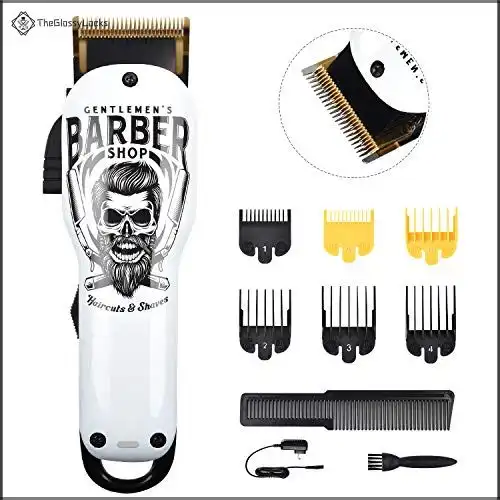
The Bestbomg Premium Cordless Hair Clippers Kit combines a high-torque motor pushing 7,000 RPM with stainless steel blades and eight precision guards spanning 1.5 mm to 19 mm, giving you adaptable fade control across different hair types.
You’ll appreciate the taper lever for quick length adjustments mid-cut, while the ergonomic GripFeel handle reduces strain during longer sessions. At its price point, this kit delivers solid performance for home users who want professional-level features without the overhead of commercial-grade equipment.
| Best For | Home users and DIY enthusiasts who want salon-quality results without spending pro-level money, especially if you’re doing regular fades or family haircuts. |
|---|---|
| Motor Type | Quiet motor |
| Blade Material | Precision sharp blades |
| Weight | 0.54 kilograms |
| Guide Combs | Adjustable taper level |
| Power Source | Corded/Cordless |
| Use Case | All-day use/travel |
| Additional Features |
|
- Powerful 7,000 RPM motor cuts through most hair types smoothly without snagging or pulling
- Eight guard sizes plus the taper lever give you tons of flexibility for different styles and lengths
- Cordless design with 4-hour runtime means you’re not tethered to an outlet during cuts
- No battery indicator so you won’t know when it’s about to die mid-haircut
- Takes 3 hours to fully recharge, which is pretty long if you forget to plug it in
- Might struggle with very thick or coarse hair since it’s not a commercial-grade clipper
Budget Vs Professional Grade Clippers
You’ve probably noticed the massive price gap between a twenty-dollar clipper kit and a professional model that costs ten times more, and it’s not just marketing hype.
The real question isn’t whether expensive clippers cut better—it’s whether the features you’re paying for actually match how you’ll use them. Let’s break down what separates budget-friendly home clippers from professional-grade tools, so you can invest your money where it counts.
Home-Use Models and Cost Savings
Cordless home-use models liberate you from monthly salon trips while delivering solid performance for DIY haircuts. Entry-level clippers cost 20 to 60 USD, mid-range options sit around 60 to 120 USD, and lithium batteries provide 60 to 90 minutes per charge—enough for several home haircutting sessions before recharging.
| Price Range | Battery Runtime | Typical Features |
|---|---|---|
| 20-60 USD | 60-75 minutes | Basic guide combs, standard motor, limited warranty |
| 60-120 USD | 75-90 minutes | Self-sharpening blades, quick charge, multiple guards |
| Replacement Parts | N/A | Blades and guides: 10-25 USD per item |
| Refurbished Units | Same as new | Up to 50% savings, limited 6-12 month warranty |
| Long-Term Savings | N/A | Avoid 15-30 USD trims every 4-6 weeks. |
Budget clippers for home grooming eliminate recurring costs while giving you control over your schedule. Cost efficiency improves when you maintain blades properly; cleaning brushes and blade oil extend clipper life beyond 500 hours for most stainless steel models, and choosing home-use models with self-sharpening technology reduces maintenance effort by 30 to 50 percent during the first year of regular DIY haircuts.
Professional Features Worth The Investment
Professional grooming demands heavy duty performance: brushless motors hitting 7000 RPM cut through thick sections without hesitation, carbide coated premium blades stay sharp past 1,000 hours, and ergonomic design reduces wrist strain during back-to-back clients. High torque motors push blade speed through coarse hair while sophisticated motors maintain consistent power under load—brand reputation reflects years of refining product features that match user needs.
| Feature Category | Home-Use Spec | Professional Spec |
|---|---|---|
| Motor Power | 15-25 watts | 90-120 watts, brushless technology |
| Blade Lifespan | 200-500 hours | 1,000-3,000 hours, carbide or DLC coated |
| Durability Build | Plastic housing | Metal housing, sealed internals, 10,000+ cycles |
Long-Term Value and Durability
A clipper that survives 1,000 hours of cutting pays for itself: extended warranties averaging 2 to 5 years cover motor and blade assemblies, modular designs let you swap parts instead of retiring the whole unit, and maintenance costs under 8 percent of original price signal smart long-term savings.
Durability tests prove professional models resist vibration cracks and maintain value through readily available replacement parts—your cost-benefit analysis of home haircuts improves when lifetime performance outweighs initial budget considerations.
| Durability Factor | Budget Models | Professional Models |
|---|---|---|
| Warranty Coverage | 1 year standard | 2-5 years, motor & blade assemblies |
| Maintenance Costs | 12-18% of purchase price | Under 8% of purchase price |
| Clipper Lifespan | 200-500 hours | 1,000-3,000+ hours with part replacement |
Essential Maintenance for Clipper Longevity
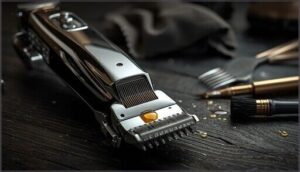
Your clipper isn’t a disposable tool; it’s an investment that demands respect and routine upkeep if you want it to deliver professional results year after year.
Your clipper is an investment that demands routine upkeep to deliver professional results year after year
The difference between a clipper that dies in six months and one that runs flawlessly for a decade comes down to three non-negotiable habits: keeping your blades clean and lubricated, storing the unit properly while maintaining battery health, and catching small problems before they become expensive failures.
Master these fundamentals, and you’ll save hundreds in replacement costs while maintaining the cutting power you need for consistent, clean work.
Blade Cleaning and Lubrication
Your clippers won’t survive neglect, so master blade maintenance now to keep every cut smooth. Clean blades after each use with a soft brush and warm water, dry thoroughly to prevent rust, then apply clipper oil to the teeth and moving parts.
For peak performance, follow this schedule:
- Wipe debris with a lint-free cloth immediately after cutting
- Use isopropyl alcohol or blade cleaning solutions for sanitizing weekly
- Apply lightweight lubricant types designed for hair clippers every 8-10 minutes of heavy use
- Remove excess oil to avoid attracting hair and lint buildup
- Inspect blade material for nicks or corrosion during routine oil maintenance
Proper lubrication reduces friction, prevents heat buildup, and extends blade life dramatically—stainless steel blades last 200-500 hours, while titanium or DLC coated versions can push 1,000-3,000 hours with diligent care.
Proper Storage and Battery Care
Storage Tips go beyond the blade—Battery Maintenance and Power Preservation determine your clipper’s true lifespan. Store cordless units in a cool, dry spot away from sunlight; keep charge between 40-60 percent for long-term Battery Longevity.
Avoid complete discharges, use the original charger to prevent overcharging, and inspect terminals monthly for corrosion to safeguard Clipper Safety, durability, and consistent battery life.
Inspection and Troubleshooting
Regular Visual Checks catch problems before they stall your cut: misaligned blades tug instead of slice, loose screws exacerbate vibration, and worn pivot pins kill stability.
Run Motor Tests without attachments to isolate irregular sounds; high-pitched whines signal bearing wear, while grinding points to Blade Alignment issues.
Noise Diagnosis and Vibration Analysis reveal whether your Blade Material needs replacement or simple Troubleshooting—tighten mounts, re-oil contact points—restores Durability through smart Clipper Maintenance.
Choosing The Right Clipper for Beginners
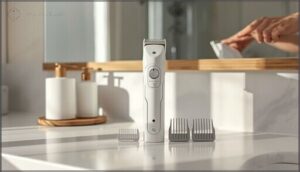
You don’t need to master every clipper feature on day one; beginners succeed when they start with tools that forgive minor mistakes and make technique easier to learn.
The right starter clipper combines easy-to-use controls, dependable safety features, and enough guidance to build your confidence without overwhelming you. Here’s what separates beginner-friendly models from the rest, plus practical steps to launch your home cutting routine with less trial and error.
Beginner-Friendly Features and Controls
When you’re choosing hair clippers for the first time, look for a beginner-friendly design with an easy interface: one-touch power switches, simple settings you can dial without reading fine print, and clear control options like lockable length adjustments.
User guidance features—color-coded guards, LED indicators, and beginner modes that prevent accidental changes mid-cut—transform intimidating DIY haircutting techniques into manageable steps you’ll master quickly.
Safety Considerations for Family Use
When you bring clippers into your family haircut routine, prioritize child safety tips like rounded blade guards and quiet operation—under 70 decibels—reducing fear of clippers in children greatly.
Clipper storage in a locked cabinet prevents tampering; electrical safety demands unplugging before blade changes. Skin protection starts with lubricated blades and proper guard attachment, while accident prevention means checking cords for frays before each home haircuts session.
Starting Your Home Haircutting Journey
Your first home grooming session feels intimidating, but beginner tips like mastering clipper safety and haircut basics transform anxiety into confidence.
Start with a quality model featuring clipper features for home use—clear guards, simple controls, and reliable battery life; then practice clipper maintenance and care through blade oiling and cleaning.
This home haircutting guide establishes family grooming solutions you’ll perfect with every cut.
Frequently Asked Questions (FAQs)
How do I choose the right hair clippers?
Start by matching motor strength to your hair texture; thick or coarse types demand high-torque power, while fine hair works with standard motors.
Then evaluate blade material and guard range for versatility.
Can hair clippers be used on beards?
Hair clippers handle beard trimming effectively when you pair them with guard combs that control length and prevent trimming too short.
Proper blade cleaning and regular oiling maintain smooth cutting performance on facial hair.
How often should clipper blades be replaced?
You’ll need to replace your blades every six to twelve months with regular use; blade wear and cutting efficiency signal when it’s time, not just a calendar schedule, ensuring haircut quality stays sharp.
Are waterproof clippers worth the extra cost?
Like choosing titanium over high-carbon steel, waterproof clippers with water-washable blades deliver exceptional hygiene factors and maintenance ease; water resistance boosts clipper durability, making the cost benefit clear for pros valuing cleanliness and longevity.
What warranty coverage should I look for?
Look for warranties covering one to two years minimum, with clear repair options and claim processes; check coverage scope for parts versus labor, transfer terms for resale value, and brand reputation for honoring durability promises.
Can I use clippers on children safely?
Yes, you can safely cut a child’s hair using clippers with child safety blades and low noise models; proper kid hair prep, secure child position, and beginner-friendly design guarantee quiet enough for kids performance.
Conclusion
Your hair clipper is more than a tool—it’s the bridge between clumsy guesswork and consistent, controlled results every time you cut. Knowing how to choose the right hair clipper means matching motor power, blade quality, and features to your specific hair type and skill level, so you’re not fighting limitations or wasting money on models that can’t deliver.
Invest in what works, maintain it properly, and you’ll own equipment that grows with your abilities instead of holding you back.
- https://magnussupply.com/blogs/news/the-ultimate-guide-to-choosing-the-best-barber-clipper-in-2025
- https://aeno.com/blog/how-to-choose-a-hair-clipper/
- https://www.clipit-grooming.com/post/choosing-the-right-clippers-and-blades-for-grooming
- https://wahlusa.com/how-to/haircutting/haircuts-101/guide-combs
- https://modernbarbersupply.com/blogs/news/the-ultimate-guide-to-choosing-hair-clippers-for-barbers-in-2025