This site is supported by our readers. We may earn a commission, at no cost to you, if you purchase through links. This content is for general informational and educational purposes only and is not a substitute for professional medical, dermatological, or nutritional advice.

Gray hairs don’t follow a schedule. They show up in your beard months or years before your scalp catches up, creating a color mismatch that ages your entire face.
You can shave it all off and start over, or you can take control with beard dye—a 15-minute process that most men overcomplicate or avoid entirely. The difference between a patchy dye job and a natural-looking beard comes down to three things: choosing the right shade, prepping your beard correctly, and applying the color with patience.
Skip any of these steps and you’ll end up with an orange beard or dye stains on your skin that last for days.
Table Of Contents
- Key Takeaways
- Why Color Your Beard?
- Choosing The Right Beard Dye
- Prepping Your Beard for Dyeing
- Step-by-Step Beard Coloring Process
- Achieving a Natural-Looking Beard Color
- Caring for Your Dyed Beard
- Frequently Asked Questions (FAQs)
- What is the best way to color your beard?
- Can a beard be colored?
- How to dye a beard without dying skin?
- How to dye a beard?
- What color beard dye should I use?
- How do I choose a beard color?
- How do I choose the best beard dye job?
- What is the proper way to dye your beard?
- Can you use hair dye on a beard?
- How can I color my beard naturally?
- Conclusion
Key Takeaways
- Pick a dye shade one level lighter than your target color to avoid harsh, unnatural results that scream “just dyed.”
- Apply barrier cream along your jawline before dyeing to prevent skin stains that last for days after you’re done.
- Process the dye for exactly 20 to 40 minutes—shorter gives patchy coverage, longer risks damage and oversaturation.
- Use sulfate-free products and cool water after dyeing to lock in color and stretch the time between touch-ups to four to six weeks.
Why Color Your Beard?
You don’t need a big reason to color your beard. Some men do it to cover grays, others want their beard to match their hair, and some just want a fresh look that feels right.
Whatever your reason, choosing the best beard dye that works with your skin tone and natural hair color makes all the difference.
Here’s what drives most guys to pick up a box of dye.
Covering Gray or Stray Hairs
Gray hair concealment ranks as the top reason men reach for beard dye. Those silver strands have coarser shafts that grab color differently than pigmented hairs, making stray hair dyeing trickier than you’d think.
Root touch ups become necessary every one to two weeks as new growth appears. Fade prevention requires color-safe shampoos and cool water rinses to keep your beard coloring fresh between applications.
Enhancing or Matching Hair Color
Beyond covering those grays, many guys dye their beards to bridge the color gap between head and facial hair. Your scalp hair may darken over time while your beard stays lighter, creating an awkward mismatch that throws off your whole look.
Shade matching means picking a dye formula within one shade of your natural hair color. Here’s what color theory tells us about getting it right:
- Cool ash tones blend better than waxy red or orange hues for most beard coloring projects
- Choosing a shade one level darker reduces noticeable regrowth at gray roots
- Matte brown shades create more authentic results than jet black dye formulas
- Splitting your beard into lighter and darker microtones adds natural color depth instead of flat coverage
Your dye kit should match your hair tones, not fight them.
Boosting Confidence and Personal Style
A unified hair color doesn’t just fix a cosmetic mismatch—it reshapes how you see yourself. Research shows that color-coordinated grooming boosts perceived attractiveness by up to 15 percent and cuts self-conscious feelings during public speaking. Your beard becomes a signal of discipline and self-care, reinforcing identity in every mirror check and social encounter.
Matching your beard color to your hair boosts attractiveness by 15 percent and turns grooming into a confidence-building signal of self-care
| Grooming Element | Confidence Impact | Style Signal |
|---|---|---|
| Consistent beard dye | Reduces self-doubt in social settings | Shows deliberate self-presentation |
| Defined beard edges | Improves neatness perceptions | Communicates reliability |
| Color-matched facial hair | Enhances visual harmony by 15% | Reinforces personal brand |
| Regular maintenance routine | Lowers anxiety before events | Signals attention to detail |
| Signature beard shape | Boosts professional credibility | Creates memorable identity marker |
Temporary Vs. Permanent Color Needs
Before choosing your beard dye, decide what you’re chasing: a one-night look or a season-long shift. Temporary Dye washes out in one to three rounds, perfect for testing shades without commitment. Permanent Dye locks in color until new growth surfaces, slashing Maintenance Costs but risking Dye Damage from repeated chemical lifting.
Your timeline shapes everything:
- Weekend experiments favor temporary formulas with zero Color Fading regret
- Gray coverage demands permanent or long-lasting semi-permanent for uniform Shade Selection
- Monthly touch-ups suit semi-permanent options balancing Color Longevity and gentleness
- Hot showers accelerate fade rates across all hair coloring types
- Porous beards grab permanent color deeper, intensifying final results
Match the formula to your beard coloring goal—not the other way around.
If you’re still figuring out your routine, check out how often you should use beard oil to keep your facial hair healthy before and after coloring.
Choosing The Right Beard Dye

The right beard dye makes all the difference between a natural look and a DIY disaster.
You need to take into account your current hair color, how long you want the results to last, and whether you’re comfortable with chemicals or prefer natural alternatives.
Here’s what you need to know to pick the perfect product for your beard.
Selecting The Best Shade for Your Hair
The best shade sits one to two levels away from your natural hair color. Darker beards look sharper with deep brown instead of jet black.
If you’re fighting gray, aim for neutral undertones that blend mixed tones without going brassy. Test a small patch first. You want color matching that looks like it grew that way, not painted on.
Permanent, Semi-Permanent, and Temporary Options
Your beard dye longevity depends on the formula you pick. Permanent dye sinks pigment into the hair cortex and lasts 4 to 6 weeks with full gray coverage. Semi-permanent coats the shaft for 2 to 6 weeks and fades evenly without harsh root lines. Temporary dye washes out after 1 to 2 showers—perfect for testing shades before committing.
- Permanent dye: Full color depth with predictable root touchups every month
- Semi-permanent: Gradual fading that blends gray without sharp contrast
- Temporary dye: Surface-level coating for quick experiments and special events
- Shade selection: Match your natural tone to control beard coloring intensity
Chemical Vs. Natural Beard Dyes
You’ll face a fork in the road: chemical formulas that rely on oxidative chemistry with hydrogen peroxide and ammonia for fast color payoff in 10 to 40 minutes, or plant-based alternatives from henna and indigo that build shade gradually over multiple sessions.
Chemical dyes lock pigment into the hair shaft for weeks of durability, while natural options fade within 2 to 6 weeks and carry lower skin allergy risk—though patch testing remains essential for both paths.
It’s important to review the risks of chemical dyes versus natural coloring before choosing your beard dye method.
Top Recommended Beard Dye Brands
Just For Men stands out for its permanent color variety and drugstore availability, while Grizzly Mountain delivers organic plant-based pigments for sensitive skin.
RefectoCil’s salon-style cream formula earns professional praise, and The Henna Guys offer pure henna without synthetic additives. Clairol Natural Instincts provides semi-permanent conditioning with gentler chemistry.
Brand comparison, user reviews, and product safety guide your choice. For more on different options, check out these best beard colour brands specifically chosen for their ingredients and effectiveness.
Prepping Your Beard for Dyeing
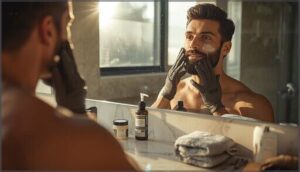
You can’t just slap dye on your beard dye and hope for the best. The prep work makes or breaks your results, from checking your beard’s condition to protecting your skin from stains.
Here’s what you need to do before you open that dye kit.
Assessing Beard Health and Length
Your facial hair needs to be at least 1 inch long for even dye coverage. Shorter beards are tougher to color and often come out patchy.
Hair density varies across your face—cheeks usually lag behind the neck and jawline. Check for split ends, excessive flaking, or redness.
Healthy skin health underneath means better results. If growth rate seems slow, wait another week or two before dyeing.
Performing a Patch Test for Allergies
Allergic reactions to beard dye can range from mild redness to severe swelling—patch testing is your insurance policy. Apply a small amount of mixed product behind your ear or on your inner forearm 48 hours before dyeing.
- Clean the test area with soap and let it dry completely
- Mix a small portion of dye according to package instructions
- Apply a dime-sized amount to the skin using a cotton swab
- Cover with a bandage and leave undisturbed for 48 hours
- Check for redness, itching, swelling, or blisters at 48 and 96 hours
If you notice any reaction, don’t use that product.
Cleaning and Conditioning Your Beard
Your patch test came back clean—now it’s time to prep the canvas. Start with a mild sulfate-free beard shampoo to lift dirt and oil without stripping natural moisture. Wash twice weekly, massaging for 15 to 30 seconds. Follow with a dedicated conditioner and leave it in for 1 to 3 minutes. This readies facial hair to accept dye evenly while protecting your skin underneath.
| Step | Product Type | Key Action |
|---|---|---|
| Wash | Sulfate-free shampoo | Massage 15–30 seconds |
| Condition | Beard conditioner | Leave in 1–3 minutes |
| Rinse | Warm then cool water | Opens and closes cuticles |
| Dry | Clean towel | Pat gently, don’t rub |
Beard hygiene sets the stage for color preservation. Gentle cleansing removes buildup that blocks dye penetration, while beard moisturizing ensures even absorption. Skip hot water—it dulls color before you’ve even applied it. Pat dry instead of rubbing to prevent breakage during facial hair care. This simple beard maintenance routine makes all the difference between patchy results and professional-grade color that lasts.
Laying Out Tools and Protective Gear
Before mixing anything, gather your dye brush selection for precision, protective cape to shield your shirt, and rubber gloves in nitrile or non-latex materials. Lay out mixing tools, applicator, shampoo, conditioner, and beard oil within arm’s reach.
Safety precautions matter—work in a ventilated space with a damp cloth nearby to catch drips fast.
Step-by-Step Beard Coloring Process
Now it’s time to get your hands dirty and actually apply the color dye. This is where precision matters—you’ll mix the dye, protect your skin, and work the product through your beard evenly.
Follow these steps to get professional-looking results at home.
Mixing The Dye Correctly

Your beard dye won’t deliver the right color depth unless you nail the mixing ratio from the start. Dye concentration controls everything—from subtle gray blending to deep, bold coverage. The dyeing process demands precision, so treat mixing like a science experiment where hair coloring techniques meet careful measurement.
Here’s how to master beard coloring chemistry:
- Wear gloves and prep a clean workspace before handling any dye concentration formulas
- Measure dye powder accurately using spoons or a scale for consistent mixing ratios
- Dissolve powder completely in hot water to prevent gritty particles during the beard dye application
- Start with concentrated stock solution, then dilute gradually to control color depth and intensity
- Record your exact mixing ratio so you can replicate perfect results in future hair dyeing sessions
Applying Barrier Cream to Prevent Skin Stains
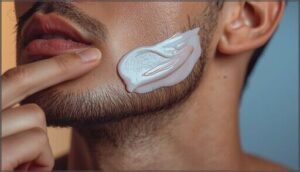
Your dye stain prevention is perfectly mixed, but skin stains can still sabotage your look. Barrier cream types range from petrolatum-based formulas to dimethicone options, each offering skin protection methods that block color transfer during beard dyeing.
Apply a thick layer along your jawline, cheeks, and neck before you start. This simple dye stain prevention step keeps facial skin care clean while following cream application techniques from any beard coloring guide.
Using Applicator Brushes or Gloves
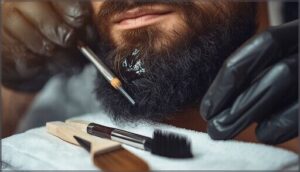
Flat-tipped brushes give broad coverage for even cosmetic products layering, while angled tools reach jawline edges with precision. Nylon bristles resist chemicals in any Beard Dyeing Guide, and natural ones suit sensitive skin.
Nitrile gloves prevent allergic reactions during Dye Application. Choose powder-free options for clean Applicator Techniques. Brush Care Tips include rinsing after use. Smart Glove Selection and Brush Bristle Types transform grooming tips into Beard Care and Maintenance wins.
Timing and Processing Recommendations

Most manufacturers recommend 20 to 40 minutes for dye processing, but your color timing depends on gray coverage needs. Check the Beard Dyeing Guide on your product for exact hair coloring windows.
Shorter processing temperatures in cool rooms may extend that period. Always complete patch tests 48 hours before the full dyeing process. Don’t exceed maximum application techniques times to avoid harsh beard color results.
Achieving a Natural-Looking Beard Color
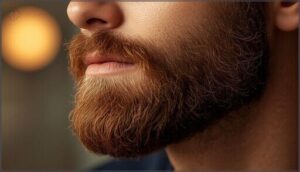
You’ve applied the dye, followed the timing, and rinsed everything out. Now comes the real test: does your beard look natural, or does it scream “I just dyed this”?
Getting it right comes down to picking the right shade, applying it evenly, and knowing how to adjust the color if things don’t turn out perfectly the first time.
Matching Beard Dye to Your Natural Shade
The secret to natural-looking beard color lies in smart shade selection and understanding your undertones. Choose a dye one level lighter than your natural hair—warm skin tones pair best with amber browns, while cool tones need ashy shades for proper undertone matching.
Test a small patch first to guarantee natural blending between your facial hair and existing color before full beard care application.
Avoiding Common Mistakes and Patchiness
Patchiness happens when you rush the prep or skip the basics. Conduct a patch test 48 hours before dyeing to catch allergic reactions and predict how your beard porosity will absorb color.
Cleanse thoroughly to remove oils that repel dye during the beard coloring process. Dry completely before application—water dilutes pigment and creates streaks. These fade prevention techniques and dye application tips protect your beard care investment.
Techniques for Even Dye Application
You need sectioning techniques to keep the dyeing process clean. Divide your beard into four vertical sections, each about 1 to 1.5 inches wide, using a fine comb. Start at the cheeks and work toward your chin for even saturation.
Apply foam dye or brush color to outer strands first, then work toward root coverage. Comb through each section to guarantee color blending and prevent gaps.
Adjusting Color Intensity and Blending
Control color depth by adjusting processing time—leave dye on 10 extra minutes to deepen your shade by one to two levels. If intensity runs too dark, a clarifying wash within 24 hours can pull back saturation by one or two tones.
Layer two shades for natural blending: start with a lighter base, then add cooler tones on top for subtle contrast and flawless shade matching.
Caring for Your Dyed Beard
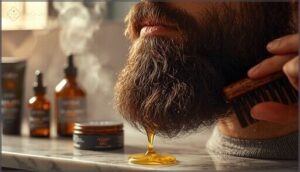
Getting the color right is only half the battle. The real work starts after you rinse out the dye and your beard begins its new life in a different shade.
Here’s what you need to do to keep that color fresh, your beard healthy, and your grooming routine on track.
Rinsing and Removing Excess Dye
After the dyeing process wraps up, proper rinsing locks in your beard color and prevents skin stains. Use lukewarm water and rinse until it runs completely clear—this usually takes 2 to 5 minutes.
Focus on these rinse techniques for effective dye removal:
- Control water temperature: Lukewarm water balances color preservation without opening hair cuticles that strip pigment.
- Massage gently: Use circular motions to dislodge trapped dye without damaging beard hair.
- Pat dry: Avoid rubbing to minimize color fade and skin protection during the hair dyeing and coloring process.
Moisturizing and Protecting Color
Once you’ve rinsed away the excess, locking in that fresh beard dye starts with hydration. Apply 1 to 2 drops of lightweight beard oils like jojoba or argan to seal the cuticle and prevent pigment from washing out. Color-shielding products with UV filters protect against sun fade, while daily hair treatment keeps your beard maintenance routine simple and your dye preservation on point.
| Hair Hydration Strategy | Color Locking Benefit |
|---|---|
| Lightweight beard oils (jojoba, argan) | Seals cuticle, reduces pigment leaching |
| UV filter conditioners | Shields hair color from sunlight fading |
| Low pH post-dye treatments | Closes cuticle, improves dye preservation |
| Lukewarm washing routine | Slows color loss during beard care |
Gentle Grooming and Product Recommendations
Keep your colored beard looking sharp by swapping harsh detergents for gentle shampoos designed for sensitive skin. Fragrance-free beard oils won’t irritate or strip your fresh dye, and microfiber towels cut down on breakage when you pat dry.
Stick with sulfate-free beard shampoo and boar bristle brushes to protect that pigment while keeping your mens grooming tips simple and effective for everyday beard care and beard styling.
Scheduling Touch-Ups and Maintenance
After a week or two, your color fading will show regrowth timing that demands attention. Most permanent dyes need a touch up every three to six weeks, while semi-permanent formulas require maintenance schedules closer to two to four weeks.
Track your dye longevity by watching gray roots—they usually appear within two to three weeks. Consistent beard maintenance keeps your grooming tips and advice on point for mens grooming and styling success.
Frequently Asked Questions (FAQs)
What is the best way to color your beard?
The devil’s in the details in regard to beard dye.
Choose a shade one level lighter than your target color, apply barrier cream, and process for 20 to 40 minutes for natural results.
Can a beard be colored?
Yes, beards can be safely colored using cosmetic hair dyes designed for facial hair.
These coloring products deposit pigment onto beard hair shafts, offering beard color options that last two to six weeks depending on your routine.
How to dye a beard without dying skin?
Apply barrier cream along your jawline and cheeks before dyeing.
Use gloves and a brush for precision.
Work in small sections, avoiding direct skin contact, then rinse thoroughly with cool water.
How to dye a beard?
To refresh your beard color, mix your chosen dye formula according to package directions, then brush it evenly through clean facial hair using an applicator, timing the processing carefully for best results.
What color beard dye should I use?
Choose a dye shade matching your natural hair color and skin tone.
Warm undertones pair with chestnut or auburn, while cool tones suit ash brown.
Start one shade lighter than desired.
How do I choose a beard color?
Start with your natural hair color as your anchor. Most guys find that matching their existing shade—or going one step lighter—creates the most believable result that won’t scream “dyed.
How do I choose the best beard dye job?
The best beard dye job starts with proper shade selection and brand comparison.
Match your natural hair color, consider your hair type, test application techniques, and use quality beard oil post-dyeing for ideal facial hair styling results.
What is the proper way to dye your beard?
Mix your beard dye following the kit instructions, then apply barrier cream along your jawline for skin protection.
Work the color through small sections with a brush, process for the recommended time, and rinse thoroughly.
Can you use hair dye on a beard?
You can use hair dye on a beard, but true beard dye is gentler on facial skin and reduces irritation risks.
Scalp dyes may cause discomfort, so choose formulations designed specifically for facial hair types.
How can I color my beard naturally?
Like finding your path without a map, natural dyes such as henna blends offer organic options for beard tones.
These plant-based formulas deliver color depth while supporting beard care and facial hair health.
Conclusion
Does coloring your beard really take fifteen minutes? Only if you’ve done the work beforehand.
The men who nail this process don’t rush through mixing or skip the barrier cream. They choose the right shade, prep their beard properly, and apply color with deliberate strokes.
You’ve got the complete roadmap now. Follow each step exactly as outlined, and you’ll walk away with a beard that looks natural—not like you tried too hard.