This site is supported by our readers. We may earn a commission, at no cost to you, if you purchase through links. This content is for general informational and educational purposes only and is not a substitute for professional medical, dermatological, or nutritional advice.

You rinse out the dye, towel off, and the mirror shows a surprise: pale streaks near your part, dark ends, and a stripe of orange where you swore you covered everything.
It happens to professionals and first-timers alike. Thick sections, dye that dried before it processed, and hair that absorbs color at different speeds all leave their mark. The good news is that most patchiness is fixable without starting over.
Here’s how to fix patchy hair dye with a few careful, targeted moves at home, plus the clear warning signs that mean it’s time to book a professional colorist.
Table Of Contents
- Key Takeaways
- What Causes Patchy Hair Dye?
- How to Assess Patchy Hair Color Before Fixing It
- How Can You Fix Patchy Hair Dye at Home?
- When Does Patchy Hair Dye Need Professional Correction?
- How to Prevent Patchy Hair Dye Next Time
- Frequently Asked Questions (FAQs)
- What to do if my hair dye is patchy?
- How to fix a blotchy dye job?
- How do you fix unevenly colored hair?
- Can I re-dye my hair if I missed some spots?
- What Causes Uneven Color?
- Should I Dye My Roots First or Last?
- How Do I Get Even Coverage With Hair Dye?
- What Does Banding Mean in Hair Color?
- What Can I Do About Patchy Bleached Hair?
- Why is My Hair Dying Unevenly?
- Conclusion
Key Takeaways
- Patchy color usually comes from three things you can control: uneven application, differences in how porous your hair is, and a sloppy dye mix, so work in thin sections and measure your ratios carefully.
- Before you fix anything, check your hair in neutral daylight, map the lighter, darker, and brassy zones, and always run a strand test on a hidden section first.
- You can fix most patches at home by touching up only the missed spots, toning brassiness with violet (for yellow) or blue (for orange), and blending faded areas with a color-depositing conditioner.
- If your hair feels gummy or snaps when wet, you see distinct bands, or orange and yellow tones survive toner, stop and see a professional colorist, since another all-over application will likely make it worse.
What Causes Patchy Hair Dye?
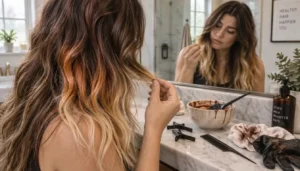
Patchy color rarely happens by chance, and knowing the cause puts you in control of the fix. Most cases trace back to just three issues, and each one leaves its own kind of mark on your hair. Here’s what to look for as you work through them carefully.
Once you know the cause, matching your styling and care routine to your hair’s needs is easier with this guide to choosing the right hair styling product.
Uneven Dye Application
Why does patchy hair dye show up even when you followed the box? Usually, uneven application is the culprit. Thick sections, skipped strands, or dye that dries before processing leave some areas pale.
Work carefully in thin subsections, coating both sides of each parting. Before any spot treatment, do a strand test, and keep color correcting kits handy for later. If you notice visible banding or uneven shade distribution between your roots, mid-lengths, and ends, a professional color correction may be needed.
Differences In Hair Porosity
Even with proper sectioning, patchy hair dye can still happen because hair porosity varies across your head. Newer roots resist color, while worn ends grab it fast.
- Roots often process lighter and slower.
- Ends can turn darker, then fade quickly.
- Uneven application isn’t always the only cause.
Run a strand test first, and adjust timing carefully so color stays even.
Since semi-permanent shades gradually fade with each wash, it helps to know how long semi-permanent hair dye lasts before you decide how often to touch up your blend.
Improper Dye Mixing
Porosity isn’t the only culprit. Your mix can cause patchy hair dye too, even when your sectioning is spot on.
Measure your hair dye and developer with a scale or graduated cup, following the ratio on the product insert. Add developer into the color, then stir carefully for a minute or two until it’s smooth and creamy. Apply promptly, within about 15 to 30 minutes.
How to Assess Patchy Hair Color Before Fixing It
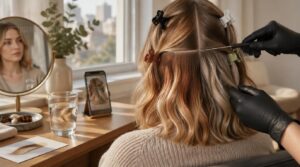
Once you know what caused the problem, you can map it. Wait until your hair is clean and fully dry, then check it in neutral daylight, since bathroom lighting hides a lot.
Work through these three steps carefully:
- Map each zone. Split your hair into four quadrants and label every uneven area as lighter, darker, warmer, cooler, or more damaged.
- Check porosity and elasticity. Test a clean strand in water, then gently stretch a wet one. If it snaps right away, hold off on further chemicals.
- Run a strand test. Use your exact mix ratio and timing on a hidden section.
Photograph the results and compare them with your goal, not the box model. This kind of hair dye troubleshooting and color matching tells you whether your patchy hair dye needs one fix or several.
If red tones are the stubborn culprit in your patchy results, this walkthrough on how to neutralize red tones in hair at home shows which shades cancel warmth without overcorrecting.
How Can You Fix Patchy Hair Dye at Home?
Patchy color is frustrating, but you can usually fix it yourself with the right approach and a little patience.
Start by matching the method to the problem you spotted during your assessment, and work carefully so you don’t make the unevenness worse.
The three fixes below cover the most common patches, from missed spots to faded areas that no longer match the rest.
Touch Up Missed or Lighter Patches
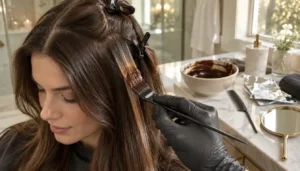
Missed spots don’t need a full redo. Mix a small batch of your original shade and treat only the lighter areas.
Run a strand test on one pale patch first. Then use a tint brush and thin 1 to 2 cm sections, coating both sides of each strand. Keep this hair dye spot correction off the darker hair, and process for the full recommended time.
Tone Brassy Patches Without Overdarkening Hair
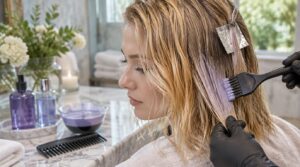
You can neutralize brassiness in a hair dye patch without darkening your hair, if you match the toner to the warmth. Violet cancels yellow, and blue cancels orange.
Match your toner to the warmth: violet cancels yellow and blue cancels orange, so brassy patches fade without darkening your hair
Choose a toner at your target level, or slightly lighter, never darker. Test a hidden strand first, since porous ends grab pigment fast.
Patchy hair dye correction needs toning on damp hair.
Blend Uneven Fading With Color-Depositing Products

Say your copper color has faded to a dull blush at the mid-lengths, while the ends still look rich and dark. That’s a classic case for hair dye blending with a color-depositing conditioner.
Apply it to damp hair, saturating the faded mid-lengths first and the ends last. Wait 3 to 5 minutes, then rinse cool. Repeat carefully, only every 1 to 2 washes.
When Does Patchy Hair Dye Need Professional Correction?
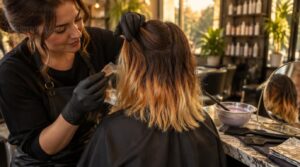
You might worry that a salon visit is overkill for a few stubborn spots. Fair enough, and most patchy hair dye responds well to careful home fixes. But some situations go beyond a simple touch-up.
Consider hair dye professional correction if you notice any of these:
- Your hair feels gummy, mushy, or snaps when wet.
- You see distinct bands, or dark box dye sits over bleached sections.
- Orange or yellow tones survive toner, or your scalp reacts badly.
Hair dye unevenness like this rarely improves with another all-over application. A hair colorist will test a strand, check porosity, and review your color history.
Professional salon services may take several visits, but you’ll end up with healthier, even color. You’ve got this.
How to Prevent Patchy Hair Dye Next Time
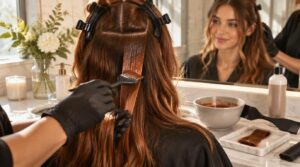
Want salon-quality color every time? Start with these habits.
- Run a test strand and confirm hair dye color matching before committing.
- Use careful hair dye sectioning, working in one-inch subsections.
- Make a hair dye porosity adjustment, applying filler to porous ends.
Then improve your hair dye application technique: saturate fully, apply roots last, and check everything carefully before you rinse.
Frequently Asked Questions (FAQs)
What to do if my hair dye is patchy?
Start by checking your hair in natural light, then run a hair dye strand test with your corrective product. Carefully touch up only the lighter spots, working in small sections, and tone brassy areas briefly.
How to fix a blotchy dye job?
Wait 48 to 72 hours, then check your patchy hair dye in daylight. For a hair dye DIY fix, apply matching filler color to light spots with a tint brush, carefully, after a test strand.
How do you fix unevenly colored hair?
Fixing uneven hair color starts with spotting whether you’re dealing with missed spots, wrong level, or brassy tone. Run a test strand, then use a tint brush carefully. Color correcting kits suit patchy hair dye.
Can I re-dye my hair if I missed some spots?
Think of it as patching a wall, not repainting it. Yes, you can fix patchy hair dye by applying the same shade carefully to missed spots only, feathering the edges, and skipping the already-dark hair.
What Causes Uneven Color?
Picture a canvas painted in a hurry, with thick streaks beside bare spots. That’s patchy hair dye. It’s rarely the box’s fault. Thin saturation, off mixing ratios, and uneven porosity usually cause it.
Should I Dye My Roots First or Last?
It depends on your goal. For gray coverage or darkening regrowth, start at the roots, since they need the full processing time. When lightening, save roots for last, because scalp heat speeds up lift.
How Do I Get Even Coverage With Hair Dye?
Picture a painted wall where one thirsty patch drinks up the color. Hair does that too.
Even out porosity first, then section carefully and saturate every strand, and patchy hair dye becomes far less likely.
What Does Banding Mean in Hair Color?
Banding is a stripe or ring of color that doesn’t match the hair around it, usually where your roots meet your lengths. Overlapping dye, long gaps between touch-ups, and scalp heat cause it, and it makes patchy hair dye look obvious.
What Can I Do About Patchy Bleached Hair?
Bleaching was supposed to make your hair uniformly light, yet here you are with stripes.
Don’t panic. Mild patchy hair dye works with carefully applied toner, while severe banding needs professional hair dye color correction.
Why is My Hair Dying Unevenly?
Patchy hair dye usually starts with rushed mixing or thin coverage, then porosity differences make it worse. Damaged ends grab pigment fast while virgin roots resist, so your allover application carefully looks uneven.
Conclusion
Was that streaky mirror moment really a disaster, or just unfinished work? Knowing how to fix patchy hair dye means you can treat it as the second one. Start with a careful assessment, then touch up, tone, or smooth one problem at a time, and always test a small strand first.
If the color still looks wrong, or your hair feels weak, stop and book a professional colorist. Recognizing your limits is part of mastery.