This site is supported by our readers. We may earn a commission, at no cost to you, if you purchase through links.
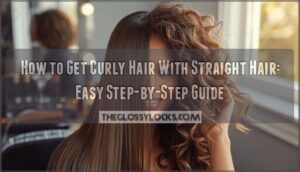
Your friend shows up with perfect bouncy curls, and you can’t help but wonder how she pulled it off with hair as straight as yours. The truth is, anyone can transform stick-straight strands into beautiful curls without a salon appointment or expensive treatments.
You just need the right techniques and a little patience. Whether you prefer heat-free overnight methods that won’t damage your hair or quick styling with hot tools, there’s a curling approach that fits your routine.
The secret lies in proper prep work, choosing methods that match your hair type, and knowing how to lock in those curls so they actually last.
Table Of Contents
Key Takeaways
- Prepping your hair with sulfate-free shampoo, curl-defining conditioner, and heat protectant sets the stage for lasting curls and protects against damage.
- You can get bouncy curls without heat by braiding, twisting, or using foam and fabric curlers overnight, which also help prevent breakage.
- Using the right heat tools—like curling irons, flat irons, or hot rollers—lets you control curl size and shape, but always use a heat protectant to avoid damage.
- To keep curls fresh and frizz-free, layer mousse, creams, and hairspray, and protect them overnight with silk accessories or loose braids.
Preparing Straight Hair for Curling
Getting straight hair to hold a curl isn’t as simple as picking up a hot tool and hoping for the best. Your hair needs the right foundation, from clean strands that grip styling products to protective barriers that shield against heat damage.
Let’s walk through the three essential prep steps that’ll set you up for curls that actually last.
Washing and Conditioning for Curl Hold
Before anything else, pick a sulfate-free shampoo—it keeps up to 80% more natural oils that help curls form. Try washing just twice weekly to lock in moisture and boost curl hold by 24%.
A curl-defining conditioner with shea butter works wonders, increasing definition by 40%. Sulphate-free options also improve colour longevity.
For extra help, apply a pre-wash oil treatment to make strands more flexible and ready for styling.
Detangling and Drying Techniques
Once your hair’s clean, it’s time to tackle tangles. Finger detangling cuts breakage by 40% compared to regular brushes—just work from ends upward. A widetooth comb distributes product better, speeding things up by 23%.
To help, consider that damaged hair cuticles increase knotting.
Next, gently blot with a microfiber towel to cut cuticle damage by 21% and reduce drying time by 30%. Air dry when possible to lock in 18% more moisture for better curl formation.
Applying Heat Protectant and Setting Products
Now that your hair’s prepped and detangled, protect it before styling. Heat protectants cut damage up to 50%, so mist from roots to ends while damp. Look for silicone-based product ingredients that shield strands from thermal shock.
Layer in mousse or setting spray next—these application techniques boost curl longevity by locking in shape.
Heat-Free Methods to Achieve Curly Hair
If you want to protect your hair from heat damage, there’s good news—you can absolutely create gorgeous curls without plugging in a single tool.
These methods work while you sleep or go about your day, giving you beautiful texture without the stress of high temperatures.
Let’s look at three proven techniques that’ll transform your straight hair into bouncy curls, no heat required.
Braiding and Twisting Overnight
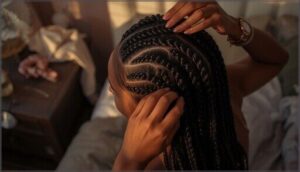
Want to wake up with gorgeous curls without the damage? Braiding and twisting overnight is one of the most effective heat-free curling methods for achieving curly hair naturally. Here’s what makes this technique so powerful for creating overnight curls:
- Twist-outs deliver excellent curl retention, holding definition up to 48 hours—perfect for busy lifestyles
- Braiding hair protects while styling, reducing breakage risk by 40% compared to loose hair
- Technique variables matter: damp hair (70–80% dry) and smaller sections boost curl definition by 25%
This comparative effectiveness between braiding and twisting gives you flexibility. Braid-outs create tighter waves with better elongation, while twist-outs produce bouncier, spring-like curls with less frizz.
Both hair styling methods work by temporarily reshaping hydrogen bonds in your hair, delivering beautiful results that support hair health without heat exposure.
Using Foam or Fabric Curlers

For overnight comfort and stunning results, foam or fabric curlers are some of the best heat-free curling methods available. These gentle hair styling methods deliver soft, natural curls with zero damage potential—reducing breakage by up to 68%.
They’re easy to use, work beautifully on straight hair, and let you wake up with gorgeous definition. Creating overnight curls has never been simpler or safer for your hair.
Creating Curls With Flexi Rods or Bantu Knots
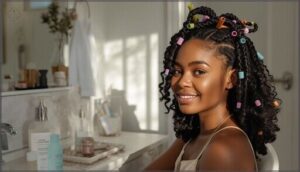
With flexi rod technique or Bantu knot variations, you’ll get bouncy, defined curls that last four to six days—perfect heat-free curling methods for straight hair.
Apply them to damp, freshly washed hair with a leave-in conditioner for damage prevention and curl longevity.
These hair styling tips work beautifully for creating overnight curls while preparing hair for curls stays gentle and protective.
Curling Straight Hair With Heat Tools
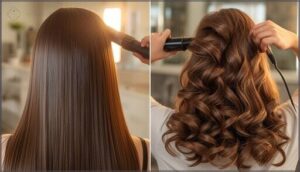
Heat tools give you the fastest path to curls when you’re working with straight hair. You’ll get the most control over curl size, shape, and hold compared to any other method.
Let’s walk through the three most reliable heat styling techniques to transform your straight strands into bouncy, defined curls.
Choosing The Right Curling Iron or Wand
Picking the right heat styling tools makes all the difference. Barrel size is crucial when using curling irons—opt for 1 to 1.25 inches for tight curls, or larger sizes for loose waves.
Barrel material also matters; ceramic distributes heat evenly, while titanium is ideal for thick hair.
Temperature settings should align with your hair type, and safety features like cool tips are essential, especially for beginners.
Using a Flat Iron for Curls
You don’t need a curling iron to get beautiful curls—your flat iron works just as well.
Start by applying heat protectant, then section hair into 1-inch pieces. Clamp each section mid-length, rotate the iron 180 degrees, and glide down smoothly.
Alternating curl direction creates natural movement, and keeping iron temperature around 350°F protects against heat damage while ensuring curls last 12-24 hours.
Curling With Hot Rollers for Volume
Hot rollers deliver impressive volume—up to 50% more fullness compared to untreated hair. Choose large 1.5-2 inch rollers for maximum lift at your roots, then let them heat for about 5 minutes. Roll 1-inch sections and leave them in for 20-45 minutes until cool.
This gentle heat method protects hair health better than direct irons, and 89% of users love the bouncy results.
Enhancing and Maintaining Curly Hair
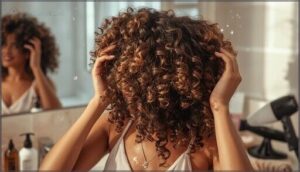
Once you’ve curled your hair, the real work begins—keeping those curls looking fresh and bouncy all day long. The right products and techniques can make the difference between curls that last and ones that fall flat within an hour.
Here’s how to improve your curls and maintain them so they stay defined, frizz-free, and full of life.
Applying Mousse, Creams, and Serums
Think of hair products like a team—each one plays its part. Start with a shine serum on damp hair, mid-lengths to ends, to lock in moisture.
Next, rake curl-enhancing creams through sections for definition. Finish with an egg-sized dollop of mousse from roots to tips. Wait three minutes between layers to avoid product buildup.
This product cocktailing guide helps your curls last longer and look healthier.
Locking in Curls With Hairspray
Once your curls are styled, reach for a strong hold hairspray—industry testing shows it preserves curl structure for up to 12 hours. Hold the can 8–12 inches away and mist lightly to avoid stiffness.
Strong hold formulas outperform flexible varieties by 18% for achieving longlasting curls, and you’ll cut touch-ups by 25% with proper application techniques.
Preventing Frizz and Refreshing Curls
High humidity is your curl’s biggest enemy, causing up to 80% of curlies to battle frizz.
Combat it with anti-humidity sprays that block moisture for 96 hours, or layer a frizz-fighting serum over leave-in conditioner to cut frizz by 18%.
Between washes, lightly mist with a curl-refreshing spray—never saturate—and scrunch to reactivate definition while keeping flyaways at bay.
Long-Term and Chemical Curling Options
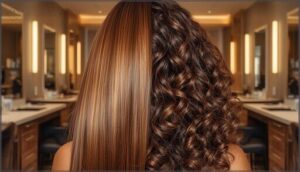
If you’re tired of curling your hair every day, chemical treatments can give you lasting curls that stick around for months. A perm restructures your hair at the protein level, creating permanent waves or curls that grow out naturally over time.
Before you book that salon appointment, it’s important to understand how to care for chemically treated hair and what risks come with the process.
Considering a Perm for Permanent Curls
If daily heat styling feels like a chore, a perm might be your answer for permanent curls that last three to six months. Professional services range from $30 to $800, depending on your hair length and salon.
Before booking, schedule a consultation to check your hair’s suitability—damaged or over-processed strands aren’t great candidates and could suffer additional perm damage.
Caring for Chemically Curled Hair
Once you’ve gotten your perm, your hair care routine needs a serious upgrade. Chemically curled hair demands extra moisture—that’s why 70% of professionals recommend sulfate-free shampoos to prevent dryness.
Here’s your new game plan for maintaining curly hair:
- Wash twice weekly with gentle, sulfate-free products to preserve curl integrity
- Deep condition regularly using protein-based treatments to repair weakened bonds
- Skip the heat whenever possible, since heat styling increases hair damage and breakage
Weighing Risks and Benefits of Chemical Treatments
Before committing to a perm, you need the full picture. Chemical treatments offer lasting curls, but they come with real trade-offs for your hair health and overall well-being.
Chemical treatments give you long-lasting curls, but they also bring serious risks to your hair health and overall well-being
| Benefits | Risks |
|---|---|
| High satisfaction rates with 2–6 month curl retention | Cancer risks: doubled uterine cancer rates with frequent use |
| Immediate volume and texture transformation | Hair damage: 95% report adverse effects including breakage |
| Professional results when properly applied | Scalp reactions: irritation, burns, and dermatitis in 67% of users |
Regulatory guidance emphasizes protecting hair through patch testing and following Safety Data Sheets. Weigh these factors carefully—your hair treatment decision affects both immediate hair care needs and long-term hair health.
Frequently Asked Questions (FAQs)
Can humidity affect how long curls last?
Humidity’s Curl Impact is like a rainstorm on a sandcastle—moisture absorption rates rise, curls unravel, and frizz formation spikes.
Using hair spray, anti-humidity sprays, and smart styling variables can boost product efficacy and help in preventing frizz.
What hairstyles help protect curls overnight?
To protect curls overnight, try the Pineapple Method with a silk scrunchie, Silk Bonnets, Loose Braids, Bantu Knots, Medusa Clipping, or a silk pillowcase.
These styles help keep curly hair defined and frizz-free until morning.
Are certain haircuts better for holding curls?
Yes, certain haircuts make a big difference for curly hair. Layered vs. blunt cuts—layers help curls last longer and look fuller.
Bob and lob styles boost definition, while pixie cuts and long haircuts support curl shape and texture.
How does hair length impact curling results?
Length and Curl go hand in hand—longer hair loosens curl definition due to gravity, while shorter hair boosts Curl Retention and Styling Efficacy.
Hair Health, Curl Type, and haircuts for curls all shape your curly hair results.
Can diet or nutrition influence hair curliness?
Think of your hair like a garden—what you feed it matters. Protein synthesis, Omega-3s, Zinc benefits, and hydration effects all boost hair growth, thickness, and elasticity.
Vitamin deficiencies can leave strands limp, brittle, and less curly.
Conclusion
Think of your hair like a blank canvas—straight strands waiting for a burst of creativity. Just as artists use different brushes, you have options for how to get curly hair with straight hair, from gentle braids to heated tools.
The real magic happens when you prep, style, and protect with care. Experiment, listen to your hair’s needs, and enjoy the transformation.
Every curl you create tells your story, adding character and confidence to your everyday look.
- https://www.scienceworld.ca/stories/can-hair-change-straight-curly/
- https://www.gemeriahair.com/blogs/news/hair-treatments-and-costs-in-usa
- https://www.poweryourcurls.com/experts-complete-guide-to-safe-and-effective-heat-styling-for-curls/
- https://www.xcode.life/genetics/is-curly-hair-genetic/
- https://barbertainer.com/can-straight-hair-turn-curly/