
This site is supported by our readers. We may earn a commission, at no cost to you, if you purchase through links. This content is for general informational and educational purposes only and is not a substitute for professional medical, dermatological, or nutritional advice.
Your waves took months to build. Every night you brushed from the crown, tied down a durag, and layered on pomade until the pattern held without you thinking about it.
Now you want them gone, and that’s a fair call. Maybe you’re after a fresh look, a job with a different dress code, or your natural curls back. The good news is waves are trained, not permanent. Habits set them, and habits can be reversed.
If you’re wondering how to get rid of waves in Black men’s hair, the path starts with what you stop doing, then moves through washing, cutting, and growing out.
Table Of Contents
- Key Takeaways
- How Can Black Men Get Rid of Waves?
- Wash Away Pomade and Product Buildup
- Cut or Grow Out Trained Waves
- Temporarily Straighten Waves With Heat Protection
- Understand Chemical Relaxers Before Straightening Waves
- Keep Hair Moisturized After Removing Waves
- Frequently Asked Questions (FAQs)
- Conclusion
Key Takeaways
- Waves fade once you stop the two habits that train them, brushing from the crown and sleeping in a durag or wave cap, so quit both first.
- Clear out pomade buildup with a clarifying shampoo, since co-washing won’t remove the wax that keeps your waves stiff.
- You can reset fast with a shorter cut or grow into your natural curls over about six weeks, while heat is only temporary and relaxers are the riskiest, hardest-to-undo route.
- Once the product is gone, your hair will feel dry, so moisturize with the LOC method and sleep in satin, because waves can come back within days if you pick up the brush again.
How Can Black Men Get Rid of Waves?

Getting rid of waves starts with changing the habits that built them. Two habits do most of the work, and stopping both lets your hair return to its natural pattern. Here’s what to quit first, and why each one matters.
Stop Directional Wave Brushing
Put the brush down first. Waves hold because you repeat the same brushing direction every day, so breaking that habit is step one. Master barbers explain that brushing outward from the crown in a consistent pattern is what trains the hair into waves, which is why changing that routine matters.
Here’s how to stop it cleanly:
- Skip the wave brush for two weeks.
- Stop brushing from the crown outward.
- Leave the durag off.
- Let your hair texture show.
- Finger-comb only if needed.
Stop Compression Used for Wave Training
Brushing is only half the system. The other half happens while you sleep. A durag or wave cap holds your hair in a wavy position for hours, and that overnight hold is what keeps the pattern sharp.
If you’re unsure which to wear, this wave cap vs durag comparison breaks down how each one fits and holds your waves overnight.
So retire the durag too. Once compression stops, your hair slowly returns to its natural curl pattern. Expect waves to lose definition over a few weeks.
Wash Away Pomade and Product Buildup
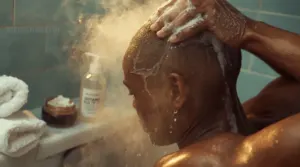
Once you stop brushing and compressing, look at what’s still sitting on your hair. Pomade and product buildup keep waves stiff and set in place, so clearing them out lets your curl pattern loosen up.
Use a clarifying shampoo to wash away pomade. Work it through twice. The first pass breaks the product down, and the second lifts the residue. If your pomade is heavy, massage coconut oil in first, then shampoo.
Co-washing won’t cut it. It cleans lightly, but it leaves wax behind.
Mind the water temperature effect. Lukewarm water, around 95 to 105°F, melts product without irritating your scalp. Finish with a cool rinse.
Clarify once or twice weekly if you use heavy pomade. Never go past three.
Cut or Grow Out Trained Waves
Once the brushing and compression stop and the buildup is gone, your waves still won’t vanish overnight. The pattern is trained into your hair, so you have to decide how to move past it. Here are two practical paths, and each one fits a different goal and level of patience.
If you’d rather keep the pattern and strengthen it, this step-by-step guide to getting deep 360 waves shows how a steady daily routine builds definition over time.
Choose a Shorter Reset Haircut
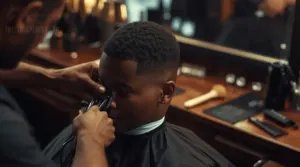
A reset takes one visit, and the clippers do the work in minutes.
A shorter cut erases your pattern fast. Pick one:
- Buzz cut at one uniform length
- Low taper fade for a neat finish
- Temp fade to merge without harsh lines
- Bald or skin fade for a full reset
Then book haircut maintenance every two weeks to stay sharp.
Grow Into Your Natural Curl Pattern

How long does it take to see your real texture? Give it six weeks of no brushing and no compression. Wash, condition, and let new growth come in untouched.
Detangle only on damp, conditioned hair with your fingers or a wide-tooth comb. Shingle a curl cream through small sections to define your coils. Keep hair moisturized, and expect real hair texture transformation after about three inches of growth.
Temporarily Straighten Waves With Heat Protection
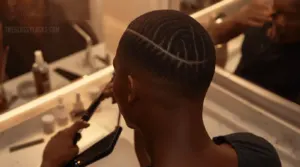
You can flatten your waves for a day or two without a relaxer, as long as you respect the heat. The goal is a temporary result, not a permanent change.
Start with clean, deeply conditioned hair, then follow these steps:
- Blot your hair and let it air-dry for 15 minutes.
- Apply a silicone-based heat protectant evenly, section by section.
- Detangle with a wide-tooth comb and split hair into 1-inch sections.
- Set a ceramic flat iron between 300°F and 350°F.
- Make one slow pass per section, chasing a comb.
Skip extra passes. Repeating them stacks heat damage fast, and that’s where breakage starts. Treat styling tool safety as part of the routine, not an afterthought, every single time you plug in.
Understand Chemical Relaxers Before Straightening Waves
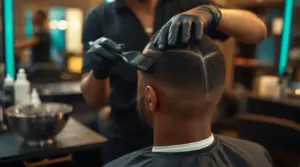
You might think a relaxer is the quickest way to lose waves for good. It is permanent, but it’s also the hardest to undo, so learn the basics first.
Most chemical relaxers use sodium hydroxide or ammonium thioglycolate to break protein bonds in the cortex and rebuild them straighter. Only new growth gets treated, which means touch-ups every 6 to 8 weeks.
The risks are real. Scalp burns, irritation and allergic reactions happen, and repeated use can leave hair brittle.
Compared with other hair straightening techniques, this one carries the most risk overall. Hair porosity matters too, since porous strands absorb chemicals very fast and overprocess. Book a professional stylist for the first application instead of using a DIY kit.
Keep Hair Moisturized After Removing Waves

Marcus brushed his waves for three years. Two weeks after he stopped, his hair felt like straw and his scalp flaked every time he scratched it. Nothing was wrong with his hair. It was just dry.
Hair that suddenly feels like straw after years of waves isn’t damaged, just thirsty, because the pomade was hiding its dryness all along
Years of pomade and brushing masked that dryness. Once the product is gone, your curls need real moisture.
Start with a water-based leave-in conditioner on damp hair. Seal it with a few drops of jojoba or argan oil, then finish with a light cream. That’s the LOC method, and it works.
Rub a little moisturizer into your scalp after you wash, too. Wash with a sulfate-free shampoo so you don’t strip your hair.
Sleep in a satin durag or bonnet. Cotton pulls moisture out overnight. Then let your hair tell you when it needs more: rough means moisturize today.
Frequently Asked Questions (FAQs)
How long does it take waves to disappear?
Most guys see waves start to fade within one to two weeks of putting down the wave brush and durag. Expect them to weaken a lot by week four. Deep waves can linger two to three months.
Can waves return after stopping the routine?
Say you quit brushing for six months, then grab a brush on a whim. Your waves show up within days. Yes, they can return. The pattern fades, but it never fully leaves, so resuming brushing brings it back.
Does hair texture change after waves fade?
Your hair isn’t going to turn into a different species overnight, but it can feel that way. Your genetic curl pattern stays the same. Brushing only trained it, so as the training fades, your natural texture returns.
Should I see a barber about stubborn waves?
A knot in a rope tells you where the strain lives. Stubborn waves work the same way. Yes, see a barber. They can read your growth direction and tell trained waves from product buildup.
Conclusion
Rome wasn’t built in a day, and neither were your waves. Knowing how to get rid of waves in Black men’s hair comes down to a few steady moves: stop brushing and compressing, wash out the buildup, then cut or grow out the pattern. Heat and relaxers are options, but they ask for care. Whatever you choose, keep your hair moisturized so it stays strong.
Your hair is yours to shape. Shape it on purpose.