This site is supported by our readers. We may earn a commission, at no cost to you, if you purchase through links.
Your clippers cut through a hundred heads without complaint, but skip one cleaning session and watch them drag, pull, and leave your clients rubbing irritated skin. Most barbers don’t realize that hair, dead skin, and oil pack into clipper blades after every single use, creating a breeding ground for bacteria while slowly dulling the cutting edge.
That grimy buildup doesn’t just compromise your cuts—it spreads infections and shortens your tool’s lifespan by years. The fix takes five minutes and costs almost nothing, but it separates professionals who burn through clippers every year from those running the same reliable pair for a decade.
Table Of Contents
- Key Takeaways
- Why Regular Clipper Cleaning Matters
- Essential Tools for Cleaning Hair Clippers
- Step-by-Step Guide to Cleaning Hair Clippers
- How to Disinfect and Sanitize Clipper Blades
- Maintenance Tips for Long-Lasting Clippers
- Frequently Asked Questions (FAQs)
- How often should hair clippers be cleaned?
- Is rubbing alcohol good for cleaning hair clippers?
- How often should clippers be professionally serviced?
- Can I sharpen clipper blades at home?
- What causes clippers to pull or snag hair?
- Are cordless clippers harder to maintain than corded?
- How do I clean clipper motor vents safely?
- Conclusion
Key Takeaways
- Dirty clipper blades create bacterial breeding grounds that cause skin infections like folliculitis and can transmit blood-borne pathogens through nicks, making sanitization between clients non-negotiable for professional safety.
- Regular cleaning and oiling after every use extends clipper lifespan from one year to over a decade by preventing debris buildup that dulls blades, damages motors, and causes rust in critical components.
- Proper disinfection requires full blade submersion in solutions like Barbicide or 70% isopropyl alcohol for exactly 10 minutes, followed by thorough drying and re-oiling to prevent corrosion and maintain cutting performance.
- Most clipper problems like hair pulling, overheating, and uneven cuts stem from neglected maintenance—brushing debris daily, applying clipper oil every few uses, and storing tools in dry environments solves 90% of common issues without professional repair.
Why Regular Clipper Cleaning Matters
You might think cleaning your clippers is just about keeping them looking nice, but there’s a lot more at stake. Dirty blades aren’t just gross—they can actually mess up your cuts, shorten your tool’s life, and even cause real problems for your skin.
Clean blades also work better with properly sized clipper guards, which rely on sharp, debris-free cutting edges to deliver consistent length.
Dirty clipper blades do more than look bad—they ruin cuts, shorten tool life, and harm your skin
Let’s break down exactly why regular cleaning should be non-negotiable in your routine.
If you’re not sure where to start, this step-by-step guide to cleaning your flat iron walks you through the entire process.
Preventing Skin Irritation and Infections
Hygiene isn’t just about looking professional—it’s about client protection and haircut hygiene. Proper clipper blade safety and sanitizing methods protect skin health and keep your reputation spotless.
Before you even pick up the clippers, make sure you know whether you’re working with wet or dry hair—each requires different blade settings and techniques to avoid uneven cuts or damage.
Dirty blades turn into breeding grounds for nasty microbes that can cause real problems:
- Bacterial skin infections like impetigo and folliculitis spread through tiny nicks, making sanitizing and disinfecting between clients essential for skin infection control
- Fungal infections such as ringworm hitchhike on contaminated blades and guards
- Blood-borne pathogens including hepatitis B and C can transmit if clippers break the skin
For more on prevention and proper tools, see these clipper and trimmer safety tips.
Extending Clipper Lifespan
Clean clippers don’t just protect skin—they save you serious cash over time. Hair clipper maintenance like daily brushing and weekly blade sharpening keeps motors running smooth and prevents rust.
With proper clipper oil application and power management, home users get 10-plus years from one unit, while pros using strict sanitizing and disinfecting routines plus smart clipper blade maintenance and clipper motor care push quality tools nearly a decade.
To better understand the steps involved, you can refer to this step-by-step clipper maintenance guide.
Ensuring Sharp and Smooth Cuts
Beyond saving money, hair clipper maintenance keeps every pass through your hair-cutting session smooth and precise. Regular blade sharpening and hair clipper maintenance remove packed debris that drags and pulls.
Blade alignment stays true when you lubricate with clipper oil after cleaning, so blade oil reduces friction and your cutting techniques deliver crisp, even lines without chatter or missed spots every time.
Essential Tools for Cleaning Hair Clippers
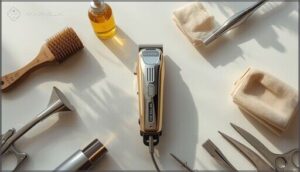
You don’t need a truckload of fancy equipment to keep your clippers running like new. A few basic tools will handle everything from daily cleanup to deep sanitizing sessions.
Just make sure you start with quality clippers that are built to last—choosing the right model from the start makes maintenance much easier down the road.
Let’s run through what you actually need in your cleaning kit.
Cleaning Brushes and Compressed Air
You’ll want a brush with stiff nylon or boar bristles to reach between blade teeth without scratching metal. Look for narrow, tapered tips that dislodge fine hair particles efficiently.
For compressed air, use 30 to 60 psi in short 2 to 4 second bursts—that keeps debris removal safe without dislodging blade components or creating moisture buildup.
Blade Wash and Disinfectant Sprays
Professional blade wash uses quaternary ammonium compounds or alcohol around 60 to 70 percent to kill bacteria, fungi, and viruses on clipper blades.
Pairing this sanitation routine with high-quality razor blades for coarse hair ensures your tools stay sharp and hygienic between cuts.
Spray products like Clippercide combine disinfectant with rust inhibitors, protecting metal while you sanitize.
You’ll get hospital-grade disinfectant efficacy when blades stay wet for the full 5 to 10 minutes—that contact time matters for killing listed pathogens effectively.
Clipper Oil and Lubricants
You’ll need genuine clipper oil—a clear, low-viscosity mineral oil that spreads in a thin film between moving blades. This lubrication reduces friction, keeps blades cooler, and extends their sharpness.
Apply one to two drops across the teeth before each use, run the clipper briefly, then wipe excess.
Skip substitutes like WD-40 or motor oil; they evaporate fast, gum up teeth, and wreck your blade lifespan.
Soft Cloths and Safety Gear
A clean workspace relies on the right soft materials and safety protocols. Protect yourself and your tools with these essentials:
- Microfiber cloth – Lint-free and gentle, it wipes blades without scratching or leaving fibers that clog teeth.
- Nitrile gloves – Hand protection against disinfectants and microscopic contaminants between clients.
- Safety glasses – Eye safety when spraying disinfectant or blasting compressed air.
Always follow electrical safety precautions: unplug before cleaning to avoid shock.
Step-by-Step Guide to Cleaning Hair Clippers
Now that you’ve got your tools ready, let’s walk through the actual cleaning process from start to finish. You’ll want to follow these steps in order to keep your clippers running smooth and your clients safe.
Here’s how to do it right every single time.
Unplugging and Disassembling Clippers Safely
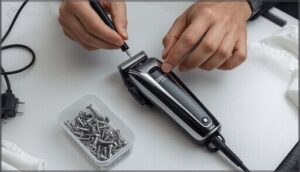
Before you touch those blades, safety comes first—always unplug your clipper from the power source to prevent accidental activation. Remove any battery packs or detachable cords for complete electrical safety.
Set up a clean, dry workspace and use insulated tools when handling metal components during clipper disassembly. Toss screws into a labeled container so nothing goes missing. These electrical safety precautions protect you and your equipment during hair clipper care.
Removing Hair and Debris From Blades
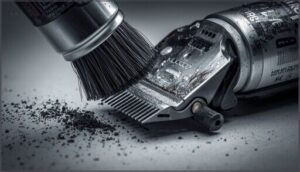
Debris accumulation hits hardest between blade teeth and at the heel and toe, so grab your stiff cleaning brush and work it through those gaps.
Brush away clumps of hair from both the moving and stationary blades, following the blade edge at a 0 to 7-degree angle.
For stubborn buildup, blast compressed air into those entrapment points where fine fibers hide.
Washing, Soaking, and Sanitizing Blades
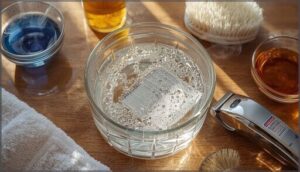
After brushing away loose hair, run your blades under warm water with a mild detergent to wash away oils and tiny fragments.
For deeper cleaning, try these soaking solutions:
- Lukewarm blade cleanser for stubborn debris
- Barbicide for sanitizing (10-minute soak minimum)
- Alcohol-based disinfectant for quick sanitizing
- Vinegar solution as a gentler alternative
Rinse thoroughly after soaking to remove all residues.
Drying and Reassembling Clippers
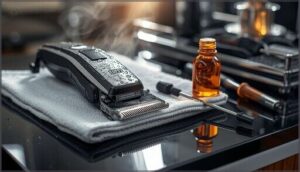
Once your blades are sanitized, proper drying prevents rust and keeps everything running smooth. Pat them down with a lint-free cloth, then let them air dry for 60 to 90 minutes on a clean rack. Don’t rush it—moisture causes problems. When they’re bone dry, align the teeth carefully and tighten screws just right. A drop of clipper oil after reassembly keeps that puppy humming.
| Drying Best Practices | Reassembly Tips |
|---|---|
| Wipe with lint-free cloth first | Match tooth gaps to factory setup |
| Air dry 60-99 minutes on rack | Tighten screws to spec—no wobble |
| Apply oil film for rust prevention | Oil hinges, run briefly, wipe excess |
How to Disinfect and Sanitize Clipper Blades
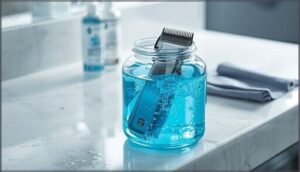
Cleaning your clippers is one thing, but sanitizing them properly? That’s where you really protect yourself and your clients from bacteria, fungi, and potential infections.
You’ve got several reliable methods to choose from, whether you’re running a professional shop or just maintaining your gear at home. Let’s walk through the most effective ways to disinfect those blades and keep everything hygienic.
Using Barbicide and Alternatives
Barbicide remains the benchmark for clipper sanitizing in barbershops—mix 2 ounces of concentrate with 32 ounces of cold water for blade cleaning.
You’ll want to clean your clipper blades with soap first, then soak them in the sanitizing solution for exactly 10 minutes.
Disinfectant sprays like Clippercide work great too, combining disinfecting and lubrication in one shot.
Alcohol and Vinegar Solutions
If commercial sanitizers aren’t your thing, you’ve got solid home alternatives. Isopropyl alcohol at 70 percent strength sanitizes clipper blades fast—just submerge them for about a minute, then dry thoroughly.
Distilled white vinegar works too, cutting through grime and deodorizing those blades. Mix it one-to-one with water to protect metal finishes, apply with a soft cloth, then rinse and oil afterward.
Proper Soaking and Rinsing Techniques
Whatever sanitization method you choose, soak time limits matter—keep detachable clipper blades fully submerged in disinfectant for exactly 10 minutes to kill pathogens without risking corrosion.
Make sure blade submersion covers every cutting surface, then lift them out, rinse under warm water if desired, and dry thoroughly with a lint-free cloth.
Proper drying prevents rust and keeps your blades ready for smooth, safe cuts.
Hygiene Tips for Home and Professional Use
At home, you can disinfect your clippers after every personal session, but pros need hand sanitizing and cleaning between each client to prevent cross contamination.
Barbershops must follow strict hygiene protocols and use approved cleaning solutions, while home users simply need safe disinfecting routines and proper clipper storage in dry cabinets.
Both settings demand consistent sanitation and maintenance to protect skin.
Maintenance Tips for Long-Lasting Clippers
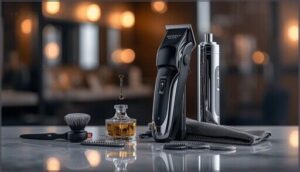
Cleaning your clippers is just half the battle—keeping them in peak condition takes a bit more attention. The good news is that a few simple habits can double or even triple the lifespan of your tools.
Let’s walk through the key maintenance practices that’ll keep your clippers running smooth and sharp for years to come.
Lubricating Blades With Clipper Oil
Think of clipper oil as insurance for your blades—a few drops before each use keeps friction low and edges sharp. Apply one drop on each corner of the moving blade and one in the center, then run your clippers for a few seconds to spread it evenly. Wipe off any excess with a soft cloth.
After blade wash or disinfecting, always re-oil because cleaning strips away lubrication.
Storing Clippers to Prevent Rust
Between haircuts, your hair clippers deserve a rust-free home. Follow these dry storage tips to keep blades sharp:
- Choose cool, dry spaces like an interior shelf rather than steamy bathrooms—humidity accelerates rust on steel blades.
- Use breathable clipper cases in leather or fabric to protect tools without trapping moisture.
- Add silica gel packets to your storage box for ongoing moisture control.
- Wrap blades in oily cloth as a protective barrier against oxygen and dampness.
Replacing Dull or Damaged Blades
Even well-oiled blades don’t last forever—when your clippers start pulling hair or leaving razor burn, it’s time for blade replacement. Check for visible chips or bent teeth on damaged blades.
If clipper sharpening doesn’t restore smooth cuts, swap the entire blade set. Always match part numbers for compatibility, oil new blades before testing, and confirm proper blade alignment so grooming tools glide without tugging.
Troubleshooting Common Clipper Issues
When clippers pull hair instead of cutting, trapped debris usually clogs the blade—clean and oil them first.
Loud rattling or clipper noise often means loose blade assemblies; tighten the screws. If blades overheat within minutes, reduce tension and apply oil.
Cordless issues like weak cuts signal battery wear, while burning smells point to electrical faults requiring immediate shutdown and professional repair.
Frequently Asked Questions (FAQs)
How often should hair clippers be cleaned?
Brush off hair and spray disinfectant after every haircut—that’s your baseline for hygiene.
Deep clean weekly if you’re cutting daily, or monthly for home use.
Oil those blades every couple cuts to keep them sharp.
Is rubbing alcohol good for cleaning hair clippers?
You can definitely use 70 percent isopropyl alcohol for disinfecting and cleaning your clippers. It dissolves oils, kills bacteria, and floats out trapped hair—just remember to oil those blades afterward since alcohol strips protective lubricant.
How often should clippers be professionally serviced?
Most home users should schedule professional clipper service once a year, while busy barbershops running tools daily need maintenance every three to six months to prevent motor wear and overheating issues.
Can I sharpen clipper blades at home?
You can try sharpening clipper blades at home, but most manufacturers don’t recommend it. DIY sharpening risks uneven edges and blade geometry damage that kills cutting performance—professional services or replacement blades work better.
What causes clippers to pull or snag hair?
When I see clippers yanking instead of gliding, I check five culprits: dull blades that mash strands, poor lubrication creating friction, hair buildup jamming teeth, misaligned teeth catching hairs, or weak motors losing power mid-stroke.
Are cordless clippers harder to maintain than corded?
Cordless clippers demand more attention because you’re juggling grooming tool maintenance plus Battery Care and Power Management.
Electronic Protection means careful Fluid Exposure around charging ports, while Cordless Limits include runtime drops that corded models never face.
How do I clean clipper motor vents safely?
You might think water works everywhere, but never let it near those motor vents.
Unplug first, then blast compressed air through the openings to clear trapped hair without risking electrical damage.
Conclusion
A clipper that’s never cleaned is a ticking time bomb—ready to ruin cuts, skin, and your reputation. Now you’ve got everything to maintain and clean hair clippers like they deserve: the right tools, the proper steps, and the habits that keep blades sharp for years.
Five minutes after each session protects your investment and your clients. Treat your clippers right, and they’ll reward you with consistent performance long after cheaper tools hit the trash.
- https://prostylingtools.com/blogs/tutorials/how-to-align-wahl-clipper-blades
- https://thegroomersedge.com/faq/essential-tips-for-proper-clipper-blade-care/
- https://sharpedgesok.com/how-to-align-your-clipper-blades
- https://barbersets.com/blogs/blogs/how-often-should-i-replace-clipper-blades
- https://allgroom.co.nz/blogs/clippers/how-often-blade-drive-replacement