This site is supported by our readers. We may earn a commission, at no cost to you, if you purchase through links.

Every curl-lover knows the heartbreak: you leave the house with hair that could rival a Renaissance painting, but by lunch, your spirals have surrendered to gravity, humidity, or the wrong product. Maybe you torched your strands chasing bounce, or you skipped the heat protectant altogether, thinking it wouldn’t matter—until it did.
The truth is, making curls last longer takes more than luck or a quick spritz of hairspray. It’s about using the right prep, smart technique, and a few trade secrets I’ve picked up behind the chair. With a little intention, your curls can outlast whatever the day throws your way.
Table Of Contents
Key Takeaways
- Prepping your hair with sulfate-free shampoo, pH-balanced conditioner, and a heat protectant sets the foundation for curls that last.
- Using the right curling tools, like a ceramic or tourmaline iron and the correct barrel size for your hair type, helps lock in curl shape and prevent damage.
- Curl longevity depends on disciplined techniques: curl small sections, let curls cool while pinned, and avoid over-touching or brushing to maintain definition.
- Environmental factors like humidity, heat, and friction from pillowcases can ruin curls, so use anti-humidity products and sleep on silk or satin to protect your style.
Why Curls Lose Their Shape Quickly
If your curls seem to fall flat by midday, you’re not alone. There are a handful of reasons this happens, and most are easier to fix than you think.
Here’s what really gets in the way of lasting curls.
Common Mistakes That Ruin Curls
Complacency destroys curl retention faster than humidity. Overheating hair, using incorrect products, or skipping heat protectant falls flat every time. Insufficient sectioning leaves curls limp, while poor cooling techniques force shape to collapse.
The biggest culprit? Excessive handling. If you want your curls to last longer, master curling techniques and handle your waves with discipline—your style will thank you.
The secret to lasting curls is disciplined styling—overhandling them is the quickest way to lose definition
The Impact of Hair Type and Health
If your curls drop before lunch, chances are, it’s not just your technique—it’s your hair’s own blueprint fighting against you. Hair porosity, scalp health, and natural texture all shape curl resilience.
Healthy, well-moisturized hair, with good elasticity, holds style longer. When your hair’s hydrated and balanced, products lock in wave memory, boosting curl retention and frizz control dramatically.
Environmental Factors Affecting Curl Longevity
Healthy hair only gets you halfway—Mother Nature loves to rewrite your style. High humidity sabotages curl longevity, while heat waves and UV damage leave styles limp and frazzled. Air pollution and strong winds undo your morning routine in minutes. That’s why real curl maintenance demands environmental awareness, not just great technique or products. Watch for:
- Humidity Control
- Temperature Effects
- Wind Protection
- Air Pollution
- UV Damage
Prep Your Hair for Long-Lasting Curls
Getting your hair ready before you curl makes all the difference in how long your style lasts. Every step, from the right wash to the products you use, lays the groundwork for curls that stay put.
Here’s what to keep in mind before you even pick up a curling iron.
Best Shampoo and Conditioner Practices
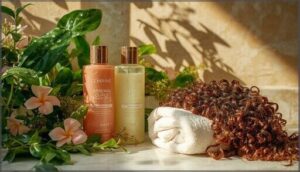
Ever noticed how the right shampoo sets the stage for standout curls? Opt for sulfate-free formulas—they offer gentle cleansing and reduce scalp irritation, which is key for curl preservation.
Pair with a pH-balanced conditioner to boost moisture retention. This small shift in hair care and hair products goes a long way for hair maintenance, hair health, and deep conditioning.
Benefits of Styling on Second-Day Hair

Second-day hair is your secret weapon for achieving better curl retention and definition. Natural oils have had time to distribute, giving your curl pattern extra grip.
You’ll notice curls last longer and hold their shape, with less tangling and breakage—especially if you use light texturizing products or try a quick curl refresher.
Embrace this hair texture advantage.
Using Mousse and Heat Protectant Effectively
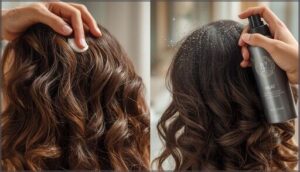
Start off by working mousse into damp hair, focusing on even distribution for uniform curl enhancement.
Wait a minute before grabbing your heat protectant—this pause lets the mousse bond with your hair texture, boosting hold.
A well-chosen styling product and heat protectant together form a shield, making your curls last longer no matter what curling technique you use.
Choose The Right Tools and Techniques
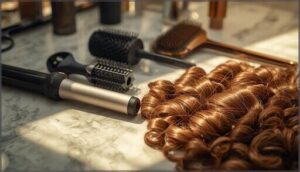
Using the right tools can make all the difference in how long your curls stick around. There are a few key details to get right, from your iron to the way you section your hair.
Here’s what to look for if you want curls that actually last.
Selecting The Best Curling Iron Material
Choosing the right curling iron is half the battle. Ceramic benefits shine for even heat distribution—no hot spots, no fried ends. Tourmaline effects keep frizz at bay, smoothing every curl. If you crave relentless power, titanium durability excels through thick, stubborn strands. Hybrid materials, like Tourmaline Ceramic, combine speed and shine, letting your curling technique work smarter—not harder.
Understanding AP study guides can help you master similar attention to detail in your daily routine.
Ideal Barrel Size for Lasting Curls
Barrel Size Matters more than you think. A 1.0–1.25 inch curling iron finds the sweet spot for Curl Longevity—offering tighter definition without compromising bounce.
If you’ve got fine Hair Texture, lean smaller; thick hair thrives on a bit more width for better Heat Distribution. The right barrel isn’t just a tool—it’s the secret to curls that last longer.
Temperature Settings for Different Hair Types
Ever wonder why your curls fall flat or frizz out by lunchtime? Temperature control is the backbone of heat damage prevention and real curl retention.
Match your curling iron heat setting to your hair type and porosity; for instance, fine hair shines at lower temperatures, while coarse hair needs a little more heat for that lasting, defined wave.
Proper Sectioning and Clipping Methods
Dividing your hair with intention is the unsung hero of curls that truly last. Smart sectioning tips—like creating four to six clean panels—let heat work evenly and reduce damage.
Precise clip placement locks in your curl pattern and helps each strand cool for maximum hold. Reuse clean clips to improve grip; this simple tweak boosts curl enhancement, regardless of hair texture or type.
Styling Tips to Make Curls Stay Longer
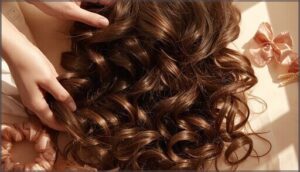
Ready to make your curls last well past lunchtime? Small changes in your styling routine can make a big difference.
Here’s what you can start doing right now to help those curls stay put.
Curling Small Sections for Extra Hold
Power move: target small sections when you’re curling for serious staying power. This hands-on Sectioning Technique lets you lock in Curl Tension, especially with a Small Barrel iron that amps up Hold Duration on every hair type.
Working piece by piece, you’ll see curls last longer—this method outperforms big chunks, no matter your Hair Texture or styling goals.
Pinning and Cooling Curls for Maximum Retention
Now, if small sections are your secret weapon, think of Curl Pinning and Cooling Techniques as your shield for unbeatable retention. Let your curls set pinned and cool for 15–20 minutes—don’t rush it.
Here’s how to make curls last longer:
- Use fabric-covered pins for Pin Care
- Pin curls at mid-length for best hold
- Air dry with a light setting spray
- Try alternating curl directions for even better curl retention
Avoiding Over-Touching and Brushing
While your curls cool, remember—your hands can be their worst enemy. Gentle Handling is the backbone of Curl Preservation and Frizz Control.
Daily brushing or excessive touching strips away curl definition and longevity, especially for fine or porous hair.
For curl enhancement techniques that actually make curls last longer, use Hair Oil sparingly and reach for a curl refresher instead of constant adjusting.
Maintain and Refresh Curls After Styling

Once your curls look just right, the real challenge is keeping them fresh and bouncy. Care and quick touch-ups make all the difference for curls that last.
Here are a few simple strategies to help your style go the distance.
Overnight Care With Satin or Silk Pillowcases
Ever wondered why your curls flatten overnight? Swapping to a silk pillowcase is your secret weapon. Pillowcase materials matter—silk and satin use fabric science to slash friction by over a third, meaning curl preservation becomes seamless.
This small tweak in your sleep habits keeps curl definition and longevity on point, protecting any hair texture or type within your hair care routine. Using a silk pillowcase benefit can make a significant difference in maintaining curly hair health.
How to Revive Curls in The Morning
Momentum matters most for Morning Curl Refresh—nothing beats saving a curl set you spent all night protecting. Mist damp hair, then scrunch in curl cream or mousse to reset definition with precision.
This Curl Revival Tip works wonders for any hair texture or type. Smart and gentle daily curl maintenance leaves you with bounce, body, and fresh-from-the-salon shine.
Protecting Curls From Humidity and Frizz
When humid air threatens to wreck your style, lean into Humidity Control and Frizz Fighters made for Curl Preservation. Reach for Anti Humidity Products—glycerin-free gels, silicone serums, or matte mousses—matched to your hair porosity and texture.
Don’t skip a heat protectant either. When you shield your curls early, you’ll see tighter definition and all-day frizz control.
Deep Conditioning and Weekly Treatments
Dedication to deep conditioning isn’t just pampering—it’s the backbone of curl preservation. A weekly treatment, like a rich hair mask or a strategic leave-in conditioner, strengthens and hydrates your hair from within.
By weaving deep conditioning into your hair care routines, you boost hair nourishment and protection, supporting daily repair and long-lasting curl definition for real, all-day hold.
Frequently Asked Questions (FAQs)
Can I swim or exercise with curled hair?
Think of swimming and sweaty workouts as hurdles, not walls.
With Swim Friendly Products and smart Curl Preserving Methods—like Sweat Resistant Styling and Chlorine Protection—your curls can soldier through exercise, keeping curl retention strong, no matter your hair texture.
How often should I re-curl hair between washes?
You’ll need to re-curl every one to two days between washes—most stylists recommend redoing on day two for maximum hold.
Hair texture and environmental humidity directly impact your curl retention timeline.
What is the best hairspray for curl longevity?
You know what they say—don’t put all your eggs in one basket. For curls that truly last, go for a humidity-resistant hairspray formula packed with flexible hold polymers and film-forming ingredients, then spray using sectional spray techniques for max curl retention.
How to travel without losing curl definition?
Pack a mini Travel Kit with Curl Refreshers, Frizz Fighters, and your preferred hair styling tools.
Use Humidity Control sprays, wrap curls in silk, and refresh with lightweight products—quick moves that help curls last longer, even abroad.
Are certain haircuts better for lasting curls?
It’s not a myth—certain haircuts really do help curls last longer. Layered cuts and smart haircut geometry boost curl retention and frizz resistance by improving weight distribution.
For most hair types, these styling techniques outperform blunt edges every time.
Conclusion
Imagine this: your curls, confident and defiant, refuse to fall flat no matter what the day demands. Mastering how to make curls last longer means learning the rhythm of your hair—when to coax, when to set, when to simply let go.
Real staying power comes from preparation, protection, and a touch of rebellion. The next time you step outside, know you’ve armed each curl with the secrets it needs to conquer both gravity and expectations.