This site is supported by our readers. We may earn a commission, at no cost to you, if you purchase through links. This content is for general informational and educational purposes only and is not a substitute for professional medical, dermatological, or nutritional advice.
So you just dropped $150 on a gorgeous new color, and two weeks later it’s already looking dull and washed out. Sound familiar? Here’s the thing your colorist wishes you knew: fading starts the moment you leave the salon chair, and most of it happens because of small daily habits, not bad luck.
The good news? Knowing how to prevent hair color fading isn’t complicated, it just takes a few smart swaps. From that first post-color wash to the products sitting in your shower right now, small changes add up fast. Let’s get your color lasting as long as it should.
Table Of Contents
- Key Takeaways
- How to Prevent Hair Color Fading
- Choose Color-Safe Hair Care Products
- Limit Heat Damage to Dyed Hair
- Protect Hair Color From Environmental Damage
- Keep Color-Treated Hair Healthy and Vibrant
- Frequently Asked Questions (FAQs)
- How do I keep my hair color from fading so fast?
- Why does my hair color only last 3 weeks?
- Does vinegar help hair dye last longer?
- Why is my hair color fading after one week?
- How do I stop my hair dye from fading?
- How to lock hair color?
- How do you seal hair color after dying it?
- How do I stop my hair Colour fading?
- How to make your hair color last longer?
- Why is my hair color fading so fast?
- Conclusion
Key Takeaways
- Wait a full 48 hours before your first wash after coloring, since your cuticle stays open and pigment can escape before it fully bonds.
- Cool water is your color’s best friend, so rinse with it, wash less often, and always finish with a cold rinse to seal the cuticle and lock in pigment.
- Swap in sulfate-free, color-safe products and skip alcohol, salt, and heavy protein treatments, since these strip color fast and undo your progress.
- Protect your color from heat and sun by lowering styling tool temps, using heat protectant, adding UV protection, and rinsing right after swimming, since most fading happens in the first four weeks.
How to Prevent Hair Color Fading
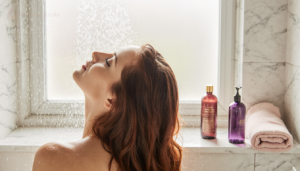
So you just dropped some cash on that gorgeous new color, and now you want it to stick around. Good news: keeping it vibrant starts with your washing routine, not some fancy salon secret. Let’s break down five simple habits that’ll make a real difference.
If your color came from a fresh bleach session, timing matters too—check out how long to wait between bleaching hair so your strands stay healthy enough to hold that shade.
If you’re already loving your new shade, these washing tips also pair perfectly with subtle hair color change ideas for your next low-key refresh.
Wait Before The First Wash
So you just dyed your hair and want to shampoo immediately? Don’t. Your cuticle stays open 24-48 hours post-color, and washing early lets pigment escape before it bonds. Color bonds actually peak around 36 hours.
If you’re using permanent dye, that oil buildup from unwashed hair actually matters less than you’d think—check out this guide on why dyeing dirty hair before your appointment helps color absorb better for the full picture.
Wait a full 48 hours before that first wash. This simple patience move can boost color longevity by up to 30%, shocker right?!
Wash Colored Hair Less Often
Now that you’ve survived the waiting game, here’s the next habit to steal: wash less often. Every shampoo session strips a little pigment, so fine hair should stick to twice weekly, while coarse or curly hair can handle three washes.
Fair warning though, 65% of frequent washers noticed fading within a month. Space it out, and your color sticks around longer.
Use Cool Water
Next up: temperature. Hot showers feel great, but they’re basically flushing your color down the drain. Cool water keeps cuticles sealed, cutting pigment loss by 30% per wash.
So wet hair with cool water pre-shower, shampoo with sulfate-free formulas, even massage your scalp for 60 seconds. Bonus: try a cool water mask weekly, then finish with cool air drying for max color retention.
Finish With a Cold Rinse
So once you’ve conditioned, don’t skip the last step: a cold water rinse, about 20-30 seconds, right at the end.
This closes the cuticle tight, locking in pigment and boosting shine instantly. Cold rinses right after coloring can lock in up to 25% more color, and that seal lasts 24-48 hours, slowing fade before it starts.
A cold rinse seals the cuticle, locking in up to 25% more color for a full 24-48 hours
Use Dry Shampoo Between Washes
Since fewer washes means less faded color, dry shampoo becomes your best friend between wash days. It absorbs oil at the roots, stretching color-safe cleansing to every 1-2 days.
Spray 6-10 inches from your scalp, wait a few minutes, then brush through. Skip fresh color for 24-48 hours to protect your hair moisture balance and vibrancy. Understanding shampoo detergent types can help you choose products that support color-treated hair.
Choose Color-Safe Hair Care Products

Now, washing habits only get you so far. What’s actually in your bottle matters just as much, maybe more. Here’s what to look for next time you’re shopping.
Use Sulfate-Free Shampoo
Ever wonder why salon color fades faster at home? Sulfates are often the culprit.
Switching to sulfate-free shampoos gives you gentle cleansing action without stripping pigment, plus real moisture retention boost and scalp health benefits.
If you’re wondering how gentler formulas actually work, this guide to the benefits of sulfate-free shampoo explains what changes for your color, moisture levels, and scalp.
For an extra layer of protection, look for formulas with glycerin, antioxidants, and UV filters, like those featured in this guide to color-safe hair products that lock in vibrancy.
Studies show up to 46% less fading over 30 days.
That’s color vibrancy preservation and reduced fading over time, simply by changing your bottle.
Apply Color-Safe Conditioner
A good conditioner does more than detangle. It seals your cuticle shut, trapping color inside.
- Apply mid-lengths to ends, skip roots
- Leave on 1-3 minutes
- Rinse with a cool water rinse
- Follow color protect shampoo with a colordepositing conditioner
Film-forming polymers and proteins support protein balance maintenance while reducing hair porosity, so leave-in conditioners keep working between washes.
Avoid Color-Stripping Ingredients
Check labels like you check ingredients on a snack: sodium chloride, denatured alcohol, and sulfates all speed up fading. Look for Sulfate Free, Alcohol Free, Chlorine Free, and Salt Free wording.
Skip alcohol-based products near heat tools, since they dry hair fast.
Choosing Paraben Free, Oxidizer Free formulas keeps color stable longer.
Try Color-Depositing Treatments
Think of color-depositing shampoo and conditioner as a top-up, not a fix. Violet or red pigments (0.2-0.5%) coat strands, neutralizing brassy tones and boosting vibrancy up to 15%.
Weekly use suits most hair types—fine hair, go biweekly. Coarse or porous hair? Twice weekly works.
Watch for pigment buildup—overuse stiffens hair and dulls color retention instead of helping it.
Consider Professional-Grade Formulas
Drugstore dupes just can’t compete here. Professional-grade formulas pack photostable dyes, ceramides, and pH-balanced systems built for real fade resistance.
Brands like Pravana Color Protect combine antioxidants with bond-preserving agents, sealing cuticles while shielding against UV and heat damage.
Yes, they cost more. But that salon-level color protect shampoo pays you back in weeks of extra vibrancy.
Limit Heat Damage to Dyed Hair
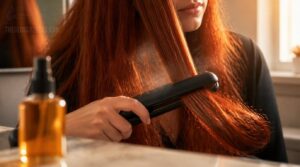
Now, let’s talk heat. Your styling tools can undo weeks of careful color work in seconds, and that’s a rough trade. Here’s how to keep the heat from stealing your shine.
Apply Heat Protectant
Skipping heat protectant is basically asking your color to fade faster.
Spray evenly through damp strands, holding the bottle 6-8 inches away, focusing on mid-lengths and ends. Prefer cream formulas? Comb through towel-dried hair instead. Either way, reapply a lightweight formula before touch-ups.
This barrier locks in pigment, especially paired with cold water and color-protect shampoo.
Lower Styling Tool Temperatures
Cranking the heat isn’t doing your color any favors.
Fine or damaged hair? Stick to 250-300°F. Normal hair controls 300-350°F, thick strands can take 350-400°F. Lower temps mean less oxidative fading, so your heat protectant works even harder.
Start low, add heat only if needed. Pair it with a cold rinse after conditioning, and you’re stacking protection instead of fighting your tools.
Choose Even-Heating Styling Tools
Temperature matters, but so does the tool spreading that heat evenly.
Cheap plates create hot spots that scorch color right off. Look for:
- Ceramic tourmaline plates for smooth glide
- Digital temperature control for accuracy
- Fast heat recovery between sections
- Negative ion emission for shine
Even heat distribution means fewer passes, less thermal protection wasted, and color that stays put.
Keep Blow Dryers Six Inches Away
Great plates only help if you’re not blasting heat straight onto your scalp.
Six inches is the magic number. It keeps scalp temps under 45°C, blocks protein denaturation, and slows pigment oxidation by 25%.
| Distance | Effect |
|---|---|
| 3 inches | Scalp overheats |
| 6 inches | Best color retention |
| 12+ inches | Poor airflow, longer drying |
Air-Dry Hair When Possible
Sometimes the best tool is no tool at all.
Air-drying hair cuts heat exposure entirely, preserving natural texture and locking in moisture. Detangle gently with a wide-tooth comb while damp, blot (don’t rub) with microfiber, then let curls or waves settle naturally. Less friction, less frizz, more vibrant color.
Protect Hair Color From Environmental Damage
Now, your hair color isn’t just fighting shampoo and hot tools, it’s up against the sun, the pool, and the ocean too. These outside forces can undo all your hard work faster than you’d think. Here’s how to shield your color from the elements around you.
Apply UV-Protective Hair Products

Sunlight fades color faster than most washes ever will. Look for UV filters in hair products, like benzophenone derivatives, plus antioxidant boosters (vitamin E, green tea) and film forming polymers that lock everything in place.
Three things to check on the label:
- Broad spectrum protection
- Antioxidant content
- Natural UV compounds like resveratrol
Apply your UV protectant to damp hair before heading outside.
Wear a Wide-Brimmed Hat

Sometimes the best sun protection isn’t a bottle, it’s a good hat. Grab a wide-brimmed hat (at least 3 inches) in tightly woven cotton or polyester, UPF 50+. A snug, low-crown fit covers your scalp fully. Neutral colors won’t transfer pigment.
Hand-wash in cold water, air-dry flat, and keep it away from radiators.
Pre-Wet Hair Before Swimming

Think of dry hair like a dry sponge at the pool, it soaks up chlorine fast. Pre-wet hair with plain water first, so strands are already full and can’t absorb as much pool water.
Even better: use a pre-swim hydration routine first. Apply a leave-in conditioner, add a water-repellent oil, then pull on your swim cap for real hair protection.
Guard Against Chlorine and Saltwater
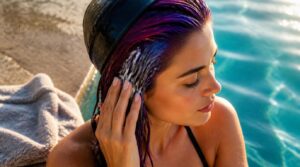
Chlorine and saltwater are color’s worst enemies, plain and simple.
Your best defense stacks up: swim cap protection, a barrier product on damp hair, plus UV protection if you’re outdoors. For ocean swims, saltwater dries color fast too.
Quick checklist:
- Pre-wet hair first
- Apply barrier product
- Add swim cap
- Use heat protection spray later
- Don’t skip the neutralizing rinse
Rinse Hair After Swimming

Here’s the deal: rinsing right after the pool or ocean is non-negotiable. Give it a fresh water rinse for three minutes, cold water works best for sealing cuticles. A short chlorine evaporation delay helps too.
Follow with post-rinse conditioner, gentle wet combing, and a shower filter if you’ve got one. Skip it, and chlorine bonds to your strands, fading color fast.
Keep Color-Treated Hair Healthy and Vibrant

So all that washing, styling, and sun protection means nothing if your hair itself isn’t healthy underneath. Color fades faster on damaged strands, no matter how careful you are. Here’s how to keep your hair in top shape so your color has something strong to hold onto.
Deep Condition Regularly
Weekly deep conditioning keeps color vibrant longer, and here’s the proof: masks maintain pigment intensity at 85% for up to 12 weeks.
A 15-minute session restores moisture to 80% of ideal levels, while ceramide-based formulas seal the cuticle, cutting color loss during shampooing by 25%.
So skipping this step isn’t just a moisture mistake, it’s a color longevity mistake too.
Use Acidic Hair Masks
Deep conditioning covers moisture, but pH balance seals the deal. Acidic hair masks (pH 4.5-5.5) close cuticles, cutting color loss up to 30%.
Key ingredients:
- Citric acid
- Malic acid
- Lactic acid
- Glycolic acid
Apply weekly, leave 5-10 minutes. Porous or processed hair benefits most. Pairs well with color-depositing conditioners, boosting pigment adhesion by 10% for lasting hair color vibrancy.
Limit Protein Treatments
So acids tighten the cuticle, but protein is where people overdo it.
Stick to once every four to six weeks—more than that and cuticles seal shut, locking out color. Choose lightweight hydrolyzed wheat or silk protein over heavy keratin. Pair it with glycerin conditioner for moisture balance.
Do the stretch test weekly; over 30% elongation means back off for hair strength and elasticity.
Reduce Towel and Pillow Friction
Ok so protein’s covered—now let’s talk friction, the sneaky culprit wrecking your color overnight.
Avoid towel drying with rough cotton; twisting rubs open the cuticle and strips pigment fast.
- Use silk pillowcases—less friction, moisture stays locked in.
- Try microfiber hair drying, gentle and fast.
- Satin wraps or friction-reducing brushes finish the job.
Schedule Trims and Color Touch-Ups
Think of trims as color insurance. Split ends grab dye unevenly, so cutting every 6-8 weeks (5 for fine hair) keeps edges sharp.
Pair that with touch-ups: gloss every 3 weeks in summer, root color every 4-6 weeks at home. Use foils, matching shade, cool rinse—same rules, smaller scale.
Frequently Asked Questions (FAQs)
How do I keep my hair color from fading so fast?
Watching your gorgeous new shade slip away feels like heartbreak.
The fix: wait before washing, use sulfate-free shampoo, cool water, heat protectant, and UV protection. Silk pillowcases and color-depositing shampoo keep that vibrancy locked in longer.
Why does my hair color only last 3 weeks?
Three weeks usually means hair porosity or dye chemistry working against you, plus stressors stacking up: hot showers, heat styling, sun exposure, hard water. Combined, they strip color retention fast.
Cool rinses, UV protection, and color-depositing shampoo slow it way down.
Does vinegar help hair dye last longer?
Vinegar’s low pH tightens cuticles and lowers porosity, trapping dye inside. A weekly vinegar rinse stabilizes pigment and boosts color retention, especially paired with sulfate-free shampoos and deep conditioning treatments.
Why is my hair color fading after one week?
Hot water and frequent washing open the cuticle fast, letting color molecules escape. Add sun exposure or chlorine, and pigment breaks down even quicker. Switch to cool water and a sulfate-free shampoo to slow the fade.
If you use a color-depositing shampoo to refresh faded shades, how long color-depositing shampoo lasts depends on your wash routine, water temperature, and the antioxidants in your formula.
How do I stop my hair dye from fading?
No single product works alone. Real fading control comes from washing less, rinsing cool, using sulfate-free shampoo, applying heat protectant, adding UV protection, and deep conditioning weekly—layer these habits together for color that actually lasts.
How to lock hair color?
Locking color in comes down to cold water rinses, sulfate-free formulas, and heat protectant every time you style. Add UV protection, silk pillowcases to cut friction, and color-depositing treatments to keep pigment locked tight between salon visits.
How do you seal hair color after dying it?
That first rinse decides everything. Cool water for a few minutes shuts the cuticle, then a color sealing conditioner with cationic surfactants locks pigment in, followed by a quick vinegar rinse for extra shine and staying power.
How do I stop my hair Colour fading?
Wait before that first wash, then switch to sulfate-free shampoo and cool water. Add UV spray, rinse after swimming, use dry shampoo between washes, and skip protein treatments — small habits that keep dye locked in longer.
How to make your hair color last longer?
Picture two clients, same salon visit, same red shade. One washes daily with hot water; three weeks later she’s orange.
The other uses cool water, sulfate-free shampoo, color-depositing conditioner, and skips daily washing. Her red still glows.
Why is my hair color fading so fast?
So what’s actually happening? Hot water and frequent washing strip dye fast, sulfates make it worse, UV rays break down pigment, and hot styling tools weaken the cuticle. Combine those factors, and color retention takes a serious hit.
Conclusion
Colorists estimate up to 80% of color fade happens within the first four weeks, long before most people think to worry. That’s not bad luck, it’s chemistry meeting habits. Knowing how to prevent hair color fading means treating those early weeks like they matter most, because they genuinely do. Cool water, gentle products, less heat, smart choices, real results. Your color isn’t fragile. It’s just waiting for you to protect it right.