This site is supported by our readers. We may earn a commission, at no cost to you, if you purchase through links. This content is for general informational and educational purposes only and is not a substitute for professional medical, dermatological, or nutritional advice.
A patient once told me she’d tried six sunscreens in one summer, hunting for one that wouldn’t turn her T-zone into a grease slick by noon. Her cheeks stayed dry and flaky through all six. That’s the trap: one bottle rarely fits every inch of your face.
Your skin isn’t uniform, so your sun protection shouldn’t be either. Oily zones, dry patches, and reactive spots each pull toward different formulas.
Learning how to choose the right sunscreen for your skin type means matching ingredients to what your skin actually does, not what the label promises.
Table Of Contents
- Key Takeaways
- Identify Your Skin Type and Concerns
- Choose Broad-Spectrum SPF 30 or Higher
- Compare Mineral, Chemical, and Hybrid Sunscreens
- Match Sunscreen to Your Skin Type
- Consider Skin Tone and Pigmentation
- Pick The Right Sunscreen Format
- Read Water Resistance and Safety Labels
- Top 5 Sunscreens for Different Skin Types
- Apply and Reapply Sunscreen Correctly
- Frequently Asked Questions (FAQs)
- How do I know my skin type for sunscreen?
- What is the 3 1 1 rule for sunscreen?
- How do I know what type of sunscreen I need?
- Should you use SPF 30 or 50 on your face?
- Which sunscreen is best for every skin type?
- How do I choose a sunscreen for my skin type?
- What is the best food for skin?
- How to choose the right sunscreen?
- How do dermatologists choose the best sunscreen?
- How do I choose the right sunscreen?
- Conclusion
Key Takeaways
- Your skin isn’t one texture all over, so pick formulas by zone—gels for oily areas, creams for dry patches, and mineral sunscreen for sensitive spots.
- Always choose broad-spectrum SPF 30 or higher, since that protects against both UVB burning and UVA aging, no matter your skin type.
- Reapply every two hours regardless of the SPF number, because even high SPF protection fades fast with sweat, water, or time.
- Apply a full ounce (about a shot glass) fifteen minutes before sun exposure, and don’t forget commonly missed spots like ears, scalp, hands, and feet.
Even a quick towel-dry can strip away a chunk of your protection, so it helps to check this guide on how often to reapply sunscreen for tips on staying covered all day.
Identify Your Skin Type and Concerns

Before you buy any sunscreen, take a minute to really look at your skin. Not the skin you wish you had, but the one you’re in today. Here’s what to check first.
Everyone’s skin has different needs, so it helps to browse this guide to the best sunscreens for men before picking one off the shelf.
Determine Oil and Shine Levels
Shine tells a story. Check your T zone by early afternoon, when oil production peaks between 10 a.m. and 2 p.m.
A tissue press works, but dermatology offices use sebum meters, showing oily skin often exceeds 80 micrograms per square centimeter. High readings mean you need noncomedogenic or mineral sunscreen for oily, acne-prone skin.
Check Dryness and Flaking
Oil isn’t the only clue. Dry skin often feels tight after cleansing, with fine flakes on cheeks or around the nose.
Dermatologists use TEWL measurement to check water loss, and readings above 30 g/m²/24h signal a compromised barrier. Indoor heating drops humidity to 20%, worsening dryness, so sunscreen for dry skin should include ceramides and hyaluronic acid.
Notice Redness or Stinging
Redness within 5 minutes points to a reactive ingredient, not just sun sensitivity. Watch for pink cheeks, tingling on the nose, or small bumps on the forehead.
Sensitive skin flares fast with chemical filters like oxybenzone. If stinging peaks then fades in 15 minutes, switch to fragrance-free, hypoallergenic mineral sunscreen next time.
Map Combination Skin Zones
Reactive skin isn’t the only pattern worth tracking. Grab a mirror at midday and look zone by zone:
- Forehead with visible shine or enlarged pores
- Nose showing a glossy sheen
- Chin feeling slick by afternoon
- Cheeks pulling tight or flaking
- Jawline sitting comfortably in between
This T-zone versus cheek split guides zone-specific sunscreen selection, so you balance oil control up top with real cheek moisture underneath. For those managing both oily and dry areas, understanding combination skin care helps tailor effective daily routines.
Consider Breakouts and Clogged Pores
Breakouts often trace back to sunscreen, not just skin type. Look for non-comedogenic labels and oil-free formulas under 2% oil content.
Mineral sunscreen with zinc oxide suits acne-prone skin well. Skip heavy silicones; choose gel-based textures that won’t trap sebum or clog pores.
Choose Broad-Spectrum SPF 30 or Higher
Once you know your skin type, the next step is picking the right level of protection. SPF numbers and labels can feel confusing at first glance. Here’s what actually matters when you’re standing in that sunscreen aisle.
UVA Versus UVB Protection
Two rays, two very different threats. UVB burns your skin’s surface, damaging DNA in the epidermis. UVA ages you quietly, sinking deeper to break down collagen and elastin.
UVA makes up about 95% of ground-level UV rays, hitting your skin all day, every season. Your skin type doesn’t change this math—everyone needs coverage against both.
Why Broad Spectrum Matters
Since UVA and UVB damage skin differently, you need both covered, not just one. That’s what "broad spectrum" means on your label.
FDA rules require UVA protection at one-third your SPF number, minimum.
Why it matters:
- Cuts skin cancer risk roughly 50%
- Slows visible aging, fewer wrinkles
- Blocks visible light dark spots
- Balances UVA-UVB defense daily
SPF 30 Versus SPF 50
Is SPF 50 really worth the upgrade? The math says barely.
| SPF | UVB Blocked |
|---|---|
| 30 | 97% |
| 50 | 98.4% |
That’s a 1.4% gap. SPF 30 suits daily wear, with better makeup compatibility and lighter texture. Choose SPF 50 for prolonged outdoor days, when every bit of broad spectrum defense counts against sensitive skin flare-ups.
Daily Wear Versus Prolonged Exposure
Your commute needs less than your hike. Daily wear relies on a stable film, but that layer thins fast outdoors, dropping within two hours under strong UV. Sweat compounds this: heavy outdoor sweating cuts protection to roughly 60%.
Prolonged exposure demands more diligence than a quick school run ever will, regardless of your skin type.
Higher SPF Reapplication Myths
A high number on the bottle won’t save you from reapplying. SPF 100 myth, debunked: even at 99% initial UVB blockage, protection drops to 85% after four hours untouched.
Even SPF 100 fades fast: 99% protection at the start can drop to 85% after four untouched hours
Sunscreen guidelines don’t bend for higher numbers. Your skin type doesn’t matter either — everyone follows the same sunscreen reapplication rule: every two hours, no exceptions.
Compare Mineral, Chemical, and Hybrid Sunscreens
Once you know your SPF number, the next choice is what type of sunscreen to reach for. Mineral, chemical, and hybrid formulas all protect your skin, but they work in different ways. Here’s what sets them apart.
Zinc Oxide and Titanium Dioxide

When you see zinc oxide or titanium dioxide listed as active ingredients, you’re looking at mineral sunscreen at its heart. Zinc oxide covers broad spectrum UVA and UVB rays. Titanium dioxide leans toward strong UVB defense.
Modern formulas use nanoparticle technology, reducing that chalky white cast without sacrificing protection. Both minerals are reef safe, gentle for sensitive skin, and worth a quick tolerance test first.
Common Chemical UV Filters

Mineral filters aren’t your only option. Chemical sunscreen works by absorbing UV rays, not deflecting them.
Avobenzone covers UVA broadly but needs stabilizers to resist breakdown. Octocrylene offers steady UVB defense and boosts photostability. Octinoxate targets UVB wavelengths, while oxybenzone faces growing regulatory scrutiny in some regions. Each filter absorbs a different light spectrum, so blends deliver fuller coverage than any single ingredient alone.
How Hybrid Formulas Work

Hybrid sunscreen blends both worlds. A mineral chemical mix pairs zinc oxide or titanium dioxide with organic filters, giving true broad spectrum protection.
During the film formation process, this mix settles into one flexible layer, so minerals shield while chemical filters absorb light. Dispersion agents keep particles even, which explains the reduced white cast many hybrid formulas achieve.
Sensitivity and Allergy Considerations
That flexible film only matters if your skin tolerates it. Mineral sunscreen tolerance stays high, around 1.2% irritation, while chemical filters cause reactions in up to 4% of users. If you have sensitive skin, ask for:
- Fragrance free labeling
- Hypoallergenic certification
- Patch-tested formulas
- Mineral-only actives
- No oxybenzone or parabens
White Cast and Finish Differences
That ghostly tint on your skin? It comes from zinc oxide and titanium dioxide sitting on the surface, more visible on darker complexions. White Cast Solutions include micronized filters or tinted sunscreen with iron oxides.
Finish matters too: gel formulas feel light, creams add moisture, powders mattify. Choose sunscreen for darker skin labeled "sheer" or "invisible" for better blending.
Match Sunscreen to Your Skin Type
Not all sunscreens work the same way for all skin. Your skin’s unique needs matter just as much as the SPF number on the bottle. Here’s how to find the right match for your specific skin type.
Oily and Acne-prone Skin
Shine by noon isn’t just annoying, it’s a sign your skin makes 1.5 to 2.5 times more sebum than normal skin.
Look for oil-absorbing ingredients like silica for a matte finish.
Niacinamide at 2% cuts oil production by 15% in a month.
Choose non-comedogenic, gel-based sunscreen for oily, acne-prone skin, and skip heavy oils entirely.
Dry and Dehydrated Skin
When your skin feels tight after cleansing, that’s a barrier crying for help. Dry skin loses 30% more ceramide NP than normal skin, so barrier lipid restoration matters most.
Choose sunscreen with ceramides and hyaluronic acid for immediate plumping. Cream-based, mineral sunscreen locks in moisture best. Skip daily exfoliation—stick to once weekly with gentle AHA to avoid stripping fragile lipids further.
Sensitive and Reactive Skin
Stinging within two minutes affects 35% of sensitive skin users trying new products, so patch-test everything first.
Choose mineral sunscreen with zinc oxide or titanium dioxide, plus colloidal oatmeal soothing. Skip synthetic fragrance irritation and nickel contact dermatitis triggers from metal packaging.
Look for hypoallergenic labels, barrier repair creams with niacinamide, and green tea polyphenols to calm inflammation before it starts.
Normal and Combination Skin
Lucky you if your face behaves evenly, or nearly so. Normal skin keeps sebum balance steady and moisture retention high, needing simple broad-spectrum SPF 30 protection.
Combination skin? Your T-zone oiliness calls for a gel formula, while cheek dryness wants a touch more cream. Sunscreen for oily skin works on the shiny zone; layer moisturizer elsewhere. Pore visibility often improves once oil’s controlled.
Mature Skin Support Needs
Sun damage doesn’t stop at wrinkles—it slows collagen renewal too. Mature skin needs broadspectrum sunscreen with SPF 30 plus extra support built in.
Look for antioxidant protection like vitamin E or ferulic acid, alongside ingredients offering hydration support and barrier repair. Peptides encourage collagen boost, while calming agents deliver redness relief for sensitive skin prone to flushing as it thins with age.
Consider Skin Tone and Pigmentation

Skin tone changes what your sunscreen needs to do. Deeper skin faces different risks than fair skin, and pigmentation issues call for extra care. Here’s what to look for.
Tinted Formulas for Deeper Skin
For deeper skin, that ghostly cast from mineral sunscreen used to be a dealbreaker. Now, iron oxides solve it, blending seamlessly into olive and deep undertones.
Look for buildable coverage, water resistant tints, and non comedogenic formulas with SPF 30 broad-spectrum protection.
Shade matching along your jawline confirms the right fit, even for sensitive skin.
Visible Light and Dark Spots
Even indoor light plays a role. Thirty minutes under typical LED lighting can raise melanin production by up to 12%, and blue light (415-455nm) is the biggest trigger.
That oxidative stress speeds melanin transfer to skin cells, worsening spots on your face, neck, and forearms. Mineral sunscreen with zinc oxide blocks blue light up to 500nm, giving real visible light protection.
Hyperpigmentation and Melasma Needs
Melasma calls for extra care. It’s a chronic condition that flares with sun and visible light, so daily photoprotection matters more than ever.
Choose broad-spectrum SPF 50, applied with targeted facial application to the centrofacial zone. This helps:
- Reduce melasma flare prevention triggers
- Block UVA, UVB, and visible light
- Calm hyperpigmentation over time
- Suit sensitive skin needs
- Support consistent daily use
Iron Oxides in Tinted Sunscreen
That daily SPF 50 habit works even better with tint added in. Iron oxides are the pigments giving tinted sunscreen its color, and they block visible light UV filters miss entirely.
For melasma-prone or sensitive skin, look for yellow, red, and black iron oxides matched to your skin tone. Bonus: most formulas stay reef-safe, dermatologist approved, and gentle.
Pick The Right Sunscreen Format

Sunscreen isn’t just about the ingredients inside; the format matters too. Your skin type, lifestyle, and even how much time you have in the morning all play a role. Let’s look at your options, so you can find the one that fits your routine best.
Choosing the wrong format for your skin type can backfire, much like timing your body exfoliation incorrectly — small missteps in routine order make a bigger difference than most people expect.
Creams for Lasting Moisture
Cream sunscreens feel like a warm blanket for dry skin. They pair hyaluronic acid and ceramides with occlusive oils, sealing in moisture for hours.
Picture:
- A rich, buttery texture melting into skin
- A dewy, plump finish by evening
- No tight or flaky patches by noon
Choose cream formulas for lasting hydration and daily barrier repair.
Gels for Lightweight Wear
Splash-on relief describes gels best: they hit skin cool, then vanish.
That cooling gel texture comes from high water content, giving fast absorption and a non-greasy finish—ideal sunscreen for oily skin or humid days.
| Gel Trait | What It Does | Best For |
|---|---|---|
| Breathable film | Protects without clogging pores | Oily, acne-prone skin |
| Water-resistant gel | Holds up through sweat | Active days |
| Lightweight wear | Layers under makeup | Daily face sunscreen |
Sticks for Targeted Coverage
Precision matters when a blemish or under-eye area needs care, not your whole face. A sunscreen stick glides on solid, delivering broad spectrum SPF without mess.
- Twist-up application tools
- Portable size for pockets
- Non-greasy finish over makeup
- Good for sensitive, oily, or dry skin
- Targeted application, no fingers needed
Sprays for Hard-to-reach Areas
Can’t reach your own back? That’s where sunscreen spray earns its keep. The nozzle angle covers those hard-to-reach areas—neck, shoulder blades, backs of knees—while fine mist particle size dries fast, no greasy film.
Good spray application technique means holding it close, not spraying into wind. Follow inhalation safety measures: hold breath briefly, avoid faces. A quick-release nozzle helps with scalp spots. Choose water resistant formulas for sweat or swimming.
Powders for Touch-ups Only
Midday shine isn’t a sunscreen failure, it’s a reminder to reapply. Powder SPF brushes fix that without ruining makeup.
- Blends over makeup, no cakey buildup
- Mattifies oily zones fast
- Slim, mirrored cases for packaging portability
- Some formulas are reef-safe formulas
- Fine for sensitive skin, fragrance-free
Keep touch-up frequency every two hours. Powders support, but don’t replace, your primary sunscreen for face.
Read Water Resistance and Safety Labels
Sunscreen labels say a lot, once you know how to read them. Terms like "water resistant" or "fragrance-free" aren’t just marketing talk, they carry real meaning. Here’s what those labels actually tell you.
40. minute Versus 80-minute Protection
Those two numbers on the label aren’t marketing fluff, they’re tested performance windows. A 40-minute rating fits casual swimming or light sweating. Choose 80 minutes for vigorous swimming or long days outside.
Either way, sunscreen effectiveness fades with immersion, so reapply the moment your timer runs out, and always after towel drying, even if skin still feels dry.
Non-comedogenic Label Meaning
Non-comedogenic means the formula isn’t likely to clog pores or trigger comedones, blackheads and whiteheads.
It’s not FDA-regulated, so results vary by brand.
Quick label checklist:
- Look for "non-comedogenic" or "won’t clog pores"
- Favor glycerin or aloe over coconut oil
- Patch-test if you’re acne-prone
Great for sensitive skin, but not a breakout guarantee.
Fragrance-free and Hypoallergenic Claims
Non-comedogenic tells you about pores. Fragrance-free and hypoallergenic tell you less than you’d think, since neither term carries a strict legal definition.
Fragrance-free means no added perfume, not zero odor or zero allergens. Hypoallergenic claims vary by brand.
Sensitive skin still reacts to preservatives or plant oils. Check the ingredient list, especially if you’ve had contact allergies before, and patch-test mineral sunscreen with zinc oxide first.
Expiration Dates and Storage
That bottle in your gym bag has a shelf life, even unopened. Most sunscreens stay effective for three years, but heat above 30°C clumps zinc oxide, and sunlight degrades avobenzone fast.
Store sunscreen in a cool, dark cabinet, cap sealed tight. Grainy texture or a rancid smell means it’s time to toss it, expiration date or not.
Baby Sunscreen and Age Guidance
Babies under six months shouldn’t wear sunscreen at all — shade and clothing are safest. From six months on, use mineral sunscreen with zinc oxide or titanium dioxide, SPF 30 or higher.
- Fragrance-free, hypoallergenic formulas
- Apply 15 minutes before going out
- Reapply every two hours
- Choose water-resistant options for swimming
- Avoid chemical filters for sensitive skin
Top 5 Sunscreens for Different Skin Types
Knowing your skin type is only half the battle, finding a product that actually fits it is the other. To save you some guesswork, here are five sunscreens that consistently perform well for different needs. Take a look at what makes each one stand out.
1. La Roche Posay Anthelios Milk Sunscreen
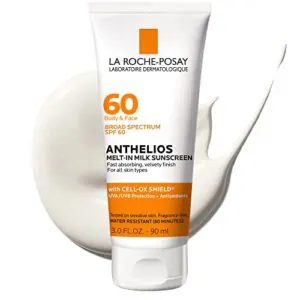
La Roche Posay Anthelios Melt-In Milk feels less like sunscreen and more like a light lotion. It delivers broad-spectrum SPF 60 with Cell-Ox Shield antioxidant technology, absorbing fast with no greasy or white cast.
You’ll get 80 minutes of water resistance, and it’s free of octinoxate and oxybenzone. Tested for sensitive skin, it layers well under makeup. This chemical formula works best for anyone wanting daily hydration alongside serious sun protection, though swimmers should reapply promptly.
| Best For | Anyone with sensitive skin who wants a lightweight, daily-wear sunscreen for face and body that layers smoothly under makeup during outdoor activities like beach days, travel, or festivals. |
|---|---|
| SPF Rating | SPF 60 |
| Broad Spectrum | Yes |
| White Cast | No |
| Sensitive Skin Suitable | Yes |
| Net Weight | 4.18 oz |
| Makeup Compatible | Layers under makeup |
| Additional Features |
|
- Broad-spectrum SPF 60 with Cell-Ox Shield antioxidant protection
- Fast-absorbing milk texture with no greasy feel or white cast
- Free of octinoxate and oxybenzone, and tested for sensitive skin
- Only water resistant for 80 minutes, so swimmers or heavy sweaters need to reapply often
- Chemical formula isn’t ideal for those who prefer mineral (zinc oxide or titanium dioxide) sunscreens
- Priced higher than many mass-market sunscreen options
2. La Roche Posay UV Clear Sunscreen
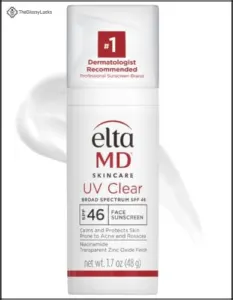
Breakouts don’t wait for a good hair day, and neither should your sunscreen routine. UV Clear brings SPF 50 chemical protection with Cell-Ox Shield technology, plus azelaic acid to calm blemishes.
The texture is featherlight, absorbing fast without any white cast. It’s fragrance-free and non-comedogenic, built specifically for acne-prone and rosacea-prone skin. Wear it bare-faced or under makeup daily.
If you’re expecting, pair it with a gentle routine, and our guide to safe skin cleansing during pregnancy explains which ingredients to skip.
| Best For | Those with oily, acne-prone, or sensitive skin who want reliable, lightweight sun protection that won’t clog pores or cause breakouts. |
|---|---|
| SPF Rating | SPF 46 |
| Broad Spectrum | Yes |
| White Cast | No |
| Sensitive Skin Suitable | Yes |
| Net Weight | 1.7 oz |
| Makeup Compatible | Untinted/tinted options |
| Additional Features |
|
- Broad spectrum SPF 46 protection with transparent zinc oxide, leaving no white cast
- Oil-free, fragrance-free, and non-comedogenic formula, ideal for sensitive and blemish-prone skin
- Contains niacinamide to help improve skin tone and manage discoloration
- Product name and description can be confusing due to conflicting information
- Requires choosing between tinted and untinted versions based on preference
- Only available in a 1.7 oz size, which may not last long with daily use
3. Invisible Primer Sunscreen SPF
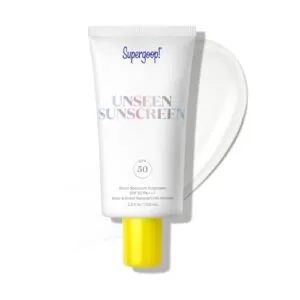
When makeup and sun protection compete for space on your face, this product ends the fight. It’s a weightless SPF 50 primer with a matte, invisible finish and no white cast.
Beyond sunscreen, it grips makeup for longer wear and smooths pores for a natural base. Fragrance-free and non-comedogenic, it suits sensitive or acne-prone skin. The clear texture makes application tricky to judge, though, so layer generously to get full protection.
| Best For | Anyone who wants daily sun protection without disrupting their makeup routine, especially those with sensitive, acne-prone, or oily skin who prefer a matte finish. |
|---|---|
| SPF Rating | SPF 50 |
| Broad Spectrum | Yes |
| White Cast | No |
| Sensitive Skin Suitable | Yes |
| Net Weight | 2.5 fl oz |
| Makeup Compatible | Makeup primer |
| Additional Features |
|
- Weightless, invisible SPF 50 formula with no white cast
- Doubles as a primer, gripping makeup for longer wear
- Fragrance-free and gentle enough for sensitive or acne-prone skin
- Premium price for only 2.5 fl oz of product
- Clear texture makes it hard to gauge how much you’ve applied
- Matte finish isn’t ideal for those who prefer a dewy or glowy look
4. ISDIN Eryfotona Actinica Mineral Sunscreen SPF 50
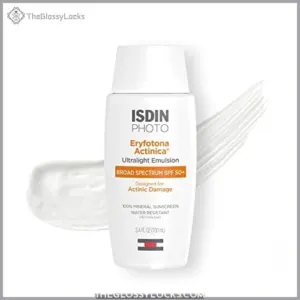
Sun damage isn’t just about tomorrow’s burn, it’s about years of exposure already sitting in your skin. That’s where this mineral sunscreen stands apart.
Its DNA Repairsomes technology works to repair existing UV damage while shielding you from new rays. Built on 11% zinc oxide, it delivers broad-spectrum SPF 50+ without the usual chalky finish.
The ultralight formula absorbs fast and doubles as a great makeup primer, ideal if you’re managing actinic damage and want mineral-only protection.
| Best For | People with sensitive, sun-damaged skin who want mineral-only protection with added anti-aging repair benefits. |
|---|---|
| SPF Rating | SPF 50+ |
| Broad Spectrum | Yes |
| White Cast | Possible |
| Sensitive Skin Suitable | Yes |
| Net Weight | 2.65 oz |
| Makeup Compatible | Makeup primer/base |
| Additional Features |
|
- DNA Repairsomes technology helps repair existing sun damage while preventing new harm
- Lightweight, fast-absorbing texture that works well as a makeup primer
- All-mineral, broad-spectrum formula gentle enough for sensitive skin
- Higher price tag than many other sunscreens on the market
- Can leave a white cast depending on your skin tone
- Needs a good shake before each use, plus has a mild scent
5. Colorescience Brush On Sunscreen
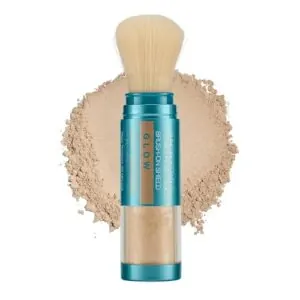
Ever tried reapplying sunscreen over a full face of makeup without ruining it? This brush-on powder solves that problem.
Built with zinc oxide and titanium dioxide, it offers SPF 50 broad-spectrum coverage plus 98.4% HEV blue light defense. Two luminizing shades add a soft glow or bronze tint.
It’s a touch-up tool, not your primary shield. At 0.15 ounces, expect frequent repurchasing, and some users find the bristles tricky to dispense through.
| Best For | People who wear makeup and need an easy way to reapply sunscreen throughout the day without disturbing their look. |
|---|---|
| SPF Rating | SPF 50 |
| Broad Spectrum | Yes |
| White Cast | No |
| Sensitive Skin Suitable | Not specified |
| Net Weight | 0.15 oz |
| Makeup Compatible | Brush-on over makeup |
| Additional Features |
|
- Convenient brush-on application for touch-ups over makeup, on the face, ears, or scalp
- Provides SPF 50 with UVA/UVB and 98.4% HEV blue light protection
- Two luminizing shades add a natural glow or bronze tint while protecting skin
- Small 0.15 oz size may require frequent repurchasing, especially for heavy users
- Some users find it difficult to dispense product through the bristles
- Premium $69 price tag is higher than many comparable sunscreens
Apply and Reapply Sunscreen Correctly

The right sunscreen only works if you use it correctly. Timing, amount, and technique matter just as much as the formula you choose. Here’s exactly how to apply and reapply it, step by step.
Apply 15 Minutes Before Exposure
Patience pays off here. Wait 15 minutes after applying sunscreen before heading outside, whether you’re using a mineral or chemical formula. That window lets the film fully form on your skin instead of rubbing off.
It also gives your skin time to cool, which helps active ingredients settle evenly instead of evaporating in the heat.
Use One Ounce for Body
Most people apply about a quarter of the sunscreen they actually need. A full ounce covers your whole body, roughly a shot glass worth, or a palmful. That amount creates the 2 mg/cm² film tested for SPF ratings.
Try these:
- Fill a shot glass as your visual guide
- Adjust: half an ounce for kids, up to 1.5 for larger frames
- Apply generously, don’t rub it in like lotion
Cover Commonly Missed Areas
That shot glass covers your body, but small spots still get skipped. Ears and neck catch 25% of head UV exposure. Scalp, hairline, hands, feet, toes, knees, and elbows burn fast too.
| Missed Area | Risk |
|---|---|
| Ears | 42% never apply sunscreen here |
| Scalp | Burns in 20 minutes |
| Hands | Photoaging within 5 years |
| Feet | Burns in 10 minutes |
| Knees/Elbows | 35% of sunburns missed here |
Reapply Every Two Hours
Ears and knees don’t matter much if you skip round two. Set a two-hour reminder—UV index, sweat, or a towel rub-down all shorten that window. Water resistance fades at 40 or 80 minutes. Chemical formulas lose potency faster than mineral ones. For sensitive skin, reapplying keeps protection steady without extra irritation.
Layer Before Makeup and Bug Spray
Order matters as much as timing. Apply sunscreen first, wait 15 minutes, then bug spray, then makeup. DEET can break down UV filters if layered too soon.
Quick sequence:
- Sunscreen, wait 15 minutes
- Bug spray (fragrance-free for sensitive skin)
- Makeup, once white cast settles
Mineral formulas may need extra minutes to spread evenly before foundation goes on.
Frequently Asked Questions (FAQs)
How do I know my skin type for sunscreen?
Shine in your T-zone, tightness after washing—your face already tells the story. Try an oil blotting test and a flaking dryness check; oily, dry, sensitive, or combination skin all point toward different sunscreen textures and ingredients.
What is the 3 1 1 rule for sunscreen?
Think one ounce, one hour, factor 30. Use a shot glass worth of sunscreen for your whole body, reapply every hour outdoors, and pick SPF 30 or higher for reliable skin protection, whatever your skin type.
How do I know what type of sunscreen I need?
The best sunscreen feels invisible yet works hardest when you forget it’s there. Your skin type assessment guides everything: oily skin wants gel textures, sensitive skin needs mineral sunscreen, and dry skin craves cream-based hydration.
Should you use SPF 30 or 50 on your face?
For daily commute protection or sensitive skin, SPF 30 covers you well. Choose SPF 50 for long outdoor activity, high summer UV, or makeup layering days—it holds up better under sweat and sun.
Which sunscreen is best for every skin type?
Truthfully, there’s no single crown-winner here. Mineral sunscreen suits sensitive and oily skin, chemical formulas feel lighter on dry skin, and SPF effectiveness matters less than consistent application and reapplying every two hours.
How do I choose a sunscreen for my skin type?
Start with your skin’s texture and reactions: oily skin wants gel-based, non-comedogenic formulas, dry skin needs cream-based moisture, and sensitive or acne-prone skin benefits from fragrance-free mineral sunscreen with zinc oxide, always patch-tested first.
What is the best food for skin?
Picture your plate as sunscreen from the inside out. Blueberry antioxidants, dark chocolate flavonoids, spinach lutein, green tea catechins, and pomegranate punicalagins all fight skin aging, calm oily, dry, sensitive, and acne-prone skin, and support lasting strength.
How to choose the right sunscreen?
Match sunscreen to your skin type and needs: mineral sunscreen for sensitive skin, broad-spectrum SPF 30+ for daily wear, water-resistant formulas for swimming, and don’t forget lip protection or checking expiration dates.
How do dermatologists choose the best sunscreen?
Like a jeweler matching stone to setting, dermatologists weigh skin type matching, SPF level determination, and ingredient safety evaluation together, favoring mineral sunscreen benefits for sensitive skin while screening chemical sunscreen risks against real product testing standards.
How do I choose the right sunscreen?
Choosing wisely means knowing your skin type, then checking for broad-spectrum SPF 30+. Weigh mineral versus chemical sunscreen for sensitivity, pick a texture you’ll actually enjoy wearing, and apply generously, every two hours, for real protection.
Conclusion
Oily skin deserves gels. Dry skin deserves cream. Sensitive skin deserves mineral formulas.
That’s the heart of how to choose the right sunscreen for your skin type: matching texture to need, not chasing trends.
Your T-zone, your cheeks, your reactive patches, each one tells you something real.
Listen to it.
A good sunscreen shouldn’t fight your skin; it should work with it.
Find your match, apply it daily, and let your skin finally breathe easy under the sun.
- https://www.aad.org/public/everyday-care/sun-protection/shade-clothing-sunscreen/choosing-right-sunscreen
- https://www.otsdermatology.com/blog/6-expert-tips-to-choose-the-ideal-sunscreen-for-your-skin-type
- https://www.cetaphil.in/articles-skin-care-tips/How_To_Choose_The_Best_Sunscreen_For_Your_Skin_Type.html