This site is supported by our readers. We may earn a commission, at no cost to you, if you purchase through links.
Your flat iron glides through your hair, and for a moment, everything looks perfect—smooth, sleek, exactly what you wanted. But over time, those daily styling sessions add up, and suddenly you’re dealing with brittle ends, dullness, and strands that snap at the slightest touch.
Heat damage doesn’t happen overnight, but the cumulative effect of repeated exposure to high temperatures breaks down your hair’s protective structure, strips away essential moisture, and weakens the proteins that give your strands their strength.
The good news? You don’t have to choose between styling your hair and keeping it healthy. With the right heat protectants, proper techniques, and a few strategic adjustments to your routine, you can maintain your favorite styles while preserving your hair’s integrity for years to come.
Table Of Contents
- Key Takeaways
- What Causes Heat Damage to Hair?
- How to Choose The Right Heat Protectant
- Proper Application of Heat Protection Products
- Safe Heat Styling Techniques for Healthy Hair
- Daily Habits to Strengthen and Protect Hair
- Frequently Asked Questions (FAQs)
- How to prevent hair damage from heat?
- How to protect hair from heat damage without products?
- What is a natural heat protectant for hair?
- Can heat protectant repair already damaged hair?
- How often should I wash heat-styled hair?
- Do natural oils provide any heat protection?
- Whats the maximum safe temperature for curling irons?
- Can I use heat protectant on color-treated hair?
- Conclusion
Key Takeaways
- Heat damage occurs when temperatures above 180-200°C lift your hair’s cuticle scales and trigger permanent protein breakdown in the cortex, creating microcracks that strip moisture and weaken strands with every styling session.
- Effective heat protection requires layering the right silicone-based products on damp hair before styling, using the lowest temperature that works for your hair type (starting at 365°F or lower), and working in small 1-2 inch sections to minimize repeated heat exposure.
- Your hair’s resilience depends on what happens between styling sessions—weekly deep conditioning masks restore moisture and protein balance, regular trims every 6-8 weeks prevent split ends from traveling up the shaft, and embracing heatless alternatives like flexi rods gives your strands essential recovery time.
- Natural oils like argan and grapeseed provide minimal surface protection but can’t block heat from penetrating the cortex, making dedicated heat protectants with ingredients like dimethicone and cyclopentasiloxane essential for real thermal defense during styling.
What Causes Heat Damage to Hair?
You might think your flat iron or blow dryer is just styling your hair, but every pass of heat damage actually triggers a chain reaction at the microscopic level.
Thankfully, heatless styling methods can help you achieve gorgeous results without putting your strands through that destructive process.
When you understand what’s happening to each strand, you’ll see why hair protection isn’t optional—it’s essential.
Let’s break down the three main culprits behind heat damage.
High Temperatures and Hair Structure
Your hair’s cuticle layer is made of overlapping scales that shield the cortex underneath—but when temperatures hit 180-200°C, those scales lift and separate, increasing hair porosity and leaving the strand rough and vulnerable.
Even worse, heat beyond that threshold triggers protein denaturation in the cortex, weakening your hair’s strength and elasticity while creating microcracks you can’t undo once cooling happens.
Extreme heat triggers protein breakdown in your hair’s cortex, creating permanent microcracks that weaken each strand irreversibly
Learn more about the ways that heat styling tools cause damage and what science says about protecting hair.
Moisture Loss From Styling Tools
Those lifted cuticles do more than feel rough—they become escape routes for internal moisture every time you pick up a flat iron or curling wand. Here’s what happens inside the strand when heat meets water:
- Rapid evaporation strips 3–5% more water from your hair than air drying, leaving fibers visibly drier after each session
- Steam formation inside wet strands creates permanent voids (“bubble hair”) that can’t hold moisture afterward
- Surface lipid loss removes the protective oil film that normally locks water inside, so conditioners struggle to keep your hair hydrated long-term
Repeated thermal damage compounds these effects—hair that’s blow-dried and ironed weekly holds less baseline moisture than occasionally styled strands, which is why your ends feel chronically parched even right after conditioning.
Learning about the importance of moisture retention in hair health can help you make more informed styling choices.
Daily Environmental Stressors
Your hair already fights a daily battle you can’t see. Urban air pollution deposits fine particulate matter that weakens your cuticle layer, while UV exposure degrades the keratin proteins holding each strand together.
Add traffic noise and indoor light pollution—both proven to spike stress hormones that thin hair over time—and you’ve stacked environmental factors on top of thermal damage before your straightener even heats up.
How to Choose The Right Heat Protectant
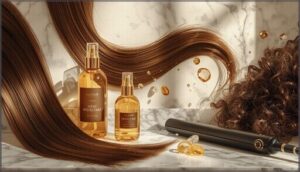
Not all heat protectants work the same way, and choosing the wrong one can leave your hair vulnerable to damage (or worse, weighed down and greasy).
If you blow-dry regularly, finding a protectant that shields without buildup becomes even more critical—understanding how often you should blow dry your hair can help you balance styling with long-term hair health.
The right product depends on when you’re styling, what ingredients actually shield against heat, and whether your hair is fine, thick, curly, or chemically treated. Let’s break down exactly what to look for so you can make a smart, confident choice.
Wet Vs. Dry Heat Protection Products
Your heat protectant choice depends entirely on when you’re applying it.
Wet heat protection products shield your hair cuticle during blow-drying—they’re applied to damp strands and create a moisture barrier that prevents thermal damage as water evaporates.
Dry formulas, on the other hand, guard against direct contact with straighteners and curling irons, sealing the cuticle to reduce heat transfer during high-temperature styling tool safety.
Key Ingredients for Thermal Defense
Silicones like dimethicone and cyclopentasiloxane form the backbone of effective thermal shields—they create a flexible protective coating that distributes heat evenly and prevents moisture loss.
You’ll also want antioxidants (vitamin E, green tea extract) to fight oxidative stress, plus natural oils like argan or coconut that fortify your strands against thermal damage while maintaining flexibility during styling.
Matching Products to Hair Type
Your texture determines which formulation works best—choosing the wrong product wastes money and risks hair damage.
Here’s how to match heat protectants to your hair type:
- Fine hair: Lightweight sprays and water-based formulas prevent weighing down roots
- Medium to thick hair: Balanced creams offer thermal protection without excessive buildup
- Curly or coily hair: Richer leave-ins with oils seal moisture while defining your natural pattern
Product ingredient review matters as much as hair type classification.
Proper Application of Heat Protection Products
Having the right heat protectant is only half the battle—you need to use it correctly to actually shield your hair from damage.
The difference between protected and fried hair often comes down to when and how you apply your product, not just which one you choose. Let’s walk through the exact steps that’ll keep your strands safe, plus the sneaky mistakes that undermine even the best protectants.
When and How to Apply Heat Protectants

Timing is everything when you apply heat protectants—spray or distribute product on clean, towel-dried hair within two to three minutes to lock in moisture before styling prep begins.
Use a pea-sized amount for short to medium hair, nickel-sized for longer locks, focusing on midlengths and ends where heat damage strikes hardest. Comb through evenly, let it absorb for one to two minutes, then begin heat styling confidently within thermal limits.
Common Mistakes to Avoid

You’ve probably overdone it at least once—blasting wet hair with a straightener or using barely any product because you thought “a little goes a long way.”
Heat tool abuse starts when you skip thorough drying or choose the incorrect product for your hair type.
Overheating risks multiply when you ignore damage prevention basics, turning heat styling into a fast track toward breakage instead of beautiful results.
Reapplying Protection Between Styling Sessions

Heat reapplication isn’t a one-and-done deal—most thermal shields fade within 24 hours, especially after sweaty workouts or humid weather.
If you’re touching up curls the next morning or switching from blow-drying to flat-ironing, a product refresh before each styling session keeps damage prevention strong. Fine hair needs just a light mist during reapplication, while thick strands benefit from several targeted sprays on mid-lengths and ends.
Safe Heat Styling Techniques for Healthy Hair
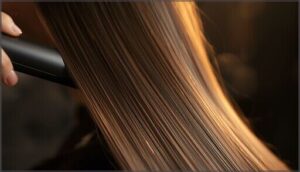
Even the best heat protectant won’t save your hair if you’re using your flat iron wrong. The way you apply heat matters just as much as what you put on before styling—and small adjustments to your technique can make a dramatic difference in preventing damage.
Here’s how to style smarter and keep your strands healthy.
Setting The Right Temperature
Your styling tool’s temperature setting makes all the difference between sleek strands and irreversible damage. Here’s what you need to master temperature control:
- Start at 365°F or lower for most hair types—thermal limits matter
- Fine or damaged hair? Stick to low-medium heat settings
- Thick hair can briefly handle up to 450°F, but watch carefully
- Use digital readouts for precise damage prevention
- Heat protectants reduce penetration by up to 50 percent
Lower temps with slower passes often beat high heat every time.
Working in Small Sections
Once you’ve dialed in the right temperature, smart sectioning techniques enhance your thermal control and damage minimization efforts. Working in 1 to 2-inch sections cuts overall heat exposure by up to 40 percent—that’s serious heat damage prevention.
Divide your hair into four to six parts using color clips, apply heat protection to each section individually, and you’ll boost styling efficiency while keeping breakage at bay.
Avoiding Heat on Wet or Dirty Hair
Sectioning hair sets you up for success, but the state of your strands matters just as much. Never apply heat to wet or dirty hair—wet strands are 1.5 times more prone to breakage, and buildup traps heat unevenly.
- Wet hair swells and weakens, making thermal protection far less effective
- Dirty hair harbors residue that can smoke or burn at high temperatures
- Air drying 70 to 80 percent before heat styling slashes your damage risk
Using Microfiber Towels for Drying
Once your hair’s mostly dry, how you remove that last bit of moisture matters. A microfiber towel pulls 60 to 70 percent more water from strands than cotton—without the friction that causes breakage.
Gently squeeze sections instead of rubbing, then wrap loosely for 5 to 15 minutes. This simple swap cuts your heat styling time and protects hair before any tool touches it.
Daily Habits to Strengthen and Protect Hair

Heat protection products are only half the equation—what you do between styling sessions matters just as much. Building a few simple habits into your weekly routine can actually strengthen your hair’s natural defenses against thermal damage.
Here are three practices that work together to keep your hair resilient, healthy, and better equipped to handle the heat.
Incorporating Weekly Hair Masks
Think of weekly hair masks as your safety net—they flood the hair shaft with the deep conditioning and hair nourishment that daily products just can’t deliver.
For ideal hair repair and hair protection against heat damage, focus your moisture mask routine on:
- Mid-lengths and ends where heat damage shows first
- Five to fifteen minutes per treatment for maximum absorption
- Plant oils and butters that replenish lost lipids
- Protein-rich mask ingredients like keratin for structural strength
- Consistent timing—once weekly for most types, twice for very dry strands
This hair care ritual promotes your protein-moisture balance, making strands more resilient every time you reach for hot tools.
Regular Trims to Prevent Split Ends
Snipping away split ends every six to eight weeks isn’t just cosmetic—it’s serious damage control for your hair health. Regular trim frequency stops splits from traveling up the shaft (yes, they migrate), promotes even hair growth, and keeps your heat damage under control.
Healthy ends mean better hair protection, smoother styling, and less breakage during your hair maintenance routine.
Embracing Heatless Styling Alternatives
Giving your styling tools a break doesn’t mean sacrificing great hair—heatless curling can deliver gorgeous results while you sleep, thanks to flexi rods, wave formers, and protective styling techniques. Your hair gets the texture you want without the thermal stress.
- Flexi rods create defined curls overnight, sealing cuticles and reducing frizz with zero heat damage prevention concerns
- Wave formers use gentle pressure instead of high temperatures for soft, beachy waves
- Satin scarves reduce friction during sleep, preventing breakage and moisture loss
- Microfiber towels absorb water quickly during air drying without the roughness of terry cloth
- Pin curls and twist-outs define your natural texture as hair dries, lasting multiple days
Frequently Asked Questions (FAQs)
How to prevent hair damage from heat?
You can shield strands from heat damage by applying a quality heat protectant before styling, using the lowest effective temperature, and giving your hair regular breaks from hot tools altogether.
How to protect hair from heat damage without products?
Skipping hot tools altogether is your best defense—try air drying to 80 percent, then embrace heatless styling like braids or buns while natural oils seal your cuticle, limiting direct heat exposure completely.
What is a natural heat protectant for hair?
Natural oils like argan oil and grapeseed coat strands to reduce heat transfer, while plant proteins (rice, quinoa) strengthen hair.
Vitamin E shields against thermal damage, and UV-filtering botanicals protect during styling—all without silicones.
Can heat protectant repair already damaged hair?
Heat protectant can’t reverse structural damage that’s already done, but it does improve appearance and strength over time—reducing breakage, restoring moisture, and preventing further harm when you keep using it consistently.
How often should I wash heat-styled hair?
Here’s the clean slate truth: wash frequency depends on your hair porosity and heat styling habits.
Most people need washing every 2–4 days to prevent product buildup while maintaining moisture balance and scalp comfort.
Do natural oils provide any heat protection?
You’ve probably heard that coconut oil or grape seed oil can shield strands during heat styling. They do create a light oil barrier effect that reduces surface friction and slows moisture loss, but they won’t stop heat from penetrating your hair’s cortex—making dedicated heat protectants essential for real thermal protection benefits.
Whats the maximum safe temperature for curling irons?
Most curling irons should stay between 300 and 375°F for safe styling.
Fine or chemically treated hair needs lower heat settings, while thicker strands can tolerate up to 400°F with proper heat protectant.
Can I use heat protectant on color-treated hair?
Absolutely—you should use heat protectant on color-treated hair. Choose color safe products with silicone benefits and thermal shielding to prevent fade.
These heat protectant sprays create a barrier that locks in pigment during heat styling.
Conclusion
You might think protecting hair from heat damage means giving up your favorite styling tools, but that’s not the case. Small adjustments—choosing the right protectant, dialing down temperatures, working in sections—make all the difference between healthy, resilient strands and brittle, damaged ones.
Your hair can handle heat when you respect its limits. Treat it with intention, give it recovery time between sessions, and you’ll keep styling without the sacrifice.